
A busy bus station can tell you a lot about passenger experience—if you know how to listen. From long queues and unclear signage to cleanliness, safety, and staff helpfulness, every touchpoint shapes how travelers feel about their journey. Yet many operators still rely on occasional surveys or delayed complaints, missing the chance to understand issues while they are happening. That is where effective bus station feedback becomes essential.
Gathering meaningful feedback in a fast-moving transport environment is not just about asking more questions. It is about capturing the right insights at the right moment, across the places that matter most, from ticket machines and waiting areas to platforms, toilets, and exits. When done well, feedback helps transport teams spot recurring problems, respond faster to service issues, and make smarter decisions that improve passenger satisfaction over time.
In this article, we will explore practical ways to measure passenger satisfaction in bus stations, including the most useful metrics, feedback collection methods, and ways to turn real-time input into operational improvements. We will also look at how modern tools, such as QR- and NFC-based solutions like Tapsy, can help mobility hubs collect fast, actionable feedback without adding friction for passengers.
Why bus station feedback matters for passenger satisfaction

The link between feedback and passenger experience
Bus station feedback shows exactly where the journey breaks down and what most affects passenger satisfaction. When operators collect feedback at key touchpoints, they can spot recurring issues and act faster.
- Waiting areas: uncover problems with seating, shelter, crowding, and real-time information
- Ticketing: identify confusing machines, long queues, payment issues, or unclear fares
- Accessibility: reveal barriers for wheelchair users, parents, and older passengers
- Safety and cleanliness: highlight poor lighting, litter, damaged facilities, or security concerns
- Staff interactions: measure helpfulness, clarity, and response times
This insight is essential for improving the overall passenger experience. Tools like Tapsy can help capture quick, in-the-moment feedback across busy travel and mobility hubs.
Common challenges at bus stations passengers report
The most common bus station complaints usually cluster around a few recurring pain points that directly shape bus station customer experience and can be tracked as satisfaction drivers:
- Delays and unreliable departures: measure satisfaction with punctuality, wait-time tolerance, and service recovery.
- Unclear signage and wayfinding: track ease of navigation, missed connections, and requests for staff help.
- Poor seating and cleanliness: monitor comfort ratings, dwell-time satisfaction, and facility condition scores.
- Overcrowding: assess perceived comfort, queue times, and platform congestion by time of day.
- Security concerns: measure feelings of safety, lighting quality, and incident reporting rates.
- Lack of real-time information: track satisfaction with updates, screen accuracy, and announcement clarity.
Using timely bus station feedback at key touchpoints helps operators identify the most urgent travel hub issues and prioritize fixes fast.
Benefits of measuring satisfaction consistently
Regular bus station feedback collection turns isolated opinions into a reliable decision-making tool. When you measure passenger satisfaction consistently, you can:
- Benchmark performance across stations, time periods, teams, or services
- Detect trends early, such as recurring cleanliness, safety, signage, or queueing issues
- Improve operations by linking low scores to specific touchpoints and acting faster
- Support investment decisions with evidence from ongoing customer feedback analysis
- Build trust by showing passengers and local stakeholders that concerns are tracked and addressed
Consistent measurement also gives a clearer view of overall transport service quality. Tools like Tapsy can help capture fast, in-the-moment feedback at key station touchpoints, making insights more timely and actionable.
What to measure in a bus station feedback program

Core satisfaction categories to track
To make bus station feedback useful, define clear customer satisfaction categories and group them into operational and experiential themes. This structure makes reporting easier and turns comments into practical bus station satisfaction metrics and transport hub KPIs.
- Operational categories: cleanliness, safety, ticketing, accessibility, and punctuality information
- Experiential categories: comfort, ease of navigation, amenities, and staff helpfulness
For each category, track both ratings and comments. For example:
- Cleanliness: toilets, seating areas, platforms, waste management
- Comfort: temperature, seating availability, noise, crowding
- Accessibility: lifts, ramps, tactile signage, step-free routes
- Safety: lighting, visibility, security presence
- Punctuality information: accuracy, timeliness, clarity of delay updates
- Navigation and ticketing: signage, wayfinding, machine usability
- Amenities and staff: Wi-Fi, charging, shops, helpful support
This approach helps teams prioritize improvements by impact and ownership.
Quantitative and qualitative indicators
Effective bus station feedback relies on both quantitative feedback and qualitative feedback. Numbers show what is happening, while comments explain why.
- Scores and ratings track overall sentiment quickly, such as cleanliness, safety, or staff helpfulness.
- Wait times measure operational performance and reveal friction at ticket counters, boarding areas, or information desks.
- Complaint volumes highlight recurring issues and help prioritize urgent fixes.
- Open-text comments add context, showing whether low scores are caused by poor signage, overcrowding, accessibility gaps, or staff interactions.
For stronger customer satisfaction metrics, review both types together. For example, a low rating paired with comments about confusing platform changes is more actionable than a score alone. This combined view helps bus stations identify patterns, respond faster, and improve the passenger experience with confidence.
How to segment feedback by passenger type
Effective bus station feedback becomes far more useful when responses are grouped by rider needs and travel context. Strong passenger segmentation helps operators avoid treating all passengers as if they expect the same experience.
- Commuters: track speed, reliability, queue times, and real-time information to improve commuter satisfaction.
- Occasional travelers and tourists: review signage, wayfinding, ticketing clarity, and staff helpfulness.
- Disabled passengers and older adults: prioritize lifts, seating, step-free access, audio/visual announcements, and safety through accessible transport feedback.
- Peak-hour users: compare crowding, platform access, cleanliness, and perceived security during busy periods.
This approach reveals hidden barriers that average scores often miss. For example, a station may rate well overall but still fail wheelchair users or tourists. Tools like Tapsy can help capture quick, location-based feedback from different passenger groups in real time.
Best methods to collect bus station feedback

On-site surveys and QR code feedback tools
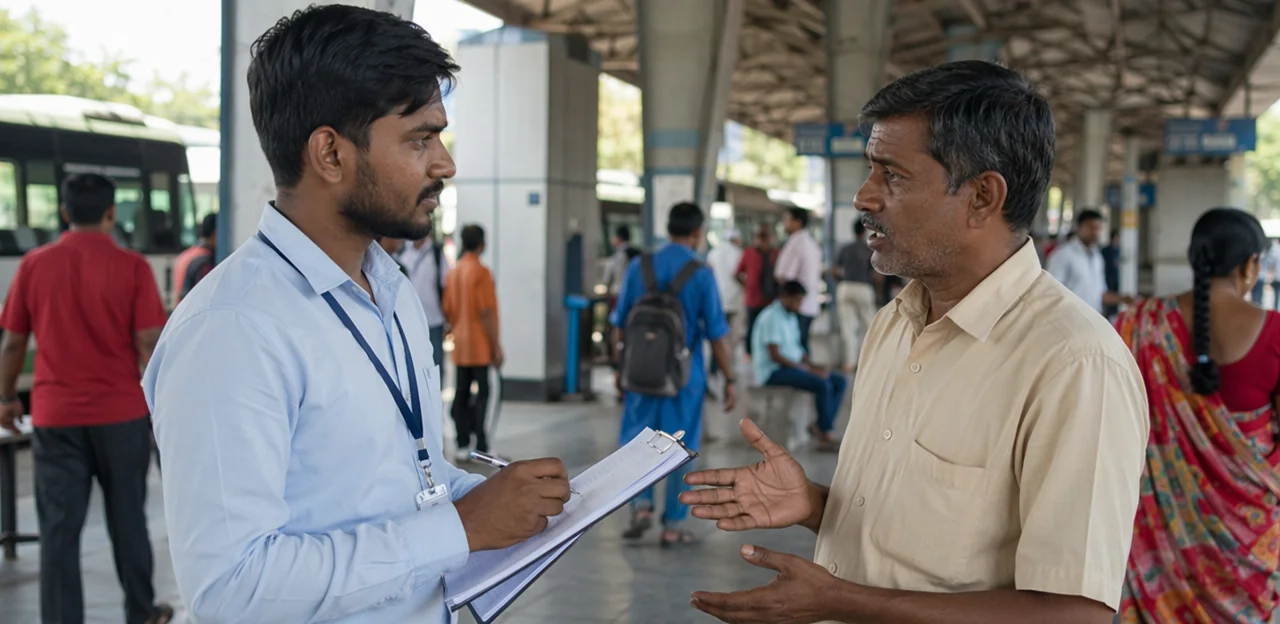
To improve bus station feedback, collect responses where the experience happens. A well-placed bus station survey captures fresh impressions before passengers leave.
- Use multiple touchpoints: Add kiosks in waiting areas, posters at entrances, QR code feedback signs on platforms, and survey links on printed or digital receipts.
- Keep surveys short: A strong on-site passenger survey should take under 30 seconds on mobile—use 1–3 rating questions plus one optional comment field.
- Match questions to location: Ask about cleanliness in restrooms, signage near entrances, and crowding or punctuality on platforms.
- Increase response rates: Use large QR codes, clear calls to action, and simple incentives such as prize draws or discount vouchers.
- Track by zone and time: Compare results by entrance, platform, and peak period to spot service issues quickly.
Tools like Tapsy can help deploy fast, no-app QR feedback flows across busy stations.
Digital channels, apps, and social listening
Digital channels make bus station feedback easier to collect at scale and act on quickly. Use a mix of owned and public platforms to capture both digital customer feedback you request and comments passengers share voluntarily.
- Transport apps: Add a short transport app survey after ticket purchase, journey completion, or service alerts to capture timely ratings.
- Email follow-ups: Send brief post-journey surveys with 1–3 questions on cleanliness, signage, waiting times, and staff helpfulness.
- SMS surveys: Ideal for fast response rates, especially after disruptions or support interactions.
- Website forms: Offer always-on feedback pages for complaints, suggestions, and accessibility issues.
- Google reviews: Monitor recurring themes passengers raise publicly about facilities and service.
- Social media monitoring: Track mentions, tags, and keywords to gather real-time social media feedback and spot emerging issues early.
Tools such as Tapsy can also support fast, no-app feedback collection at station touchpoints.
Staff observations and mystery passenger research
Not all problems appear in formal bus station feedback surveys. Some of the most useful insights come from what staff see every day and what independent reviewers experience on the ground.
- Use frontline staff feedback: Ask cleaners, security teams, drivers, and customer service staff to log recurring issues such as unclear signage, queue bottlenecks, faulty ticket machines, or accessibility gaps.
- Run a service quality audit: Schedule observational audits at different times and days to assess cleanliness, wait times, wayfinding, lighting, and staff visibility.
- Invest in mystery passenger research: Mystery passengers can test real journeys, revealing friction points passengers may accept silently, such as confusing transfers or inconsistent assistance.
The key is triangulation: compare staff logs, audit findings, and mystery passenger research with survey results to confirm patterns, prioritize fixes, and spot hidden service failures faster.
How to analyze feedback and choose the right metrics

Key metrics: CSAT, NPS, CES, and operational indicators
For effective bus station feedback, use a mix of perception and operational metrics:
- CSAT for transport: Best for measuring satisfaction with a specific touchpoint, such as ticketing, cleanliness, security, or staff helpfulness. Ask immediately after the interaction to capture fresh impressions.
- NPS passenger experience: Useful for understanding overall station loyalty and whether passengers would recommend the hub. Run it after a complete journey or station visit, not at a single service point.
- Customer Effort Score: Ideal for high-friction tasks like finding the right bay, buying a ticket, or getting disruption information. It highlights where the station feels confusing or difficult.
- Complaint resolution time: Tracks how quickly issues such as broken facilities or accessibility problems are handled.
- Dwell-time-related indicators: Compare wait times, queue length, and time spent in key areas with satisfaction scores to spot crowding and wayfinding problems.
Tools like Tapsy can help capture these signals in real time at station touchpoints.
Turning comments into actionable themes
Open-text bus station feedback becomes far more useful when it is organized into clear, repeatable categories. A simple feedback analysis process helps teams move from scattered comments to practical improvements.
- Create core customer comment themes: group responses under headings such as cleanliness, communication, accessibility, and safety.
- Tag each comment consistently: add one or more labels to every response, such as “dirty toilets,” “unclear signage,” “lift out of service,” or “poor lighting.”
- Use sentiment analysis: identify whether comments are positive, neutral, or negative to quickly spot pain points and prioritize urgent issues.
- Track recurring trends: monitor which themes appear most often by location, time of day, or service area to uncover persistent problems.
For higher-volume operations, tools like Tapsy can help capture and route feedback quickly. The goal is to turn repeated passenger comments into clear actions for station teams.
Benchmarking results across time and locations
To turn bus station feedback into action, compare results across multiple dimensions rather than looking at one overall score. Strong transport benchmarking helps operators spot whether issues are local, route-specific, or tied to peak demand.
- By station: rank locations by cleanliness, safety, waiting environment, and staff helpfulness.
- By route: identify whether dissatisfaction follows specific services, operators, or interchange points.
- By time of day: compare peak vs. off-peak sentiment to reveal crowding, delays, or staffing gaps.
- By season: track how weather, holidays, and school terms affect the passenger experience.
A practical station performance dashboard should combine survey scores, comment themes, and passenger feedback trends with operational data such as delays, footfall, queue times, and incident reports. Tools like Tapsy can support fast, location-based feedback collection, making it easier to benchmark performance and prioritize improvements.
Turning bus station feedback into service improvements
Prioritizing quick wins and long-term investments
Turn bus station feedback into action by ranking issues against three factors:
- Frequency – how often passengers mention the problem
- Severity – whether it affects safety, accessibility, or basic usability
- Satisfaction impact – how strongly it lowers overall ratings or repeat use
Use this scoring to build a practical service improvement plan. Quick wins often deliver fast customer experience improvement, such as:
- updating unclear signage
- adjusting cleaning schedules for toilets or waiting areas
- fixing lighting, seating, or real-time information displays
Longer-term bus station upgrades should target structural pain points, including:
- step-free access and other accessibility upgrades
- shelter redesigns for weather protection
- layout changes to reduce crowding and confusion
Tools like Tapsy can help capture and compare these issues in real time.
Closing the feedback loop with passengers
To close the feedback loop, show passengers exactly what changed because of their input. With bus station feedback, visible updates make feedback feel worthwhile and strengthen passenger trust.
- Use on-site signage: Display “You said, we did” boards near entrances, waiting areas, and ticket machines.
- Update digital channels: Share improvements on your website, app, and social media with short, specific examples.
- Be transparent: Explain what has been fixed, what is in progress, and what may take longer due to budget or operational limits.
- Keep customer communication consistent: Use the same messages across physical and digital touchpoints.
Tools like Tapsy can help connect real-time feedback with clear follow-up messaging, encouraging future participation.
Building a continuous improvement process
To turn bus station feedback into measurable action, make it part of daily transport operations management, not a one-off project. A simple governance rhythm helps teams respond faster and improve consistently:
- Hold regular review meetings weekly for operational issues and monthly for trends, root causes, and priorities.
- Assign cross-functional ownership across facilities, cleaning, security, customer service, and commercial teams so each issue has a clear owner.
- Track KPIs such as satisfaction score, response time, issue resolution rate, cleanliness ratings, and accessibility feedback.
- Run recurring surveys at key touchpoints to monitor changes over time and strengthen your customer experience strategy.
This creates a practical continuous improvement loop. Tools like Tapsy can help capture and route real-time feedback efficiently.
Best practices and mistakes to avoid

How to design accessible, unbiased surveys
Use these survey design best practices to improve bus station feedback quality and reach more passengers:
- Write short, plain-language questions and avoid jargon or double negatives.
- Offer multilingual options based on passenger demographics.
- Ensure digital forms support screen readers, keyboard navigation, and clear contrast.
- Use inclusive response formats, such as rating scales plus optional free-text comments.
For accessible surveys and inclusive passenger feedback, avoid leading questions like “How helpful was our excellent staff?” Keep surveys brief—ideally 3–5 questions—because long forms reduce completion rates and answer quality.
Data privacy, consent, and ethical use of feedback
Strong bus station feedback programs depend on trust. To support feedback data privacy, survey consent, and ethical data collection:
- Clearly state why responses are collected, how they will be used, and who can access them.
- For anonymous feedback, avoid collecting unnecessary identifiers such as phone numbers or precise location data.
- For identifiable feedback, obtain explicit consent, explain retention periods, and protect records with encryption and role-based access.
- Follow relevant privacy laws, publish a simple privacy notice, and let passengers opt out or request deletion.
If using tools like Tapsy, keep consent language visible at the point of response.
Common measurement pitfalls in transport hubs
- Relying on one channel: Only using email or long surveys skews bus station feedback toward highly motivated riders. Combine QR codes, kiosks, SMS, and staff prompts for better passenger satisfaction measurement.
- Ignoring silent passengers: Many dissatisfied travelers never complain. Use quick, in-the-moment pulse checks to capture quieter segments and reduce customer feedback mistakes.
- Overreacting to isolated complaints: Look for patterns by time, route, and touchpoint before changing operations.
- Missing operational context: Connect comments with delays, crowding, cleaning logs, and staffing levels using transport hub analytics for clearer action priorities.
Conclusion
In busy travel environments, measuring satisfaction effectively comes down to timing, simplicity, and action. The most effective bus station feedback strategies capture input at key touchpoints, use short and relevant questions, and combine quick ratings with optional comments so passengers can share what matters most. When operators track themes like cleanliness, safety, accessibility, signage, waiting times, and staff helpfulness, they gain a clearer picture of the real passenger experience across the entire journey.
Just as important, bus station feedback should not sit in a dashboard untouched. The real value comes from turning insights into operational improvements, resolving issues quickly, and comparing results by location, time of day, or service area to spot recurring problems and measure progress. Real-time tools can make this process faster and more practical, especially in high-traffic hubs.
If you are ready to improve passenger satisfaction, now is the time to review your feedback process, identify your highest-friction touchpoints, and implement a system that makes it easy for passengers to respond in the moment. Solutions such as Tapsy can help mobility teams collect fast, on-site feedback without adding friction. For next steps, create a simple feedback framework, define your key satisfaction metrics, and explore tools and benchmarks that support continuous improvement across your station experience.
Frequently Asked Questions
- Why is bus station feedback important for passenger satisfaction?
It shows where the journey breaks down across touchpoints such as waiting areas, ticketing, accessibility, safety, cleanliness, and staff interactions. When feedback is collected at the right moment, operators can spot recurring issues faster and make targeted improvements.
- What are the most common problems passengers report at bus stations?
Frequent complaints include delays, unreliable departures, unclear signage, poor seating, cleanliness issues, overcrowding, security concerns, and lack of real-time information. These issues directly affect comfort, confidence, and overall satisfaction.
- Which satisfaction categories should a bus station feedback program track?
A useful structure combines operational categories such as cleanliness, safety, ticketing, accessibility, and punctuality information with experiential categories such as comfort, navigation, amenities, and staff helpfulness. Tracking both ratings and comments in each category makes the feedback easier to act on.
- How should operators balance quantitative and qualitative feedback?
Ratings, scores, wait times, and complaint volumes show what is happening at scale, while open-text comments explain why passengers feel that way. Reviewing both together helps teams identify patterns and choose more precise fixes.
- Why should feedback be segmented by passenger type?
Different groups experience the station differently, so average scores can hide important problems. Segmenting feedback for commuters, tourists, disabled passengers, older adults, and peak-hour users helps reveal barriers tied to speed, wayfinding, accessibility, crowding, or safety.
- What is the best way to collect feedback on-site in a busy bus station?
Use short surveys at the point of experience through kiosks, posters, QR code signs, and links on printed or digital receipts. Keep the survey under 30 seconds, ask location-specific questions, and compare responses by zone and time of day.
- How can digital channels support bus station feedback collection?
Transport apps, email follow-ups, SMS surveys, website forms, Google reviews, and social media monitoring can capture both requested and voluntary feedback. This mix helps operators gather timely input at scale and detect emerging issues quickly.
- What role do staff observations and mystery passengers play?
Frontline staff can log repeated issues such as queue bottlenecks, broken machines, unclear signage, or accessibility gaps that surveys may miss. Mystery passengers and service quality audits add an independent view, and comparing these findings with survey results helps confirm patterns.
- When should CSAT, NPS, and Customer Effort Score be used in a bus station setting?
CSAT works best for specific touchpoints such as ticketing, cleanliness, security, or staff helpfulness right after the interaction. NPS is better for measuring overall station loyalty after a full visit, while Customer Effort Score is useful for tasks that feel confusing or difficult, such as finding the right bay or getting disruption information.
- How can open-text comments be turned into actionable themes?
Group comments into clear categories such as cleanliness, communication, accessibility, and safety, then tag them consistently with labels like dirty toilets or poor lighting. Adding sentiment analysis and tracking themes by location or time helps teams prioritize recurring issues.
- How should bus station feedback be benchmarked across locations and time periods?
Compare results by station, route, time of day, and season rather than relying on one overall score. A practical dashboard should combine survey scores, comment themes, and trends with operational data such as delays, footfall, queue times, and incident reports.
- How do operators decide between quick wins and long-term improvements?
A practical approach is to rank issues by frequency, severity, and satisfaction impact. Quick wins often include clearer signage, better cleaning schedules, or fixing lighting and displays, while long-term investments may focus on accessibility upgrades, shelter redesigns, or layout changes.
- What does it mean to close the feedback loop with passengers?
It means showing passengers what changed because of their feedback through on-site signs, website updates, app messages, or social posts. Clear communication about what has been fixed, what is in progress, and what may take longer helps build trust and encourages future participation.
- How can a bus station build a continuous improvement process around feedback?
Feedback should be reviewed regularly, with weekly checks for operational issues and monthly reviews for trends and root causes. Clear ownership across facilities, cleaning, security, customer service, and commercial teams, along with recurring surveys and KPI tracking, keeps improvements moving.
- What mistakes should be avoided when measuring passenger satisfaction at transport hubs?
Common mistakes include relying on a single feedback channel, ignoring silent passengers, reacting too strongly to isolated complaints, and reviewing comments without operational context. Better results come from combining channels such as QR codes, kiosks, SMS, and staff prompts, then linking feedback to delays, crowding, cleaning logs, and staffing levels.