Every hotel wants more guest feedback, but few want to risk sounding pushy, repetitive, or intrusive. That’s the challenge at the heart of improving your hotel survey response rate: how do you collect enough meaningful insight to improve service without adding friction to the guest experience? In hospitality, timing and tone matter. A poorly placed survey request can feel like just another demand on a traveler’s attention, while a well-designed feedback moment can make guests feel heard, valued, and more likely to respond.
The good news is that increasing survey participation doesn’t have to mean sending more emails or offering bigger incentives. Often, the biggest gains come from smarter survey design, better timing, shorter feedback flows, and choosing touchpoints that feel natural during or just after the stay. Some hotels also use tools like Tapsy to capture real-time feedback at key moments, helping teams act on issues before they turn into negative reviews.
In this article, we’ll explore practical ways to raise response rates without annoying guests, including when to ask, what to ask, how to reduce survey fatigue, and how to create a feedback process that supports both guest satisfaction and operational improvement.
Why Hotel Survey Response Rate Matters
A higher hotel survey response rate gives you a truer picture of what guests actually experience, not just the opinions of the happiest or most frustrated visitors. When more guests respond, guest feedback becomes more representative across room types, booking channels, stay lengths, and traveler segments.
- Better data quality: More responses reduce bias and strengthen confidence in trends.
- Smarter operational decisions: Reliable hotel customer insights help teams prioritize fixes that affect the most guests, from housekeeping delays to breakfast queues.
- Fewer blind spots: Strong participation uncovers issues that would otherwise stay hidden until they appear in public reviews.
To improve reliability, keep surveys short, timely, and tied to key touchpoints. Tools like Tapsy can help capture feedback while the stay is still fresh.
Low hotel survey response rate can lead teams to act on a distorted picture of hotel guest satisfaction. When only the most delighted or most frustrated guests respond, survey bias increases and everyday guest experiences go unseen.
- Biased data: Extreme opinions can make performance look better or worse than it really is.
- Poor prioritization: Hotels may invest in fixing loud but less common complaints while overlooking issues that affect more guests.
- Missed service issues: With low survey participation, recurring problems like slow check-in, weak Wi-Fi, or inconsistent housekeeping may never surface clearly.
To reduce bias, collect feedback at multiple touchpoints during the stay, keep surveys short, and use simple in-stay tools such as Tapsy to capture broader, more representative responses.
Balancing feedback collection with a positive guest experience
Improving your hotel survey response rate should never come at the expense of the guest experience. In customer experience hospitality, guests are more likely to respond when surveys feel helpful, brief, and well-timed rather than intrusive.
- Ask at the right moment: Send surveys after checkout or at key in-stay touchpoints, not repeatedly throughout the stay.
- Keep it short: Focus on 1–3 high-value questions that match your hotel survey strategy.
- Respect choice: Make participation optional and avoid aggressive reminders.
- Act on feedback: When guests see visible improvements, trust grows and loyalty strengthens.
Tools like Tapsy can help hotels collect timely, low-friction feedback without overwhelming guests.
Common Reasons Guests Ignore Hotel Surveys
Poor timing before, during, or after the stay
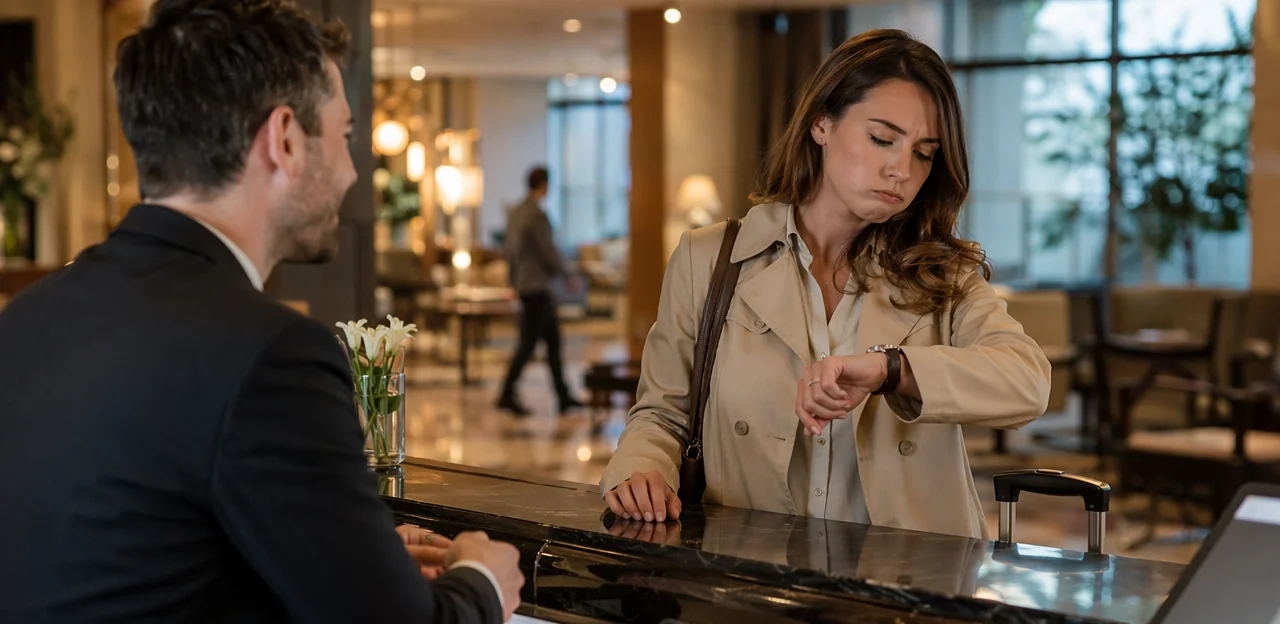
Survey timing has a direct impact on your hotel survey response rate. If a hotel email survey arrives before guests have experienced key touchpoints, they have little to evaluate. Send it during check-in, breakfast, or travel home, and it feels intrusive. Wait too long, and details fade, lowering both open rates and completion quality.
To match the guest journey:
- During the stay: use short, in-the-moment feedback only for service recovery
- At checkout or within 24 hours: send the main post-stay survey while the experience is still fresh
- Avoid peak friction moments: arrivals, payment, and early-morning departures
Tools like Tapsy can help capture timely in-stay feedback without overwhelming guests.
Surveys that are too long, vague, or repetitive
Long, confusing surveys are one of the fastest ways to trigger survey fatigue and hurt your hotel survey response rate. When guests see too many hotel survey questions, they often quit before finishing.
- Cut survey length: Keep it to 3–7 essential questions. Focus on the moments that matter most, such as check-in, room cleanliness, staff service, and checkout.
- Use clear wording: Avoid broad or vague prompts like “How was your experience?” Ask specific questions guests can answer quickly.
- Remove repetition: Repeating similar rating scales across multiple pages feels tedious and lowers completion rates.
A simple, focused survey respects guests’ time. Tools like Tapsy can also help collect short, in-the-moment feedback before fatigue sets in.
Lack of relevance, personalization, or perceived value
Generic survey emails often underperform because guests do not immediately see why the request matters to them. If the message feels mass-sent, untimely, or disconnected from their stay, your hotel survey response rate will suffer.
- Use personalized surveys that reference the guest’s actual experience, such as check-in, breakfast, spa, or room comfort.
- Explain the benefit clearly: “Your feedback helps us improve future stays and fix issues faster.”
- Improve feedback request relevance by asking only questions tied to the services each guest used.
- Keep the survey short and specific to reduce effort and increase guest engagement.
Tools like Tapsy can also help collect feedback at relevant touchpoints while the experience is still fresh.
Survey Design Tactics That Increase Completion Rates

Keep the survey short and focused on priority questions
A short hotel survey consistently outperforms longer forms because guests are far more likely to finish when the ask feels quick and relevant. As a rule, aim for 3–5 core questions and keep completion time under 2 minutes. This simple change can lift your hotel survey response rate and improve overall survey completion rate.
Use these survey design best practices to trim unnecessary questions:
- Start with your goal: identify the one decision the survey should support, such as improving check-in, room cleanliness, or breakfast service.
- Remove “nice-to-know” questions: if a question will not drive action, cut it.
- Avoid duplicates: combine overlapping satisfaction questions into one clear rating item.
- Make comments optional: collect detail without slowing every guest down.
Focused surveys reduce fatigue, improve answer quality, and still deliver useful insight. If you need deeper feedback, use targeted follow-up surveys later or tools like Tapsy to capture fast, touchpoint-specific responses in the moment.
Use clear wording, mobile-friendly layouts, and smart question flow
Strong hotel survey design removes friction at every step. If guests have to zoom, decode jargon, or answer irrelevant questions, your hotel survey response rate will drop quickly.
Focus on these practical improvements:
- Use plain language: Replace internal terms with simple, guest-friendly wording. Ask “How was your check-in experience?” instead of “Rate front-desk efficiency.”
- Build a mobile-friendly survey: Most guests respond on phones, so use large tap targets, short screens, and minimal typing.
- Show progress indicators: A simple bar or “Question 2 of 5” reduces uncertainty and makes the survey feel manageable.
- Use logical branching: Only show follow-up questions that match the guest’s answer. If they rate breakfast poorly, ask why; if they skipped it, move on.
- Keep formatting clean: One question per screen, readable font sizes, and clear buttons improve survey usability.
Tools like Tapsy can also help hotels deliver fast, no-app feedback flows that feel easier to complete in the moment.
Ask actionable questions tied to service improvements
To improve your hotel survey response rate, ask questions guests can answer quickly and your team can actually act on. A strong guest satisfaction survey should focus on specific moments in the stay, not vague impressions alone.
Use actionable survey questions such as:
- Check-in: “How satisfied were you with check-in speed and welcome experience?”
- Cleanliness: “Was your room clean and ready when you arrived?”
- Staff service: “Did our team resolve your requests promptly and courteously?”
- Amenities: “How would you rate the Wi-Fi, breakfast, gym, or pool during your stay?”
- Overall satisfaction: “What is the one thing we could improve before your next visit?”
Keep rating scales consistent, then add one optional comment box for detailed hotel service feedback. This combination helps hotels spot patterns, prioritize fixes, and turn feedback into operational improvements. Tools like Tapsy can also capture this feedback in real time at key touchpoints.
Best Timing and Delivery Channels for Hotel Surveys
Choose the right moment in the guest journey
Timing has a direct impact on your hotel survey response rate. The best guest journey survey depends on what you need to learn and when you can still act on it.
- Post-check-in surveys: Best for measuring arrival experience, front-desk service, and first impressions. Ideal for full-service hotels, resorts, and business properties where check-in sets the tone.
- In-stay survey: Use this when you want real-time issue detection for housekeeping, room comfort, Wi-Fi, or amenities. This works especially well for resorts, extended-stay properties, and upscale hotels where service recovery matters. Tools like Tapsy can help capture feedback at the moment of experience.
- Post-stay feedback: Best for overall satisfaction, loyalty, and review intent. It suits nearly all property types, especially boutique hotels and short-stay urban properties.
Match timing to the feedback goal, not just convenience.
Use each channel where it fits the guest journey best to improve your hotel survey response rate without creating message fatigue:
- Email: Best for post-stay feedback when guests have time to reflect. Use it for slightly longer surveys and send only to guests who have opted in to email hotel guest communication.
- SMS survey: Ideal for short, mobile-friendly check-ins during or just after the stay. Keep it to 1–3 questions and reserve SMS for urgent, high-visibility moments because it feels more intrusive.
- QR code survey: Great for in-stay, location-based feedback in rooms, breakfast areas, or reception. It lets guests respond on their own terms without adding another direct message.
- App prompts: Useful for hotels with active mobile app users, especially for loyalty members and personalized follow-ups.
Always match channel choice to guest preferences, consent, and timing. Tools like Tapsy can help hotels collect no-app QR feedback at key touchpoints.
Optimize reminders without crossing into annoyance
A smart follow-up strategy can lift your hotel survey response rate without making guests feel chased. The goal is simple: use timely, respectful survey reminders and clear stop rules to avoid survey annoyance.
- Send the first reminder 48–72 hours after checkout if the guest has not responded. This keeps the stay fresh without feeling intrusive.
- Limit reminders to 1–2 follow-ups total. More than that often hurts brand perception more than it helps completion rates.
- Space messages 3–5 days apart so guests have time to respond naturally.
- Stop immediately when a guest completes the survey, opts out, or gives a low-engagement signal such as repeated non-opens.
- Use channel logic: don’t send the same reminder by both email and SMS unless the guest has consented and the message adds value.
Tools like Tapsy can also help hotels trigger better-timed feedback requests at the right touchpoints.
How to Motivate Guests to Respond Without Damaging Trust
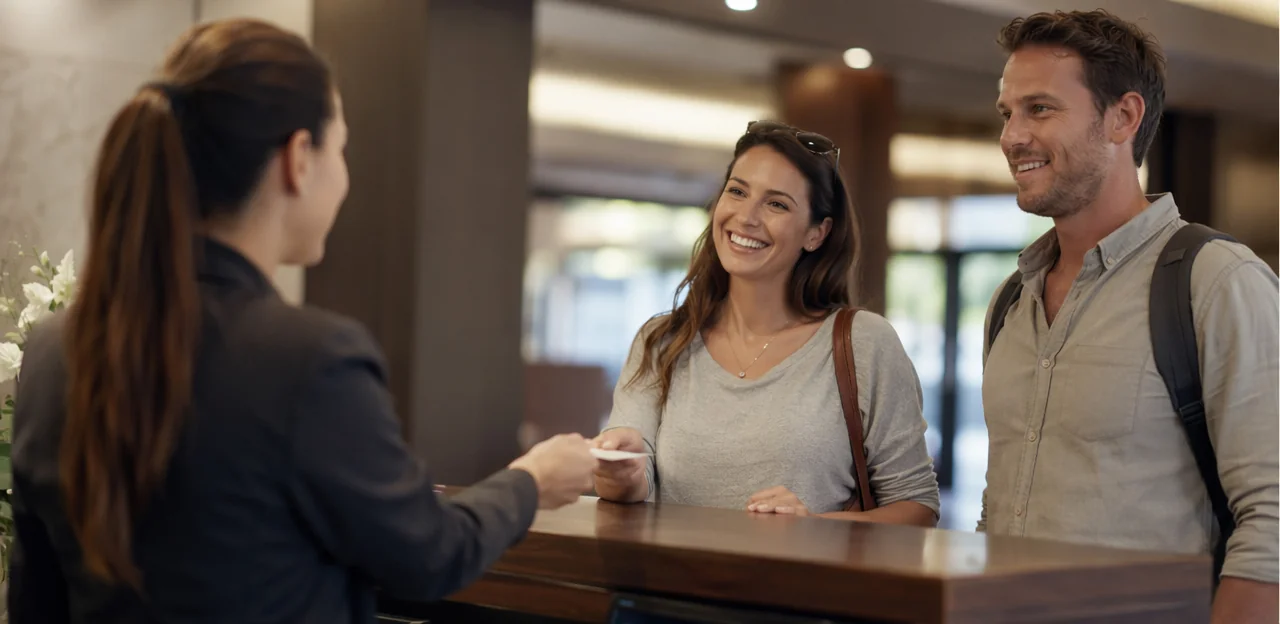
Write invitations that feel personal and respectful
A stronger hotel survey response rate often starts with a better ask. Your survey invitation email should sound like a thoughtful follow-up, not a mass marketing blast.
- Use a real sender name: “Maria at Lakeside Hotel” feels more trustworthy than “No-Reply Guest Surveys.”
- Write human subject lines: Try “Thanks for staying with us, Anna” or “Could you share quick feedback on your stay?”
- Keep the tone warm and respectful: A personalized guest message should thank guests, explain why their opinion matters, and avoid pressure.
- Make hotel email copy concise: State the survey length upfront and include one clear CTA.
Tools like Tapsy can also support more timely, guest-friendly feedback requests.
Use incentives carefully and ethically
Survey incentives can improve your hotel survey response rate, but only when they feel like a thank-you, not a payoff. The best guest survey rewards are small, relevant, and easy to redeem.
- Offer light incentives such as a future-stay discount, coffee voucher, late checkout entry, or hospitality loyalty points.
- Use prize draws sparingly; they can boost volume, but may attract rushed, low-quality responses from guests focused only on winning.
- Avoid offering rewards so large that they feel transactional or influence honest feedback.
- Tie incentives to completion, not to giving a positive score.
- Keep terms simple and transparent to maintain trust.
Tools like Tapsy can help deliver modest rewards without adding friction.
Show guests that feedback leads to visible improvements
To increase your hotel survey response rate, guests need proof that their input matters. When you close the feedback loop, you turn surveys from a one-way request into a trust-building conversation.
- Send a prompt thank-you message that confirms their feedback was received and appreciated.
- Share visible service updates such as faster check-in, improved breakfast options, or cleaner common areas based on guest comments.
- Use staff follow-up for low scores so guests see real action, not automated silence.
- Mention improvements in future survey invites with lines like “You asked, we improved.”
This approach strengthens guest trust, supports ongoing hotel service improvement, and makes guests more willing to participate again.
Measuring, Testing, and Improving Survey Performance

Track the metrics behind survey success
To improve your hotel survey response rate, monitor the right survey metrics consistently:
- Open rate: shows whether your subject line, timing, and sender name attract attention.
- Click-through rate: reveals how compelling your survey invitation and CTA are.
- Completion rate: measures how many guests finish the survey once they start.
- Abandonment rate: highlights where guests drop off, often due to length or poor mobile design.
- Response quality: assess comment depth, relevance, and consistency, not just volume.
Review these KPIs weekly to spot friction points and refine survey design, timing, and follow-up.
Run A/B tests on timing, copy, and survey length
Use A/B testing surveys to improve your hotel survey response rate without increasing guest fatigue. Test one variable at a time and track opens, clicks, and completions:
- Subject lines: Compare benefit-led copy vs. simple requests.
- Send times: Test checkout day, 24 hours later, and 72 hours later.
- Question count: Try 3, 5, or 10 questions to find the best completion rate.
- Channel mix: Compare email, SMS, QR, or tools like Tapsy for in-stay prompts.
This kind of survey optimization helps hotels identify what guests actually respond to.
Turn survey data into ongoing guest experience improvements
To improve your hotel survey response rate over time, show guests their feedback leads to action. Use hotel feedback analysis to spot recurring issues by touchpoint, shift, room type, or property, then turn insights into measurable guest experience improvement across hospitality operations.
- Track trends in complaints, praise, and response timing
- Share clear summaries with front desk, housekeeping, food service, and management teams
- Prioritize fixes that affect reviews, repeat stays, and service recovery
- Close the loop by updating guests on visible improvements
Tools like Tapsy can help teams capture and act on real-time insights faster.
Conclusion
Improving your hotel survey response rate comes down to one simple principle: make feedback easy, timely, and worthwhile for guests. The most effective hotels keep surveys short, send them at the right moment, personalize the invitation, and clearly explain how guest input will be used to improve future stays. Just as importantly, they avoid over-surveying, respect guest preferences, and focus on relevance instead of volume.
A stronger hotel survey response rate is not built by asking more questions—it is built by creating a smoother guest experience around feedback itself. When surveys feel convenient rather than disruptive, guests are far more likely to respond honestly and consistently. In-stay feedback options, mobile-friendly formats, and thoughtful incentives can all help boost participation without damaging satisfaction.
The next step is to audit your current survey journey: review timing, question length, channel performance, and follow-up processes. Test small changes, measure results, and refine your approach over time. If you want to go further, consider tools like Tapsy, which help hospitality teams collect real-time feedback at key touchpoints and act on issues before checkout.
Ready to improve your hotel survey response rate? Start with one guest-friendly change today, track the impact, and build a feedback strategy that strengthens both guest loyalty and operational performance.
Frequently Asked Questions
- Why is a higher hotel survey response rate important?
A higher response rate gives a more representative view of what guests actually experience across room types, booking channels, stay lengths, and traveler segments. It improves data quality, reduces bias from only extreme opinions, and helps teams make better operational decisions.
- What usually causes guests to ignore hotel surveys?
Guests often ignore surveys because the timing is poor, the survey is too long, or the questions feel vague or repetitive. Generic requests that do not feel relevant to the guest’s actual stay also lower participation.
- When is the best time to send a hotel survey?
The main post-stay survey is best sent at checkout or within 24 hours, while the stay is still fresh. In-stay feedback works best for service recovery at key moments, and hotels should avoid high-friction times like arrival, payment, or early-morning departure.
- How long should a hotel guest survey be?
A short survey performs best, with 3–5 core questions and a completion time under 2 minutes. In some cases, 3–7 essential questions can still work well if they stay focused on priority topics.
- What kinds of questions should hotels ask to improve completion rates?
Hotels should ask clear, specific, actionable questions tied to moments like check-in, room cleanliness, staff service, amenities, and checkout. Optional comments can be added for detail, but the main questions should be quick to answer and directly useful for service improvements.
- How can hotels reduce survey fatigue without losing useful feedback?
Keep surveys short, remove duplicate questions, and avoid broad prompts that require too much effort to answer. Collect feedback at natural touchpoints and use targeted follow-up later if deeper insight is needed.
- Which survey channel works best: email, SMS, QR code, or app prompts?
Each channel fits a different moment in the guest journey. Email works well for post-stay reflection, SMS suits short and urgent check-ins, QR codes are useful for in-stay location-based feedback, and app prompts work best for hotels with active app users.
- How many reminder messages should a hotel send after the first survey request?
A respectful follow-up strategy usually means sending the first reminder 48–72 hours after checkout if there is no response. Hotels should limit reminders to 1–2 follow-ups total, space them 3–5 days apart, and stop once the guest responds or opts out.
- How can survey invitations feel more personal and less like marketing?
Use a real sender name, a human subject line, and a warm, concise message that thanks the guest and explains why their opinion matters. It also helps to state the survey length clearly and include one simple call to action.
- Should hotels offer incentives for completing surveys?
Incentives can help when they are small, relevant, and framed as a thank-you rather than a payoff. Suitable examples include a future-stay discount, coffee voucher, late checkout entry, or loyalty points, but rewards should never depend on giving a positive score.
- How do hotels motivate guests to respond without damaging trust?
The best approach is to make feedback easy, timely, and clearly worthwhile. Hotels can build trust by respecting guest choice, avoiding aggressive reminders, and showing that feedback leads to visible service improvements.
- What does it mean to close the feedback loop in hospitality?
Closing the feedback loop means confirming that feedback was received and showing guests that action followed. That can include thank-you messages, staff follow-up on low scores, and visible updates such as faster check-in or improved breakfast options.
- What survey design choices make mobile completion easier?
Mobile-friendly surveys should use large tap targets, short screens, minimal typing, and readable formatting. One question per screen, progress indicators, and logical branching also reduce friction and make completion feel manageable.
- What metrics should hotels track to improve survey performance?
Hotels should monitor open rate, click-through rate, completion rate, abandonment rate, and response quality. Reviewing these regularly helps identify problems with subject lines, timing, survey length, mobile usability, or invitation copy.
- How can hotels test and improve their survey strategy over time?
Hotels can run A/B tests on one variable at a time, such as subject lines, send times, question count, or channel mix. They should then use the results and feedback trends to refine timing, design, follow-up, and operational improvements.