
In busy travel and mobility hubs, every passenger interaction matters—but capturing meaningful feedback in the middle of crowds, queues, delays, and tight connection windows is a constant challenge. Airports, train stations, ferry terminals, and metro interchanges serve thousands of people moving quickly through multiple touchpoints, which makes improving the passenger feedback response rate far more complex than simply sending another survey.
The good news is that higher response rates are possible when feedback is designed around the realities of passenger behavior. Timing, survey length, channel choice, visibility, and perceived value all play a major role in whether travelers choose to respond or move on. In high-traffic environments, the most effective strategies are often the simplest: asking at the right moment, reducing friction, and making it easy for passengers to share feedback while their experience is still fresh.
This article explores how busy hubs can increase participation without disrupting operations or overwhelming travelers. We’ll look at practical survey design tactics, touchpoint placement, incentive ideas, and ways to collect real-time insights across the passenger journey. We’ll also touch on how no-app tools such as QR and NFC-based solutions, including platforms like Tapsy, can help mobility teams gather faster, more actionable feedback at scale.
Why Passenger Feedback Response Rates Matter in Busy Hubs
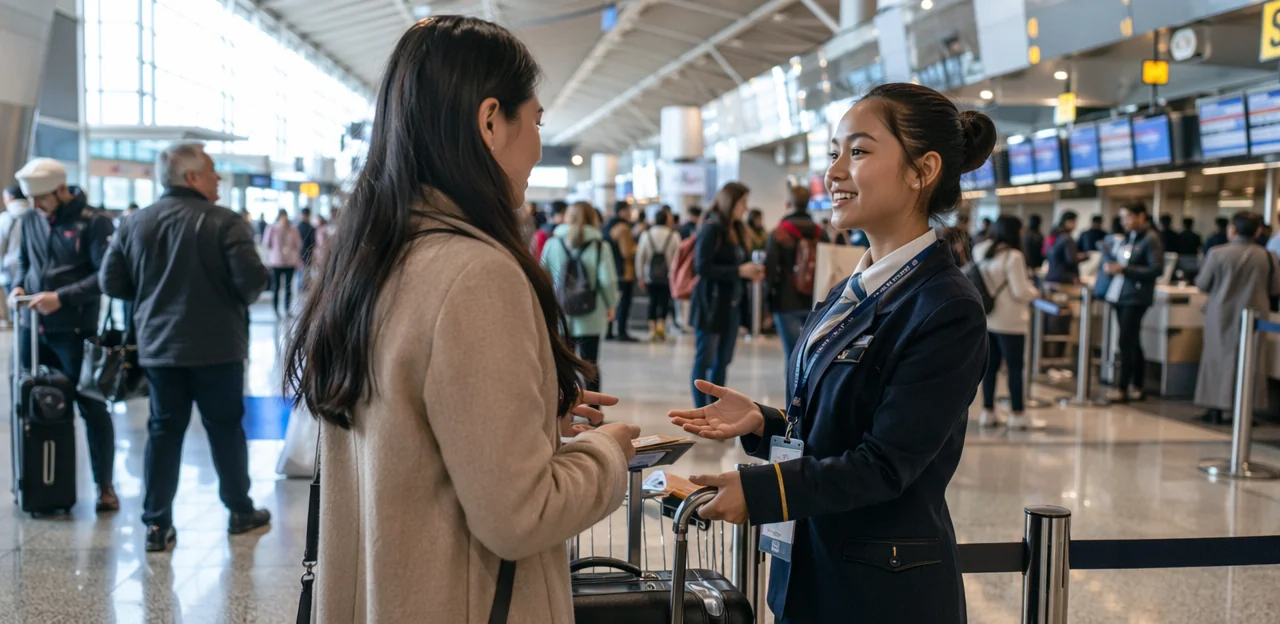
A higher passenger feedback response rate gives operators a more accurate picture of what is really happening across terminals, platforms, gates, and waiting areas. In busy hubs, low participation can overrepresent extreme experiences, while broader input produces stronger passenger experience insights and more confident decisions.
- Improves reliability: More responses reduce bias and reveal patterns by time, zone, or service touchpoint.
- Supports smarter resource allocation: Teams can prioritize staffing, cleaning, signage, seating, or queue management where issues appear most often.
- Strengthens passenger experience management: Frequent, location-specific travel hub feedback helps operators fix problems faster and track whether improvements actually work.
Using simple, in-the-moment collection methods can turn feedback into operational guidance, not guesswork.
Challenges unique to airports, stations, and terminals
In busy travel hubs, improving passenger feedback response rate is harder because passengers are moving, distracted, and often under stress. Unlike controlled retail settings, airport passenger surveys and station feedback collection must work within fast-changing environments.
- Crowded spaces: Noise, queues, and congestion reduce attention spans and make survey prompts easy to ignore.
- Time pressure: Travelers rushing to gates, platforms, or connections will only complete ultra-short feedback requests.
- Multilingual audiences: Questions must be simple, visual, and available in key languages to avoid drop-off.
- Fragmented journeys: A single trip spans check-in, security, retail, boarding, and arrivals, making it harder to capture feedback at the right moment.
Use touchpoint-based, no-app methods at exits, waiting zones, and service pinch points to collect fresher responses.
What a good response rate looks like by channel
A strong passenger feedback response rate depends heavily on the channel, timing, and traffic conditions, so use survey response benchmarks as directional, not absolute.
- SMS: Often highest-performing for post-journey outreach because messages are seen quickly and easy to answer on mobile.
- Email: Usually lower than SMS, but useful for longer surveys or follow-up after complex journeys.
- QR codes: A QR code survey response rate varies widely based on placement, signage, and wait time; expect better results at gates, lounges, and baggage claim than in fast-moving corridors.
- Kiosks: Effective for instant, one-tap ratings in dwell areas, but weaker for detailed comments.
- Intercept surveys: Can deliver high completion rates, though staffing and peak-hour pressure affect results.
Benchmark passenger survey channels by location, audience, and journey stage—not industry averages alone.
Diagnose What Lowers Response Rates Before Redesigning Surveys

Map friction across the passenger journey
Use passenger journey mapping to pinpoint where travelers are most and least likely to answer. In busy hubs, the same passenger may be open to feedback in one moment and impossible to reach in the next. Improving passenger feedback response rate starts with identifying these context shifts.
- Rushed moments: security lines, boarding calls, platform changes, baggage reclaim congestion
- Distracted moments: wayfinding, retail browsing, family coordination, document checks
- Stressed moments: delays, missed connections, disruptions, accessibility challenges
- Idle moments: waiting at gates, charging zones, lounges, shuttle queues
These are your key survey friction points. Use them to refine customer feedback timing: avoid high-pressure touchpoints, and trigger short surveys when passengers are stationary, calm, and have clear next steps. Tools like Tapsy can help place feedback prompts exactly where response intent is highest.
Identify audience and sampling gaps
A low passenger feedback response rate often signals a weak survey sampling strategy, not just poor survey design. If the same frequent flyers or rail regulars are asked repeatedly, fatigue sets in and results become skewed.
- Review passenger segmentation: Separate business travelers, daily commuters, tourists, families, and accessibility users to see who is underrepresented.
- Check touchpoint coverage: Airport lounges may capture premium travelers, while platforms, bus interchanges, and wayfinding points may better reach commuters and first-time visitors.
- Monitor survey frequency: Limit repeat invites for frequent travelers and rotate samples by route, time, or terminal.
- Compare responses to footfall data: This helps confirm whether you’re collecting representative passenger feedback across key segments.
Tools like Tapsy can help place feedback prompts at varied physical touchpoints.
Audit survey fatigue and trust barriers
To improve passenger feedback response rate, first identify why travelers stop engaging. In busy hubs, low participation often comes from avoidable friction:
- Repetitive requests: Asking the same passengers too often creates survey fatigue, especially across check-in, security, retail, and boarding touchpoints.
- Unclear purpose: If people do not understand why feedback is being collected or how it will be used, feedback trust drops quickly.
- Privacy concerns: Weak messaging around data use, anonymity, and consent can hurt confidence in privacy in passenger surveys.
- No visible follow-up: When passengers never see service improvements, they assume feedback disappears.
Audit request frequency, simplify explanations, publish privacy notices clearly, and share “you said, we did” updates on screens, emails, or QR feedback pages.
Use Better Survey Design to Increase Participation

Keep surveys short, relevant, and mobile-first
In busy stations and airports, speed matters. To improve passenger feedback response rate, make every survey feel effortless and timely.
- Keep it short: Aim for 1–3 core questions and an optional comment box. Short passenger surveys reduce drop-off and improve survey completion rate.
- Use simple formats: Prefer tap-friendly scales, multiple choice, thumbs up/down, or emoji ratings over long open-text fields.
- Prioritize mobile survey design: Build for one-handed smartphone use with large buttons, fast loading pages, minimal typing, and clear progress indicators.
- Match questions to the journey: Ask about the exact touchpoint the passenger just experienced, such as security wait times, cleanliness, signage, or boarding flow.
- Trigger feedback at the right moment: QR or NFC prompts placed at exits, gates, or service points capture fresher, more accurate responses.
Tools like Tapsy can support no-app, touchpoint-based collection in high-traffic hubs.
Write questions that are easy to answer on the move
In stations, terminals, and interchanges, on-the-go feedback only works when questions feel effortless. To improve passenger feedback response rate, design for people who are walking, waiting, or boarding in short bursts of attention.
- Use plain language: Ask one thing at a time with familiar words, such as “How clean was this platform?” instead of long, formal phrasing.
- Build a multilingual passenger survey: Let travelers switch languages instantly, use clear icons, and avoid idioms that do not translate well.
- Prioritize accessible survey design: Use large tap targets, high-contrast text, readable fonts, and minimal typing so people can respond quickly on mobile.
- Sequence questions smartly: Start with a single rating, follow with one optional reason, then end. Keep the most important questions first in case the journey resumes.
Tools like Tapsy can support fast, no-app mobile feedback at physical touchpoints.
Use incentives and value messaging carefully
In busy hubs, survey incentives can help, but only when friction is already low and the ask is short. To improve passenger feedback response rate without biasing answers, keep rewards modest and relevant.
- Use incentives selectively: Offer small perks such as loyalty points, a coffee voucher, or prize-entry draws for high-traffic touchpoints where you need to increase survey participation quickly.
- Lead with the benefit, not the reward: Your feedback value proposition should explain what passengers gain indirectly: shorter queues, cleaner facilities, clearer wayfinding, and better staff support.
- Be transparent: Tell people exactly how feedback will be used, who reviews it, and when changes are likely. This often builds more trust than rewards alone.
- Close the loop: Share visible improvements on signage or screens so passengers see that responding leads to action.
Tools like Tapsy can support this with low-friction, on-the-spot feedback flows.
Choose the Right Timing and Channels for Busy Environments

Capture feedback at high-intent moments
To improve passenger feedback response rate, ask for input when the experience is still fresh and the traveler has a natural pause. The right survey timing depends on the touchpoint you want to measure.
- After security: Ideal for rating queue times, staff helpfulness, and screening experience, while details are still top of mind.
- At the gate or platform waiting area: Best for real-time passenger feedback on seating, cleanliness, Wi-Fi, charging points, signage, and retail or lounge services.
- After arrival: Use this moment to measure baggage delivery, border control, wayfinding, ground transport, and overall terminal flow.
- Post-journey survey: Send shortly after the trip for broader reflections on the end-to-end experience, especially when measuring multiple touchpoints.
Keep surveys short, context-specific, and easy to access via QR, SMS, or NFC. Tools like Tapsy can help place feedback prompts exactly where high-intent moments happen.
Compare QR codes, SMS, email, kiosks, and intercept methods
Choosing the right channel can lift your passenger feedback response rate by matching the survey to the travel moment:
- QR code passenger survey: High visibility on gates, platforms, lounges, and receipts. Fast and low-cost to deploy, but depends on signage, smartphone use, and passenger dwell time. Best for in-the-moment feedback.
- SMS feedback survey: Strong convenience because the link opens directly on a phone. Often delivers higher completion than email after a trip, but requires consent and accurate contact data. Messaging costs can add up.
- Email surveys: Cheapest for follow-up at scale and useful for longer surveys, but often lower open and click rates in busy transport settings.
- Kiosks: Very visible in fixed locations and easy for quick ratings, but hardware and maintenance costs are higher.
- Intercept survey travel hub teams: Highest response quality because staff invite participation directly, but labor costs are significant and coverage is harder to scale.
For many hubs, combining QR, SMS, and selective intercepts works best.
Build an omnichannel feedback strategy
A strong omnichannel feedback strategy helps improve passenger feedback response rate by meeting travelers where they already are, without creating friction. In busy hubs, the goal is broad but balanced passenger survey distribution across key moments in the journey.
- Use physical signage at exits, platforms, waiting areas, restrooms, and service desks with clear QR codes and short calls to action.
- Add digital prompts on kiosks, Wi-Fi login pages, digital screens, and post-service emails to capture feedback at natural touchpoints.
- Send app notifications selectively after milestones like arrival, boarding, or baggage collection, rather than pushing too often.
- Train staff to invite feedback during helpful interactions, especially after resolving an issue or assisting with wayfinding.
To avoid overwhelming passengers, keep messaging consistent, rotate prompts by location, and limit surveys to 1–3 questions. Tools like Tapsy can support no-app QR/NFC collection across multiple transport customer feedback channels.
Operational Tactics That Lift Response Rates at Scale

Train frontline staff to invite feedback naturally
Frontline teams can lift passenger feedback response rate when requests feel helpful, not scripted or pushy. Effective frontline staff feedback collection depends on timing, tone, and relevance.
- Use short staff-led survey invites such as: “If you have 20 seconds, your feedback helps us improve this station.”
- Ask after key moments: resolved delays, wayfinding help, accessibility support, or baggage assistance. These service recovery moments increase trust and willingness to respond.
- Keep prompts human and selective. Staff should invite feedback only when the interaction was meaningful.
- Train teams to point passengers to the fastest channel, like a QR code at exits or counters.
These passenger engagement tactics feel respectful and improve participation quality.
Improve visibility with signage, placement, and wayfinding
Strong survey signage placement can lift your passenger feedback response rate without interrupting flow. Put feedback prompts where passengers naturally pause, not where they rush.
- Dwell zones: Place QR codes near charging points, gate seating, baggage reclaim, and ticketing queues where people have a few spare minutes.
- Exits: Use concise signs at terminal, platform, and restroom exits to capture feedback while the experience is still fresh.
- Lounges and waiting areas: Prioritize table tents, digital screens, and subtle wall decals for high visibility.
- Kiosks: Effective feedback kiosk placement works best near staffed help points, concourses, and transfer corridors.
- Wayfinding: Use arrows, floor decals, and screen prompts to improve wayfinding for surveys and guide passengers smoothly to the nearest feedback point.
Close the loop to encourage future participation
To increase passenger feedback response rate over time, passengers need proof that their input leads to action. When hubs close the feedback loop, they build passenger trust, reduce survey fatigue, and make future requests feel worthwhile.
- Share visible updates such as cleaner restrooms, clearer wayfinding, or shorter queue management changes.
- Use signage, app notifications, email follow-ups, or digital screens to say: “You said, we changed.”
- Highlight both quick wins and longer-term projects so passengers see progress, not silence.
This transparency helps improve future survey response rates because people are more likely to respond when they believe feedback matters. Tools like Tapsy can help deliver fast, touchpoint-based updates alongside feedback collection.
Measure, Test, and Optimize Response Rate Performance

Track the metrics behind response rate improvement
To improve passenger feedback response rate, track a small set of high-impact survey response metrics consistently:
- Invite-to-start rate: Measures how many passengers open or begin the survey after seeing the prompt.
- Completion rate: Shows whether your survey length, timing, and question flow are working.
- Channel performance: Compare QR codes, SMS, email, kiosks, and app prompts by response volume and conversions.
- Segment coverage: Check representation across terminals, routes, time bands, and passenger types.
- Feedback data quality: Monitor drop-off points, duplicate entries, straight-lining, and unusable comments.
Run experiments on wording, timing, and format
Use survey A/B testing to improve your passenger feedback response rate instead of relying on assumptions. Test one variable at a time and track completion by location, time, and channel.
- Compare subject lines and survey call to action copy, such as “Share your journey in 30 seconds” vs. “Help us improve this station.”
- Test question order and shorter vs. slightly longer surveys.
- Send at different moments: immediately after transit, during dwell time, or shortly after exit.
These small experiments help optimize response rate with evidence, not guesswork.
Turn feedback data into continuous passenger experience gains
To raise passenger feedback response rate, show travelers and teams that feedback drives action:
- Use feedback analytics to link low scores to specific touchpoints such as security, wayfinding, cleanliness, or queue times.
- Turn insights into clear owners, deadlines, and service recovery actions for fast travel hub service optimization.
- Share simple stakeholder reports with operations, retail, facilities, and leadership to track trends and wins.
- Feed recurring themes into wider passenger experience improvement programs, so upgrades are visible, measurable, and continuously refined.
Conclusion
In busy travel and mobility hubs, improving the passenger feedback response rate comes down to one simple principle: make feedback fast, relevant, and easy to give in the moment. The most effective strategies combine well-placed survey touchpoints, short mobile-friendly questions, clear timing, and visible proof that passenger input leads to action. When travelers see that their comments help reduce queues, improve cleanliness, streamline wayfinding, or strengthen service recovery, they are far more likely to participate again.
Just as important, teams should use incentives carefully, personalize requests by journey stage, and monitor performance by location, time, and touchpoint. This allows operators to identify what drives the highest passenger feedback response rate without adding friction to already busy environments. In high-traffic hubs, even small changes—like reducing survey length or placing QR prompts at natural waiting points—can deliver meaningful gains.
The next step is to audit your current feedback journey and remove anything that slows passengers down. Then test, measure, and refine continuously. If you want to go further, consider tools such as Tapsy, which support no-app QR/NFC feedback collection at physical touchpoints. Start optimizing today, and turn every passenger interaction into a chance to raise your passenger feedback response rate and improve the overall travel experience.
Frequently Asked Questions
- Why is passenger feedback response rate important in busy travel hubs?
A higher response rate gives operators a more reliable view of what passengers experience across terminals, platforms, gates, and waiting areas. It reduces the risk of hearing only from people with extreme experiences and helps teams make better decisions about staffing, cleaning, signage, seating, and queue management.
- What makes it harder to collect feedback in airports, stations, and terminals?
Passengers in busy hubs are often moving quickly, distracted, or under stress from queues, delays, and tight connections. Multilingual audiences and fragmented journeys also make it harder to ask at the right moment and keep surveys easy to complete.
- What does a good response rate look like across different survey channels?
Response rates vary by channel, timing, and traffic conditions, so benchmarks should be treated as directional rather than fixed. SMS often performs well for post-journey outreach, email is useful for longer follow-up surveys, QR codes depend heavily on placement and dwell time, kiosks work for quick ratings, and intercept surveys can achieve high completion when staffing allows.
- How can passenger journey mapping help improve survey participation?
Journey mapping helps identify moments when travelers are rushed, distracted, stressed, or idle. Feedback requests should avoid high-pressure touchpoints like boarding calls or congested baggage reclaim and instead target calmer pauses such as gates, lounges, charging zones, or shuttle queues.
- How do operators spot audience or sampling gaps in feedback collection?
Teams should review whether key groups such as business travelers, commuters, tourists, families, and accessibility users are all represented. Comparing response patterns with footfall data and rotating invites by route, time, or terminal can help prevent overreliance on the same frequent travelers.
- What causes survey fatigue and trust problems among passengers?
Repeated requests across multiple touchpoints can make passengers ignore future surveys. Trust also drops when the purpose is unclear, privacy messaging is weak, or travelers never see evidence that their feedback led to changes.
- How short should a passenger survey be in a high-traffic environment?
The most effective format is usually 1 to 3 core questions with an optional comment box. Short, mobile-first surveys reduce drop-off and make it easier for passengers to respond while standing, waiting, or moving through the hub.
- What kind of questions work best for passengers who are on the move?
Questions should use plain language, ask one thing at a time, and focus on the touchpoint the passenger just experienced. Tap-friendly formats like rating scales, multiple choice, thumbs up or down, and emoji responses work better than long open-text prompts.
- Should travel hubs use incentives to increase feedback response rates?
Incentives can help when the survey is already short and low-friction, but they should be modest and used selectively. Small perks like loyalty points, coffee vouchers, or prize-entry draws can support participation, while clear messaging about how feedback improves queues, cleanliness, or wayfinding often builds stronger trust.
- When are the best moments to ask passengers for feedback?
High-intent moments include after security, while waiting at a gate or platform, after arrival, and shortly after the journey ends. These points work well because the experience is still fresh and passengers are more likely to have a natural pause to respond.
- How do QR codes, SMS, email, kiosks, and intercept surveys compare?
QR codes are fast and low-cost for in-the-moment feedback, especially in dwell areas, but depend on visibility and smartphone use. SMS is convenient and often strong for post-journey surveys, email is better suited to longer follow-up, kiosks are useful for quick fixed-location ratings, and intercepts offer high-quality responses but require more staff time.
- What does an effective omnichannel feedback strategy look like in a transport hub?
It combines physical prompts such as QR signs at exits, platforms, restrooms, and service desks with digital prompts on kiosks, Wi-Fi login pages, screens, emails, or app notifications. The key is to keep messaging consistent, rotate prompts by location, and limit surveys to a few questions so passengers are not overwhelmed.
- How can frontline staff encourage feedback without sounding pushy?
Staff should invite feedback naturally after meaningful interactions, such as helping with wayfinding, accessibility support, baggage assistance, or service recovery. Short, respectful prompts and directing passengers to the fastest option, like a nearby QR code, can improve participation without disrupting the experience.
- How can hubs make feedback prompts more visible?
Prompts should be placed where passengers naturally pause, including charging points, gate seating, baggage reclaim, ticketing queues, lounges, and exits. Clear signage, digital screens, table tents, wall decals, arrows, and floor decals can all help guide travelers to the nearest feedback point.
- Which metrics and tests help improve passenger feedback response rates over time?
Useful metrics include invite-to-start rate, completion rate, channel performance, segment coverage, and feedback quality. Operators can improve results by testing one variable at a time, such as call-to-action wording, question order, survey length, or timing, and then using the findings to refine the feedback journey continuously.