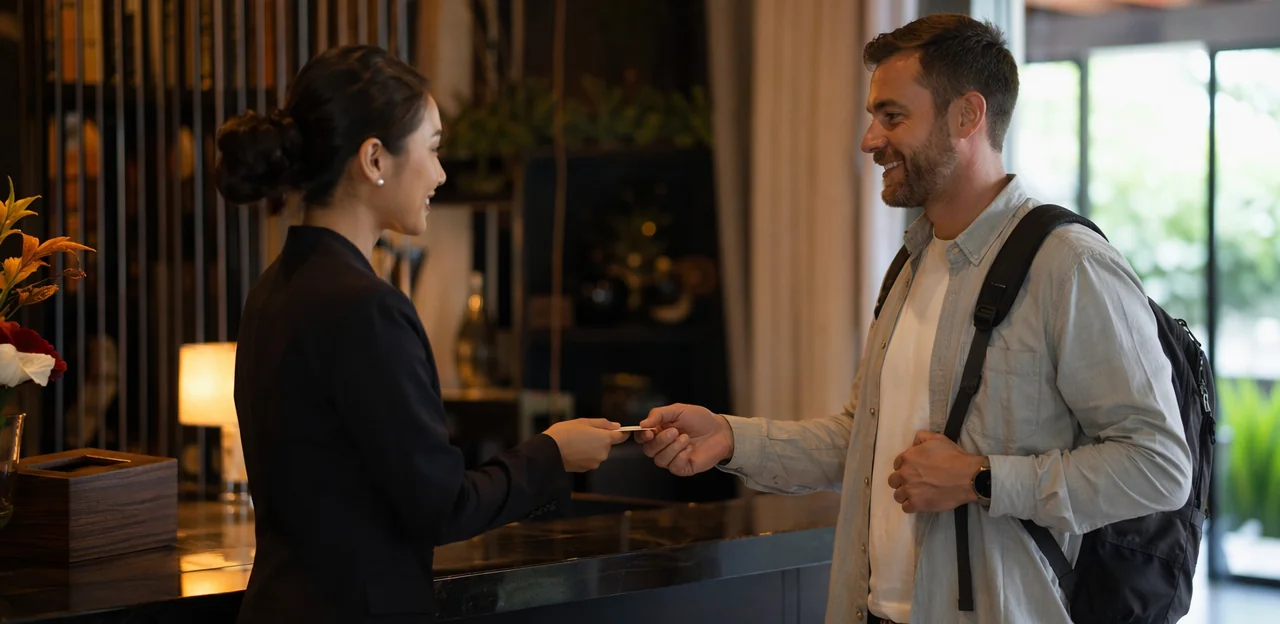
The first few minutes of a guest’s stay can shape everything that follows. A warm welcome, a smooth check-in, and a confident front-desk interaction instantly build trust, while long waits, confusion, or a lack of attention can create frustration before the room door even opens. That is why hotel reception feedback matters so much: it captures the earliest signals of guest satisfaction at the exact moment first impressions are formed.
For hotels focused on improving guest experience, measuring reception performance accurately is no longer just a nice-to-have. It is a practical way to identify service gaps, reduce complaints, and prevent negative reviews before they happen. From queue times and staff friendliness to communication clarity and problem resolution, the reception desk offers valuable insight into how guests perceive the entire property.
This article explores how to collect hotel reception feedback in a way that is timely, reliable, and genuinely useful. We will look at the challenges of measuring first impressions, the most effective feedback methods, and the metrics hotels should track to turn front-desk interactions into actionable service improvements. We will also touch on how real-time tools, including solutions like Tapsy, can help hotels capture in-the-moment feedback and respond while the guest experience can still be improved.
Why hotel reception feedback matters for guest experience
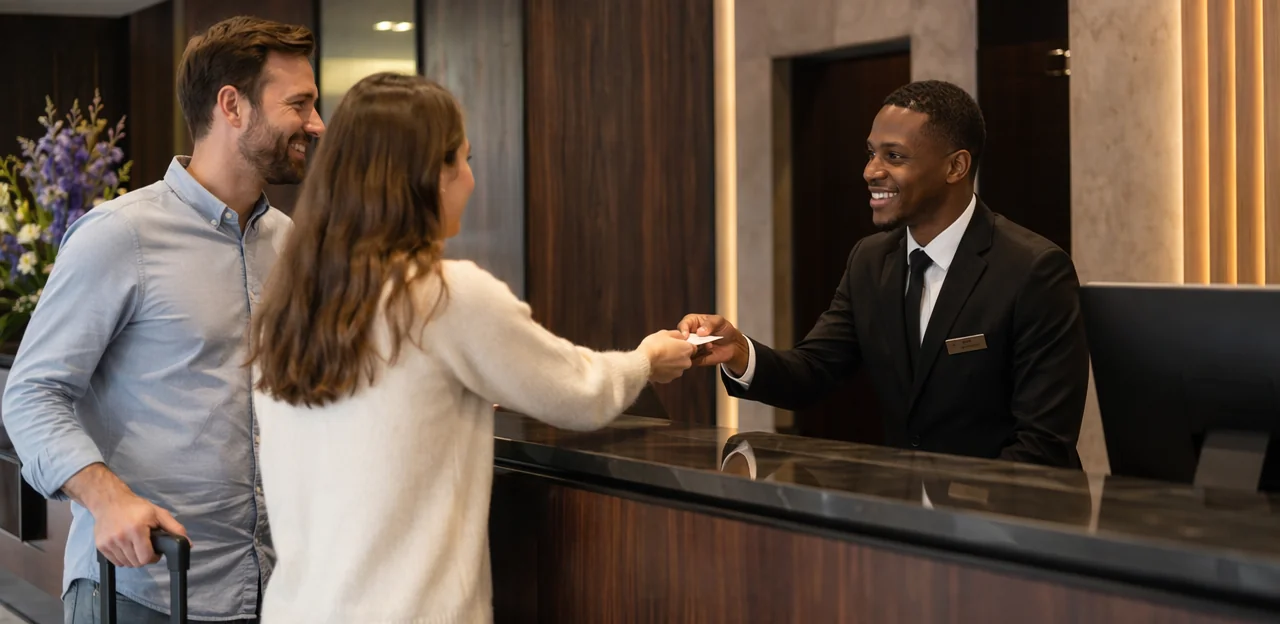
The reception desk as the first real brand touchpoint
The front desk is where first impressions in hotels become real. Before guests see the room or amenities, they judge the stay through the hotel check-in experience: the welcome, eye contact, tone, professionalism, and wait time.
Key elements to measure in hotel reception feedback include:
- Greeting quality: Was the welcome warm, personal, and attentive?
- Professionalism: Did staff appear confident, informed, and well-presented?
- Speed: Was check-in efficient without feeling rushed?
- Problem handling: Were questions, delays, or special requests managed calmly?
A smooth reception builds trust and excitement. A cold or slow arrival creates frustration fast. Using real-time touchpoint tools such as Tapsy can help hotels capture these reactions while they are still fresh.
How first impressions affect reviews, loyalty, and revenue
The first few minutes of arrival often shape the entire stay. Strong hotel reception feedback helps hotels measure whether check-in feels welcoming, efficient, and trustworthy before that impression turns into public criticism or lost revenue.
- Positive reception interactions improve hotel online reviews, because guests often mention friendliness, speed, and problem-solving.
- Early satisfaction strongly influences guest satisfaction hotel scores and increases the chance of repeat bookings, supporting long-term hotel guest loyalty.
- Confident, attentive front-desk service also boosts upselling success for upgrades, breakfast, and late checkout.
By tracking early-stage sentiment in real time, hotels can fix issues fast, recover unhappy guests, and protect both reputation and revenue.
Common blind spots in front desk performance measurement
Many hotels judge front desk performance through overall stay surveys sent after checkout. The problem is that broad scores hide reception-specific friction, so teams miss the moments that shape first impressions most.
Common blind spots include:
- Queue times not measured separately: guests may rate the stay well overall while still feeling frustrated at check-in.
- Unclear communication: policies, breakfast times, deposits, or directions may be explained inconsistently.
- Lack of warmth: efficiency is tracked, but tone, eye contact, and welcome quality are often ignored.
- Inconsistent standards: service varies by shift, agent, or occupancy level.
To improve hotel service quality, use hotel reception feedback at the touchpoint, with targeted guest feedback metrics for wait time, clarity, friendliness, and resolution speed.
What to measure in hotel reception feedback

Core reception experience metrics
To make hotel reception feedback useful, track a mix of operational and subjective indicators:
- Check-in wait time (operational): measure average queue time, peak-hour delays, and abandoned check-ins.
- Check-in efficiency (operational): track time from arrival to room key issued, plus completion rate without repeat steps.
- Friendliness of staff (subjective): use post-check-in ratings to assess warmth, welcome, and attentiveness.
- Problem resolution (both): monitor resolution time and first-contact resolution, then compare with guest satisfaction scores.
- Accuracy of information (both): audit errors in directions, amenities, billing, or policy explanations, and validate with guest feedback.
- Perceived professionalism (subjective): score appearance, confidence, communication clarity, and composure.
Together, these hotel reception metrics give a clearer view of front desk service quality than satisfaction scores alone.
Emotional and qualitative signals from guests
Scores alone rarely explain why a check-in felt smooth, cold, rushed, or reassuring. Strong hotel reception feedback should capture emotional cues that numbers miss, using a mix of open comments, guest sentiment analysis, and a short hotel feedback survey sent within 15–30 minutes of arrival.
- Ask open-text prompts: “How did the welcome feel?” or “Did reception make you feel confident and comfortable?”
- Track emotional themes: tone, warmth, professionalism, clarity, and perceived care.
- Use sentiment tagging: identify positive, neutral, or negative language patterns at scale.
- Act quickly on signals: comments about confusion, indifference, or stress often predict later dissatisfaction.
This qualitative guest feedback adds context to scores, helping teams understand not just ratings, but the emotional quality of first impressions.
Balancing speed with hospitality
A smooth hotel check-in process should feel fast and human. If hotels measure only queue time or transaction length, they may improve front desk efficiency while weakening the hospitality customer experience. Strong hotel reception feedback should track both operational speed and emotional quality, such as whether guests felt welcomed, understood, and guided.
Measure reception performance with a balanced scorecard:
- Efficiency: wait time, check-in duration, issue resolution speed
- Warmth: greeting quality, empathy, eye contact, tone of voice
- Personalization: recognition of repeat guests, tailored recommendations
- Guidance: clarity on amenities, breakfast, Wi-Fi, and local tips
Use short, real-time feedback prompts right after arrival. Tools like Tapsy can help capture fresh impressions before small service gaps become lasting negative memories.
Best methods to collect accurate reception feedback

Post-check-in surveys and real-time feedback requests
To collect accurate hotel reception feedback, ask guests shortly after arrival—ideally within 15 to 30 minutes of check-in, while the experience is still fresh. This improves response quality and helps teams fix issues before they affect the stay.
Use simple, low-friction channels such as:
- SMS or email: Send a short hotel survey after check-in with 1–3 questions about welcome, speed, friendliness, and clarity of information.
- App prompts: Trigger real-time guest feedback requests once the room is accessed or check-in is completed.
- QR codes at reception or in-room: Let guests scan and complete a quick reception feedback survey in seconds.
- In-room tablets or TVs: Offer an easy way to rate arrival experience and request follow-up.
Keep surveys short, mobile-friendly, and route low scores instantly to the front desk. Tools like Tapsy can help capture and act on feedback in real time.
On-site observation and operational data
To measure hotel reception feedback accurately, combine guest opinions with observable service data. This helps confirm whether poor first impressions come from isolated incidents or repeatable process issues.
- Queue length: Track average and peak waiting lines by hour to spot pressure points at reception.
- Staffing levels: Compare guest volume with shift coverage to see when under-resourcing affects service quality.
- Check-in duration: Use check-in time tracking to measure how long registration, ID checks, payment, and key handover actually take.
- Complaint logs: Review recurring themes such as slow service, unclear communication, or room readiness delays.
- Mystery guest audits: A structured front desk audit can assess greeting quality, professionalism, and policy consistency.
Together, these hotel operational metrics validate survey results and reveal bottlenecks that training, scheduling, or digital tools can fix. Platforms like Tapsy can also capture real-time reception sentiment while the experience is still fresh.
Review mining and staff feedback loops
Surveys capture only part of the picture. To improve hotel reception feedback, combine guest comments from multiple sources with structured employee input.
- Mine online reviews and social mentions for recurring themes such as check-in delays, unfriendly greetings, unclear directions, or poor queue handling. Good hotel review analysis should tag comments by issue type, shift, and time of day.
- Track sentiment patterns across Google, TripAdvisor, OTAs, and social platforms to spot first-impression problems that formal surveys may underreport.
- Create a staff feedback hospitality loop by asking receptionists, concierges, and duty managers to log common guest frustrations after each shift.
- Use these findings to build front desk training insights around greeting standards, escalation handling, peak-time staffing, and local knowledge gaps.
Tools like Tapsy can also help capture real-time reception issues before they become public reviews.
How to design better hotel reception feedback surveys

To collect hotel reception feedback that leads to action, write questions that are simple, specific, and tied to processes your team can improve. Good guest survey design avoids vague wording and asks about one moment at a time.
- Welcome: “Did you feel welcomed when you arrived?”
- Speed: “How satisfied were you with check-in wait time?”
- Clarity: “Were directions, policies, and next steps explained clearly?”
- Courtesy: “How would you rate the front desk team’s friendliness and professionalism?”
- Issue handling: “If you had a problem, was it resolved quickly and effectively?”
Keep hotel feedback questions short, with rating scales plus one optional comment box. The best front desk survey questions map directly to staffing, training, signage, and service recovery improvements. Tools like Tapsy can help capture these responses in real time.
Avoiding bias, timing issues, and low response quality
To collect accurate hotel feedback, hotels need to remove friction and reduce survey bias hospitality teams often create unintentionally. Poor timing, leading questions, long forms, and unclear rating scales can all distort hotel reception feedback.
- Ask at the right time: Send feedback requests soon after check-in, when first impressions are fresh but the guest has completed the reception experience.
- Use neutral wording: Avoid prompts like “How excellent was our welcome?” Instead ask, “How would you rate your check-in experience?”
- Keep it short: Limit surveys to 1–3 questions to improve guest survey response rate.
- Use clear scales: Label ratings clearly, such as 1 = very poor and 5 = excellent.
- Design for mobile: Make forms fast, simple, and easy to complete on a phone.
Sample rating scales and open-ended prompts
Use a short guest feedback form that combines scores with comments, so hotel reception feedback is easy to measure and act on.
- Likert-scale hotel survey examples
- “The reception team greeted me warmly.” (1–5: Strongly disagree to Strongly agree)
- “Check-in was fast and well organized.” (1–5)
- “Staff explained key information clearly.” (1–5)
- “The reception area felt clean, calm, and welcoming.” (1–5)
- NPS hotel reception prompt
- “How likely are you to recommend this hotel based on your reception experience?” (0–10)
- Open-text questions
- “What made your arrival and check-in smooth?”
- “What, if anything, felt frustrating at reception?”
- “Was there a specific staff action, delay, or detail that influenced your first impression?”
Keep surveys to 3–5 questions and review low scores quickly. Tools like Tapsy can help capture this feedback in real time at reception.
Turning reception feedback into operational improvements

Using feedback to improve staffing, training, and workflows
Hotel reception feedback is most useful when hotels track patterns, not just one-off comments. Repeated complaints about queues, unclear communication, or slow check-in often point to gaps in staffing, training, or process design.
- Adjust shift coverage: Use feedback by time of day to identify pressure points and add experienced team members during peak check-in, group arrivals, and checkout windows.
- Improve scripting: If guests mention confusion, refine welcome scripts so staff explain IDs, deposits, breakfast, and key policies clearly and consistently.
- Train for empathy: Build hotel staff training around tone, active listening, and ownership, especially when guests are tired or frustrated.
- Streamline steps: Review your front desk workflow to reduce duplicate ID and payment requests, pre-authorize faster, and shorten handoff delays.
- Act in real time: Tools like Tapsy can help surface recurring friction quickly, supporting faster reception process improvement.
Segmenting feedback by guest type and stay context
Not all guests evaluate hotel reception feedback the same way, so strong guest segmentation hotel practices are essential. A business traveler may value speed, invoice accuracy, and late-night efficiency, while families often notice stroller access, room coordination, and staff warmth. Groups may judge queue handling and check-in organization, and international guests may be more sensitive to language support, local guidance, and payment clarity.
To improve hotel customer experience data and hospitality analytics, segment reception feedback by:
- Guest type: business, family, group, international, leisure couple
- Booking channel: direct, OTA, corporate, travel agent
- Arrival time: peak check-in, late arrival, early check-in
- Property type: airport hotel, resort, boutique, budget, conference hotel
This helps hotels spot whether poor scores come from a specific audience or operational context. Tools like Tapsy can support touchpoint-level capture for more precise analysis.
Building accountability with dashboards and KPIs
A strong hotel KPI dashboard turns hotel reception feedback into clear daily actions. Keep it simple, visible, and tied to outcomes managers can coach against.
- Track core front desk KPIs together: survey score, average check-in wait time, complaint rate, issue resolution time, and review sentiment about reception.
- Group metrics by shift, day, agent, and booking type: this helps managers spot whether problems come from staffing gaps, training issues, or peak-time pressure.
- Add review themes, not just scores: tag comments into themes such as friendliness, speed, problem-solving, and queue management for better guest experience reporting.
- Set thresholds and trends: use weekly targets and month-on-month comparisons so teams can see progress, not just isolated results.
- Coach consistently: review the dashboard in team huddles, celebrate wins, and assign follow-up actions for recurring weak points.
Tools like Tapsy can help capture real-time reception insights and feed faster service recovery.
Common mistakes hotels make when measuring first impressions

Relying only on overall satisfaction scores
An overall satisfaction score can show whether guests left happy, but it rarely explains why. In hotel guest experience measurement, broad post-stay surveys often blend check-in, room quality, dining, and checkout into one rating, which can hide reception-specific friction.
- A low score may reflect a poor welcome, long queues, or unclear communication at arrival.
- Later positive experiences can mask weak first impressions.
- Teams cannot tell whether reception problems are dragging down satisfaction across the stay.
To improve hotel reception feedback, collect reception-specific feedback immediately after check-in, ideally at the desk or lobby touchpoint.
Ignoring context behind negative feedback
Not all hotel reception feedback reflects staff performance alone. To improve guest complaint analysis, hotels should read comments against the hotel operations context, including:
- System outages: slow check-in may stem from PMS or payment failures
- Peak arrival periods: queues often rise during tour arrivals or event check-ins
- Understaffing: absences or scheduling gaps can affect speed and tone
- Guest expectations: loyalty status, booking channel, and rate paid shape perception
This context helps teams prioritise fairer hospitality service recovery actions, spot root causes, and avoid blaming reception unfairly. Real-time tools like Tapsy can also help capture issues while conditions are still visible.
Collecting data without closing the loop
Collecting hotel reception feedback is pointless if comments disappear into a dashboard and nothing changes. Failing to close the feedback loop weakens trust, reduces response rates, and leaves recurring check-in issues unresolved.
To turn feedback into action:
- Set response protocols: assign owners, urgency levels, and target response times for low scores or repeated complaints.
- Review trends weekly: front desk, operations, and management should assess patterns, not just isolated comments.
- Run a continuous improvement cycle: identify issue, test a fix, measure results, and refine.
This approach strengthens your guest experience strategy and supports real hotel continuous improvement.
Conclusion
In hospitality, first impressions are never a small detail—they shape the entire guest journey. That’s why measuring hotel reception feedback accurately is so important. By collecting feedback at the right moment, using simple and accessible methods, and tracking both emotional and operational signals such as wait times, staff friendliness, and check-in efficiency, hotels can move beyond assumptions and understand what guests actually experience from the moment they arrive.
Strong hotel reception feedback processes help teams spot friction early, improve service recovery, and create a smoother, more welcoming arrival experience. They also give managers clearer data for training, staffing, and benchmarking performance across shifts or properties. Most importantly, they turn the reception desk from a potential pain point into a competitive advantage.
The next step is to audit your current check-in experience and identify where feedback can be captured in real time. Consider using QR-based touchpoints, short pulse surveys, staff coaching reviews, and guest journey dashboards to make insights more actionable. Solutions like Tapsy can also help hotels gather instant, touchpoint-level feedback while there is still time to respond.
If you want to improve guest satisfaction, reduce negative reviews, and strengthen loyalty, start by making hotel reception feedback a core part of your guest experience strategy.
Frequently Asked Questions
- Why is reception feedback so important for hotels?
Reception feedback captures the guest’s first impression at the moment it is formed. It helps hotels identify service gaps early, reduce complaints, and prevent negative reviews before they affect the rest of the stay.
- What parts of the check-in experience should hotels measure?
Hotels should measure greeting quality, professionalism, speed, and problem handling at the front desk. Useful metrics also include wait time, check-in efficiency, information accuracy, friendliness, and perceived professionalism.
- How do first impressions at reception affect reviews and loyalty?
A welcoming and efficient arrival often improves online reviews because guests frequently mention friendliness, speed, and problem-solving. Early satisfaction also supports repeat bookings, guest loyalty, and better upselling opportunities for upgrades or add-ons.
- What are the most common blind spots in front desk performance measurement?
Many hotels rely too heavily on overall post-stay surveys, which can hide reception-specific problems. Common blind spots include unmeasured queue times, unclear communication, lack of warmth, and inconsistent service between shifts or staff members.
- When should hotels ask guests for reception feedback?
The best time is shortly after check-in, ideally within 15 to 30 minutes of arrival. That timing keeps the experience fresh in the guest’s mind and gives staff a chance to fix issues before they shape the full stay.
- Which channels work best for collecting hotel reception feedback?
Low-friction channels work best, such as SMS, email, app prompts, QR codes at reception or in-room, and in-room tablets or TVs. The goal is to make feedback fast, mobile-friendly, and easy to complete in just a few moments.
- How can hotels balance check-in speed with a warm welcome?
Hotels should track both operational and emotional measures instead of focusing only on transaction speed. A balanced scorecard can include efficiency, warmth, personalization, and guidance so check-in feels fast without becoming cold or rushed.
- What emotional signals should hotels capture during reception feedback?
Hotels should look for themes such as warmth, tone, professionalism, clarity, and perceived care. Open-text comments and sentiment tagging help explain whether a check-in felt smooth, reassuring, rushed, confusing, or indifferent.
- How should a good hotel reception survey be designed?
A strong survey uses simple, specific questions tied to actions the team can improve, such as welcome, speed, clarity, courtesy, and issue handling. It should stay short, use clear rating scales, and include an optional comment box for context.
- What survey mistakes reduce feedback quality at check-in?
Poor timing, leading wording, long forms, and unclear scales can all distort results. Hotels should use neutral language, ask soon after check-in, limit surveys to 1–3 questions, and make the form easy to complete on a phone.
- What operational data should be combined with guest opinions?
Hotels should pair guest feedback with queue length, staffing levels, check-in duration, complaint logs, and mystery guest audits. This combination helps confirm whether poor first impressions come from isolated incidents or recurring process problems.
- How can online reviews and staff input improve reception analysis?
Review mining can reveal repeated issues like delays, unfriendly greetings, unclear directions, or poor queue handling across platforms such as Google, TripAdvisor, OTAs, and social channels. Staff feedback loops add frontline insight by logging common frustrations after each shift.
- How should hotels turn reception feedback into operational improvements?
Hotels should look for patterns and use them to adjust staffing, improve scripts, train for empathy, and streamline front desk workflows. Repeated complaints about queues or confusion usually point to fixable gaps in scheduling, communication, or process design.
- Why is it useful to segment reception feedback by guest type or stay context?
Different guests judge reception differently, so segmentation helps hotels understand who is affected and under what conditions. Breaking feedback down by guest type, booking channel, arrival time, or property type makes it easier to find specific operational causes behind low scores.
- What mistakes should hotels avoid when measuring first impressions?
Hotels should avoid relying only on overall satisfaction scores, ignoring operational context behind negative feedback, and collecting data without acting on it. Strong measurement requires reception-specific feedback, fair interpretation of issues like outages or peak arrivals, and a clear process for follow-up and improvement.