
A guest doesn’t have to leave angry to become a lost customer. In restaurants and cafés, disappointment often happens quietly: a cold entrée, a delayed drink, a forgotten request, a server who never circles back. If those moments go unaddressed before the check is signed, they can quickly turn into negative reviews, damaged reputation, and fewer repeat visits. That is why effective restaurant complaint management is not just about handling problems after the fact—it is about recovering the experience while the guest is still at the table.
When teams can spot issues in real time and respond with speed, empathy, and authority, they have a powerful chance to turn frustration into loyalty. A sincere apology, a quick replacement, or a manager stepping in at the right moment can completely change how a guest remembers the visit. In some operations, tools like Tapsy can help surface in-the-moment feedback before a complaint goes public.
This article explores how restaurants can build a smarter complaint recovery process on the floor, from identifying service failures early to training staff, empowering managers, and using feedback systems to protect both guest satisfaction and long-term revenue.
Why restaurant complaint management matters in real time
The cost of unresolved table-side complaints
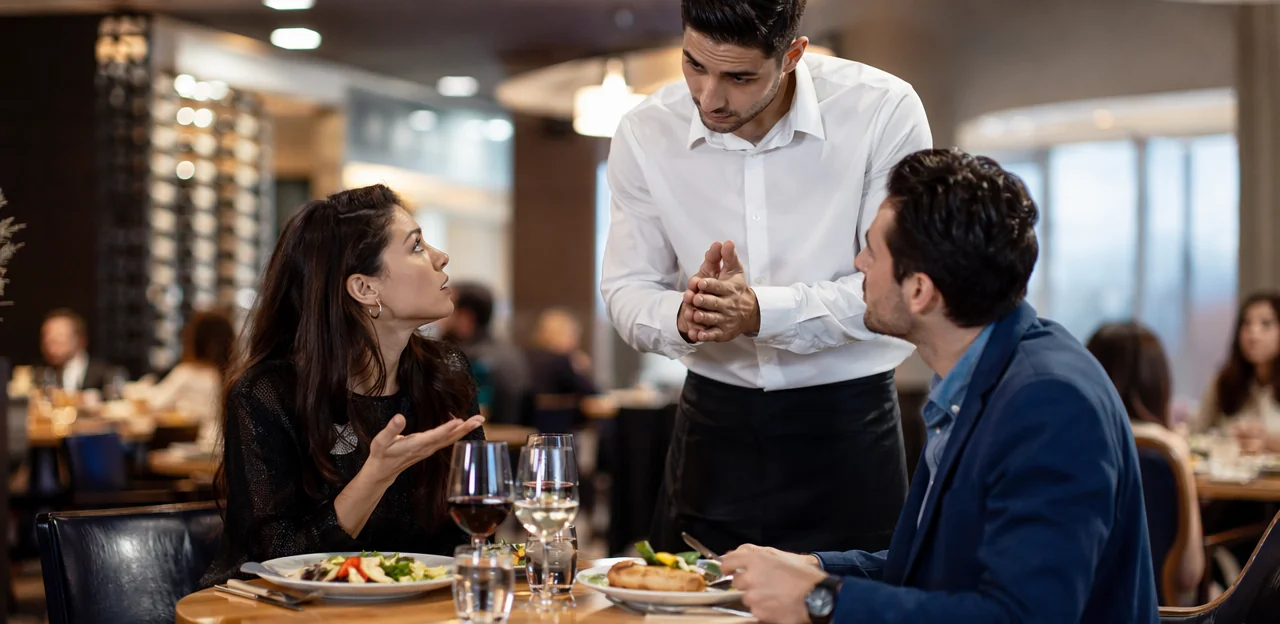
When a problem is ignored until after the meal, the cost rises quickly. Effective restaurant complaint management depends on fixing issues before guests walk out frustrated.
- Lost repeat business: A guest who leaves disappointed is far less likely to return, even if you email an apology later.
- Negative restaurant reviews: Unresolved issues often become public complaints on Google, Yelp, or social media, influencing future diners.
- Refund requests and chargebacks: Delayed action can turn a simple remake or apology into a refund demand.
- Brand reputation damage: One poor experience shared widely can outweigh dozens of positive visits.
Real-time guest recovery gives staff a chance to replace a dish, adjust the bill, or involve a manager immediately. Tools like Tapsy can help surface issues while guests are still seated, when recovery is most effective.
Common complaints in restaurants and cafés
The most frequent restaurant complaints usually fall into a few repeatable categories. In strong restaurant complaint management, teams should track these issues so they can fix problems before guests leave unhappy.
- Slow service: long waits for seating, drinks, food, or the check
- Incorrect orders: missing items, wrong dishes, or allergy requests ignored
- Food quality concerns: cold meals, inconsistent taste, poor presentation, or undercooked food
- Cleanliness issues: dirty tables, restrooms, menus, or utensils
- Billing mistakes: incorrect charges, double billing, or unclear fees
- Staff attitude problems: rude, dismissive, or unhelpful interactions
Reviewing patterns in these common restaurant guest complaints helps operators spot recurring restaurant service issues by shift, station, or team member. Tools like Tapsy can help capture in-the-moment feedback, allowing managers to respond faster while guests are still seated.
What guests expect when something goes wrong
In restaurant complaint management, guests usually want five things immediately:
- Speed: A fast response shows the issue matters now, not after they leave.
- Empathy: Guests want to feel heard, not challenged or dismissed.
- Ownership: One staff member should take responsibility instead of passing the problem around.
- Transparency: Explain what happened and what will be done to fix it.
- A fair solution: Replace the dish, adjust the bill, or offer an appropriate gesture based on the problem.
Meeting these customer expectations restaurant teams face is central to strong service recovery in restaurants. When staff respond quickly and fairly, they protect the guest experience before frustration turns into a bad review or lost loyalty. Tools like Tapsy can help surface issues while guests are still seated, making recovery faster and retention stronger.
How to respond to complaints while the guest is still seated
Use a simple service recovery framework
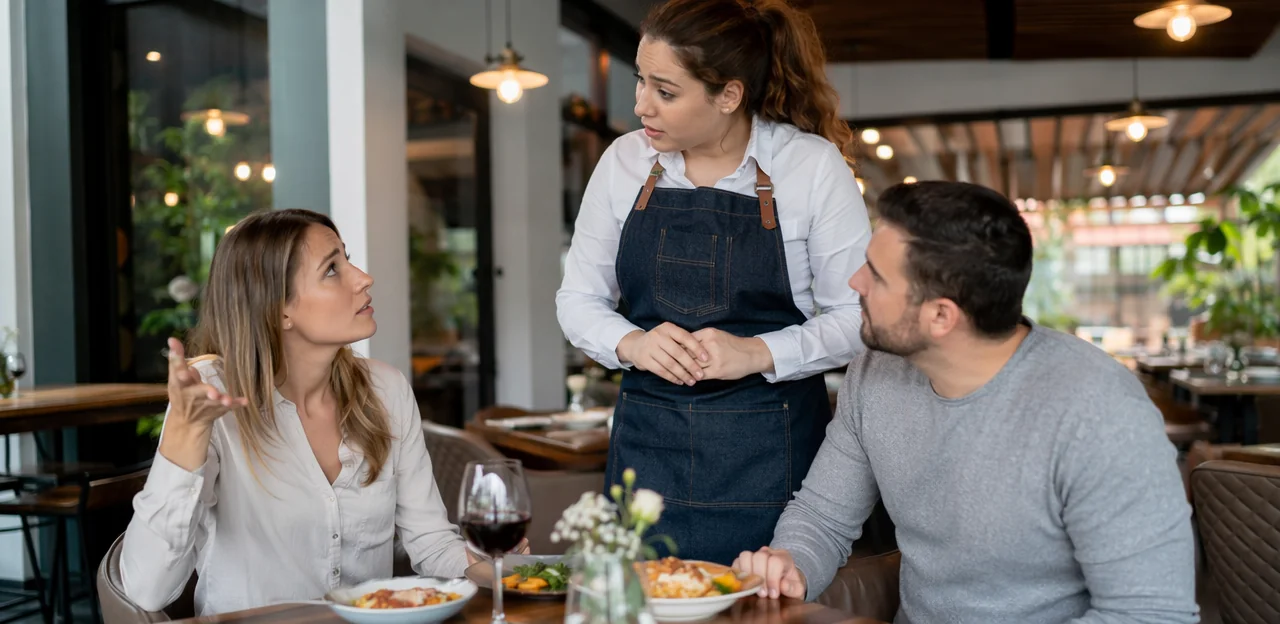
A clear service recovery framework gives your team a reliable way to respond fast when emotions are high. In restaurant complaint management, consistency matters as much as speed. A simple model helps servers stay calm, escalate appropriately, and resolve guest complaints before they leave unhappy.
Use a repeatable four-step process:
- Listen — Let the guest explain without interruption. Confirm the issue so they feel heard.
- Apologize — Offer a sincere apology, even if the problem seems small. Avoid defensiveness.
- Solve — Fix the issue immediately when possible: replace the dish, adjust the bill, or involve a manager.
- Follow up — Revisit the table within minutes to confirm the solution worked.
This approach improves restaurant complaint handling by removing guesswork under pressure. Train staff with examples, define when managers should step in, and keep approved recovery options clear. Tools like Tapsy can also help alert managers to in-the-moment issues while guests are still seated.
What servers should say and do first
In restaurant complaint management, the first 30 seconds shape whether a guest feels heard or dismissed. Strong server complaint training should focus on three basics:
- Approach with calm, open body language
- Stop other tasks, make eye contact, and stand at a respectful distance.
- Keep your hands visible, avoid sighing, interrupting, or crossing your arms.
- Lead with empathy, not excuses
- Use a simple guest complaint script such as:
- “I’m sorry this happened. Thank you for telling me.”
- “I can see why that’s frustrating.”
- “Let me fix this for you right away.”
- Avoid defensive phrases like “That’s not usually a problem” or “The kitchen is busy.”
- Use a simple guest complaint script such as:
- Clarify, act, escalate
- Briefly confirm the issue: “So the meal arrived cold, correct?”
- Offer the next step fast: replace, re-fire, remove, or involve a manager.
- In any serious restaurant complaint response—food safety, allergy, billing conflict, or an upset guest—escalate immediately. Tools like Tapsy can also help alert managers while guests are still seated.
When managers should step in immediately
In effective restaurant complaint management, some issues should never stay at server level. Fast leadership involvement shows urgency, protects the guest experience, and improves restaurant service recovery before frustration turns into a bad review.
Managers should step in immediately when:
- Food safety or allergy concerns arise, including undercooked food, foreign objects, contamination, or allergen mistakes
- Severe delays leave guests waiting too long for drinks, entrées, or the check
- Repeated mistakes happen, such as multiple wrong orders or a failed remake
- Guests become visibly upset, angry, embarrassed, or emotionally distressed
- Compensation decisions are needed, including voids, discounts, complimentary items, or future-visit offers
Strong restaurant manager complaint handling means approaching the table quickly, listening without defensiveness, and owning the solution. Clear protocols for escalating guest complaints help teams act fast. Tools like Tapsy can also alert managers in real time, making recovery possible while guests are still seated.
Recovery tactics that actually win guests back

Match the solution to the severity of the issue
Effective restaurant complaint management depends on choosing a response that feels fair, fast, and proportional. A clear restaurant compensation policy helps staff act confidently and consistently.
- Minor issue: Replace a drink, correct a side, or remake a dish quickly.
- Moderate issue: Remove the item from the bill or offer a complimentary dessert.
- Major issue: Adjust the bill, comp a course, or provide a future visit incentive.
The goal is not to overcompensate, but to use smart guest recovery tactics that match the inconvenience caused. Strong restaurant service recovery examples include comping an undercooked entrée, offering dessert after a long delay, or sending a return voucher when the full experience was affected. Tools like Tapsy can help flag issues early so managers can respond before guests leave dissatisfied.
Speed, personalization, and follow-through
Strong restaurant complaint management depends on acting before frustration turns into a bad review or a lost guest. Fast, real-time complaint resolution shows urgency and respect, but speed alone is not enough.
- Respond immediately: Acknowledge the issue at once, apologize clearly, and explain the next step so the guest knows action is underway.
- Tailor the recovery: Effective personalized guest recovery means matching the solution to the problem and the guest’s situation—replace a dish, adjust the bill, or involve a manager when appropriate.
- Check back after the fix: A simple restaurant follow-up at the table confirms whether the solution worked and whether the guest feels heard.
Tools like Tapsy can help teams catch issues while guests are still seated, making recovery faster and more effective.
Mistakes that make complaints worse
In restaurant complaint management, small missteps can quickly turn a fixable issue into a lost guest, bad review, or team conflict. Avoid these common complaint handling mistakes:
- Arguing or getting defensive: Never debate the guest’s experience. Even if the facts are unclear, acknowledge the frustration first.
- Blaming the kitchen or another staff member: Internal finger-pointing signals weak restaurant operations and reduces trust.
- Overpromising: Do not offer solutions you cannot deliver quickly.
- Apologizing, then disappearing: A sincere apology without follow-up is a classic sign of poor service recovery.
- Offering compensation before fixing the problem: Replace the dish, correct the order, or speed up service first—then decide if compensation is still needed.
Use clear ownership, fast action, and a final check-back to prevent escalation. Tools like Tapsy can also help teams catch issues before guests leave.
Build a complaint-ready restaurant operation
Train staff to spot dissatisfaction early
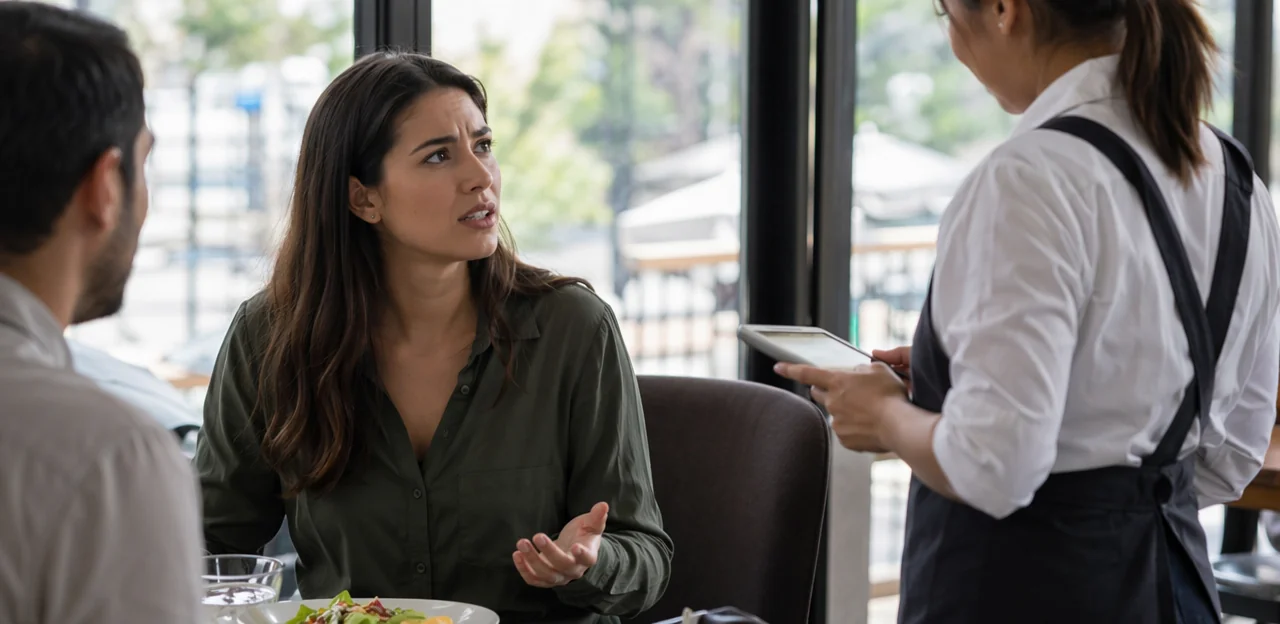
Strong restaurant complaint management starts before a guest voices a problem. Through consistent restaurant staff training, teams can learn to notice small signals and act fast enough to prevent guest complaints.
- Build proactive table touches: Check in shortly after food arrives, not just at payment time. A simple, timely “How is everything tasting?” creates space for honest feedback.
- Teach staff to read guest cues: Watch for untouched plates, repeated glances toward the kitchen, forced smiles, crossed arms, or guests scanning the room for help.
- Respond before frustration grows: If service is delayed or an order looks wrong, acknowledge it immediately and offer an update or solution.
This kind of hospitality service training turns prevention into a daily habit. Tools like Tapsy can also surface issues in real time while guests are still seated.
Create clear escalation and empowerment rules
Strong restaurant complaint management starts with a simple, written playbook every shift can follow. A clear restaurant complaint policy should define exactly what front-line staff can resolve on the spot and when to trigger the complaint escalation process.
- Servers can handle immediately: refire a dish, replace a drink, offer dessert, or comp a low-cost item up to a set dollar limit.
- Supervisors approve: larger comps, multiple-item discounts, or complaints involving wait times and billing disputes.
- Managers escalate fast: allergy concerns, safety issues, aggressive guest behavior, or repeat service failures.
This kind of staff empowerment restaurant teams need reduces hesitation, speeds recovery, and keeps responses consistent across shifts. Tools like Tapsy can also alert managers in real time when an issue needs immediate intervention.
Document complaints to improve operations
Strong restaurant complaint management does more than save one table; it strengthens daily restaurant operations. A simple complaint tracking process helps managers spot repeat issues and fix root causes instead of treating every complaint as isolated.
Track each complaint with:
- Type of issue: cold food, long wait, wrong order, billing, cleanliness
- Timing: daypart, shift, peak hours, ticket time
- Staff involved: server, host, kitchen station, manager
- Resolution: remake, discount, manager visit, follow-up
When reviewed weekly, this data reveals patterns in food prep delays, understaffed shifts, unclear handoffs, or inconsistent service standards. Pair logs with a real-time guest feedback system to capture issues while guests are still seated. Tools like Tapsy can help surface trends quickly, turning complaints into continuous improvement actions.
Turn complaint data into better guest experience
Find patterns across service, food, and staffing
Strong restaurant complaint management depends on spotting repeat issues, not treating every complaint as isolated. Use restaurant analytics to review guest complaint trends across:
- Daypart: Are lunch complaints tied to speed, while dinner issues center on order accuracy?
- Menu item: Flag dishes linked to cold food, missing sides, or quality inconsistency.
- Team member or shift: Identify coaching needs, staffing gaps, or handoff problems.
- Location or table area: Compare branches, patio vs. dining room, or bar service performance.
Then rank issues by frequency and guest impact. This helps teams focus on the fixes that drive real restaurant performance improvement. Tools like Tapsy can make these patterns visible in real time.
Use feedback to coach teams and refine SOPs
Complaint trends should feed directly into restaurant complaint management, not just end-of-shift reports. Use recurring issues to improve restaurant team training and tighten restaurant SOPs without creating a blame culture.
- Onboarding: Turn common complaints into real scenarios for new hires, such as delayed greetings, unclear allergy guidance, or incorrect order repeats.
- Pre-shift meetings: Review one recent issue, the recovery step taken, and the better response staff should use next time.
- Menu communication: If guests often misunderstand ingredients, portions, or wait times, update scripts and menu descriptions.
- SOP updates: Refine handoff, check-back, and escalation steps based on patterns.
This approach makes service coaching practical, consistent, and focused on improvement.
Measure success beyond fewer complaints
Fewer complaints alone do not prove that restaurant complaint management is working. Track a small set of restaurant KPIs that show whether recovery is protecting loyalty:
- Recovery rate: percentage of issues resolved before the guest leaves
- Manager response time: average minutes from complaint to action
- Guest satisfaction metrics: post-recovery rating, table-side feedback, or CSAT after resolution
- Repeat visits: whether recovered guests return within 30, 60, or 90 days
- Online review sentiment: monitor review themes, star trends, and recovery mentions in your review management restaurant process
Review these metrics weekly by shift, location, and issue type. Tools like Tapsy can help capture real-time feedback and measure whether service recovery leads to stronger retention.
Conclusion: make every complaint a recovery opportunity

The key principles to remember
Strong restaurant complaint management is not about defending the business or offering automatic discounts. It is about protecting the guest experience in the moment and showing guests that their concerns matter before they walk out the door.
Keep these core principles front and center:
- Respond fast
Time matters. The longer a complaint sits unresolved, the more frustrated the guest becomes. Empower servers and managers to acknowledge issues immediately, even if the full solution takes a few minutes. - Listen carefully and calmly
Let the guest explain what went wrong without interruption. Good listening often reduces tension on its own. Repeat the issue back clearly so the guest knows they were heard and understood. - Fix the issue fairly
Effective service recovery should match the problem. Replace the dish, correct the bill, speed up service, or involve a manager when needed. The goal is not to “win” the interaction, but to restore trust in a way that feels reasonable and sincere. - Follow up before the guest leaves
Never assume the first fix solved everything. A quick table check after the recovery shows care and gives you one more chance to turn a poor moment into a positive memory. - Use complaints to improve operations
Every complaint is useful data. Track patterns in wait times, order accuracy, food quality, cleanliness, and communication. These insights help improve training, staffing, kitchen flow, and overall guest experience.
When these habits become routine, restaurant complaint management turns from damage control into a reliable system for better service recovery, stronger operations, and more loyal guests. Tools like Tapsy can also help teams capture real-time feedback and act before a complaint becomes a public review.
Conclusion
Effective restaurant complaint management is not just about fixing a mistake—it is about protecting the guest experience before disappointment turns into a lost customer or a public negative review. When teams are trained to spot issues early, respond with empathy, act quickly, and empower staff to resolve problems on the spot, restaurants can turn tense moments into loyalty-building opportunities.
The strongest service recovery strategies all share a few essentials: listening without defensiveness, apologizing sincerely, solving the issue while the guest is still seated, and following up to make sure the resolution feels complete. Just as important, every complaint should be treated as operational insight. Patterns around wait times, food quality, communication, or service gaps can reveal where processes need to improve.
Strong restaurant complaint management creates a better experience for guests and a stronger operation for your team. If you want to reduce negative reviews, recover more diners in real time, and increase repeat visits, now is the time to review your service recovery process, train your front-of-house team, and implement faster feedback loops. Tools like Tapsy can help capture in-the-moment feedback and alert managers before guests leave. Start by auditing your current complaint handling workflow, then build a recovery system that keeps more guests coming back.
Frequently Asked Questions
- What is restaurant complaint management?
Restaurant complaint management is the process of identifying, addressing, and resolving guest problems before they turn into lost loyalty or public complaints. It focuses on real-time recovery at the table through fast action, empathy, ownership, and fair solutions.
- Why is it important to resolve complaints while guests are still seated?
Resolving issues during the visit gives the team a chance to repair the experience before the guest leaves frustrated. That can reduce negative reviews, refund requests, chargebacks, reputation damage, and lost repeat business.
- What are the most common restaurant complaints teams should track?
Common complaints include slow service, incorrect orders, food quality problems, cleanliness issues, billing mistakes, and poor staff attitude. Tracking these patterns helps operators identify recurring service failures by shift, station, or team member.
- What do guests usually expect when something goes wrong in a restaurant?
Guests typically expect speed, empathy, ownership, transparency, and a fair solution. They want someone to respond quickly, explain what will happen next, and fix the problem in a way that matches the inconvenience.
- What is a simple framework staff can use to handle complaints?
A practical four-step framework is: listen, apologize, solve, and follow up. Staff should let the guest explain, offer a sincere apology, fix the issue quickly, and return to the table within minutes to confirm the solution worked.
- What should servers say first when a guest complains?
Servers should start with calm body language and an empathetic response such as, "I'm sorry this happened. Thank you for telling me." They should avoid excuses, briefly confirm the issue, and explain the next step right away.
- When should a manager step in instead of leaving the issue with the server?
Managers should get involved immediately for food safety or allergy concerns, severe delays, repeated mistakes, visibly upset guests, and compensation decisions. Quick leadership involvement shows urgency and helps protect the guest experience.
- How should a restaurant match compensation to the severity of the complaint?
Minor issues may call for a quick replacement or correction, such as a new drink or side. Moderate issues may justify removing an item from the bill or offering dessert, while major issues may require a bill adjustment, comped course, or future visit incentive.
- What makes service recovery effective beyond just acting fast?
Effective recovery combines speed with personalization and follow-through. Teams should tailor the solution to the specific problem and then check back at the table to make sure the guest feels heard and the fix was successful.
- What complaint-handling mistakes make situations worse?
Arguing, getting defensive, blaming coworkers, overpromising, disappearing after apologizing, and offering compensation before fixing the actual problem can all escalate frustration. Clear ownership, fast action, and a final check-back help prevent that.
- How can staff spot dissatisfaction before a guest says anything?
Teams can use proactive table touches shortly after food arrives and watch for signals like untouched plates, repeated looks toward the kitchen, forced smiles, crossed arms, or guests scanning the room for help. Responding to those cues early can prevent a complaint from growing.
- What should a restaurant complaint policy include?
A clear policy should define what front-line staff can resolve on the spot, what supervisors must approve, and what requires immediate manager escalation. It should also set boundaries for actions like refires, drink replacements, desserts, low-cost comps, and higher-risk issues such as allergies or safety concerns.
- What complaint details should restaurants document for operational improvement?
Teams should log the issue type, timing, staff involved, and resolution. Reviewing that information weekly helps reveal patterns in delays, staffing gaps, handoff problems, and inconsistent service standards.
- How can complaint data be used to improve training and SOPs?
Recurring complaints can be turned into onboarding scenarios, pre-shift coaching topics, and updates to service scripts or menu communication. Teams can also refine handoff, check-back, and escalation steps based on the patterns they see.
- How can tools like Tapsy support restaurant complaint recovery?
Tools like Tapsy can help surface in-the-moment guest feedback while diners are still seated. That allows managers and staff to respond faster, recover the experience before the complaint goes public, and spot trends that need operational fixes.