Winning a new client in the salon industry takes time, effort, and marketing spend. Getting that client to return again and again is where real growth happens. That’s why salon client retention is one of the most important drivers of long-term success for wellness and personal service businesses. While promotions and loyalty perks can help, the real key to repeat visits often lies in something much simpler: listening.
Client feedback gives salons a direct window into what guests love, what frustrates them, and what may be stopping them from booking their next appointment. From the consultation and service quality to wait times, checkout, and follow-up communication, every touchpoint shapes the overall experience. When salons actively collect and act on feedback, they can fix issues faster, strengthen trust, and create the kind of personalized service that keeps clients coming back.
In this article, we’ll explore how feedback supports stronger salon client retention, which types of feedback matter most, and how salons can turn insights into practical improvements that boost loyalty. We’ll also look at simple ways to gather feedback consistently—potentially with tools like Tapsy—so salons can improve the client experience, encourage repeat bookings, and build a more loyal customer base over time.
Why salon client retention matters for sustainable growth
The cost of losing existing salon clients
Losing loyal guests is expensive because replacing them usually costs far more than keeping them. Strong salon client retention protects profit, keeps chairs full, and creates a more predictable business.
- Higher acquisition costs: New clients often require paid ads, promotions, discounts, or extra admin time to book and onboard.
- Lower lifetime value: When you lose repeat salon clients, you also lose future appointments, retail purchases, add-on services, and long-term revenue.
- Unstable schedules: Returning clients help smooth out slower weeks and make staffing and inventory planning easier.
- Fewer referrals: Happy regulars naturally recommend your salon, reducing the need to spend heavily on marketing.
To improve retention, collect feedback after appointments, fix recurring issues quickly, and follow up personally with clients who stop booking.
How client experience influences rebooking behavior
A strong client experience is one of the biggest drivers of salon rebooking, especially after a first or second visit. Clients rarely return based on the haircut, color, or treatment alone; they return when the full experience feels easy, personal, and consistent.
- Service quality builds trust: Great results, attentive consultations, and a stylist who remembers preferences make clients feel confident booking again.
- Convenience reduces drop-off: Easy scheduling, short wait times, and smooth checkout remove friction that can stop repeat visits.
- Communication keeps the relationship warm: Follow-up texts, appointment reminders, and feedback requests show clients they matter.
For better salon client retention, track feedback after each visit and act quickly on common issues before they affect rebooking decisions.
Key retention metrics salons should track
To improve salon client retention, track a small set of metrics consistently and review them monthly. The most useful salon retention metrics include:
- Rebooking rate: The percentage of clients who book their next appointment before leaving. A low rate often signals missed upsell or follow-up opportunities.
- Repeat visit frequency: How often returning clients come back within 30, 60, or 90 days. This helps you spot gaps in loyalty.
- Client churn: The share of clients who stop visiting after a set period. Use feedback to understand why they dropped off.
- Average spend: Measure revenue per visit to see whether loyal clients are also increasing service or retail purchases.
- Customer lifetime value salon: Estimate total revenue a client generates over time to identify your highest-value segments and retention priorities.
Pair these metrics with feedback to turn insight into action.
How to collect feedback that improves retention

Best times to ask for salon client feedback
Timing has a major impact on response rates and the quality of salon client feedback. To support stronger salon client retention, ask when the experience is still fresh and the next step is clear:
- Right after appointments: Send a short post-appointment survey within a few hours. Clients can accurately rate service quality, wait time, staff friendliness, and results.
- After first visits: New clients notice details loyal clients may overlook, making early feedback especially useful for improving onboarding and rebooking.
- After service recovery: If you fixed a complaint or adjusted a service, follow up within 24–48 hours to confirm satisfaction and rebuild trust.
- At loyalty milestones: Ask after a fifth visit, membership renewal, or referral reward to learn what keeps clients coming back.
Keep surveys brief, mobile-friendly, and tied to action.
Feedback channels clients actually use
Choosing the right customer feedback channels is key to salon client retention. Most salons get better results by mixing fast, low-friction options with more detailed follow-up.
- SMS surveys: Best for quick post-visit ratings. High open rates make SMS ideal for same-day feedback and time-sensitive recovery.
- Email: Better for longer comments, service-specific questions, and loyalty follow-up, but response rates are usually lower.
- In-person check-ins: Great for immediate issue spotting at checkout, especially after color, facials, or first visits.
- Online reviews: Use targeted salon review requests to capture happy clients on Google or Yelp and strengthen trust.
- Social media messages: Useful for casual feedback, but harder to track consistently.
- Booking app prompts: Effective because they appear where clients already rebook.
A simple mix often works best: SMS for speed, email for depth, reviews for visibility, and booking prompts for repeat visits.
Questions that uncover useful retention insights
To improve salon client retention, ask focused, easy-to-answer questions right after appointments and again before rebooking windows close. A strong client satisfaction survey should uncover both praise and friction points.
- Satisfaction: “How satisfied were you with your service today?” “Did your result match what you expected?”
- Unmet expectations: “Was anything missing from your visit?” “What could we have done better?”
- Service preferences: “Which services, products, or appointment times do you prefer?” “How do you like to receive reminders or offers?”
- Risk of churn: “If you haven’t rebooked, what’s the main reason?” “Was price, timing, results, or experience a factor?”
- Loyalty signals: “How likely are you to return?” “Would you recommend us to a friend?”
Use these salon feedback questions consistently to spot patterns and act quickly.
Turning feedback into a better salon client experience
Identifying patterns in positive and negative feedback
To improve salon client retention, don’t review comments one by one in isolation. Instead, analyze client feedback by grouping it into clear themes so recurring strengths and pain points stand out.
- Wait times: note mentions of delayed appointments, rushed services, or smooth check-ins.
- Stylist communication: track comments about listening skills, consultation quality, and aftercare advice.
- Pricing clarity: flag confusion around add-ons, package costs, or unexpected charges.
- Cleanliness: monitor feedback on stations, tools, restrooms, and overall atmosphere.
- Results consistency: compare praise or complaints about color, cuts, and repeat visit outcomes.
Count how often each theme appears and whether sentiment is positive or negative. These salon customer insights help you prioritize fixes, reinforce what clients love, and create targeted improvements that bring guests back.
Fixing common friction points that prevent return visits
To strengthen salon client retention, turn repeated complaints into clear service fixes that improve salon experience and reduce client churn:
- Booking issues: Simplify online booking, show real-time availability, and send instant confirmations and reminders.
- Delays and long waits: Stagger appointments more realistically, build buffer time into schedules, and alert clients early if a stylist is running late.
- Pushy upselling: Train staff to recommend add-ons based on client goals, not sales pressure. Notes in the client profile can guide relevant suggestions.
- Service mismatches: Use pre-service consultations and photo references to confirm expectations before starting.
- Follow-up gaps: Send a quick post-visit message, care tips, and rebooking prompts within 24 hours.
Tools like Tapsy can help capture fresh feedback at key touchpoints so issues are fixed faster.
Training staff to use feedback constructively
Strong salon staff training helps teams treat feedback as a tool for growth, not criticism. For better salon client retention, owners and managers should coach both front-desk staff and service providers to respond calmly, thank the client, and clarify the issue without becoming defensive.
- Create a simple response script: “Thank you for telling us. We appreciate the feedback and want to make this right.”
- Role-play common scenarios: Practice handling complaints about wait times, communication, or results.
- Review feedback weekly: Use team huddles to spot patterns and reinforce standards that improve service consistency salon wide.
- Turn feedback into action: Assign one improvement goal per team member and track progress.
- Use fast feedback tools: Platforms like Tapsy can help collect timely feedback managers can coach around quickly.
Consistent coaching builds confidence, accountability, and a more reliable client experience.
Using feedback to personalize follow-up and rebooking
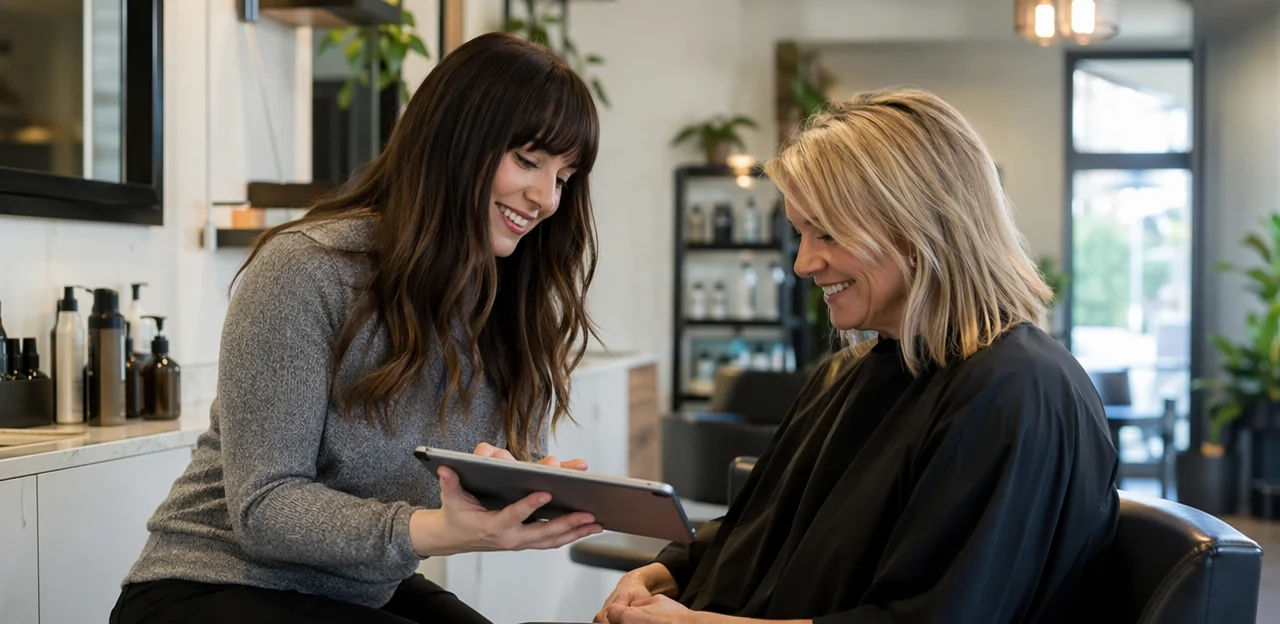
Segmenting clients based on preferences and behavior
Effective salon client retention starts with smart grouping. By combining feedback, service preferences, and booking history, salons can build a practical client segmentation salon strategy that supports better follow-up and stronger loyalty.
- New clients: Use consultation notes and first-visit feedback to send welcome offers, stylist recommendations, or care tips tied to their service.
- Loyal clients: Identify repeat visits, high satisfaction scores, and favorite treatments to reward consistency with VIP perks and early access.
- At-risk clients: Flag clients with declining visit frequency, canceled appointments, or negative feedback, then send personalized salon marketing messages with recovery offers.
- High-value clients: Track top spenders and premium service users for exclusive packages, upgrades, and priority booking.
Tools like Tapsy can help collect timely feedback that makes segmentation more accurate and actionable.
Creating follow-up messages that bring clients back
A strong salon follow-up strategy turns recent visits into future appointments. To improve salon client retention, make your rebooking messages feel personal, timely, and useful, not automated.
- Reference the last visit: Mention the service, stylist, or result: “Hope you’re still loving your balayage from last Thursday.”
- Use known preferences: Include details like preferred stylist, product sensitivities, or ideal appointment times.
- Acknowledge feedback: If a client praised the scalp massage or mentioned wanting shorter layers next time, reflect that in your message.
- Add a clear rebooking prompt: Suggest the right timing: “It may be a good time to refresh your color in the next 5–6 weeks.”
- Keep the tone warm and concise: Avoid generic lines like “Book now!” without context.
If you collect visit feedback through tools like Tapsy, use those insights to make every follow-up more relevant.
Recovering unhappy or inactive clients with service recovery
Strong salon client retention often depends on how quickly you respond when something goes wrong. A clear service recovery salon process can turn a bad experience into a second chance and help you win back salon clients who have gone quiet.
- Respond fast and personally: Reply to negative feedback within 24–48 hours. Thank the client, acknowledge the issue, and avoid defensive language.
- Offer a specific solution: Depending on the problem, provide a redo, partial refund, complimentary add-on, or priority rebooking with a senior stylist.
- Follow up after resolution: Check in a few days later to confirm they’re satisfied and invite honest feedback.
- Reconnect with inactive clients: Send a personalized message referencing their past visit, share what has improved, and include a low-pressure incentive to return.
Tools like Tapsy can help capture issues early, before clients disappear.
Building loyalty programs and retention systems around feedback

Connecting feedback to loyalty offers and incentives
Feedback becomes more powerful when it directly shapes your salon loyalty program. To improve salon client retention, group feedback by motivation, then match offers to what clients value most:
- Price-sensitive clients: send bounce-back offers like “Book within 14 days for 15% off your next blowout.”
- Service-focused clients: reward repeat bookings with add-ons such as a deep-conditioning treatment or brow touch-up.
- Happy regulars: trigger referral prompts after high ratings, offering points or credits for each new client they bring in.
- VIP clients: use positive feedback and spend history to unlock early booking access, birthday perks, or exclusive packages.
These personalized rewards are among the most effective client retention strategies salon teams can use.
Automating retention workflows without losing a personal touch
Automation works best when it supports relationships, not replaces them. For stronger salon client retention, use a salon CRM and booking software to trigger timely, personalized messages based on each visit.
- Automate surveys: Send a short feedback request a few hours after the appointment while the experience is still fresh.
- Trigger rebooking prompts: If a client usually returns every 6–8 weeks, schedule reminders around that window.
- Personalize follow-ups: Reference the service, stylist, or past preferences instead of sending generic texts.
- Flag unhappy clients fast: Low survey scores should create alerts for personal outreach and service recovery.
This approach makes automated client retention feel thoughtful, relevant, and human.
Encouraging reviews and referrals from satisfied clients
Positive feedback should not stay private. Turning happy client comments into salon reviews and referrals helps strengthen salon client retention while attracting new bookings.
- Ask at the right moment: After a great appointment, send a simple text or email with a direct review link.
- Repurpose praise: With permission, turn positive feedback into short testimonials for your website, booking pages, and social media.
- Create a referral habit: Pair compliments with a referral offer, such as a discount, add-on, or loyalty reward for both clients.
- Make it easy: Use QR codes at checkout or tools like Tapsy to capture feedback quickly and guide satisfied clients toward public reviews.
Done consistently, salon referral marketing becomes a natural extension of great service.
Measuring results and refining your retention strategy

Tracking the impact of feedback-driven changes
To improve salon client retention, compare performance before and after each change so you can clearly measure salon retention and identify real feedback ROI.
- Set a baseline: Track 30–90 days of data before changes, including repeat booking rate, rebooking at checkout, average visit frequency, and satisfaction scores.
- Measure after implementation: Review the same metrics 30, 60, and 90 days after updates such as shorter wait times, improved consultations, or loyalty offers.
- Compare by change: Tag each improvement so you can see which actions increase repeat bookings most.
- Segment results: Check trends by stylist, service type, or client group.
If you use tools like Tapsy, faster feedback collection can make before-and-after comparisons easier and more accurate.
Testing and improving your retention approach over time
Strong salon client retention comes from ongoing testing, not guesswork. Use small, trackable experiments to improve what brings clients back.
- Test messaging: Compare reminder texts, rebooking emails, and post-visit follow-ups. Try different tones, timing, and calls to action.
- Test incentives: Offer one group a loyalty perk, another a discount, and another a free add-on to see what drives repeat bookings.
- Test service improvements: Use feedback to adjust wait times, consultation quality, or checkout flow, then measure return visits.
For effective retention strategy optimization, track rebooking rate, repeat visit frequency, and client satisfaction. Simple salon marketing tests each month can reveal what truly increases loyalty.
Common mistakes salons should avoid
A weak salon feedback strategy can hurt salon client retention even when intentions are good. Avoid these common client retention mistakes:
- Collecting feedback but not acting on it: If clients share concerns and see no change, trust drops fast. Review trends weekly and assign clear follow-up actions.
- Over-surveying clients: Too many requests create fatigue. Keep surveys short and send them only at key moments, like after appointments.
- Sending generic follow-ups: Personalize messages based on the client’s visit, feedback, or service history.
- Ignoring frontline staff input: Stylists and reception teams hear recurring issues first. Include their insights to improve your salon feedback strategy and client experience.
Conclusion
In the end, salon client retention comes down to one simple truth: clients return when they feel heard, valued, and consistently cared for. Feedback gives salons the insight to understand what clients love, where friction exists, and how to turn a one-time appointment into a long-term relationship. From post-visit surveys and review requests to personalized follow-ups and service recovery, every feedback touchpoint is an opportunity to strengthen trust and improve the client experience.
The most successful salons don’t just collect opinions—they act on them. When clients see changes based on their input, they are far more likely to rebook, recommend your salon, and stay loyal over time. That’s what makes feedback such a powerful driver of salon client retention: it helps you refine services, reward loyalty, and create experiences clients genuinely want to come back to.
Now is the time to make feedback part of your retention strategy. Start by identifying key moments to ask for input, train your team to respond quickly, and use what you learn to personalize future visits. If you want to streamline the process, tools like Tapsy can help capture real-time feedback and encourage repeat engagement. Take the next step by reviewing your current client journey, setting retention goals, and building a feedback loop that keeps clients coming back.
Frequently Asked Questions
- Why is salon client retention so important for long-term growth?
Keeping existing clients is usually more profitable than constantly replacing them with new ones. Repeat clients support steadier schedules, higher lifetime value, more referrals, and more predictable revenue over time.
- How does client feedback help bring salon clients back?
Feedback shows what clients enjoy, what frustrates them, and what may stop them from booking again. When salons act on that input quickly, they can fix issues, build trust, and improve the overall experience in ways that encourage repeat visits.
- Which salon retention metrics should be tracked regularly?
Useful metrics include rebooking rate, repeat visit frequency, client churn, average spend, and customer lifetime value. Reviewing them monthly alongside feedback helps salons see where loyalty is improving and where clients may be dropping off.
- When is the best time to ask for salon client feedback?
The best time is shortly after the appointment, while the experience is still fresh. It is also valuable after first visits, after resolving a complaint, and at loyalty milestones such as a fifth visit or membership renewal.
- What feedback channels work best for salons?
A mix usually works best: SMS for fast post-visit responses, email for more detailed comments, and booking app prompts where clients already rebook. In-person check-ins, online review requests, and social media messages can also help, though some are harder to track consistently.
- What questions should salons ask to uncover retention problems?
Good questions cover satisfaction, unmet expectations, preferences, churn risk, and loyalty signals. Examples include asking whether the result matched expectations, what could have been better, why a client has not rebooked, and how likely they are to return or recommend the salon.
- How can salons turn feedback into practical service improvements?
Group comments into themes such as wait times, stylist communication, pricing clarity, cleanliness, and consistency of results. Counting repeated positives and negatives makes it easier to prioritize the fixes that will have the biggest impact on return visits.
- What common friction points stop salon clients from returning?
Booking problems, long waits, pushy upselling, unclear expectations, and weak follow-up can all reduce repeat visits. Salons can address these by simplifying scheduling, improving timing, using better consultations, and sending post-visit messages with care tips and rebooking prompts.
- How should salon staff respond to negative feedback?
Staff should stay calm, thank the client, and focus on understanding the issue without becoming defensive. Weekly feedback reviews, role-playing common scenarios, and assigning improvement goals can help teams use criticism constructively.
- How can salons personalize follow-up messages using feedback?
Follow-ups work better when they reference the client's last service, preferred stylist, timing preferences, or comments from recent feedback. A warm message with a clear and relevant rebooking suggestion feels more helpful than a generic promotion.
- What is a good way to segment salon clients for retention marketing?
Clients can be grouped into practical segments such as new clients, loyal clients, at-risk clients, and high-value clients. Using feedback, booking history, and service preferences helps salons send more relevant offers, recovery messages, and loyalty rewards.
- How can salons win back unhappy or inactive clients?
Respond to negative feedback within 24 to 48 hours, acknowledge the issue, and offer a specific solution such as a redo, refund, add-on, or priority rebooking. For inactive clients, send a personal message that references their past visit, explains what has improved, and includes a low-pressure reason to return.
- How can feedback improve a salon loyalty program?
Feedback helps salons match rewards to what different clients value most. Price-sensitive clients may respond to bounce-back offers, service-focused clients may prefer add-ons, and loyal or VIP clients may value referral rewards, early booking access, or exclusive perks.
- How can salons automate retention without sounding impersonal?
Automation works best when messages are triggered by real client behavior and include personal details from the visit. Surveys, rebooking reminders, and low-score alerts can be automated while still referencing the service, stylist, or preferences to keep communication human.
- What mistakes should salons avoid when using feedback to improve retention?
Common mistakes include collecting feedback without acting on it, sending too many surveys, using generic follow-ups, and ignoring input from frontline staff. A stronger approach is to review trends weekly, keep requests brief, personalize outreach, and include insights from stylists and reception teams.