
A trade show may last only a few days, but the insights it generates can shape event strategy for months to come. From attendee impressions and exhibitor concerns to sponsor ROI expectations, every interaction holds valuable information about what worked, what fell short, and where future events can improve. That’s why trade show feedback is no longer a nice-to-have—it’s a critical part of creating stronger, smarter, and more profitable event experiences.
Collecting meaningful feedback, however, requires more than sending a generic post-event survey. Organizers need a thoughtful approach that captures perspectives from multiple stakeholders, identifies patterns quickly, and turns raw responses into actionable improvements. Attendees may focus on registration, content, and networking opportunities, while exhibitors care about booth traffic and lead quality, and sponsors want clear evidence of visibility and impact.
In this article, we’ll explore how to gather trade show feedback effectively from attendees, exhibitors, and sponsors, which questions to ask, when to collect responses, and how AI and analytics can help uncover deeper trends. We’ll also look at ways to improve response rates and use real-time tools—such as solutions like Tapsy in broader engagement contexts—to turn feedback into better event planning, stronger partnerships, and a more memorable conference experience.
Why Trade Show Feedback Matters for Event Success
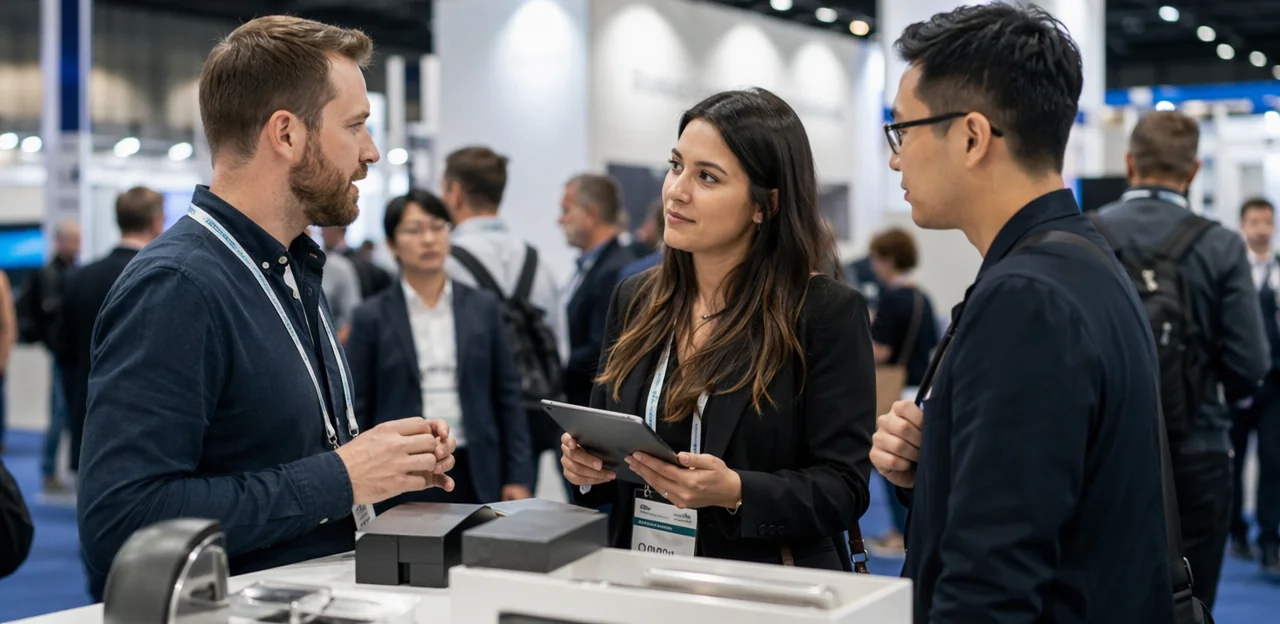
The role of feedback in improving events
Trade show feedback should be treated as a core part of event planning, not just a post-show task. When organizers build structured event feedback into the attendee journey and the post-event evaluation process, they gain clear insight into what worked and what needs attention.
Structured feedback helps teams:
- Identify high-performing sessions, booths, and networking formats
- Spot pain points such as registration delays, poor signage, or low foot traffic
- Understand exhibitor and sponsor ROI expectations
- Prioritize improvements for future conferences and exhibitions
To make feedback actionable, use targeted surveys, on-site pulse checks, and segmented questions for attendees, exhibitors, and sponsors. This creates measurable insights that support smarter planning, better experiences, and stronger event outcomes.
Different perspectives: attendees, exhibitors, and sponsors
Strong trade show feedback comes from understanding that each group judges success differently:
- Attendee feedback reveals experience quality: registration ease, session relevance, booth interest, navigation, and overall satisfaction.
- Exhibitor feedback focuses on business outcomes: booth traffic, lead quality, staff support, floor layout, and ROI.
- Sponsor feedback measures brand impact: visibility, audience alignment, activation performance, and perceived value of sponsorship packages.
Collecting attendee feedback, exhibitor feedback, and sponsor feedback together creates a fuller view of event performance. It helps organizers identify where engagement was high, where value fell short, and which improvements will increase retention and revenue. Use segmented surveys and real-time tools to capture insights while experiences are still fresh.
Business outcomes tied to feedback collection
Effective trade show feedback should lead to measurable business decisions, not just reports. When organizers connect insights to action, they improve both experience and profitability.
- Increase attendee satisfaction: Use feedback to fix pain points such as registration delays, session relevance, venue flow, or networking quality.
- Improve exhibitor retention: Identify which booth locations, lead quality tools, and audience segments delivered the most value, then refine future packages.
- Strengthen sponsor retention: Track sponsor goals like brand visibility, engagement, and qualified interactions to show clear results and support renewals.
- Boost event ROI: Turn feedback into changes that raise repeat attendance, increase renewals, and improve package performance.
Real-time tools, including platforms like Tapsy, can help teams capture and act on insights faster.
What Insights to Collect From Each Stakeholder Group

Attendee feedback questions that reveal experience gaps
Strong trade show feedback starts with targeted attendee survey questions that uncover friction points across the full journey. Focus on these high-value areas:
- Registration: Was sign-up simple, fast, and clear? Ask about ticketing, badge pickup, wait times, and pre-event communication.
- Session quality: Did sessions match expectations, deliver useful insights, and feel worth the time? Include speaker quality, relevance, and schedule balance.
- Networking: Were there enough opportunities to meet the right people? Measure matchmaking, hosted meetups, and informal connection spaces.
- Venue logistics: Ask about signage, seating, accessibility, crowd flow, food, and parking or transport.
- Mobile app usability: Was the app easy to navigate for agendas, maps, exhibitor lists, and live updates?
- Overall event experience: Use conference feedback prompts like “What was the biggest frustration?” and “What should we improve first?”
For faster, in-the-moment insights, tools like Tapsy can help capture real-time event experience feedback before issues grow.
Exhibitor feedback that measures lead quality and booth performance
A strong exhibitor survey should go beyond simple satisfaction scores and capture trade show feedback that ties directly to outcomes. Focus on metrics that help organizers improve the exhibitor experience and prove event value:
- Booth traffic: Ask exhibitors to rate visitor volume, peak times, and traffic quality by attendee type.
- Lead quality: Measure how many conversations matched target buyer profiles, budget levels, or purchase intent.
- Booth performance: Evaluate booth location, visibility, neighboring exhibitors, and how the floor layout affected engagement.
- Setup experience: Gather feedback on move-in logistics, signage, Wi-Fi, power access, and installation support.
- Staff support: Assess responsiveness from event staff before, during, and after the show.
- ROI from participation: Track perceived return based on leads generated, meetings booked, brand exposure, and follow-up opportunities.
Use these insights to refine floor plans, exhibitor services, and sponsorship packages for future events.
Sponsor feedback that evaluates visibility and value
A strong sponsor survey helps turn trade show feedback into measurable improvements for future packages and renewals. Ask sponsors to rate both outcomes and experience, then compare responses with event data.
- Brand exposure: Measure perceived booth traffic, logo visibility, speaking-session reach, social mentions, and digital impressions.
- Audience alignment: Ask whether attendees matched the sponsor’s target industries, job titles, budgets, and buying intent.
- Activation performance: Evaluate demos, contests, lounges, or content sessions by engagement level, footfall, and staff interactions.
- Lead generation: Track lead volume, lead quality, follow-up readiness, and early pipeline impact to assess sponsorship ROI.
- Package satisfaction: Gather feedback on pricing, included benefits, communication, setup support, and upgrade opportunities.
For stronger insights, combine survey answers with badge scans, app analytics, and post-event sponsor interviews. Tools like Tapsy can also support faster, real-time feedback capture.
Best Methods for Collecting Trade Show Feedback

Post-event surveys, in-app polls, and email follow-ups
To improve trade show feedback, match the method to the audience, timing, and depth of insight you need. Each channel serves a different purpose:
- Post-event survey: Best for detailed feedback from attendees, exhibitors, and sponsors once they’ve had time to reflect. Use it to measure satisfaction, ROI, lead quality, session value, and future intent. Keep the event survey short, role-specific, and send within 24–48 hours.
- In-app polls: Ideal during the event for fast pulse checks on sessions, booth traffic, wayfinding, or amenities. Response rates are often higher because feedback is immediate, though answers are usually less detailed.
- Email follow-up: Use segmented email follow-up campaigns to boost completions, especially for exhibitors and sponsors who need tailored questions. Send reminders 3–5 days later and offer a clear reason to respond, such as improving next year’s event experience.
Onsite feedback tools and real-time listening
To improve trade show feedback, collect insights while impressions are immediate. Fast, low-friction tools increase response rates and make real-time feedback more accurate and actionable.
- Live polling: Use event apps, session screens, or booth tablets to ask quick questions during demos, keynotes, or networking moments.
- QR code survey links: Place a QR code survey on badges, booth signage, tables, and exit points so attendees can respond in seconds from their phones.
- Kiosk stations: Set up simple self-service tablets in high-traffic areas for short onsite surveys about navigation, content, or exhibitor experience.
- SMS prompts: Send timely text messages after sessions or meetings to capture fresh reactions with one-click ratings.
- Staff interviews: Train booth and floor staff to ask 1–2 consistent questions and log answers immediately.
If needed, tools like Tapsy can support fast, location-based feedback capture.
How to increase response rates and data quality
To improve trade show feedback, focus on making surveys fast, relevant, and easy to complete while protecting event data quality.
- Send at the right time: Ask for feedback immediately after a session, booth visit, or sponsor interaction, while details are still fresh. This can lift your survey response rate significantly.
- Keep questions focused: Use clear, specific wording and limit forms to 3–7 questions. Strong feedback form design reduces drop-off and prevents vague answers.
- Personalize by audience: Tailor questions for attendees, exhibitors, and sponsors instead of using one generic survey.
- Offer simple incentives: Entry into a prize draw, exclusive content, or small rewards can encourage completion without biasing results.
- Segment and validate: Track responses by ticket type, booth category, or session attended, and filter out rushed, duplicate, or incomplete submissions.
Tools like Tapsy can also support real-time, context-aware feedback collection.
Using AI and Analytics to Turn Feedback Into Insights

Analyzing qualitative feedback with AI
Open-ended trade show feedback often contains the richest insights, but reviewing hundreds of comments manually is slow and inconsistent. AI feedback analysis helps event teams turn qualitative feedback into clear action faster by organizing responses at scale.
- Categorize comments automatically: AI groups feedback by topic, such as booth traffic, speaker quality, lead generation, venue logistics, or sponsor visibility.
- Run sentiment analysis: It detects positive, neutral, and negative tone, helping teams understand how attendees, exhibitors, and sponsors felt about specific experiences.
- Spot recurring themes: AI identifies repeated concerns or praise across surveys, emails, and app responses.
- Surface urgent issues quickly: Negative spikes around registration delays, Wi-Fi problems, or exhibitor support can be flagged immediately for follow-up.
Used well, AI highlights what matters most so teams can prioritize improvements with confidence.
Combining survey data with event analytics
To get more value from trade show feedback, connect survey responses to behavioral signals across your event stack. This creates a fuller view of what attendees did, not just what they said.
- Match feedback with attendance data to compare satisfaction by ticket type, buyer role, or visit duration.
- Layer in session engagement such as check-ins, dwell time, and Q&A activity to see which content drove the strongest responses.
- Review app activity including agenda saves, messages, and push-notification clicks as key engagement metrics.
- Analyze badge scans and lead capture metrics alongside exhibitor and sponsor surveys to measure booth performance and lead quality.
Using integrated event analytics and trade show data helps teams identify high-impact experiences, improve layouts, and prove ROI more accurately.
Building dashboards and reports for stakeholders
Turn trade show feedback into concise event reporting that each audience can act on. A strong feedback dashboard should highlight trends, benchmark performance, and clearly show what to do next.
- For internal teams: track event KPIs such as attendee satisfaction, session ratings, lead quality, booth traffic, and recurring pain points.
- For exhibitors: report visitor volume, engagement rate, top product interests, qualified leads, and common objections.
- For sponsors: focus on impressions, scans, brand recall, content engagement, and sponsorship ROI.
Keep dashboards visual with filters by audience type, day, booth, or session. Pair charts with short summaries, key takeaways, and recommended actions. In formal reports, include:
- top insights
- KPI performance
- priority improvements
- next-step owners and timelines
Tools like Tapsy can help centralize real-time feedback and analytics.
Turning Trade Show Feedback Into Action

Prioritizing improvements for future events
To turn trade show feedback into action, build an event improvement plan that scores each issue or idea against three criteria:
- Impact: Will this change significantly improve attendee experience, exhibitor ROI, or sponsor visibility?
- Urgency: Does it affect safety, logistics, satisfaction, or revenue right now?
- Feasibility: Can your team deliver it within budget, staffing, and timeline constraints?
A simple priority matrix helps organize customer insights into quick wins, strategic upgrades, and long-term projects. For example, fixing unclear signage may be high-impact and easy, while redesigning the floor plan may require more resources. This structured approach supports smarter event optimization, ensuring the most valuable changes happen first for attendees and partners alike.
Closing the loop with attendees, exhibitors, and sponsors
Collecting trade show feedback is only half the job. To close the feedback loop, share what you learned and what actions you’ll take. Clear stakeholder communication shows attendees, exhibitors, and sponsors that their input matters, which strengthens trust and drives event loyalty.
- Send a post-event summary highlighting key themes, wins, and top improvement areas.
- Segment updates by audience so each group sees changes relevant to their goals.
- Be specific: explain what will change next year, what is being tested, and what cannot be changed yet.
- Follow up before the next event to show progress.
This transparency turns feedback into stronger, longer-term event relationships.
Creating a continuous feedback strategy
Treat trade show feedback as an always-on process, not a single post-event survey. A strong feedback strategy should cover the full event lifecycle so you can compare expectations, real-time experiences, and final outcomes.
- Pre-event: Ask attendees, exhibitors, and sponsors about goals, priorities, and concerns during registration or onboarding.
- Onsite: Use quick pulse checks at key moments—check-in, sessions, booth visits, and networking areas—to capture immediate reactions.
- Post-event: Follow up with targeted surveys and analyze themes by audience segment, satisfaction level, and ROI.
To make continuous feedback work, assign owners, define response triggers, and review insights weekly. Tools like Tapsy can support real-time collection and faster action during live events.
Common Trade Show Feedback Mistakes to Avoid

Asking too many or vague questions
One of the most common survey mistakes in trade show feedback is asking too many questions—or asking feedback questions that are too broad to answer usefully. Long surveys create survey fatigue, so attendees, exhibitors, and sponsors either abandon them or give rushed, low-quality responses.
- Keep surveys short: focus on 5–10 essential questions.
- Use specific wording, such as “How valuable was the keynote session?” instead of “What did you think?”
- Separate audiences so attendees, exhibitors, and sponsors each get relevant questions.
- Mix rating scales with one or two open-ended prompts for context.
Clear, concise surveys produce cleaner data and more actionable insights.
Ignoring stakeholder-specific goals
Using one generic questionnaire for everyone weakens trade show feedback because attendees, exhibitors, and sponsors measure success differently. Without proper survey segmentation, you risk collecting broad but shallow responses that hide the issues each group actually cares about.
- Attendees focus on session quality, networking, and overall experience.
- Exhibitors care about booth traffic, lead quality, and logistics.
- Sponsors want brand visibility, audience fit, and ROI.
A stronger event survey strategy tailors questions to each audience, making stakeholder feedback more actionable. Segment surveys by role, goals, and touchpoints, then compare results across groups to spot gaps. Tools like Tapsy can also support more targeted, real-time feedback collection.
Collecting feedback without follow-through
Collecting trade show feedback is only valuable if it leads to action. When attendee, exhibitor, and sponsor comments sit in spreadsheets or dashboards untouched, you lose trust and miss opportunities to improve future outcomes. Strong feedback analysis should turn raw responses into actionable insights that directly inform event planning.
- Assign clear owners for each feedback category
- Share post-event reports with priorities, timelines, and next steps
- Track measurable improvements, such as booth traffic, session ratings, or sponsor satisfaction
- Review progress before the next event to close the loop
Tools like Tapsy can help capture and organize real-time input, but accountability is what turns feedback into results.
Conclusion
In the end, effective trade show feedback is what turns a one-time event into a repeatable growth strategy. By collecting insights from attendees, exhibitors, and sponsors, event organizers gain a clearer picture of what worked, what fell short, and where the biggest opportunities lie. Attendee responses reveal the quality of the event experience, exhibitor input highlights booth traffic, lead quality, and logistics, while sponsor feedback uncovers whether partnerships delivered real brand value and ROI.
The most successful teams don’t treat trade show feedback as a formality after the event—they build it into the full event lifecycle. That means using the right mix of surveys, real-time polling, on-site check-ins, and post-event analytics to capture honest, actionable data. When paired with AI and analytics, these insights become even more powerful, helping organizers identify patterns, improve future programming, personalize experiences, and strengthen sponsor and exhibitor retention.
Now is the time to refine your feedback strategy. Audit your current collection methods, streamline your questions, and make it easy for every stakeholder to respond. If you’re looking to modernize the process, tools like Tapsy can support real-time engagement and smarter insight gathering. Start using better trade show feedback today to create more valuable, data-driven events tomorrow.
Frequently Asked Questions
- Why is trade show feedback important for event success?
Trade show feedback helps organizers understand what worked, what fell short, and what should change for future events. It supports better attendee experiences, stronger exhibitor and sponsor retention, and clearer decisions tied to ROI and event performance.
- What types of feedback should be collected from attendees?
Attendee feedback should cover registration, session quality, networking opportunities, venue logistics, mobile app usability, and overall satisfaction. Useful prompts also ask about the biggest frustration and which improvement should come first.
- How is exhibitor feedback different from attendee feedback?
Exhibitor feedback focuses more on business outcomes than general experience. It should measure booth traffic, lead quality, booth location and visibility, setup logistics, staff support, and perceived return from participating.
- What should sponsors be asked in a trade show feedback survey?
Sponsors should be asked about brand exposure, audience alignment, activation performance, lead generation, and satisfaction with the sponsorship package. Questions should also cover communication, setup support, pricing, and upgrade opportunities.
- When is the best time to collect trade show feedback?
Feedback should be collected across the full event lifecycle, not only after the show ends. Pre-event questions capture goals and concerns, onsite pulse checks gather immediate reactions, and post-event surveys sent within 24–48 hours help measure reflection and outcomes.
- Which feedback collection methods work best at a trade show?
A strong approach combines post-event surveys, in-app polls, email follow-ups, QR code survey links, kiosk stations, SMS prompts, and staff interviews. Each method serves a different purpose, from quick pulse checks during the event to more detailed responses after it ends.
- How can organizers improve survey response rates and data quality?
Send feedback requests at the right moment, keep surveys short, and tailor questions by audience type. It also helps to offer simple incentives, segment responses by role or touchpoint, and filter out duplicate, rushed, or incomplete submissions.
- How many questions should a trade show feedback survey include?
Shorter surveys generally produce better completion rates and cleaner responses. A focused form should usually contain about 3–7 questions for fast feedback, while broader guidance recommends keeping surveys to 5–10 essential questions and avoiding unnecessary extras.
- What are the most common mistakes to avoid when gathering feedback?
Common mistakes include asking too many questions, using vague wording, sending the same survey to every stakeholder group, and failing to act on the results. These problems lead to survey fatigue, shallow insights, and reduced trust from attendees, exhibitors, and sponsors.
- Why should feedback surveys be segmented by stakeholder group?
Attendees, exhibitors, and sponsors judge success differently, so one generic questionnaire misses important details. Segmented surveys make responses more relevant and help organizers compare experience quality, business outcomes, and sponsorship value more accurately.
- How can AI help analyze trade show feedback?
AI can automatically categorize open-ended comments, detect sentiment, identify recurring themes, and flag urgent problems such as registration delays or Wi-Fi issues. This makes it easier to process large volumes of qualitative feedback and prioritize improvements faster.
- What event data should be combined with survey responses?
Survey results become more useful when paired with attendance data, session engagement, app activity, badge scans, and lead capture metrics. Combining these sources helps teams compare what people said with what they actually did during the event.
- What should a trade show feedback dashboard include?
A useful dashboard should show trends, benchmark performance, and highlight recommended next steps. Internal teams may need attendee satisfaction, session ratings, booth traffic, and pain points, while exhibitors and sponsors need metrics such as visitor volume, qualified leads, impressions, and ROI indicators.
- How do you turn trade show feedback into an action plan?
Use a simple priority framework based on impact, urgency, and feasibility. This helps separate quick wins from larger strategic projects, assign owners, and focus resources on changes that improve experience, logistics, visibility, or revenue.
- How can tools like Tapsy support trade show feedback collection?
Tools like Tapsy can support real-time, context-aware feedback capture during live events. They are presented as useful for broader engagement, faster insight gathering, location-based collection, and centralizing feedback with analytics.