
In hospitality, every guest interaction leaves a signal, but not every hotel is set up to act on it. A delayed survey after checkout may reveal what went wrong, yet by then the opportunity to fix the experience, protect the review, or recover the relationship has often passed. That is why a strong hotel voice of customer program is no longer just a nice-to-have for experience teams. It is a practical operating system for turning guest feedback into faster service recovery, smarter decision-making, and more consistent stays.
For hotels, the real value of feedback lies in making it operational. That means collecting input at the right moments, routing issues to the right teams, and using guest sentiment to improve everything from housekeeping and front desk performance to breakfast service and amenity quality. When done well, voice of customer programs help hotels move from reactive problem-solving to proactive guest experience management.
This article explores how hotels can design voice of customer programs that do more than measure satisfaction. We will look at how to capture in-stay feedback, close the loop quickly, identify recurring operational issues, and build systems that support both guest experience and business performance. Where relevant, tools like Tapsy can also illustrate how real-time feedback can be embedded directly into the guest journey.
What a hotel voice of customer program is and why it matters
Defining hotel voice of customer in hospitality
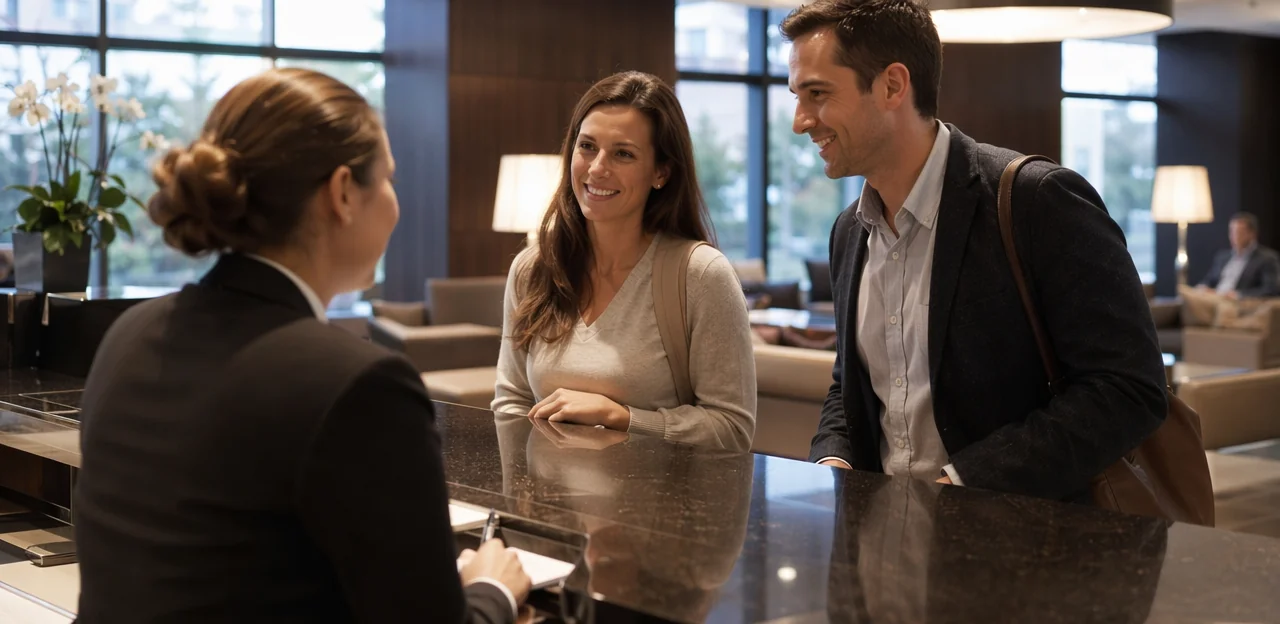
Hotel voice of customer is the practice of continuously collecting, analyzing, and acting on what guests say, do, and experience across the full stay journey. Unlike a basic guest satisfaction survey, which usually captures a limited score at checkout, voice of customer hospitality connects multiple feedback sources to uncover what guests actually need.
A strong guest feedback program combines:
- Structured feedback: ratings, NPS, CSAT, post-stay surveys
- Unstructured feedback: reviews, open-text comments, chat logs, social mentions, staff notes
- Multiple channels: in-stay touchpoints, email, SMS, apps, front desk, review platforms
This broader approach helps hotels identify:
- Recurring friction points
- Service recovery opportunities
- Emerging guest expectations
Tools like Tapsy can support real-time capture at key touchpoints, making feedback more operational and actionable.
Why operational feedback beats passive reporting
A hotel voice of customer program creates value only when feedback triggers action. Collecting comments in surveys or dashboards is useful, but passive reporting rarely fixes the stay in time. Operational guest feedback turns insights into tasks, owners, and deadlines that improve both hotel customer experience and performance.
- Route issues instantly: Send housekeeping, maintenance, or front desk alerts based on the comment type.
- Assign accountability: Give each issue a team owner, response SLA, and follow-up status.
- Enable fast service recovery: In service recovery hotels, quick actions like a room change, apology, or amenity can prevent negative reviews and save loyalty.
- Spot recurring failures: Workflow data reveals patterns in check-in delays, cleanliness, or breakfast service.
Tools like Tapsy can help hotels capture in-stay feedback and trigger real-time recovery actions.
Core benefits for hotels and hospitality teams
A mature hotel voice of customer program turns feedback into daily action, not just reporting. For hospitality teams, the biggest benefits are practical and measurable:
- Higher hotel guest satisfaction: Capture issues during the stay, resolve them fast, and prevent small problems from shaping the full visit.
- Stronger hotel reputation management: When teams recover service before checkout, hotels reduce negative public reviews and encourage more positive post-stay feedback.
- Better retention and repeat bookings: Guests are more likely to return when they feel heard and see visible follow-through.
- Improved staff alignment: Shared feedback dashboards help front desk, housekeeping, food service, and management act on the same priorities.
- Smarter operational decisions: VOC data reveals recurring friction points across the guest experience hotels deliver, guiding staffing, training, maintenance, and service design improvements.
Building the foundation of an effective VOC strategy

Map the guest journey across every touchpoint
To make a hotel voice of customer program operational, start by documenting the full hotel guest journey and the moments that shape satisfaction most. Effective guest journey mapping hotel teams use should cover both digital and on-property hotel touchpoints, including:
- Discovery: website, OTAs, ads, reviews, call center
- Booking: rate clarity, upsells, confirmation messages
- Check-in: wait times, staff welcome, room readiness
- Stay: room comfort, housekeeping, Wi-Fi, noise
- Dining and amenities: breakfast, restaurant, spa, gym, pool
- Issue resolution: maintenance, complaints, service recovery speed
- Check-out: billing accuracy, queue time, farewell
- Post-stay follow-up: surveys, review requests, loyalty offers
This map shows where to collect feedback in real time, not just after departure. Tools such as QR or NFC prompts, including solutions like Tapsy, can help hotels capture feedback exactly where experience happens.
Choose the right feedback channels and data sources
A strong hotel voice of customer program combines high-response channels with richer operational signals. Use a mix of hotel feedback channels to capture both fast sentiment and detailed context:
- Surveys: Send a short guest survey hotel link by SMS or email after key moments such as check-in, breakfast, or checkout.
- In-stay capture: Use QR codes, in-stay messaging, and chatbot interactions to collect feedback while issues can still be fixed.
- Unstructured sources: Mine hotel review data, social media mentions, call center logs, and chatbot transcripts for recurring themes.
- Operational notes: Include front desk notes and service recovery records to connect feedback to actions taken.
Prioritize channels by journey stage: SMS and QR codes often lift response rates, while reviews and call logs add deeper quality insights. Tools like Tapsy can help hotels capture real-time, touchpoint-level feedback.
Set goals, owners, and success metrics
A strong hotel voice of customer program starts with clear business goals and named accountability. Your hotel VOC strategy should tie feedback to outcomes teams can influence.
- Set objectives: reduce complaint volume, lift OTA/Google review scores, increase repeat stays, improve upsell satisfaction, or shorten issue response and resolution times.
- Define measurable KPIs: track customer experience metrics hotel teams already understand, such as review rating, NPS/CSAT, first-response time, recovery time, complaint recurrence, and repeat booking rate. These become your core hotel feedback KPIs.
- Assign owners: operations owns service recovery and process fixes; marketing owns review generation and reputation trends; CX owns analysis and reporting; property teams own daily action and follow-up.
If helpful, tools like Tapsy can route real-time feedback to the right team faster.
Collecting and analyzing guest feedback at scale

Capture structured and unstructured feedback
A strong hotel voice of customer program combines scores with stories. Hotels need structured metrics to track performance and unstructured feedback to understand why guests feel the way they do.
- Rating scales reveal satisfaction at key touchpoints such as check-in, room cleanliness, breakfast, and checkout.
- Hotel NPS shows loyalty and likelihood to recommend.
- CSAT hotel surveys measure satisfaction with a specific stay or service.
- CES highlights how easy it was to resolve requests, complaints, or booking changes.
- Open-text comments and review content add the context behind low or high scores.
When these inputs are analyzed together, teams get stronger guest sentiment analysis, spot recurring issues faster, and prioritize operational fixes. Tools like Tapsy can help capture both in-stay ratings and comments in real time.
Use segmentation to uncover meaningful patterns
Raw scores rarely tell the full story. In a strong hotel voice of customer program, hotel feedback segmentation helps teams see exactly where problems start and who feels them most.
Segment feedback by:
- Property: compare locations to spot underperforming hotels
- Room type: identify issues tied to suites, standard rooms, or family rooms
- Traveler type: separate business, leisure, couples, families, and groups
- Booking source: compare OTA, direct, corporate, and agent bookings
- Loyalty tier: understand whether VIP guests face different friction points
- Stay purpose and region: uncover patterns by trip reason and market
This level of hospitality analytics turns broad sentiment into actionable guest experience insights. For example, noise complaints may cluster in city-center properties, while breakfast dissatisfaction may be highest among business travelers. Tools like Tapsy can support this with touchpoint-level, real-time feedback views.
Turn data into root-cause insights
A strong hotel voice of customer program should do more than collect comments—it should explain why problems happen. With hotel text analytics, hotels can turn open-text feedback into operational signals by tagging keywords, sentiment, location, shift, and service stage.
- Tag recurring issues: Group comments into categories such as housekeeping delays, check-in friction, noise complaints, or breakfast quality concerns.
- Spot patterns over time: Track guest complaint trends by daypart, team, room type, or property to see where issues cluster.
- Connect symptoms to causes: Effective root cause analysis hotel teams can uncover whether noise complaints come from elevator-adjacent rooms, or whether breakfast complaints stem from queue times rather than food taste.
- Trigger action: Route insights to the right team for staffing, process, or training fixes.
Tools like Tapsy can help capture and categorize feedback in real time.
Making hotel feedback operational across teams
Create closed-loop workflows for fast action
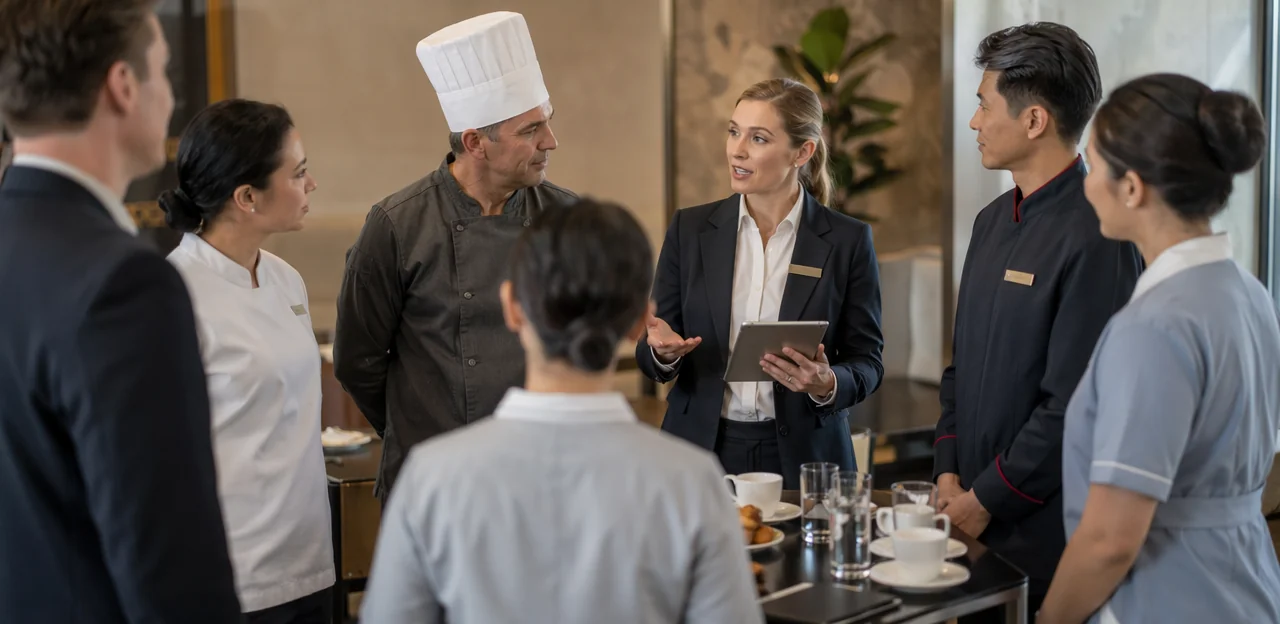
A strong hotel voice of customer program only works when feedback triggers immediate action. A closed loop feedback hotel process ensures negative comments never sit unnoticed while guest frustration grows.
- Set real-time alerts: Route low scores, safety concerns, cleanliness complaints, or service failures instantly to the right team.
- Use hotel case management: Turn each issue into a trackable case with owner, priority, deadline, and status.
- Build escalation rules: If a case is unresolved within a set timeframe, automatically notify supervisors or duty managers.
- Standardize follow-up: Confirm the fix, contact the guest, and document the outcome for future learning.
This structure speeds up guest issue resolution, helps teams recover stays before checkout, and reduces the risk of poor reviews, complaints, and lost loyalty. Tools like Tapsy can support this with real-time in-stay alerts.
Route insights to the right departments
A strong hotel voice of customer program only works when feedback reaches the teams that can act on it immediately. Turn comments into departmental hotel insights with role-based dashboards and clear action queues:
- Front office: check-in delays, staff attitude, room-change requests, billing issues
- Housekeeping: cleanliness scores, linen requests, missed servicing, minibar complaints
- Food and beverage: breakfast quality, wait times, menu gaps, service feedback
- Maintenance: HVAC, plumbing, lighting, Wi-Fi, noise, and safety issues
- Revenue teams: pricing sentiment, upsell response, package performance
- Corporate teams: brand trends, multi-property benchmarking, recurring service failures
This structure improves hotel operations feedback by assigning owners, deadlines, and escalation rules. With hotel workflow automation, urgent issues can trigger instant alerts, while dashboards show open cases, resolution times, and repeat problems. Tools like Tapsy can support this real-time routing across hotel teams.
Embed VOC into daily hotel operations
To make a hotel voice of customer program actionable, build guest insights into existing operating rhythms rather than treating feedback as a separate report.
- Daily standups: Review the last 24 hours of frontline guest feedback, highlight recurring issues, and assign immediate fixes such as room readiness, breakfast flow, or response times.
- Shift handovers: Pass on open guest concerns, VIP preferences, and unresolved service recovery actions so nothing is lost between teams.
- Weekly reviews: Track patterns by department, root causes, and recovery speed to guide hotel service improvement priorities.
- Management meetings: Link VOC trends to staffing, training, SOP updates, and investment decisions that support hotel operational excellence.
Real-time feedback tools, including solutions like Tapsy, help frontline teams act fast, prevent negative reviews, and prioritize the issues affecting guests now.
Technology, governance, and best practices for long-term success

Select the right hotel VOC platform
Choosing the right hotel voice of customer platform means matching technology to real hotel operations, not just buying a survey tool. Look for:
- Omnichannel collection: capture feedback from SMS, email, QR codes, web, in-stay touchpoints, and post-stay surveys.
- Core integrations: connect with PMS, CRM, ticketing, and reputation tools so teams can link feedback to guest profiles and stays.
- AI analysis: sentiment analysis, theme detection, and comment tagging to spot recurring issues fast.
- Operational dashboards and alerts: real-time views by property, department, and touchpoint, plus instant alerts for low scores.
- Benchmarking: compare performance across properties, teams, and competitors.
The best hotel VOC software, hospitality customer experience platform, or hotel feedback management software should support service recovery, multi-property reporting, and hotel-specific workflows.
Establish governance, privacy, and data quality standards
A strong hotel voice of customer program needs clear rules so teams can trust and act on feedback confidently. Prioritize:
- Survey governance: standardize question sets, timing, channels, and ownership across properties to avoid inconsistent results.
- Response thresholds: set minimum sample sizes before reporting trends or comparing teams, reducing overreaction to limited feedback.
- Role permissions: control who can view guest details, edit surveys, and resolve alerts to support effective hotel data governance.
- Data hygiene: remove duplicates, tag feedback consistently, and audit incomplete records to improve feedback data quality.
- Privacy compliance: align collection, storage, consent, and retention policies with guest data privacy hotel requirements.
Good governance keeps insights accurate, secure, and operationally useful.
Common mistakes hotels should avoid
A strong hotel voice of customer program fails when feedback is collected but not operationalized. Common VOC mistakes hospitality teams should avoid include:
- Creating hotel survey fatigue: sending too many surveys, asking too many questions, or requesting feedback at every touchpoint.
- Tracking vanity metrics only: don’t rely solely on NPS or star ratings; connect feedback to root causes, recovery actions, and revenue impact.
- Responding too slowly: delayed follow-up turns solvable issues into public complaints and poor reviews.
- Leaving ownership unclear: every issue needs a named team and service-level target.
- Failing to close the loop: share improvements with staff and guests so feedback feels valued.
These are core hotel CX best practices that turn insight into action.
Measuring impact and continuously improving the program

Track KPIs that connect feedback to business outcomes
To make a hotel voice of customer program operational, track hotel VOC KPIs that show both service performance and commercial impact:
- Response rate: measures how many guests share feedback across stay stages.
- Issue resolution time: shows how quickly teams close the loop on complaints.
- Review score trends: track hotel review score improvement by property, department, and touchpoint.
- Complaint volume: identify recurring friction points before they damage reputation.
- Repeat booking rate and hotel guest retention: link better experiences to return revenue.
- Loyalty retention: measure whether satisfied guests stay active in your program.
- Operational improvement completion: confirm that feedback leads to real fixes.
Tools like Tapsy can help capture in-stay feedback fast, making it easier to connect VOC action to revenue growth and stronger online reputation.
Use pilot programs and test-and-learn cycles
A hotel voice of customer initiative is easier to scale when it starts small and proves value quickly. Use a hotel pilot program to test one property, one touchpoint, or one issue category—such as check-in delays, room cleanliness, or breakfast experience—before expanding.
- Choose a narrow scope: start with a single hotel, guest journey stage, or recurring complaint.
- Set clear success metrics: response rate, issue resolution time, guest satisfaction, and review improvement.
- Run short test cycles: review results weekly, adjust workflows, and refine alerts or ownership.
This test and learn hospitality approach reduces rollout risk, creates quick wins, and builds internal confidence for wider hotel CX transformation. Tools like Tapsy can support fast, touchpoint-level pilots with real-time feedback.
Build a culture that listens and acts
A strong hotel voice of customer program only works when feedback leads to visible action. To build a customer-centric hotel culture, hotels should:
- Secure leadership support: managers must review insights regularly, remove barriers, and model fast follow-through.
- Train teams on response standards: staff should know how to capture, escalate, and resolve issues consistently.
- Recognize action, not just scores: reward teams for service recovery, idea-sharing, and strong hotel staff engagement feedback habits.
- Communicate outcomes transparently: share what guests said, what changed, and what results improved.
This creates the discipline of continuous improvement hospitality needs—where listening, acting, and learning become everyday habits, not one-off initiatives.
Conclusion
In hospitality, collecting feedback is no longer enough; the real advantage comes from turning it into action. A strong hotel voice of customer program helps hotels capture insights at the right moments, identify recurring pain points across the guest journey, and empower teams to resolve issues before they become negative reviews. From check-in delays and housekeeping concerns to breakfast quality and checkout experience, operational feedback gives hotels a clearer view of what guests actually experience in real time.
The most effective hotel voice of customer strategies connect listening with accountability. That means using clear feedback channels, routing issues to the right teams quickly, tracking trends across properties, and measuring how service recovery impacts satisfaction, loyalty, and repeat bookings. When feedback becomes operational, hotels can improve guest experience continuously rather than reactively.
Now is the time to review your current approach. Audit your guest touchpoints, define escalation workflows, and invest in tools that make fast action possible. Solutions such as Tapsy can help hotels capture in-stay feedback and respond before checkout, when there is still time to improve the stay.
Take the next step by mapping your guest journey, setting measurable VoC goals, and exploring technology that turns every guest comment into a practical opportunity for improvement.
Frequently Asked Questions
- What is a voice of customer program for hotels?
A hotel voice of customer program continuously collects, analyzes, and acts on what guests say, do, and experience across the full stay journey. It combines structured feedback like ratings, NPS, and CSAT with unstructured sources such as reviews, comments, chat logs, social mentions, and staff notes.
- How is a hotel VOC program different from a basic post-stay survey?
A basic post-stay survey usually captures limited feedback after checkout, when the chance to fix the experience has often passed. A VOC program uses multiple channels and touchpoints, including in-stay feedback, so hotels can recover service faster and improve operations in real time.
- Why is operational feedback more valuable than passive reporting in hospitality?
Operational feedback creates value when comments trigger tasks, owners, deadlines, and follow-up instead of sitting in dashboards. That allows teams to route issues instantly, assign accountability, recover service quickly, and identify recurring failures across the stay experience.
- What benefits can hotels expect from making guest feedback operational?
Hotels can improve guest satisfaction by resolving issues during the stay before they shape the full visit. Operational feedback also supports stronger reputation management, better retention and repeat bookings, improved staff alignment, and smarter decisions about staffing, training, maintenance, and service design.
- Which guest journey touchpoints should hotels map for a VOC program?
Hotels should map the full journey from discovery and booking to check-in, the stay itself, dining and amenities, issue resolution, checkout, and post-stay follow-up. This helps identify the moments that shape satisfaction most and shows where real-time feedback should be collected.
- What feedback channels should hotels use to capture guest input effectively?
A strong approach mixes surveys, in-stay capture, unstructured sources, and operational notes. SMS, email, QR codes, chatbot interactions, reviews, social mentions, call center logs, and front desk notes all help capture both quick sentiment and deeper context.
- What goals and KPIs should a hotel set for a VOC strategy?
Hotels can set goals such as reducing complaint volume, improving review scores, increasing repeat stays, improving upsell satisfaction, or shortening response and resolution times. Useful KPIs include NPS, CSAT, review rating, first-response time, recovery time, complaint recurrence, and repeat booking rate.
- What types of guest feedback should hotels analyze together?
Hotels should combine structured metrics like rating scales, NPS, CSAT, and CES with open-text comments and review content. Scores show what is happening at key touchpoints, while comments explain why guests feel that way and help teams prioritize fixes.
- How does segmentation improve hotel feedback analysis?
Segmentation helps hotels see where problems start and which guest groups experience them most. Feedback can be segmented by property, room type, traveler type, booking source, loyalty tier, stay purpose, and region to uncover more actionable patterns.
- How can hotels turn guest comments into root-cause insights?
Hotels can use text analysis to tag comments by issue type, sentiment, location, shift, and service stage. This makes it easier to track recurring complaint trends, connect symptoms to causes, and route insights to the right team for staffing, process, or training changes.
- What does a closed-loop feedback process look like in a hotel?
A closed-loop process uses real-time alerts, case management, escalation rules, and standardized follow-up. Each issue gets an owner, priority, deadline, and status so teams can resolve problems before checkout and document the outcome.
- How should hotel feedback be routed across departments?
Feedback should go directly to the teams that can act on it, such as front office, housekeeping, food and beverage, maintenance, revenue teams, or corporate teams. Role-based dashboards, action queues, deadlines, and escalation rules help ensure issues are handled quickly and consistently.
- How can hotels embed VOC into daily operations instead of treating it like a report?
Hotels can review the last 24 hours of guest feedback in daily standups, carry open concerns into shift handovers, and use weekly reviews to track patterns and root causes. Management meetings should then connect those insights to staffing, training, SOP updates, and investment decisions.
- What should hotels look for when choosing a VOC platform?
Hotels should look for omnichannel collection, integrations with PMS, CRM, ticketing, and reputation tools, plus AI analysis, dashboards, alerts, and benchmarking. The platform should support service recovery, multi-property reporting, and workflows that match hotel operations rather than only survey collection.
- What common mistakes should hotels avoid when running a VOC program?
Hotels should avoid survey fatigue, relying only on vanity metrics, responding too slowly, leaving ownership unclear, and failing to close the loop. A stronger approach limits unnecessary surveys, ties feedback to root causes and actions, and makes sure teams and guests see that improvements were made.