
Few airport experiences shape passenger perception as quickly as the restroom. In a journey defined by queues, delays, tight connections, and high expectations, restroom cleanliness, availability, and maintenance can instantly influence how travelers judge the entire terminal. That is why airport restroom feedback is far more than a facilities metric—it is a high-impact signal for passenger satisfaction, operational efficiency, and brand trust.
Unlike many touchpoints in travel hubs, restrooms are used by a wide range of passengers across every demographic, often at moments of stress or urgency. When something goes wrong—unclean stalls, empty dispensers, long wait times, or maintenance issues—the impact is immediate and memorable. When managed well, however, restrooms quietly reinforce a sense of safety, care, and quality throughout the airport experience.
This article explores why airport restroom feedback deserves greater strategic attention within travel and mobility hubs, and how real-time input can help operators respond faster, allocate resources better, and improve passenger experience at scale. It will also look at how technologies such as AI analytics, NFC and QR touchpoints, and lightweight engagement solutions like Tapsy can turn a traditionally overlooked facility into a valuable source of actionable insight.
Why airport restrooms are a critical passenger experience touchpoint

The role of restrooms in first impressions and trust
Restrooms are one of the clearest signals travelers use to judge an airport. Clean, stocked, and well-maintained facilities strengthen airport cleanliness perception, reinforce safety, and elevate the overall airport passenger experience. By contrast, a dirty or neglected restroom can quickly undermine trust, even if check-in, security, and retail services perform well.
- Cleanliness signals operational quality: Travelers often see restrooms as a reflection of back-of-house standards across the terminal.
- Safety and comfort matter: Poor lighting, odors, broken fixtures, or empty soap dispensers can make passengers feel unsafe or uncared for.
- Negative moments carry outsized weight: One bad restroom visit can shape overall satisfaction and future airport choice.
Using airport restroom feedback in real time helps teams identify issues fast, prioritize cleaning rounds, and protect the passenger journey before dissatisfaction spreads.
Why facilities teams should treat restrooms as high-visibility assets
In airports, restrooms are not back-of-house details—they are public proof points for airport service quality. Clean, stocked, easy-to-navigate facilities shape first impressions, reduce stress during delays, and reinforce traveler confidence across terminals. That makes airport facilities management a visible driver of the overall travel hub guest experience.
- Protect brand reputation: Poor restroom conditions quickly influence how passengers judge the entire airport.
- Support dwell-time comfort: Comfortable facilities help travelers feel more at ease while waiting, dining, or shopping.
- Build trust at scale: Consistent standards across terminals signal operational control and care.
Using airport restroom feedback in real time helps teams spot issues faster, prioritize cleaning, and recover service before complaints spread online. With the right data, facilities management becomes a strategic guest experience function—not just maintenance.
Common pain points travelers notice immediately
Passengers form opinions fast, and restroom problems often trigger instant dissatisfaction. The most frequent airport restroom complaints include:
- Poor airport restroom cleanliness: wet floors, dirty stalls, overflowing bins, and visible grime quickly damage trust.
- Odor problems: unpleasant smells signal missed cleaning cycles and weak ventilation.
- Supply shortages: empty soap dispensers, no toilet paper, or paper towel gaps frustrate travelers in a hurry.
- Accessibility gaps: unusable accessible stalls, missing grab bars, or poor signage create serious barriers.
- Long queues: peak-time congestion raises stress and makes service failures more noticeable.
- Restroom maintenance issues: broken locks, clogged toilets, faulty taps, and nonworking hand dryers reduce usability.
This is why airport restroom feedback should be collected at the point of experience. Real-time QR or NFC prompts help teams spot issues early, prioritize fixes, and prevent minor problems from becoming recurring complaints.
What airport restroom feedback reveals about operational performance
From passenger comments to actionable facility insights
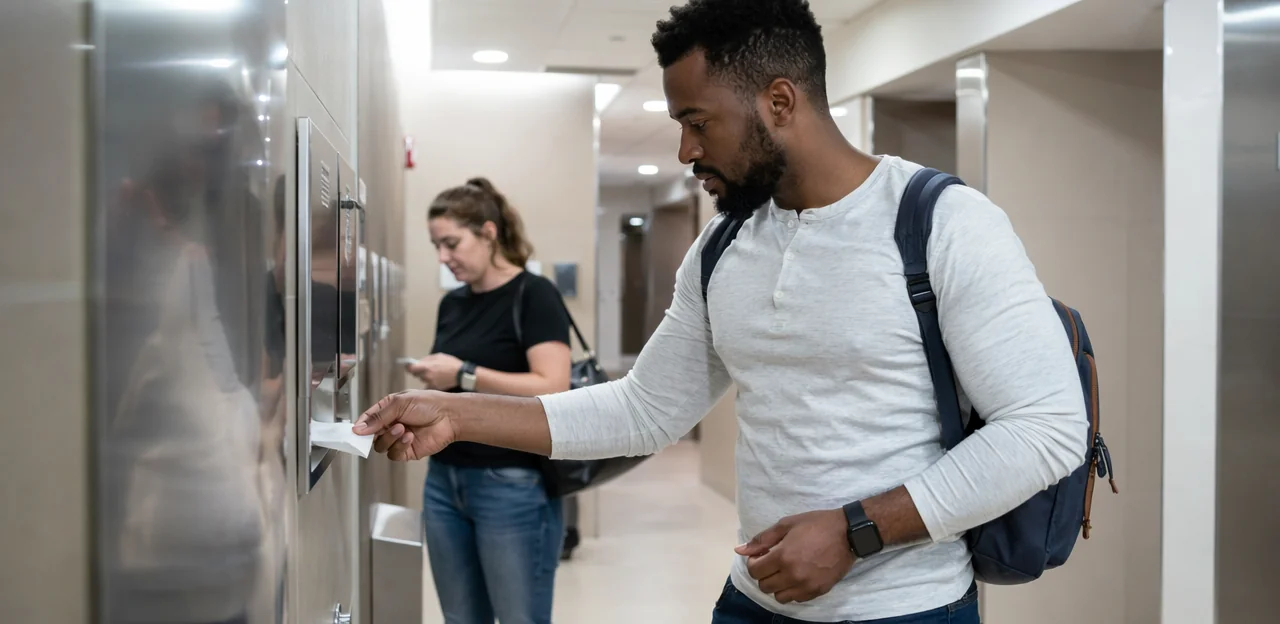
Effective airport restroom feedback becomes far more valuable when it is structured and tagged by context. Instead of relying on scattered complaints, airports can use passenger feedback data to identify patterns and prioritize fixes with confidence.
- Track by location: Compare terminals, gates, lounges, and arrivals areas to spot underperforming restrooms.
- Track by time: Reveal peak-hour cleaning gaps, supply shortages, or recurring late-night maintenance issues.
- Track by restroom type: Measure differences across family restrooms, accessible facilities, and standard washrooms.
With strong restroom feedback analytics, teams can turn recurring issues into clear operational actions, such as adjusting cleaning schedules, restocking frequency, or repair response times. The result is measurable facility performance insights that help airports move from anecdotal feedback to service standards, KPI tracking, and continuous improvement.
Key metrics airports should monitor
To turn airport restroom feedback into operational improvements, airports should track a focused set of measurable KPIs:
- Cleanliness score tracking: Monitor average cleanliness ratings by restroom, time of day, and daypart to spot recurring problem windows.
- Facility response time: Measure how quickly teams acknowledge and act on alerts after a passenger reports an issue.
- Refill rates: Track soap, paper, and sanitizer stockout frequency to reduce preventable complaints.
- Issue resolution speed: Separate minor fixes from maintenance-heavy problems to understand true closure times.
- Satisfaction by terminal: Compare terminals, gates, and high-traffic zones to prioritize staffing and cleaning schedules.
- Traffic-adjusted performance benchmarks: Evaluate airport restroom KPIs against passenger volume so busy areas are judged fairly.
Platforms like Tapsy can help capture real-time signals and route issues faster.
How feedback helps prioritize staffing and maintenance
Airport restroom feedback becomes far more useful when it is tied to time, location, and traffic volume. With real-time restroom monitoring, airport teams can move from fixed rounds to demand-based action during rush periods.
- Adjust airport cleaning schedules: Instant low ratings or issue reports can trigger extra cleaning during arrival banks, boarding waves, or weather-related delays.
- Dispatch technicians faster: Repeated comments about broken locks, leaks, odors, or dryers help route maintenance crews to the right restroom before issues escalate.
- Replenish supplies proactively: Trends in feedback, paired with passenger flow data, highlight when soap, paper, and sanitizer run low fastest.
Over time, this data supports predictive facility maintenance, helping managers staff smarter, reduce downtime, and protect the passenger experience at peak volume.
Using AI and analytics to turn restroom feedback into decisions
How AI identifies patterns across terminals and time periods
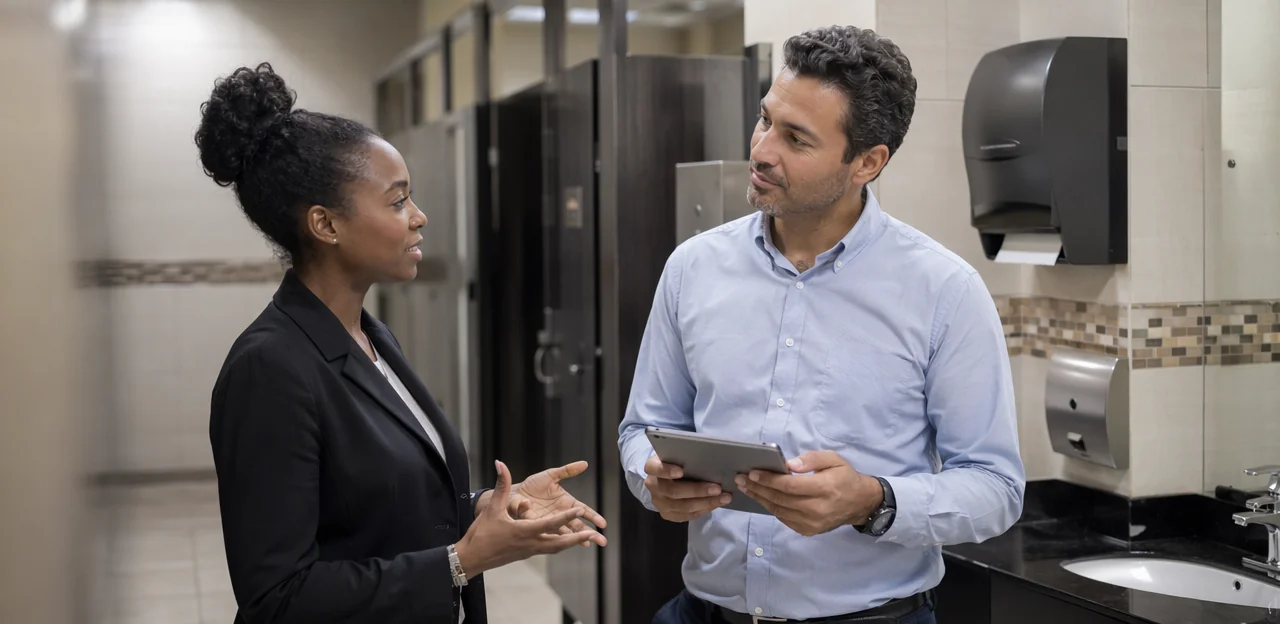
With airport restroom feedback captured in real time, AI can turn scattered comments and low ratings into clear operational priorities. AI restroom analytics and broader airport analytics help teams spot where issues repeat, when they peak, and which terminals need faster intervention.
- Detect hotspots: AI clusters complaints by restroom, gate zone, terminal, or time of day to reveal persistent cleanliness or supply issues.
- Find recurring failures: It flags repeated themes such as broken locks, empty soap dispensers, odors, or long cleaning gaps.
- Track sentiment trends: Passenger sentiment analysis shows whether satisfaction drops during delays, overnight periods, or seasonal surges.
- Predict demand spikes: By combining feedback with flight schedules and footfall data, teams can schedule cleaners, restock supplies, and deploy supervisors more efficiently.
Platforms like Tapsy can support this with real-time, location-aware feedback capture.
Combining feedback with operational and traffic data
Linking airport restroom feedback to operational context turns isolated complaints into actionable insight. When teams combine feedback with flight schedules, passenger volumes, staffing levels, and sensor data, they gain a clearer view of what is driving restroom issues and when intervention is needed.
- Match feedback to flight banks: Identify spikes in cleanliness complaints after large arrivals or delays.
- Layer in staffing data: See whether low satisfaction aligns with understaffed shifts or slow response times.
- Use sensor signals: Pair comments with occupancy, consumable levels, and cleaning-event data for stronger restroom usage analytics.
- Track trends by terminal or gate cluster: This improves resource allocation using airport operations analytics and broader travel mobility data.
The result is faster service recovery, smarter scheduling, and more reliable facility standards.
Building a continuous improvement loop
To make airport restroom feedback actionable, airports need a closed-loop feedback process that connects passenger input to frontline response and long-term planning.
- Centralize signals in an airport performance dashboard: Combine QR/NFC submissions, cleaning logs, footfall, and dwell-time data to spot recurring issues by terminal, restroom, and time of day.
- Set smart alerts: Trigger notifications for low cleanliness scores, supply shortages, or accessibility complaints so teams can respond before satisfaction drops further.
- Create clear reporting workflows: Route issues to cleaning, maintenance, or operations teams with ownership, SLA targets, and status tracking.
- Measure outcomes: Compare response times, repeat complaints, satisfaction trends, and audit scores to evaluate what fixes work.
This turns feedback into a practical facility improvement strategy with measurable service gains. Platforms like Tapsy can support real-time capture and routing.
NFC and QR touchpoints: making feedback easy for travelers

Why low-friction feedback channels increase response rates
For airport restroom feedback, speed matters. Travelers are often in transit, carrying bags, watching boarding times, or managing families. The easier the interaction, the more likely they are to respond.
- QR restroom feedback lets passengers scan and submit a rating in seconds at the exit or near mirrors.
- NFC feedback touchpoints remove even more friction with a simple tap, ideal for busy, mobile-first travelers.
- Short, location-specific prompts improve completion rates and produce more accurate, in-the-moment insights.
- Fast interactions also boost data quality by capturing issues like cleanliness, supplies, or wait times before details are forgotten.
Well-placed passenger feedback tools turn a routine stop into a high-value operational signal.
Best practices for placement, design, and prompts
To improve airport restroom feedback, make the interaction fast, visible, and easy for global travelers:
- Optimize QR code placement: place codes at the exit, near mirrors, and by hand-dryers or sinks—areas where passengers naturally pause. Keep signage at eye level and avoid placing it only inside stalls.
- Use clear calls to action: short prompts such as “How was this restroom?”, “Report an issue in 10 seconds,” or “Help us keep this restroom clean” outperform generic survey language.
- Design for multilingual passenger feedback: detect browser language automatically, offer a visible language selector, and use simple icons plus plain wording.
- Prioritize mobile feedback experience: use mobile-first forms, large tap targets, 1–3 questions, and QR/NFC options. Solutions like Tapsy can support multilingual, touchpoint-specific flows.
Balancing convenience, privacy, and accessibility
To make airport restroom feedback effective, airports should keep the process fast, respectful, and usable for everyone. The best accessible feedback systems reduce friction while protecting passenger privacy and supporting an inclusive airport experience.
- Offer multiple input options: NFC taps, QR codes, large-print signage, voice support, and a simple web form.
- Ensure accessibility: wheelchair-reachable placement, screen-reader compatibility, strong color contrast, and clear multilingual instructions.
- Minimize data collection: allow anonymous responses by default and explain what data is stored, why, and for how long.
- Design for speed: 1–2 question flows, large buttons, and easy issue categories.
- Route urgent alerts instantly to cleaning or operations teams for faster response.
Tools like Tapsy can support multilingual, low-friction feedback journeys.
Best practices for improving airport restroom experience at scale
Designing service standards for cleanliness and availability
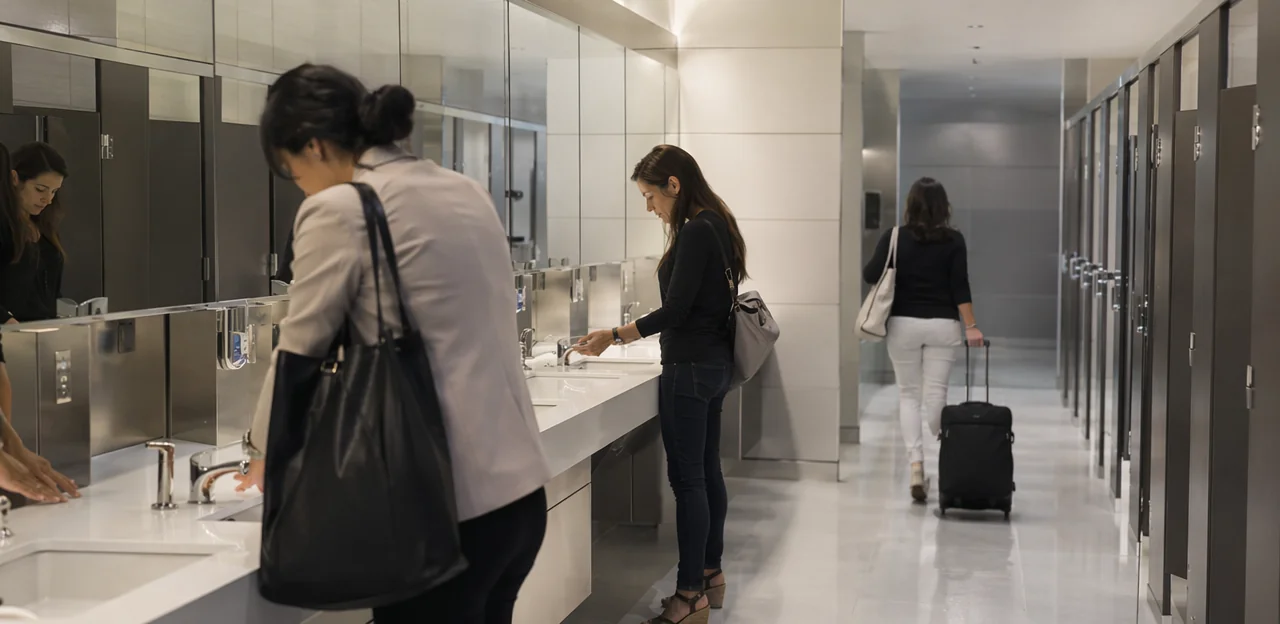
Set restroom service levels by traffic zone so teams can match effort to demand and act quickly on airport restroom feedback.
- High-traffic gates, arrivals, and security areas: inspect every 15–30 minutes; restock soap, paper, and seat covers before they reach 25% remaining.
- Medium-traffic concourses: inspect every 30–45 minutes with hourly consumable checks.
- Low-traffic zones: inspect every 60–90 minutes, with trigger-based cleaning after delays or diversions.
- Odor control: require ventilation checks each shift, rapid waste removal, and documented deep-cleaning for drains and grout.
- Accessibility compliance: verify grab bars, turning space, dispensers, alarms, and baby-change access on every round.
- Fixture uptime: set airport restroom standards of 98%+ availability for taps, toilets, dryers, and locks, supported by digital cleanliness management alerts.
Training frontline teams to respond to feedback quickly
Fast action turns airport restroom feedback into visible service recovery. Effective facilities team training should give cleaning crews, supervisors, and engineers a shared feedback response workflow so every alert leads to a clear next step.
- Cleaning crews: triage hygiene issues like spills, empty soap, or full bins within minutes using mobile alerts and checklist-based protocols.
- Supervisors: verify completion, reassign staff during peaks, and escalate repeat complaints or low satisfaction scores.
- Maintenance teams: handle faults such as blocked toilets, broken locks, leaks, or lighting failures through a defined airport maintenance response process.
Train teams on response-time targets, escalation rules, and closure confirmation. Platforms like Tapsy can help route alerts in real time, improving accountability, consistency, and passenger trust.
Using pilot programs to validate improvements
Before rolling out airport restroom feedback across an entire airport, start with an airport pilot program in one or two terminals with different passenger profiles. This reduces risk and makes restroom feedback implementation easier to refine.
- Set baseline metrics first: cleanliness scores, complaint volume, response times, supply stockouts, dwell-time patterns, and labor hours.
- Test both tools and operations: QR/NFC feedback points, alert routing, cleaning schedules, signage, and staffing adjustments.
- Compare pre- and post-launch results: track changes in satisfaction, issue resolution speed, repeat complaints, and maintenance costs.
- Quantify facility improvement ROI: connect better scores to fewer service failures, stronger passenger sentiment, and more efficient labor deployment.
Platforms such as Tapsy can support fast, real-time testing before wider deployment.
Measuring business impact and building the case for investment

How restroom feedback supports broader airport goals
- Improves airport customer satisfaction: Restrooms are a universal touchpoint, so fast fixes to cleanliness, supplies, or wait times can lift satisfaction across the journey.
- Strengthens brand perception in airports: Clean, accessible facilities signal operational discipline, care, and premium service standards.
- Protects concession dwell time: When passengers can trust restroom conditions and find issues resolved quickly, they spend less time troubleshooting and more time shopping or dining.
- Advances accessibility outcomes: Airport restroom feedback helps identify gaps in signage, layouts, fixtures, and maintenance that affect travelers with disabilities, families, and older passengers.
- Supports service excellence metrics: Real-time feedback data gives airports measurable inputs for response times, cleanliness scores, and continuous improvement targets.
Quantifying ROI from better facilities and faster response
Airports can turn airport restroom feedback into a practical airport ROI model by linking alerts and satisfaction data to operational outcomes. Track results across a few core metrics:
- Fewer complaints: Compare restroom-related complaints before and after real-time feedback deployment to estimate savings in service recovery and reputational risk.
- Passenger satisfaction improvement: Measure changes in terminal or overall journey scores, especially where restroom cleanliness strongly influences perception.
- Better labor allocation: Use issue patterns to schedule cleaners by demand, improving facility management ROI through less wasted labor and faster turnaround.
- Reduced service disruptions: Quantify fewer restroom closures, stockouts, and emergency callouts.
Platforms such as Tapsy can help capture real-time signals that make these ROI calculations more accurate.
What a future-ready restroom feedback strategy looks like
A strong airport restroom feedback approach is fast, visible, and tied to action. In future-ready airport operations, the goal is not just collecting comments, but turning them into measurable service improvements.
- Easy passenger input: Place NFC and QR touchpoints at exits so travelers can report cleanliness, supplies, odors, or accessibility issues in seconds.
- AI-powered analysis: Use smart airport feedback tools to detect sentiment, spot repeat issues, and identify patterns by terminal, time, or restroom zone.
- Operational accountability: Route alerts to cleaning teams, assign ownership, and track response times through dashboards.
- Continuous improvement: Review trends regularly to refine staffing, maintenance schedules, and service standards.
This is the foundation of an effective airport restroom feedback strategy.
Conclusion
In busy travel environments, small moments shape the overall journey—and few touchpoints influence perception more than the restroom. Cleanliness, availability, maintenance, and accessibility all affect how passengers judge an airport’s efficiency, care standards, and brand experience. That’s why airport restroom feedback is far more than a facilities metric; it’s a real-time signal of operational performance, passenger satisfaction, and service quality.
By capturing airport restroom feedback at the moment of use through AI-powered analytics, NFC and QR touchpoints, and simple mobile-friendly surveys, airports can identify issues faster, prioritize cleaning resources, reduce complaints, and improve passenger trust. These insights also help teams spot trends across terminals, peak travel periods, and specific amenities, turning a traditionally overlooked space into a high-impact source of continuous improvement.
For airport operators, the next step is clear: make airport restroom feedback an active part of your passenger experience strategy. Start with accessible feedback points, connect data to response workflows, and review insights regularly to drive measurable improvements. If you’re exploring practical tools, solutions like Tapsy can support real-time engagement and faster service recovery. Investing in this touchpoint today can lead to cleaner facilities, happier travelers, and a stronger airport experience tomorrow.
Frequently Asked Questions
- Why do airport restrooms have such a strong impact on passenger perception?
Restrooms are one of the fastest ways travelers judge an airport’s cleanliness, safety, and overall service quality. A clean, stocked, and well-maintained facility reinforces trust, while a poor experience can damage satisfaction even if other services perform well.
- What are the most common airport restroom issues passengers notice right away?
Passengers quickly notice dirty stalls, wet floors, overflowing bins, bad odors, and empty soap or paper dispensers. They also react strongly to long queues, broken fixtures, and accessibility problems such as unusable accessible stalls or poor signage.
- How does real-time restroom feedback help airport operations teams?
Real-time feedback helps teams identify problems as they happen instead of relying on delayed complaints. That allows cleaning, restocking, and maintenance teams to respond faster and prevent small issues from becoming repeated service failures.
- Which restroom performance metrics should airports track?
Useful metrics include cleanliness scores, facility response time, refill rates, issue resolution speed, and satisfaction by terminal or zone. Traffic-adjusted benchmarks are also important so busy restrooms are evaluated fairly against passenger volume.
- How can airports use feedback to improve cleaning schedules?
Feedback tied to time, location, and traffic volume helps teams move from fixed cleaning rounds to demand-based action. Low ratings or repeated issue reports can trigger extra cleaning during arrival peaks, boarding waves, delays, or other high-pressure periods.
- What does AI add to airport restroom feedback analysis?
AI helps turn scattered comments and ratings into clear patterns across terminals, gate zones, and time periods. It can highlight recurring problems like odors, broken locks, empty dispensers, or satisfaction drops during delays and seasonal surges.
- Why should restroom feedback be combined with flight schedules and passenger traffic data?
Combining feedback with operational context makes it easier to understand what is driving complaints and when intervention is needed. Airports can match issues to flight banks, staffing levels, occupancy signals, and consumable levels to schedule resources more effectively.
- What is a closed-loop restroom feedback process in an airport?
A closed-loop process connects passenger input to alerts, team ownership, response workflows, and outcome measurement. Airports centralize signals, route issues to the right team, track SLA targets, and review repeat complaints and response times to improve standards over time.
- Are QR codes or NFC touchpoints better for airport restroom feedback?
Both are designed to reduce friction and capture feedback quickly at the point of experience. QR codes let travelers scan and respond in seconds, while NFC can make the process even faster with a simple tap for mobile-first users.
- Where should airports place restroom feedback prompts for the best response rates?
The best locations are where passengers naturally pause, such as exits, mirrors, sinks, hand-dryers, or nearby areas at eye level. Prompts should be short, visible, and easy to understand rather than hidden inside stalls or buried in generic signage.
- How can airports make restroom feedback accessible and privacy-friendly?
Airports can offer multiple input options such as QR, NFC, large-print signage, voice support, and simple web forms. They should support screen readers, strong contrast, wheelchair-reachable placement, multilingual instructions, and anonymous responses by default with clear data explanations.
- What service standards should airports set for restroom cleanliness and availability?
Standards should vary by traffic zone, with high-traffic areas inspected more frequently than medium- or low-traffic zones. Airports should also define targets for consumable restocking, odor control, accessibility checks, and high fixture uptime for taps, toilets, dryers, and locks.
- How should frontline teams be trained to respond to restroom feedback?
Cleaning crews, supervisors, and maintenance teams need a shared workflow so each alert leads to a clear next step. Training should cover triage, escalation rules, response-time targets, reassignment during peaks, and closure confirmation for both hygiene and repair issues.
- Why is it useful to start with a pilot program before rolling out restroom feedback airport-wide?
A pilot in one or two terminals reduces risk and helps refine tools, signage, alert routing, and staffing changes before wider deployment. It also makes it easier to compare baseline and post-launch results for cleanliness scores, complaint volume, response times, and maintenance costs.
- How can airports measure the business value of better restroom feedback systems?
Airports can link feedback and alert data to fewer complaints, improved passenger satisfaction, better labor allocation, and fewer closures or stockouts. This supports a practical ROI case by showing how faster response and better facility standards improve both operations and passenger trust.