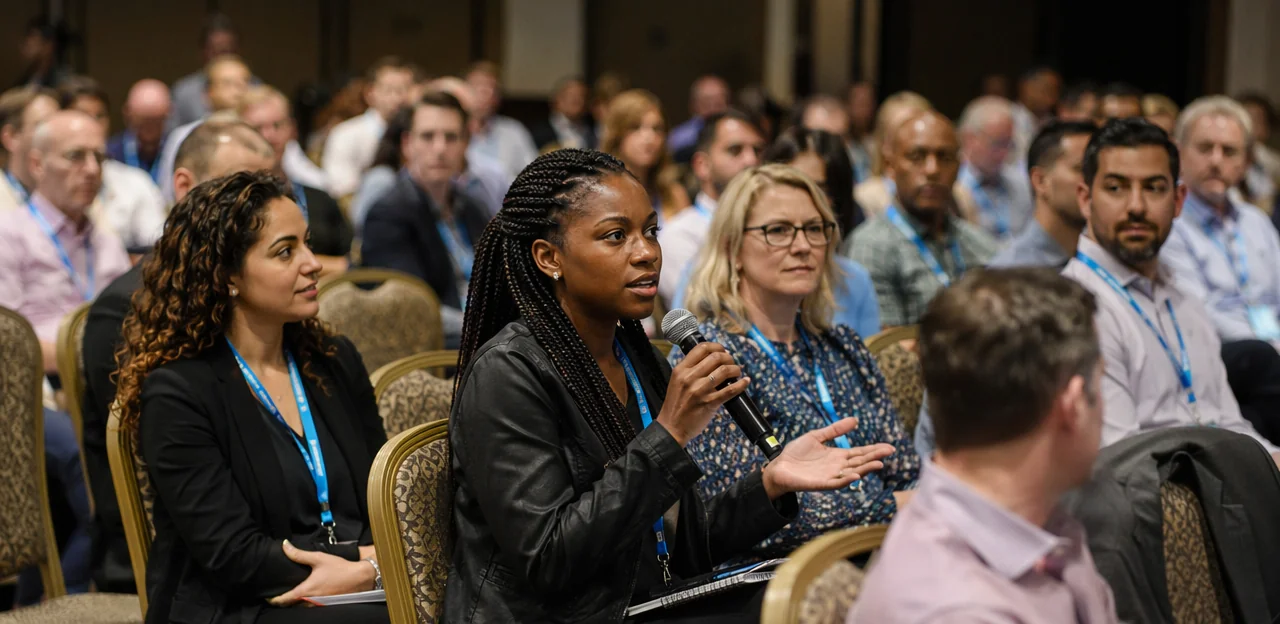
A great conference doesn’t end when the applause starts—it succeeds when the audience becomes part of the experience. In today’s event landscape, attendees expect more than polished presentations and packed agendas. They want to be heard, involved, and valued in real time. That’s why conference audience engagement has become a critical factor in not only delivering memorable events, but also driving meaningful business outcomes.
Feedback is no longer just a post-event metric used to measure satisfaction. When captured at the right moments, it can become a powerful conversion tool—helping organizers improve sessions on the fly, identify high-intent attendees, personalize follow-up, and turn passive participants into active prospects, loyal customers, or repeat delegates. From live polls and Q&A sessions to instant surveys and interactive touchpoints, the most effective conferences use audience insight to shape the event experience as it happens.
This article explores how event professionals can use feedback strategically to strengthen engagement before, during, and after a conference. We’ll look at why real-time interaction matters, how feedback supports conversion goals, and which tools and tactics can help create a more responsive, attendee-focused event journey.
Why conference audience engagement matters for event conversions

Defining conference audience engagement in modern events
Conference audience engagement is the degree to which attendees actively participate in, respond to, and emotionally connect with an event. In modern conferences, it goes beyond simply filling seats—it shapes the full audience experience before, during, and after each session.
Strong event engagement typically includes:
- Active participation: asking questions, voting in polls, joining discussions, or networking
- Emotional investment: feeling seen, inspired, and connected to the event’s purpose
- Session interaction: engaging with speakers, content, apps, and live feedback tools
- Overall event experience: how attendees perceive value, relevance, and satisfaction across the journey
To improve conference audience engagement, design sessions that invite two-way interaction, collect real-time feedback, and act on attendee insights quickly. This turns passive listeners into involved participants and helps events drive stronger loyalty, satisfaction, and conversion outcomes.
How engagement influences pipeline, retention, and ROI
Strong conference audience engagement turns passive attendees into measurable business outcomes. When people interact with polls, Q&A, live feedback, and personalized follow-ups, they signal intent—making it easier to improve conference conversions and prove event ROI.
- Higher response to offers: Engaged attendees are more likely to click post-event resources, redeem exclusive offers, or join demos because the experience already feels relevant.
- More follow-up meetings: Real-time feedback helps sales teams identify warm prospects and prioritize outreach while interest is still high.
- Better attendee retention: Participants who feel heard are more likely to return to future events and recommend them to peers.
- Stronger lead quality: Engagement data reveals buying signals, helping teams separate casual interest from qualified leads.
Tools like Tapsy can help capture and act on these signals in real time.
Why feedback is more than a satisfaction metric
For strong conference audience engagement, feedback should be treated as a conversion optimization asset, not just a measure of attendee satisfaction. The right event feedback reveals where attendees hesitate, drop off, or fail to take the next step—whether that is visiting a sponsor booth, booking a follow-up demo, downloading content, or returning next year.
- Identify friction points: Pinpoint unclear agendas, weak session formats, long queues, or poor app navigation that reduce action.
- Spot conversion opportunities: Find which topics, speakers, or touchpoints drive registrations, networking, or sponsor interactions.
- Act in real time: Use live polls or in-event check-ins to fix issues before they affect outcomes.
Tools like Tapsy can help capture real-time insights that turn feedback into measurable attendee action.
Using feedback to improve the attendee journey

Pre-event feedback for agenda and messaging alignment
Strong conference audience engagement starts before attendees arrive. A well-designed pre-event survey can uncover what people want to learn, the challenges they are trying to solve, and which session formats they prefer. These audience insights help teams make smarter conference planning decisions and shape messaging that feels relevant from the first email.
Use pre-event feedback to identify:
- Attendee goals: career growth, networking, product discovery, or technical learning
- Preferred topics: trends, case studies, hands-on workshops, or leadership sessions
- Pain points: budget limits, skill gaps, implementation challenges, or industry changes
Registration forms can include a few strategic questions, while quick polls on email or social channels validate interest in specific themes. Audience research from past events, CRM data, and website behavior can add deeper context. If patterns emerge early, organizers can refine the agenda, personalize promotions, and highlight the sessions most likely to drive registrations and attendance.
Real-time feedback during sessions and networking
Real-time feedback turns conference audience engagement into something measurable and actionable while the event is still unfolding. Instead of waiting for post-event surveys, teams can use in-the-moment signals to improve session engagement and attendee satisfaction on the spot.
- Live polls reveal audience interest, confusion, or sentiment during presentations, helping speakers adjust pace, examples, or depth.
- Q&A tools surface the most relevant questions, letting moderators prioritize themes attendees care about most.
- Session ratings collected immediately after each talk highlight which formats, speakers, or topics are resonating.
- Mobile app prompts can ask targeted questions during breaks, sponsor activations, or networking sessions, boosting event app engagement.
This approach makes live event feedback operational, not just informative. Event teams can reassign room capacity, tweak agendas, improve signage, or add networking support in real time. Platforms such as Tapsy can also help capture immediate reactions in a simple, accessible way.
Post-event feedback that supports follow-up conversions
A strong post-event survey turns conference audience engagement into measurable sales opportunities. The key is to combine stated feedback with behavioral data—session attendance, booth visits, content downloads, app clicks, and Q&A participation—to identify intent and personalize event follow-up.
- Segment by interest and readiness: Group attendees by topics viewed, satisfaction scores, role, and buying stage. For example, highly engaged prospects who visited product sessions may be ready for a demo, while early-stage attendees may need educational content.
- Personalize lead nurturing: Use survey responses to send relevant case studies, session recaps, pricing guides, or consultation invites instead of generic emails.
- Trigger next-best actions:
- Send demo offers to high-intent attendees
- Share tailored resources with warm leads
- Promote early-bird registration to satisfied participants
Tools such as Tapsy can help centralize feedback and behavior signals, making lead nurturing faster and more targeted.
Best feedback channels for stronger audience experience

Surveys, polls, and forms that attendees actually complete
To improve conference audience engagement, make feedback requests fast, relevant, and easy to answer. The best event surveys respect attendees’ time while giving organizers insights they can act on quickly.
- Keep it short: Aim for 3–5 questions for in-session polls and under 2 minutes for post-event forms.
- Ask at the right moment: Trigger questions immediately after a session, demo, or networking activity while impressions are fresh.
- Focus on relevance: Tailor questions by attendee type, session track, or event stage to improve survey response rates.
- Mix formats wisely: Use quick ratings, multiple choice, and one open-text question for richer insights.
- Show clear value: Explain how responses will improve future sessions, offers, or follow-up content.
- Use mobile-first audience feedback tools: Simple QR, SMS, or NFC-based options such as Tapsy can reduce friction and boost completion.
Interactive event technology and engagement platforms
The right event technology turns feedback collection into a live part of conference audience engagement, not a post-event afterthought. Use a mix of audience engagement tools to make participation easy and measurable:
- Event apps: Push session polls, ratings, and personalized prompts in real time.
- QR codes: Place them on slides, badges, and booths to capture instant feedback with minimal friction.
- Chat features: Enable live Q&A, upvoting, and moderated discussion to surface audience intent and objections.
- Gamification: Reward surveys, check-ins, or idea submissions with points, prizes, or leaderboard visibility.
- Audience response systems: Run polls, quizzes, and sentiment checks during sessions to guide speakers and qualify leads.
Together, these tools create an interactive conference experience that boosts participation while generating actionable conversion data.
Qualitative feedback from conversations and community touchpoints
To improve conference audience engagement, look beyond survey scores and app analytics. Qualitative feedback from real conversations often reveals the emotions, objections, and motivations behind attendee behavior.
- Networking lounges: Listen for repeated questions, frustrations, or excitement around sessions, pricing, or next-step interest.
- Moderator observations: Ask moderators to note energy shifts, common audience concerns, and which topics trigger the strongest reactions.
- Social media comments: Track live posts, replies, and event hashtags to spot unfiltered attendee sentiment in real time.
- Sponsor interactions: Booth teams often hear buying signals, hesitation points, and competitor mentions that formal tools miss.
Turn these insights into action by tagging recurring themes and sharing them with sales and marketing. This helps your event community feel heard while improving conversion messaging after the event.
Turning attendee feedback into conversion strategy

Identifying high-intent signals in feedback data
To turn conference audience engagement into pipeline, look for patterns that reveal true purchase readiness rather than general interest. Combine intent data from surveys, in-session actions, and post-event interactions to improve conference lead scoring.
- Survey answers: Flag attendees who mention budget, implementation timelines, vendor comparisons, or urgent challenges. Open-text responses often reveal stronger buying intent than rating scales alone.
- Session behavior: Prioritize people who attend product-focused sessions, return for advanced topics, or stay through demos and Q&A. This attendee behavior often signals active evaluation.
- Engagement patterns: Track repeat booth visits, content downloads, meeting requests, and clicks on follow-up emails. Multiple high-value actions within a short window usually indicate readiness.
Assign weighted scores to these signals so sales teams can focus on the most conversion-ready leads first.
Segmenting audiences for personalized follow-up
Feedback is most valuable when it drives smarter conference audience engagement after the event. Use survey responses, session ratings, and poll data to build practical audience segmentation groups, then tailor outreach to each segment.
- By interests: Tag attendees by topics, speakers, or formats they engaged with most.
- By job roles: Create tracks for executives, marketers, operators, or technical teams with role-specific next steps.
- By satisfaction level: Send recovery messages to dissatisfied attendees, and upsell highly satisfied ones into demos, memberships, or future events.
- By funnel stage: Separate first-time visitors, warm leads, and sales-ready contacts for more timely follow-up.
This approach strengthens personalized event marketing, sharpens attendee personas, and improves conversions by making every message feel relevant rather than generic.
Aligning sales, marketing, and event teams around insights
To turn conference audience engagement into revenue, teams need one shared view of attendee behavior and a clear follow-up workflow. A centralized dashboard makes event data insights visible across functions, so marketing can spot high-intent actions, sales can prioritize outreach, and event teams can improve future touchpoints.
- Create shared feedback dashboards: Combine survey responses, session ratings, booth interactions, and content downloads in one place.
- Define handoff rules: Route hot leads to sales for meetings or demos, while marketing nurtures lower-intent contacts.
- Tag sponsor-related signals: Show which sessions, activations, or conversations delivered sponsorship value.
- Set follow-up SLAs: Contact engaged attendees quickly with relevant offers and personalized next steps.
This approach strengthens sales and marketing alignment, improves your event marketing strategy, and builds long-term relationships beyond the event itself.
Metrics to measure engagement and feedback-driven success

Core engagement KPIs for conferences and events
To improve conference audience engagement, track a focused set of engagement KPIs that reveal how attendees interact before, during, and after sessions. Key conference metrics include:
- Session attendance: compare registrations vs. actual check-ins by track, speaker, or time slot.
- Poll and Q&A participation: measure live response rates to gauge attention and relevance.
- Event app activity: track logins, agenda views, message activity, and feature usage.
- Dwell time: monitor how long attendees stay in sessions, expo areas, or branded zones.
- Networking interactions: count meeting requests, chat exchanges, and connection scans.
- Content downloads: measure interest in presentations, whitepapers, and follow-up resources.
Used together, these event analytics show what drives engagement and where feedback can boost conversions.
Feedback metrics that reveal experience quality
To improve conference audience engagement, track a mix of quantitative and qualitative signals instead of relying on one survey score alone:
- Response rates: Measure who is replying, when, and from which sessions. Low rates can signal survey fatigue or weak engagement.
- Event satisfaction metrics: Use overall satisfaction, NPS, or goal-completion scores to benchmark experience quality.
- Session ratings: Compare speakers, formats, and topics to identify what drives attention and conversions.
- Sentiment trends: Review positive, neutral, and negative patterns over time to catch friction points early.
- Open-text themes: Use audience feedback analysis to group recurring comments on content relevance, pacing, networking, and logistics.
Together, these metrics create a more accurate view of audience experience.
Conversion metrics tied to attendee engagement
To prove conference audience engagement is driving business value, connect feedback signals to clear event conversion metrics:
- Booked meetings: Track how many app interactions, poll responses, or session ratings lead to demo requests or sales meetings.
- Qualified event leads: Score attendees based on engagement depth—booth visits, Q&A participation, survey completion, and content downloads—to identify stronger sales opportunities.
- Sponsor interactions: Measure scans, sponsored session participation, and feedback sentiment to show sponsor influence and conversion potential.
- Repeat attendance: Compare satisfaction and engagement scores with re-registration rates.
- Revenue influence: Tie attendee actions to pipeline creation, closed deals, upsells, and renewals for stronger conference ROI.
Use integrated dashboards or tools like Tapsy to capture real-time feedback and link it to conversion outcomes.
Common mistakes and best practices for feedback-led engagement
Mistakes that reduce trust and response quality
Common event feedback mistakes can quietly undermine conference audience engagement and lower response quality:
- Over-surveying attendees creates survey fatigue, reducing completion rates and honesty.
- Asking vague questions leads to unusable answers; keep prompts specific and tied to sessions, speakers, or logistics.
- Choosing poor timing—such as sending surveys too late—weakens recall and relevance.
- Lacking transparency about how feedback will be used damages attendee trust.
- Failing to act on input is the biggest mistake; share changes made so attendees see their voices matter.
Best practices for creating a continuous feedback loop
- Ask targeted questions: Use short, specific prompts at key moments—session relevance, speaker clarity, networking value, and next-step intent—to strengthen your feedback loop and improve conference audience engagement.
- Close the loop quickly: Share what you heard, what will change, and when. Post-event recap emails and in-app updates build trust and support your audience engagement strategy.
- Turn insights into action: Track recurring themes, segment responses by attendee type, and connect feedback to registrations, upgrades, or sponsor interest for continuous event improvement and stronger conversion performance.
Building a repeatable framework for future conferences
Turn each event into a stronger conference strategy by using a simple review cycle:
- Document lessons fast: Capture attendee feedback, top questions, drop-off points, and high-performing sessions within 48 hours.
- Benchmark results: Track the same KPIs across events—response rates, session participation, lead quality, and post-event conversions.
- Refine tactics: Compare in-person, hybrid, and virtual formats to identify what improves conference audience engagement.
- Standardize playbooks: Save proven surveys, polls, messaging, and follow-up workflows in a repeatable event framework for ongoing event optimization.
Conclusion
Ultimately, strong conference audience engagement is not just about keeping attendees interested in the moment—it is about turning participation into measurable business results. When organizers collect feedback in real time, ask the right questions at key touchpoints, and act on insights quickly, they create more relevant sessions, stronger speaker performance, and a more personalized event experience. Just as importantly, that feedback becomes a conversion tool: it helps identify high-intent attendees, refine follow-up messaging, and move participants toward registration renewals, sponsorship interest, product demos, or future event attendance.
The most successful event teams treat feedback as an ongoing conversation rather than a post-event formality. By embedding polls, surveys, live Q&A, and interactive response tools throughout the attendee journey, they strengthen conference audience engagement while building trust and capturing valuable first-party data.
Now is the time to audit your current feedback strategy and identify where engagement is being lost. Start with one or two high-impact improvements, such as live session polling or personalized post-event follow-up, then measure the conversion impact. For teams looking to modernize real-time engagement and feedback collection, tools like Tapsy can offer a useful example of how interactive feedback can drive action. For next steps, explore event analytics benchmarks, attendee journey mapping, and feedback platform options to build a smarter engagement strategy.
Frequently Asked Questions
- What does conference audience engagement mean in modern events?
Conference audience engagement is the level of active participation, response, and emotional connection attendees have with an event. It includes actions like asking questions, voting in polls, joining discussions, networking, and interacting with speakers, content, apps, and feedback tools. It also reflects how attendees perceive value and relevance across the full event journey.
- Why does audience engagement affect conference conversions?
Engaged attendees are more likely to respond to offers, book follow-up meetings, and interact with post-event resources because the experience feels relevant to them. Their actions also reveal intent, which helps teams identify stronger leads and improve event ROI. When attendees feel heard, they are also more likely to return and recommend future events.
- How can feedback be used as a conversion tool instead of only a satisfaction metric?
Feedback can show where attendees hesitate, drop off, or fail to take the next step, such as visiting a sponsor booth or booking a demo. It can also highlight which topics, speakers, and touchpoints drive action. When collected in real time, it helps teams fix issues and improve outcomes before the event ends.
- What should organizers ask before a conference to improve engagement?
Pre-event questions should focus on attendee goals, preferred topics, and key pain points. Useful areas include career growth, networking, product discovery, technical learning, budget limits, skill gaps, and implementation challenges. These insights help refine the agenda, personalize promotions, and align messaging with real attendee interests.
- Which real-time feedback methods work best during conference sessions?
Live polls, Q&A tools, immediate session ratings, and mobile app prompts are effective because they capture reactions while the experience is still fresh. These methods help speakers adjust pacing, examples, and depth based on audience interest or confusion. They also give event teams signals they can use to improve logistics and support during the event.
- How does post-event feedback support follow-up conversions?
Post-event feedback becomes more useful when combined with behavioral data such as session attendance, booth visits, content downloads, app clicks, and Q&A participation. That combination helps teams segment attendees by interest and readiness, then send more relevant follow-up. High-intent attendees may receive demo offers, while others may get educational resources or early-bird registration messages.
- What makes event surveys and polls more likely to be completed?
Short, relevant, and well-timed questions improve completion rates. In-session polls should stay around 3–5 questions, and post-event forms should take under two minutes. Mobile-first formats such as QR, SMS, or NFC-based options also reduce friction and make feedback easier to submit.
- How do event apps, QR codes, and gamification improve the audience experience?
These tools make participation easier and more measurable throughout the event. Event apps can push polls and ratings in real time, QR codes allow instant feedback with minimal effort, and gamification can reward surveys, check-ins, or idea submissions. Together, they create a more interactive experience while generating useful conversion data.
- Why is qualitative feedback from conversations important at conferences?
Conversations often reveal emotions, objections, and motivations that survey scores and app analytics miss. Networking lounges, moderator observations, social media comments, and sponsor interactions can uncover repeated questions, frustrations, and buying signals. Tagging and sharing these themes helps improve both follow-up messaging and future event planning.
- What attendee behaviors signal high purchase intent after a conference?
Strong intent signals include survey answers that mention budget, timelines, vendor comparisons, or urgent challenges. Behavioral signs include attending product-focused sessions, staying through demos and Q&A, making repeat booth visits, downloading content, requesting meetings, and clicking follow-up emails. Weighted lead scoring can help sales teams prioritize the most conversion-ready contacts.
- How should attendees be segmented for personalized follow-up?
Useful segments include interests, job roles, satisfaction levels, and funnel stages. Teams can group people by the topics or speakers they engaged with, separate executives from technical teams, and distinguish first-time visitors from sales-ready leads. This makes follow-up more relevant and improves the chance of conversion.
- How can sales, marketing, and event teams work together using feedback data?
A shared dashboard should combine survey responses, session ratings, booth interactions, and content downloads in one place. Clear handoff rules help route hot leads to sales while marketing nurtures lower-intent contacts. Fast follow-up and shared visibility improve both revenue opportunities and future event decisions.
- Which KPIs should be tracked to measure conference engagement?
Key engagement KPIs include session attendance, poll and Q&A participation, event app activity, dwell time, networking interactions, and content downloads. These metrics show how attendees interact before, during, and after sessions. When reviewed together, they help identify what is driving engagement and where improvements are needed.
- What feedback metrics show whether the attendee experience was strong?
Useful feedback metrics include response rates, overall satisfaction, NPS, goal-completion scores, session ratings, sentiment trends, and recurring open-text themes. These signals provide a broader view than a single score alone. They help teams spot friction points in content, pacing, networking, and logistics.
- What common mistakes reduce trust and response quality in conference feedback?
Over-surveying attendees can create fatigue and lower both completion rates and honesty. Vague questions, poor timing, weak transparency about how feedback will be used, and failure to act on input also reduce trust. A stronger approach is to ask targeted questions at key moments, share what changed, and document lessons quickly for future events.