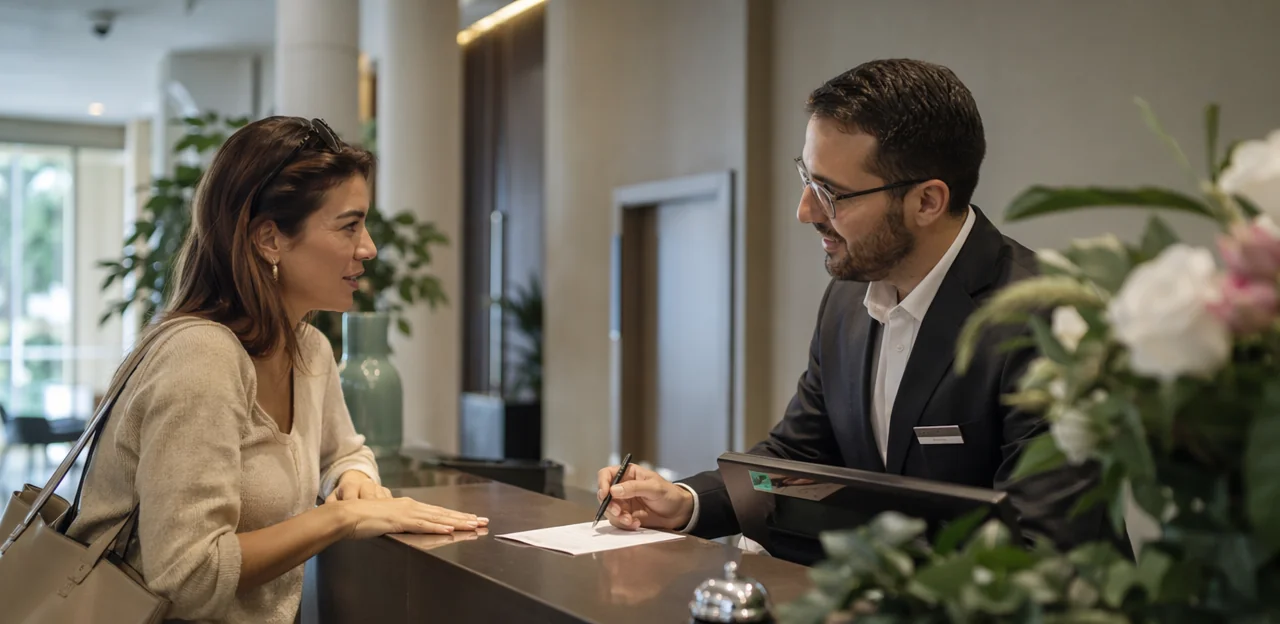
A memorable hotel stay is rarely defined by a single moment. It is shaped by every interaction along the way, from the speed of check-in and the comfort of the room to breakfast service, staff responsiveness, and the ease of checkout. For hoteliers, understanding how guests feel at each of these touchpoints is no longer optional. It is essential to delivering consistent service, protecting reputation, and turning first-time visitors into loyal guests.
That is where hotel guest journey feedback becomes so valuable. Instead of relying only on post-stay reviews or generic surveys, hotels can measure the experience in real time and identify exactly where satisfaction rises or falls during the guest journey. This creates opportunities to resolve issues before they become public complaints, improve operations, and build a more guest-centric experience from arrival to departure.
In this article, we will explore how to measure feedback across the full hotel journey, which touchpoints matter most, and how hospitality teams can use data to improve service recovery, staff performance, and overall guest satisfaction. We will also look at practical ways hotels can collect timely insights, including real-time tools such as Tapsy, to better understand what guests experience when it matters most.
Why hotel guest journey feedback matters
Defining the guest journey in hospitality
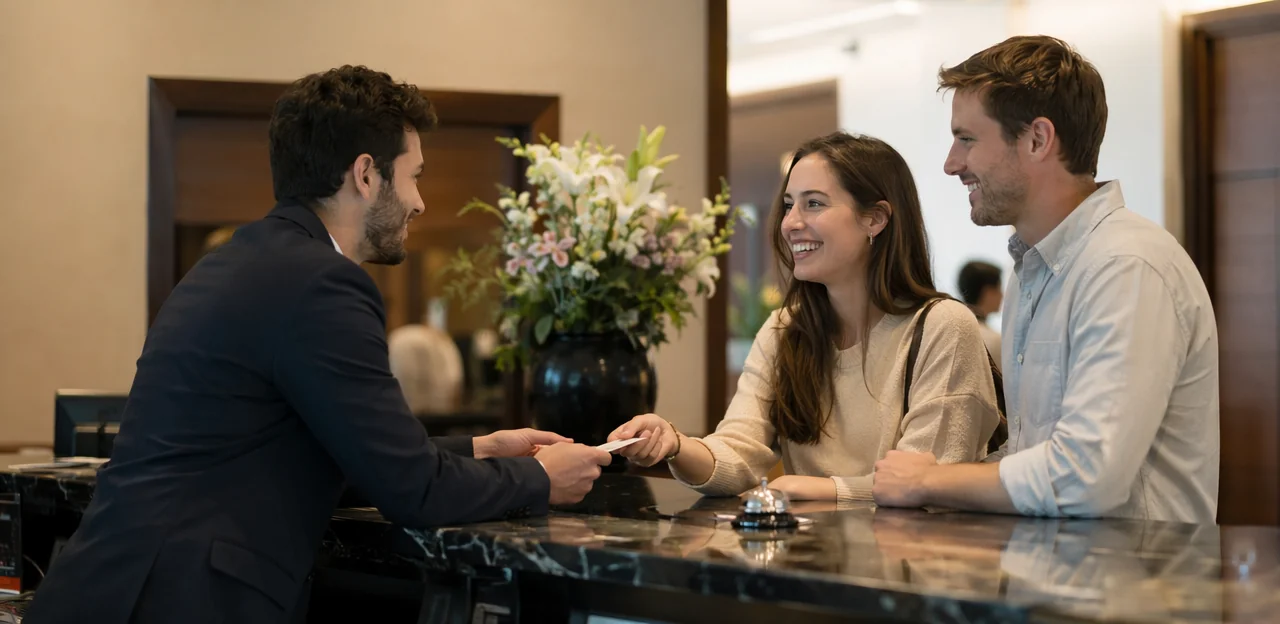
In guest journey hospitality, the experience spans every touchpoint, not just the room itself. Effective hotel guest journey feedback tracks how guests feel at each stage of the stay:
- Pre-arrival: booking ease, confirmation clarity, special requests, and expectations set online
- Arrival and check-in: parking, queue times, welcome quality, and speed of service
- In-stay: room comfort, housekeeping, dining, amenities, and staff responsiveness
- Checkout and post-stay: billing accuracy, departure experience, follow-up messages, and review intent
This journey-based approach gives a clearer view of the hotel customer experience than a single satisfaction score. It helps hotels identify exactly where friction happens, prioritize fixes, and recover issues before they become negative reviews. Tools like Tapsy can support touchpoint-level feedback collection in real time.
How feedback influences satisfaction, loyalty, and revenue
Timely hotel guest journey feedback helps hotels fix problems before they turn into complaints, poor ratings, or lost bookings. When teams act during the stay, they improve the guest satisfaction hotel experience and create stronger emotional trust.
- Reduce friction fast: Spot issues like slow check-in, room cleanliness, or breakfast delays in real time.
- Improve service recovery: Quick action, such as a room change or follow-up from staff, can turn a negative moment into a positive memory.
- Increase repeat bookings: Guests who feel heard are more likely to return, boosting hotel loyalty and direct revenue.
- Strengthen reputation: Better in-stay experiences support stronger reviews and smarter hotel review management.
Tools like Tapsy can help capture and route feedback at key touchpoints.
Traditional hotel feedback programs often miss the moments that shape satisfaction most.
- A generic hotel feedback survey sent after departure relies on memory, so details about check-in delays, room issues, or breakfast service are often forgotten or blurred.
- A post-stay survey hotel approach also suffers from low response rates. Many guests ignore email surveys once the trip is over, leaving hotels with a small and often biased sample.
- Delayed feedback limits recovery. If you only hear about a problem after checkout, the chance to fix it, protect reviews, and improve the stay has already passed.
Effective hotel guest journey feedback should support guest experience measurement at key touchpoints throughout the stay, not just at the end. Tools like Tapsy can help hotels capture fast, in-the-moment insights where service happens.
Mapping feedback across every stage of the stay

Pre-arrival and arrival touchpoints
Strong hotel guest journey feedback starts before the guest steps through the door. To improve the hotel arrival experience, measure the moments that shape confidence and reduce friction:
- Booking ease: Was the website fast, mobile-friendly, and clear on rates, policies, and room details?
- Confirmation clarity: Did guests receive accurate booking details, check-in times, cancellation terms, and contact information?
- Pre-arrival guest communication: Track whether reminder emails or SMS messages answered key questions about transport, amenities, upgrades, and local tips.
- Parking and wayfinding: Ask if parking instructions were easy to follow and whether signage made arrival stress-free.
- Reception first impressions: Use hotel check-in feedback to assess queue times, staff warmth, efficiency, and how welcome guests felt on arrival.
Tools like Tapsy can help capture feedback at reception while impressions are still fresh.
In-stay moments that shape perception
The middle of the stay is where hotel guest journey feedback becomes most actionable. Instead of waiting until checkout, collect in-stay guest feedback at the moments that define comfort and convenience:
- Room cleanliness and amenities: Use short mobile or QR surveys after check-in to capture room experience feedback on bed comfort, bathroom cleanliness, Wi-Fi, temperature, and stocked amenities.
- Dining and housekeeping: Ask for quick ratings after breakfast, room service, or housekeeping visits to monitor consistency and overall hotel service quality.
- Maintenance and staff responsiveness: Trigger instant feedback when guests report issues, then measure resolution speed and satisfaction after the fix.
- Digital service interactions: Track sentiment around mobile check-in, digital keys, chat support, and in-room tablets.
Tools like Tapsy can help hotels gather real-time feedback at these touchpoints and resolve issues before they become negative reviews.
Checkout and post-stay follow-up
The final stage of hotel guest journey feedback often shapes the lasting impression guests share with others. Measure checkout performance with short, targeted questions at departure and after the stay:
- Billing clarity: Ask whether charges were easy to understand and if any discrepancies were resolved quickly.
- Checkout speed: Track wait times, queue length, and satisfaction with express or digital checkout options as part of your hotel checkout feedback process.
- Farewell experience: Measure whether staff were friendly, thanked the guest, and invited them to return.
Then extend feedback beyond departure with a post-stay guest survey sent within 24–48 hours. Keep it short and include a clear hotel review request for satisfied guests. Follow-up messaging can also uncover delayed concerns, identify service recovery opportunities, and improve future stays. Tools like Tapsy can help capture and route feedback efficiently across these touchpoints.
Best methods to collect hotel guest journey feedback
Surveys, SMS, email, and in-app feedback
Choosing the right guest feedback channels helps hotels collect timely, useful hotel guest journey feedback without over-surveying guests.
- Transactional surveys: Best after key moments like check-in, breakfast, spa visits, or checkout. A short hotel guest survey tied to a specific interaction delivers clear operational insights.
- QR code prompts: Ideal in rooms, elevators, reception, or restaurants for instant, location-based feedback while the experience is still fresh.
- Mobile messaging: SMS feedback hotel campaigns work well for fast in-stay pulse checks, service recovery, and checkout follow-ups because open rates are high.
- Email surveys: Better for post-stay reflection, longer-form comments, and overall satisfaction or NPS measurement.
- In-app pulse checks: Most effective for hotels with mobile apps, especially for loyalty members, enabling quick ratings after service touchpoints.
Tools like Tapsy can support QR-led, real-time feedback collection across hotel touchpoints.
On-property listening tools and frontline capture
To improve hotel guest journey feedback, hotels need simple, visible ways to collect real-time guest feedback before frustration turns into a negative review. Effective on-property listening should combine digital prompts with frontline team input:
- Kiosk prompts at check-in/check-out: Ask one or two quick questions about arrival, wait times, and room readiness to capture immediate front desk feedback.
- Tablet surveys in lounges, restaurants, or spas: Keep surveys short so guests can flag cleanliness, service speed, or comfort issues in the moment.
- Concierge notes and staff observations: Train teams to log recurring comments, non-verbal frustration, and special requests that indicate declining satisfaction.
- Service recovery logs: Record complaints, actions taken, and resolution times to strengthen hotel service recovery processes.
Tools like Tapsy can help route low scores to the right team fast, enabling intervention before checkout.
Online reviews and social listening as journey signals
Hotel online reviews and social comments are rich sources of hotel guest journey feedback because they show what guests notice, remember, and share at each stage of the stay. When combined with social listening hospitality tools and guest sentiment analysis, they help hotels spot recurring expectations and pain points faster.
- Pre-arrival: Look for comments about booking ease, website clarity, pricing, and response times.
- Arrival and check-in: Track mentions of parking, queues, staff welcome, and first impressions.
- In-stay: Analyze feedback on room cleanliness, noise, Wi-Fi, breakfast, and service recovery.
- Checkout and post-stay: Monitor billing issues, departure speed, and whether guests would recommend the property.
Actionably, tag reviews by journey stage, identify repeated complaint themes, and compare sentiment over time. Tools like Tapsy can also help capture in-stay feedback before issues turn into public negative reviews.
Metrics and KPIs that matter most

Core guest experience metrics to track
To turn hotel guest journey feedback into operational improvements, track a balanced set of metrics across every stay stage:
- CSAT hotel scores: Measure satisfaction after key moments like check-in, room entry, breakfast, and checkout.
- NPS hospitality: Gauge loyalty and likelihood to recommend your property after the stay.
- CES: Track how easy it was for guests to request help, change rooms, or resolve billing issues.
- Response time: Monitor how quickly staff acknowledge guest requests or complaints.
- Issue resolution rate: Measure the percentage of problems fully solved before checkout.
- Review score trends: Compare OTA, Google, and direct survey ratings over time.
- Touchpoint benchmarks: Set target scores by department to improve your hotel guest experience metrics consistently.
Linking feedback to operational performance
To make hotel guest journey feedback actionable, map comments to the operational drivers behind them and review them alongside core hotel operational KPIs and hospitality performance metrics.
- Housekeeping turnaround: Link cleanliness complaints to room-ready times and missed turnaround targets.
- Maintenance response: Match comments about broken fixtures, air conditioning, or Wi-Fi to average repair response and resolution times.
- Check-in wait times: Compare front-desk feedback with queue length, peak-hour arrivals, and average check-in duration.
- Staffing levels: Track whether low scores rise during understaffed shifts or high-occupancy periods.
- Service consistency: Compare sentiment by team, shift, and property to spot training gaps affecting service quality hotel standards.
Tools like Tapsy can help capture touchpoint-level feedback in real time.
Building a guest journey feedback dashboard
A strong guest feedback dashboard should turn raw comments into fast, usable decisions. Structure hotel guest journey feedback around the dimensions leaders need most:
- Touchpoint: arrival, check-in, room, breakfast, spa, housekeeping, checkout
- Department: front desk, housekeeping, food and beverage, maintenance
- Property: compare locations, brands, or individual hotels
- Guest segment: business travelers, families, loyalty members, first-time guests
In your hotel analytics and hospitality reporting, combine sentiment, score trends, issue categories, and response times. Use filters and heatmaps to reveal where satisfaction drops and which teams need support first. Add alerts for low scores at critical moments so managers can act quickly. Tools like Tapsy can help capture touchpoint-level feedback in real time.
Turning feedback into better hotel experiences
Prioritizing issues by impact and frequency
To turn hotel guest journey feedback into action, rank problems by both how often they happen and how much damage they cause. Not every complaint deserves the same urgency.
- High frequency + high impact: Fix first. Examples include slow check-in, poor room cleanliness, or unreliable Wi-Fi—common guest pain points hotel teams can’t ignore.
- Low frequency + high impact: Escalate quickly. Safety issues, billing errors, or rude staff may be rare but can severely hurt reviews and trust.
- High frequency + low impact: Streamline next. Small irritants like breakfast queues can still affect satisfaction and retention over time.
Track each issue against:
- Review mentions
- Repeat booking rates
- Compensation costs
- Staff time to resolve
This framework helps improve hotel guest experience and supports smarter hospitality service improvement decisions.
Closing the loop with guests and teams
To close the feedback loop, hotels need fast action, clear ownership, and visible follow-through. Hotel guest journey feedback only creates value when guests see responses and teams use insights to improve.
- Respond quickly: Acknowledge feedback during the stay when possible. Thank the guest, confirm the issue, and explain the next step and timing.
- Prioritize hotel guest recovery: For service failures, empower staff to resolve problems immediately with practical remedies such as a room move, housekeeping revisit, amenity replacement, or late checkout.
- Share insights with teams: Turn recurring comments into daily briefings, trend reports, and staff coaching hospitality sessions focused on specific touchpoints.
- Create accountability: Assign issue owners across front desk, housekeeping, food and beverage, and maintenance, then track resolution times and repeat problems.
Tools like Tapsy can help route real-time issues to the right team before checkout.
Using feedback to drive continuous improvement
To turn hotel guest journey feedback into action, hotels need a simple test-and-learn process tied to their hotel experience strategy. Instead of collecting comments and moving on, teams should use feedback to identify friction points, trial improvements, and measure impact over time.
- Test one change at a time: adjust check-in staffing, breakfast flow, room readiness, or checkout communication.
- Monitor the right metrics: track satisfaction by touchpoint, recovery time, repeat complaints, review scores, and return intent.
- Benchmark performance: compare results by department, shift, season, or property to spot what drives a continuous improvement hotel model.
- Build accountability: share insights across teams so decisions reflect real guest needs and strengthen guest-centric hospitality.
Tools like Tapsy can help capture real-time, touchpoint-level feedback for faster improvement cycles.
Best practices for a scalable feedback strategy

Segmenting feedback by guest type and stay purpose
Effective hotel guest journey feedback starts with smart hotel guest segmentation. Different guests judge the same touchpoints differently, so one generic survey misses useful insight.
- Business travelers: prioritize fast check-in, reliable Wi-Fi, quiet rooms, workspace comfort, and efficient checkout. Tailor business traveler feedback around speed, convenience, and productivity.
- Families: focus on room layout, safety, breakfast variety, child-friendly amenities, and staff helpfulness.
- Leisure guests: value atmosphere, local recommendations, amenities, and memorable service, shaping the overall leisure guest experience.
- Groups and loyalty members: often assess coordination, recognition, perks, and consistency across stays.
Use segmented questions to uncover what matters most to each audience.
Avoiding survey fatigue and improving response rates
To improve hotel guest journey feedback without causing survey fatigue hospitality teams should keep requests timely, short, and relevant:
- Send at the right moment: Ask about check-in shortly after arrival, dining after the meal, and overall satisfaction at checkout or post-stay.
- Keep surveys brief: Aim for 1–3 core questions to lift survey response rate hotel performance.
- Personalize outreach: Use the guest’s name, stay details, or touchpoints they actually used.
- Ask only relevant questions: Don’t ask spa questions to guests who never visited the spa.
These guest feedback best practices help hotels collect more accurate, actionable insights.
Privacy, data quality, and technology integration
Strong hotel guest journey feedback programs depend on trust, structure, and connected systems:
- Prioritize hospitality data privacy with clear consent language, transparent data use, and secure storage aligned with local regulations.
- Establish data governance rules for access, retention, tagging, and ownership so feedback stays compliant and usable.
- Use hotel CRM integration and PMS connections to link feedback with stay details, guest profiles, and service recovery workflows.
- Choose guest feedback software that removes duplicates, standardizes categories, and flags urgent issues in real time.
Clean, actionable data helps hotel teams spot patterns, personalize follow-up, and make faster operational decisions.
Conclusion
In hospitality, every touchpoint matters—from the first impression at arrival to the final interaction at checkout. That’s why hotel guest journey feedback is so valuable: it helps hotels understand what guests experience in real time, identify friction points across check-in, rooms, dining, amenities, and departure, and turn small issues into opportunities for service recovery. Rather than relying only on post-stay reviews, a structured feedback strategy gives teams the insight they need to act faster, improve operations, and protect brand reputation.
The most effective approach to hotel guest journey feedback is continuous, touchpoint-based, and easy for guests to complete. When feedback is gathered at the right moments, hotels can uncover patterns, benchmark performance, and create more personalized, memorable stays that drive loyalty and repeat bookings. Tools such as Tapsy can support this by helping properties collect real-time feedback directly at key service moments.
Now is the time to review your current guest feedback process and map it against the full guest journey. Start by identifying your highest-impact touchpoints, setting clear response workflows, and tracking trends over time. For next steps, explore guest satisfaction metrics, service recovery best practices, and real-time hospitality feedback tools to build a stronger, more guest-centric experience.
Frequently Asked Questions
- What is hotel guest journey feedback?
Hotel guest journey feedback measures how guests feel at each stage of their stay rather than relying on one overall score. It covers pre-arrival, arrival and check-in, in-stay moments, and checkout or post-stay follow-up.
- Why is touchpoint-based feedback more useful than only sending a post-stay survey?
Post-stay surveys depend on memory, so details about check-in delays, room issues, or breakfast service can be forgotten or blurred. Touchpoint-based feedback captures impressions in real time, which helps hotels fix problems before checkout and before they become public complaints.
- Which guest journey stages should hotels measure?
Hotels should measure pre-arrival, arrival and check-in, in-stay, and checkout or post-stay stages. Each stage includes different touchpoints such as booking ease, room comfort, dining, staff responsiveness, billing clarity, and departure experience.
- What should hotels ask about before guests arrive?
Useful pre-arrival questions focus on booking ease, confirmation clarity, and whether reminder emails or SMS messages answered key questions. Hotels can also ask about parking instructions, transport information, upgrades, amenities, and how well expectations were set online.
- How can hotels collect feedback during check-in and arrival?
Hotels can use short surveys, kiosk prompts, QR codes, or reception-based feedback requests while impressions are still fresh. The most useful topics include parking, wayfinding, queue times, staff warmth, efficiency, and how welcome the guest felt.
- What are the most important in-stay moments to monitor?
Key in-stay moments include room cleanliness, bed comfort, bathroom condition, Wi-Fi, temperature, and stocked amenities. Hotels should also monitor dining, housekeeping, maintenance response, staff responsiveness, and digital service interactions such as mobile check-in or chat support.
- What should be measured at checkout and after departure?
Hotels should measure billing clarity, whether discrepancies were resolved quickly, checkout speed, and the quality of the farewell experience. After departure, a short survey within 24 to 48 hours can capture overall satisfaction, delayed concerns, and review intent.
- Which feedback channels work best for different hotel touchpoints?
Transactional surveys work well after specific moments like check-in, breakfast, spa visits, or checkout. QR codes are useful for location-based feedback, SMS is effective for fast in-stay pulse checks and follow-ups, email suits post-stay reflection, and in-app pulse checks fit hotels with mobile apps.
- How can frontline teams help capture real-time guest feedback?
Frontline teams can use kiosk or tablet prompts and also log concierge notes, recurring comments, non-verbal frustration, and special requests. Service recovery logs are also important because they track complaints, actions taken, and resolution times.
- How should hotels use online reviews and social comments in guest journey analysis?
Hotels can tag reviews and social comments by journey stage to see where problems or praise appear most often. This helps identify patterns around booking, arrival, room experience, breakfast, billing, checkout, and whether guests would recommend the property.
- What KPIs matter most when measuring the hotel guest experience?
Important metrics include CSAT after key moments, NPS after the stay, and CES for tasks like requesting help or resolving billing issues. Hotels should also track response time, issue resolution rate, review score trends, and touchpoint benchmarks by department.
- How do hotels connect guest feedback to operational performance?
Comments should be reviewed alongside operational drivers such as housekeeping turnaround, maintenance response, check-in wait times, staffing levels, and service consistency by team or shift. This makes it easier to see which internal issues are causing low scores at specific touchpoints.
- What should a guest journey feedback dashboard include?
A useful dashboard organizes feedback by touchpoint, department, property, and guest segment. It should combine sentiment, score trends, issue categories, and response times, with filters, heatmaps, and alerts for low scores at critical moments.
- How should hotels prioritize which guest issues to fix first?
Problems should be ranked by both frequency and impact. High-frequency, high-impact issues like slow check-in, poor room cleanliness, or unreliable Wi-Fi should be addressed first, while low-frequency but high-impact issues such as billing errors or rude staff should be escalated quickly.
- What makes a hotel feedback strategy scalable without causing survey fatigue?
A scalable approach keeps surveys short, timely, and relevant to the touchpoints each guest actually used. It also segments feedback by guest type and stay purpose, uses clear privacy and data governance practices, and connects feedback systems with CRM or PMS workflows for cleaner action.