
A single unresolved complaint can do more than disrupt one guest’s stay—it can quickly escalate into a negative review, a service recovery failure, or a wider operational issue affecting multiple rooms, teams, or shifts. In today’s hospitality environment, speed matters just as much as service quality. The faster hotels can spot urgent problems, the better their chances of protecting guest satisfaction, preserving reputation, and reducing the cost of recovery.
That is why effective hotel guest complaint management is no longer just a front desk responsibility. It is a cross-functional operational priority that depends on clear reporting channels, fast triage, and the ability to distinguish minor inconveniences from issues that demand immediate action, such as cleanliness concerns, safety risks, noise disturbances, or recurring maintenance failures.
This article explores how hotels can identify urgent guest issues faster, create smarter escalation processes, and turn complaint data into actionable insight. It will also look at practical ways to capture feedback earlier in the guest journey, improve response times, and empower teams to resolve problems before checkout. Where relevant, tools such as Tapsy can support this by helping hotels collect real-time feedback at key touchpoints and route urgent concerns to the right team without delay.
Why fast complaint identification matters in hotels
The cost of delayed responses
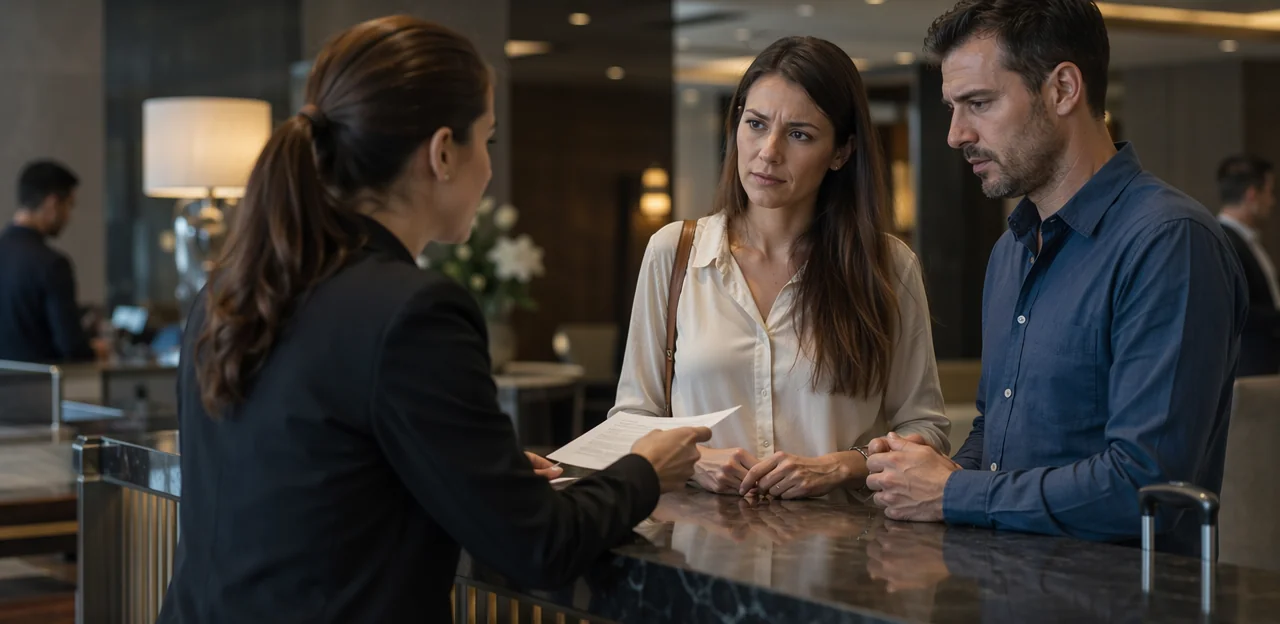
Slow guest complaint response time can turn a fixable issue into a lasting negative impression. In hotel guest complaint management, every delayed response increases the risk of lower hotel guest satisfaction, harsher online reviews, and preventable operational strain.
- Guest trust drops fast: A delayed reply signals that the hotel is not listening, especially with cleanliness, noise, billing, or safety concerns.
- Negative reviews become more likely: Guests who are not helped during their stay often share their frustration publicly after checkout.
- Staff workload grows: Unresolved issues escalate, require more follow-up, and create pressure across front desk, housekeeping, and management.
- Revenue suffers: Poor reviews reduce bookings, while weak service recovery lowers repeat stays and upsell opportunities.
Early detection is essential in hospitality operations. Real-time alerts and touchpoint feedback tools such as Tapsy help teams spot urgent issues before they damage the guest experience.
Common types of hotel complaints
In effective hotel guest complaint management, teams should track the common hotel complaints that most often damage satisfaction and trigger negative reviews fastest:
- Cleanliness issues: dirty rooms, stained linens, odors, pests, or unclean bathrooms. These escalate immediately because guests see them as a basic hygiene and trust failure.
- Noise complaints: hallway noise, neighboring rooms, elevators, nightlife, or HVAC systems. These quickly become major guest experience problems, especially overnight.
- Maintenance problems: broken air conditioning, poor Wi-Fi, plumbing leaks, hot water loss, or faulty locks. Comfort and security concerns raise urgency.
- Billing disputes: unexpected charges, deposit confusion, or incorrect minibar fees. These often escalate at checkout.
- Safety concerns: unsafe access, suspicious activity, or malfunctioning locks. Always prioritize first.
- Service delays: slow check-in, late housekeeping, or delayed room service. Repeated delays turn minor hotel service issues into lasting frustration.
What makes a complaint urgent
In hotel guest complaint management, urgency is not just about who shouts loudest. It should be defined by clear operational criteria so teams can act fast and consistently. Prioritize urgent guest complaints when they involve:
- Safety risk: fire hazards, security concerns, broken locks, food contamination, slips, or medical issues
- High complaint severity: no hot water, no AC in extreme weather, flooding, power loss, or an uninhabitable room
- Strong emotional intensity: a distressed, angry, or visibly upset guest may need immediate de-escalation
- VIP or high-value impact: loyalty members, group organizers, executives, or event guests can carry wider business consequences
- Public escalation risk: threats of negative reviews, social posts, or complaints to booking platforms
This framework improves service recovery prioritization and helps staff respond before problems spread.
How to classify and prioritize complaints effectively

Build a complaint triage framework
A clear complaint triage framework helps standardize hotel guest complaint management so every team responds the same way, regardless of shift or department. Use a simple 3-factor scoring model for faster complaint prioritization:
- Impact – How much does the issue affect the guest experience or multiple guests?
- Urgency – Does it need action now to prevent escalation, checkout dissatisfaction, or a public review?
- Operational risk – Does it involve safety, security, compliance, or potential revenue loss?
Score each complaint as Low, Medium, or High in all three areas, then assign response rules:
- High-risk/high-urgency: immediate manager alert
- High-impact but lower urgency: resolve within the same shift
- Low-impact issues: log, monitor, and batch-fix
In your hotel guest complaint management process, define owners, escalation paths, and response time targets. Tools like Tapsy can help route urgent issues in real time.
Use severity levels and response deadlines
A clear triage model is essential in hotel guest complaint management because not every issue carries the same operational or reputational risk. Define complaint severity levels and pair each with firm hotel response standards and a practical guest complaint SLA:
- Critical: Safety, security, discrimination, medical incidents, no hot water, major room access failure.
Response goal: acknowledge in 5–10 minutes, begin action immediately, manager escalation. - High: HVAC failure, severe noise, cleanliness problems, repeated service failure.
Response goal: acknowledge in 15 minutes, resolve or offer workaround within 1 hour. - Medium: Missing amenities, billing questions, slow service, minor maintenance.
Response goal: acknowledge in 30 minutes, resolve within 2–4 hours. - Low: Suggestions, non-urgent preferences, cosmetic issues.
Response goal: acknowledge within 2 hours, address by end of day.**
Tools like Tapsy can help route urgent complaints faster.
Create escalation rules for frontline teams
Clear escalation rules help hotel guest complaint management move faster and more consistently. Give frontline staff a simple decision framework so they know what to solve immediately and what to pass on.
- Resolve at first contact: Use standard front desk complaint handling for low-risk issues such as missing towels, minor billing questions, wake-up call errors, or amenity requests.
- Escalate to supervisors: Repeated service failures, compensation requests, VIP guest concerns, or complaints involving multiple departments.
- Escalate to maintenance: HVAC failures, plumbing leaks, power issues, broken locks, or anything affecting room usability.
- Escalate to security: Threats, theft allegations, harassment, intoxicated behavior, or any safety concern.
- Escalate to management: Legal risk, social media escalation, discrimination claims, or serious service recovery breakdowns.
Document this complaint escalation process in SOPs and train teams regularly as part of strong hotel operations management.
Signals that help hotels identify urgent issues faster

Listen for language and emotional cues
In hotel guest complaint management, urgency often shows up in how a guest communicates, not just what they report. Train staff to spot these guest complaint signals early:
- Repeated requests: “I’ve asked three times” or “No one has helped yet” often means an urgent service issue is escalating.
- Anger or frustration: raised voices, sharp wording, all-caps messages, or phrases like “This is unacceptable” signal immediate attention is needed.
- Fear or discomfort: comments such as “I don’t feel safe,” “There’s smoke,” or “Someone is outside my room” should trigger instant escalation.
- Safety mentions: cleanliness hazards, broken locks, flooding, or electrical problems always outrank routine complaints.
- Threats to leave or post reviews: “We’re checking out now” or “I’ll post this everywhere” indicates high-risk dissatisfaction.
Strong customer emotion detection helps teams prioritize faster and recover issues before they damage the guest experience.
Track patterns across channels
Urgent issues rarely appear in just one place. Strong hotel guest complaint management depends on combining signals from every guest touchpoint to enable true omnichannel complaint tracking.
- Review front desk logs, phone call notes, messaging apps, email, surveys, and review sites in one shared view.
- Tag complaints by issue type, location, severity, and time so recurring problems stand out quickly.
- Watch for clusters, such as multiple Wi-Fi complaints in one wing or repeated check-in delays across shifts.
- Set alerts for high-risk themes like safety, cleanliness, billing errors, or staff conduct.
- Compare direct complaints with public reviews to catch issues that staff may be missing.
This approach improves guest feedback monitoring across all hotel communication channels, helping managers prioritize urgent service recovery before small frustrations become reputation damage.
Use data and technology for early alerts
Strong hotel guest complaint management depends on spotting patterns before they become public reviews or service failures. Use connected hospitality technology to surface urgent issues in real time:
- PMS notes: Standardize staff notes with clear categories such as noise, cleanliness, billing, or safety so repeat complaints are easy to identify.
- Ticketing systems: Route issues automatically by department, priority, and SLA, with escalation rules for unresolved cases.
- Dashboards: Track open complaints, response times, room-level incidents, and high-risk locations across the property.
- AI tagging: Apply guest feedback analytics to tag sentiment, detect recurring keywords, and flag serious complaints faster.
- Trend reporting: Review weekly and monthly trends to catch repeat failures by shift, room type, or service area.
The right hotel complaint software, including tools like Tapsy, helps teams act before complaints escalate.
Best practices for service recovery after urgent complaints

Respond with speed, empathy, and ownership
In hotel guest complaint management, the first response often determines whether frustration escalates or becomes a strong service recovery in hotels moment. Staff should act quickly, sound human, and make the next step clear.
- Acknowledge immediately: Thank the guest for raising the issue and name the problem directly so they feel heard.
- Apologize sincerely: Use simple language such as “I’m sorry this happened” rather than scripted phrases that feel impersonal.
- Set expectations: Explain what will happen next, who is handling it, and when the guest can expect an update.
- Take ownership: Avoid passing blame between departments. One team member should stay responsible until the guest complaint resolution is complete.
Strong hospitality customer service means listening, acting, and following through. Tools like Tapsy can help teams flag urgent issues in real time.
Match the solution to the severity
Effective hotel guest complaint management means pairing the remedy with the impact on the guest, not using a one-size-fits-all response. Strong complaint resolution strategies should follow clear escalation rules:
- Minor inconvenience: Offer a quick apology plus a small amenity, such as drink vouchers, breakfast, or late checkout.
- Room-specific issue: For noise, cleanliness, HVAC, or Wi-Fi problems, dispatch maintenance or housekeeping immediately; if unresolved fast, arrange a room change.
- Service failure with clear disruption: Apply your guest compensation policy with partial refunds, waived fees, or loyalty points.
- Repeated or emotional complaints: Escalate to a duty manager for personal follow-up and recovery.
- Safety, security, or health concerns: Take immediate safety action, involve management, and document every step.
These are practical hotel service recovery examples that protect satisfaction and trust.
Close the loop with the guest
In effective hotel guest complaint management, the fix is only half the job. A strong guest follow-up process confirms whether the solution actually worked and shows the guest that their experience matters. This step is critical for complaint closure and long-term hotel guest retention.
- Check back promptly: Follow up in person, by message, or with a quick call after the issue is resolved.
- Confirm satisfaction: Ask if the outcome met expectations and whether anything else is needed.
- Document the result: Record the complaint, action taken, resolution time, and guest response in your system.
- Spot repeat patterns: Use follow-up data to identify recurring issues, weak service points, or training gaps.
Tools like Tapsy can help teams capture and track recovery feedback in real time, reducing repeat complaints and protecting future reviews.
Training staff and standardizing hotel complaint workflows

Train teams to recognize urgent complaints
Strong hotel guest complaint management starts with role-specific hotel staff training so every department can spot red flags early and escalate without delay. Build complaint handling training around realistic scenarios and clear response thresholds:
- Front desk: train staff to flag safety concerns, repeat complaints, threats of checkout or bad reviews, and visibly distressed guests.
- Housekeeping: teach teams to report sanitation issues, leaks, odors, pests, and signs a room is unfit for stay.
- Maintenance: prioritize outages affecting water, power, HVAC, locks, or accessibility.
- Managers: run daily briefings on escalation rules, ownership, and recovery authority.
Use short drills, checklists, and real-time alert tools to reinforce hospitality service standards and speed action.
Use scripts, checklists, and SOPs
To strengthen hotel guest complaint management, give teams simple tools they can use under pressure without sounding robotic:
- Create a hotel SOP for complaints that defines escalation levels, response times, owners, and recovery options for issues like noise, cleanliness, billing, or safety.
- Use a complaint handling checklist so staff consistently confirm the issue, apologize, assess urgency, log details, and agree on next steps.
- Provide flexible front desk scripts with approved language such as: “I’m sorry this happened. Let me fix this right away.”
The goal is consistency, not rigid wording. Train staff to adapt tone, ask clarifying questions, and use judgment. Tools like real-time alert platforms such as Tapsy can also help route urgent complaints faster.
Improve handoffs between departments
Many complaint delays happen when front desk, housekeeping, maintenance, and food service work in silos. Strong cross-department communication makes hotel guest complaint management faster by ensuring the right team gets the full context immediately.
- Use one shared log for complaint details, priority, owner, and resolution status.
- Set clear escalation rules so urgent issues move instantly from reception to the correct department.
- Standardize handoff notes to include room number, issue type, guest impact, and deadline.
- Review open cases during shift changes to prevent lost information.
Better hotel workflow management and daily operations coordination reduce duplicate work, missed follow-ups, and unresolved complaints. Tools like Tapsy can also help route real-time issues to the right team quickly.
Measuring success and improving the complaint management process

Track the right KPIs
To improve hotel guest complaint management, track a focused set of complaint management KPIs that show both speed and outcome:
- First response time: How quickly staff acknowledge a complaint
- Resolution time: How long it takes to fully fix the issue
- Escalation rate: The share of complaints needing manager intervention
- Repeat complaints: Recurring issues by room, department, or property
- Guest satisfaction metrics: Post-resolution ratings, CSAT, or NPS
- Review sentiment: Trends in online reviews after service recovery
Use these hotel performance metrics in a weekly dashboard to spot bottlenecks, coach teams, and prioritize high-impact fixes. Tools like Tapsy can help capture real-time feedback and alert teams faster.
Review root causes and recurring issues
Strong hotel guest complaint management does more than resolve single incidents; it turns complaint trends into operational improvement. Use root cause analysis to group feedback by department, shift, room type, or touchpoint, then look for patterns behind recurring hotel complaints.
- Housekeeping: repeated comments about room cleanliness, linen quality, or missed amenities may signal weak checklists or rushed turnovers.
- Maintenance: recurring AC, plumbing, or Wi-Fi complaints often point to delayed preventive maintenance.
- Staffing: spikes in wait times or slow service can reveal understaffed shifts.
- Communication: repeated confusion about check-in, breakfast hours, or fees suggests unclear guest messaging.
Tools like Tapsy can help capture these patterns in real time across hotel touchpoints.
Turn complaint insights into better guest experience
Effective hotel guest complaint management should do more than resolve one-off issues—it should fuel guest experience improvement across the property. Turn complaint data into action by:
- Spotting patterns: Track recurring issues such as slow check-in, housekeeping delays, or Wi-Fi problems to identify root causes.
- Refining processes: Update SOPs, staffing plans, and training based on real guest feedback.
- Prioritizing prevention: Fix high-frequency pain points before they become negative reviews or repeat failures.
- Closing the loop: Share insights with department heads and monitor whether changes reduce complaint volume.
This approach supports continuous improvement in hotels and strengthens hospitality reputation management by showing guests that feedback leads to visible service upgrades.
Conclusion
Effective hotel guest complaint management is not just about resolving problems—it is about spotting the right problems early enough to protect the guest experience. When hotels combine clear complaint categories, real-time alerts, frontline staff training, and defined escalation paths, they can identify urgent issues faster and respond before frustration turns into a negative review or lost loyalty.
The most successful teams treat complaints as operational intelligence. Patterns in cleanliness concerns, noise issues, maintenance requests, check-in delays, or staff service gaps can reveal where immediate action and long-term improvement are needed. By prioritizing complaints based on severity, guest impact, and response time, hotels can move from reactive service recovery to proactive experience management.
Strong hotel guest complaint management also depends on the right tools. Real-time feedback systems and touchpoint-level reporting can help staff intervene during the stay, not after checkout. Solutions like Tapsy can support this by capturing in-the-moment feedback and routing urgent issues quickly to the right team.
Now is the time to review your current complaint workflow, audit response times, and identify where urgent issues are being missed. Build a faster escalation process, equip teams with better visibility, and explore guest feedback tools that strengthen hotel guest complaint management from check-in to checkout.
Frequently Asked Questions
- Why is fast complaint identification so important in hotels?
A slow response can turn a fixable problem into a negative review, a failed service recovery, or a wider operational issue. Fast identification helps protect guest satisfaction, reduce recovery costs, and prevent problems from affecting multiple rooms, teams, or shifts.
- What types of hotel complaints usually need the fastest attention?
Complaints involving cleanliness, safety, severe noise, broken locks, flooding, power loss, no hot water, or major maintenance failures should be prioritized quickly. These issues affect trust, comfort, security, or room usability and can escalate fast if ignored.
- How can a hotel tell whether a guest complaint is truly urgent?
Urgency should be judged by clear criteria such as safety risk, complaint severity, emotional intensity, VIP or business impact, and public escalation risk. A distressed guest, a safety mention, or a threat to leave or post reviews are strong signals that immediate action is needed.
- What is a practical way to classify hotel complaints?
A simple triage model can score each complaint by impact, urgency, and operational risk. Teams can then label issues as low, medium, or high and apply clear response rules, such as immediate manager alerts for high-risk cases or same-shift resolution for high-impact issues.
- What response deadlines should hotels set for different complaint severity levels?
Critical issues should be acknowledged in 5 to 10 minutes with immediate action and manager escalation. High-severity complaints should be acknowledged within 15 minutes and resolved or worked around within 1 hour, while medium and low issues can follow longer targets based on risk.
- Which complaints should frontline staff resolve themselves, and which should they escalate?
Frontline teams can usually handle low-risk issues such as missing towels, amenity requests, wake-up call errors, or minor billing questions. They should escalate repeated failures, VIP concerns, compensation requests, safety issues, legal risk, or problems involving maintenance, security, or multiple departments.
- What guest language or behavior can signal a complaint is escalating?
Repeated requests, angry wording, raised voices, all-caps messages, and statements like 'This is unacceptable' suggest rising urgency. Comments about feeling unsafe, seeing smoke, wanting to check out, or planning to post reviews should trigger immediate attention.
- How can hotels spot urgent issues across multiple communication channels?
Hotels should combine front desk logs, phone notes, messages, email, surveys, and review sites into one shared view. Tagging complaints by issue type, location, severity, and time helps teams detect clusters, recurring failures, and high-risk themes faster.
- How do PMS notes, dashboards, and ticketing systems help complaint management?
Standardized PMS notes make repeat issues easier to identify, while ticketing systems can route complaints by department, priority, and SLA. Dashboards help teams monitor open complaints, response times, room-level incidents, and high-risk areas in real time.
- What is the best first response to an urgent guest complaint?
The first response should be fast, empathetic, and clear. Staff should acknowledge the issue, apologize sincerely, explain what will happen next, and keep one person responsible until the problem is fully resolved.
- How should hotels match service recovery to the seriousness of the complaint?
Minor inconveniences may only need an apology and a small amenity such as breakfast, drink vouchers, or late checkout. More serious room issues may require immediate maintenance, housekeeping, a room move, partial refunds, waived fees, loyalty points, or direct manager involvement.
- Why is closing the loop with the guest after a fix so important?
Following up confirms whether the solution actually worked and shows the guest that their experience matters. It also helps document the outcome, measure resolution quality, and identify repeat issues or service gaps.
- How should hotel teams be trained to recognize urgent complaints?
Training should be role-specific so each department knows which red flags to spot and when to escalate. Front desk, housekeeping, maintenance, and managers should use realistic scenarios, short drills, checklists, and clear thresholds for urgent action.
- What workflows help reduce delays between front desk, housekeeping, and maintenance?
A shared complaint log, standardized handoff notes, and clear escalation rules help the right team get full context quickly. Reviewing open cases during shift changes also prevents lost information, duplicate work, and missed follow-ups.
- Which KPIs should hotels track to improve complaint handling over time?
Useful metrics include first response time, total resolution time, escalation rate, repeat complaints, post-resolution satisfaction, and review sentiment. Tracking these in a regular dashboard helps managers find bottlenecks, coach teams, and prioritize operational fixes.