
In a quick service environment, every second counts, and so does every customer impression. A long wait, a missing item, or a great interaction with staff can shape whether a guest returns, leaves a review, or chooses a competitor next time. That’s why quick service restaurant feedback has become more than a nice-to-have metric. It is a practical tool for improving speed, service quality, menu performance, and overall customer satisfaction in real time.
The challenge, of course, is collecting feedback without slowing down the experience. Traditional surveys often arrive too late, ask too much, and produce response rates that are too low to guide daily operations. Today’s restaurants need faster, simpler ways to capture useful insights while the visit is still fresh. Solutions such as tap-to-rate tools and real-time engagement platforms like Tapsy show how operators can gather meaningful input in just seconds.
This article explores how quick service brands can collect better data with less friction, what kinds of questions actually deliver actionable insights, and how AI and analytics can turn short customer responses into smarter operational decisions. You’ll also learn how fast feedback loops can support service recovery, boost loyalty, and help teams improve performance across every shift.
Why quick service restaurant feedback matters
The role of instant feedback in fast-paced dining
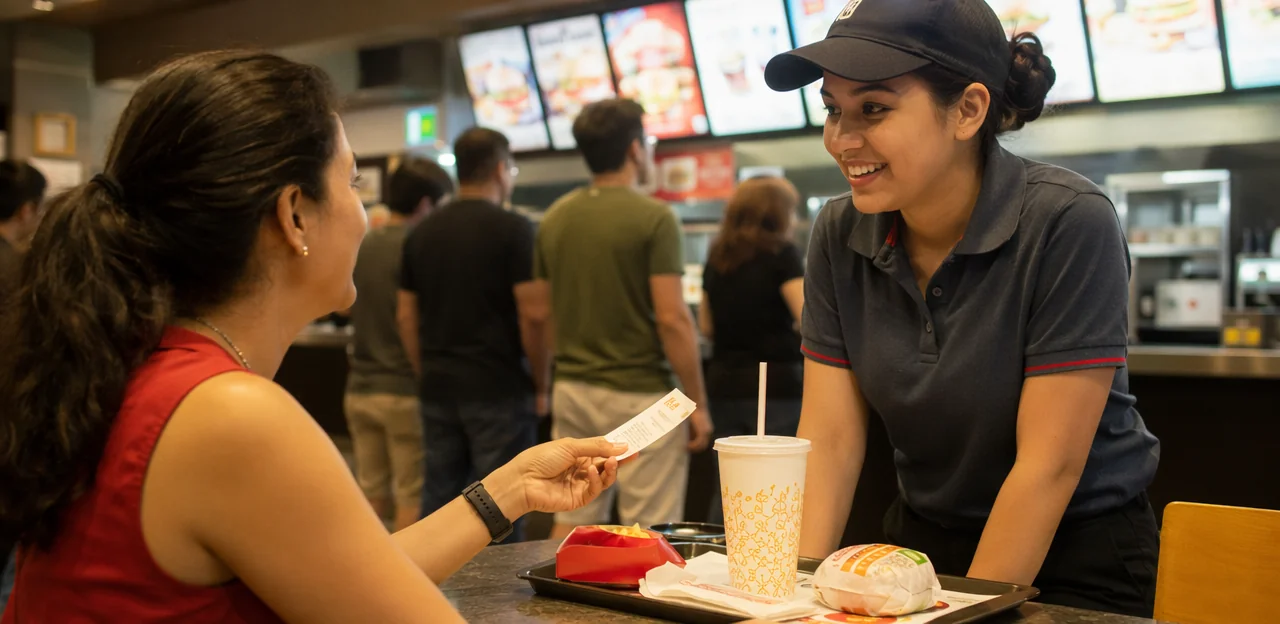
In quick service environments, speed shapes the entire guest experience. That’s why quick service restaurant feedback must be captured in the moment, not hours later when details are forgotten. Real-time customer feedback helps teams spot issues while the customer is still on-site, making service recovery possible before frustration turns into a lost visit or public complaint.
- Match service speed with insight speed: Fast transactions require equally fast feedback loops.
- Identify friction points quickly: Flag long waits, order errors, stock issues, or kiosk problems as they happen.
- Protect retention and reviews: Resolve concerns immediately before they affect loyalty or online ratings.
- Turn data into action: Use fast food customer insights to adjust staffing, improve workflows, and refine menu execution.
Tools like Tapsy can support instant, location-based feedback collection.
How feedback supports restaurant operations
Quick service restaurant feedback gives teams a fast way to spot operational problems before they affect more guests. Short ratings and comments can directly improve restaurant operations by showing where service breaks down most often.
- Wait times: Repeated low scores during lunch or dinner rushes highlight bottlenecks in staffing, prep, or pickup flow.
- Order accuracy feedback: Comments about missing items, wrong modifiers, or packaging mistakes reveal training and POS process issues.
- Cleanliness: Guest notes about tables, restrooms, or condiment stations help managers schedule faster checks.
- Staff interactions: Ratings uncover whether friendliness, speed, and problem resolution are supporting restaurant service quality.
- Digital ordering performance: Feedback on app usability, kiosk errors, or delayed confirmations helps improve the online ordering journey.
Tools like Tapsy can help capture this feedback in real time for faster action.
Business outcomes tied to better feedback collection
Effective quick service restaurant feedback systems do more than gather opinions—they drive measurable results fast:
- Improve customer satisfaction restaurant-wide: Capture feedback immediately after ordering or pickup, while details are fresh. This helps teams fix issues on the spot and prevent small problems from becoming negative experiences.
- Boost restaurant customer retention: When guests see their input leads to faster service, cleaner spaces, or better food consistency, they are more likely to return.
- Strengthen restaurant review management: Resolve complaints privately before customers post public reviews, and identify happy guests who are more likely to leave positive ratings online.
- Support faster, smarter decisions: Real-time trends help managers adjust staffing, menu items, and service processes based on actual guest sentiment.
Tools like Tapsy can help restaurants collect and act on this data in seconds.
Best ways to collect useful data in seconds

QR codes, kiosks, receipts, and SMS surveys
For quick service restaurant feedback, the best channels are the ones guests can complete in under 30 seconds. Choose touchpoints based on speed, visibility, and timing:
- Table tents and packaging inserts: A QR code feedback restaurant setup works well for dine-in tables, takeaway bags, cups, and boxes. Keep the survey to 1–3 questions and link to a mobile-friendly restaurant feedback survey.
- Self-service kiosks: Ideal right after ordering, but only if the prompt is one tap, such as rating speed or order accuracy.
- Digital receipts: Add a survey link to email or app receipts to capture feedback after pickup or delivery.
- Text-based surveys: An SMS customer survey often gets fast responses because it opens directly on the guest’s phone.
For better completion rates, offer a small incentive and trigger surveys immediately after the visit.
In-app and online ordering feedback prompts
To improve quick service restaurant feedback, ask for input at the moment the experience is freshest—without interrupting checkout or slowing reorder flow. Keep online ordering feedback short, contextual, and optional.
- Trigger prompts at key moments: after payment, when pickup is marked complete, or once delivery is confirmed.
- Use 1–2 tap questions: “Was your order accurate?” or “How was pickup speed?” work better than long surveys.
- Match questions to the channel: collect mobile app customer feedback on app usability, order customization, and payment; ask for delivery feedback restaurant insights on timing, packaging, and food condition.
- Add smart follow-ups: only request extra detail if a customer selects a low rating.
- Offer frictionless input: thumbs, stars, quick tags, and optional text boxes increase response rates.
Tools like Tapsy can help restaurants capture real-time, channel-specific feedback efficiently.
Timing, placement, and incentives that increase response rates
To improve quick service restaurant feedback, ask for input when the experience is still fresh and effortless to recall. The best customer feedback timing is usually:
- Right after pickup or delivery confirmation for speed and accuracy
- At the table or tray return area while guests are finishing
- Within 10–30 minutes by SMS or app if in-person prompts are missed
Prompt placement matters just as much for a stronger survey response rate restaurant strategy:
- On receipts, packaging, kiosks, and table tents
- Near exits, drink stations, and pickup shelves
- Inside loyalty apps or post-order emails
Use small restaurant survey incentives like a free topping, drink upgrade, or points bonus. Keep rewards modest so they encourage participation without attracting rushed, low-quality answers.
What questions quick service restaurants should ask
Keep surveys short and action-oriented
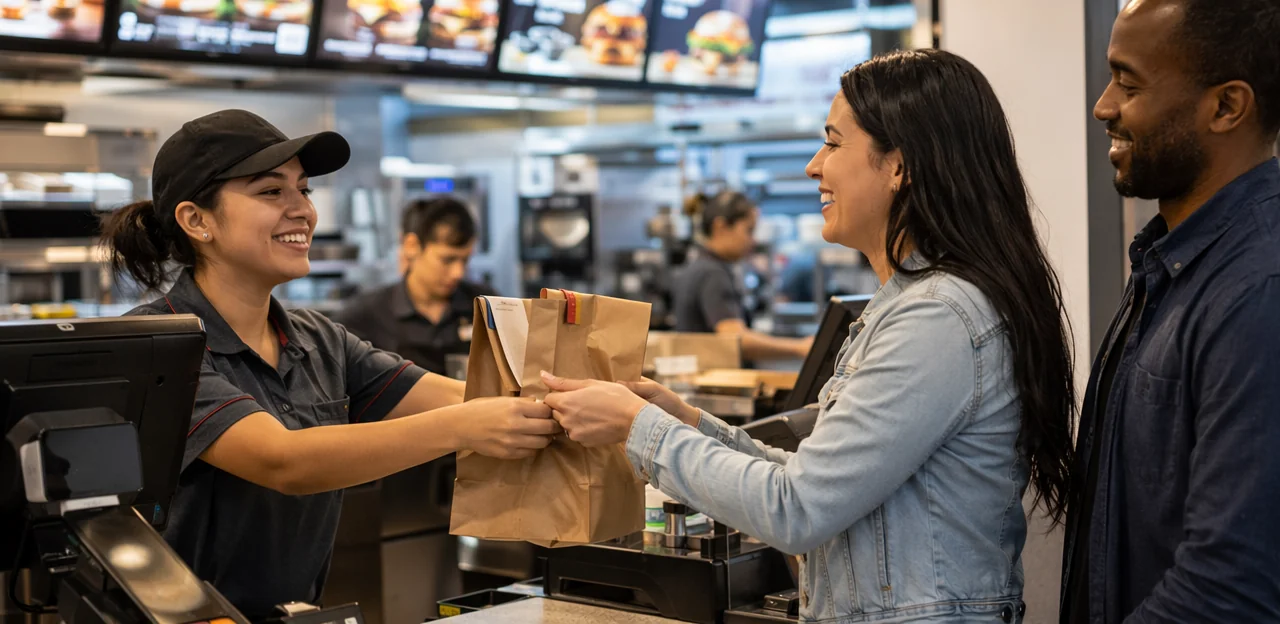
For quick service restaurant feedback, speed matters. A short customer survey should take no more than 5–10 seconds and focus on one clear goal: identify what needs attention now.
- Ask only one to three high-value restaurant survey questions
- Prioritize simple formats like:
- “How was your order today?”
- “Was your food ready on time?”
- “Would you come back?”
- Use tap-based ratings, yes/no choices, or one optional comment field
- Match each question to an action, such as fixing wait times, order accuracy, or staff friendliness
A well-designed quick feedback form reduces drop-off and gives teams fast, usable insights they can act on immediately.
Core metrics: speed, accuracy, food quality, and service
For effective quick service restaurant feedback, focus on a few high-impact question categories that customers can answer in seconds:
- Wait time: Use a simple service speed survey such as “How satisfied were you with the speed of service?”
- Order completeness: Run an order accuracy survey with questions like “Was your order correct and complete?”
- Taste and freshness: Capture food quality feedback on flavor, temperature, and portion satisfaction.
- Cleanliness: Ask about tables, counters, restrooms, and overall dining area condition.
- Staff friendliness: Measure whether team members were polite, helpful, and professional.
Keep questions short, rating-based, and tied to specific touchpoints so managers can spot issues and act immediately.
Open-text responses that reveal hidden issues
A single optional comment box can make quick service restaurant feedback far more useful than ratings alone. While scores show what happened, open-ended survey responses explain why.
- Use one short prompt, such as: “What could we improve today?”
- Review comments weekly for repeated themes in speed, order accuracy, cleanliness, or staff friendliness.
- Apply customer comments analysis to group feedback into menu, staffing, and process categories.
- Turn patterns into action: recurring complaints about cold fries may signal holding-time issues; repeated requests for healthier sides are strong restaurant feedback examples for menu updates.
Tools like Tapsy can help surface sentiment and recurring topics quickly.
Using AI and analytics to turn feedback into action

How AI categorizes sentiment and recurring themes
AI turns quick service restaurant feedback into clear, usable insights within seconds. Using AI customer feedback analysis, modern tools scan star ratings, survey scores, and open-text comments to identify both emotional tone and repeated issues.
- Detect sentiment automatically: Restaurant sentiment analysis labels comments as positive, negative, or neutral, and can often spot mixed reactions like “great food, slow service.”
- Group similar complaints: Feedback analytics clusters comments into themes such as wait times, order accuracy, staff friendliness, cleanliness, or mobile app problems.
- Surface operational patterns: Dashboards reveal whether complaints spike by location, shift, daypart, delivery channel, or dine-in vs. drive-thru.
- Prioritize action: AI highlights the most frequent or highest-impact issues first, helping managers fix root causes faster.
For multi-unit brands, platforms such as Tapsy can help centralize this analysis, making it easier to compare trends and improve consistency across stores.
Dashboards and alerts for operational decision-making
To make quick service restaurant feedback useful, managers need visibility they can act on immediately. A strong restaurant analytics dashboard turns guest comments, ratings, and POS data into clear operational signals.
- Track live service metrics: Use real-time feedback monitoring to watch wait times, order accuracy, food quality, and cleanliness by shift, location, or team member.
- Spot trends early: Trend reports can reveal recurring lunch-rush bottlenecks, frequent complaints about a menu item, or rising delivery errors over several days.
- Set automated thresholds: Configure operational alerts restaurant teams receive when negative feedback spikes, wait-time scores drop, or accuracy falls below target.
- Prioritize fast intervention: Route alerts to the right manager so they can add staff, retrain a station, or pause a problematic item before complaints spread.
Platforms such as Tapsy can help centralize this data, making service recovery faster and more consistent across locations.
From data to process improvements
Quick service restaurant feedback is most valuable when it triggers fast, measurable action. Short, location-specific feedback helps teams spot friction points and turn them into restaurant process improvement opportunities.
- Menu adjustments: If guests repeatedly mention cold fries, confusing combo options, or missing dietary choices, simplify the menu, revise prep timing, or add clearer labeling.
- Staffing changes: Feedback tied to dayparts can reveal lunch rush bottlenecks, helping managers add cashiers, expediters, or kitchen support during peak periods.
- Training updates: Complaints about order accuracy or rushed interactions often point to a staff training restaurant need, such as better handoff checks, upselling scripts, or allergy communication.
- Workflow improvements: Comments about long waits can improve drive-thru performance, pickup shelf organization, or dine-in table turnover by redesigning station layouts and handoff steps.
Tools like Tapsy can help capture these insights in real time, before small issues become repeat problems.
Common mistakes and best practices

Avoiding survey fatigue and low-quality responses
To improve quick service restaurant feedback, keep surveys short, timely, and varied. Survey fatigue happens when guests are asked too often or forced through too many questions, which lowers completion rates and makes answers less reliable.
- Limit length: Aim for 1–3 questions focused on one visit or touchpoint.
- Ask at the right moment: Trigger feedback right after ordering, pickup, or dining while details are fresh.
- Avoid repetitive requests: Don’t prompt the same customer every visit; use frequency caps where possible.
- Keep questions relevant: Strong restaurant survey design uses simple language and rotating prompts.
These customer feedback best practices help increase participation and produce cleaner, more actionable data.
Protecting privacy and data quality
To make quick service restaurant feedback both useful and trustworthy, restaurants need clear privacy practices and strong data controls:
- Ask for clear consent: State what data is collected, why it is needed, and how long it will be stored. This strengthens customer data privacy restaurant efforts and builds trust.
- Offer anonymous options: Let guests skip personal details when possible. Anonymous feedback restaurant channels often increase honesty, especially for complaints.
- Handle data securely: Limit access, store only necessary information, and follow local privacy regulations.
- Protect survey data quality: Use CAPTCHA, device limits, time stamps, duplicate detection, and basic anomaly checks to reduce spam, repeat entries, and fake responses. This keeps survey data quality high and insights actionable.
Creating a closed-loop feedback process
To make quick service restaurant feedback useful, every alert needs a clear next step. A strong closed-loop feedback process turns comments into action, accountability, and better service over time.
- Assign ownership: Route feedback by type—food quality to kitchen leads, speed issues to shift managers, and app or kiosk problems to operations.
- Follow up fast on serious complaints: For safety, order errors, or staff conduct issues, set response SLAs and document the outcome for consistent restaurant complaint resolution.
- Share what changed: Post staff updates on recurring issues and fixes, such as menu tweaks or faster pickup flows, to support a continuous improvement restaurant culture.
Tools like Tapsy can help teams capture and act on feedback in real time.
Building a scalable feedback strategy for restaurants and cafés

Choosing tools that fit your service model
The best quick service restaurant feedback platform should match how guests actually order and receive food. When comparing restaurant feedback software, look for:
- Dine-in: QR, NFC, or receipt-based prompts that capture feedback before guests leave.
- Drive-thru: One-tap ratings linked to speed, order accuracy, and lane performance.
- Takeaway and delivery: SMS, app, or packaging-based surveys triggered after pickup or drop-off.
- Multi-location needs: Central dashboards with store-level filtering and multi-location restaurant analytics.
- System connections: Strong POS integration feedback features to tie responses to orders, tickets, staff, and dayparts, plus CRM syncing for follow-up and loyalty campaigns.
Tools like Tapsy can be useful if you also want real-time engagement and first-party customer data capture.
KPIs to track over time
To make quick service restaurant feedback actionable, monitor a small set of restaurant KPIs consistently:
- Feedback response rate: Track how many guests actually complete your survey or tap-to-rate prompt. A rising feedback response rate usually means your process is fast and well placed.
- Satisfaction score: Use simple customer satisfaction metrics like CSAT or star ratings by shift, location, and menu category.
- Sentiment trends: Measure whether comments are becoming more positive, neutral, or negative over time.
- Repeat complaints: Flag recurring issues such as order accuracy, wait times, or food temperature.
- Resolution speed: Monitor how quickly staff acknowledge and resolve problems before they turn into public reviews.
Tools like Tapsy can help centralize and analyze these metrics in real time.
A practical rollout plan for teams
Use a simple, repeatable restaurant feedback strategy to make quick service restaurant feedback easy for guests and staff:
- Start small: Choose 2–3 touchpoints, such as checkout, pickup, or table QR prompts, and ask one or two clear questions.
- Define ownership: Assign managers to monitor responses daily and flag urgent service issues fast.
- Prioritize restaurant team training: Teach staff how to invite feedback naturally, explain its purpose, and respond positively.
- Review insights weekly: Track themes, sentiment, and repeat complaints to guide action.
- Refine continuously: Adjust questions, timing, and channels based on results to improve implementing customer feedback over time.
Tools like Tapsy can help streamline real-time collection and analysis.
Conclusion
In fast-paced dining environments, the best insights are the ones you can capture immediately. That’s why quick service restaurant feedback matters: it helps operators understand guest satisfaction in the moment, spot recurring issues faster, and make smarter decisions without slowing down service. From short mobile surveys and QR code prompts to AI-powered analytics dashboards, the right feedback approach turns a few seconds of customer input into meaningful operational improvements.
When done well, quick service restaurant feedback doesn’t just measure performance—it strengthens it. It can reveal bottlenecks in ordering, pickup, food quality, cleanliness, and staff interactions, giving teams the clarity they need to act quickly. Just as importantly, it helps restaurants close the loop with guests, improve loyalty, and prevent small frustrations from becoming lost business or negative reviews.
The next step is to simplify your feedback process and make participation effortless for customers and staff alike. Start by identifying your key touchpoints, choosing a fast feedback format, and reviewing results consistently to drive action. If you’re exploring tools that support real-time engagement and AI-driven insights, platforms like Tapsy can be a useful example. Ultimately, investing in quick service restaurant feedback is investing in better experiences, stronger retention, and more agile restaurant operations.
Frequently Asked Questions
- Why is quick service restaurant feedback important in fast-paced dining?
It helps teams capture customer impressions while the visit is still fresh, so details about wait times, missing items, or staff interactions are not lost. Real-time feedback also makes it easier to recover service before frustration turns into a lost customer, a bad review, or a switch to a competitor.
- What kinds of operational issues can quick service feedback uncover?
Short ratings and comments can reveal problems with wait times, order accuracy, cleanliness, staff friendliness, and digital ordering performance. These signals help managers spot breakdowns in staffing, prep flow, packaging, POS processes, or app and kiosk usability.
- What are the fastest ways to collect useful customer feedback in a quick service restaurant?
The most effective methods are channels guests can complete in under 30 seconds, such as QR codes on packaging or table tents, one-tap kiosk prompts, digital receipt links, and SMS surveys. Fast, visible, and well-timed prompts usually work better than long traditional surveys.
- When should restaurants ask customers for feedback to get better response rates?
The best time is right after pickup or delivery confirmation, at the table while guests are finishing, or within 10 to 30 minutes by SMS or app if an in-person prompt is missed. Asking while the experience is still easy to recall improves both response quality and usefulness.
- Where should feedback prompts be placed in a quick service setting?
Good placement includes receipts, takeaway packaging, kiosks, table tents, exits, drink stations, pickup shelves, loyalty apps, and post-order emails. The goal is to put the prompt where customers naturally pause without interrupting ordering or checkout.
- How many questions should a quick service restaurant survey include?
A strong quick-service survey should usually include only one to three high-value questions. Keeping it short reduces drop-off and makes it easier for teams to act on the answers immediately.
- What are the most useful questions to ask in a quick service feedback form?
The most actionable questions focus on speed, order completeness, food quality, cleanliness, and staff friendliness. Simple prompts like whether the order was correct, whether food was ready on time, or whether the guest would come back are easy to answer and tied to clear actions.
- Should restaurants include an open-text comment box in a short survey?
Yes, one optional comment field can add context that ratings alone cannot provide. It helps explain why a guest was unhappy or satisfied and can reveal recurring issues such as cold fries, confusing menu options, or requests for healthier sides.
- How can AI help restaurants make sense of short feedback responses?
AI can scan ratings and comments to detect sentiment, group similar complaints, and highlight repeated themes like slow service, order mistakes, cleanliness issues, or app problems. This makes it easier to identify root causes and prioritize the most important fixes first.
- What should managers look for in a feedback dashboard?
Managers should look for live visibility into service speed, order accuracy, food quality, and cleanliness by shift, location, or team member. Useful dashboards also show trends over time and support alerts when negative feedback spikes or performance drops below target.
- How does customer feedback support process improvements in restaurant operations?
Feedback can guide menu changes, staffing adjustments, training updates, and workflow redesign. Repeated complaints about long waits, cold food, or rushed interactions point to specific changes in prep timing, handoff checks, station layout, or peak-period staffing.
- What mistakes should restaurants avoid when collecting feedback?
They should avoid long surveys, poorly timed requests, and asking the same customer for feedback on every visit. Survey fatigue lowers completion rates and can reduce answer quality, so prompts should stay short, relevant, and spaced out with frequency caps when possible.
- How can restaurants protect privacy and maintain feedback data quality?
They should clearly explain what data is collected, why it is needed, and how long it will be stored, while offering anonymous options when possible. Data quality can be protected with secure handling, limited access, CAPTCHA, device limits, time stamps, duplicate detection, and anomaly checks.
- What does a closed-loop feedback process look like in a quick service restaurant?
It means every important piece of feedback is routed to the right owner, such as kitchen leads for food quality or shift managers for speed issues. Serious complaints should be handled quickly with response timelines and documented outcomes, while teams are updated on recurring issues and fixes.
- What should restaurants consider when choosing a scalable feedback tool?
The tool should match the service model, whether that means QR or receipt prompts for dine-in, one-tap ratings for drive-thru, or SMS and app surveys for takeaway and delivery. For multi-location operations, central dashboards, store-level filtering, and integrations with POS or CRM systems are especially useful.