
A hotel’s reputation is no longer shaped only after checkout. In today’s review-driven hospitality landscape, guest sentiment forms in real time—at check-in, over breakfast, in the room, and during every service interaction in between. That’s why effective hotel reputation management starts long before a public review is posted. It begins with private in-stay feedback that gives hotels a chance to listen, respond, and recover the experience while the guest is still on property.
For accommodation providers, this shift is critical. A small issue like poor Wi-Fi, room cleanliness, noise, or slow service can quickly turn into a negative online review if it goes unnoticed. But when guests have a simple way to share concerns privately, hotel teams can intervene early, resolve problems faster, and turn potential dissatisfaction into loyalty.
This article explores why private in-stay feedback is becoming an essential part of modern hotel reputation management, how it supports better operations and guest experience, and why proactive service recovery matters more than ever. It will also look at practical ways hotels can collect real-time feedback across key touchpoints, with solutions such as Tapsy offering one example of how hospitality teams can capture insights and act before checkout.
Why hotel reputation management must begin during the guest stay

The limits of relying only on post-stay reviews
Relying only on post-stay reviews means your team learns about problems after the guest has already left. That makes hotel reputation management largely reactive, especially when issues surface first in online hotel reviews on Google, TripAdvisor, or OTAs.
- Recovery windows close fast: Once checkout happens, you lose the best chance to fix noise, cleanliness, Wi-Fi, or service issues in real time.
- Negative sentiment grows: Frustrated guests often write harsher public reviews when they feel no one listened during the stay.
- Operational issues stay hidden: Repeated breakdowns can affect many more guests before patterns appear in review data.
To avoid reactive reputation management, collect private in-stay feedback at key touchpoints so staff can resolve issues before they become public complaints.
How private in-stay feedback changes the reputation timeline
Private in-stay feedback shortens the gap between a guest problem and your team’s response. Instead of discovering issues in a public review after checkout, hotels can act while the stay is still recoverable. That changes hotel reputation management from reactive damage control into proactive guest experience management.
- Capture issues early: Use real-time guest feedback to spot complaints about noise, cleanliness, Wi-Fi, or service delays.
- Route alerts fast: Send low scores or urgent comments directly to housekeeping, maintenance, or the front desk.
- Recover before checkout: Offer a room change, apology, or quick fix before frustration becomes a negative review.
- Learn operational patterns: Track recurring issues by touchpoint to improve service over time.
Tools like Tapsy can help hotels turn private in-stay feedback into proactive reputation management at the moment it matters most.
The business case for hospitality teams
For hotels, hotel reputation management is not just a marketing task after checkout. It is an operational discipline that protects hospitality reputation while guests are still on property. Private in-stay feedback helps teams resolve issues before they become public complaints, improving guest satisfaction and strengthening hotel brand trust.
- Lift review scores: Fix room, service, or cleanliness issues in real time before guests post negative reviews.
- Increase repeat bookings: Guests who feel heard are more likely to return and book direct.
- Reduce complaint escalation: Early alerts help staff recover service quickly and avoid refunds, disputes, or damaging online posts.
- Build stronger brand trust: Consistent recovery shows guests the hotel acts on feedback, not just collects it.
Tools like Tapsy can support this by capturing feedback instantly at key touchpoints.
What private in-stay feedback looks like in hotel operations
Common channels hotels can use
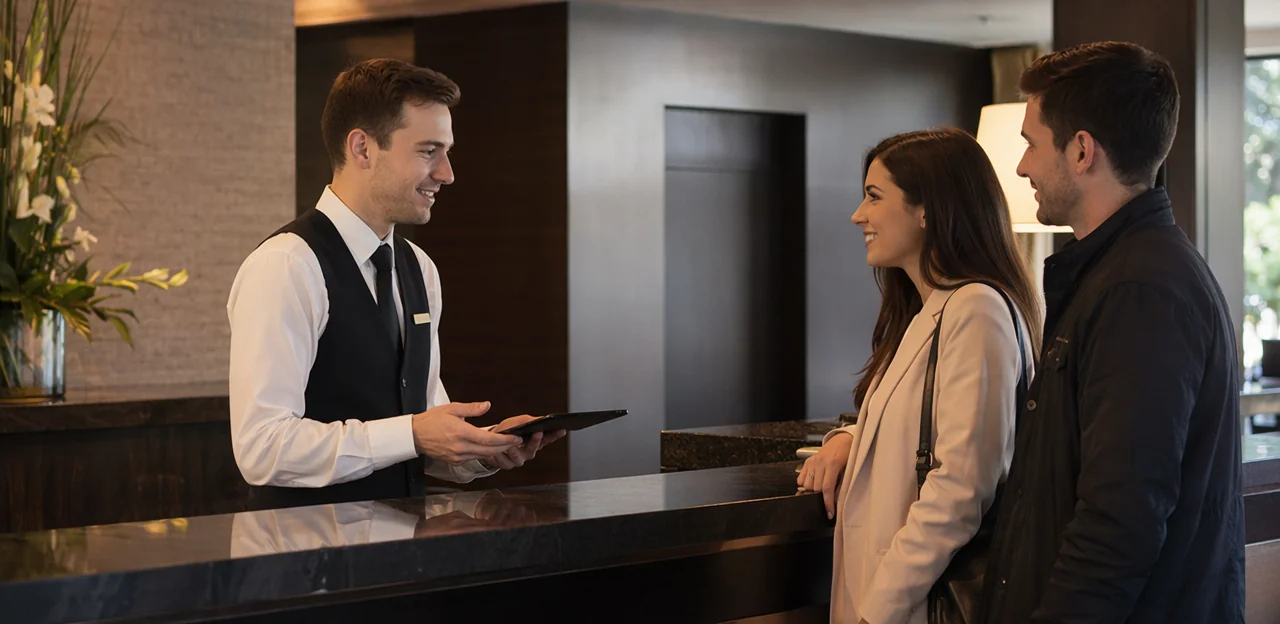
Choosing the right hotel feedback channels helps teams catch issues early and strengthen hotel reputation management before checkout.
- SMS guest surveys: Best for limited-service, roadside, and business hotels. Fast open rates make SMS guest surveys ideal for quick in-stay pulse checks.
- QR code hotel survey: Great for boutique hotels, resorts, and F&B areas. Place codes in rooms, elevators, breakfast spaces, and spa zones for instant, location-specific feedback.
- In-room tablets: Useful in upscale and full-service properties where guests already use digital room controls.
- Mobile apps: Best for large brands with loyalty adoption.
- WhatsApp: Effective for international guests and concierge-heavy properties.
- Email check-ins: Good for pre-arrival and mid-stay follow-ups.
- Front-desk prompts: Ideal at check-in or after issue resolution.
Tools like Tapsy can combine QR/NFC touchpoints with real-time alerts.
Best moments to ask for feedback during the stay
Smart guest feedback timing improves response rates and gives staff time to fix problems before they become public complaints. As part of hotel reputation management, feedback should match key stages of the hotel guest journey:
- Right after check-in: Ask a short question about arrival, wait time, and first room impression. This catches early friction fast.
- After the first night: A brief mid-stay survey helps uncover issues with noise, comfort, cleanliness, or Wi-Fi while recovery is still possible.
- After dining or spa use: Request feedback when the experience is fresh, so comments are more specific and useful for service teams.
- Before checkout: Confirm whether concerns were resolved and identify any last-minute issues.
Tools like Tapsy can help hotels collect and route in-stay feedback in real time.
What questions generate actionable responses
The best hotel survey questions are short, specific, and tied to issues staff can fix during the stay. For stronger hotel reputation management, ask about the moments that most affect reviews:
- Room condition: “Is your room comfortable and everything working as expected?”
- Cleanliness: “How would you rate the cleanliness of your room and bathroom?”
- Service speed: “Did you experience any delays with check-in, housekeeping, or room service?”
- Staff interactions: “How helpful and professional has our team been so far?”
Use a simple 1–5 rating scale in every guest satisfaction survey to spot low scores fast, then add an optional open-text field like, “What can we improve right now?” This combination delivers actionable guest feedback, helping teams identify patterns, prioritize fixes, and recover service before a public review is posted.
Using in-stay feedback to improve guest experience and service recovery

How fast response prevents negative public reviews
Speed is critical in hotel reputation management because unhappy guests rarely wait long before forming a lasting impression. When private in-stay feedback triggers immediate alerts, staff can step in before frustration turns into a public complaint.
- Route alerts instantly: Send low ratings or urgent comments to the right team, whether that is housekeeping, maintenance, or the front desk.
- Act while the guest is still on property: Offer a room change, fix Wi-Fi, replace amenities, or provide a sincere apology and recovery gesture.
- Close the loop quickly: Confirm the issue was resolved and check whether the guest is now satisfied.
This kind of guest issue resolution is the foundation of effective service recovery hotel processes. Fast, thoughtful recovery shows guests they are heard, which can rebuild trust, create loyalty, and prevent negative reviews. Tools like Tapsy can support this by turning real-time feedback into actionable staff alerts.
Building escalation workflows across departments
A strong hotel operations workflow turns private in-stay feedback into fast recovery before issues become public reviews. For effective hotel reputation management, each team needs clear ownership, timing, and follow-through.
- Housekeeping: Own cleanliness, linen, minibar, and room reset complaints. Acknowledge within 5 minutes and resolve urgent issues within 15–20 minutes.
- Maintenance: Handle HVAC, plumbing, lighting, Wi-Fi, and safety-related faults. Critical issues should escalate immediately to engineering or the duty manager, with updates logged until closed.
- Food and beverage: Take ownership of breakfast delays, order accuracy, food quality, and allergy concerns. Service recovery should begin during the same meal period.
- Front office: Coordinate all cross-team cases, communicate with the guest, and decide on room moves, compensation, or manager follow-up.
For reliable department escalation and hotel complaint management, use shared dashboards, time-stamped tickets, and daily review of unresolved cases. Tools like Tapsy can help route alerts instantly to the right department.
Closing the loop with guests effectively
Closing the feedback loop is where strong hotel reputation management becomes visible to guests. Fast, thoughtful follow-up turns a complaint into trust and supports effective hotel guest recovery.
- Acknowledge concerns immediately: Thank the guest, apologize sincerely, and show empathy. Good guest communication should make the guest feel heard, not processed.
- Share clear updates: Let guests know what action is being taken, who is handling it, and when they can expect a fix. Even a short update reduces frustration.
- Confirm resolution personally: After the issue is addressed, check back in person, by message, or by phone to confirm the outcome meets expectations.
- Tailor the response: Use the guest’s name, reference the specific issue, and avoid scripted language whenever possible.
Tools like Tapsy can help teams capture in-stay issues quickly and respond before checkout. Speed, empathy, and personalization are what make closing the feedback loop effective.
How private feedback strengthens review management and online reputation

Reducing review volume driven by unresolved issues
Strong hotel reputation management starts by catching service failures while guests are still on property. When hotels invite private, in-stay feedback, they can resolve issues before frustration turns into negative hotel reviews. This is not about hiding complaints. It is about improving the experience in time to change the outcome.
- Set alerts for common failure points such as cleanliness, noise, Wi-Fi, maintenance, or slow service.
- Route each issue immediately to the right team, with clear response times.
- Follow up with the guest after the fix to confirm the problem was resolved.
This approach strengthens review management for hotels because fewer preventable problems reach public platforms. It also supports a smarter online reputation strategy by reducing review volume caused by avoidable operational mistakes. Tools like Tapsy can help capture and route feedback in real time.
Encouraging satisfied guests to share public reviews
To increase hotel reviews without risking trust or platform violations, make guest review requests simple, timely, and fully optional. Strong hotel reputation management depends on inviting honest feedback, not filtering or pressuring guests.
- Ask after a positive moment: Send the request after a successful issue resolution, smooth checkout, or a clearly strong stay.
- Follow platform rules: Never offer incentives in exchange for positive reviews, gate unhappy guests, or script review content. This is essential for ethical review generation.
- Choose the right channel: Use post-stay email or SMS, and include direct links to your preferred review profiles.
- Keep it neutral: Ask guests to “share their experience” rather than “leave a 5-star review.”
- Use in-stay feedback tools: Solutions like Tapsy can help identify satisfied guests before checkout, so outreach feels relevant and well-timed.
Turning feedback data into reputation insights
Private in-stay comments are often the earliest signal of what will later appear in public reviews. With guest feedback analytics, hotels can spot recurring issues—such as slow check-in, breakfast quality, or room cleanliness—before they damage ratings online. This makes hotel reputation management more proactive and measurable.
- Use review sentiment analysis to group comments by theme, location, and time period.
- Track repeated negative phrases to predict likely review topics on Google, TripAdvisor, or OTAs.
- Compare positive sentiment trends to identify which service moments strengthen brand messaging.
- Turn findings into action by updating staff training, SOPs, and guest communications.
Over time, these hotel reputation insights help hotels improve service consistency, refine marketing claims, and raise review scores through faster, data-backed operational changes.
Implementation best practices for hotels and accommodation providers
Choosing the right tools and integrations
The best hotel reputation management setup should fit your operations, not add manual work. When comparing hotel reputation management software or a guest feedback platform, prioritize:
- PMS integration: Sync stay dates, room numbers, guest profiles, and post-stay triggers to personalize outreach and speed up service recovery.
- Automation: Auto-send in-stay check-ins, escalate low scores, and log issues without staff chasing spreadsheets.
- Multilingual support: Essential for international guests and multi-market brands.
- Mobile usability: Staff need fast, mobile-friendly dashboards to act on feedback anywhere on property.
- Alert routing: Send housekeeping, maintenance, or front desk issues directly to the right team.
Boutique hotels may prefer simple, fast tools, while groups and larger brands need deeper reporting, benchmarking, and multi-property controls. Solutions like Tapsy can also help capture real-time in-stay feedback at key touchpoints.
Technology can flag issues fast, but hotel reputation management improves only when teams know exactly how to respond in the moment. Effective hotel staff training turns private in-stay feedback into consistent service recovery across every shift.
- Train staff on clear service standards for common issues such as noise, cleanliness, Wi-Fi, and check-in delays.
- Use simple response scripts so employees can acknowledge concerns, apologize professionally, and explain next steps with confidence.
- Build role-specific workflows into hospitality operations management so front desk, housekeeping, and managers know ownership and escalation paths.
- Secure leadership buy-in to reinforce expectations, coach teams, and review feedback trends regularly.
Tools like Tapsy can surface issues, but trained people resolve them well.
Key metrics to measure success
To make hotel reputation management measurable, track a small set of connected hotel KPIs that link in-stay service recovery to public review performance:
- Response time: How quickly teams acknowledge guest issues after private feedback is submitted.
- Resolution rate: The percentage of problems fully solved before checkout.
- Guest satisfaction metrics: In-stay satisfaction scores, post-resolution ratings, and NPS/CSAT by touchpoint.
- Review score trends: Changes in Google, TripAdvisor, and OTA ratings over time.
- Repeat stay rate: A strong sign that service recovery is improving loyalty.
- Complaint categories: Monitor recurring issues like cleanliness, noise, Wi-Fi, or check-in delays.
These reputation management metrics help hotels connect operational fixes to stronger reviews, fewer complaints, and higher retention.
Common mistakes hotels make with in-stay feedback programs
Asking too often or making surveys too long
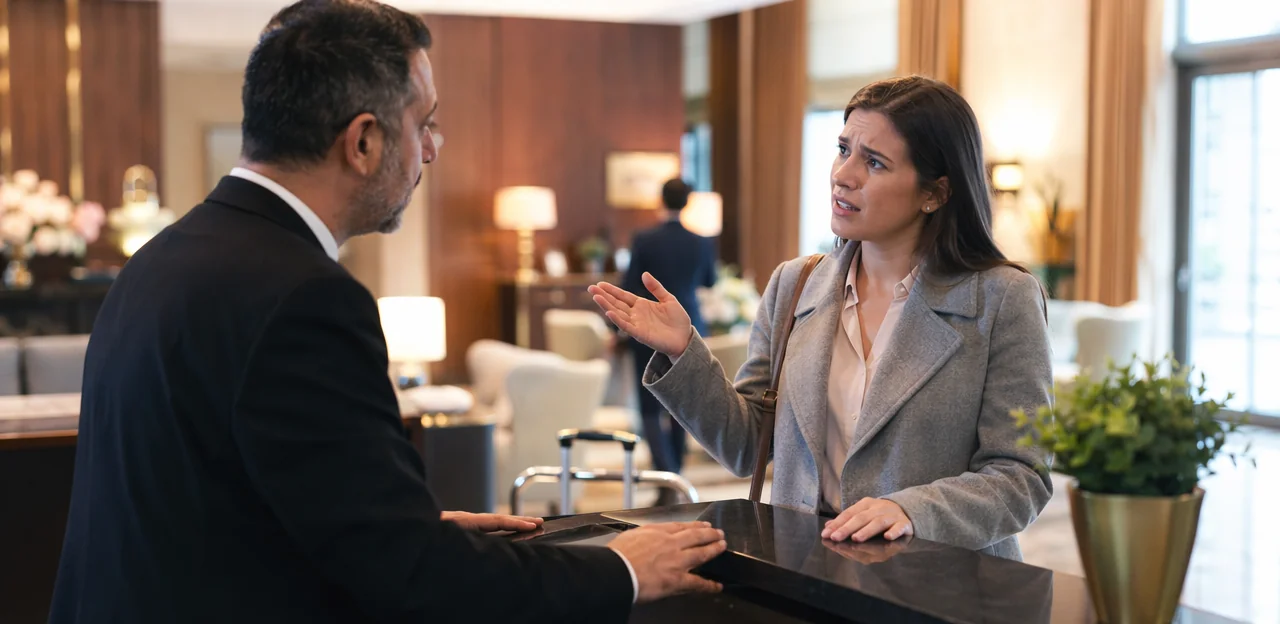
Poor hotel survey design quickly creates survey fatigue, which lowers completion quality and hurts your guest feedback response rate. For effective hotel reputation management, keep feedback requests light and well-timed:
- Ask only 1–3 essential questions during the stay
- Match questions to the guest journey, such as check-in, room comfort, or breakfast
- Use one optional comment box instead of long forms
- Trigger requests after meaningful touchpoints, not every interaction
Tools like Tapsy can help hotels collect short, in-stay feedback at the right moment, before frustration turns into public reviews.
Collecting private feedback only helps if teams act on it. When guests see no feedback follow-up, disappointment deepens and guest trust erodes faster than if you had never asked. In hotel reputation management, unanswered in-stay feedback signals that the hotel listens without caring.
- Assign clear ownership for each issue type
- Set response standards with timelines and escalation paths
- Show visible hotel service improvement through staff follow-up or on-property fixes
Tools like Tapsy can help route issues quickly, but accountability and visible action are what protect trust.
Treating reputation as a marketing-only function
Hotel reputation management fails when it sits only with marketing. Review responses may protect the brand voice, but ratings are shaped by housekeeping, front desk, maintenance, F&B, and leadership every day.
- Build a hotel reputation strategy that links guest feedback to service recovery and root-cause fixes.
- Align operations and guest experience teams around shared KPIs like response time, cleanliness, and issue resolution.
- Use cross-functional hospitality management to turn in-stay feedback into action before guests post publicly.
Tools like Tapsy can help route issues to the right team in real time.
Conclusion
In today’s hospitality landscape, hotel reputation management can no longer begin after checkout, when a guest has already posted a public review. It starts during the stay, when hotels still have the opportunity to listen, respond, and recover the experience in real time. Private in-stay feedback gives teams the visibility they need to catch issues early, whether the problem is cleanliness, noise, service delays, or amenities, and turn a potential complaint into a moment of care.
The most effective hotel reputation management strategies connect guest experience with daily operations. By collecting feedback at key touchpoints, routing concerns to the right staff quickly, and tracking recurring patterns across departments, hotels can improve service recovery, protect review scores, and build stronger guest loyalty. Just as importantly, they create a feedback culture focused on prevention rather than damage control.
If you want to strengthen your hotel reputation management approach, the next step is to audit your current guest feedback journey. Identify where guests can easily share concerns during their stay, define internal alert and response workflows, and measure recovery outcomes over time. Tools like Tapsy can help make that process faster and more actionable. Start by piloting private in-stay feedback at your highest-impact touchpoints, then use the insights to improve operations, guest satisfaction, and long-term brand trust.
Frequently Asked Questions
- Why should hotel reputation management start before checkout?
Guest sentiment forms throughout the stay, not only after departure. When hotels collect private in-stay feedback, they can identify issues early, respond while the guest is still on property, and reduce the chance that unresolved problems become negative public reviews.
- What are the risks of relying only on post-stay reviews?
Post-stay reviews reveal problems after the best recovery window has already closed. That makes reputation management reactive, allows frustration to grow, and can leave recurring operational issues hidden until they affect many more guests.
- How does private in-stay feedback change the way hotels handle reputation?
It shortens the time between a guest problem and the hotel's response. Instead of discovering complaints on Google, TripAdvisor, or OTAs after checkout, teams can act immediately, recover the experience, and learn from recurring issues by touchpoint.
- Which guest issues are most important to catch during the stay?
Common high-impact issues include poor Wi-Fi, room cleanliness, noise, slow service, maintenance faults, and check-in delays. These are the kinds of problems that can often be fixed quickly if staff are alerted in time.
- What feedback channels can hotels use to collect private in-stay feedback?
Hotels can use SMS surveys, QR code surveys, in-room tablets, mobile apps, WhatsApp, email check-ins, and front-desk prompts. The best choice depends on the property type, guest behavior, and where feedback is most useful during the stay.
- When is the best time to ask hotel guests for feedback?
Strong moments include right after check-in, after the first night, after dining or spa use, and before checkout. These points help teams catch early friction, address service-specific issues, and confirm whether concerns were resolved.
- What questions make in-stay hotel surveys more actionable?
Short, specific questions tied to fixable issues work best, such as room comfort, cleanliness, service delays, and staff helpfulness. A simple 1–5 rating plus an optional open-text question like what can be improved right now helps staff spot low scores and act quickly.
- How can fast responses help prevent negative online reviews?
Immediate alerts let the right team step in before frustration hardens into a lasting negative impression. Quick actions such as fixing Wi-Fi, replacing amenities, offering a room change, or following up after a repair can rebuild trust and reduce the chance of a public complaint.
- How should hotels organize escalation workflows across departments?
Each department should have clear ownership, response timing, and follow-through for the issues it controls. Housekeeping, maintenance, food and beverage, and front office should use shared dashboards, time-stamped tickets, and daily review of unresolved cases so nothing is missed.
- What does it mean to close the loop with a guest effectively?
It means acknowledging the concern quickly, explaining what action is being taken, and confirming personally that the outcome meets expectations. Speed, empathy, and personalized communication make guests feel heard rather than processed.
- How can hotels encourage public reviews without violating platform rules?
Requests should be neutral, optional, and sent at the right time, such as after a smooth checkout or successful service recovery. Hotels should never offer incentives for positive reviews, gate unhappy guests, or script what guests should say.
- How can private feedback data improve online reputation over time?
Private comments often reveal the same themes that later appear in public reviews, such as cleanliness, breakfast quality, or slow check-in. By grouping feedback by theme, location, and time period, hotels can update training, SOPs, and guest communication before ratings are affected.
- What should hotels look for when choosing reputation management and feedback tools?
Useful capabilities include PMS integration, automation, multilingual support, mobile-friendly dashboards, and alert routing to the right department. Smaller properties may prefer simple tools, while larger groups often need deeper reporting, benchmarking, and multi-property controls.
- Which metrics show whether an in-stay feedback program is working?
Key measures include response time, resolution rate before checkout, in-stay satisfaction scores, post-resolution ratings, NPS or CSAT by touchpoint, review score trends, repeat stay rate, and recurring complaint categories. These metrics connect operational recovery to stronger reviews and guest loyalty.
- What common mistakes weaken hotel in-stay feedback programs?
Frequent or overly long surveys create fatigue and reduce response quality. Other major mistakes include failing to act on feedback and treating reputation as only a marketing responsibility instead of a cross-functional operational discipline.