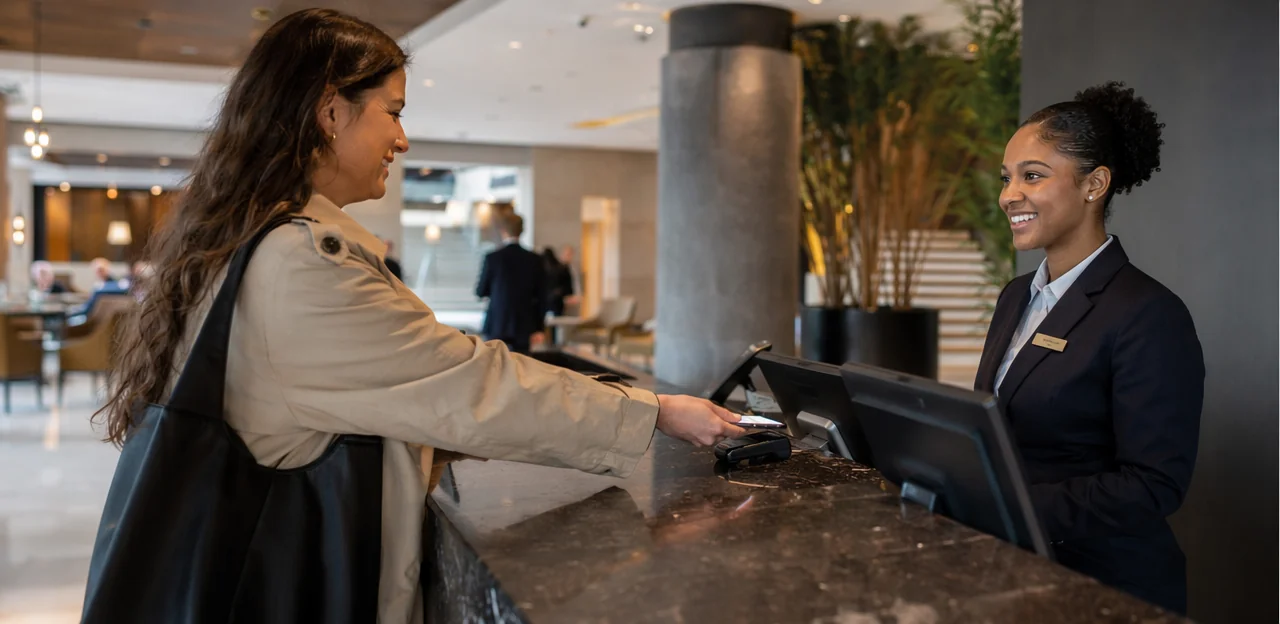
A great guest experience can be won or lost in seconds, and by the time a hotel reads a post-stay review, the opportunity to fix the problem has often passed. That is why more hospitality teams are turning to NFC-enabled touchpoints that let guests share feedback in the moment, with a simple tap.
An effective NFC feedback hotel strategy brings guest insight directly into the flow of the stay. Instead of relying only on email surveys after checkout, hotels can place tap-to-rate prompts at key moments such as check-in, in-room service, breakfast areas, spas, elevators, and checkout desks. This makes it easier to capture honest, timely reactions while the experience is still fresh and service teams still have time to respond.
In this article, we will explore how NFC feedback works across the full guest journey, from arrival to departure, and why it is becoming a practical tool for improving guest satisfaction, service recovery, and operational visibility. We will also look at real tap-to-rate use cases, the value of combining NFC with QR touchpoints, and how solutions like Tapsy can help hotels collect real-time feedback without adding friction for guests.
Why NFC feedback matters in hotels

A practical NFC feedback hotel setup places simple tap points wherever guest sentiment is formed:
- Reception and checkout desks: tap-to-rate cards prompt quick feedback on arrival, service speed, and departure.
- Restaurant tables and breakfast areas: table tents capture dining feedback while the experience is still fresh.
- Guest rooms and corridors: room signage lets guests report cleanliness, noise, Wi-Fi, or maintenance issues instantly.
- Spa, gym, and pool counters: guests can rate amenities and staff service in the moment.
In a tap-to-rate hotel flow, guests tap with their phone to open a short mobile form or rating screen—no app download required. Well-placed hotel NFC touchpoints help teams spot issues early and improve service before checkout.
Why tap-to-rate outperforms traditional feedback methods
Compared with paper cards, email surveys, and even standard QR codes, NFC feedback hotel touchpoints make hotel guest feedback faster and easier to capture when the experience is still fresh.
- More convenient than paper cards: no pen, no collection delay, and no manual data entry.
- Faster than email surveys: guests tap and respond in seconds instead of ignoring a message after checkout.
- More visible than QR-only signs: in the NFC vs QR hotel comparison, a simple tap often feels more intuitive than opening a camera and scanning.
- Better timing: guests can share real-time hotel feedback at check-in, in-room, at breakfast, or after using the spa.
This in-the-moment approach typically increases participation and helps staff resolve issues before they become public reviews.
Business benefits for operations and reputation
NFC feedback hotel touchpoints give teams a faster way to protect both service quality and brand perception.
- Catch issues earlier: Guests can tap and report noise, cleanliness, Wi-Fi, or breakfast problems in the moment, helping staff resolve them before checkout.
- Improve service recovery: Real-time alerts let front desk, housekeeping, or maintenance respond quickly with practical fixes, reducing escalations and supporting stronger hotel reputation management.
- Increase hotel review generation: When problems are solved during the stay, satisfied guests are more likely to leave positive public reviews afterward.
- See trends across departments: Hotels gain clearer insight into the full guest experience hotel journey, from check-in to checkout, and can spot recurring issues by team, location, or time period.
Tools like Tapsy can support this touchpoint-level visibility.
Best NFC feedback use cases across the guest journey

Arrival and check-in touchpoints
Arrival is where guest expectations are either confirmed or challenged, so NFC feedback hotel touchpoints should be placed at the highest-friction moments to capture immediate sentiment.
- Valet: Add tap-to-rate at vehicle drop-off to measure greeting speed, professionalism, and handoff clarity. This helps hotels understand the early arrival experience hotel guests notice first.
- Reception/front desk: Place NFC tags at the counter to collect hotel check-in feedback on wait times, staff warmth, problem resolution, and overall front desk feedback.
- Concierge: Use a quick rating prompt after luggage help, local recommendations, or special requests to track staff helpfulness and service confidence.
- Self-check-in kiosks: Capture feedback on screen clarity, speed, ease of use, and whether guests still needed assistance.
For best results, keep surveys to 1–3 taps, trigger alerts for low scores, and review results by touchpoint and shift. Tools like Tapsy can help route real-time issues before they become negative reviews.
In-stay touchpoints for rooms, dining, and amenities
NFC feedback hotel programs work best when tags are placed exactly where the experience happens, making in-stay hotel feedback immediate and actionable. A simple tap can help teams fix issues before checkout and improve satisfaction in real time.
- Guest rooms: Place tags on bedside tables, desks, TV units, or bathroom mirrors for fast hotel room feedback. Prompts like: “How is your room comfort?” or “Need help with Wi-Fi, noise, or cleanliness?”
- Restaurants and bars: Add tags to menus, tables, bill folders, or bar counters to collect restaurant feedback hotel guests can give in seconds. Try: “How was your meal today?” or “Rate service and drink quality.”
- Pools, gyms, and spas: Position tags at entrances, lockers, or loungers. Use prompts such as: “Was the area clean and relaxing?” or “How was your treatment or workout experience?”
- Housekeeping carts: Let staff offer tap-to-rate after service with prompts like: “Was your room cleaned to expectations?”
Platforms like Tapsy can route low scores instantly to the right team for fast recovery.
Checkout and post-stay review prompts
An NFC feedback hotel setup is especially effective at the end of the stay, when impressions are complete and guests are most ready to respond. Place tap-to-rate prompts at key exit moments to capture hotel checkout feedback quickly and route issues privately before asking for public praise.
- Checkout desk: Add an NFC tag to the payment terminal or counter card for a 1–2 question satisfaction check while staff can still resolve concerns.
- Luggage storage: Use a tap point near bag collection to ask about service speed, friendliness, and overall stay quality.
- Shuttle exits: Prompt guests to rate departure convenience as they leave for the airport or station.
- Printed takeaway cards: Include NFC-enabled cards in folios or welcome-back materials for easy post-stay hotel reviews later.
A smart flow should separate low scores into private recovery alerts, while satisfied guests receive a clear guest review request hotel link to Google, TripAdvisor, or Booking.com. Tools like Tapsy can help automate this routing and improve review conversion without adding friction.
How to design high-converting tap-to-rate experiences

Keep the feedback flow short and context-specific
For NFC feedback hotel touchpoints, the best-performing journeys are fast and relevant. A tap-to-rate feedback flow should usually ask one to three questions max, tailored to the exact moment and location.
- Housekeeping cart or room tag: cleanliness, room comfort, issue resolved?
- Breakfast area: food quality, wait time, staff friendliness
- Spa, gym, or pool: facility condition, availability, overall satisfaction
- Checkout desk: stay rating, problem resolution, likelihood to return
This creates a short hotel survey that feels easy to complete, not like a generic form. Context-aware prompts improve completion rates because guests can answer in seconds while the experience is still fresh. They also improve contextual guest feedback quality, since responses are tied to a specific service, team, or touchpoint. Platforms like Tapsy can help hotels deploy these targeted flows across the guest journey.
Use smart routing for complaints and positive reviews
A well-designed NFC feedback hotel flow should do more than collect scores—it should route them intelligently. This creates a stronger hotel review funnel while protecting the guest experience.
- Low ratings: Send instant guest satisfaction alerts to the front desk, housekeeping, or duty manager so teams can act fast. Effective service recovery hotel steps may include a room check, apology, amenity, or direct follow-up before checkout.
- High ratings: After a positive tap-to-rate response, guide guests to your Google or Tripadvisor review page while the experience is still fresh.
- Keep it ethical: Never block negative feedback or pressure guests into public reviews. Offer every guest a fair chance to share feedback, and use routing to resolve issues first.
Platforms like Tapsy can help automate alerts and review paths across hotel touchpoints.
Optimize signage, placement, and call-to-action copy
Strong NFC feedback hotel performance depends on making the tap feel obvious, fast, and worthwhile. To improve guest feedback conversion, focus on visibility and clarity at each touchpoint:
- Place tags where guests naturally pause: reception desks, elevator lobbies, room desks, breakfast exits, spa counters, and checkout areas.
- Use bold NFC signage hotel visuals with simple instructions such as “Tap your phone here” and a phone icon.
- Keep the hotel call to action specific and low-friction: “Tap to rate your stay in 10 seconds” or “Tap to tell us how breakfast was.”
- Add multilingual messaging based on guest mix to reduce hesitation.
- Train staff to reinforce usage with a quick verbal prompt at check-in or checkout.
- Test height, lighting, and sign size to ensure tags are easy to notice and use.
Tools like Tapsy can support these touchpoints with no-app feedback flows.
Implementation tips for hotel teams

Where to place NFC touchpoints for maximum engagement
Use guest journey mapping hotel data to place NFC feedback hotel prompts where traffic is high and emotions are strongest. A practical NFC placement hotel framework includes:
- Check-in desks: capture first impressions, wait times, and staff helpfulness right after arrival.
- Elevators: ideal for quick pulse checks between lobby, rooms, and amenities.
- Bedside tables: collect in-room feedback on cleanliness, comfort, noise, Wi-Fi, and temperature while issues are still fixable.
- Menus and dining tables: gather real-time reactions to food quality, speed, and service.
- Spa reception: measure high-emotion service moments tied to relaxation and premium expectations.
- Checkout areas: confirm stay satisfaction and surface unresolved issues before public reviews.
These hotel feedback touchpoints work best with short tap-to-rate flows and instant alerts, as supported by tools like Tapsy.
Integrations, alerts, and workflow ownership
To make NFC feedback hotel programs operationally useful, connect responses to the systems teams already use:
- CRM and hotel feedback software: enrich guest profiles with sentiment, preferences, and recovery history.
- PMS integration hotel: tie feedback to stay dates, room type, rate plan, and property for faster context.
- Help desk and messaging tools: convert low scores into tickets and notify front desk, housekeeping, maintenance, or duty managers instantly.
- Analytics platforms: track issue volume, response times, recurring pain points, and property-level trends.
Set clear ownership:
- Front desk/duty manager: first response to urgent service issues
- Housekeeping or maintenance: operational fixes
- Guest relations/marketing: follow-up and reporting
Use guest feedback alerts for low ratings, safety flags, or negative comments, with daily reviews and weekly management reporting. Solutions like Tapsy can support this routing model.
Privacy, accessibility, and staff training considerations
To make NFC feedback hotel touchpoints effective, hotels should balance convenience with trust and inclusivity:
- Get clear consent: Explain what data is collected, why it is needed, and whether feedback is anonymous or linked to a stay. Strong hotel data privacy practices should include visible notices, opt-in choices, and secure storage.
- Limit and protect data: Collect only the information needed to resolve issues or improve service, and define retention periods and access controls.
- Design for inclusive use: Support accessible guest feedback with large tap signage, simple forms, screen-reader-friendly pages, multilingual options, and QR alternatives for guests without NFC-enabled phones.
- Train teams carefully: Good hotel staff training feedback means teaching staff to invite responses naturally—at checkout, after service recovery, or during key touchpoints—without pressure, scripting fatigue, or interrupting the guest experience.
Measuring success and avoiding common mistakes

Key metrics to track for NFC feedback performance
To measure NFC feedback hotel results effectively, track KPIs that show both engagement and operational impact:
- Tap rate: the percentage of guests who tap an NFC touchpoint after seeing it.
- Completion rate: how many taps turn into submitted feedback, revealing friction in the flow.
- Response volume by touchpoint: compare check-in, room, breakfast, spa, and checkout to find where feedback is strongest.
- Average rating: a core guest satisfaction KPI for monitoring service quality over time.
- Issue resolution time: how quickly teams close reported problems before checkout.
- Review uplift: measure whether in-stay recovery increases public reviews and ratings.
- Repeat operational themes: track recurring complaints or praise to improve staffing, housekeeping, or amenities.
Together, these hotel feedback metrics help improve NFC engagement rate and guest experience.
Common deployment mistakes hotels should avoid
Even a strong NFC feedback hotel strategy can fail if execution is weak. Avoid these common hotel feedback mistakes:
- Asking too much: Keep forms short. More than 1–3 questions often reduces completion rates.
- Poor tag placement: Don’t hide NFC tags where guests won’t notice them. Place them at high-intent touchpoints like check-in desks, rooms, elevators, and breakfast areas.
- Using generic forms: Tailor questions to each location so feedback is specific and useful.
- Ignoring mobile UX: Broken pages, slow load times, and awkward forms create major NFC implementation issues. Prioritize mobile feedback optimization.
- No follow-up: Route low scores to staff quickly.
- No action taken: Collecting feedback without fixing recurring issues damages trust. Tools like Tapsy can help trigger alerts and faster service recovery.
Examples of practical wins from guest journey feedback
- Check-in bottlenecks: Guests tap an NFC feedback hotel point at reception and flag 15-minute queues during peak arrivals. With this hotel guest journey feedback, managers add a second desk and pre-arrival digital forms, reducing wait times and improving first impressions.
- Housekeeping delays: A guest taps in-room after 3 p.m. to report the room is still not ready. The alert triggers real-time service recovery, prompting housekeeping prioritization and a quick apology or amenity.
- Breakfast service gaps: Repeated low ratings at the buffet reveal slow replenishment and coffee station congestion. Teams adjust staffing, restocking schedules, and layout—an easy operational improvement hotel teams can measure quickly.
Tools like Tapsy can help route these touchpoint issues instantly.
Choosing between NFC, QR, or a combined strategy

When NFC is the best fit for hospitality
NFC hospitality works best where guests expect premium, effortless service and staff want the fastest possible response. A NFC feedback hotel setup is especially effective in:
- Luxury and boutique hotels where frictionless guest experience matters
- Staff-light environments like aparthotels, late-night check-in, or self-service areas
- High-traffic touchpoints such as elevators, breakfast zones, spas, and checkout desks
For NFC for hotels, use it when tap-to-rate is quicker than scanning. Just account for device compatibility and guest habits, since some travelers still respond better to QR as a backup for contactless hotel feedback.
When QR codes still add value
QR still matters in an NFC feedback hotel setup because it broadens access and lowers rollout friction. In NFC vs QR hospitality, QR is especially useful for:
- Printed collateral: add a hotel QR code feedback link on room cards, menus, key sleeves, receipts, and elevator signage.
- Wider familiarity: many guests already know how to scan a QR feedback hotel prompt with their camera.
- Backup access: ideal when tap is disabled, unsupported, or guests simply prefer scanning.
QR is often cheaper to print, easier to update via dynamic links, and flexible for temporary campaigns or seasonal touchpoints.
Why many hotels benefit from using both
A blended contactless feedback strategy helps hotels capture more responses at every touchpoint. An NFC feedback hotel setup makes rating effortless with a quick tap, while QR codes provide a clear visual fallback for guests whose phones do not support NFC or who prefer scanning.
- Use NFC and QR hotel touchpoints together on room cards, reception desks, lifts, and restaurant tables.
- Support different guest habits to improve multi-channel guest feedback participation.
- Track which format performs best by location, then optimize placement and signage.
Conclusion
In a competitive hospitality market, timing matters just as much as service quality. That’s why an NFC feedback hotel strategy is so effective: it lets guests share quick, frictionless feedback at the exact moments that shape their stay, from check-in and room arrival to breakfast, spa visits, and checkout. By placing tap-to-rate touchpoints across the guest journey, hotels can capture fresher insights, identify recurring service issues, and resolve problems before they turn into negative public reviews.
More importantly, NFC feedback creates a smoother loop between guest sentiment and hotel action. Teams can respond faster, improve touchpoint-level experiences, and use real-time data to strengthen satisfaction, loyalty, and operational performance across one property or an entire portfolio. When done well, an NFC feedback hotel approach doesn’t just collect opinions, it helps protect reputation and elevate the guest experience in measurable ways.
If your hotel is looking to modernize guest feedback, now is the time to map your highest-impact touchpoints and test tap-to-rate journeys where feedback matters most. Consider exploring tools like Tapsy for no-app NFC and QR feedback flows, real-time alerts, and reward-based engagement. Start with one property, measure results, and build a smarter, more responsive guest experience from there.
Frequently Asked Questions
- What is NFC feedback in hotels?
NFC feedback in hotels uses tap-enabled touchpoints that let guests open a short rating form on their phone without downloading an app. Hotels place these touchpoints at moments like check-in, in-room service, dining, spa visits, and checkout to collect feedback while the experience is still fresh.
- Why do hotels use tap-to-rate instead of only post-stay email surveys?
Tap-to-rate captures reactions during the stay, when staff still have time to fix problems before checkout. Email surveys often arrive too late, after the chance for service recovery has already passed.
- Where should hotels place NFC feedback touchpoints for the best results?
High-impact locations include reception desks, checkout counters, elevators, bedside tables, room desks, breakfast areas, restaurant tables, spa counters, and pool or gym entrances. These spots work well because guest sentiment is forming there and guests naturally pause long enough to tap.
- How does NFC feedback compare with QR codes in hotels?
NFC is often faster and more intuitive because guests can tap instead of opening a camera and scanning. QR still adds value as a backup for guests without NFC-enabled phones or for those who simply prefer scanning.
- Should hotels use NFC only, or combine NFC and QR?
Many hotels benefit from using both because it supports different guest habits and device compatibility. A combined setup can improve participation by offering tap for speed and QR as a clear fallback on room cards, reception desks, lifts, and restaurant tables.
- What are the best use cases for NFC feedback during check-in?
Useful check-in touchpoints include valet, reception, concierge, and self-check-in kiosks. Hotels can measure wait times, greeting quality, staff helpfulness, problem resolution, and kiosk ease of use with short prompts.
- How can hotels use NFC feedback inside rooms and across amenities?
Hotels can place tags on bedside tables, desks, TV units, bathroom mirrors, menus, bar counters, lockers, loungers, and even housekeeping carts. These touchpoints help guests quickly report room comfort, Wi-Fi, noise, cleanliness, dining quality, or spa and gym satisfaction.
- What should a high-converting hotel tap-to-rate flow look like?
The strongest flows are short, usually one to three questions, and matched to the exact location. A breakfast prompt should ask about food quality or wait time, while a room prompt should focus on comfort, cleanliness, or unresolved issues.
- How should hotels handle negative feedback collected through NFC?
Low ratings should trigger private alerts to the right team, such as the front desk, housekeeping, maintenance, or a duty manager. Fast follow-up can include a room check, apology, amenity, or direct contact before the guest leaves.
- How can positive NFC feedback help generate more public reviews?
When guests give high ratings, hotels can guide them to review pages like Google, TripAdvisor, or Booking.com while the experience is still fresh. This works best after issues have been resolved and without blocking or suppressing negative feedback.
- What signage and call-to-action copy helps guests use NFC feedback points?
Clear signage should make the action obvious with simple instructions like “Tap your phone here” and a phone icon. Specific calls to action such as “Tap to rate your stay in 10 seconds” or “Tap to tell us how breakfast was” reduce hesitation and improve conversion.
- What systems and workflows should support an NFC feedback program?
Responses should connect to CRM tools, hotel feedback software, PMS data, help desk systems, messaging tools, and analytics platforms when possible. Hotels also need clear ownership, with front desk or duty managers handling urgent responses, operational teams fixing issues, and guest relations or marketing managing follow-up and reporting.
- What privacy and accessibility considerations matter for hotel NFC feedback?
Hotels should clearly explain what data is collected, whether feedback is anonymous or linked to a stay, and how the data is stored and retained. Accessibility should include large signage, simple forms, screen-reader-friendly pages, multilingual options, and QR alternatives for guests who cannot use NFC.
- Which metrics should hotels track to measure NFC feedback performance?
Useful metrics include tap rate, completion rate, response volume by touchpoint, average rating, issue resolution time, review uplift, and recurring themes. Together, these show both guest engagement and whether teams are improving service quality over time.
- What common mistakes can reduce the success of hotel NFC feedback?
Frequent mistakes include asking too many questions, hiding tags in low-visibility areas, using generic forms, and ignoring mobile usability. Programs also fail when low scores are not routed quickly or when teams collect feedback but do not act on recurring problems.