
In busy stations, airports, and interchanges, passenger opinions can change in seconds. A delayed train, unclear signage, a broken ticket machine, or an unexpectedly smooth connection can all shape how travelers remember a journey. That is why mobility customer experience can no longer rely on occasional surveys or after-the-fact reports. For travel and mobility hubs, the most valuable insights often come in the moment, at the exact touchpoint where the experience happens.
Real-time feedback gives operators a clearer view of what passengers are actually facing across terminals, platforms, waiting areas, and service desks. Instead of guessing where friction exists, hubs can spot issues faster, respond more effectively, and make improvements that passengers notice immediately. This shift is not just about collecting more data; it is about turning live traveler sentiment into practical action.
In this article, we will explore what travel and mobility hubs can learn from real-time feedback, why speed and context matter in passenger experience, and how immediate insight can support service recovery, operational efficiency, and long-term trust. We will also look at how tools such as Tapsy can help capture quick, in-the-moment feedback at high-traffic touchpoints, giving operators a more direct path to better journeys.
Why real-time feedback matters in mobility customer experience

The shift from delayed surveys to live passenger insight
Traditional post-journey surveys often arrive hours or days later, when details are blurred and the original context is gone. For busy stations, airports, and terminals, that means missed opportunities to improve mobility customer experience in the moment.
Real-time feedback changes that by capturing passenger insight at the exact touchpoint where friction happens. This makes travel hub customer experience data far more actionable because teams can respond while the issue still matters.
- Better context: feedback is tied to a location, queue, facility, or service interaction
- Faster recovery: staff can fix cleanliness, signage, crowding, or equipment issues immediately
- Smarter operations: live trends reveal recurring pain points by time, zone, or service type
Tools like Tapsy can help hubs collect quick, in-the-moment input without slowing passengers down.
How feedback shapes the full passenger journey
Strong mobility customer experience is built across the entire passenger journey, not at one isolated moment. A single satisfaction score can hide where friction really happens, so hubs should map feedback across all key customer touchpoints, including:
- Ticketing: booking, payment, queues, and machine usability
- Wayfinding: signage clarity, platform changes, and digital updates
- Security: wait times, communication, and perceived safety
- Cleanliness: toilets, seating areas, platforms, and shared spaces
- Accessibility: lifts, ramps, audio guidance, and step-free routes
- Retail and food: speed, relevance, and convenience
- Staff interactions: helpfulness, empathy, and problem resolution
Use real-time feedback to spot issues where they occur, route them to the right teams, and track improvements by touchpoint. Tools like Tapsy can help collect fast, in-the-moment feedback at busy hubs.
The business case for listening in the moment
Acting on feedback while travelers are still on site turns mobility customer experience into a measurable business advantage. Real-time insight helps hubs fix issues before they escalate, protecting both service quality and revenue.
- Reduce complaints early: Spot problems like crowding, cleanliness, signage, or delays before they generate formal complaints or negative reviews.
- Improve customer satisfaction: Fast service recovery shows passengers they are heard, which strengthens trust and lifts overall passenger experience.
- Protect reputation: Consistent, visible action on feedback improves public perception and supports stronger word of mouth.
- Boost operational efficiency: Live sentiment data helps teams deploy cleaners, staff, or support where demand is highest, improving resource allocation.
Tools like Tapsy can help hubs capture and route feedback instantly at key touchpoints.
What travel and mobility hubs can learn from real-time feedback data

Identifying friction points before they escalate
Real-time feedback gives teams an early-warning system for friction points that can quietly damage mobility customer experience. Instead of waiting for complaints to pile up, hubs can spot patterns as they form and act before minor issues turn into larger service failures.
- Track repeated signals around long lines to improve queue management at ticketing, security, boarding, or exits.
- Flag comments about confusing signage so wayfinding updates can be made before travelers miss connections.
- Monitor reports of overcrowding, delays, or poor amenities by location and time of day.
- Route urgent alerts to the right operations team for faster fixes.
For stronger travel hub operations, combine live feedback with staffing, footfall, and service data. Tools like Tapsy can help capture quick, in-the-moment traveler input at key touchpoints.
Understanding different passenger needs and expectations
No two travelers experience a hub in the same way, so improving mobility customer experience starts with understanding distinct passenger needs:
- Commuters value speed, reliability, and clear disruption updates.
- Business passengers expect fast transfers, quiet spaces, charging points, and predictable service.
- Leisure travelers and tourists need intuitive wayfinding, multilingual support, and local information.
- Families look for seating, toilets, stroller access, and low-stress navigation.
- Passengers with reduced mobility depend on step-free routes, staff assistance, and truly accessible travel.
Segmented, real-time feedback helps operators spot where experiences differ by traveler type, time, and touchpoint. This leads to more targeted fixes, smarter resource allocation, and a more inclusive customer experience for everyone using the hub.
Turning sentiment into operational intelligence
Real gains in mobility customer experience happen when feedback is connected to what was happening operationally at that moment. Combining satisfaction scores, qualitative comments, and live metrics turns raw opinions into operational intelligence that teams can act on.
- Match sentiment to context: Link ratings and comments to queue times, delays, staffing levels, footfall, equipment uptime, or cleanliness logs.
- Use customer sentiment analysis to find root causes: Repeated complaints about “confusing platforms” may align with disruption periods or signage failures.
- Prioritize service improvement: Focus first on issues with high volume, strong negative impact, and clear operational triggers.
- Share insights across teams: Operations, facilities, customer service, and commercial teams need one view of problem patterns and trends.
Tools like Tapsy can help capture real-time comments at hub touchpoints, making faster decisions easier.
Best practices for collecting real-time feedback at mobility hubs
Choosing the right feedback channels
The best feedback channels match the traveler’s context, speed, and device habits. For strong mobility customer experience insights, use a mix of low-friction options:
- QR code surveys: Ideal at gates, platforms, lounges, toilets, and exits. They capture in-the-moment reactions fast, but signage and placement heavily influence scan rates.
- SMS and email prompts: Useful after a trip or service interaction. They often reach more people, but delayed timing can reduce detail and accuracy.
- Mobile apps: Great for rich mobile feedback, journey-based questions, and repeat users, though app adoption can limit volume.
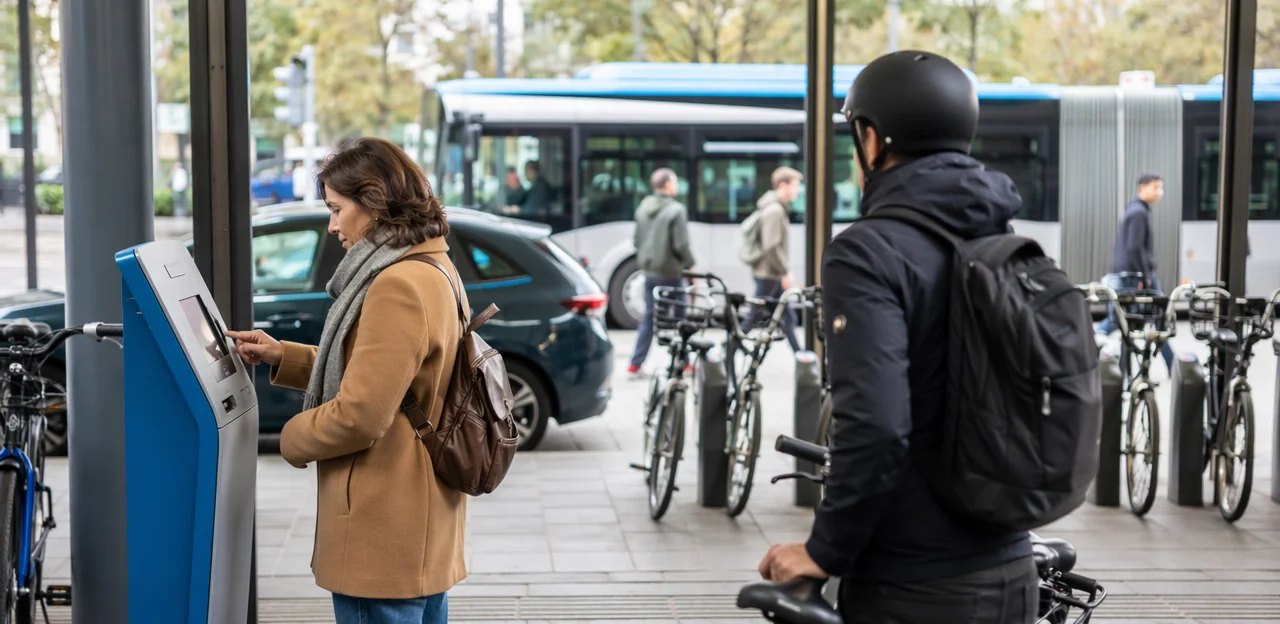
- Kiosks and in-terminal surveys: Best for high-traffic areas and quick sentiment checks, especially where passengers may not want to use their phones.
Choose channels based on convenience, timing, and touchpoint. Faster channels improve response speed; simpler formats usually lift response rates; well-timed prompts improve data quality. Tools like Tapsy can help hubs collect quick QR-based feedback at physical touchpoints.
Asking better questions at the right moment
Short, well-timed customer feedback questions outperform broad end-of-trip surveys because they capture what travelers are experiencing right now. For stronger mobility customer experience insights, match each prompt to a specific touchpoint and keep it to one or two clear questions.
- Arrivals: “Was baggage reclaim easy to find?” or “How clean was the arrivals hall?”
- Departures: “Was security wait time acceptable?” or “Did signage help you reach your gate or platform?”
- Transfers: “Was it easy to navigate between services?” or “Did connection information feel clear and timely?”
- Station services: “Was the ticket machine working properly?” or “How would you rate toilet cleanliness?”
This approach improves journey stage feedback, increases response rates, and makes real-time surveys more actionable. Tools like Tapsy can help hubs trigger these quick prompts at the exact moment they matter.
Balancing volume, privacy, and usability
To improve mobility customer experience, hubs need enough responses to spot patterns without turning feedback into friction. The best approach is short, well-timed, and transparent:
- Keep surveys lightweight: use 1–3 questions at key touchpoints such as exits, platforms, or service desks.
- Prioritize consent and data privacy: clearly explain what is collected, why it matters, and whether responses are anonymous.
- Design for survey accessibility: support screen readers, large tap targets, high-contrast layouts, and simple language.
- Enable multilingual passenger feedback: offer the most common local and visitor languages from the first screen.
- Make responding effortless: QR, NFC, and one-tap ratings reduce effort in busy environments.
Tools like Tapsy can help hubs capture fast, privacy-conscious feedback at the moment of travel.
How to act on feedback to improve passenger experience

Closing the loop with frontline teams
Real gains in mobility customer experience happen when insights reach the people who can act on them immediately. A strong customer feedback loop turns passenger comments into clear tasks for frontline teams, helping hubs fix issues before they escalate.
- Route feedback by team: send cleanliness complaints to cleaning, queue concerns to operations, safety flags to security, and service issues to retail or customer service.
- Use real-time alerts: trigger notifications for low scores, urgent keywords, or repeated complaints so teams can respond fast.
- Track performance on dashboards: show issues by location, time, and category to spot patterns and prioritize action.
- Assign accountability: give each alert an owner, response target, and resolution status to improve service recovery.
Tools like Tapsy can help hubs capture and route feedback in real time.
Prioritizing quick wins and long-term fixes
Real-time feedback is most useful when hubs separate urgent fixes from structural change. This helps improve mobility customer experience without losing momentum on bigger transformation goals.
- Quick wins: Act fast on issues that can be solved within days, such as redeploying staff during peak periods, updating unclear signage, fixing broken equipment, or improving cleaning schedules. These visible changes build trust and show passengers their feedback matters.
- Long-term fixes: Use recurring feedback patterns to guide hub service design decisions, including layout redesigns, queue management processes, accessibility upgrades, and better digital services like wayfinding or disruption updates.
- Best practice: Track both categories in one roadmap to support continuous improvement—delivering immediate relief while investing in lasting performance gains.
Tools like Tapsy can help teams capture and route these insights in real time.
Measuring impact after changes are made
Once improvements are introduced, hubs need performance measurement that links action to results. For mobility customer experience, the goal is to confirm that changes improve service, not just activity levels.
- Track core CX metrics: monitor CSAT, NPS, complaint volume, repeat issue rates, queue times, and staff response times.
- Benchmark before and after: compare each location, route, or touchpoint against a clear baseline so teams can see what changed.
- Analyze customer satisfaction trends: review weekly and monthly patterns to separate one-off spikes from sustained improvement.
- Connect CX to operations: measure whether better feedback scores also reduce delays, escalations, refunds, or service disruptions.
- Segment results: break data down by time of day, traveler type, and touchpoint to identify where gains are strongest.
Tools like Tapsy can help capture real-time feedback and make trend analysis faster and more actionable.
Technology, analytics, and KPIs that support better mobility customer experience

Using dashboards and alerts for faster response
In busy hubs, real-time dashboards turn scattered feedback into clear operational priorities. By combining live ratings, comments, and incident reports, teams can use customer experience analytics to spot problems before they escalate and protect mobility customer experience at critical touchpoints.
- Track issues by location, time, and category to identify recurring pain points fast
- Set automated service alerts for low scores, safety concerns, cleanliness complaints, or equipment failures
- Share one live view across operations, facilities, customer service, and security to speed coordination
- Use trends to prioritize staffing, maintenance, and service recovery during peak periods
Tools like Tapsy can help route real-time feedback to the right team instantly.
Combining feedback with operational and location data
Real-time feedback becomes far more useful when paired with operational data from the same moment and place. This helps hubs understand not just what passengers felt, but why.
- Match comments and ratings with queue times, footfall analytics, and passenger flow to spot where congestion is driving frustration.
- Layer in dwell time and delay data to see how waiting impacts satisfaction at gates, platforms, or retail areas.
- Connect feedback to asset performance such as lifts, ticket machines, escalators, or toilets to identify recurring service pain points.
This joined-up view of mobility customer experience helps teams prioritise fixes, deploy staff faster, and improve both operations and passenger confidence.
Key KPIs for travel and mobility hubs
To improve mobility customer experience, hubs need a focused set of metrics that connect passenger sentiment with operational action:
- Satisfaction score / CSAT: Measure how travelers rate specific touchpoints such as cleanliness, signage, staff support, or waiting areas.
- NPS: Track how likely passengers are to recommend the station, airport, or terminal overall.
- Response time: Monitor how quickly teams acknowledge real-time issues.
- Issue resolution rate: Measure the percentage of reported problems fully resolved within target timeframes.
- Cleanliness and accessibility scores: Essential for high-traffic environments and inclusive passenger experience.
- Repeat complaint trends: Identify recurring failures by location, time, or service type.
Together, these mobility customer experience metrics help hubs prioritize fixes, allocate resources, and improve service continuously.
Building a feedback-driven culture across travel hubs

Creating cross-functional ownership of passenger experience
Mobility customer experience cannot be owned by a single CX team, because passengers judge the whole journey, not internal departments. Delays, cleanliness, signage, app updates, retail queues, and staff support all shape outcomes, so a strong passenger experience strategy must be shared across the organization.
- Operations own flow, punctuality, and disruption handling
- Facilities manage cleanliness, comfort, and accessibility
- Digital improves wayfinding, alerts, and self-service tools
- Commercial aligns retail and service touchpoints with traveler needs
- Leadership sets priorities, KPIs, and accountability
Build a customer-centric culture with shared metrics, regular insight reviews, and cross-functional collaboration powered by real-time feedback tools such as Tapsy.
Training staff to respond with empathy and speed
Real-time feedback only improves mobility customer experience when frontline teams know how to act on it. Effective staff training should help employees read passenger sentiment quickly, prioritize urgent issues, and deliver empathetic service under pressure.
- Train staff to spot patterns in feedback and distinguish minor frustrations from safety, accessibility, or delay-related concerns.
- Give teams clear authority to resolve common problems on the spot, from rebooking guidance to wayfinding support.
- Use simple communication frameworks: acknowledge the issue, explain what is happening, and state the next step clearly.
- Practice disruption scenarios regularly so customer service in transport stays calm, consistent, and human.
Tools like Tapsy can help route live feedback to the right team faster.
From reactive listening to continuous improvement
The strongest hubs treat real-time feedback as more than a service-recovery tool. They build it into a customer experience strategy that turns daily signals into smarter decisions, stronger operations, and better mobility customer experience over time.
- Spot patterns, not just incidents: Track recurring issues by location, time, and touchpoint to guide continuous improvement.
- Prioritize high-impact fixes: Use feedback data to improve signage, accessibility, staffing, and flow where friction is highest.
- Test and learn quickly: Pilot changes, measure traveler response, and scale what works to drive travel hub innovation.
- Close the loop visibly: Show passengers that feedback leads to action, building trust, resilience, and long-term loyalty.
Tools like Tapsy can help hubs capture and act on these insights in real time.
Conclusion
In the end, improving mobility customer experience is no longer about relying on occasional surveys or waiting for complaints to surface after the journey is over. Travel and mobility hubs perform best when they listen in real time, at the exact moments that shape passenger perception—during delays, at ticketing points, in waiting areas, and across essential facilities. Real-time feedback gives operators the visibility to spot friction quickly, respond faster, and make smarter decisions based on what travelers are actually experiencing.
The key takeaway is clear: when hubs collect timely, location-based insights, they can strengthen service recovery, improve operational efficiency, and build trust with passengers. From cleanliness and accessibility to signage, staff support, and crowd management, every touchpoint contributes to overall mobility customer experience.
Now is the time to move from reactive improvement to continuous listening. Start by identifying your highest-friction touchpoints, simplifying feedback collection, and creating internal workflows that turn insights into action. For teams looking to operationalize this approach, tools like Tapsy can help capture fast, no-app passenger feedback directly at the point of experience.
To take the next step, audit your current feedback journey, review response times, and explore solutions that make real-time passenger insight part of everyday operations. The hubs that listen faster will improve faster.
Frequently Asked Questions
- Why is real-time feedback more useful than post-journey surveys in mobility hubs?
Real-time feedback captures passenger sentiment at the exact moment and place where an issue happens. That gives teams better context and lets them respond while the problem still matters. Post-journey surveys often arrive after details are blurred, which makes action slower and less precise.
- What parts of the passenger journey should travel hubs monitor with real-time feedback?
Hubs should collect feedback across ticketing, wayfinding, security, cleanliness, accessibility, retail and food, and staff interactions. Looking at only one overall score can hide where friction actually occurs. Touchpoint-level feedback makes it easier to route issues and track improvements.
- How does real-time feedback help improve mobility customer experience during disruptions?
It helps teams spot crowding, signage confusion, delays, broken equipment, or cleanliness issues before they escalate into larger failures. Staff can then act quickly with service recovery, clearer communication, or operational adjustments. This visible response can strengthen trust and satisfaction.
- What can hubs learn by segmenting feedback from different types of passengers?
Segmented feedback shows that commuters, business passengers, tourists, families, and passengers with reduced mobility often need different things. Operators can then target fixes based on traveler type, time, and touchpoint. This supports more inclusive and relevant improvements across the hub.
- How can passenger sentiment be turned into operational intelligence?
The most useful approach is to connect ratings and comments with live operational context such as queue times, delays, staffing levels, footfall, equipment uptime, or cleanliness logs. That helps teams identify root causes instead of reacting only to symptoms. It also makes prioritization clearer across operations, facilities, customer service, and commercial teams.
- Which feedback channels work best in stations, airports, and terminals?
The right channel depends on the touchpoint and passenger context. QR code surveys work well in physical spaces like gates, platforms, lounges, toilets, and exits, while SMS and email are useful after a trip or service interaction. Mobile apps can support richer journey-based feedback, and kiosks or in-terminal surveys can suit high-traffic areas where phone use is less convenient.
- What makes a good real-time feedback question at a mobility hub?
Good questions are short, specific, and tied to a clear journey stage. Instead of broad trip-wide prompts, hubs should ask one or two focused questions such as whether security wait time was acceptable or whether signage helped a passenger reach the right platform. This improves response rates and makes the feedback easier to act on.
- How can hubs collect enough feedback without creating friction for passengers?
They should keep surveys lightweight, usually one to three questions, and place them at key touchpoints. Clear consent, simple language, accessible design, and multilingual options also help more people respond comfortably. Low-effort methods like QR, NFC, and one-tap ratings reduce the burden in busy environments.
- What should happen after negative feedback is submitted at a travel hub?
Feedback should be routed to the team best placed to act, such as cleaning, operations, security, retail, or customer service. Real-time alerts can flag low scores, urgent keywords, or repeated complaints for immediate follow-up. Each issue should have an owner, a response target, and a resolution status.
- How should hubs decide between quick fixes and long-term improvements?
Quick wins are issues that can be solved in days, such as adjusting staffing, updating signage, fixing equipment, or improving cleaning schedules. Long-term fixes address recurring patterns through layout redesigns, accessibility upgrades, queue management changes, or better digital services. Tracking both in one roadmap supports continuous improvement without losing momentum.
- How can operators measure whether feedback-driven changes are working?
They should compare results before and after changes using metrics such as CSAT, NPS, complaint volume, repeat issue rates, queue times, and staff response times. Weekly and monthly trend reviews help separate one-off spikes from sustained progress. Breaking results down by location, time of day, traveler type, and touchpoint shows where gains are strongest.
- What role do dashboards and alerts play in mobility customer experience management?
Dashboards turn scattered ratings, comments, and incident reports into a live operational view. Alerts help teams react quickly to low scores, safety concerns, cleanliness complaints, or equipment failures. Sharing this view across operations, facilities, customer service, and security improves coordination and speed.
- Why should feedback be combined with location and operational data?
Passenger comments become more actionable when linked to the same moment and place. Matching feedback with queue times, footfall, passenger flow, dwell time, delay data, or asset performance helps explain why satisfaction changed. That joined-up view supports faster fixes and better resource allocation.
- Which KPIs are most important for travel and mobility hubs tracking customer experience?
A focused set includes satisfaction score or CSAT, NPS, response time, issue resolution rate, cleanliness scores, accessibility scores, and repeat complaint trends. These metrics connect passenger sentiment to operational action. Used together, they help hubs prioritize improvements and monitor service quality over time.
- How can tools like Tapsy support real-time feedback in high-traffic hubs?
Tools like Tapsy can help capture quick, in-the-moment feedback at busy touchpoints without requiring a full app experience. They can support QR-based collection, route feedback to the right teams, and make trend analysis faster. This gives operators a more direct path from passenger input to action.