
A great attraction can lose its shine the moment a visitor feels confused, excluded, or unheard. In museums, galleries, heritage sites, and other tourist-heavy destinations, the visitor experience is shaped by far more than the exhibition or landmark itself. Signage, staff interactions, queue management, accessibility, and cultural understanding all play a role—and when guests come from different countries and language backgrounds, collecting meaningful feedback becomes far more complex.
That is where visitor feedback multilingual strategies become essential. If attractions only gather responses in one language, they risk missing critical insights from a large share of their audience, especially international visitors who may have very different expectations, needs, and accessibility concerns. Multilingual feedback helps organisations understand what diverse visitors are really experiencing, identify friction points earlier, and create more inclusive environments for everyone.
This article explores why multilingual feedback matters so much for visitor attractions, how it supports accessibility and inclusion goals, and what museums and cultural venues can do to capture better insights at scale. It will also look at practical ways to collect feedback in real time across busy touchpoints, with tools such as Tapsy offering one example of how attractions can make feedback easier, faster, and more accessible for global audiences.
Why multilingual visitor feedback matters at tourist-heavy attractions

Language access directly shapes the multilingual visitor experience at museums, heritage sites, and major attractions. When visitors cannot easily understand signage, instructions, maps, or feedback forms, they are more likely to feel unsure, miss key exhibits, and leave less satisfied.
- Satisfaction drops when people struggle to follow the visitor journey or understand context.
- Confidence falls if wayfinding, safety information, or staff interactions are unclear.
- Participation decreases when tours, interactives, and surveys are only offered in one language.
- Insight quality improves when visitor feedback multilingual options let people respond in the language they know best.
Collecting feedback in multiple languages helps attractions uncover barriers that monolingual surveys often miss, giving teams more accurate, inclusive data to improve access, interpretation, and overall visitor experience.
Accessibility, inclusion, and cultural participation
Multilingual feedback systems help museums and attractions turn inclusion goals into everyday practice. When visitor feedback multilingual options are available, more people can report barriers, suggest improvements, and feel their perspectives matter.
- Reduce language barriers: Offer short, plain-language forms in key visitor languages to support accessible visitor feedback.
- Hear underrepresented voices: Visitors who may not speak the dominant language can more easily raise concerns about signage, staff interactions, sensory overload, pricing, or physical access.
- Improve equity outcomes: Review responses by language and touchpoint to spot patterns affecting the inclusive museum experience.
- Act quickly: Route urgent issues, such as wayfinding confusion or inaccessible facilities, to the right team for fast resolution.
Tools such as Tapsy can support simple QR-based collection at key points across the visitor journey.
Business and operational benefits for attractions
Collecting visitor feedback multilingual gives attractions a clearer picture of what different audiences actually experience, not just what one language group reports. That leads to practical improvements across operations:
- Better reviews and ratings: Resolve issues early and identify what international guests value most, improving public sentiment and more useful tourist attraction feedback.
- Stronger reputation: Showing visitors you listen in their own language builds trust, inclusivity, and word-of-mouth recommendations.
- Improved staff training: Use recurring themes from museum visitor insights to coach frontline teams on wayfinding, accessibility, queue management, and cultural communication.
- Smarter service design: Broader audience input helps refine signage, exhibit interpretation, ticketing flows, and amenities based on real visitor needs.
Tools like Tapsy can help capture this feedback at key touchpoints in real time.
How to design a multilingual feedback strategy

Choose priority languages based on audience data
To decide priority languages for attractions, start with evidence, not assumptions. A simple visitor demographics analysis helps you support the languages that will improve access fastest without stretching budget or staff capacity.
- Review ticketing data: Check booking origins, group tours, postcode data, and peak seasons to identify your largest non-native language audiences.
- Study tourism patterns: Use city or regional tourism reports to spot the top inbound markets visiting your destination.
- Check website analytics: Look at browser language settings, international traffic sources, and pages viewed by overseas visitors.
- Map community demographics: Local census and school/community data can reveal important resident languages, especially for repeat visits and inclusion.
For visitor feedback multilingual programmes, launch with 3–5 high-impact languages, then expand based on response volume and operational capacity. Tools like Tapsy can help test demand at specific touchpoints.
Select the right feedback channels
Choosing the best visitor feedback channels depends on crowd size, dwell time, and audience mix. For visitor feedback multilingual programmes, use a blended approach:
- QR surveys: Fast, low-cost, and ideal for high-footfall attractions. Add them at exits, cafés, and queue areas using multilingual survey tools.
- Kiosks: Great for instant, on-site responses, especially where visitors may not want to scan a code.
- Email follow-ups: Best for richer feedback after ticketed visits, but response rates are usually lower.
- SMS and app prompts: Useful for timed-entry venues and members, though less effective for one-off international tourists.
- Paper forms: Helpful for older visitors, but slower to process and translate.
- Staff-led interviews: Best for accessibility insights and deeper qualitative feedback, but harder to scale.
For mixed-age audiences, combine QR, kiosks, and selective staff interviews.
Write culturally clear and easy-to-translate questions
To improve visitor feedback multilingual programs, write questions that are simple, neutral, and easy to localize. Well-designed translated survey questions reduce confusion and make results more comparable across visitor groups.
- Use plain language surveys with short sentences and one idea per question.
- Avoid idioms, slang, humor, and culture-specific references that may not translate clearly.
- Choose neutral wording to prevent bias. For example, ask “How easy was it to find your way?” instead of “Did you enjoy our clear signage?”
- Keep response scales consistent across languages so reporting stays reliable.
- Test translations with native speakers to catch awkward phrasing or unintended meanings.
- Prefer concrete terms over abstract ones, such as “waiting time” instead of “service efficiency.”
If you use a tool like Tapsy, keep touchpoint surveys brief so translation stays accurate and completion rates stay high.
Best practices for collecting high-quality multilingual feedback

Reduce friction at the point of response
To increase survey response rates, make feedback effortless in the exact moment visitors are most willing to respond. For visitor feedback multilingual programs, small design choices can significantly improve multilingual feedback collection.
- Ask at the right time: Trigger feedback at natural pause points such as exit gates, cafés, gift shops, or immediately after a guided tour.
- Keep surveys short: Aim for 1–3 questions, with one optional comment box. Long forms reduce completion.
- Design mobile-first: Use large buttons, fast-loading pages, and instant language selection on the first screen.
- Place signage strategically: Position QR or NFC prompts where queues form or dwell time is high, not only at the entrance.
- Train staff to prompt gently: A simple “You can leave feedback in your own language” increases participation.
Tools like Tapsy can support no-app, touchpoint-based collection.
Ensure translation quality and cultural accuracy
For visitor feedback multilingual programs, poor translation can distort responses and weaken insights. Strong survey localization should go beyond word-for-word conversion and reflect local phrasing, tone, and cultural context.
- Use professional translators with tourism, museum, or public-facing experience.
- Localize examples, date formats, rating scales, and idioms so questions feel natural to each audience.
- Apply back-translation: translate the survey into the target language, then back into the original to catch meaning shifts.
- Build a clear translation quality assurance process with glossary rules, approved terminology, and version control.
- Ask native speakers to review the final survey for nuance, sensitivity, and clarity before launch.
This approach reduces misunderstandings, improves completion rates, and protects data quality across diverse visitor groups.
Build trust around privacy and consent
For visitor feedback multilingual programs to succeed, attractions must make privacy easy to understand at a glance. Clear, respectful messaging increases response rates and reduces hesitation.
- Use multilingual consent notices at every feedback touchpoint, with plain language explaining what data is collected, why it is needed, and how long it is kept.
- Keep visitor data privacy details consistent across QR forms, kiosks, websites, and staff scripts.
- Offer anonymous or low-data feedback options whenever possible, especially for international visitors with different privacy expectations.
- Show reassurance messages such as “Your feedback is confidential, secure, and helps improve the visitor experience.”
- Include visible links to privacy policies in major visitor languages and make opt-in choices explicit, not pre-ticked.
Tools like Tapsy can support simple, no-app feedback flows with clear consent steps.
Analyzing multilingual feedback for actionable insights

Standardize data across languages
To make visitor feedback multilingual useful at scale, standardize every response before analysis:
- Create a shared taxonomy: Map translated comments into common categories such as signage, queues, accessibility, staff helpfulness, cleanliness, and value. Use one master tag list for all languages.
- Keep rating scales identical: A 1–5 satisfaction score should mean the same thing in every survey version. Translate labels carefully so “good,” “fair,” or “excellent” carry equivalent strength.
- Normalize open-text themes: Group similar phrases across languages into unified topics, which improves multilingual feedback analysis and trend reporting.
- Compare by segment: Review cross-language survey data by language, country of origin, age group, or visit type to spot differences without losing consistency.
Tools like Tapsy can help centralize this structure across touchpoints.
Use AI and human review together
For visitor feedback multilingual programs, the strongest approach combines automation with expert review. AI translation for surveys helps attractions process large volumes of comments quickly, while sentiment analysis multilingual tools can flag trends, urgent complaints, and recurring accessibility issues across languages.
- Use AI first to translate open-text responses and cluster common themes.
- Apply multilingual sentiment analysis to detect satisfaction, frustration, or confusion by location, exhibit, or service point.
- Add human review for sensitive feedback, cultural references, sarcasm, and context-heavy comments that AI may misread.
- Create a review workflow where staff validate high-impact insights before acting on them.
This hybrid model improves speed without losing nuance. Platforms such as Tapsy can support fast feedback collection, but human oversight remains essential for accurate, culturally aware decisions.
Turn comments into operational improvements
To make visitor feedback multilingual useful, group comments by theme and location, then look for patterns across languages and time periods. This turns raw opinions into a practical museum feedback action plan.
- Tag recurring issues: classify comments into signage, queues, exhibits, accessibility, and staff interactions.
- Measure frequency and severity: track how often each issue appears and whether it affects satisfaction, dwell time, or repeat visits.
- Prioritize high-impact fixes: update unclear wayfinding, redesign queue flow, improve exhibit labels, remove accessibility barriers, and coach frontline teams.
- Assign ownership: give each issue to operations, visitor services, or curatorial teams with deadlines.
- Track results: compare complaint volume, satisfaction scores, queue times, and accessibility ratings before and after changes.
This structured approach supports continuous visitor experience improvement with measurable outcomes.
Applying feedback in museums and cultural attractions
Improve exhibits, interpretation, and wayfinding
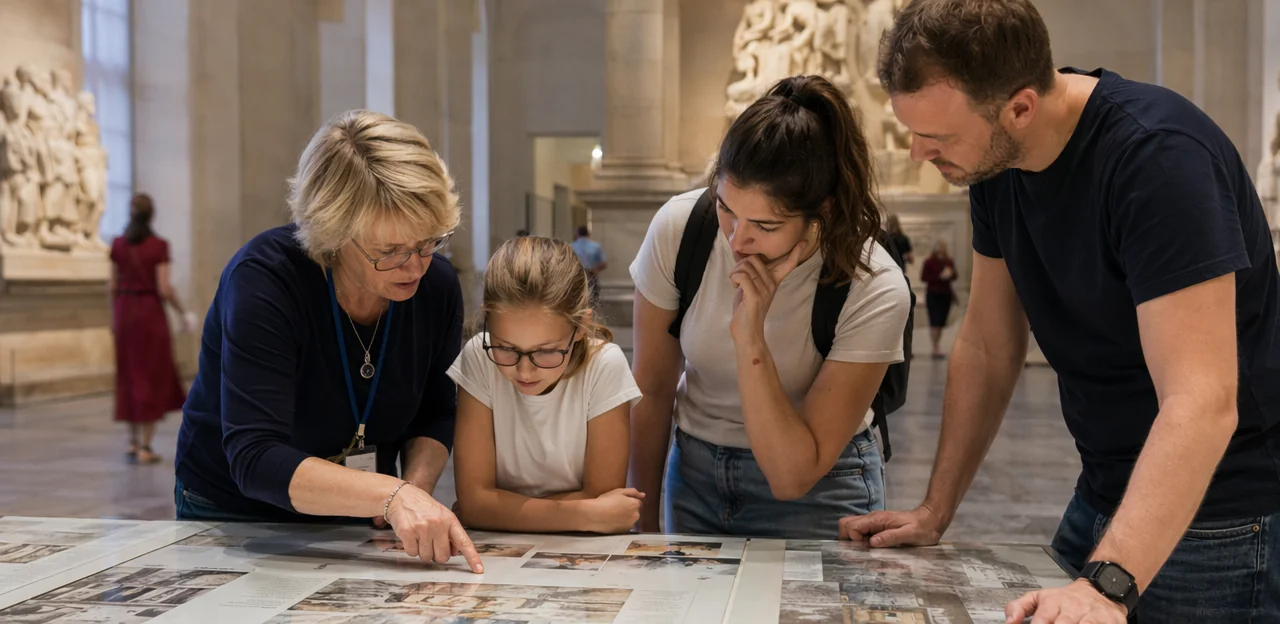
Multilingual insights help attractions remove confusion and make experiences more inclusive for global visitors. Use visitor feedback multilingual data to identify where people misunderstand content, miss routes, or abandon audio tours.
- Refine labels: Flag exhibits with unclear translations, jargon, or culturally specific references, then simplify wording and add context.
- Improve audio guides: Track where listeners skip, replay, or rate segments poorly to strengthen pacing, tone, and language quality.
- Strengthen maps and museum wayfinding: Use feedback to spot confusing entrances, galleries, restrooms, and exit routes, then update icons, landmarks, and directional signage.
- Enhance multilingual interpretation: Compare comments by language group to tailor stories, examples, and explanations for international audiences.
Tools like Tapsy can help collect feedback directly at key touchpoints.
Support frontline staff and service recovery
visitor feedback multilingual helps attractions spot exactly where visitors struggle and where teams need better support. Use feedback trends to strengthen frontline staff training and improve service recovery tourism processes:
- Identify recurring issues at ticket desks, security, wayfinding points, and galleries where language barriers cause confusion.
- Review comments by language to uncover unclear signage, untranslated instructions, or staff scripts that need simplifying.
- Train staff in key phrases, non-verbal guidance, escalation steps, and how to use translation tools calmly under pressure.
- Build fast recovery playbooks for missed tours, queue frustration, or misunderstood policies, so staff can apologise, clarify, and resolve issues quickly.
Tools like Tapsy can help capture these issues in real time at the point of experience.
Create a continuous feedback loop
To turn visitor feedback multilingual into action, build a simple process that closes the loop and supports continuous improvement visitor experience goals:
- Report back visibly: Share “You said, we did” updates on signage, websites, email follow-ups, and social channels in key visitor languages.
- Track trends over time: Monitor themes by language, touchpoint, season, and visitor type to spot recurring barriers and measure whether fixes improve satisfaction.
- Make feedback part of planning: Review multilingual insights in weekly operations meetings, exhibition planning, accessibility reviews, and staff training.
- Assign ownership: Give teams clear responsibility for responding, resolving, and reporting outcomes.
Tools such as Tapsy can help attractions maintain a practical feedback loop attractions process in real time.
Common challenges and practical solutions

Managing budget, scale, and technology limits
Many attractions need visitor feedback multilingual systems without adding major cost or complexity. A practical approach is to start small, prove value, then expand.
- Phase rollout by priority: begin with your top 3–5 visitor languages, busiest sites, or highest-friction touchpoints such as entry, wayfinding, and exits.
- Use budget-friendly survey translation: translate short core questions first, then add open-text options later to control costs.
- Choose simple multilingual feedback tools: QR-based forms, browser surveys, and no-app platforms often work better with legacy systems than full software replacements.
- Support small teams: use templates, shared translation glossaries, and automated alerts. Tools like Tapsy can help collect fast, touchpoint-based feedback without heavy technical setup.
Avoiding bias and underrepresentation
Low participation from some language groups can create survey response bias, making results look more positive or negative than the wider audience experience. In visitor feedback multilingual programmes, this often happens when surveys are only promoted in dominant languages or shared at the wrong touchpoints.
To improve inclusive audience research:
- Track response rates by language to spot underrepresented groups early.
- Target outreach where those visitors are most likely to engage, such as ticket desks, wayfinding points, cafés, or exit areas.
- Use translated invites and simple QR/NFC prompts so participation feels easy and relevant.
- Train frontline staff to encourage feedback across language groups consistently.
Tools like Tapsy can help place multilingual feedback prompts directly at key visitor touchpoints.
Measuring success with the right KPIs
To improve visitor feedback multilingual programs, attractions should track a focused set of visitor feedback KPIs that reveal both experience quality and operational impact:
- Response rate by language: Identify which language groups engage most and where translations, placement, or prompts need improvement.
- Satisfaction trends: Monitor scores over time by language, touchpoint, and visitor segment to spot recurring issues.
- Issue resolution time: Measure how quickly teams respond to complaints, especially for urgent accessibility or service problems.
- Accessibility scores: Track feedback on signage, audio guides, mobility access, and staff support.
- Repeat visitation indicators: Use return intent, membership renewals, or revisit rates to connect feedback with loyalty.
These multilingual survey metrics help museums and attractions turn insight into action.
Conclusion
In today’s tourism landscape, great experiences are not enough if visitors cannot easily share what they felt, needed, or struggled with. That is why visitor feedback multilingual strategies are becoming essential for museums, galleries, heritage sites, and major attractions. When feedback is available in multiple languages, organizations gain more accurate insights, reduce barriers for international guests, and create a more inclusive experience for every visitor.
The key takeaway is simple: multilingual feedback helps attractions listen better, respond faster, and improve more confidently. It strengthens accessibility and inclusion, highlights operational issues that may otherwise go unnoticed, and gives teams a clearer picture of how different audiences experience exhibits, facilities, signage, and staff interactions. Most importantly, it shows visitors that their voices matter, regardless of the language they speak.
The next step is to audit your current feedback journey: review where feedback is collected, identify language gaps, simplify response options, and ensure your team can act on insights quickly. If you are looking for a practical way to collect real-time, touchpoint-based feedback, tools like Tapsy can support multilingual engagement without adding friction.
Now is the time to make visitor feedback multilingual a core part of your visitor experience strategy—and turn every guest insight into a better, more welcoming attraction.
Frequently Asked Questions
- Why is multilingual visitor feedback important for museums and tourist attractions?
It helps attractions understand the experiences of international visitors who may struggle with signage, instructions, maps, or surveys in a single language. This leads to more accurate insights, earlier detection of barriers, and a more inclusive visitor experience.
- How does multilingual feedback support accessibility and inclusion?
It gives more visitors a practical way to report barriers related to signage, staff interactions, sensory overload, pricing, or physical access. When people can respond in their preferred language, attractions are better able to hear underrepresented voices and act on equity-related issues.
- What operational benefits can attractions gain from collecting feedback in multiple languages?
Attractions can improve reviews and ratings by resolving issues earlier and understanding what international guests value most. Multilingual feedback also supports better staff training, stronger reputation, and smarter service design across ticketing, signage, interpretation, and amenities.
- How should an attraction choose which languages to offer first?
Start with audience data rather than assumptions by reviewing ticketing origins, tourism reports, website analytics, and local community demographics. A practical rollout is to begin with 3–5 high-impact languages and expand based on response volume and operational capacity.
- Which feedback channels work best for multilingual visitor feedback?
The best mix depends on crowd size, dwell time, and audience type. QR surveys are fast and low-cost for busy sites, kiosks work well for instant on-site responses, email follow-ups can collect richer feedback, and staff-led interviews are useful for deeper accessibility insights.
- What makes a multilingual survey question easy to understand and translate?
Questions should use plain language, short sentences, and one idea per question. Neutral wording, consistent response scales, and concrete terms like "waiting time" instead of abstract phrases help keep results clear and comparable across languages.
- How can attractions increase response rates for multilingual surveys?
Ask for feedback at natural pause points such as exits, cafés, gift shops, or right after guided tours. Keep surveys to 1–3 questions, design them for mobile use, place prompts where visitors are already waiting, and train staff to invite responses gently.
- Why is translation quality so important in visitor feedback systems?
Poor translation can distort meaning, reduce completion rates, and weaken the quality of insights. Strong localization should include professional translators, back-translation, glossary rules, version control, and final review by native speakers.
- How should attractions handle privacy and consent in multilingual feedback collection?
Privacy messaging should be clear and easy to understand at every feedback touchpoint. Attractions should explain what data is collected, why it is needed, how long it is kept, and offer anonymous or low-data options whenever possible.
- How can multilingual feedback be analyzed consistently across different languages?
Responses should be standardized using a shared taxonomy for themes such as signage, queues, accessibility, staff helpfulness, cleanliness, and value. Rating scales should stay identical across languages, and open-text comments should be grouped into common topics for reliable reporting.
- Should attractions rely on AI alone to process multilingual feedback?
No, the strongest approach combines AI with human review. AI can translate comments, cluster themes, and detect sentiment at scale, while people are still needed to interpret cultural references, sarcasm, and sensitive context accurately.
- What should teams do after collecting multilingual visitor comments?
Group comments by theme and location, then measure how often issues appear and how severe they are. From there, attractions can prioritize fixes, assign ownership to the right teams, and track whether changes improve satisfaction, queue times, or accessibility ratings.
- How can multilingual feedback improve exhibits and wayfinding?
It helps identify where visitors misunderstand labels, miss routes, or stop using audio guides. Attractions can then simplify exhibit wording, improve translations, update maps and directional signage, and tailor interpretation for different language groups.
- What are common challenges when launching a multilingual feedback program?
Budget limits, scaling across touchpoints, and working with existing technology are common obstacles. A practical solution is to phase the rollout, translate short core questions first, and use simple no-app tools such as QR-based forms.
- Which KPIs should attractions track to measure success?
Useful KPIs include response rate by language, satisfaction trends by touchpoint and segment, issue resolution time, accessibility scores, and repeat visitation indicators. These measures show both how well the feedback system is working and whether operational improvements are making a difference.