
A great meal can win a customer once, but a great experience is what brings them back. In restaurants and cafés, small moments—slow service, a missed order, a cold coffee, a warm welcome—shape how guests remember their visit. The challenge is turning those moments into clear, useful insight before they become negative reviews, lost repeat business, or operational blind spots. That’s where a well-designed restaurant customer satisfaction survey becomes a powerful tool.
The right survey questions do more than collect opinions. They help restaurant teams uncover what’s working, identify service issues quickly, and prioritize improvements that actually matter to guests. From food quality and staff friendliness to wait times, cleanliness, and value for money, every question should lead to action—not just data.
In this article, we’ll explore the restaurant customer satisfaction survey questions that deliver meaningful feedback and support better decisions across service, menu planning, and day-to-day operations. You’ll learn which question types to use, how to keep surveys short and effective, and how to capture feedback while the dining experience is still fresh. We’ll also look at how tools like Tapsy can help restaurants gather real-time feedback at the table or counter and respond faster when it matters most.
Why Customer Satisfaction Surveys Matter for Restaurants and Cafés

A well-designed restaurant customer satisfaction survey turns opinions into clear operational priorities. Structured restaurant customer feedback helps teams spot what diners expect most and where the experience breaks down.
- Identify friction points: Track issues like wait times, order accuracy, noise, cleanliness, or staff attentiveness.
- Improve the guest experience: Use feedback trends to adjust staffing, training, menu flow, and service standards.
- Strengthen customer retention for restaurants: When guests see problems fixed, they are more likely to return.
Surveys also reveal what drives loyalty, positive online reviews, and word-of-mouth referrals. Real-time tools such as Tapsy can capture feedback before guests leave, helping restaurants recover service quickly and protect repeat visits.
The operational value of actionable feedback
A well-designed restaurant customer satisfaction survey should do more than collect opinions—it should improve restaurant operations. The most useful surveys turn guest comments into clear next steps for managers and frontline teams.
- Service speed: Spot delays by shift, daypart, or table zone to adjust staffing and kitchen flow.
- Food quality: Identify recurring issues like cold dishes, inconsistent portions, or menu items that underperform.
- Cleanliness: Flag problems in dining areas, restrooms, or tables before they damage trust.
- Staff performance: Reveal coaching needs around friendliness, order accuracy, and attentiveness.
This is the power of actionable customer feedback: stronger restaurant service quality, faster fixes, and measurable operational improvements.
Common mistakes restaurants make with surveys
Even a well-intentioned restaurant customer satisfaction survey can fail if the setup is flawed. Common survey design mistakes include:
- Asking too many questions: Long surveys reduce completion rates and weaken customer satisfaction measurement. Focus on the few metrics that directly support service improvements.
- Using vague wording: Questions like “Was everything okay?” produce weak insights. Be specific about food quality, speed, cleanliness, and staff service.
- Ignoring negative feedback: Collecting complaints without acting on them damages trust and wastes data.
- Failing to close the loop: Share findings with both guests and staff, then explain what changes were made.
Among the best restaurant survey best practices is keeping surveys short, clear, and action-oriented.
What Makes a Great Restaurant Customer Satisfaction Survey
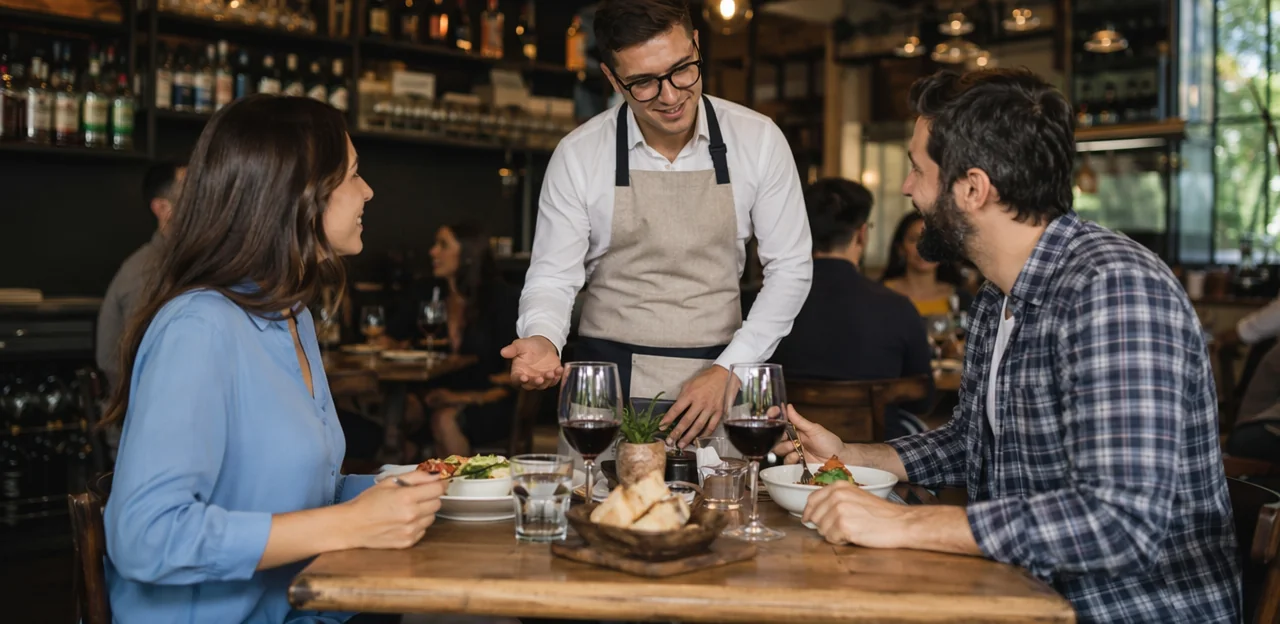
Keep surveys short, clear, and easy to complete
A restaurant customer satisfaction survey works best when it respects the guest’s time. A short customer survey—typically 3 to 7 questions and under 2 minutes—usually delivers a higher restaurant survey response rate than longer forms. It also improves data quality, because guests are more likely to finish and answer thoughtfully.
- Keep it brief: Focus on the most actionable questions about food, service, speed, and cleanliness.
- Use simple language: Avoid jargon, double-barreled questions, or long rating scales.
- Prioritize mobile survey design: Use large buttons, one-question-per-screen layouts, and minimal typing.
- Make completion effortless: Offer optional comment fields instead of requiring long written responses.
Tools like Tapsy can help restaurants collect fast, mobile-friendly feedback right after the dining experience.
Use a mix of rating, multiple-choice, and open-ended questions
The best restaurant customer satisfaction survey uses different survey question types to capture both patterns and details. This gives you data you can track over time and comments you can act on quickly.
- Use rating scale questions for key metrics like food quality, service speed, cleanliness, and value. These make it easy to spot trends by shift, location, or daypart.
- Use yes-or-no or multiple-choice prompts when you need fast, structured answers, such as “Was your order accurate?” or “What affected your visit most?”
- Add open-ended survey questions at the end to uncover context, like why service felt slow or what guests loved most.
Keep comment boxes optional and focused. Tools like Tapsy can help restaurants collect this feedback in the moment, when details are still fresh.
Align questions with the full dining experience
A strong restaurant customer satisfaction survey should mirror the guest journey, not just the meal itself. Structuring restaurant survey questions by touchpoint helps you collect more useful dining experience feedback and spot exactly where service breaks down.
- Booking: Was it easy to reserve a table online or by phone?
- Arrival: How were wait time, greeting, and seating experience?
- Service: Was staff attentive, friendly, and knowledgeable?
- Food and drinks: Did quality, taste, temperature, and timing meet expectations?
- Ambiance: How did guests rate cleanliness, noise, lighting, and comfort?
- Payment: Was checkout quick, accurate, and convenient?
- Follow-up: Would they return or recommend you?
This customer journey survey approach turns broad opinions into clear operational actions. Tools like Tapsy can also capture feedback at key moments while the experience is still fresh.
Best Restaurant Customer Satisfaction Survey Questions to Ask
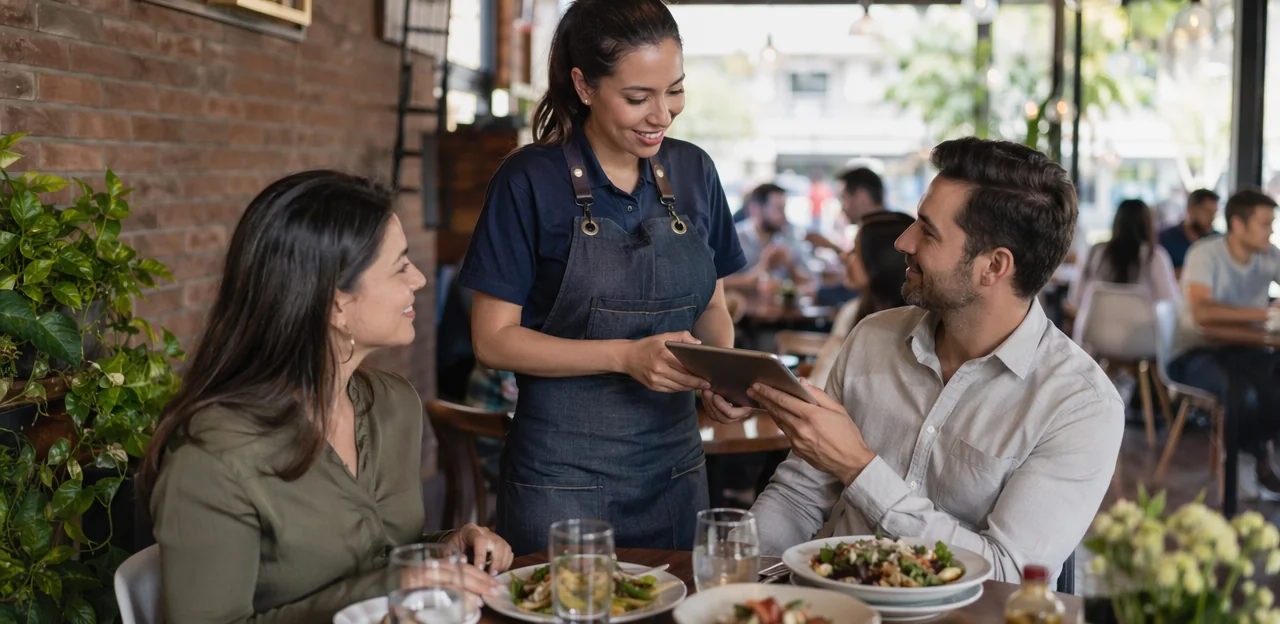
Questions about food quality, menu, and value
A strong restaurant customer satisfaction survey should go beyond overall ratings and ask specific questions about the meal itself. These food quality survey questions and menu feedback questions help restaurants identify what to improve, keep, or promote.
- How would you rate the taste of your meal?
Measures flavor satisfaction and highlights which dishes consistently impress or disappoint. - How fresh did the ingredients seem?
Reveals whether guests notice issues with produce, proteins, or preparation quality. - Was the portion size too small, too large, or just right?
Helps balance cost control with guest expectations and reduce complaints about value. - Did the menu offer enough variety for your preferences?
Shows whether the selection feels broad enough across mains, sides, drinks, and specials. - Were there suitable options for your dietary needs or preferences?
Useful for understanding gaps in vegetarian, vegan, gluten-free, allergy-friendly, or low-calorie choices. - How would you rate the value for money of your meal?
A key restaurant value for money question that connects price to quality, portion size, and overall satisfaction. - Which menu item would you order again, and why?
Identifies signature dishes and gives richer insight than ratings alone.
For faster, in-the-moment responses, tools like Tapsy can capture this feedback before guests leave.
Questions about service, staff, and speed
Service quality often shapes the overall restaurant customer satisfaction survey more than food alone. To uncover what guests actually experience, include clear restaurant service survey questions that measure both hospitality and efficiency.
Consider asking:
- Friendliness: “How friendly and welcoming was our staff?”
- Attentiveness: “Did your server check in at the right times without being intrusive?”
- Order accuracy: “Was your order prepared and delivered correctly?”
- Wait times: “How satisfied were you with seating time, order delivery time, and checkout speed?”
- Problem resolution: “If something went wrong, how well did our team resolve it?”
These questions generate practical staff performance feedback you can act on quickly. For example:
- Low friendliness scores may signal a need for hospitality coaching and better greeting standards.
- Weak attentiveness ratings can highlight sections that are too large or shifts that are understaffed.
- Frequent order accuracy issues may point to kitchen handoff problems or POS training gaps.
- Poor results from a service speed survey can justify schedule changes during lunch, dinner, or weekend peaks.
- Repeated complaints about unresolved issues show managers where escalation training is needed.
If you collect responses in real time through tools like Tapsy, managers can spot service issues before guests leave unhappy.
Questions about ambiance, cleanliness, and overall satisfaction
A strong restaurant customer satisfaction survey should go beyond food and service to measure how the space feels. Ambiance and cleanliness often shape whether guests stay longer, return, or recommend your venue to others. Use a mix of rating-scale and open-text questions in your restaurant ambiance survey and overall satisfaction survey.
Consider including:
- Atmosphere: “How would you rate the overall atmosphere of the restaurant?”
- Music: “Was the music volume and style appropriate for your dining experience?”
- Seating comfort: “How comfortable was your seating during your visit?”
- Restroom cleanliness: “How satisfied were you with restroom cleanliness and maintenance?”
- Dining area cleanliness: “How clean did the tables, floors, and shared spaces feel?”
To turn responses into action, track:
- Overall satisfaction score on a 1–5 or 1–10 scale
- Likelihood to return: “How likely are you to visit again?”
- Net promoter-style question: “How likely are you to recommend us to friends or family?”
This combination gives clear cleanliness feedback and highlights operational fixes, such as adjusting music, improving seating layouts, or increasing restroom checks. Tools like Tapsy can help capture this feedback in the moment, when impressions are freshest.
How to Design Surveys That Increase Response Rates

Choose the right timing and delivery channel
Strong survey timing improves response rates and makes your restaurant customer satisfaction survey more useful.
- Dine-in: Ask within 5–30 minutes after payment while the experience is still fresh. A QR code restaurant survey on the bill holder, table tent, or exit sign works well for full-service and casual dining.
- Takeaway: Send within 30–60 minutes after pickup to capture food quality, speed, and order accuracy. A receipt link or SMS customer survey is ideal.
- Delivery: Send 30–90 minutes after drop-off so guests have time to eat. Email works for longer feedback; SMS is better for quick ratings.
For fast-casual or high-volume formats, kiosks near exits can capture immediate, in-the-moment feedback. Tools like Tapsy can also help restaurants collect quick QR-based responses at key touchpoints.
Write unbiased questions and avoid survey fatigue
A strong restaurant customer satisfaction survey should feel fair, quick, and easy to finish. To create unbiased survey questions, use neutral wording that does not push guests toward a positive or negative answer.
- Ask: “How would you rate the speed of service?”
Avoid: “How great was our fast service?” - Ask one thing at a time instead of combining topics like food and service in a single question.
- Use balanced answer scales, such as very dissatisfied to very satisfied.
To avoid survey fatigue, remove repetitive or low-value prompts, keep the survey short, and make comment fields optional. Shorter surveys usually improve your survey completion rate. Tools like Tapsy can also help restaurants collect fast, in-the-moment feedback with fewer steps.
Use incentives carefully without skewing feedback
Survey incentives can help increase survey responses, but they should never pressure guests into leaving overly positive ratings on your restaurant customer satisfaction survey. Keep rewards small, universal, and separate from the score itself.
- Offer modest incentives like a discount on a future visit, loyalty points, or entry into a prize draw.
- Reward completion, not a 5-star rating, to protect honest customer feedback.
- Avoid wording such as “Leave a great review for 10% off.”
- Use clear messaging: “Share your experience and receive a thank-you reward.”
For example, tools like Tapsy can pair quick feedback with a simple next-visit perk without tying rewards to positive responses.
Turning Survey Results Into Actionable Restaurant Improvements

Identify patterns in ratings and comments
To analyze survey results effectively, don’t review each response in isolation. Use your restaurant customer satisfaction survey data to group feedback into categories that reveal repeat problems and standout strengths:
- By theme: service speed, food quality, cleanliness, value, ambiance
- By location: compare branches, dining areas, patio, drive-thru, or takeaway
- By shift: lunch, dinner, weekends, or late-night service
- By menu item: identify dishes linked to praise, complaints, or inconsistent quality
- By staff role: servers, hosts, kitchen, bar, or delivery team
This approach improves restaurant feedback analysis by uncovering customer satisfaction trends you can act on fast. For example, low dinner scores at one location may point to staffing gaps, while repeated praise for a menu item highlights what to promote or replicate.
Prioritize changes that affect revenue and loyalty
Use your restaurant customer satisfaction survey results to rank improvements by three factors:
- Guest impact: Fix the issues guests mention most often or rate lowest, such as wait times, order accuracy, or staff friendliness. These have the biggest effect on how you improve restaurant loyalty.
- Operational feasibility: Prioritize changes your team can implement quickly and consistently, like clearer table-turn processes or better shift handoffs.
- Business outcomes: Tie each issue to restaurant performance metrics such as repeat visits, average spend, review scores, and complaint volume.
A simple guest satisfaction strategy is to score each improvement by impact, effort, and revenue potential, then tackle the high-impact, low-effort wins first. Tools like Tapsy can help surface urgent issues in real time.
Close the feedback loop with staff and customers
To close the feedback loop, turn every restaurant customer satisfaction survey result into visible action:
- Share insights weekly with managers and frontline teams. Highlight top praise, recurring complaints, and location or shift trends so teams know what to fix first.
- Use feedback in restaurant team training by reviewing real guest comments, coaching service recovery, and reinforcing behaviors that drive higher scores.
- Respond to customer feedback quickly, especially from dissatisfied guests. Thank them, acknowledge the issue, and explain the next step or offer a recovery gesture.
- Tell customers what changed: “You asked for faster lunch service, so we added a second prep station.”
Tools like Tapsy can help teams capture and route feedback in real time.
Survey Templates, Metrics, and Final Best Practices

A simple survey template restaurants can adapt
Use this short restaurant customer satisfaction survey as a practical restaurant survey template for any post-dining survey or customer satisfaction questionnaire:
- Rate 1–5: food quality, service speed, staff friendliness, cleanliness, and value for money
- Open comment: “What was the main reason for your rating today?”
- Loyalty question: “How likely are you to visit us again or recommend us to others?”
Keep it under one minute to improve completion rates.
- Track customer satisfaction metrics consistently: overall satisfaction score, food, service, speed, and cleanliness ratings from each restaurant customer satisfaction survey.
- Monitor survey performance metrics like response rate to judge survey reach and timing.
- Include repeat visit intent and recommendation likelihood to predict loyalty.
- Review complaint themes monthly to spot operational issues.
- Strong restaurant KPI tracking connects feedback trends to staffing, menu changes, and service recovery actions.
- Review your restaurant customer satisfaction survey quarterly to remove weak questions, spot trends, and keep feedback relevant.
- Update questions whenever menus, staffing, service models, or technology change so your data reflects the real guest experience.
- Benchmark scores by location, shift, and time period to uncover actionable restaurant customer insights.
- Most importantly, share findings with teams and act on them—strong survey best practices drive continuous improvement in restaurants and a true customer-first culture.
Conclusion
A well-built restaurant customer satisfaction survey does more than collect opinions—it gives your team clear direction on what to improve next. By asking targeted questions about food quality, service speed, staff friendliness, cleanliness, atmosphere, value, and overall experience, restaurants can uncover the real drivers behind repeat visits, negative reviews, and lost revenue. The most effective surveys are short, timely, and easy to complete, with a mix of rating-scale questions and open-ended feedback that reveals the “why” behind each score.
The key is turning responses into action. Review trends regularly, identify recurring pain points, and share insights with managers and frontline staff so improvements happen quickly. When survey data is tied to operational decisions, menu updates, service training, and service recovery efforts, your restaurant customer satisfaction survey becomes a practical growth tool rather than just another report.
As a next step, audit your current survey questions and remove anything vague, repetitive, or difficult to act on. Then test a streamlined format at key touchpoints, such as after payment or at table-side checkout. Tools like Tapsy can also help capture real-time guest feedback and alert teams before a poor experience turns into a public review. Start refining your survey today, and turn every response into a better dining experience.
Frequently Asked Questions
- Why should restaurants and cafés use customer satisfaction surveys?
Customer satisfaction surveys help turn guest opinions into clear operational priorities. They reveal friction points like slow service, order mistakes, cleanliness issues, and weak staff attentiveness. They also support better retention by showing teams what to fix before guests stop coming back.
- What makes a restaurant customer satisfaction survey effective?
An effective survey is short, clear, and focused on questions that lead to action. It should usually stay within 3 to 7 questions and take less than 2 minutes to complete. The strongest surveys cover key areas like food, service, speed, cleanliness, and overall experience.
- How many questions should a restaurant survey include?
A restaurant survey should typically include 3 to 7 questions. Keeping it short improves completion rates and helps guests answer more thoughtfully. Long surveys often reduce response quality and make it harder to identify the most important issues.
- Which question types work best in a restaurant feedback survey?
A good survey uses a mix of rating-scale, multiple-choice, yes-or-no, and open-ended questions. Rating questions help track trends over time, while structured choices make responses easy to analyze. Open comments add context and explain why a guest gave a certain score.
- What are the most useful questions to ask about food quality and value?
Useful food questions cover taste, freshness, portion size, menu variety, dietary options, and value for money. Asking which menu item a guest would order again can also highlight signature dishes and strong performers. These questions help restaurants improve both menu planning and guest satisfaction.
- How can a survey measure service quality in a restaurant?
Service quality can be measured by asking about friendliness, attentiveness, order accuracy, wait times, and problem resolution. These questions show whether the team is welcoming, efficient, and able to recover when something goes wrong. The results can guide staffing decisions, coaching, and process improvements.
- Should restaurant surveys ask about ambiance and cleanliness?
Yes, because atmosphere and cleanliness strongly influence whether guests return or recommend the venue. Questions about music, seating comfort, restroom cleanliness, and dining area cleanliness help uncover issues beyond food and service. These responses can lead to practical fixes in layout, maintenance, and environment.
- When is the best time to send a restaurant customer survey?
Timing depends on the service format. For dine-in, asking within 5 to 30 minutes after payment works well, while takeaway surveys fit best within 30 to 60 minutes after pickup. Delivery feedback is better sent 30 to 90 minutes after drop-off so guests have time to eat.
- What delivery channels are recommended for restaurant surveys?
QR codes work well for dine-in surveys on bill holders, table tents, or exit signs. Receipt links and SMS are useful for takeaway, while email or SMS can suit delivery depending on whether the goal is a quick rating or longer feedback. Kiosks near exits can also help in fast-casual or high-volume settings.
- How do you write unbiased restaurant survey questions?
Use neutral wording that does not push guests toward a positive or negative answer. Ask one thing at a time and avoid combining topics like food and service in a single question. Balanced answer scales, such as very dissatisfied to very satisfied, also help keep feedback fair.
- What survey mistakes should restaurants avoid?
Common mistakes include asking too many questions, using vague wording, ignoring negative feedback, and failing to share what changed. Questions like 'Was everything okay?' usually produce weak insights because they are too broad. Surveys work better when they are specific, short, and tied to visible action.
- Should restaurants offer incentives for completing surveys?
Incentives can help increase responses if they are modest and not tied to positive ratings. Good examples include a future discount, loyalty points, or entry into a prize draw. The reward should be for completion, not for leaving a 5-star response.
- How should restaurants analyze survey results?
Survey results should be grouped by themes such as service speed, food quality, cleanliness, value, and ambiance. It is also useful to compare feedback by location, shift, menu item, or staff role. This makes recurring problems and standout strengths easier to spot and act on quickly.
- How can survey feedback be turned into operational improvements?
The best approach is to prioritize issues based on guest impact, operational feasibility, and business outcomes. High-impact, low-effort fixes should come first, especially when they affect repeat visits, review scores, or complaint volume. Teams should also share insights regularly and use them in training and service recovery.
- How can tools like Tapsy support restaurant feedback collection?
Tools like Tapsy can help restaurants capture real-time feedback at the table, counter, or other key touchpoints. This makes it easier to collect responses while the experience is still fresh and to spot service issues before guests leave unhappy. They can also support quick, mobile-friendly survey completion.