A great spa experience is about far more than the treatment itself. From the moment a guest books an appointment to the follow-up they receive after leaving, every touchpoint shapes how they feel, what they remember, and whether they return. That’s why spa client journey feedback has become such a valuable tool for wellness businesses that want to improve service, strengthen loyalty, and deliver a more seamless guest experience.
When spas listen carefully at each stage of the journey, they can uncover what’s working, where friction appears, and which moments matter most to clients. Booking convenience, pre-visit communication, check-in, ambience, therapist interaction, treatment quality, and post-treatment follow-up all contribute to the overall impression. Even small issues at one stage can affect satisfaction across the entire visit.
This article explores how to collect and use spa client journey feedback from booking to post-treatment, helping wellness and personal services teams turn real client insights into meaningful improvements. We’ll look at the key feedback moments to track, the benefits of connecting feedback across the full client experience, and how tools such as Tapsy can help capture timely responses at the right touchpoints. By understanding the full journey, spas can create experiences that feel smoother, more personal, and more memorable.
Why spa client journey feedback matters across the full guest experience
Defining the spa client journey from first click to repeat visit
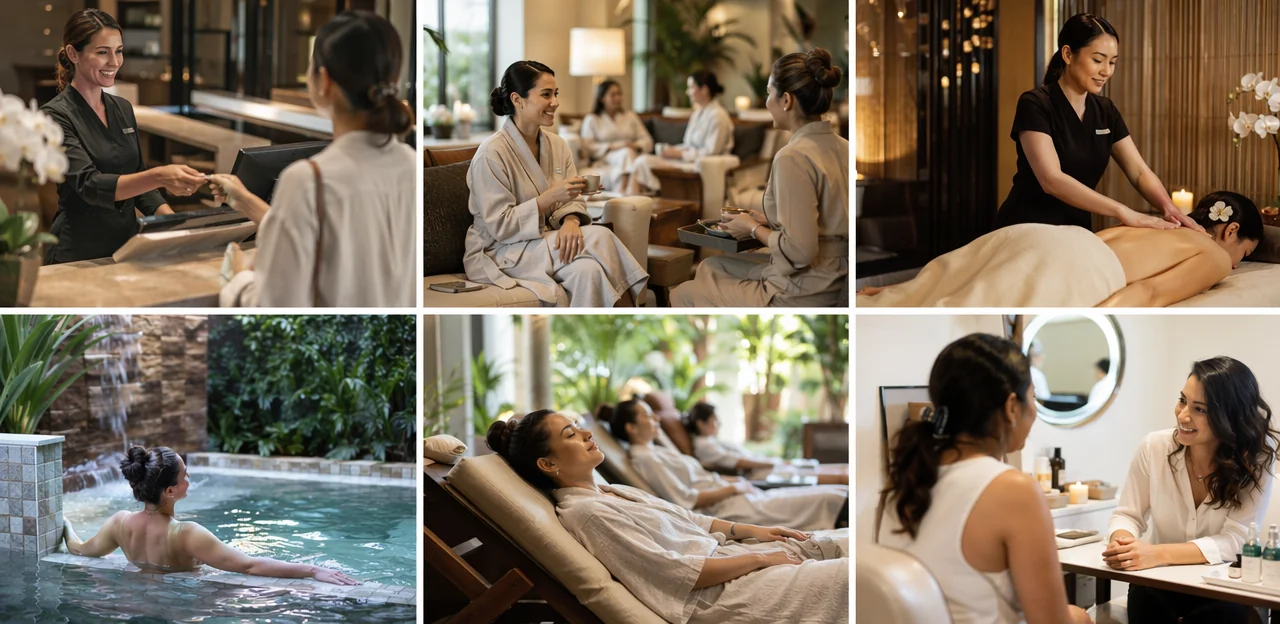
A strong spa client journey feedback strategy tracks the entire spa guest journey, not just the final impression. In a client experience spa model, each stage shapes loyalty, reviews, and rebooking.
Map feedback across key touchpoints:
- Discovery: website, ads, social media, and service pages
- Booking: ease of scheduling, confirmations, and payment flow
- Arrival: welcome, ambience, wait time, and check-in
- Treatment: therapist quality, comfort, personalization, and results
- Checkout: upsells, clarity, and speed
- Post-visit: follow-up messages, review requests, and rebooking offers
This approach reveals where friction starts. A single satisfaction score can hide problems like confusing booking or weak follow-up. Tools such as Tapsy can help capture stage-specific feedback while the experience is still fresh.
How feedback influences loyalty, reviews, and revenue
Actionable spa client journey feedback helps spas turn small issues into measurable growth. When you collect spa customer feedback at booking, arrival, treatment, and follow-up, you can spot friction before it affects loyalty.
- Reduce friction: Fix slow booking flows, unclear pricing, long wait times, or checkout delays that lower guest satisfaction spa scores.
- Improve service quality: Use comments to coach staff, refine treatment recommendations, and personalize future visits.
- Increase repeat bookings: Fast service recovery and tailored follow-ups strengthen trust and support better spa client retention.
- Boost reviews and referrals: Satisfied guests are more likely to leave positive ratings, recommend your spa, and return with friends.
Tools like Tapsy can help capture in-the-moment feedback and turn it into loyalty-driving action.
Common feedback gaps in wellness and personal services
Many brands collect reviews, but spa client journey feedback often misses the moments where friction actually happens. Common client feedback gaps include:
- Booking frustrations: Guests may abandon appointments because of unclear availability, slow confirmations, or limited rescheduling options, yet this rarely appears in standard wellness customer feedback surveys.
- Front-desk bottlenecks: Long check-in times, payment confusion, or poor handoffs between reception and therapists can damage the experience before treatment even begins.
- Inconsistent therapist communication: Clients notice when consultation quality, pressure checks, or aftercare explanations vary widely between practitioners.
- Weak post-treatment follow-up: Many spas fail to ask timely spa service feedback about results, retail recommendations, or rebooking intent.
To close these gaps, gather feedback at each touchpoint, not just after the visit. Tools like Tapsy can help capture in-the-moment insights.
Collecting feedback at the booking and pre-arrival stages
Improving online booking with timely client input
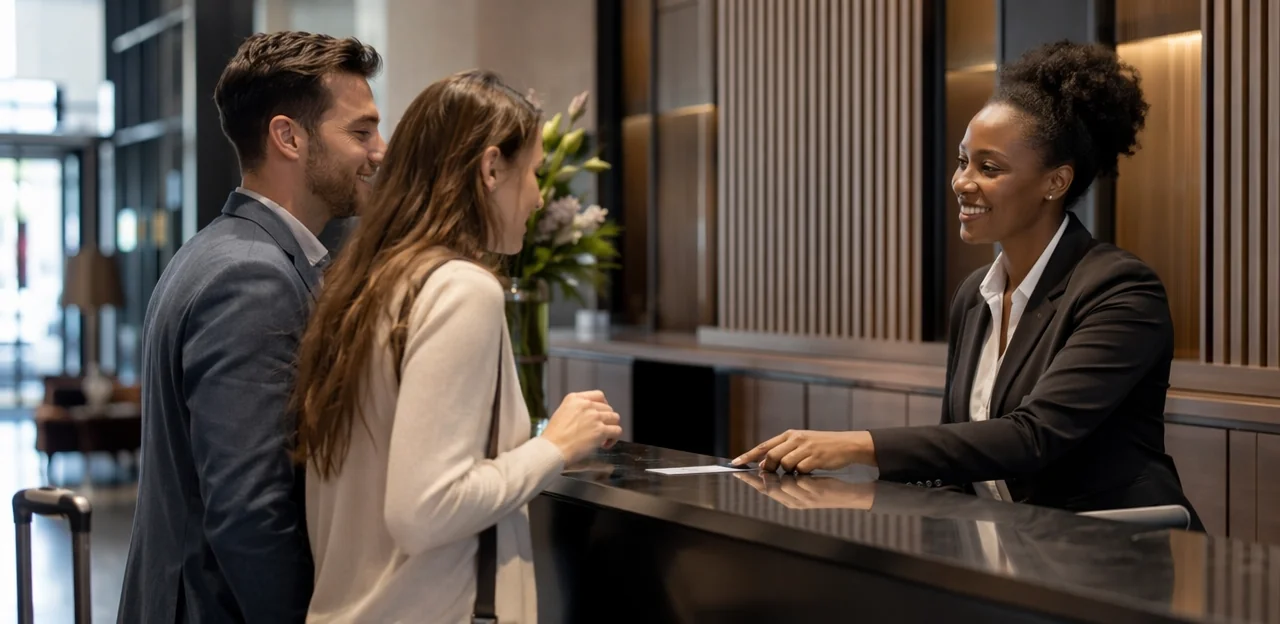
To improve the online booking experience, spas should collect spa client journey feedback at the exact points where clients hesitate or leave. Short, targeted prompts can reveal what causes friction in spa appointment booking and help reduce abandonment.
- Website usability: Ask whether pages load quickly, navigation feels clear, and key actions are easy to find.
- Appointment availability: Track feedback on limited time slots, unclear therapist availability, or difficulty rescheduling.
- Mobile booking: Test every step on phones and invite clients to rate speed, form length, and ease of use.
- Service descriptions: Check if treatments, durations, pricing, and add-ons are explained clearly enough to support decisions.
- Payment flow: Monitor drop-off at checkout and ask about trust, payment options, and failed transactions.
Tools like Tapsy can help capture quick feedback at these high-friction moments.
Using confirmations, forms, and integrations to capture expectations
Strong spa client journey feedback starts before the guest walks in. A well-timed pre-visit spa survey and digital intake flow help teams personalize service, reduce surprises, and improve comfort from the first appointment.
- Pre-visit surveys: Ask about treatment goals, pressure preferences, sensitivities, allergies, and desired outcomes.
- Digital intake forms: Collect health history, contraindications, and communication preferences in advance so therapists can prepare properly.
- SMS confirmations: Use reminder texts to confirm appointment details and invite clients to update requests or note special occasions.
- Spa software integrations: Connect forms, messaging, and booking data with your CRM to centralize client preference capture.
When spa software integrations sync survey responses into booking profiles, staff can greet clients with relevant context and deliver a more consistent, personalized experience.
Identifying friction before the guest arrives
Strong spa client journey feedback starts before check-in. To improve the pre-arrival guest experience, review every message and touchpoint for signs of confusion, then act on recurring patterns.
- Track common questions: Monitor calls, texts, and emails about directions, parking access, late arrival rules, cancellation policies, and when guests should arrive.
- Collect appointment preparation feedback: Ask guests after booking whether treatment prep instructions were clear, including what to wear, what to avoid, and when to complete forms.
- Review no-show and late-arrival trends: These often reveal unclear timing, weak reminders, or poor policy visibility.
- Audit confirmation messages: Make sure maps, parking details, policies, and preparation steps are easy to find on mobile.
Using short spa communication feedback surveys after booking can help spas spot friction early and improve clarity before the visit.
Capturing in-spa feedback during arrival, treatment, and checkout
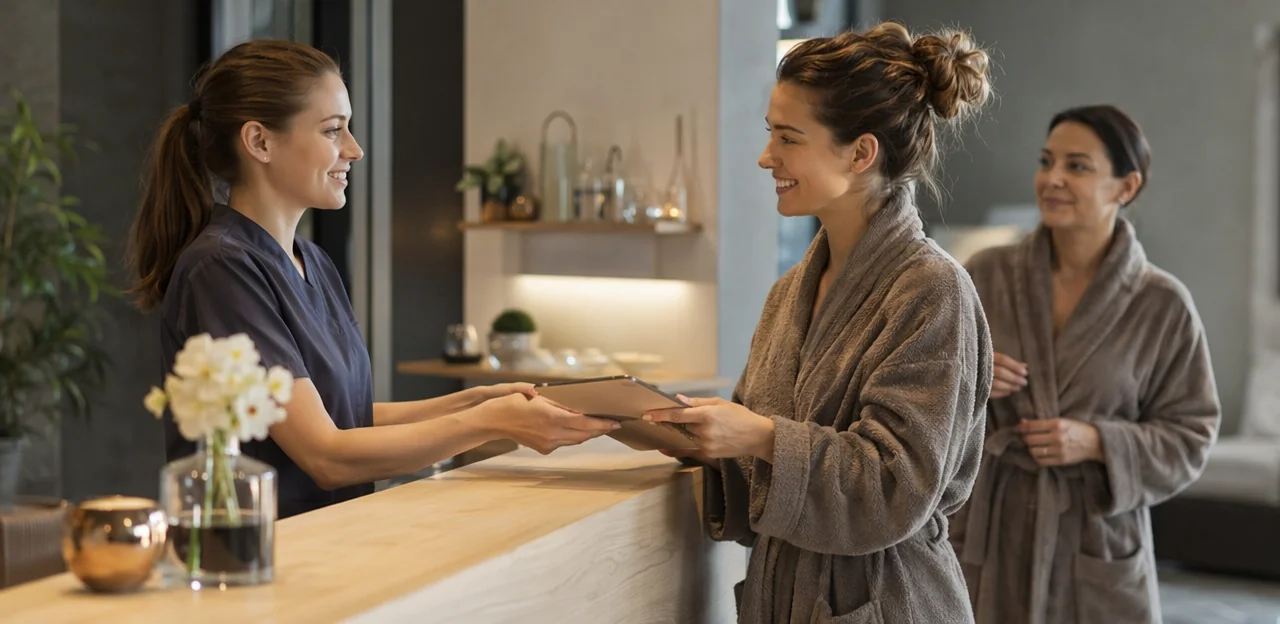
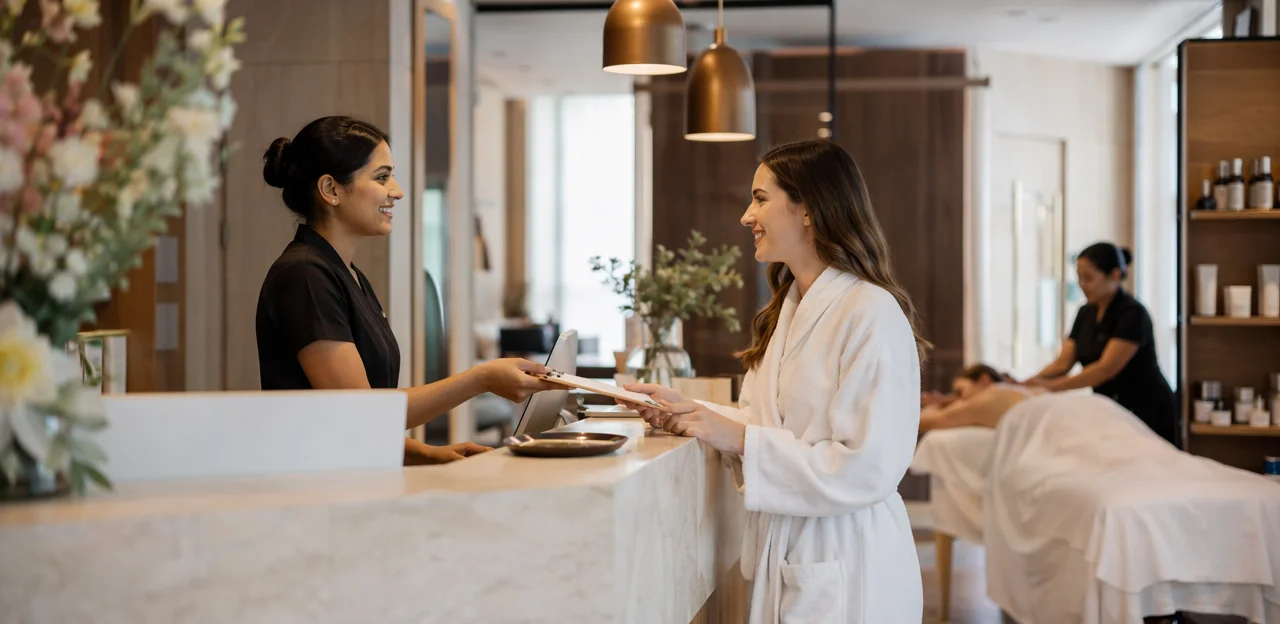
Measuring first impressions at check-in and reception
The spa arrival experience shapes expectations for the entire visit, so this stage should be a core part of your spa client journey feedback strategy. Capture input immediately after check-in or while the experience is still fresh to spot operational gaps early.
Focus feedback on key arrival touchpoints:
- Greeting quality: Was the welcome warm, personal, and attentive?
- Wait times: How long did clients wait to check in, and did it feel well managed?
- Ambiance: Ask about lighting, scent, music, temperature, and overall calm.
- Cleanliness: Measure perceptions of the reception desk, lounge, restrooms, and shared spaces.
- Staff professionalism: Evaluate appearance, communication, confidence, and helpfulness.
Keep reception feedback spa surveys short, such as a 1–3 question pulse check via QR code at reception. Tools like Tapsy can help collect fast, in-the-moment feedback on the spa check-in experience before small issues affect the treatment itself.
Gathering treatment-specific feedback without disrupting care
To improve the spa client journey feedback loop, collect treatment insights at moments that feel natural, private, and low-effort. The goal is to capture useful treatment feedback spa teams can act on without interrupting relaxation.
- Use a two-step approach: ask one quick check-in immediately after treatment, then send a short follow-up later for deeper massage client feedback.
- Keep questions specific: rate therapist communication, room comfort, pressure preferences, personalization, and perceived treatment outcomes.
- Offer simple formats: QR cards at checkout, SMS surveys, or a no-app tool like Tapsy can make feedback fast and discreet.
- Include optional comments: let guests mention whether pressure was too light or firm, if the therapist adapted well, or if the service felt tailored.
- Route low scores quickly: alert managers when feedback signals discomfort, unclear communication, or missed spa service personalization opportunities.
Short, well-timed surveys protect the guest experience while giving spas actionable service data.
Using checkout feedback to uncover service and sales issues
Checkout is one of the best moments to collect spa client journey feedback, because the full visit is still fresh and purchase decisions have just happened. Use a mix of spa checkout feedback methods to spot friction quickly:
- Point-of-sale prompts: Add a one-tap rating or QR survey at payment to ask whether pricing felt clear, products were explained well, and checkout was smooth.
- Short surveys: Keep questions focused on key revenue and retention signals, such as the rebooking experience spa guests had, whether retail suggestions felt helpful or pushy, and overall satisfaction.
- Staff questions: Train front-desk teams to ask simple, consistent questions like “Was everything clear today?” or “Did you find the right home-care products?”
This approach helps uncover issues with package pricing, unclear add-ons, weak retail conversations, and missed rebooking opportunities. Tools like Tapsy can help capture this feedback in the moment and route concerns fast.
Turning post-treatment feedback into loyalty and retention strategies

Designing effective post-visit surveys and review requests
Strong spa client journey feedback depends on timing, simplicity, and a clear next step. Send a spa survey after visit within 2–6 hours by SMS for quick responses, or by email later the same day for more detailed answers.
- Keep surveys to 3–5 questions on:
- overall satisfaction
- treatment results
- therapist professionalism
- cleanliness and ambiance
- Use a mix of rating scales and one optional comment box to capture useful post-treatment feedback without creating friction.
- Personalize messages with the client’s name, treatment type, and location to boost engagement.
- If feedback is positive, follow with a direct spa review request linking to Google or another review platform.
- If feedback is low, route it privately to your team for fast service recovery.
Tools like Tapsy can help streamline this flow across channels.
Segmenting responses to personalize follow-up
Using spa client journey feedback effectively means grouping clients by treatment type, goals, concerns, and satisfaction level so every message feels relevant. Strong client segmentation spa strategies help teams move beyond generic emails and create a more effective personalized spa follow-up.
- Aftercare advice: Send tailored skincare, hydration, or muscle-recovery tips based on the service received and any sensitivities mentioned in feedback.
- Membership offers: Recommend wellness plans or packages that match frequent booking patterns, preferred treatments, or stated goals like stress relief or skin improvement.
- Rebooking reminders: Adjust timing by service, such as shorter reminders for facials and longer intervals for massage or recovery treatments.
- Recovery recommendations: Follow up with stretch routines, product suggestions, or therapist notes when clients report tension, soreness, or specific wellness needs.
Tools like Tapsy can help capture and organize this feedback at key touchpoints.
Recovering unhappy clients before they churn
A strong spa client retention strategy starts with acting quickly on spa client journey feedback. When you spot negative spa feedback, use a simple service recovery spa workflow:
- Trigger fast alerts: Flag low ratings or negative comments immediately and notify the manager or front desk lead.
- Reach out within 24 hours: Contact the client personally by phone, text, or email. Acknowledge the issue, apologize sincerely, and thank them for sharing it.
- Resolve the problem: Offer a clear next step, such as a redo, therapist change, refund, or treatment credit.
- Coach the team: Review patterns in feedback, address training gaps, and reinforce service standards.
- Protect loyalty: Use thoughtful retention offers like a follow-up upgrade or personalized return incentive.
Tools like Tapsy can help route low-score alerts faster.
Using integrations and analytics to make feedback actionable

Connecting booking, CRM, POS, and survey tools
Strong spa integrations turn isolated reviews into usable spa client journey feedback. When booking, CRM, POS, and survey platforms share data, spas can link each rating or comment to the full client record and measure what drives satisfaction and revenue.
- Connect feedback to appointments to see which visit types create the best or worst experiences.
- Match responses with staff and services to spot coaching needs, top performers, and treatment-level trends.
- Combine survey data with POS results to track rebooking, retail purchases, tips, and lifetime value.
- Use spa CRM feedback workflows to trigger follow-up, recovery offers, or loyalty outreach after low scores.
With wellness software analytics, managers can move from generic survey results to clear operational action.
Tracking the right client experience metrics
To turn spa client journey feedback into action, track a focused set of spa client experience metrics across every stage of the visit:
- Spa NPS: Measures loyalty and referral intent after treatment.
- CSAT: Capture immediate satisfaction after booking, check-in, treatment, and checkout.
- Repeat booking rate: Shows whether great experiences convert into future revenue.
- Review volume and rating trends: Monitor how often clients leave public feedback and what they say.
- Complaint themes: Group issues like wait times, cleanliness, pressure during upsells, or booking friction.
- Therapist performance: Compare satisfaction scores, rebooking rates, and review mentions by provider.
- No-show reduction: Track reminders, deposits, and confirmation flows to improve attendance.
Together, these guest satisfaction metrics reveal where to improve service, retention, and consistency.
Building a continuous improvement loop for teams
To turn spa client journey feedback into measurable gains, managers need a simple review-to-action process that every location follows. This strengthens spa operations improvement, supports feedback-driven training, and improves spa service quality management.
- Spot patterns weekly: Group feedback by booking, arrival, treatment, checkout, and follow-up to find recurring friction points.
- Turn themes into training: Use low-score trends to coach front desk, therapists, and support staff with short, role-specific refreshers.
- Update SOPs: Revise scripts, hygiene steps, consultation flows, and recovery protocols when the same issue appears repeatedly.
- Adjust staffing and services: Rebalance schedules, add peak-time coverage, or refine treatment add-ons based on demand and complaints.
- Standardize across teams: Share winning fixes between locations using dashboards or tools like Tapsy.
Best practices for a feedback program in wellness and personal services

Asking the right questions at the right time
To improve spa client journey feedback without creating fatigue, follow these client survey best practices:
- Keep it short: ask 3–5 questions max, with one optional comment box.
- Match the channel to the moment: use SMS or email after treatment, and QR codes at reception for quick in-spa check-ins.
- Time surveys carefully: ask booking questions right after reservation, service questions within a few hours, and loyalty questions 1–3 days later.
- Design better spa feedback questions: use simple scales, one topic per question, and ask about staff, ambiance, wait time, and results.
This creates a stronger wellness feedback strategy.
- Use automated spa feedback to send timely booking confirmations, pre-visit reminders, and post-treatment check-ins, keeping the spa client journey feedback process consistent and easy to manage.
- Pair automation with personal follow-up when feedback signals concern, hesitation, or dissatisfaction. A quick call or tailored message restores trust faster than a generic response.
- Build a human-centered client experience by automating routine wellness guest communication while reserving therapist or manager outreach for emotional, sensitive, or high-value moments.
- Tools like Tapsy can help capture feedback quickly without losing brand warmth.
Maintaining privacy, consent, and brand trust
To protect spa client journey feedback and strengthen loyalty, build privacy into every touchpoint:
- Prioritize spa data privacy with encrypted systems, limited staff access, and secure storage for treatment notes, contact details, and feedback.
- Get clear client consent wellness for SMS, email, and follow-up requests, with easy opt-in and opt-out choices.
- Use feedback ethically: anonymize when possible, avoid sharing sensitive personal details, and follow feedback compliance spa policies.
- Review vendors regularly; tools like Tapsy should support secure, consent-based feedback collection.
Conclusion
In today’s wellness market, exceptional treatments alone are not enough. The full guest experience—from online booking and pre-visit communication to check-in, treatment quality, checkout, and follow-up—shapes how clients feel, what they remember, and whether they return. That’s why spa client journey feedback is so valuable: it helps you uncover friction points, confirm what your team is doing well, and make improvements at every stage of the experience.
When spas consistently collect and act on spa client journey feedback, they can reduce booking drop-offs, improve personalization, strengthen staff performance, and build long-term loyalty. Even small insights—such as wait-time concerns, unclear confirmations, or missed post-treatment touchpoints—can lead to meaningful gains in satisfaction and retention.
The next step is simple: map your client journey, identify key feedback moments, and make it easy for guests to share their thoughts while the experience is still fresh. You can start with short surveys, post-visit SMS or email requests, or touchpoint-based tools such as Tapsy to capture real-time feedback more efficiently.
If you want to improve guest experience and grow repeat bookings, make spa client journey feedback a core part of your strategy. Review your current process, choose the right feedback tools, and turn every client interaction into an opportunity to elevate your spa experience.
Frequently Asked Questions
- What is spa client journey feedback?
Spa client journey feedback is input collected across the full guest experience, not just after the treatment ends. It covers discovery, booking, arrival, treatment, checkout, and post-visit follow-up so spas can see where friction starts and what drives loyalty.
- Why should spas collect feedback at multiple touchpoints instead of using one overall satisfaction score?
A single score can hide problems such as confusing booking, slow check-in, or weak follow-up. Gathering feedback at each stage makes it easier to identify specific issues and improve the moments that affect reviews, rebooking, and guest satisfaction.
- Which stages of the spa guest journey should be tracked for feedback?
Key stages include discovery, booking, arrival, treatment, checkout, and post-visit follow-up. Tracking each one helps connect client comments to the exact touchpoint where the experience felt smooth or frustrating.
- How can a spa improve its online booking experience using client feedback?
Use short prompts at points where clients hesitate or leave the booking flow. Focus on website usability, appointment availability, mobile booking, service descriptions, and payment flow to uncover what causes abandonment.
- What should a pre-visit spa survey ask before the appointment?
A pre-visit survey should ask about treatment goals, pressure preferences, sensitivities, allergies, and desired outcomes. Digital intake forms can also collect health history, contraindications, and communication preferences so therapists can prepare properly.
- How can spas identify pre-arrival friction before guests walk in?
Review common questions about directions, parking, late arrival rules, cancellation policies, and arrival timing. It also helps to ask whether preparation instructions were clear and to audit confirmation messages for mobile-friendly access to maps, policies, and forms.
- What should spas measure during check-in and reception?
Measure greeting quality, wait times, ambiance, cleanliness, and staff professionalism. Short pulse surveys at reception, such as a 1–3 question QR code check, can capture first impressions while they are still fresh.
- How can treatment-specific feedback be collected without disrupting relaxation?
A two-step approach works well: ask one quick question right after treatment, then send a short follow-up later for more detail. Keep questions focused on therapist communication, room comfort, pressure preferences, personalization, and perceived results.
- Why is checkout an important moment for feedback?
Checkout is valuable because the full visit is still fresh and purchase decisions have just been made. Feedback at this point can reveal issues with pricing clarity, retail conversations, add-ons, rebooking, and the overall speed and smoothness of payment.
- When should a spa send a post-visit survey or review request?
A post-visit survey can be sent within 2–6 hours by SMS for quick responses or later the same day by email for more detailed feedback. Positive responses can be followed by a direct review request, while low scores should be routed privately for service recovery.
- How can spas personalize follow-up based on client feedback?
Responses can be segmented by treatment type, goals, concerns, and satisfaction level. That makes it easier to send relevant aftercare advice, membership offers, rebooking reminders, and recovery recommendations instead of generic follow-up messages.
- What should a spa do when a client leaves negative feedback?
Low ratings or negative comments should trigger fast alerts so a manager or front desk lead can respond quickly. The best next steps are to reach out within 24 hours, acknowledge the issue, apologize sincerely, and offer a clear resolution such as a redo, therapist change, refund, or credit.
- Which metrics are most useful for tracking spa client experience?
Useful metrics include NPS, CSAT, repeat booking rate, review volume and rating trends, complaint themes, therapist performance, and no-show reduction. Together, these measures show where service, consistency, and retention need attention.
- How do integrations between booking, CRM, POS, and survey tools make feedback more actionable?
Integrations connect comments and ratings to appointments, staff, services, and purchase behavior. That allows spas to identify treatment-level trends, spot coaching needs, track rebooking and retail outcomes, and trigger follow-up or recovery workflows from one client record.
- How can tools like Tapsy support spa feedback collection?
Tools like Tapsy can help capture timely feedback at booking, reception, checkout, and post-visit touchpoints. They can also support quick surveys, in-the-moment responses, and faster routing of concerns so teams can act while the experience is still recent.