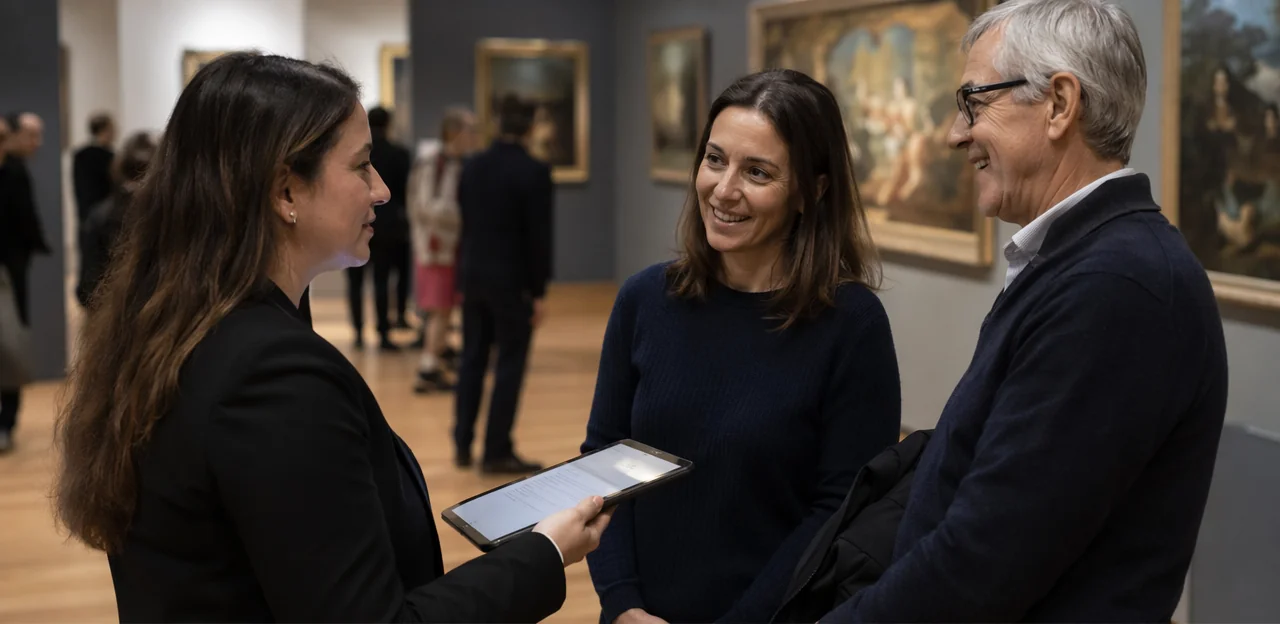
What makes an exhibition memorable—and what makes visitors quietly walk past displays without connecting? For galleries, the difference often comes down to understanding the experience through the eyes of the people moving through the space. That’s where gallery visitor feedback becomes invaluable. When collected thoughtfully, it can reveal what captures attention, where confusion starts, which exhibits resonate most, and what practical issues may be affecting enjoyment.
The challenge is not simply asking for opinions, but asking the right questions in the right way. Long, generic surveys often produce limited insight, while short, well-designed prompts can uncover clear opportunities to improve interpretation, layout, accessibility, staff interactions, and overall visitor satisfaction. In a gallery setting, even a few simple questions can lead to meaningful changes that strengthen engagement and encourage repeat visits.
This article explores how museums and attractions can use simple, effective survey design to gather better visitor insights without overwhelming guests. We’ll look at the kinds of questions that generate useful responses, when and where to ask them, and how to turn feedback into practical exhibition improvements. We’ll also touch on how tools such as Tapsy can support real-time, touchpoint-based feedback collection in physical visitor environments.
Why gallery visitor feedback matters for exhibition improvement
How feedback reveals visitor needs and expectations
Gallery visitor feedback gives museums direct evidence of what people value, what they miss, and where the experience breaks down. Instead of guessing, teams can use responses to uncover visitor expectations across exhibitions, wayfinding, interpretation, seating, lighting, and public spaces.
- Identify what audiences enjoy: Track which displays, themes, or interactive elements create the strongest emotional or educational response.
- Spot confusion early: Feedback highlights unclear labels, difficult routes, overwhelming layouts, or missing context.
- Understand satisfaction drivers: Cleanliness, staff helpfulness, queue times, comfort, and accessibility often shape overall impressions as much as the exhibition itself.
- Turn patterns into action: Regular review of comments and ratings produces practical museum visitor insights that guide improvements, staff training, and future programming.
Collected consistently, feedback helps galleries design experiences that feel clearer, more welcoming, and more memorable.
The link between feedback, engagement, and repeat visits
Effective gallery visitor feedback does more than measure satisfaction; it helps shape a better museum visitor experience that keeps people involved and eager to return. When galleries act on comments quickly, visitors feel heard, which strengthens visitor engagement and trust.
- Identify what draws attention: Learn which exhibits, labels, tours, or interactive elements create the strongest responses.
- Remove friction points: Fix confusing layouts, long queues, or unclear signage that reduce enjoyment.
- Encourage loyalty: Visitors who see improvements based on feedback are more likely to make repeat visits, join memberships, and recommend the gallery to others.
- Create a feedback loop: Short, timely surveys at exit points or via tools like Tapsy can capture fresh insights and support continuous improvement.
Listening consistently turns one-time visitors into long-term supporters.
Common mistakes museums make when collecting feedback
Many museums weaken gallery visitor feedback by making avoidable survey design mistakes. The most common issues include:
- Asking too many questions: Long museum surveys reduce completion rates and lead to rushed, low-quality answers. Focus on a few high-value visitor feedback questions.
- Using vague wording: Questions like “Did you enjoy the exhibition?” are too broad. Ask about layout, interpretation, pacing, or accessibility instead.
- Collecting feedback too late: If visitors are surveyed days later, details are forgotten. Capture responses near the exit or at key touchpoints while impressions are fresh.
- Failing to act on results: Feedback only matters if teams review patterns and make visible improvements.
Tools such as Tapsy can help collect simple, real-time feedback at the right moment.
How to design simple visitor feedback questions that work

What makes a good exhibition feedback question
Good exhibition feedback questions make it easy for visitors to respond honestly and quickly. For strong survey design, focus on questions that are:
- Clear and simple: Use everyday language and avoid jargon. Clear survey questions reduce confusion and improve response quality.
- Focused on one idea: Ask about one topic at a time, such as layout, interpretation, or staff helpfulness. Avoid combining multiple issues in one question.
- Relevant to the visit: Tie questions directly to what the visitor experienced in the gallery, so gallery visitor feedback feels meaningful and specific.
- Easy for diverse audiences: Keep wording accessible, offer simple rating scales, and make questions suitable for different ages, languages, and familiarity levels.
Short, relevant questions usually deliver the most useful answers.
Choosing between rating scales, multiple choice, and open text
The best gallery visitor feedback surveys mix formats so you can measure sentiment, spot problems, and collect useful ideas.
- Rating scale questions work best for measuring satisfaction quickly and consistently. Use them for overall enjoyment, wayfinding, staff helpfulness, or exhibition layout. Keep scales simple, such as 1–5, so results are easy to compare over time.
- Multiple choice visitor survey questions help identify barriers fast. Use them when you need clear categories, such as “What made your visit difficult?” with options like signage, crowding, lighting, or ticketing.
- Open-ended feedback is ideal for detailed suggestions and unexpected insights. Ask one focused prompt, such as “What would most improve this exhibition?”
A practical approach is to start with a rating, follow with multiple choice, then offer one short comment box.
How many questions to ask without causing survey fatigue
To reduce survey fatigue, keep a short visitor survey to 3–5 core questions for most gallery visits. This is usually enough to capture useful gallery visitor feedback without overwhelming people who may be leaving, moving to another space, or visiting with others.
- Prioritise essentials first: ask about overall satisfaction, favourite exhibit, clarity of interpretation, and one improvement area.
- Use one optional open comment: this adds context without increasing feedback form length too much.
- Match timing to the moment: ask 1–2 questions in-gallery, then send a slightly longer follow-up only to willing visitors.
- Test completion rates: if drop-off rises after question three or four, shorten the form.
- Rotate secondary questions: don’t ask everything every time.
Tools such as Tapsy can help collect quick, touchpoint-based responses while the visit is still fresh.
Simple questions museums and galleries can ask visitors
Core satisfaction questions for every exhibition
A strong gallery visitor feedback process starts with a short set of questions that work across permanent collections, temporary exhibitions, and mixed museum spaces. Keep your visitor satisfaction survey focused on the essentials:
- Enjoyment: How much did you enjoy this exhibition today?
- Clarity: Were the labels, themes, and interpretation easy to understand?
- Relevance: Did the exhibition feel engaging and meaningful to you?
- Accessibility: Was the exhibition easy to navigate, view, and interact with?
- Comfort: Did you feel comfortable in the space, including seating, lighting, and layout?
- Overall satisfaction: Overall, how satisfied were you with your visit?
- Recommendation: How likely are you to recommend this exhibition or museum to others?
For a practical museum feedback form, use a simple rating scale plus one open comment such as: What could we improve? These gallery visitor feedback questions help teams spot issues quickly, compare exhibitions consistently, and make informed improvements to interpretation, access, and visitor flow.
Questions that uncover learning, emotion, and connection
Strong gallery visitor feedback should go beyond basic satisfaction and reveal what visitors actually took away from the exhibition. To understand museum learning outcomes, emotional engagement, and the quality of your interpretation, include questions like:
- Did you learn something new today?
This is a simple starting point for measuring learning impact. - What is one idea, story, or object you will remember after your visit?
Open-text answers show which messages truly landed. - Did the exhibition make you feel inspired, moved, surprised, or challenged?
This helps assess emotional response rather than just enjoyment. - Did anything in the exhibition connect with your own life, community, or experiences?
Personal relevance is a strong indicator of deeper engagement. - Were the labels, audio, or digital interpretation clear and helpful?
This provides practical interpretation feedback for improving content delivery.
For best results, combine one rating-scale question with one open comment. Short, well-placed surveys at the gallery exit—or via QR tools such as Tapsy—can capture fresher, more useful responses.
Questions for accessibility, navigation, and visitor comfort
Strong gallery visitor feedback should go beyond the exhibition itself and examine how easy, welcoming, and comfortable the full visit feels. To collect useful museum accessibility feedback and improve gallery navigation and visitor comfort, ask clear, specific questions such as:
- Was it easy to find your way from the entrance to the exhibition, toilets, café, shop, or exit?
- Were signs and directions clear and visible throughout the gallery?
- Did the layout feel intuitive, or were any spaces confusing, crowded, or difficult to access?
- Was there enough seating for resting, reflecting, or waiting?
- Was the lighting comfortable for moving safely and reading displays without glare?
- Were object labels easy to read, with clear text size, placement, and language?
- Did you feel the gallery was inclusive and accessible, including for wheelchair users, older visitors, families, or neurodivergent guests?
Use optional comment boxes to capture details about barriers or discomfort points. Tools like Tapsy can also help gather quick, location-specific feedback at key touchpoints.
Best ways to collect gallery visitor feedback

In-gallery, exit, and post-visit survey methods
Choose gallery visitor feedback tools by timing as well as format:
- In-gallery kiosks: Fast, visible, and good for capturing reactions while exhibits are fresh. Downsides: limited depth, queueing, and hardware upkeep.
- QR code survey links: Low-cost, flexible, and easy to place beside exhibits or at exits. The main risk is low scan rates without clear prompts or incentives.
- Paper forms: Useful for older audiences or low-tech settings, but slower to process and harder to analyse at scale.
- Museum exit survey emails: Great for more thoughtful responses after the visit, though response rates can drop.
- Staff-led interviews: Rich qualitative insight and clarification, but they require training and can introduce bias.
For best results, combine several visitor feedback methods rather than relying on one alone.
How to reach different audience segments
Strong gallery visitor feedback depends on smart audience segmentation and flexible collection methods. Use short, relevant prompts for each group:
- Families: ask about child-friendly interpretation, facilities, and dwell time; use quick emoji or smile-scale questions.
- Tourists: offer multilingual surveys and ask how well signage, orientation, and local context supported the visit.
- Members: gather deeper museum audience feedback on programming, value, and repeat-visit motivations.
- School groups: collect separate responses from teachers and students to improve learning outcomes and logistics.
- Older visitors: provide large-print, paper, or staff-assisted options.
- Visitors with access needs: include questions on physical, sensory, and digital accessibility as part of inclusive visitor research.
Tools like Tapsy can help deliver simple QR-based feedback at key touchpoints.
Encouraging honest responses without adding friction
To improve gallery visitor feedback, make it effortless and safe for people to respond. Strong visitor research best practices focus on simplicity, trust, and relevance:
- Keep surveys short: ask 2–5 focused questions to protect your survey response rate.
- Offer anonymity: reassure visitors that anonymous visitor feedback is welcome and personal details are optional.
- Explain the purpose: briefly state how feedback will improve labels, layout, accessibility, or programming.
- Ask at the right moment: place prompts at exits or key touchpoints while impressions are fresh.
- Use easy formats: QR codes, tap-based ratings, or tools like Tapsy can reduce effort and increase participation.
When visitors see feedback is quick, confidential, and useful, they are more likely to answer honestly.
Turning visitor feedback into exhibition improvements
How to analyze responses for patterns and priorities
To get value from gallery visitor feedback, keep analysis simple and consistent. The goal is to analyze survey results quickly enough to spot what matters most.
- Start with ratings: Group scores by exhibition, gallery space, time of day, or visitor type. Look for repeated low scores in areas like signage, crowding, lighting, or interpretation.
- Review comments in batches: Tag each comment by theme, such as navigation, staff, accessibility, labels, or facilities. This makes visitor feedback analysis easier and more objective.
- Count recurring issues: A problem mentioned often, especially alongside low ratings, should move up the priority list.
- Balance problems with praise: Positive themes reveal strengths worth protecting or expanding.
Simple dashboards or tools like Tapsy can help teams turn comments into practical museum data insights.
Using feedback to improve interpretation, layout, and programming
Gallery visitor feedback becomes most useful when it leads to visible action across the exhibition experience. Use recurring comments and low-scoring touchpoints to prioritise practical changes such as:
- Labels and interpretation: simplify text, add clearer object context, improve font size, and offer multilingual or sensory-friendly formats to strengthen museum interpretation.
- Object placement: move popular or overlooked works, reduce visual clutter, and adjust sightlines to support better flow and gallery layout improvements.
- Wayfinding: add clearer directional signage, entrance cues, and room-by-room orientation points.
- Accessibility features: respond to feedback on seating, lighting, audio guides, captions, step-free routes, and tactile resources.
- Public programming: shape tours, talks, family activities, and events around topics visitors say they want more of.
This approach turns feedback into measurable exhibition improvement.
Closing the loop with visitors and stakeholders
Collecting gallery visitor feedback is only half the job. Closing the feedback loop means showing people what changed because they spoke up. This strengthens visitor trust and proves feedback is valued, not just collected.
- Share clear updates in-gallery, by email, on social media, or in funding reports.
- Highlight specific actions, such as improved wayfinding, better seating, revised labels, or quieter reflection spaces.
- Tell staff what visitors said and how teams responded, so learning becomes part of daily practice.
- Report outcomes to funders and partners to demonstrate responsiveness, accountability, and impact.
This transparency supports continuous improvement by turning feedback into visible action. Even small “you said, we did” updates can build credibility and encourage more honest, useful responses over time.
Building a sustainable feedback strategy for museums and attractions
Creating a repeatable feedback process for every exhibition
Use a simple exhibition review framework for every show so gallery visitor feedback becomes consistent and useful:
- Plan: set 2–3 goals and core questions before launch.
- Collect: use the same short survey across temporary and permanent displays.
- Review: check results weekly for patterns, not one-off comments.
- Apply: assign actions, deadlines, and owners.
This repeatable feedback strategy strengthens your museum evaluation process and makes improvements easier to track over time.
- Combine visitor experience metrics like satisfaction scores, dwell time, and repeat-visit intent with open-text responses to understand both what happened and why.
- Track patterns over time: if gallery visitor feedback scores drop in one room or exhibit, review comments for recurring themes such as signage, lighting, or pacing.
- Use this mix of qualitative and quantitative feedback to strengthen museum evaluation, prioritize fixes, and justify decisions with evidence.
Key metrics to track over time
Track gallery visitor feedback consistently to spot trends and improve exhibition performance. Useful museum KPIs include:
- Visitor satisfaction metrics: overall rating, enjoyment, and whether expectations were met
- Clarity: how well visitors understood themes, labels, and wayfinding
- Dwell time: time spent in each gallery or exhibit zone
- Accessibility ratings: ease of navigation, seating, lighting, and inclusive interpretation
- Likelihood to recommend: a simple advocacy score for long-term benchmarking
Conclusion
In the end, better exhibitions start with better listening. Thoughtful gallery visitor feedback helps museums and attractions move beyond assumptions and understand what audiences truly notice, value, and remember. By asking simple, well-timed questions—about navigation, interpretation, emotional impact, accessibility, and overall satisfaction—you can uncover practical insights that lead to stronger exhibition design and a more rewarding visitor experience.
The most effective feedback strategies are focused, easy to complete, and tied to clear action. Short surveys, in-gallery prompts, and post-visit follow-ups can all reveal where visitors are engaging deeply, where confusion appears, and where improvements will have the greatest effect. Just as importantly, acting on gallery visitor feedback builds trust by showing visitors that their voices shape future experiences.
Now is the time to review your current survey approach and simplify it. Start with a small set of high-value questions, test responses across different exhibitions, and use the findings to guide continuous improvement. If you want to streamline real-time, touchpoint-based feedback collection, tools like Tapsy can support faster insight gathering without adding friction for visitors.
For next steps, audit your existing visitor surveys, identify gaps in your exhibition feedback process, and explore best practices in survey design and visitor experience measurement. Consistent gallery visitor feedback is one of the simplest ways to create exhibitions that resonate more deeply and improve over time.
Frequently Asked Questions
- Why is visitor feedback important for improving gallery exhibitions?
Visitor feedback shows what people value, where they get confused, and which practical issues affect their experience. It helps galleries improve interpretation, layout, accessibility, staff interactions, and overall satisfaction based on direct evidence rather than guesswork.
- What are the most useful questions to ask gallery visitors?
The strongest questions focus on specific parts of the visit, such as enjoyment, clarity of labels, accessibility, comfort, and likelihood to recommend. A short set of 3–5 core questions plus one optional open comment usually gives useful insight without overwhelming visitors.
- How many questions should a museum visitor survey include?
A short survey should usually contain 3–5 core questions. This is enough to capture key feedback while reducing survey fatigue, especially when visitors are leaving the space or moving on to another part of the venue.
- What makes a good exhibition feedback question?
A good question is clear, simple, and focused on one idea at a time. It should relate directly to the visitor's experience and be easy for different ages, language backgrounds, and familiarity levels to answer.
- Should galleries use rating scales, multiple choice, or open-text questions?
A mix of formats works best because each one serves a different purpose. Rating scales measure satisfaction consistently, multiple choice helps identify barriers quickly, and open text reveals detailed suggestions or unexpected issues.
- When is the best time to collect feedback from gallery visitors?
The best time is while the visit is still fresh, such as at the exit or at key touchpoints in the gallery. If feedback is collected too late, visitors may forget details that would have helped identify specific problems or strengths.
- What are common mistakes museums make when collecting visitor feedback?
Common mistakes include asking too many questions, using vague wording, collecting feedback too long after the visit, and failing to act on the results. These problems reduce response quality and make it harder to turn feedback into meaningful improvements.
- Which satisfaction questions work across most exhibitions?
Useful cross-exhibition questions ask about enjoyment, clarity, relevance, accessibility, comfort, overall satisfaction, and likelihood to recommend. These create a consistent baseline for comparing permanent collections, temporary shows, and mixed museum spaces.
- How can galleries ask about learning and emotional impact?
Questions can ask whether visitors learned something new, what idea or object they will remember, and whether the exhibition made them feel inspired, moved, surprised, or challenged. Asking whether the exhibition connected to their own life or community also helps measure deeper engagement.
- What should museums ask about accessibility and navigation?
Questions should cover wayfinding, signage clarity, layout, seating, lighting, label readability, and whether the space felt inclusive and accessible. These prompts help identify barriers affecting wheelchair users, older visitors, families, and neurodivergent guests.
- What are the best ways to collect gallery visitor feedback?
Useful methods include in-gallery kiosks, QR code survey links, paper forms, exit survey emails, and staff-led interviews. Combining several methods is often more effective than relying on only one, because each format has different strengths and limitations.
- How can museums gather feedback from different audience segments?
Different groups need different approaches, such as emoji-style prompts for families, multilingual surveys for tourists, deeper questions for members, and separate feedback from teachers and students for school groups. Older visitors may benefit from large-print or paper options, while visitors with access needs should be asked directly about physical, sensory, and digital accessibility.
- How do you encourage honest responses without adding friction?
Keep surveys short, offer anonymity, explain why the feedback matters, and ask at the right moment. Easy formats such as QR codes or tap-based ratings reduce effort and make visitors more likely to respond honestly.
- How should galleries analyze visitor feedback for action?
Start by grouping ratings by exhibition, space, time of day, or visitor type to spot low-scoring areas. Then review comments by theme, count recurring issues, and balance problems with positive feedback so teams can prioritise what to fix and what to preserve.
- How can feedback be turned into visible exhibition improvements?
Recurring comments can guide changes to labels, interpretation, object placement, wayfinding, seating, lighting, captions, audio guides, and public programming. Sharing clear updates such as 'you said, we did' also helps build trust with visitors, staff, funders, and partners.