A great guest experience rarely happens by accident. In hospitality, small moments—an easy check-in, a spotless room, a quick response to a complaint, a smooth checkout—shape how guests remember a stay and whether they return. But to improve those moments consistently, hotels need more than intuition. They need timely, actionable feedback, and that starts with asking the right hotel customer survey questions.
Well-designed surveys can do far more than measure satisfaction. They can reveal operational bottlenecks, uncover recurring service issues, highlight staff performance trends, and show which parts of the guest journey need immediate attention. From front desk efficiency to housekeeping standards, breakfast quality, amenities, and post-stay loyalty, the right questions help turn guest opinions into better operational decisions.
In this article, we’ll explore how to create smarter hotel customer survey questions that generate useful insights instead of vague responses. You’ll learn which question types work best, what to ask at different stages of the guest journey, and how to use survey data to improve service quality, reduce negative reviews, and boost guest satisfaction. We’ll also touch on how real-time feedback tools like Tapsy can help hotels capture in-stay insights before minor issues become lasting impressions.
Why hotel customer surveys matter for hotel operations

How guest feedback supports better operational decisions
Structured guest feedback for hotels turns opinions into clear operational priorities. Well-designed hotel customer survey questions help managers spot recurring issues by department, shift, or touchpoint, so decisions are based on patterns rather than assumptions.
- Identify service gaps: Track low scores around check-in, housekeeping, breakfast, Wi-Fi, or maintenance.
- Prioritize improvements: Focus budget and staff time on the issues guests mention most often and rate most poorly.
- Reduce complaints: Capture problems early and resolve them before they become negative reviews or repeat frustrations.
- Align with guest expectations: Use feedback trends to refine staffing, training, amenities, and service standards.
Tools like Tapsy can also help collect real-time in-stay feedback for faster action.
The link between surveys, guest satisfaction, and loyalty
Well-designed hotel customer survey questions help hotels identify what truly shapes satisfaction, from check-in speed to room cleanliness and staff responsiveness. A strong hotel guest satisfaction survey does more than measure opinions; it reveals which experiences influence repeat bookings, positive online reviews, and long-term hotel guest loyalty.
- Spot key drivers: Track which touchpoints most affect satisfaction and return intent.
- Reduce churn: Act quickly on recurring complaints before they damage retention.
- Strengthen reputation: Use feedback trends to improve review scores on major travel platforms.
- Build loyalty: Personalize offers, service recovery, and follow-up based on guest preferences.
Tools like Tapsy can help capture real-time feedback, enabling faster fixes and better guest retention.
Common operational areas surveys can improve
Well-designed hotel customer survey questions help teams turn guest feedback into practical hotel operations improvement actions. Focus on key touchpoints such as:
- Front desk performance: Track wait times, check-in clarity, and staff helpfulness to improve training, staffing, and peak-hour coverage.
- Housekeeping standards: Identify trends in room cleanliness, linen quality, restocking, and turnaround speed to tighten SOPs and inspections.
- Food and beverage quality: Measure breakfast variety, service speed, menu satisfaction, and dining cleanliness to refine offerings and staffing.
- Maintenance response: Use hospitality survey insights to spot recurring issues like air conditioning, plumbing, or Wi-Fi and reduce repair delays.
- Digital guest experience: Evaluate mobile check-in, booking flow, in-room tech, and guest messaging. Tools like Tapsy can support real-time issue capture.
How to design effective hotel customer survey questions
What makes a hotel survey question useful and actionable
Useful hotel customer survey questions do more than collect opinions—they point to a clear operational fix. In survey design for hotels, the strongest questions share a few traits:
- Clarity: Use simple language guests understand instantly. Avoid jargon, double meanings, or combining multiple topics in one question.
- Specificity: Ask about one touchpoint at a time, such as check-in speed, room cleanliness, breakfast quality, or Wi-Fi reliability.
- Neutrality: Keep wording unbiased so answers reflect the guest’s real experience, not the hotel’s assumptions.
- Relevance: Focus on areas tied to measurable outcomes like satisfaction scores, complaint volume, repeat bookings, and staff response times.
The most effective hotel survey questions are timely and tied to action. For example, real-time tools like Tapsy can help hotels capture feedback at the exact service moment, making issue resolution faster and more practical.
Choosing the right question types for hospitality surveys
Strong guest feedback survey design depends on matching each format to the decision you need to make. The best hotel customer survey questions usually combine several hotel survey question types:
- Rating scales: Use 1–5 or 1–10 scales to measure satisfaction with check-in, cleanliness, staff helpfulness, or breakfast. Best for benchmarking trends across properties or time periods.
- Multiple-choice questions: Ideal when you need clear operational direction, such as “Which issue affected your stay most?” They make analysis faster and reduce vague answers.
- Yes-or-no items: Useful for simple confirmations, like whether a guest used the spa or experienced a maintenance issue. Keep these limited so surveys do not feel overly basic.
- Open-ended prompts: Add these after low ratings or at the end to uncover context, service recovery opportunities, and ideas you did not anticipate.
A practical approach is to start with ratings, diagnose with multiple choice, and finish with one optional comment.
Survey design mistakes hotels should avoid
Even well-intentioned hotel customer survey questions can produce poor data if the survey is designed badly. To follow strong hotel survey best practices and avoid common survey mistakes in hospitality, watch for these issues:
- Leading questions: Avoid wording that pushes guests toward a positive answer, such as “How much did you enjoy our excellent breakfast?”
- Overly long surveys: If it takes too long, completion rates drop and answers become rushed.
- Vague wording: Ask specific questions about check-in, cleanliness, staff response time, or breakfast quality instead of broad questions like “How was your stay?”
- Poor timing: Send surveys during the stay or shortly after checkout while details are still fresh.
- No operational link: Every question should support a decision, such as staffing, maintenance, housekeeping, or service recovery.
Tools like Tapsy can also help hotels collect timely, touchpoint-specific feedback that is easier to act on.
Essential hotel customer survey questions by guest touchpoint
Pre-arrival and booking experience questions
Strong hotel customer survey questions should start before the guest ever arrives. A well-designed pre-arrival guest survey helps hotels uncover friction in the booking journey, improve conversion rates, and set clearer expectations before check-in.
Use hotel booking survey questions such as:
- How easy was it to find the information you needed on our website?
- Was the booking process simple and fast to complete?
- Were room types, amenities, and policies explained clearly?
- How clear and transparent was our pricing, including taxes, fees, and add-ons?
- Did you feel confident that you were selecting the right room for your needs?
- How helpful and timely was your booking confirmation email or message?
- Did our pre-stay communication answer your questions about check-in, parking, breakfast, or special requests?
- Before arrival, how well did we set expectations for your stay?
These questions help identify whether guests struggle with website navigation, confusing rate displays, or unclear confirmation messaging. For better operational decisions, track responses by booking channel, device type, and guest segment. If many guests report confusion before arrival, update your website copy, simplify checkout steps, and improve automated emails. Tools like Tapsy can also support better guest feedback collection across the hospitality journey.
Check-in, room stay, and on-property experience questions
The best hotel customer survey questions for this stage help operators identify service gaps while guests are still on-site. Focus on touchpoints that most influence satisfaction, complaints, and repeat bookings.
Use concise hotel stay survey questions such as:
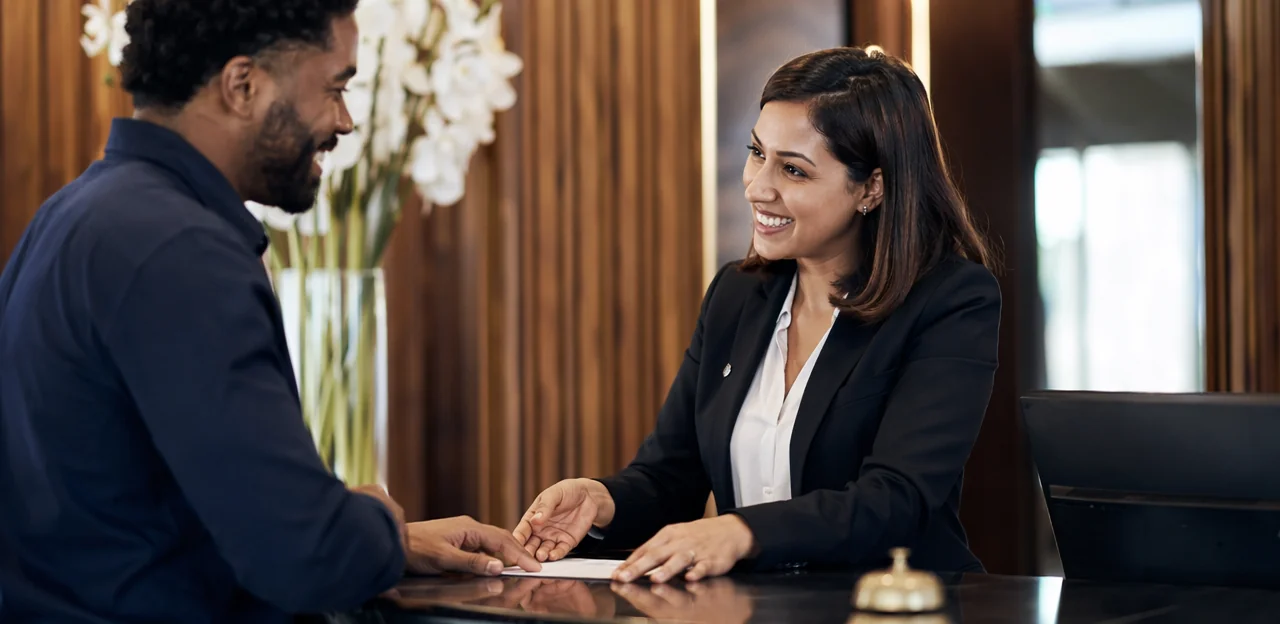
- Front desk service: “How satisfied were you with the speed and friendliness of check-in?”
- Arrival experience: “Was the check-in process smooth, clear, and welcoming?”
- Room cleanliness: “How would you rate the cleanliness of your room on arrival?”
- Room comfort: “How satisfied were you with the bed, temperature, lighting, and overall comfort?”
- Amenities: “Did the in-room amenities meet your expectations, including Wi-Fi, toiletries, and entertainment options?”
- Noise levels: “How quiet was your room during the day and overnight?”
- Staff responsiveness: “When you requested assistance, how quickly and effectively did staff respond?”
- Maintenance issues: “Did you experience any problems with the room, bathroom, air conditioning, or other facilities?”
- Overall stay quality: “How would you rate the overall quality of your stay so far?”
These room satisfaction survey questions should combine rating scales with one open-text prompt like, “What could we improve before checkout?” Tools such as Tapsy can help hotels collect this feedback in real time and resolve issues before they turn into negative reviews.
Dining, checkout, and post-stay feedback questions
The final stage of the guest journey often reveals the clearest operational insights. Well-designed hotel customer survey questions should uncover whether dining met expectations, checkout felt smooth, and any problems were resolved before departure. These are also some of the most useful post-stay hotel survey questions because they connect service quality to loyalty and revenue.
Consider including questions such as:
- How would you rate the quality and variety of breakfast or restaurant dining?
- Was food service timely, fresh, and good value for the price paid?
- How efficient was the checkout process, including wait time and billing accuracy?
- Were any issues during your stay resolved quickly and satisfactorily?
- How would you rate the overall value for money of your stay?
- How likely are you to recommend our hotel to friends, family, or colleagues?
For stronger hotel checkout feedback, add one open-text prompt like: “What could we improve before your next stay?” This helps identify recurring friction points such as long morning queues, confusing invoices, or inconsistent breakfast standards.
If you want faster issue recovery, tools like Tapsy can capture feedback at breakfast areas or reception before guests leave, giving teams time to act before a negative review is posted.
When and how to send hotel guest surveys
Best timing for pre-stay, in-stay, and post-stay surveys
Getting hotel survey timing right improves both response rates and decision quality. Use hotel customer survey questions at three key moments:
- Pre-stay: Send 3–7 days before arrival to collect preferences such as room type, dietary needs, arrival time, and special requests. Keep it short so guests respond quickly.
- In-stay: Ask during the first 24 hours or right after key touchpoints like check-in, breakfast, or spa use. This helps teams fix issues before checkout and supports service recovery.
- Post-stay: Send a post-stay guest survey within 24–48 hours of checkout, while the experience is still fresh but the guest has completed the full journey.
Tools like Tapsy can also help capture real-time in-stay feedback at hotel touchpoints.
Choosing the right survey channels
The best hotel survey channels depend on when and how guests interact with your property. To get better responses to hotel customer survey questions, match the channel to guest behavior and hotel type:
- Email: Best for post-stay feedback and longer surveys for resorts, business hotels, and loyalty members.
- SMS survey for hotels: Ideal for short, time-sensitive check-ins during or right after the stay.
- QR codes: Great in lobbies, rooms, restaurants, and spas for instant touchpoint feedback.
- Mobile apps / in-room tablets: Useful for tech-forward or full-service hotels collecting in-stay service requests and satisfaction data.
- Website pop-ups: Effective for booking and checkout feedback on direct channels.
Tools like Tapsy can help hotels capture no-app QR feedback in real time.
How to increase response rates without frustrating guests
To increase hotel survey response rates and improve guest survey engagement, make feedback effortless and relevant:
- Keep surveys short: Limit hotel customer survey questions to 3–7 essentials, with one optional open-text field.
- Personalize the invite: Use the guest’s name, stay details, and send the survey soon after checkout while the experience is fresh.
- Design for mobile: Ensure surveys load fast, display cleanly on phones, and require minimal typing.
- Offer clear incentives: Small rewards like discount codes, loyalty points, or late-checkout perks can boost participation.
- Use gentle reminders: Send one or two polite follow-ups only, spaced appropriately to avoid annoyance.
Tools like Tapsy can also help capture quick, in-the-moment feedback.
How to analyze survey results for operational improvements

Turning survey responses into measurable insights
To analyze hotel survey results effectively, turn raw answers from your hotel customer survey questions into operational categories your teams can act on:
- By department: group feedback into front desk, housekeeping, food and beverage, maintenance, and spa to pinpoint where service gaps start.
- By stay type: compare business, leisure, group, event, and long-stay guests to see which experiences drive different expectations.
- By guest segment: review responses by loyalty tier, booking channel, family vs. solo traveler, or first-time vs. repeat guest.
- By recurring themes: tag comments such as cleanliness, check-in speed, breakfast quality, noise, and Wi-Fi.
This approach improves hotel guest feedback analysis by revealing patterns, priorities, and root causes that directly support better staffing, training, and service recovery decisions.
Using survey metrics to prioritize action
To turn hotel customer survey questions into better decisions, track the hotel survey metrics that reveal both urgency and impact:
- Satisfaction score trends: Monitor overall satisfaction by touchpoint—check-in, room cleanliness, breakfast, and checkout—to spot recurring weak points.
- CSAT: Use post-interaction CSAT to identify immediate service failures, such as slow front desk support or housekeeping delays.
- NPS for hotels: Track promoter, passive, and detractor patterns to see which issues most affect loyalty and repeat bookings.
- Complaint frequency: Rank issues by volume and severity so high-frequency problems get fixed first.
- Sentiment trends: Analyze open-text feedback for rising negative themes like noise, Wi-Fi, or cleanliness.
Tools like Tapsy can help hotels capture real-time feedback and escalate urgent issues faster.
Closing the feedback loop with staff and guests
A strong hotel feedback loop turns survey data into visible action. After reviewing hotel customer survey questions, hotels should:
- Share findings internally: give each department a simple weekly summary of trends, praise, and recurring issues.
- Assign accountability: name an owner for every problem area, with deadlines and follow-up checks.
- Respond to guests quickly: contact dissatisfied guests, acknowledge the issue, explain the resolution, and offer service recovery where appropriate.
- Communicate improvements: tell guests when feedback led to changes, such as faster check-in, cleaner rooms, or better breakfast flow.
This process builds trust, strengthens hospitality service improvement, and shows both staff and guests that feedback leads to real results.
Best practices for building a continuous guest feedback program
- Create one shared hotel feedback program with standardized hotel customer survey questions, trigger points, scoring, and escalation rules across check-in, in-stay, and post-stay surveys.
- Assign clear ownership: operations manages fixes, marketing tracks themes and loyalty insights, and guest services handles follow-up.
- Set a weekly reporting cadence with monthly cross-functional reviews.
- Use a central dashboard to support guest experience management hotels, spot trends, and align teams on actions.
- Keep hotel customer survey questions limited to data that improves service, such as stay purpose, preferences, or issue resolution needs. This supports personalization without over-collecting sensitive details.
- Clearly explain consent, why data is collected, and how long it is stored to strengthen hotel guest data privacy.
- Use secure storage, restricted access, and deletion policies to meet hospitality survey compliance.
- Personalize follow-ups responsibly using only relevant, permission-based guest data.
Sample framework for ongoing survey optimization
Use a simple monthly cycle to optimize hotel surveys and support continuous improvement hospitality teams can act on:
- Test question sets: A/B test short versions of your hotel customer survey questions by stay type or channel.
- Review response quality: Track completion rates, skipped items, and vague comments.
- Update seasonally: Refresh questions for peak travel periods, amenities, and guest expectations.
- Align with goals: Tie feedback to occupancy, upsells, service recovery, and review scores.
Conclusion
In hospitality, better decisions start with better listening. The right hotel customer survey questions help you move beyond generic satisfaction scores and uncover what truly shapes the guest experience—from check-in efficiency and room cleanliness to staff responsiveness, amenities, and checkout. When surveys are short, timely, and tied to specific touchpoints, they deliver actionable insights that support faster service recovery, smarter staffing, and more confident operational planning.
Just as importantly, well-designed hotel customer survey questions help hotels spot patterns over time. They reveal recurring pain points, highlight what guests value most, and give teams the data they need to prioritize improvements that boost satisfaction, loyalty, and online reputation. In a competitive market, that kind of feedback is not just helpful—it is a strategic advantage.
The next step is to review your current survey approach and refine it around clear goals, concise wording, and moments that matter most in the guest journey. Consider building a question bank for pre-stay, in-stay, and post-stay feedback, and track results regularly to turn insights into action. If you want a more real-time approach, tools like Tapsy can help hotels capture feedback during the stay and address issues before they become negative reviews. Start improving your surveys today, and let every guest response guide better operational decisions.
Frequently Asked Questions
- Why are hotel customer surveys important for operational decisions?
They turn guest opinions into clear operational priorities instead of relying on assumptions. Hotels can identify recurring issues in areas like check-in, housekeeping, breakfast, Wi-Fi, and maintenance, then focus staff time and budget where problems appear most often.
- How do guest surveys influence hotel satisfaction and loyalty?
They help hotels see which touchpoints most affect satisfaction, repeat bookings, and recommendation intent. By acting quickly on recurring complaints and personalizing follow-up, hotels can improve retention, online reviews, and long-term loyalty.
- Which hotel departments can improve most from survey feedback?
Survey feedback is especially useful for front desk, housekeeping, food and beverage, maintenance, and digital guest experience. It can reveal issues such as long wait times, inconsistent room cleanliness, weak breakfast standards, repair delays, or friction in mobile check-in and guest messaging.
- What makes a hotel survey question useful and actionable?
A strong question is clear, specific, neutral, and relevant to an operational decision. It should focus on one touchpoint at a time, such as room cleanliness or check-in speed, so the response points to a practical fix.
- What question types work best in a hotel guest survey?
A balanced survey usually combines rating scales, multiple-choice questions, yes-or-no items, and open-ended prompts. A practical structure is to start with ratings, use multiple choice to diagnose the issue, and finish with one optional comment for context.
- What common survey design mistakes should hotels avoid?
Hotels should avoid leading questions, vague wording, overly long surveys, poor timing, and questions with no operational purpose. If a survey is too broad or too late, responses become less useful and harder to turn into action.
- What should hotels ask before a guest arrives?
Pre-arrival questions should focus on website clarity, booking simplicity, pricing transparency, room selection confidence, and the usefulness of confirmation and pre-stay communication. These responses help improve conversion, reduce confusion, and set better expectations before check-in.
- What are the most useful in-stay survey questions for hotels?
The most useful in-stay questions cover check-in speed and friendliness, room cleanliness, comfort, amenities, noise levels, staff responsiveness, maintenance issues, and overall stay quality so far. Adding one open-text prompt such as what could be improved before checkout helps uncover issues while there is still time to fix them.
- Which post-stay questions help hotels improve loyalty and service quality?
Helpful post-stay questions ask about breakfast or restaurant quality, food service speed and value, checkout efficiency, billing accuracy, issue resolution, overall value for money, and likelihood to recommend. These topics connect final impressions to loyalty, reputation, and future bookings.
- When is the best time to send hotel guest surveys?
Pre-stay surveys work best 3 to 7 days before arrival, in-stay surveys during the first 24 hours or right after a key touchpoint, and post-stay surveys within 24 to 48 hours after checkout. Timing matters because fresh experiences produce more accurate and actionable feedback.
- Which survey channels should a hotel use for different moments of the guest journey?
Email works well for post-stay feedback and longer surveys, while SMS is better for short, time-sensitive check-ins during or just after the stay. QR codes fit lobbies, rooms, restaurants, and spas, and website pop-ups are useful for booking and checkout feedback on direct channels.
- How can hotels increase survey response rates without annoying guests?
Keep surveys short, usually 3 to 7 essential questions, and make them mobile-friendly with minimal typing. Personalized invites, small incentives, and one or two polite reminders can improve participation without creating frustration.
- How should hotels analyze survey responses for operational improvements?
Responses should be grouped by department, stay type, guest segment, and recurring themes such as cleanliness, breakfast quality, noise, or Wi-Fi. This makes it easier to spot patterns, find root causes, and decide where staffing, training, or service recovery is needed most.
- Which survey metrics help hotels prioritize what to fix first?
Useful metrics include satisfaction score trends by touchpoint, CSAT, NPS, complaint frequency, and sentiment trends in open-text comments. Together, these show both the urgency of a problem and its likely impact on loyalty, reviews, and repeat business.
- How can hotels build a continuous guest feedback program and where does Tapsy fit?
Hotels can standardize question sets, trigger points, scoring, and escalation rules across pre-stay, in-stay, and post-stay surveys, then review results weekly and monthly across teams. Tapsy is presented as a tool for capturing real-time, touchpoint-specific feedback so teams can act faster before minor issues become negative reviews.