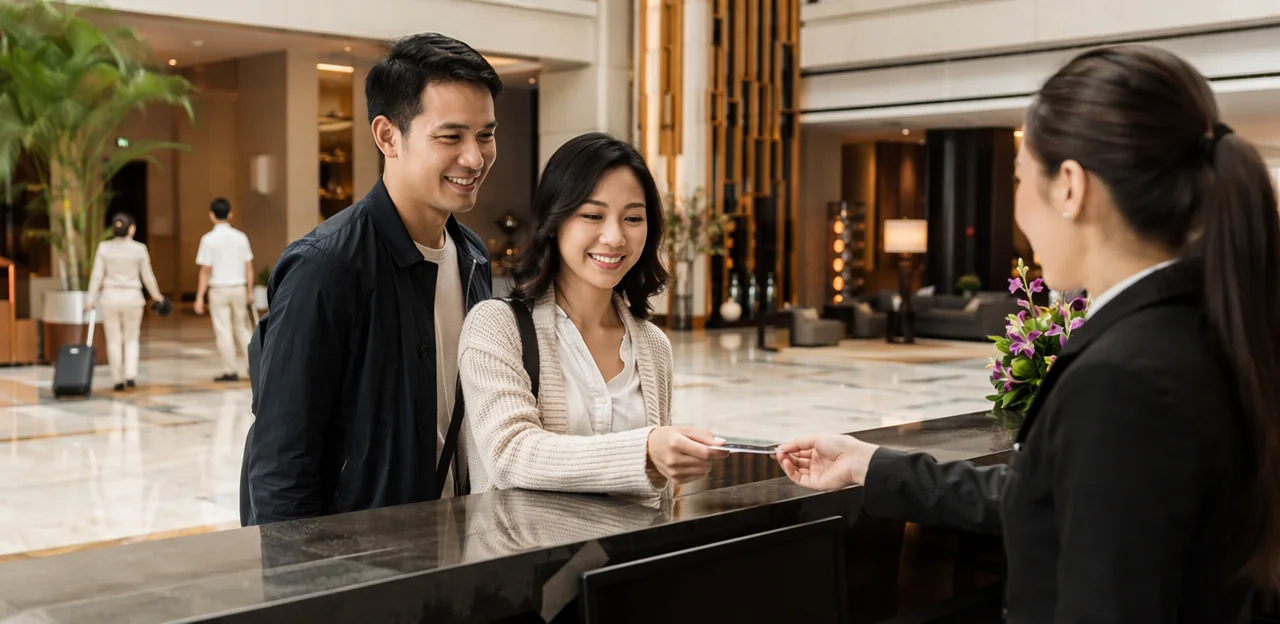
A great stay is made up of dozens of moments: the ease of check-in, the comfort of the room, the quality of breakfast, the speed of service, and the feeling guests leave with at checkout. When hotels only ask for feedback at the very end, they often miss the details that matter most. That is why a well-designed hotel guest satisfaction survey should do more than collect opinions after the stay — it should capture insights at every stage of the guest journey.
In hospitality, timing is everything. The right survey questions, asked at the right moment, can uncover service gaps, prevent negative reviews, and help teams act before small issues become lasting frustrations. From pre-arrival expectations to post-stay reflections, each touchpoint offers valuable opportunities to understand what guests need and how their experience can be improved.
This article explores hotel guest satisfaction survey questions for every stage of the stay, including pre-booking, check-in, in-room experience, on-site amenities, dining, checkout, and post-stay follow-up. You will learn how to design surveys that feel relevant, increase response rates, and generate feedback that leads to better operations, stronger loyalty, and a more consistent guest experience. In some cases, tools like Tapsy can also help hotels collect real-time feedback while guests are still on property.
Why Hotel Guest Satisfaction Surveys Matter
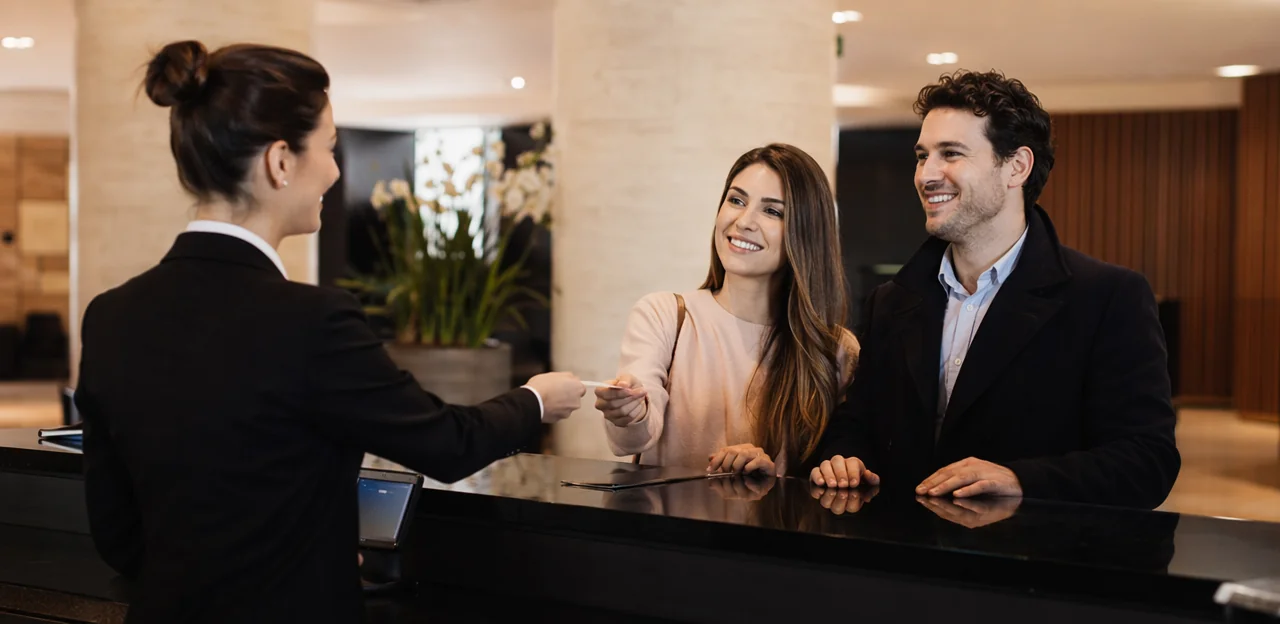
The role of feedback in the hotel guest journey
Guest feedback is essential across the hotel guest journey because it helps hotels compare expectations with actual experience at every stage, from booking to post-stay. A well-timed hotel guest satisfaction survey gives teams the insight needed to improve service before small issues become public complaints.
- Pre-arrival: understand booking ease, communication quality, and guest expectations
- During the stay: identify problems early for fast service recovery, such as room, cleanliness, or staff issues
- At checkout: measure overall hotel customer satisfaction while details are still fresh
- Post-stay: support reputation management, retention, and loyalty by learning what drives repeat visits and reviews
Real-time tools like Tapsy can also help capture in-stay feedback at key touchpoints.
Key metrics hotels should track
A strong hotel guest satisfaction survey should pair direct questions with a few core guest satisfaction metrics:
- CSAT hotel: Best for measuring satisfaction with specific touchpoints like check-in, room cleanliness, breakfast, or checkout. Use it after key moments to spot operational issues fast.
- NPS for hotels: Most useful post-stay to measure loyalty and likelihood to recommend. It complements detailed survey answers by showing overall brand advocacy.
- CES: Ideal for service interactions, such as resolving a complaint or changing a booking. It reveals how easy your hotel is to deal with.
- Review sentiment: Analyze themes in public reviews to validate survey findings.
- Response rate: Tracks survey health; low rates may signal poor timing, survey fatigue, or weak distribution.
Benefits of stage-based survey design
A stage-based hotel guest satisfaction survey delivers better insights because it matches questions to what guests are actually experiencing at each point in the journey. Instead of sending one generic form, smarter survey design separates feedback into pre-stay, arrival, in-stay, and post-stay moments.
- Higher accuracy: Guests recall details more clearly when answering close to the experience.
- More actionable feedback: Teams can pinpoint whether issues come from booking, check-in, room quality, or checkout.
- Better response rates: Short, relevant hotel survey questions feel easier to complete.
- Stronger service recovery: In-stay feedback supports fast fixes before negative reviews happen.
This approach makes every guest experience survey more useful for operations, training, and loyalty improvement.
Pre-Stay Hotel Guest Satisfaction Survey Questions
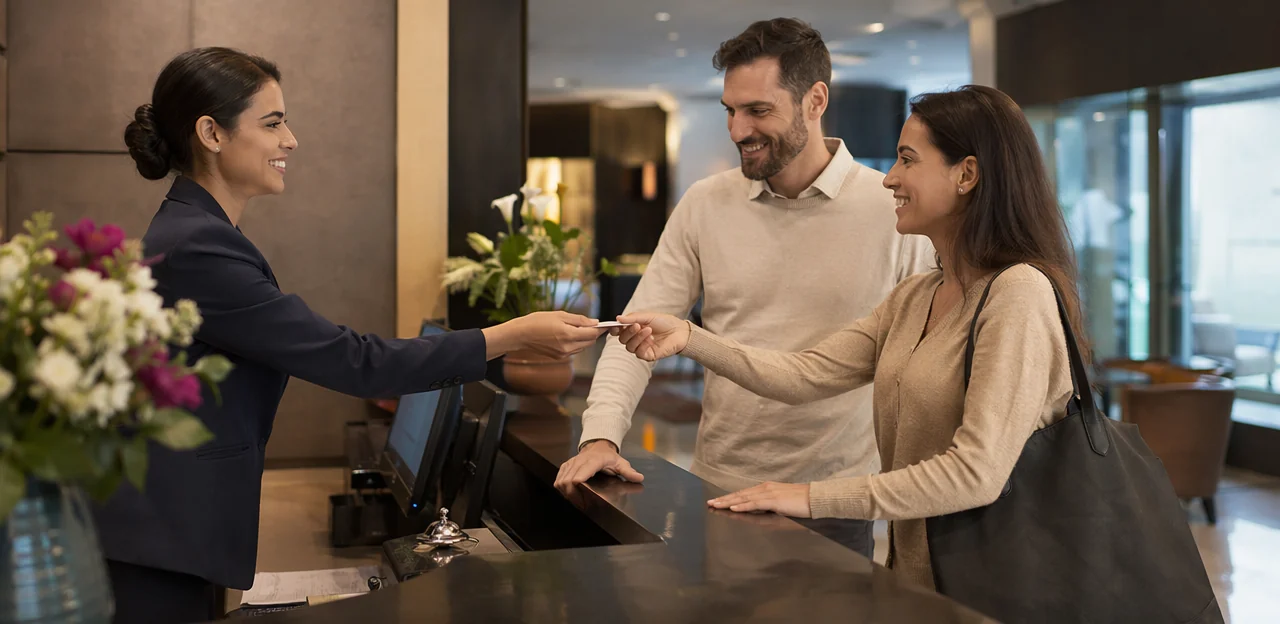
Booking and reservation experience questions
The booking stage shapes first impressions, so your hotel guest satisfaction survey should measure how easy and trustworthy the process feels. Use a focused hotel booking survey with questions like:
- How easy was it to find room types, amenities, and policies on our website?
- Did the booking engine load quickly and work smoothly on your device?
- Were rates, taxes, fees, and cancellation terms clearly displayed before payment?
- How confident did you feel that you were getting the best available rate?
- Was your confirmation email clear, accurate, and delivered promptly?
- How easy was it to modify, upgrade, or cancel your reservation?
These reservation experience questions reveal friction that hurts booking satisfaction and conversion. For stronger insights, pair rating-scale questions with one open-text prompt to uncover specific usability or transparency issues.
Pre-arrival communication and expectations
A strong pre-arrival survey helps hotels identify gaps before check-in and align guest expectations with the actual stay experience. In your hotel guest satisfaction survey, include questions that measure whether guests felt informed, reassured, and supported before arrival.
Consider asking:
- Was your booking confirmation email clear and easy to understand?
- Were your special requests acknowledged and confirmed in time?
- Were upsell offers relevant and useful, rather than pushy?
- Did you receive clear check-in instructions, parking details, and arrival guidance?
- Did our hotel communication help you feel prepared for your stay?
These questions reveal whether pre-stay messaging builds confidence or creates friction. If scores are low, improve email timing, personalize confirmations, and automate helpful reminders through tools such as Tapsy where appropriate.
Sample pre-stay survey questions
Strong pre-stay survey questions help hotels spot friction before arrival and improve the overall hotel guest satisfaction survey process. Keep questions short, specific, and easy to answer on mobile.
- How easy was it to book your stay?
Use a 1–5 rating scale to measure booking experience. - How clear were our room details, pricing, and cancellation policies?
This identifies confusion that can lead to frustration later. - How satisfied are you with the support you received before arrival?
Useful for evaluating email, phone, chat, or concierge assistance. - Did you receive all the information you needed before check-in?
Include arrival time, parking, amenities, and special requests. - How confident do you feel about your upcoming stay?
A simple sentiment question can reveal hidden concerns.
These hospitality survey examples work best with tap-friendly scales, yes/no options, and one optional comment box.
Arrival and In-Stay Survey Questions

Check-in and first impression questions
The arrival experience often shapes the rest of the stay, so your hotel guest satisfaction survey should capture feedback as early as possible. A strong hotel check-in survey helps identify friction points before they turn into complaints or poor reviews, while also measuring the emotional impact of the first impression hotel guests receive.
Focus on questions that reveal both operational efficiency and guest perception, such as:
- How satisfied were you with the wait time at check-in?
- How welcoming and friendly was the front desk team upon arrival?
- How clean, organized, and inviting was the lobby area?
- How smooth and efficient was the check-in process?
- Did your room meet your expectations when you first entered it?
To make responses actionable, use a rating scale plus an optional comment field. This helps uncover whether issues stem from staffing, housekeeping, queue management, or room readiness. If you collect feedback in real time through touchpoints like reception QR codes, tools such as Tapsy can help hotels respond quickly and improve the guest’s first impression before dissatisfaction grows.
Room, amenities, and service quality questions
This section of a hotel guest satisfaction survey should uncover how guests feel about the core stay experience: the room itself, available amenities, and the quality of service they receive day to day. Strong questions here help improve hotel room satisfaction, identify gaps in your hotel amenities survey, and measure overall service quality hotel teams deliver.
Focus on questions such as:
- How satisfied were you with room cleanliness upon arrival?
- How comfortable was the bed, temperature, lighting, and noise level?
- Did you notice any maintenance issues, such as plumbing, air conditioning, or broken fixtures?
- How reliable and fast was the Wi-Fi during your stay?
- How would you rate housekeeping consistency and timeliness?
- Were dining options, breakfast, or room service quality up to expectations?
- How quickly and effectively did staff respond to requests or problems?
Use a mix of rating-scale and open-text questions to capture both trends and specific issues. If possible, collect this feedback during the stay, not just at checkout, so teams can resolve problems quickly. Tools like Tapsy can help hotels gather real-time feedback at key touchpoints.
Mid-stay pulse survey examples
A mid-stay survey helps hotels capture real-time guest feedback while there is still time to fix problems. Unlike a checkout-only hotel guest satisfaction survey, a short in-stay pulse can uncover issues with housekeeping, noise, Wi-Fi, breakfast, or staff responsiveness early enough for effective service recovery hotel teams can act on immediately.
Use brief, low-friction prompts such as:
- SMS: “How is your stay so far? Rate your room comfort from 1–5.”
- Email: “We hope you’re enjoying your stay. Is anything preventing a great experience?”
- QR code in-room or at breakfast: “Scan to share feedback in 30 seconds.”
- App message or web link: “Need anything fixed today? Let us know now.”
Keep the survey to 2–3 questions, for example:
- How satisfied are you with your stay so far?
- Have you experienced any issue we should resolve today?
- What can we improve right now?
Set alerts for low scores so staff can respond fast with a room change, housekeeping revisit, or personal follow-up. Tools like Tapsy can support QR-based, no-app feedback collection at key hotel touchpoints.
Post-Stay Survey Questions That Drive Better Reviews and Loyalty

Overall satisfaction and likelihood to return
The final section of a hotel guest satisfaction survey should measure the big-picture outcome of the stay. In your post-stay survey, include clear questions that capture overall guest satisfaction, perceived value, and future intent.
- Overall satisfaction: Ask guests to rate their stay on a 1–5 or 1–10 scale.
- Value for money: Use a question like, “How would you rate the value of your stay compared with the price paid?”
- Likelihood to return: Ask, “How likely are you to stay with us again?” to identify drivers of hotel loyalty.
- Willingness to recommend: Include a recommendation question, such as an NPS-style item, to gauge advocacy.
Keep this section short, consistent, and easy to answer. Tools like Tapsy can also help hotels collect post-stay feedback efficiently and act on trends faster.
Review generation and open-ended feedback
A strong hotel guest satisfaction survey should go beyond ratings and invite guests to explain their experience in their own words. This is where a hotel review survey becomes especially valuable, helping teams uncover emotional drivers behind satisfaction and loyalty.
Include open-ended survey questions such as:
- What did you enjoy most about your stay?
- What could we have improved before or during checkout?
- Is there anything our team did especially well?
- Would you be willing to leave a public review?
These prompts generate rich guest review feedback that highlights standout service, recurring pain points, and language you can reuse in marketing. If a guest says they would leave a review, provide a direct link immediately. Tools like Tapsy can help capture timely comments and route issues before they become negative public reviews.
Sample post-stay survey questions
A strong hotel guest satisfaction survey should keep email follow-ups short, specific, and easy to answer. Use a simple hotel survey template with a mix of scales and open text:
- Overall satisfaction: “How satisfied were you with your stay?”
Rating scale: 1–5 or 1–10 - Key experience areas: “How would you rate check-in, room cleanliness, staff helpfulness, breakfast, and checkout?”
Use consistent rating scales for comparison - NPS prompt: “How likely are you to recommend our hotel to a friend or colleague?”
Scale: 0–10 - Improvement question: “What was the biggest issue that affected your stay?”
- Open comment field: “What could we do to improve future stays?”
These post-stay survey questions help turn each guest satisfaction questionnaire into clear operational priorities.
Best Practices for Hotel Survey Design and Distribution

How to write effective survey questions
Strong survey question design makes a hotel guest satisfaction survey easier to complete and more useful to analyze. Follow these customer satisfaction survey best practices:
- Keep questions short and specific: Ask about one topic at a time, such as check-in speed or room cleanliness.
- Avoid leading or biased wording: Use neutral phrasing like “How would you rate your check-in experience?” instead of “How excellent was check-in?”
- Use consistent rating scales: Stick to the same 1–5 or 1–10 scale throughout to reduce confusion.
- Match question types to the goal: Use rating scales for benchmarking, multiple choice for issue categories, and open text for detailed guest comments.
These hotel survey best practices improve response quality and actionability.
Choosing the right timing and channels
Effective survey timing makes every hotel guest satisfaction survey more useful and more likely to be completed. Match each survey to the guest journey and the best guest feedback channels:
- Pre-stay: Send 3–7 days before arrival by email or mobile app to collect preferences, arrival details, and special requests.
- In-stay: Use SMS, QR codes, tablets, or app prompts during key moments like check-in, after the first night, or after breakfast/spa visits to capture real-time issues.
- Post-stay: Send within 24–48 hours by email or SMS for overall satisfaction, reviews, and loyalty insights.
For stronger hotel survey distribution, keep surveys short and channel-specific. Tools like Tapsy can support fast QR-based in-stay feedback at key touchpoints.
Improving response rates without survey fatigue
To improve survey response rate without causing survey fatigue, keep every hotel guest satisfaction survey timely, relevant, and easy to complete. A strong hospitality feedback strategy should focus on value for both the guest and the hotel.
- Personalize the invite: Use the guest’s name, stay dates, or touchpoint visited to make the survey feel relevant.
- Keep it short: Ask 3–5 essential questions, with one optional comment box.
- Offer light incentives: Small perks like loyalty points, discounts, or a future-stay voucher can lift participation.
- Explain the purpose: Tell guests how feedback helps improve rooms, service, or check-in experiences.
- Send at the right moment: In-stay or immediately post-stay surveys typically perform best.
Tools like Tapsy can also help collect fast, touchpoint-based feedback with minimal friction.
How Hotels Can Act on Survey Results
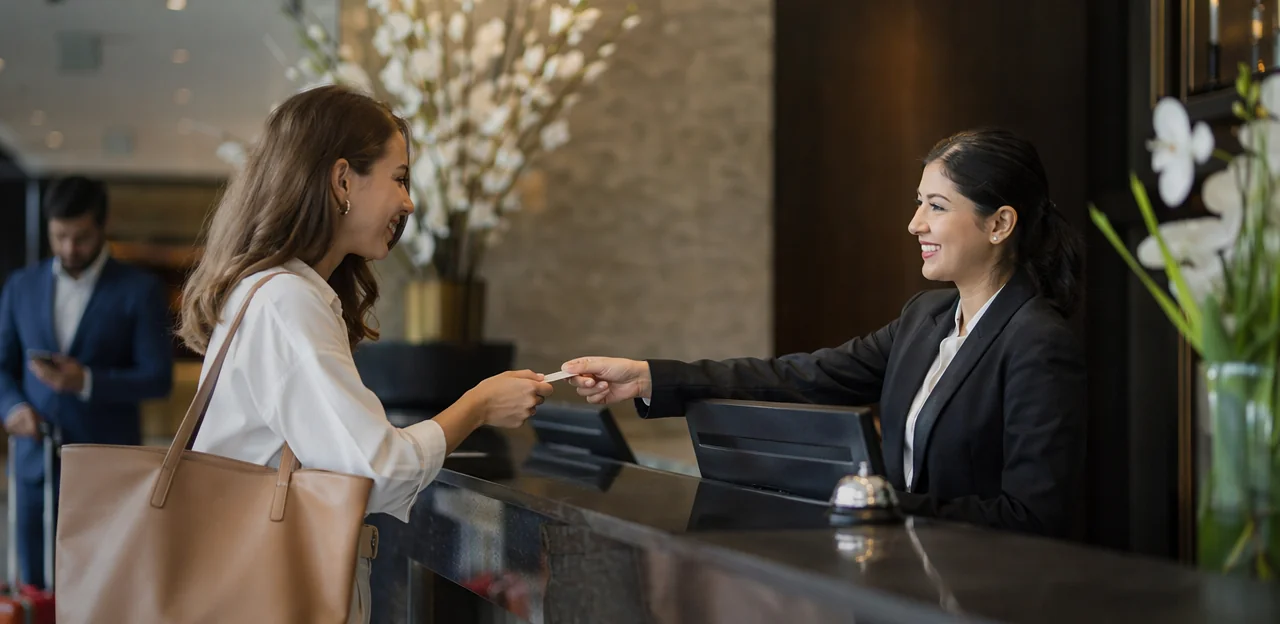
Turning survey data into operational improvements
A hotel guest satisfaction survey only creates value when feedback turns into action. To drive hotel operations improvement and stronger hospitality performance, organize responses by department and urgency:
- Front desk: check-in delays, staff attitude, billing issues
- Housekeeping: room cleanliness, linen quality, maintenance gaps
- Food and beverage: breakfast variety, speed, service quality
- Facilities: Wi-Fi, parking, gym, spa, noise, temperature
Use guest feedback analysis to spot recurring complaints, track trends weekly, and prioritize fixes by guest impact and frequency. Tools like Tapsy can help route issues quickly to the right team.
Closing the loop with guests and staff
A hotel guest satisfaction survey only creates value when feedback leads to action. To close the feedback loop effectively:
- Respond quickly to low scores or negative comments to support fast guest complaint resolution before checkout or review posting.
- Share recurring themes with front desk, housekeeping, food and beverage, and management so teams can fix root causes, not just symptoms.
- Turn insights into hotel staff training by coaching around service gaps, recovery skills, and communication.
- Use positive feedback to recognize top performers and reinforce behaviors worth repeating.
Tools like Tapsy can help route issues in real time.
Building a continuous guest experience program
To turn feedback into a true guest experience program, build a simple, ongoing measurement framework that connects every signal:
- Use each hotel guest satisfaction survey at check-in, during the stay, and after checkout.
- Combine survey results with public reviews, complaint themes, and internal KPIs like response time, housekeeping quality, and repeat bookings.
- Review trends weekly and assign owners for fixes, training, and service recovery.
- Track property, department, and touchpoint performance to support a continuous improvement hotel strategy.
Tools like Tapsy can help capture real-time feedback and strengthen hospitality customer experience efforts.
Conclusion
A well-designed hotel guest satisfaction survey does more than collect opinions—it helps hotels understand the guest journey from booking to post-stay follow-up. By asking the right questions at each stage of the stay, hospitality teams can uncover friction points early, improve service recovery, and create more personalized, memorable experiences. From pre-arrival expectations and check-in efficiency to room comfort, amenities, dining, and checkout, each touchpoint offers valuable insight into what guests truly value.
The most effective survey strategies are timely, concise, and action-oriented. When hotels gather feedback while experiences are still fresh, they can respond faster, reduce negative reviews, and strengthen loyalty. A thoughtful hotel guest satisfaction survey also gives teams the data they need to spot trends, train staff, and make smarter operational decisions across properties.
As a next step, review your current guest feedback process and map survey questions to every stage of the stay. Consider using touchpoint-based tools such as Tapsy to capture real-time feedback and resolve issues before checkout. You can also build on this by exploring survey design best practices, benchmarking satisfaction scores, and refining your guest experience strategy over time. Start optimizing your survey approach today to turn guest feedback into lasting hospitality improvements.
Frequently Asked Questions
- Why should hotels collect guest feedback at multiple stages of the stay instead of only after checkout?
Stage-based feedback helps hotels capture details while each experience is still fresh. It also makes it easier to identify whether problems come from booking, check-in, the room, amenities, dining, or checkout. Collecting feedback during the stay supports faster service recovery before issues turn into negative reviews.
- What guest satisfaction metrics should a hotel track in its survey program?
Hotels should track CSAT for specific touchpoints such as check-in, room cleanliness, breakfast, or checkout. NPS is useful after the stay to measure loyalty and willingness to recommend, while CES helps evaluate how easy service interactions feel. Review sentiment and response rate also help validate findings and monitor survey performance.
- What are the most useful pre-stay survey questions for hotels?
Useful pre-stay questions focus on booking ease, clarity of room details and pricing, support before arrival, and whether guests received all the information they needed. Hotels can also ask how confident guests feel about the upcoming stay. These questions help reveal friction before check-in.
- How can a hotel evaluate the booking and reservation experience?
A hotel can ask whether room types, amenities, and policies were easy to find, whether the booking engine worked smoothly, and whether rates, taxes, fees, and cancellation terms were clearly shown. It is also helpful to ask about confirmation email clarity and how easy it was to modify or cancel a reservation. Combining rating-scale questions with one open-text prompt makes the feedback more actionable.
- What should hotels ask about pre-arrival communication?
Hotels should ask whether the booking confirmation was clear, whether special requests were acknowledged in time, and whether check-in instructions, parking details, and arrival guidance were easy to understand. They can also ask whether upsell offers felt relevant and whether communication helped guests feel prepared. These questions show whether pre-stay messaging builds confidence or creates confusion.
- Which questions are best for measuring the check-in experience and first impression?
Strong check-in questions cover wait time, front desk friendliness, lobby cleanliness and organization, and how smooth the arrival process felt. Hotels should also ask whether the room met expectations on first entry. A rating scale with an optional comment field helps uncover whether issues relate to staffing, queue management, housekeeping, or room readiness.
- How should hotels measure room comfort, amenities, and service quality during the stay?
Hotels should ask about room cleanliness, bed comfort, temperature, lighting, noise level, and any maintenance issues. They should also measure Wi-Fi reliability, housekeeping consistency, dining quality, and how quickly staff responded to requests or problems. Using both rating scales and open-text responses helps capture trends and specific operational issues.
- What is a mid-stay pulse survey, and why is it useful?
A mid-stay pulse survey is a short in-stay check-in designed to capture real-time guest feedback while there is still time to fix problems. It usually includes only two or three questions, such as overall satisfaction so far, whether any issue needs resolution today, and what could be improved right now. This approach helps teams act quickly with solutions like housekeeping follow-up or a room change.
- Which channels work best for hotel surveys at different points in the guest journey?
Pre-stay surveys work well through email or a mobile app, usually sent 3–7 days before arrival. In-stay feedback can be collected through SMS, QR codes, tablets, or app prompts at key touchpoints like check-in, after the first night, or after breakfast or spa visits. Post-stay surveys are best sent within 24–48 hours by email or SMS.
- How can hotels improve survey response rates without causing survey fatigue?
Hotels can improve response rates by keeping surveys short, relevant, and timed to the right moment. Personalizing the invite, explaining why the feedback matters, and offering light incentives such as loyalty points or a future-stay voucher can also help. A practical format is 3–5 essential questions with one optional comment box.
- What should a post-stay hotel survey include to measure satisfaction and loyalty?
A post-stay survey should include overall satisfaction, value for money, likelihood to return, and willingness to recommend. It can also ask guests to rate key experience areas such as check-in, room cleanliness, staff helpfulness, breakfast, and checkout. Keeping this section short and consistent makes it easier to compare results over time.
- How can hotels use open-ended questions to generate better reviews and insights?
Open-ended questions help guests explain what they enjoyed most, what could have been improved, and whether any team member did especially well. These responses reveal emotional drivers behind satisfaction and highlight recurring pain points or standout service moments. If a guest indicates willingness to leave a public review, the hotel should provide a direct review link immediately.
- What makes a hotel survey question effective?
Effective survey questions are short, specific, and focused on one topic at a time. Hotels should avoid leading wording and use neutral phrasing, such as asking how a guest would rate check-in rather than assuming it was excellent. Consistent rating scales and the right question type for the goal make responses easier to analyze.
- How should hotels act on survey results to improve operations?
Hotels should organize feedback by department and urgency so the right teams can respond. Common categories include front desk issues, housekeeping concerns, food and beverage feedback, and facilities problems such as Wi-Fi, parking, noise, or temperature. Reviewing trends weekly and prioritizing fixes by impact and frequency helps turn feedback into operational improvements.
- How can tools like Tapsy fit into a hotel guest feedback strategy?
Tools like Tapsy can help hotels collect real-time feedback at touchpoints such as reception, in-room QR codes, or other on-property moments. They can also support fast, no-app feedback collection and help route issues quickly to the right team. This is especially useful for in-stay service recovery before checkout.