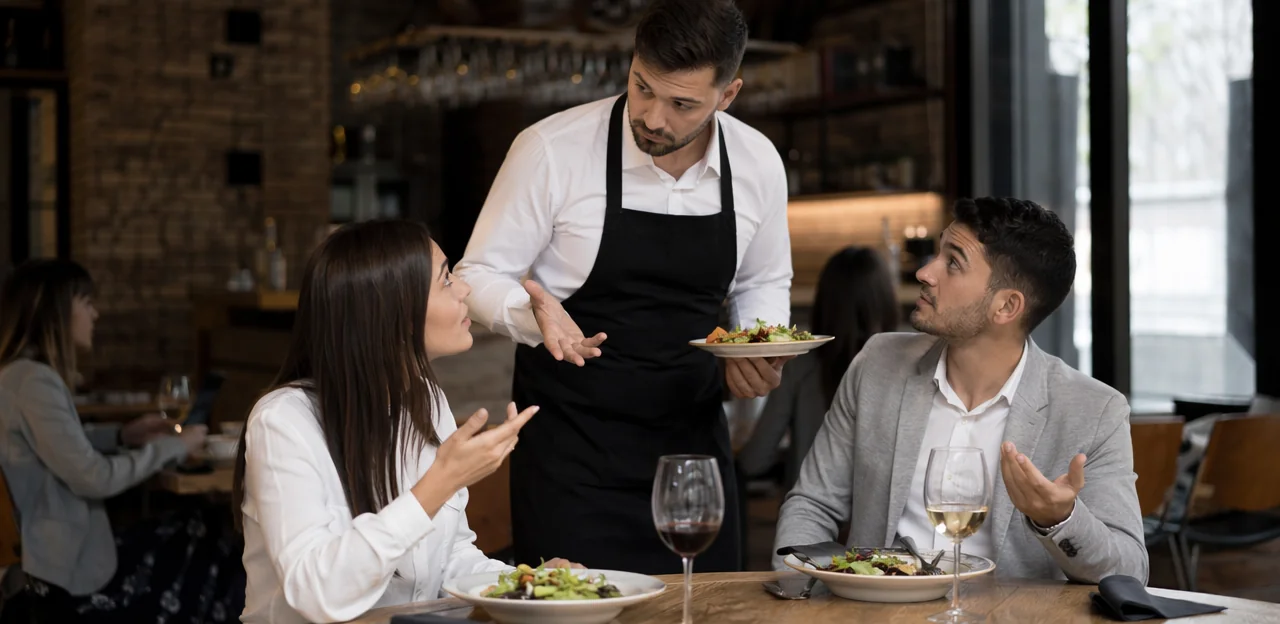
In restaurants and cafés, a single bad experience can travel fast. What starts as a delayed order, a cold meal, or an unfriendly interaction can quickly turn into a negative review, lost repeat business, and damage to your brand. That is why handling restaurant customer complaints effectively is not just a customer service task, but a core part of restaurant operations.
Not all complaints are equal, and treating every issue the same can lead to slow responses and missed opportunities to recover the guest experience. Some complaints point to service gaps, others reveal kitchen bottlenecks, training needs, cleanliness concerns, or communication breakdowns between front and back of house. When you categorize complaints correctly, you can respond faster, solve the root cause, and prevent the same issues from happening again.
This article will explore the most common types of restaurant customer complaints, how to organize them into useful categories, and what actions managers and teams should take in response. It will also look at service recovery best practices, escalation workflows, and ways to use real-time feedback tools such as Tapsy to catch problems early and protect the dining experience before they become public complaints.
Why restaurant customer complaints matter

The business impact of complaints on restaurants and cafés
Restaurant customer complaints directly shape guest loyalty and profitability. Left unresolved, even small issues can damage restaurant reputation management efforts and reduce repeat business.
- Reputation: One poor experience can quickly become a negative review on Google, TripAdvisor, or social media.
- Repeat visits: Guests who feel ignored are far less likely to return, while well-handled complaints can actually build trust.
- Revenue: Fewer return visits, lower average spend, and public criticism all affect sales.
- Staff morale: Repeated complaints often signal process gaps, which can frustrate teams and increase pressure during service.
Treat complaints as operational data, not isolated incidents. Track patterns by category, shift, menu item, or location to uncover root causes. Tools like Tapsy can help capture real-time feedback before dissatisfaction turns into lost revenue.
Common reasons guests complain
Most restaurant customer complaints fall into a few repeatable categories. Tracking these patterns helps managers respond faster and prevent future issues.
- Slow service: Long wait times for seating, drinks, food, or the bill are among the most common restaurant complaints.
- Incorrect orders: Missing items, wrong dishes, or unmet dietary requests quickly frustrate guests.
- Food quality issues: Cold meals, inconsistent taste, poor presentation, or undercooked food often drive guest complaints in restaurants.
- Billing errors: Incorrect charges, unclear fees, or slow payment handling can damage trust at the end of the visit.
- Cleanliness concerns: Dirty tables, restrooms, menus, or floors signal weak standards.
- Poor staff interactions: Rude, inattentive, or unhelpful service can escalate even small problems.
Use clear complaint categories and real-time feedback tools like Tapsy to spot issues early and act quickly.
The difference between feedback, complaints, and crisis situations
Not all restaurant customer complaints carry the same risk, so clear triage is essential for effective restaurant complaint management.
- Feedback: Low-stakes comments or minor dissatisfaction, such as slow service, noise, or a lukewarm dish. Log these, thank the guest, and use them for coaching or process improvements.
- Complaints: Service failures that need direct recovery, such as wrong orders, rude interactions, or billing issues. Respond quickly, apologize, fix the problem, and document the root cause.
- Crisis situations: Urgent incidents requiring immediate escalation to a manager or owner. This includes food safety complaints, allergy exposure, suspected contamination, harassment, discrimination, or threats to guest safety.
Set clear escalation rules so frontline staff know when to resolve, when to compensate, and when to escalate immediately.
How to categorize restaurant customer complaints

Service-related complaints
Service-related restaurant customer complaints usually point to gaps in both frontline behavior and back-of-house coordination. Common service complaints in restaurants include:
- Long wait times: delays for seating, ordering, food delivery, or payment
- Staff attitude: rude, dismissive, or unhelpful interactions
- Poor communication: unclear menu details, missing updates on delays, or inconsistent information
- Reservation handling: lost bookings, long waits despite reservations, or poor table management
- Order accuracy: wrong dishes, missing items, or unmet dietary requests
These restaurant service issues often need more than a one-time apology. They usually signal a need for staff coaching, clearer service standards, and process refinement across host, kitchen, and floor teams. Track recurring patterns, review shift-level bottlenecks, and use real-time feedback tools such as Tapsy to catch problems early and recover service before they become negative reviews.
Product and food-related complaints
Product and food-related restaurant customer complaints usually point to operational gaps that can be tracked and fixed. Common restaurant food complaints include:
- Taste and seasoning: too salty, bland, overcooked, or undercooked
- Temperature: food arrives cold, lukewarm, or unevenly heated
- Portion size and presentation: servings feel too small, inconsistent, or poorly plated
- Allergens and dietary errors: missing allergy notes or incorrect ingredient substitutions
- Freshness and consistency: stale ingredients, wilted produce, or dishes varying between shifts
Categorizing these as food quality complaints helps kitchen teams spot patterns by menu item, station, shift, or supplier. If multiple guests report cold fries or inconsistent pasta, managers can review prep timing, holding procedures, or plating standards. Use clear complaint tags in your POS or feedback tool to turn one-off issues into actionable kitchen improvements before they become repeat problems.
Environment, pricing, and policy complaints
Many restaurant customer complaints are not about one employee’s mistake—they point to larger operational choices. Restaurant cleanliness complaints may signal weak opening/closing checklists, understaffed dining rooms, or poor restroom inspection routines. Restaurant pricing complaints often stem from unclear menus, surprise service fees, or promotions that staff cannot explain consistently.
Key areas to track include:
- Environment: cleanliness, noise levels, table spacing, uncomfortable seating, lighting, temperature, and overall ambience
- Pricing: perceived value, hidden charges, portion size versus price, and unclear upsells
- Policies: refund rules, coupon exclusions, booking terms, and promotion limitations
To act on these complaints:
- Audit the guest journey from menu to payment.
- Make fees, terms, and offer conditions visible before purchase.
- Use recurring complaint data to review staffing, layout, pricing strategy, and policy design.
Tools like Tapsy can help capture these issues in real time before they become public reviews.
How to respond to complaints in the moment

A simple service recovery framework for frontline staff
A clear framework makes restaurant customer complaints easier to manage in the moment and improves service recovery in restaurants. Train staff to follow a simple five-step model:
- Listen – Let the guest explain the issue without interrupting.
- Acknowledge – Show you understand the specific problem and its impact.
- Apologize – Offer a sincere, professional apology without becoming defensive.
- Solve – Take immediate action, such as replacing a dish, adjusting the bill, or involving a manager.
- Follow up – Check back after the fix to confirm the guest is satisfied.
This structure gives teams a reliable answer to how to handle restaurant complaints calmly and consistently. It reduces emotional reactions, speeds up decisions, and helps staff stay professional under pressure. Tools like Tapsy can also help teams capture issues quickly and route them to the right person for faster recovery.
What to say and what to avoid
When handling restaurant customer complaints, your wording matters as much as the fix. A strong restaurant complaint response should show empathy, take ownership, and lower tension quickly.
- What to say
- “I’m sorry this happened. Thank you for telling us.”
- “I understand why that’s frustrating.”
- “Let me take care of this for you right away.”
- “Here’s what we can do next.”
- What to avoid
- “That’s not our fault.”
- “No one else complained.”
- “You must have misunderstood.”
- “It’s not a big deal.”
These phrases can sound defensive, dismissive, or accusatory. Good customer service scripts for restaurants should focus on listening, acknowledging the issue, and explaining the next step clearly. Train staff to avoid interrupting, arguing, or blaming the guest, even when the complaint seems minor or unfair.
When managers should step in
Not all restaurant customer complaints should stay with the frontline team. Strong restaurant manager complaint handling starts with clear escalation rules so issues are resolved quickly and consistently.
Escalate through your complaint escalation process when:
- The guest remains unhappy after the first solution or repeats the complaint.
- A high-value guest is involved, such as a regular, VIP, large party, or private event host.
- The situation becomes public, loud, or risks disturbing other diners.
- A refund, discount, or comped meal is requested beyond staff authority.
- Health, safety, or food contamination concerns are raised.
- Staff misconduct is alleged, including rudeness, discrimination, harassment, or negligence.
Managers should step in calmly, listen fully, document facts, and offer a clear next action. Tools like Tapsy can also help flag urgent issues in real time before they escalate further.
Turning complaints into operational improvements

How to log and track complaint data
Create a simple customer complaint log that every manager can update in real time. To make restaurant complaint tracking useful, record each issue consistently so patterns are easy to spot.
Include fields such as:
- Complaint category: food quality, service speed, staff attitude, cleanliness, billing, delivery
- Shift and date: lunch, dinner, weekend, holiday rush
- Employee involved: server, host, kitchen lead, manager
- Menu item: specific dish, drink, modifier, or promo item
- Channel: in-person, phone, email, review site, delivery app, QR feedback tool
Review your log weekly to identify recurring root causes behind restaurant customer complaints. For example, repeated complaints about one dish on Friday nights may point to prep, staffing, or supplier issues. Even a spreadsheet—or a tool like Tapsy—can surface trends early.
Finding root causes across service and kitchen operations
To turn restaurant customer complaints into meaningful restaurant operations improvement, track patterns by shift, station, menu item, and team handoff. Effective root cause analysis restaurant complaints should connect the issue to where the breakdown starts, not just where guests notice it.
- Staffing: Complaints about slow service often point to understaffed peak periods or poor section balancing.
- Training gaps: Repeated order errors may signal weak POS training, allergy handling, or service standards.
- Prep workflows: Long ticket times can reveal bottlenecks in mise en place, expo, or batch prep timing.
- Menu design: High-return dishes may indicate overly complex recipes or unclear descriptions.
- Suppliers: Consistent quality issues can stem from ingredient variability or late deliveries.
- FOH-BOH communication: Missed modifiers and timing problems often come from unclear call-outs or weak handoff processes.
Using complaints to improve training and SOPs
Treat restaurant customer complaints as a practical training tool, not just a service issue log. When you review patterns weekly, you can turn recurring problems into stronger restaurant staff training and smarter restaurant SOP improvement.
- Improve onboarding: Add real complaint examples to new-hire training so staff learn how to handle delays, order errors, and guest communication from day one.
- Tighten service standards: If complaints mention slow greetings or missed check-backs, update table service steps and timing expectations.
- Strengthen food handling procedures: Repeated issues around temperature, allergies, or presentation should trigger SOP updates, line checks, and refresher training.
- Coach managers better: Use complaint trends in manager one-to-ones to improve floor supervision, escalation, and recovery decisions.
Tools like Tapsy can help capture real-time patterns faster.
Managing online and offline complaint channels

Handling in-person, phone, email, and social media complaints
Not all restaurant customer complaints should be handled the same way. The channel affects response speed, tone, and record-keeping.
- In-person: Respond immediately, stay calm, and solve the issue before the guest leaves. Keep your tone empathetic and discreet, then log the complaint afterward.
- Phone: Act quickly and listen without interrupting. Use a warm, reassuring tone, confirm details, and document promised follow-up.
- Email: Reply promptly but with more structure. Acknowledge the issue, explain next steps, and keep a written trail.
- Social media: For online restaurant complaints, speed matters most. A strong social media complaint response should be polite, brief, public at first, then moved to direct messages.
Responding to negative reviews without harming your brand
Effective responding to negative restaurant reviews starts with speed, empathy, and professionalism. When restaurant customer complaints appear on Google, Yelp, or other platforms, avoid defensiveness and use a consistent restaurant review management process:
- Acknowledge the issue and thank the guest for the feedback.
- Take accountability when appropriate, without arguing or blaming staff publicly.
- Apologize sincerely and mention the specific concern, such as service delays or food quality.
- Invite a private follow-up by sharing a manager email or phone number.
- Keep it brief and calm so future readers see your brand as responsive and respectful.
Tools like Tapsy can also help capture issues earlier, before they become public reviews.
Encouraging direct feedback before guests post publicly
To reduce restaurant customer complaints from turning into public criticism, make private feedback easy and immediate:
- Table touches: Train managers or servers to check in shortly after food arrives and again near the end of the meal. This creates a safe moment for honest restaurant guest feedback.
- QR surveys: Add a QR code on tables, menus, or bill holders so guests can report issues in seconds while the experience is still fresh.
- Receipt links: Include a short feedback URL on receipts to capture concerns after payment.
- Follow-up messages: Send a same-day text or email inviting feedback and offering quick resolution.
Tools like Tapsy can help restaurants act fast and prevent negative restaurant reviews.
Building a complaint-ready restaurant culture

Training teams to see complaints as opportunities
A strong service recovery culture starts with reframing restaurant customer complaints as useful signals, not personal criticism. In effective restaurant customer service training, managers should teach staff to pause, listen, and respond with curiosity rather than defensiveness.
- Normalize feedback: Remind teams that complaints reveal gaps in service, timing, food quality, or communication.
- Train recovery scripts: Use simple steps: acknowledge, apologize, clarify, act, and follow up.
- Review patterns together: Turn recurring complaints into coaching and process improvements.
- Celebrate recoveries: Recognize employees who turn unhappy guests into loyal ones.
Tools like Tapsy can also help teams capture issues quickly and respond before frustration escalates.
Creating clear policies for refunds, comps, and follow-up
To handle restaurant customer complaints fairly, restaurants need written rules that staff can apply consistently:
- Define a clear restaurant refund policy: when to offer a full refund, partial refund, remake, or credit.
- Set a restaurant comp policy with limits by issue type, such as delayed food, quality problems, or service errors.
- Clarify manager authority: supervisors may comp desserts or drinks, while larger refunds require manager approval.
- Require documentation in the POS or complaint log, including issue category, amount comped, and resolution.
- Standardize guest follow-up within 24–48 hours for serious complaints to apologize, confirm resolution, and rebuild trust.
Tools like Tapsy can help teams capture and route complaints quickly.
Key metrics to measure complaint handling success
Track restaurant KPIs that show whether your team is resolving restaurant customer complaints effectively and improving guest loyalty:
- Complaint volume by category: Monitor issues by food quality, service speed, staff behavior, cleanliness, and billing to spot recurring operational problems.
- Resolution time: Measure how quickly complaints are acknowledged and fully resolved; faster recovery often reduces negative reviews.
- Repeat complaint rate: Track how often the same issue reappears to identify failed fixes or training gaps.
- Review score trends: Compare ratings before and after service recovery improvements.
- Guest return rate after recovery: Measure whether dissatisfied guests come back after a successful resolution.
Using clear complaint resolution metrics in a tool like Tapsy can help teams act faster and benchmark results.
Conclusion
Handling restaurant customer complaints well is not just about fixing isolated issues—it’s about building a stronger, more resilient operation. By categorizing complaints into clear groups such as food quality, service speed, staff behavior, cleanliness, billing, and order accuracy, restaurants can respond faster, identify patterns, and prevent the same problems from happening again. The most effective teams treat every complaint as both a service recovery opportunity and a source of operational insight.
A strong process matters: listen carefully, respond with empathy, resolve the issue quickly, document what happened, and follow up when appropriate. Over time, this approach helps reduce negative reviews, improve staff training, and create a better guest experience from front of house to kitchen. In other words, restaurant customer complaints are not just problems to manage—they are signals that can guide smarter decisions.
Now is the time to review your current complaint-handling workflow and make it more consistent, measurable, and proactive. Create categories, assign ownership, track recurring issues, and use guest feedback to drive improvement. If you want to capture feedback in real time and act before complaints escalate, tools like Tapsy can support faster service recovery. For next steps, consider building a complaint response playbook, training your team regularly, and monitoring key trends each week.
Frequently Asked Questions
- Why is it important to categorize restaurant customer complaints?
Categorizing complaints helps restaurants respond faster and choose the right action for each issue. It also makes it easier to spot patterns, find root causes, and prevent repeat problems across service, kitchen, cleanliness, billing, or communication.
- What are the most common types of restaurant customer complaints?
Common complaints include slow service, incorrect orders, food quality problems, billing errors, cleanliness concerns, and poor staff interactions. These categories cover many recurring issues that affect guest satisfaction, reviews, and repeat visits.
- How do feedback, complaints, and crisis situations differ in a restaurant?
Feedback usually involves low-stakes dissatisfaction, such as noise, slow service, or a lukewarm dish, and should be logged for improvement. Complaints involve service failures that need direct recovery, while crisis situations include urgent risks like food safety issues, allergy exposure, harassment, discrimination, or threats to guest safety and require immediate escalation.
- What counts as a service-related complaint in a restaurant?
Service-related complaints include long waits, rude or dismissive behavior, poor communication, reservation problems, and order accuracy issues. These often point to gaps in staff coaching, service standards, or coordination between front and back of house.
- Which issues belong under food and product complaints?
Food and product complaints include problems with taste, seasoning, temperature, portion size, presentation, allergens, dietary requests, freshness, and consistency. Tracking them by menu item, station, shift, or supplier helps kitchen teams identify where the breakdown starts.
- How should restaurants handle complaints about cleanliness, pricing, or policies?
These complaints should be treated as operational signals rather than one-off mistakes. Restaurants should audit the guest journey, make fees and terms visible before purchase, and use recurring complaint data to review staffing, layout, pricing strategy, and policy design.
- What is a simple framework staff can use to resolve complaints in the moment?
A practical five-step approach is to listen, acknowledge, apologize, solve, and follow up. This helps staff stay calm, respond consistently, and confirm that the guest is satisfied after the fix.
- What should staff say when a guest complains, and what should they avoid?
Helpful phrases include apologizing, thanking the guest for speaking up, acknowledging the frustration, and clearly explaining the next step. Staff should avoid defensive or dismissive language such as blaming the guest, minimizing the issue, or saying no one else complained.
- When should a manager step in to handle a complaint?
Managers should step in when the guest is still unhappy after an initial solution, when a VIP or large party is involved, or when the issue becomes public and disruptive. Escalation is also necessary for larger refunds, health or safety concerns, food contamination, or allegations of staff misconduct.
- What information should be included in a restaurant complaint log?
A useful complaint log should include the complaint category, shift and date, employee involved, menu item, and channel such as in-person, phone, email, review site, delivery app, or QR feedback tool. Recording issues consistently makes weekly reviews more useful and helps reveal repeat patterns.
- How can restaurants find the root cause behind recurring complaints?
Restaurants should review complaints by shift, station, menu item, and team handoff to connect the issue to where it begins. Common root causes include understaffing, training gaps, prep bottlenecks, menu design problems, supplier inconsistency, and weak communication between front and back of house.
- How can complaint trends improve training and SOPs?
Recurring complaints can be turned into training examples for onboarding, coaching, and manager development. They can also guide updates to service standards, food handling procedures, line checks, and escalation practices so teams respond more consistently.
- How should restaurants respond to complaints across in-person, phone, email, and social media channels?
In-person complaints should be handled immediately and discreetly before the guest leaves, while phone complaints require calm listening and clear follow-up. Email responses should be prompt and structured, and social media responses should be fast, polite, brief, and moved to direct messages after an initial public reply.
- What is the best way to respond to a negative restaurant review?
A strong response acknowledges the issue, thanks the guest, apologizes sincerely, and stays calm and professional. It should avoid arguing in public and invite the guest to continue the conversation privately with a manager by phone or email.
- Which metrics help measure whether complaint handling is working?
Useful metrics include complaint volume by category, resolution time, repeat complaint rate, review score trends, and guest return rate after recovery. These measures show whether fixes are fast, whether the same issues keep happening, and whether service recovery is helping rebuild loyalty.