
In restaurants and cafés, timing is everything, and that includes feedback. The problem is that most guests do not want to scan a long survey, download an app, or fill out a receipt form after they leave. By then, the moment has passed, details are forgotten, and valuable insights are lost. That is why NFC feedback restaurant systems are gaining attention: they make it easy for guests to tap their phone and rate their experience in seconds, right at the table, counter, or exit.
This simple tap-to-rate approach can dramatically improve response rates because it removes friction at the exact point where the dining experience happens. Instead of chasing reviews later, restaurants can capture honest, in-the-moment feedback while there is still time to respond, recover a poor experience, and protect their reputation. For operators, that means clearer visibility into service speed, food quality, cleanliness, and staff performance across key touchpoints.
In this article, we will explore how NFC feedback works in restaurant settings, why it consistently outperforms traditional survey methods, and how thoughtful survey design can increase participation without annoying guests. We will also look at operational benefits, practical placement ideas, and how solutions like Tapsy can help restaurants turn quick taps into actionable insights.
Why NFC feedback works better than traditional restaurant surveys

Conventional feedback methods often fail because they ask guests to do too much, too late.
- Paper cards get ignored, lost, or filled out after the moment has passed.
- Email surveys arrive when the dining experience is no longer fresh, which hurts motivation and lowers restaurant survey response rates.
- QR code feedback restaurant setups can still create hesitation if guests must open a camera, scan, wait for a page to load, and then complete multiple fields.
This is the core of guest feedback friction: every extra step reduces participation. In a busy restaurant, even small delays matter.
An NFC feedback restaurant approach removes that effort with a simple tap at the table, counter, or exit. Fewer actions, better timing, and shorter forms consistently improve completion rates. Tools like Tapsy help restaurants capture feedback in the moment, when guests are most likely to respond.
How tap-to-rate matches real guest behavior
In restaurants and cafés, guests already use their phones at the table to check menus, pay, message friends, or leave reviews. That makes NFC feedback restaurant flows feel natural rather than disruptive. A quick tap lets diners respond in seconds, while the experience is still fresh.
- Fits the moment: Place tags on tables, receipts, counters, or exits so guests can tap to rate restaurant service right after ordering, eating, or paying.
- Removes friction: No app download, login, or long form means higher NFC customer feedback completion rates.
- Supports mobile-first habits: A mobile feedback restaurant flow works best when it opens instantly, asks 1–3 simple questions, and allows an optional comment.
Tools like Tapsy can help restaurants capture this feedback at the exact touchpoint where it matters most.
The psychology behind higher response rates
Why does NFC feedback restaurant technology work so well? It aligns with core customer feedback psychology by making the action feel immediate, simple, and worthwhile.
- Instant access reduces cognitive load: Guests tap and rate in seconds, with no app download, search, or long form. The easier it feels, the more likely they are to respond.
- Timing matters: An instant feedback restaurant request placed at the table, checkout, or exit captures reactions while the experience is still fresh.
- Clear prompts remove hesitation: Simple cues like “Tap to rate your visit” tell customers exactly what to do next.
- Perceived ease boosts action: To increase survey response rate restaurant teams should keep surveys short, visible, and tied to the moment of service.
Tools like Tapsy help restaurants apply these principles consistently.
How NFC feedback restaurant systems work in practice
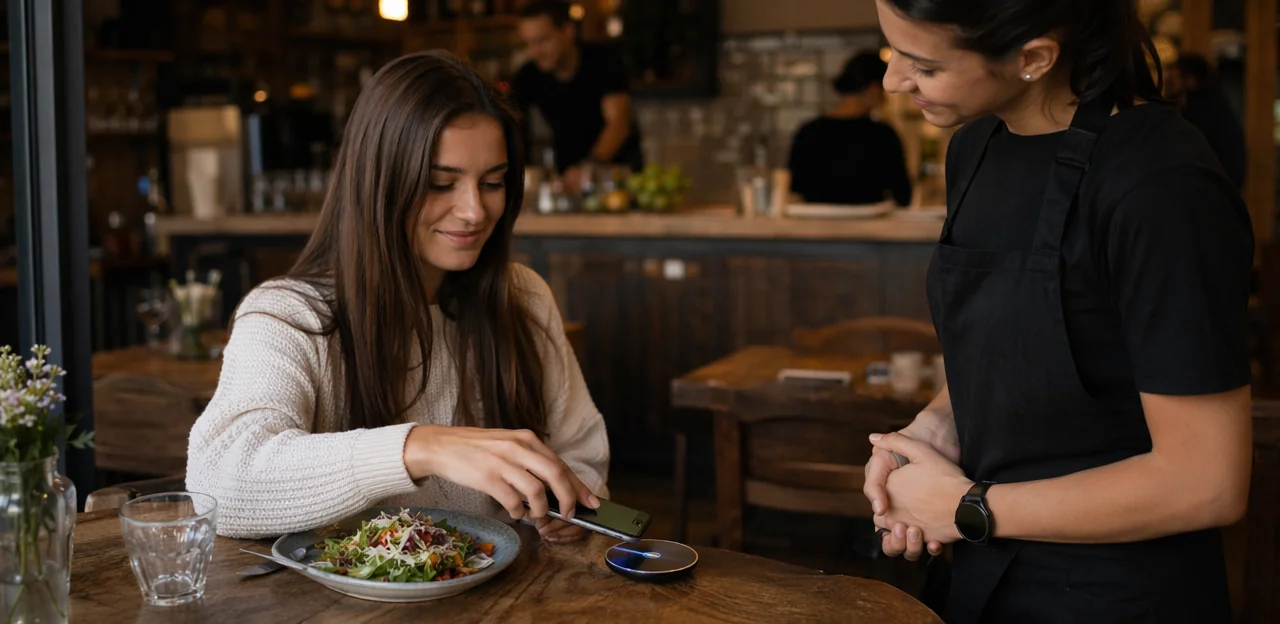
What NFC touchpoints are and where to place them
An NFC touchpoints restaurant setup uses tap-enabled items that open a fast feedback form on a guest’s phone—no app, no typing a URL. For an effective NFC feedback restaurant strategy, use multiple formats based on the guest journey:
- NFC-enabled cards and table tents: Best for dine-in tables, bars, and café seating. They make table tap feedback easy while the experience is still fresh.
- Restaurant NFC tags as stickers: Place on takeaway bags, drink fridges, tray returns, or pickup shelves.
- Receipts with NFC prompts: Ideal for takeaway and quick-service orders after payment.
- Counter displays: Use at café counters, host stands, waiting areas, and payment stations for quick post-service ratings.
Place touchpoints where guests naturally pause: tables, collection points, queues, exits, and tills. Tools like Tapsy can help manage these touchpoints consistently.
The guest journey from tap to completed response
A strong NFC feedback restaurant setup keeps the path short, clear, and mobile-first. The best tap to rate flow usually looks like this:
- Tap the NFC tag at the table, counter, or receipt stand.
- Open a fast landing page with no app download or login.
- Show an immediate rating prompt such as 1–5 stars or a quick smiley scale.
- Ask 1–3 short follow-up questions based on the score.
- Offer an optional public review request only after a positive response.
This streamlined restaurant feedback journey reduces friction, so more guests finish the survey while the experience is still fresh. It also improves data quality by capturing simple ratings first, then relevant details second. A well-designed NFC review funnel can even route low scores to staff privately before directing happy diners to review platforms.
NFC vs QR codes: when to use each
For an effective NFC feedback restaurant setup, it helps to understand where each option performs best. In the NFC vs QR restaurant comparison, neither is universally better—each solves a different access problem.
- NFC: Fastest option. Guests simply tap, making it ideal at tables, counters, or exits where speed matters and impulse responses are high.
- QR codes: More visible and familiar. They work well on menus, receipts, windows, and takeaway packaging where guests can scan at their own pace.
- Device compatibility: NFC is seamless on many modern phones, but some users may have it disabled or unsupported. QR is more universally accessible through the camera.
- Best practice: Use QR and NFC feedback together in one contactless feedback system to maximize reach, reduce friction, and capture more responses. Platforms like Tapsy support this blended approach.
Designing a high-converting restaurant feedback survey

Keep surveys short, specific, and easy to finish
In a busy service setting, speed matters. A strong NFC feedback restaurant flow should take seconds, not minutes, because diners and café guests often respond while leaving, paying, or waiting briefly. Shorter forms consistently improve survey completion rate and reduce drop-off.
Best practices for restaurant feedback survey design:
- Limit question count: Aim for 1–3 core questions plus one optional comment field.
- Use simple rating scales: A 1–5 star scale, thumbs up/down, or smiley rating works better than long matrix questions.
- Ask only actionable questions: Focus on food quality, service speed, staff friendliness, cleanliness, or wait time—topics your team can improve quickly.
- Keep wording clear: Avoid jargon, double-barreled questions, or anything that makes guests stop and think.
A short customer survey restaurant setup captures more in-the-moment feedback and gives operators cleaner data. Platforms like Tapsy also support fast tap-to-rate flows that fit naturally into hospitality operations.
Ask the right questions for service, food, and experience
A strong restaurant customer satisfaction survey should focus on the moments that shape the guest journey. In an NFC feedback restaurant setup, keep questions short, specific, and tied to operational actions.
- Food quality: Ask about taste, temperature, freshness, portion size, and menu accuracy.
- Speed of service: Measure wait time for seating, ordering, food delivery, and bill payment.
- Cleanliness: Cover tables, restrooms, dining areas, and overall hygiene standards.
- Staff friendliness: Use restaurant service survey questions about greeting, attentiveness, problem-solving, and professionalism.
- Value for money: Ask whether price matched food quality, portion size, and service.
To improve dining experience feedback, match each category to the team that can act on it: kitchen, front-of-house, cleaning, or management. This makes feedback easier to route, track, and use for service goals such as faster table turns, better hospitality, and higher repeat visits.
Route happy guests to reviews and unhappy guests to private feedback
A strong NFC feedback restaurant flow should separate praise from problems without creating friction. The goal is simple: encourage satisfied diners to share public reviews, while unhappy guests reach a private feedback restaurant form your team can act on immediately.
- Start with one fast rating question such as “How was your experience today?”
- If the score is high, send guests to Google, TripAdvisor, or Facebook with a short thank-you and direct review link.
- If the score is low or neutral, open a private form asking what went wrong, plus an optional contact field for follow-up.
- Trigger alerts for issues like food quality, wait times, or staff service so managers can respond quickly.
This approach supports restaurant reputation management by increasing authentic positive reviews and catching service failures before they become public complaints. For brands exploring review gating alternatives, this method focuses on recovery, retention, and better guest experience rather than blocking feedback.
Operational benefits beyond higher response rates

Spot service issues faster with real-time guest insights
With NFC feedback restaurant touchpoints placed at tables, counters, or exits, managers can collect real-time restaurant feedback while the visit is still fresh. This makes it easier to detect patterns early, not days later in public reviews.
- Flag recurring problems quickly: spot repeated complaints about slow service, missing items, cold food, or order accuracy.
- Act during the shift: alert floor managers to coach staff, adjust table coverage, or fix kitchen handoff issues immediately.
- Improve guest experience monitoring: compare feedback by time, team, or service area to uncover useful restaurant operations insights.
Tools like Tapsy can help route low ratings to the right team fast, supporting quicker service recovery.
Use feedback data to train staff and improve consistency
An NFC feedback restaurant system becomes far more valuable when guest insights are used in daily coaching. Look for repeated themes in comments—slow greetings, order accuracy, table check-backs, or cleanliness gaps—and turn them into focused training actions.
- Review patterns by shift, role, and location during manager huddles
- Use real guest comments in restaurant staff training feedback sessions
- Update SOPs when the same issue appears repeatedly
- Track improvements in ratings, complaint volume, and recovery speed
This creates a stronger service consistency restaurant process and supports ongoing hospitality performance improvement. Tools like Tapsy can help surface touchpoint-level trends in real time.
Measure trends across locations, shifts, and touchpoints
With NFC feedback restaurant systems, operators can turn every tap into structured insight instead of scattered comments. That makes it easier to spot patterns and act fast across both single sites and groups.
- Compare multi-location restaurant feedback by venue, franchise, or concept to identify top performers and underperforming sites.
- Break down restaurant analytics feedback by breakfast, lunch, dinner, late-night, or weekend shifts to uncover daypart issues.
- Track results by table zone, counter, patio, drive-thru, pickup shelf, or campaign source.
- Use consistent categories in guest feedback reporting to link low scores to staffing, wait times, cleanliness, or menu execution.
Platforms like Tapsy can help standardize this data so managers make clearer operational decisions faster.
Implementation best practices for restaurants and cafés

Choose the right NFC feedback setup for your venue
The best NFC feedback restaurant setup should be simple for guests and easy for staff to manage. When comparing options, focus on:
- Hardware: Durable NFC stands, table tents, or counter tags that fit high-traffic service areas.
- Software: Choose restaurant feedback software with fast surveys, real-time alerts, and location-level reporting.
- Landing pages: Mobile-first, branded pages with 1–3 questions usually convert best.
- Integrations: A strong NFC feedback platform restaurant should connect with your CRM, Google reviews, or support tools for faster follow-up.
- Deployment: Independent venues may prefer a plug-and-play NFC solution for cafés, while chains often need centralized dashboards, role-based access, and multi-location consistency.
Tools like Tapsy can help if you want no-app deployment and touchpoint-based feedback collection.
Train staff to encourage taps without disrupting service
To make NFC feedback restaurant programs work, train servers, hosts, and cashiers to ask at natural pause points—not during busy or sensitive moments. This keeps hospitality customer engagement helpful rather than pushy.
- Pick the right timing: after food is cleared, at checkout, or when guests say they enjoyed the meal.
- Use low-pressure language:
- “If you have a second, you can tap here and rate your visit.”
- “Your feedback helps us improve service.”
- “No rush, but we’d love your quick feedback before you go.”
- Keep it consistent: include short restaurant staff feedback prompts in training so every team member knows how to increase guest feedback restaurant-wide without interrupting service.
If you use a tool like Tapsy, staff can point guests to one simple tap point.
Track KPIs and optimize over time
To improve NFC feedback restaurant performance, track a small set of metrics consistently:
- Tap volume: how many guests tap at each table, counter, or exit point
- Completion rate: taps that turn into finished responses
- Review conversion rate: satisfied guests who continue to a public review
- Sentiment: trends in ratings, comments, and recurring complaints
- Issue resolution speed: how fast staff respond to low scores or service problems
Use these insights as your core feedback KPI restaurant dashboard. For strong survey optimization restaurant results, test card placement, CTA wording, and timing after ordering, payment, or meal completion. Even small changes can lift completion and review conversion rate over time.
Common challenges, compliance, and future trends

Address guest privacy, consent, and data handling
Trust is essential to any NFC feedback restaurant experience. Guests will tap more confidently when privacy expectations are clear and respectful. To strengthen restaurant feedback privacy and support customer data compliance hospitality, follow these basics:
- Explain what you collect: state whether you gather ratings, comments, device data, location, or contact details.
- Ask for clear permission: use simple opt-ins for follow-up messages or marketing to support proper guest data consent restaurant practices.
- Keep it minimal: only collect data you truly need.
- Link to your privacy policy: make it visible on the mobile feedback page.
- Protect and limit access: store feedback securely and restrict staff access to sensitive data.
Platforms like Tapsy can help standardize transparent, mobile-first feedback flows.
Solve adoption barriers like phone compatibility and awareness
To make NFC feedback restaurant programs successful, restaurants must reduce friction at the table or counter. Common contactless feedback challenges usually come from device limitations and unclear guest guidance.
- Support older phones: Not every guest has NFC enabled or available, so add a visible QR code beside every tap point. This improves NFC compatibility feedback coverage and prevents drop-off.
- Use clear signage: Simple prompts like “Tap your phone here to leave a 10-second rating” help drive NFC adoption restaurant usage.
- Educate guests fast: Add one-line instructions such as “No app needed” and small visual icons showing tap or scan.
- Test placement and flow: Tools like Tapsy can combine NFC and QR touchpoints to make feedback access easier for more guests.
What’s next for NFC, QR, and smart hospitality touchpoints
The future of restaurant feedback is moving beyond simple ratings toward connected, real-time guest intelligence. For any NFC feedback restaurant setup, the next step is turning each tap into action across operations.
- Personalized follow-ups: Trigger tailored apologies, offers, or thank-you messages based on score, visit time, or location.
- Loyalty integration: Link tap-to-rate flows with rewards, points, and return-visit incentives to increase participation and retention.
- AI-assisted sentiment analysis: Use AI restaurant guest feedback tools to detect themes like service speed, food quality, or cleanliness automatically.
- Connected systems: Combine feedback with POS, CRM, and staff alerts so managers can resolve issues faster.
This is where smart hospitality technology creates a more responsive guest experience.
Conclusion
In a fast-paced hospitality environment, timing matters. That’s why an NFC feedback restaurant strategy can be so effective: it captures guest sentiment in the moment, when the experience is still fresh and the likelihood of response is highest. By replacing long, delayed surveys with a simple tap-to-rate interaction, restaurants and cafés can reduce friction, increase participation, and gather more accurate operational insights.
The biggest advantage of NFC feedback is not just higher response rates, but faster action. Real-time feedback helps teams spot issues with food quality, service speed, cleanliness, or wait times before they turn into negative public reviews. Combined with smart survey design and well-placed touchpoints, an NFC feedback restaurant setup can improve guest satisfaction while giving managers clearer visibility into day-to-day performance.
The next step is simple: identify your highest-impact guest touchpoints, keep your survey short, and create a clear process for responding to low ratings quickly. If you want to explore a no-app way to collect and act on in-the-moment feedback, solutions like Tapsy can help restaurants launch NFC and QR feedback flows with real operational value.
Start small, measure results, and refine over time—because better feedback loops lead to better dining experiences.
Frequently Asked Questions
- What is NFC feedback for restaurants?
NFC feedback lets guests tap their phone on a tag, card, or stand to open a quick rating form. It is designed to collect feedback in seconds at the table, counter, receipt area, or exit without requiring an app or typed URL.
- Why does tap-to-rate usually get more responses than traditional restaurant surveys?
Tap-to-rate reduces guest feedback friction by removing extra steps and asking for feedback while the experience is still fresh. Paper cards, email surveys, and even QR flows can create more delay or effort, which lowers participation.
- Where should restaurants place NFC feedback touchpoints?
Good placements are tables, bars, café seating, counters, host stands, payment stations, pickup shelves, tray returns, and exits. The best locations are places where guests naturally pause during or right after service.
- How does the guest journey work from tap to completed response?
A guest taps the NFC tag and a fast landing page opens with no app download or login. The flow should start with a simple rating, then ask 1–3 short follow-up questions, and only invite a public review after a positive response.
- What makes a restaurant feedback survey convert better on mobile?
High-converting mobile surveys are short, clear, and easy to finish in seconds. A simple rating scale, 1–3 core questions, and an optional comment field work better than long forms or complex question formats.
- What questions should restaurants ask in an NFC feedback survey?
The most useful questions focus on food quality, speed of service, cleanliness, staff friendliness, and value for money. These topics are actionable because they can be routed to the kitchen, front-of-house, cleaning team, or management.
- Should restaurants use NFC or QR codes for feedback?
NFC is usually the fastest option because guests can simply tap, which works well where speed and impulse matter. QR codes are more visible and broadly accessible, so using both together helps maximize reach and reduce drop-off.
- How can restaurants send happy guests to public reviews while handling complaints privately?
Start with one quick rating question such as asking how the experience was. High scores can lead to direct review links, while low or neutral scores should open a private feedback form and trigger alerts so staff can respond quickly.
- What operational benefits does NFC feedback provide beyond higher response rates?
It gives managers real-time visibility into issues like slow service, cold food, missing items, cleanliness problems, and order accuracy. That allows teams to act during the shift instead of discovering problems later through public reviews.
- How can restaurant teams use NFC feedback to improve staff performance?
Managers can review repeated themes by shift, role, and location and turn them into focused coaching. Guest comments can support training, SOP updates, and tracking improvements in ratings, complaint volume, and recovery speed.
- What metrics should restaurants track to improve an NFC feedback program?
Useful KPIs include tap volume, completion rate, review conversion rate, sentiment trends, and issue resolution speed. Tracking these consistently helps teams test placement, timing, and call-to-action wording to improve results over time.
- How should staff encourage guests to leave feedback without being pushy?
Staff should ask at natural pause points, such as after food is cleared, at checkout, or when guests say they enjoyed the meal. Low-pressure prompts like inviting a quick tap to rate the visit help keep the interaction helpful rather than disruptive.
- What privacy and consent practices matter for restaurant NFC feedback?
Restaurants should clearly explain what data they collect, keep collection minimal, and show a visible privacy policy on the mobile page. If follow-up messages or marketing are involved, guests should be given clear opt-ins and access to sensitive data should be limited.
- What are the main adoption challenges with NFC feedback in restaurants?
Some guests may have older phones, disabled NFC, or may not immediately understand what to do. Adding a visible QR code beside each tap point, using simple signage, and stating that no app is needed can reduce these barriers.
- How can tools like Tapsy support restaurant NFC feedback workflows?
Tools like Tapsy are presented as a way to launch no-app NFC and QR feedback flows, manage touchpoints, and collect in-the-moment responses. They can also help with real-time routing, location-level reporting, and turning quick taps into actionable operational insights.