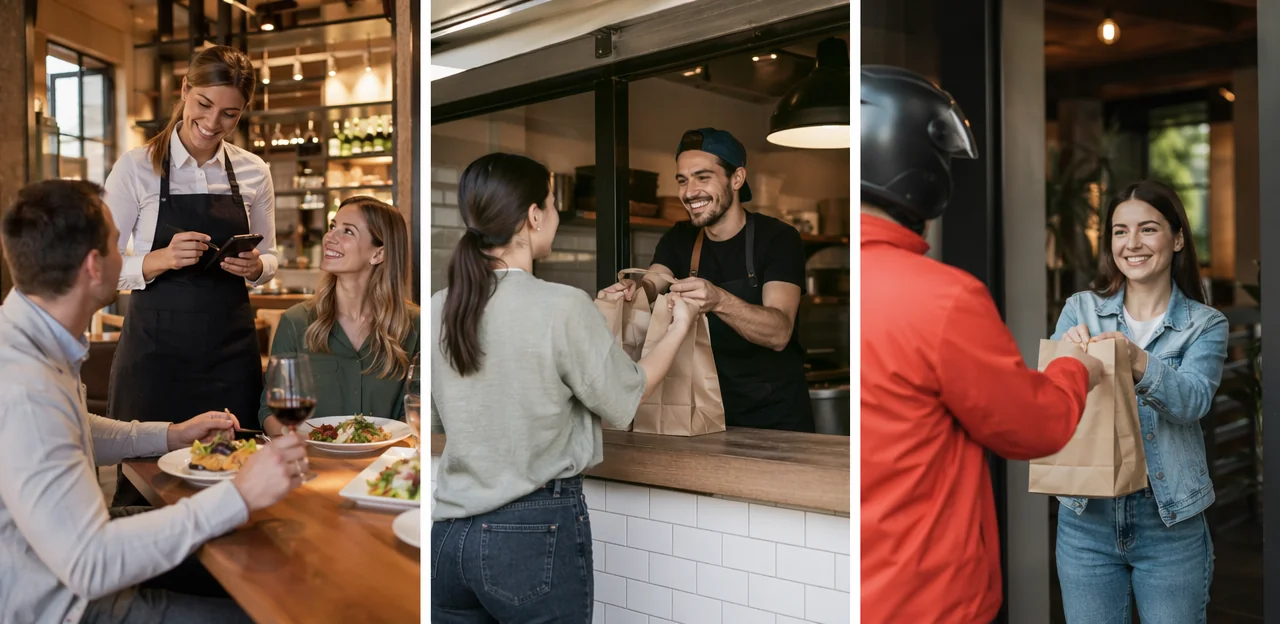
A great meal is only part of the customer experience. For restaurants and cafés, what happens around the meal, from the welcome at the table to the handoff at the takeaway counter or the condition of a delivery order at the door, can shape whether a guest returns, recommends your business, or leaves a negative review. That’s why having the right restaurant feedback templates in place is so valuable.
Well-designed feedback templates help operators collect consistent, actionable insights across every service channel. Dine-in guests may care most about service speed, staff friendliness, cleanliness, and atmosphere. Takeaway customers often focus on wait times, order accuracy, packaging, and pickup convenience. Delivery customers are more likely to notice food temperature, presentation, delays, and communication. A one-size-fits-all survey rarely captures these differences effectively.
In this article, we’ll explore how to create and use restaurant feedback templates for dine-in, takeaway, and delivery experiences, including what questions to ask, how to tailor feedback forms by touchpoint, and how to turn responses into operational improvements. We’ll also look at how real-time tools such as Tapsy can help restaurants capture feedback while the experience is still fresh, making it easier to resolve issues quickly and improve guest satisfaction across every order type.
Why Restaurant Feedback Templates Matter

How structured feedback improves restaurant operations
Using restaurant feedback templates gives teams a consistent way to collect insights from dine-in, takeaway, and delivery customers. Instead of scattered comments, a standard customer feedback form turns opinions into clear, comparable data that improves restaurant operations.
- Spot service gaps faster: Track wait times, order accuracy, and table service issues across shifts or locations.
- Monitor food quality: Identify recurring complaints about temperature, taste, packaging, or portion size.
- Evaluate staff performance trends: Compare feedback on friendliness, speed, and problem resolution over time.
- Fix delivery pain points: Measure delays, missing items, damaged packaging, and courier handoff issues.
Templates also save staff time, reduce guesswork, and make reporting easier. Tools like Tapsy can help restaurants capture real-time feedback at key service touchpoints.
Channel-specific restaurant feedback templates help teams improve the parts of service customers actually experience.
- Dine-in feedback should measure table service quality, wait times, staff friendliness, food timing, and atmosphere. This helps floor managers spot service gaps and coach teams quickly.
- Takeaway feedback should focus on packaging performance, temperature retention, pickup speed, and order accuracy. These insights reduce remakes, waste, and customer frustration.
- Delivery feedback needs questions about delivery speed, food condition on arrival, packaging leaks, and missing items. This supports better handoffs between kitchen, packing, and courier partners.
Using different questions for each channel makes feedback more actionable. Tools like Tapsy can help collect real-time responses at key touchpoints, so teams can fix recurring issues faster.
What customers expect when sharing feedback
Guests are more likely to complete a customer satisfaction survey when it feels quick, relevant, and easy on a phone. The best restaurant feedback templates respect their time and make sharing guest feedback simple.
- Keep it short: Ask only essential restaurant survey questions tied to dine-in, takeaway, or delivery.
- Use clear rating scales: Simple 1–5 ratings help guests respond fast and give teams easy-to-track data.
- Add optional comments: A short open-text field lets customers explain low scores without making the survey feel long.
- Prioritize mobile convenience: Mobile-friendly forms, QR codes, and no-login access improve completion rates.
- Build trust: Explain how feedback will be used and avoid asking for unnecessary personal details.
- Send at the right time: Request feedback soon after the meal, pickup, or delivery while the experience is still fresh.
Core Elements of Effective Restaurant Feedback Templates

Questions every restaurant feedback form should include
A strong restaurant feedback form should cover the moments that shape the guest experience while staying quick to complete. The best restaurant feedback templates usually include:
- Food quality: taste, temperature, freshness, presentation, and menu variety
- Speed of service: wait time for seating, ordering, preparation, and delivery to table or door
- Staff friendliness: courtesy, attentiveness, professionalism, and problem resolution
- Cleanliness: dining area, restrooms, packaging, tables, and overall hygiene
- Value for money: portion size, pricing, and whether the experience matched expectations
- Overall satisfaction: a final rating that captures the full visit
Use mostly rating-based customer satisfaction questions for easy analysis, then add one or two open-ended prompts such as “What did you enjoy most?” and “What could we improve?” A practical restaurant survey template balances speed, clarity, and actionable insight.
How to tailor templates by service channel
Effective restaurant feedback templates work best when they match the guest journey for each order type. A strong feedback template for restaurants should ask only the most relevant questions for that channel.
- Dine-in: Focus on the full in-house experience, including ambiance, cleanliness, staff friendliness, wait times, and food presentation. This helps you spot issues that affect comfort and service quality.
- Takeaway: Prioritize pickup speed, order accuracy, ease of collection, and packaging quality. Well-designed forms for takeaway customer feedback can reveal bottlenecks at busy collection times.
- Delivery: Ask about timeliness, food temperature on arrival, packaging condition, and order completeness. These questions are essential for improving the delivery experience, especially when third-party couriers are involved.
Using channel-specific templates makes feedback more actionable and easier for teams to improve quickly.
Best practices for survey length, format, and timing
Keep restaurant feedback templates short and easy to complete. For most guests, the ideal post-purchase survey is 3–5 questions with one optional comment box. That’s enough to capture useful insights without creating friction.
- SMS: Best for delivery and takeaway. Send within 30–60 minutes of order completion for strong response rates.
- QR code feedback form: Ideal for dine-in receipts, table tents, and exit points, where guests can respond while the experience is still fresh.
- Email: Useful for longer follow-up surveys, but keep it concise to avoid low completion.
- App-based collection: Works well for loyalty members and repeat customers, especially after frequent orders.
For any restaurant review request, ask soon after the experience—but not during peak dining moments. Tools like Tapsy can help collect quick, no-app feedback at the right touchpoints.
Restaurant Feedback Templates by Use Case

Dine-in feedback template example
A strong dine-in survey template should follow the guest journey and keep questions short enough to complete in under two minutes. Among the most useful restaurant feedback templates, this format helps collect clear restaurant guest feedback and actionable table service feedback.
- Reservation and arrival: Was booking easy? Was the wait time accurate?
- Greeting and seating: Did staff welcome you promptly and make you feel valued?
- Table service: Was your server attentive, knowledgeable, and timely without being intrusive?
- Food presentation and quality: Did dishes look appealing and arrive at the right temperature?
- Cleanliness: How would you rate the table, restrooms, menus, and overall hygiene?
- Atmosphere: Was the lighting, music, noise level, and comfort appropriate for the setting?
- Return intent: How likely are you to return or recommend the venue?
For cafés, simplify the survey around speed, friendliness, seating comfort, and drink quality. For full-service restaurants, add deeper questions on pacing, menu knowledge, and multi-course service. Tools like Tapsy can help capture feedback in real time at the table.
Takeaway feedback template example
Use this takeaway feedback template to collect fast, useful insights after pickup orders. It works well within broader restaurant feedback templates for quick-service restaurants, bakeries, coffee shops, and cafés.
Sample pickup order survey questions:
- How easy was it to place your order?
Rate online ordering, app checkout, or phone ordering. - How long did you wait for pickup?
Ask whether the order was ready on time, early, or delayed. - How would you rate the packaging?
Gather food packaging feedback on spill prevention, labeling, temperature retention, and drink security. - How fresh was your food when you collected it?
Useful for sandwiches, salads, pastries, burgers, and hot drinks. - Was your order accurate?
Check missing items, customizations, sauces, and allergy notes.
Tip: Add one open-text field: “What could we improve for takeaway?” For example, a café may learn lids need better sealing, while a burger outlet may spot recurring pickup wait-time issues. Tools like Tapsy can help capture this feedback quickly at the pickup point.
Delivery feedback template example
A strong delivery feedback template should help restaurants pinpoint issues across the full off-premise journey, not just the food itself. Within your broader restaurant feedback templates, include questions that measure both digital ordering and delivery execution.
- Ordering experience: “How easy was it to place your order on our app or website?”
- Delivery timing: “Was your order delivered within the estimated time?”
Add a follow-up field for estimated vs. actual delivery time. - Driver experience: “How would you rate the driver’s professionalism and courtesy?”
- Food quality on arrival: “Was your food delivered at the right temperature?”
- Packaging check: “Did the packaging arrive sealed, intact, and spill-free?”
- Order accuracy feedback: “Were any items missing, incorrect, or incomplete?”
Use a simple rating scale plus an optional comment box for specifics. This food delivery survey structure gives teams clear, actionable data to improve dispatch timing, packaging standards, and handoff quality. Tools like Tapsy can also help collect fast, real-time feedback after delivery.
How to Use Feedback to Improve Guest Experience

Turning survey responses into actionable insights
Using restaurant feedback templates is only the first step. To turn comments into action, structure your customer feedback analysis around clear themes:
- Group feedback by category: Sort responses into themes such as food quality, kitchen speed, packaging, delivery accuracy, and staff service.
- Track recurring complaints: Look for patterns over time, like repeated mentions of slow kitchen times, poor packaging for takeaway orders, or inconsistent staff service during busy shifts.
- Prioritize by impact and frequency: Fix issues that appear often and damage the guest experience most. For example, delayed meals may affect dine-in satisfaction, while leaking packaging can hurt delivery ratings and repeat orders.
- Turn insights into action: Assign owners, set deadlines, and review results weekly to generate practical restaurant improvement ideas. Tools like Tapsy can also help capture and organize real-time feedback.
Training staff and refining service workflows
Use restaurant feedback templates to turn guest comments into clear coaching points and repeatable process improvements. When managers review feedback by service type, they can spot where restaurant staff training and restaurant workflow changes will have the biggest impact.
- Coach front-of-house teams: Use comments about greetings, wait times, order accuracy, and upselling to guide shift briefings and one-to-one coaching.
- Improve kitchen coordination: Track complaints about delays, missing items, or packaging errors to tighten handoff steps between kitchen, counter, and delivery dispatch.
- Set channel-specific standards: Define measurable targets for dine-in table checks, takeaway pickup speed, and delivery order completeness.
This approach supports ongoing service quality improvement and helps teams respond consistently across every customer journey.
Closing the loop with unhappy and happy customers
Strong restaurant feedback templates should help teams act fast, not just collect comments. Closing the loop is essential for responding to customer feedback, improving service recovery, and strengthening online review management.
- Reply quickly to negative feedback: Acknowledge the issue, apologize clearly, and explain the next step. Contact unhappy guests within 24 hours when possible.
- Recover the experience: Offer a practical resolution such as a refund, replacement, discount, or direct manager follow-up. Log the issue so repeat problems can be fixed operationally.
- Follow up after resolution: Send a short message to confirm the guest feels heard and the problem was addressed.
- Activate happy customers: Thank satisfied diners and include a direct link asking them to leave a Google or delivery-platform review.
Tools like Tapsy can support faster follow-up and reputation management with real-time feedback alerts.
Tools, Channels, and Metrics for Feedback Collection

Where to collect feedback: QR codes, email, SMS, apps, and receipts
The best restaurant feedback templates work only if they meet guests in the right channel. Use a mix of restaurant feedback tools based on service type:
- Dine-in tables: QR codes are fast, low-cost, and capture feedback while the experience is fresh. They usually deliver higher response quality than later surveys.
- Takeaway counters: Printed receipts with a short link or QR code are affordable, but response rates are often lower unless paired with a small incentive.
- Delivery orders: An SMS survey gets quick opens and strong response rates, while an email feedback request allows more detailed comments and follow-up.
- Apps: Best for chains with loyal repeat customers, but higher setup friction can reduce participation.
Tools like Tapsy can help restaurants collect real-time QR feedback without requiring an app.
Key metrics to track across restaurant feedback templates
To make restaurant feedback templates useful, track a small set of consistent restaurant KPIs across dine-in, takeaway, and delivery:
- Customer satisfaction score (CSAT): Measure immediate satisfaction after the order or visit.
- NPS for restaurants: Track loyalty by asking how likely guests are to recommend you.
- Average rating: Monitor overall performance by location, menu item, or shift.
- Response rate: Check how many customers complete feedback to judge template effectiveness.
- Complaint categories: Group issues like food quality, speed, accuracy, cleanliness, or staff service.
- Repeat visit intent: Identify whether guests plan to return or reorder.
- Channel-specific benchmarks: Compare dine-in wait times, takeaway order accuracy, and delivery timeliness.
Tools like Tapsy can help capture these metrics in real time at each touchpoint.
Common mistakes that reduce response quality
Even strong restaurant feedback templates can fail if the survey experience is poorly designed. Avoid these common feedback form mistakes:
- Making surveys too long: A lengthy restaurant customer survey causes drop-off and lowers completion rates.
- Using vague questions: Ask specific, actionable questions about food, wait time, packaging, or delivery accuracy.
- Ignoring mobile design: If forms are hard to read or tap on a phone, guests will abandon them.
- Asking at the wrong time: Request feedback while the experience is still fresh, not days later.
- Failing to act on responses: When customers see no improvement, trust falls and future participation declines.
Following survey best practices helps protect trust, improve response quality, and increase useful feedback.
How to Build a Simple Feedback Strategy for Restaurants and Cafés

Choosing goals for feedback collection
Before building restaurant feedback templates, decide what success looks like. Clear customer experience goals make your restaurant feedback strategy more focused and your reporting more useful.
- Improve food quality: ask about taste, temperature, freshness, and portion size.
- Reduce delivery complaints: include packaging, accuracy, timing, and driver handoff.
- Increase repeat visits: measure service speed, staff friendliness, and overall satisfaction.
- Boost online ratings: identify moments most likely to influence reviews.
Strong restaurant survey planning links each goal to specific questions, response tags, and reports, so teams can spot trends and act faster.
Creating a repeatable monthly review process
Use your restaurant feedback templates as the starting point for a simple monthly feedback review process:
- Review results on the same day each month by channel, location, and issue type.
- Spot the top 3 recurring problems and assign one owner per issue with a deadline.
- Test one small improvement each month, such as packaging changes, staffing adjustments, or menu clarification.
- Track progress over time using response volume, average ratings, complaint themes, and recovery speed.
These restaurant management tips support continuous improvement for independent restaurants and multi-location brands through consistent, low-effort routines.
When to update your restaurant feedback templates
Review restaurant feedback templates whenever operations change enough to affect the guest experience. A good rule is to update survey template questions when:
- Menu items, pricing, or service formats change, so you capture fresh restaurant customer insights
- New delivery partners are added, requiring questions about timing, packaging, and handoff quality in delivery operations
- Seasonal shifts like holiday menus, outdoor seating, or peak takeaway periods alter expectations
- Recurring blind spots appear in comments, low ratings, or missed issues your current survey does not address
Tools like Tapsy can help spot these gaps faster.
Conclusion
Effective service improvements start with listening at every touchpoint. By using the right restaurant feedback templates for dine-in, takeaway, and delivery, restaurants and cafés can collect consistent insights, spot recurring issues faster, and respond in ways that improve guest satisfaction and loyalty. Whether you’re measuring table service, packaging quality, order accuracy, food temperature, or delivery timing, well-designed restaurant feedback templates make it easier to turn everyday customer comments into clear operational action.
The key is to keep your feedback process simple, relevant, and timely. Tailor questions to each experience, review responses regularly, and use the data to coach teams, refine workflows, and prevent negative reviews before they spread. Over time, this creates a stronger customer experience across all channels.
Now is the time to audit your current feedback process and upgrade it with templates that match how your guests actually order and dine. Start by creating separate forms for dine-in, takeaway, and delivery, then track trends and act on what customers tell you.
For next steps, explore survey best practices, customer journey mapping, and real-time feedback tools that help teams respond faster. Solutions like Tapsy can also support in-the-moment feedback collection at key service touchpoints. With the right restaurant feedback templates in place, every response becomes an opportunity to improve.
Frequently Asked Questions
- Why should restaurants use different feedback templates for dine-in, takeaway, and delivery?
Each service channel creates different customer expectations and pain points. Dine-in feedback should focus on service, cleanliness, and atmosphere, while takeaway should emphasize pickup speed, packaging, and order accuracy, and delivery should measure timing, food condition, and communication. Using separate templates makes responses easier to act on.
- What should a restaurant feedback form always include?
A strong form should cover food quality, speed of service, staff friendliness, cleanliness, value for money, and overall satisfaction. It should use mostly rating-based questions for easy analysis, plus one or two optional open-text prompts for extra detail.
- How long should a restaurant feedback survey be?
For most guests, the ideal survey is 3–5 questions with one optional comment box. This keeps the process quick and reduces friction while still collecting useful operational insights.
- When is the best time to ask customers for restaurant feedback?
Feedback should be requested soon after the experience while it is still fresh. SMS works well within 30–60 minutes after takeaway or delivery, and QR codes are useful for dine-in responses at the table, on receipts, or near exit points.
- What questions work best in a dine-in feedback template?
Useful dine-in questions cover reservation or arrival, greeting and seating, table service, food presentation and quality, cleanliness, atmosphere, and return intent. These help managers understand the full in-house experience and identify service gaps quickly.
- What should a takeaway feedback template measure?
A takeaway template should ask about ordering ease, pickup wait time, packaging quality, food freshness at collection, and order accuracy. These questions help uncover bottlenecks during pickup and reduce remakes, waste, and customer frustration.
- What should be included in a delivery feedback survey?
A delivery survey should ask about ordering experience, delivery timing, driver professionalism, food temperature on arrival, packaging condition, and whether the order was complete. A simple rating scale with an optional comment box gives teams clear information to improve dispatch, packing, and handoff quality.
- Which feedback channels are best for dine-in, takeaway, and delivery orders?
QR codes are well suited to dine-in because they capture feedback while the visit is still fresh. Printed receipts can support takeaway feedback, while SMS and email are useful for delivery, with SMS often better for quick response and email better for more detailed follow-up. Apps can work for loyalty members and repeat customers but may create more setup friction.
- How can restaurants make more customers complete feedback forms?
Keep the survey short, mobile-friendly, and relevant to the specific service type. Use clear 1–5 rating scales, allow optional comments, avoid unnecessary personal details, and make access easy through QR codes or no-login links.
- How should restaurants turn survey responses into operational improvements?
Responses should be grouped into categories such as food quality, speed, packaging, delivery accuracy, and staff service. Teams should then track recurring complaints, prioritize issues by frequency and impact, assign owners, set deadlines, and review progress regularly.
- How can feedback help with staff training and workflow changes?
Guest comments can be used to coach front-of-house teams on greetings, wait times, order accuracy, and service quality. Feedback about delays, missing items, or packaging errors can also improve coordination between kitchen, counter, and delivery dispatch.
- What should restaurants do after receiving negative or positive feedback?
Negative feedback should be acknowledged quickly with a clear apology and a practical next step, such as a refund, replacement, discount, or manager follow-up. Positive feedback should be recognized as well, and satisfied customers can be invited to leave a Google or delivery-platform review.
- Which metrics are most useful to track across restaurant feedback templates?
Useful metrics include customer satisfaction score, NPS, average rating, response rate, complaint categories, repeat visit intent, and channel-specific benchmarks. Tracking these consistently helps compare performance across dine-in, takeaway, and delivery.
- What common mistakes reduce restaurant feedback quality?
Long surveys, vague questions, poor mobile design, and asking too late can all lower response quality. Another major mistake is failing to act on responses, which reduces trust and makes customers less likely to share feedback again.
- When should a restaurant update its feedback templates?
Templates should be reviewed when menu items, pricing, service formats, or delivery partners change. They should also be updated during seasonal shifts or when recurring blind spots appear in comments or ratings that current questions do not capture.