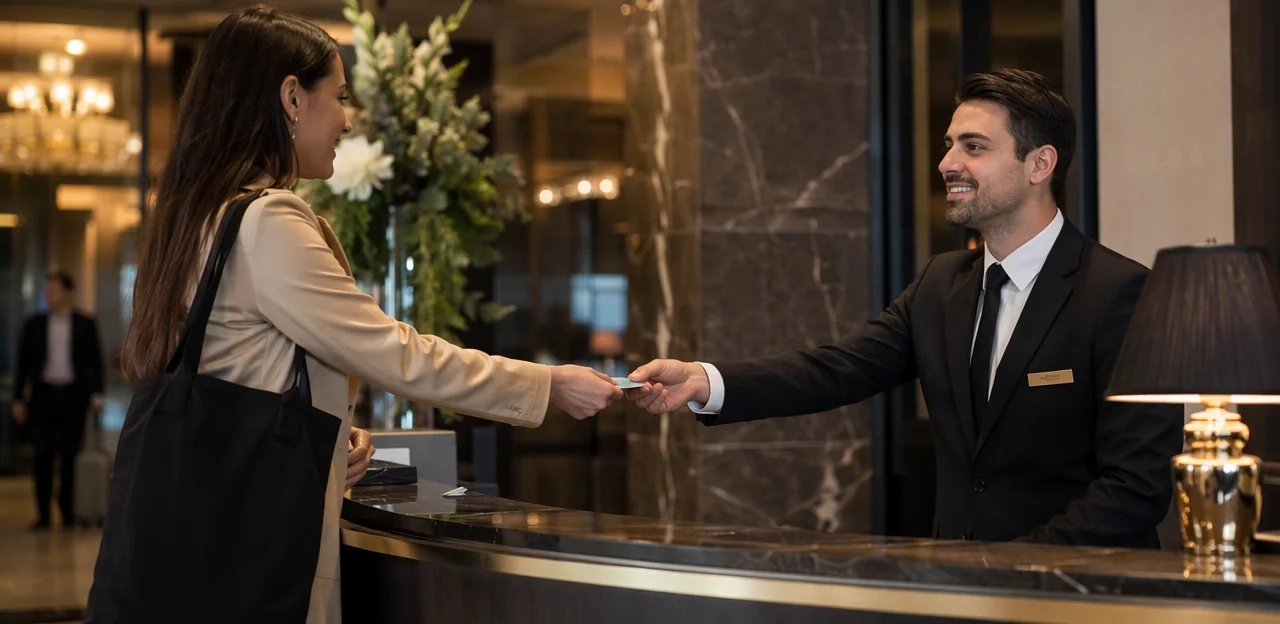
A guest’s willingness to leave feedback often comes down to one simple factor: timing. Ask too late, and the moment has passed. Ask in the wrong place, and even satisfied guests ignore the request. For hotels, that makes hotel feedback placement far more strategic than many teams realize. The right touchpoint can turn a missed survey into a valuable insight, helping staff resolve issues during the stay rather than discovering them later in a public review.
In hospitality, every stage of the guest journey creates an opportunity to listen, from check-in and in-room experiences to breakfast service, spa visits, and checkout. But not every location delivers the same response rate or quality of feedback. The most effective approach is to place feedback prompts where experiences happen and where guests can respond quickly with minimal effort, often through simple NFC or QR touchpoints.
This article explores where to place hotel feedback touchpoints for maximum response, which guest moments are most valuable to capture, and how thoughtful placement can improve service recovery, guest satisfaction, and operational visibility. We’ll also look at practical considerations for choosing high-impact locations and how tools like Tapsy can support real-time, in-stay feedback collection across key hotel touchpoints.
Why hotel feedback placement matters across the guest journey
How placement influences response rates and review quality
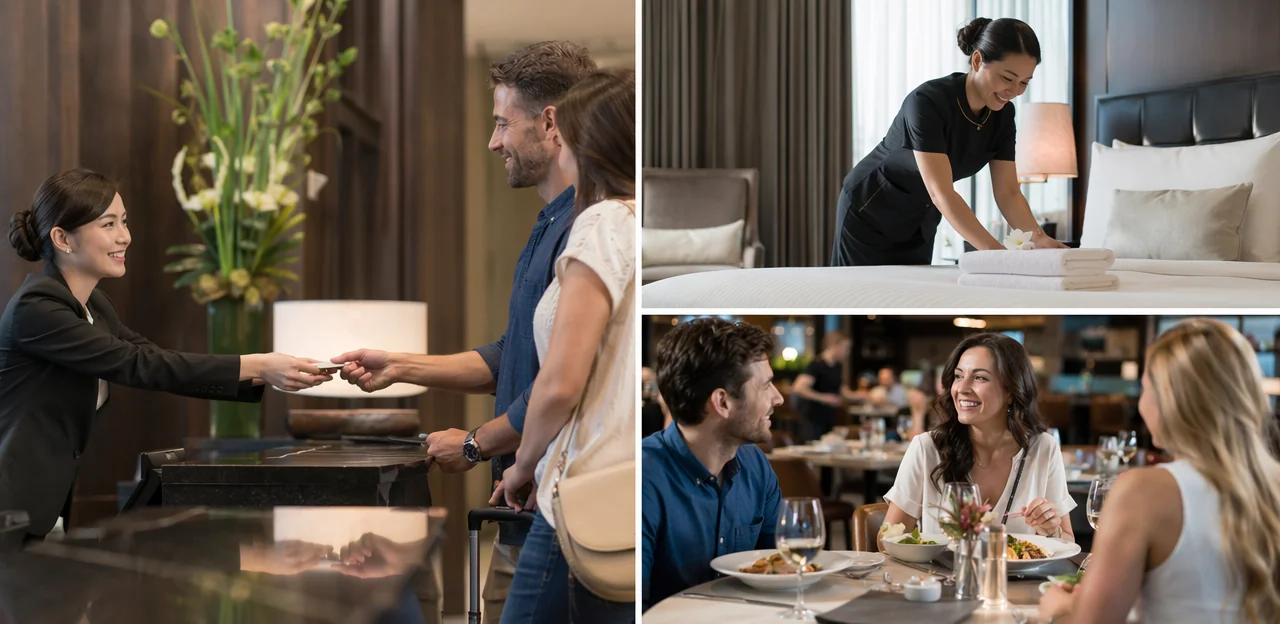
Hotel feedback placement directly shapes whether guests respond, what they say, and how useful that feedback becomes. When requests appear at the right moment and in the right place, guest feedback response rates rise because the action feels easy and relevant.
- In-the-moment prompts capture detail: A QR or NFC touchpoint in the room, breakfast area, spa, or at checkout collects feedback while the experience is still fresh.
- Convenience reduces drop-off: Short, mobile-friendly requests placed where guests naturally pause outperform generic email surveys sent hours later.
- Context improves insight quality: A prompt near housekeeping, reception, or dining leads to more specific comments, making hotel review collection more actionable.
- Timing supports service recovery: During-stay feedback lets teams fix issues before checkout. Tools like Tapsy can help route these insights instantly.
Matching touchpoints to guest intent and behavior
Effective hotel feedback placement starts with understanding guest mindset at each stage of the stay. Different hospitality touchpoints need different prompts to support strong guest journey feedback and higher response rates.
- Check-in: Guests are focused on speed, directions, and first impressions. Keep prompts short, such as “Was arrival smooth?” A quick QR or NFC tap at reception works best.
- During the stay: This is the best moment for in-stay feedback because issues can still be fixed. Place touchpoints in rooms, lifts, breakfast areas, or spas, and ask relevant questions about cleanliness, comfort, or service.
- Departure: Guests are ready to reflect on the full experience. Use checkout prompts for overall satisfaction and review intent.
Low-friction design matters: one tap, few questions, clear value. Tools like Tapsy can help make this process seamless.
Balancing visibility with a non-intrusive guest experience
Effective hotel feedback placement should make requests easy to notice without interrupting the stay. The goal is non-intrusive feedback collection that supports, rather than distracts from, the hotel customer experience.
- Limit frequency: Ask once during the stay and once at checkout or post-stay. Too many prompts reduce response rates.
- Use helpful wording: Keep language short and service-focused, such as “How is your stay going?” or “Tell us if we can improve anything today.”
- Choose natural placements: Position QR or NFC touchpoints at reception, elevators, breakfast areas, and in-room welcome materials—places guests already pause.
- Keep it fast: Ask 1–3 questions maximum to encourage more guest experience feedback.
- Avoid pressure: Never request feedback during sensitive moments like complaints, payment, or check-in queues.
Tools like Tapsy can help streamline this process with simple QR/NFC touchpoints.
Best hotel feedback touchpoints in physical spaces
Reception, check-in desk, and lobby placements
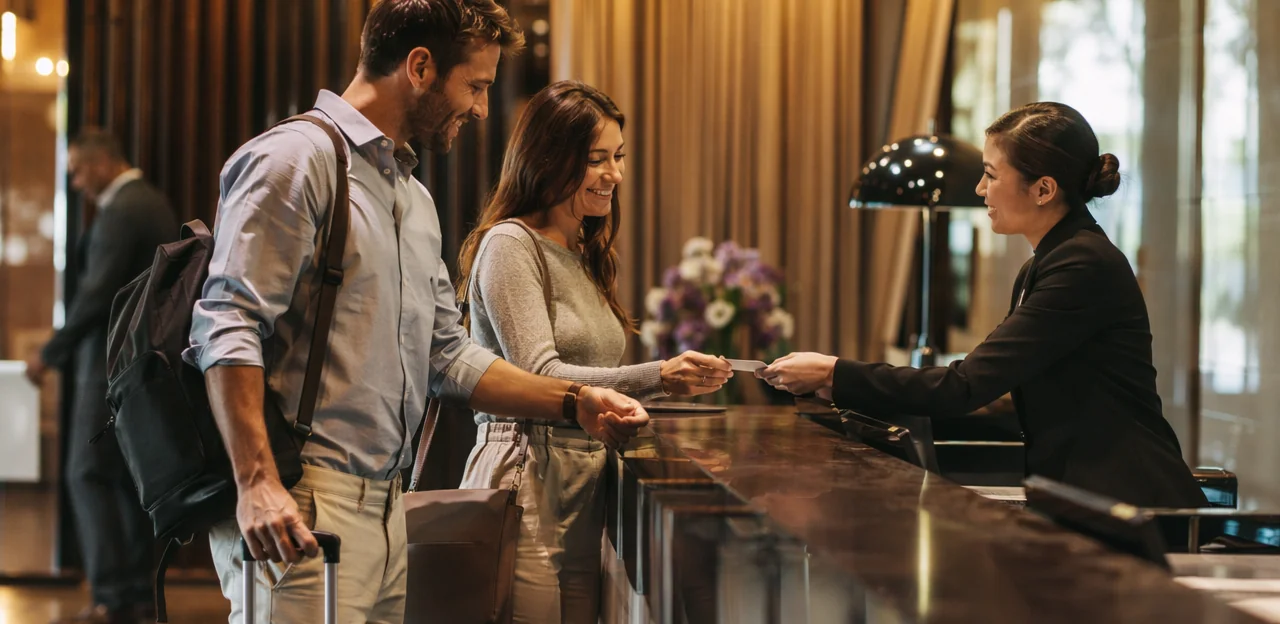
Early-arrival touchpoints are ideal for hotel feedback placement because first impressions form fast and are still easy to fix. Use these placements to capture short, low-friction responses rather than long surveys.
- Front desk signage: Place a small stand or counter card where guests pause during arrival. This works best for check-in feedback on wait time, staff friendliness, booking accuracy, and arrival clarity.
- Key card holders: Add a QR prompt guests see again when heading to the room. This is effective for quick front desk feedback while the experience is still fresh.
- Lobby displays: A visible hotel lobby QR code near seating, elevators, or concierge desks can collect feedback from guests who had to wait or needed assistance.
- Welcome materials: Include a QR code in printed or digital welcome packs to ask whether arrival felt smooth and whether guests found key hotel information easily.
Keep questions to 1–3 taps. Tools like Tapsy can help route low scores to staff in real time.
Guest rooms, bedside tables, desks, and TV interfaces
Guest rooms are ideal for capturing in-room feedback because guests naturally pause there and notice issues while they happen. Strong hotel feedback placement in the room helps teams resolve problems before checkout and before a negative review is posted.
- Bedside tables: Add a small bedside feedback touchpoint with an NFC stand or QR card so guests can quickly report noise, temperature, lighting, or mattress comfort.
- Desks and welcome trays: Place a tent card with a hotel room QR code where guests work, charge devices, or review hotel information.
- Smart TVs: Use short on-screen prompts after room service delivery, housekeeping, or during the evening idle screen to collect detailed sentiment.
- Keep prompts simple: Ask 1–3 quick questions, then offer an optional comment box for specifics.
For best results, connect low ratings to real-time staff alerts using tools like Tapsy, so issues can be fixed during the stay.
Restaurants, bars, spa, gym, and poolside locations
Amenity areas are some of the best places for hotel feedback placement because guests can rate the experience while it is still fresh. This makes amenity feedback collection more specific, timely, and useful for operations teams.
- Restaurants and bars: Use a restaurant feedback hotel prompt on menus, bills, table tents, or exit points to capture views on food quality, speed of service, and staff friendliness.
- Spa and wellness areas: A dedicated spa feedback touchpoint near reception or treatment exits helps measure therapist quality, ambience, cleanliness, and booking flow.
- Gym and poolside spaces: Place QR or NFC prompts at towel stations, exits, or loungers to gather feedback on equipment, hygiene, crowding, and comfort.
Contextual prompts improve relevance because they ask about the exact service just used. That leads to clearer comments, faster issue resolution, and better decisions. Tools like Tapsy can help route this feedback to the right team in real time.
Best digital and mobile feedback touchpoints for hotels
Post-booking, pre-arrival, and check-in messaging
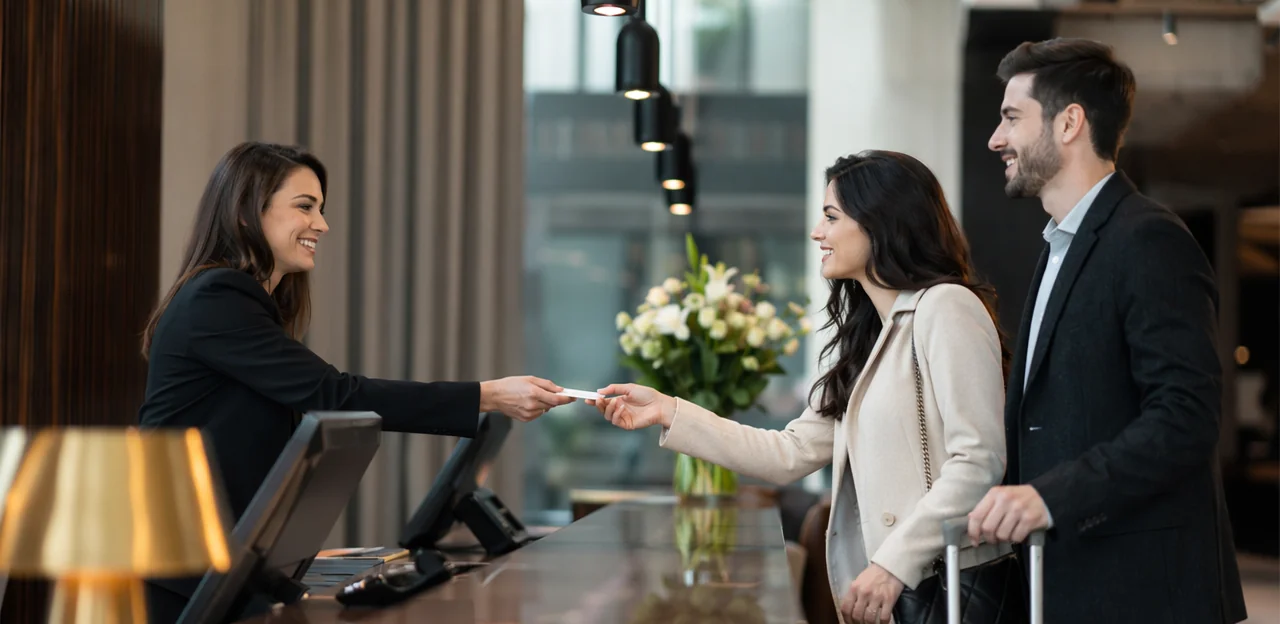
Strong hotel feedback placement starts before the guest reaches the lobby. Post-booking emails, SMS, app notifications, and digital concierge messages can introduce feedback channels early, making guests more likely to use them during the stay.
- Post-booking email: Confirm the reservation, share arrival details, and include a simple note like “Need anything before arrival? Tell us here.”
- Hotel SMS feedback prompts: Send short pre-arrival texts for check-in times, transport, or special requests, with a direct link to a feedback or service form.
- App notifications: Use your hotel app to explain how guests can report issues instantly once checked in.
- Digital concierge channels: WhatsApp, web chat, or in-room digital assistants can set expectations for fast two-way communication.
This approach improves pre-arrival guest communication and makes digital hotel feedback feel helpful rather than intrusive. Tools like Tapsy can support no-app QR/NFC feedback once guests arrive.
In-stay QR codes and NFC touchpoints for instant feedback
Smart hotel feedback placement removes effort at the exact moment a guest has something to say. With NFC hotel feedback and QR feedback touchpoints, guests can tap or scan and submit contactless guest feedback in seconds—no app download, no searching, no waiting until checkout.
Place touchpoints where feedback naturally happens:
- Elevators: capture quick comments on cleanliness, wait times, or wayfinding
- Room signage: bedside tables, desks, or bathroom mirrors for housekeeping, Wi-Fi, temperature, or noise issues
- Menus and table tents: collect breakfast, bar, or room service feedback while the experience is still fresh
- Service areas: spa desks, gym entrances, pool zones, and reception counters for real-time service insights
To increase responses, keep the flow short:
- one tap or scan
- a simple rating
- an optional comment field
Platforms like Tapsy can help hotels route low scores to staff instantly, enabling service recovery before a negative review appears online.
Checkout, post-stay surveys, and review request flows
The final stage of hotel feedback placement should make it easy for guests to respond while the stay is still fresh, without creating friction.
- Checkout screens: Add a one-question checkout feedback prompt on self-checkout kiosks, mobile checkout, or front-desk tablets. Ask for a quick rating first, then route unhappy guests to private service recovery.
- Folio emails: Include a short post-stay survey hotel link in the invoice or folio email. This works well because guests often open it to confirm charges.
- Thank-you messages: Send a same-day thank-you SMS or email with a clear CTA. If satisfaction is high, follow with a hotel review request linking to Google or Tripadvisor.
- Segmented follow-up campaigns: Separate promoters, neutral guests, and dissatisfied guests. Ask happy guests for public reviews, while inviting others to complete a private survey.
Tools like Tapsy can support simple QR/NFC-led follow-up journeys and faster issue routing.
How to choose the right placement strategy for each hotel type
Placement considerations for luxury, boutique, resort, and budget hotels
Hotel feedback placement should reflect both guest expectations and the physical journey through the property. A strong hotel feedback strategy matches the brand experience rather than using the same prompt everywhere.
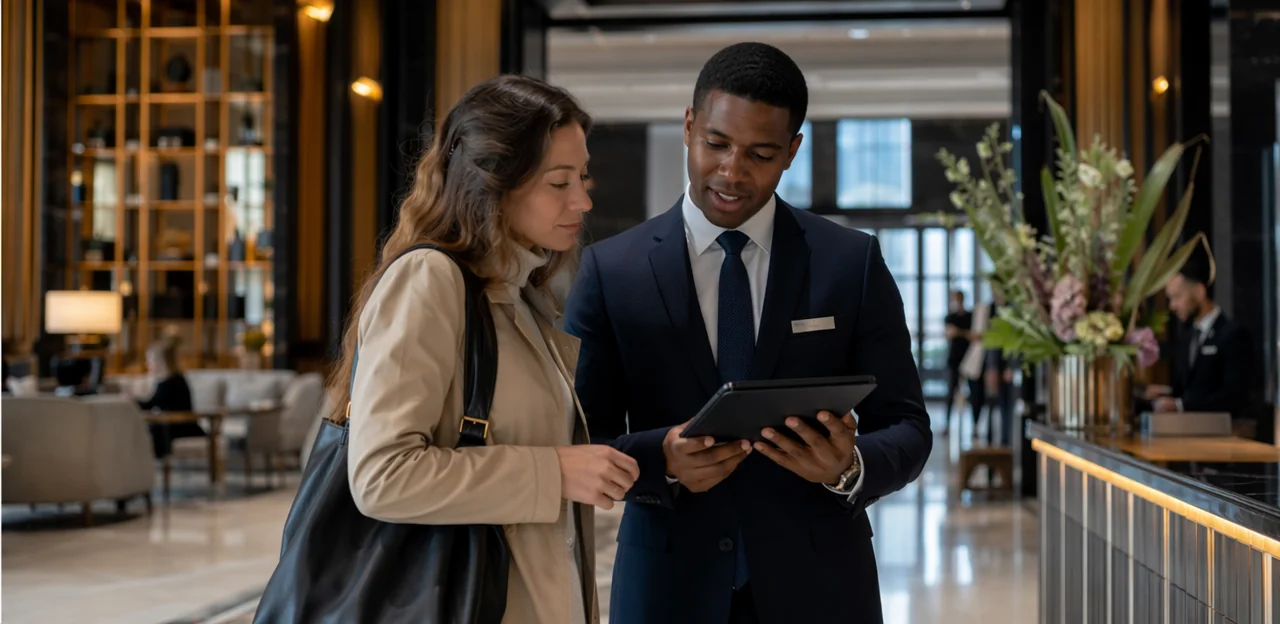
- Luxury hotels: Use discreet, staff-led prompts at concierge, turndown, spa, or checkout to protect a premium feel.
- Boutique properties: Place elegant QR/NFC prompts in curated, intimate spaces like lounges or in-room welcome materials to support personalized boutique hotel feedback.
- Resorts: Spread touchpoints across high-traffic venues—pool, spa, restaurants, and activity desks—to capture timely resort guest feedback.
- Budget hotels: Prioritize simple, visible self-service prompts at reception, lifts, and room entrances for fast, low-friction responses.
Adapting touchpoints for business travelers, families, and leisure guests
Effective hotel feedback placement should match how each guest segment moves through the property:
- Business travelers: Prioritize fast, low-friction options near check-in, desks, elevators, and conference areas. Business traveler feedback works best through QR/NFC touchpoints that take seconds to complete.
- Families: Place prompts at breakfast areas, pools, family lounges, and elevators where parents naturally pause. This improves the family hotel guest experience by capturing issues like noise, cleanliness, or child-friendly amenities in the moment.
- Leisure guests: Use touchpoints at spas, bars, restaurants, and checkout for richer leisure guest feedback, where guests have more time and prefer relaxed, mobile-friendly channels.
Tools like Tapsy can help tailor these placements without adding app friction.
Accessibility, multilingual design, and ease of use
Inclusive hotel feedback placement helps more guests respond quickly and confidently. To improve completion rates, design every touchpoint for clarity, comfort, and convenience:
- Use short, visible calls to action such as “Tell us about your stay” or “Report an issue now.”
- Offer mobile-friendly guest survey flows with large buttons, minimal fields, and no app download.
- Provide multilingual hotel feedback options based on your guest mix, with easy language switching on the first screen.
- Install QR/NFC signs at wheelchair-accessible heights and pair them with printed URLs for guests who prefer other formats.
- Use high-contrast text and simple layouts to support accessible feedback forms.
Platforms like Tapsy can support no-app, easy-scan feedback journeys across hotel touchpoints.
Optimization tips to increase hotel feedback conversions
Designing clear calls to action and short feedback flows
Strong hotel feedback placement only works when the prompt is effortless to follow. Keep every feedback call to action specific, visible, and fast:
- Signage copy: Use action-led phrases like “Scan to rate your stay in 20 seconds” or “Tap to tell us how breakfast was.” Avoid vague wording.
- QR landing pages: Apply proven QR code conversion tips: mobile-first design, no login, one clear headline, and a single next step above the fold.
- NFC prompts: Add short instructions such as “Tap phone here to share feedback now” so guests know exactly what to do.
- Survey length: A short hotel survey should take under 30 seconds—ideally 1–3 questions, plus one optional comment.
- Timing: Ask room, breakfast, spa, or checkout questions immediately after that experience for higher-quality responses.
Tools like Tapsy can help hotels deploy these fast, no-app feedback flows at key touchpoints.
Using incentives, staff prompts, and service recovery triggers
To improve response rates, combine smart hotel feedback placement with timely prompts and fast follow-up:
- Use guest feedback incentives selectively: Small rewards like a drink voucher, loyalty points, or late checkout can lift participation, especially for post-checkout surveys. Keep incentives modest so feedback stays genuine.
- Train teams on staff-led feedback requests: Front desk, housekeeping, and restaurant staff can invite guests to scan a QR code or tap an NFC point at natural moments, such as after check-in, breakfast, or issue resolution.
- Set instant alerts for service recovery hotel workflows: If a guest leaves a low score or flags cleanliness, noise, or Wi-Fi issues, notify the right team immediately. Fast action can resolve the problem before it becomes a negative public review.
Tools like Tapsy can support this real-time loop.
Tracking performance with analytics and testing placements
To improve hotel feedback placement, track results by each QR or NFC touchpoint rather than looking only at total survey volume. Strong feedback analytics hotel reporting should measure:
- Scan rates and tap rates: how many guests interact with a code or NFC point in rooms, reception, breakfast areas, or checkout desks
- Completion rates: which touchpoints turn interest into finished feedback
- Sentiment by touchpoint: where ratings and comments are most positive or negative
- Guest survey performance over time: compare daily, weekly, and seasonal trends
Use A/B testing QR placement to refine performance:
- Test visibility: desk card vs. elevator sign
- Test wording: “Share feedback” vs. “Help us improve your stay”
- Test timing: during-stay vs. checkout prompts
Platforms like Tapsy can help hotels compare touchpoint-level results and optimize continuously.
Common mistakes in hotel feedback placement and how to avoid them
Overloading guests with too many requests
Poor hotel feedback placement can quickly create survey fatigue hotel teams want to avoid. When guests see too many feedback requests at check-in, in-room, breakfast, and checkout, response quality drops and frustration rises.
- Map every feedback channel and remove duplicates.
- Assign one purpose per touchpoint, such as room issues or checkout sentiment.
- Use timing rules so guests are not hit with guest communication overload across QR, NFC, SMS, and email.
Placing touchpoints in low-visibility or low-intent areas
Poor hotel feedback placement often leads to low-performing touchpoints because guests are simply not ready to respond. If a QR code or NFC prompt appears in a rushed corridor, busy lift, or crowded checkout desk, hotel survey visibility may be low and attention even lower.
- Avoid placements where guests are walking, carrying luggage, or multitasking.
- Prioritize calm pause points like lounges, breakfast exits, or in-room areas.
- Test response rates by location and remove any poor feedback placement quickly.
Ignoring follow-up, actionability, and operational ownership
Even the best hotel feedback placement fails if feedback sits unread. Strong hotel feedback management turns responses into action:
- Review alerts daily and prioritize urgent issues fast.
- Create a clear guest feedback action plan for housekeeping, front desk, food service, and maintenance.
- Assign one owner per issue, with deadlines and follow-up tracking.
This is how feedback drives real hospitality operations improvement, not just more survey data.
Conclusion
In hospitality, timing and location make all the difference. The most effective hotel feedback placement happens where guests naturally pause, decide, or feel the impact of service most clearly—at check-in, in-room, in lifts, at breakfast, in spa and leisure areas, and at checkout. By placing feedback touchpoints at these high-intent moments, hotels can capture fresher insights, resolve issues before they become public complaints, and build a more responsive guest experience.
The key takeaway is simple: great hotel feedback placement is not about adding more surveys, but about placing the right prompt in the right moment with as little friction as possible. QR and NFC touchpoints can make feedback instant and convenient, while real-time alerts help teams act quickly on low scores, cleanliness concerns, service delays, or room issues. This turns feedback into an operational advantage, not just a reporting exercise.
If you want to improve response rates and protect your reputation, start by mapping your guest journey and identifying your highest-friction touchpoints. Then test, measure, and refine. For hotels looking for a practical way to do this, tools like Tapsy can help enable real-time, no-app feedback collection across the stay. Take the next step by auditing your current touchpoints, reviewing guest pain points, and building a feedback strategy that meets guests where their experience happens.
Frequently Asked Questions
- Why does feedback placement matter so much in hotels?
Placement affects whether guests respond, what they mention, and how useful their comments are. When feedback is requested in the right place and at the right moment, guests are more likely to reply with specific details that teams can act on during the stay.
- Where should a hotel place feedback touchpoints for the highest response rates?
High-impact locations are places where guests naturally pause or immediately experience the service. Common examples include reception, key card holders, lobby seating areas, guest rooms, elevators, breakfast areas, spas, gyms, poolside zones, and checkout points.
- What is the best time to ask hotel guests for feedback?
The strongest timing is during the stay and immediately after key moments such as check-in, breakfast, spa visits, or checkout. Asking too late can reduce response quality because the experience is no longer fresh.
- How many questions should a hotel feedback prompt include?
Keep the flow short, ideally 1 to 3 questions with an optional comment field. A fast, mobile-friendly experience reduces drop-off and makes guests more willing to complete it.
- What kinds of feedback work best at check-in?
Check-in prompts should focus on arrival-related topics such as wait time, staff friendliness, booking accuracy, directions, and whether the arrival felt smooth. These questions work best as quick scans or taps at the front desk, lobby, or on key card materials.
- Why are guest rooms effective places for in-stay feedback?
Rooms are where guests notice issues in real time, such as noise, temperature, lighting, Wi-Fi, cleanliness, or mattress comfort. A bedside, desk, or TV-based touchpoint makes it easy to report problems before checkout.
- Should hotels use QR codes or NFC for feedback collection?
Both are presented as low-friction options that let guests respond quickly without extra effort. The main goal is to make feedback instant and simple through a tap or scan, especially in places like rooms, elevators, restaurants, and reception.
- What are the best touchpoints for restaurant, bar, spa, and pool feedback?
Menus, bills, table tents, exit points, spa reception desks, treatment exits, towel stations, loungers, and gym entrances are strong options. These placements help capture feedback while the amenity experience is still fresh and easier to describe clearly.
- How should hotels handle checkout and post-stay feedback requests?
Use a simple rating prompt on checkout screens, self-checkout kiosks, mobile checkout, or front-desk tablets. Follow up with folio emails, thank-you messages, or segmented review requests so satisfied guests can leave public reviews while dissatisfied guests can share concerns privately.
- How can a hotel collect feedback without annoying guests?
Limit requests to key moments, such as once during the stay and once at checkout or post-stay. Use short, helpful wording, place prompts in natural pause points, and avoid asking during complaints, payment, or check-in queues.
- How should feedback placement differ between luxury, boutique, resort, and budget hotels?
Luxury properties should favor discreet, staff-led prompts in premium moments such as concierge, spa, turndown, or checkout. Boutique hotels benefit from elegant placements in curated spaces, resorts need touchpoints across multiple venues, and budget hotels should prioritize visible self-service prompts in simple high-traffic areas.
- How can hotels adapt feedback touchpoints for business travelers, families, and leisure guests?
Business travelers respond best to fast options near check-in, desks, elevators, and conference areas. Families are easier to reach in breakfast areas, pools, lounges, and elevators, while leisure guests are well suited to spa, restaurant, bar, and checkout touchpoints.
- What accessibility and usability features should hotel feedback touchpoints include?
Use short calls to action, large buttons, minimal fields, and mobile-friendly flows that do not require an app download. It also helps to offer multilingual options, place signs at wheelchair-accessible heights, provide printed URLs, and use high-contrast, simple layouts.
- How can hotels improve feedback conversion rates at each touchpoint?
Clear calls to action, fast landing pages, simple NFC instructions, and under-30-second surveys help increase completion. Hotels can also use modest incentives selectively, train staff to invite feedback at natural moments, and trigger instant alerts when low scores appear.
- What are the most common mistakes in hotel feedback placement?
Frequent mistakes include overloading guests with too many requests, placing prompts in rushed or low-visibility areas, and failing to act on the feedback collected. Hotels should remove duplicate requests, focus on calm pause points, track performance by touchpoint, and assign clear ownership for follow-up.