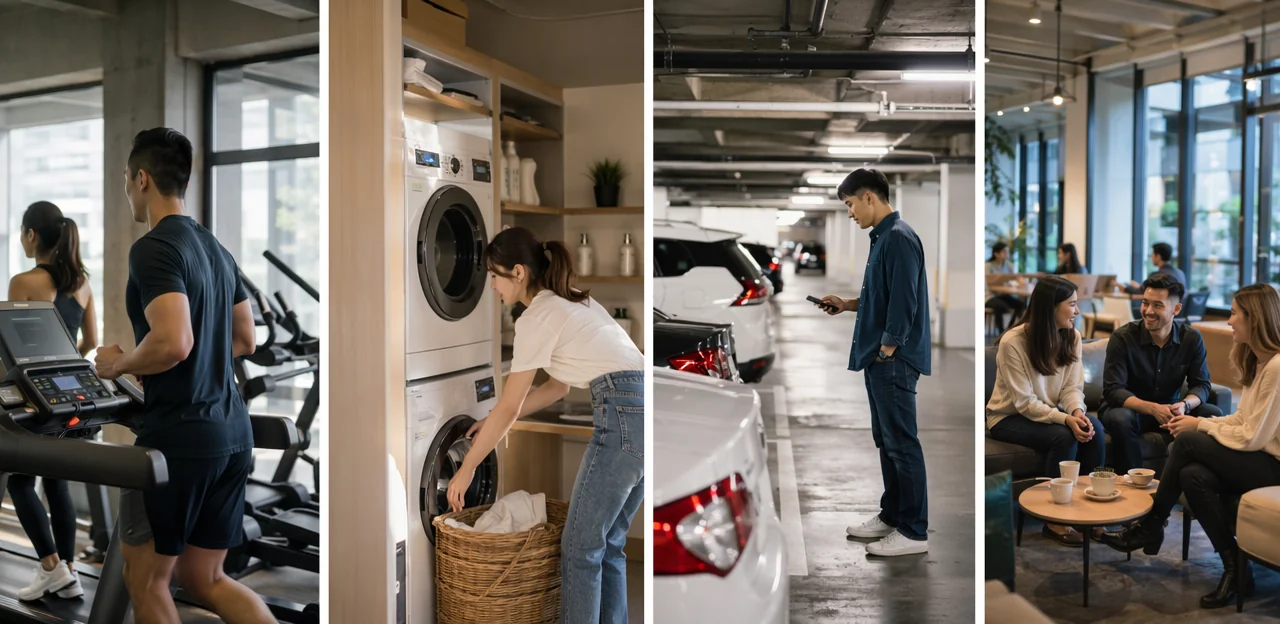
A great location may get residents or guests through the door, but the quality of shared spaces often shapes how they feel about the property day to day. A well-equipped gym, clean laundry room, reliable parking, and inviting common areas can all add value—yet they can also become recurring sources of frustration when issues go unnoticed. That is why building amenities feedback is becoming essential for housing providers, property managers, and guest experience teams that want to improve satisfaction and protect reputation.
Tracking feedback on amenities is about more than collecting occasional complaints. It means understanding which spaces people use most, where friction happens, and how quickly problems are resolved. From broken machines in the laundry room to overcrowded parking areas or underused common rooms, timely insight helps teams move from reactive fixes to proactive improvements.
In this article, we will explore how to track feedback across key building amenities, what metrics matter most, and how to turn resident or guest input into operational action. We will also look at practical ways to gather real-time responses at the point of experience, including digital tools such as Tapsy, so you can spot patterns early, respond faster, and create a better overall property experience.
Why building amenities feedback matters in housing and property
How amenities shape resident and guest experience
Shared property amenities often define how a building feels day to day. A clean gym, reliable laundry room, secure parking area, and welcoming common spaces directly affect resident experience and guest experience because they remove friction from everyday routines.
- Convenience drives satisfaction: Easy parking, working machines, and accessible fitness spaces save time and reduce stress.
- Quality influences renewals: Residents are more likely to renew when amenities are consistently clean, safe, and available.
- Experience shapes reputation: Guests and residents notice neglected common areas quickly, which can lead to poor reviews and weaker word-of-mouth.
- Amenities support perceived value: Well-managed shared spaces make rents and fees feel more justified.
Using building amenities feedback helps teams spot recurring issues early, prioritize upgrades, and improve service outcomes across the property.
The business case for tracking amenity performance
Tracking building amenities feedback turns shared spaces into measurable assets rather than recurring guesswork. Structured data helps teams spot which issues affect resident satisfaction most and where investment will deliver the best return.
- Reduce complaints: Identify recurring pain points in gyms, laundry rooms, parking, and common areas before they escalate into leasing-office frustration or negative reviews.
- Improve occupancy: Strong amenity performance supports marketing claims and helps prospects see clear value in rent levels.
- Support retention: Consistent property management feedback reveals whether amenities are encouraging renewals or pushing residents to consider alternatives.
- Guide capital planning: Trend data shows whether to repair, upgrade, expand, or repurpose underused spaces.
Unlike anecdotal comments, structured measurement provides comparable, location-specific evidence that supports faster decisions and smarter budgeting.
Common challenges property teams face
Property teams often struggle to turn building amenities feedback into clear, usable action. The most common feedback challenges include:
- Low response rates: Residents rarely complete long surveys, especially for shared spaces like gyms, laundry rooms, parking, and common rooms.
- Fragmented feedback channels: Comments arrive through email, front desk notes, maintenance apps, and social media, making a single tenant feedback system hard to maintain.
- Delayed follow-up: By the time a complaint is reviewed, the issue may have escalated and damaged the overall housing customer experience.
- Difficult comparisons: Without standard questions and scoring, it is hard to compare satisfaction across different amenities or properties.
A consistent tracking framework solves this by centralizing feedback, standardizing metrics, and helping teams prioritize fixes faster.
What to measure for gyms, laundry, parking, and common rooms
Key feedback metrics for every amenity
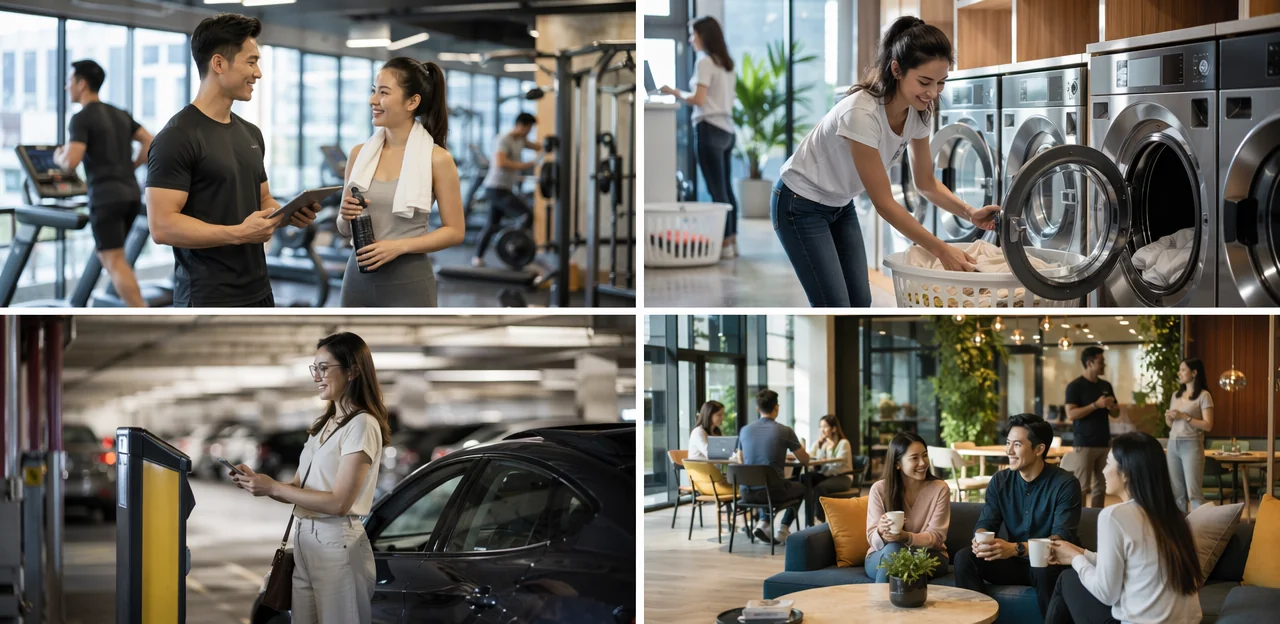
To make building amenities feedback useful, track the same core measures across gyms, laundry rooms, parking areas, and common spaces. A consistent framework makes trends easier to compare and act on.
- Cleanliness: Are surfaces, equipment, and shared areas kept hygienic and presentable?
- Availability: Can residents access machines, parking spots, or seating when needed?
- Safety: Do users feel secure, well-lit, and protected from hazards?
- Ease of access: Is entry simple, reliable, and convenient for all residents?
- Maintenance quality: Are repairs handled quickly, and is equipment functioning properly?
- Usage frequency: How often do residents use the amenity, and at what times?
- Overall satisfaction: What is the resident’s final impression of the space?
For stronger amenity feedback metrics, use a facility satisfaction survey that combines 1–5 rating scales with open-text comments. Ratings reveal patterns quickly, while comments explain why scores rise or fall. Tools like Tapsy can help collect this feedback closer to the amenity touchpoint.
Amenity-specific questions by space type
Strong building amenities feedback starts with questions tailored to how each space is actually used. Keep surveys short and specific:
- Gym feedback: Ask whether equipment is clean, safe, and working properly. Include questions on wait times, peak-hour crowding, temperature, and whether the mix of machines meets resident needs.
- Laundry room feedback: Focus on machine uptime, cleanliness, cycle reliability, and how easy it is to pay. Good laundry room feedback should also ask if residents can usually find an open washer or dryer.
- Parking feedback: Measure how secure residents feel, whether lighting and cameras are adequate, and how often spaces are unavailable. Useful parking feedback also covers signage, access control, and ease of entry and exit.
- Common room feedback: Ask about seating comfort, noise, cleanliness, Wi-Fi, and whether booking rules feel fair. Strong common room feedback should reveal if shared spaces are welcoming and equitably accessible.
Leading indicators vs lagging indicators
To improve building amenities feedback, track both leading and lagging indicators. Together, they give a fuller view of performance and help teams act faster.
- Leading indicators are proactive signals that show issues before residents complain. Examples include amenity usage data, cleanliness inspection scores, equipment downtime, booking patterns, and peak-hour overcrowding. These inputs strengthen property analytics by revealing where service quality may slip.
- Lagging indicators are reactive outcomes, such as maintenance complaints, low satisfaction scores, support tickets, and negative reviews. These are essential resident feedback metrics because they confirm how residents actually experienced the gym, laundry room, parking, or common areas.
Use leading indicators to prevent problems, and lagging indicators to validate whether fixes worked. For example, if parking complaints rise, compare them with occupancy trends and access-control logs. Tools like Tapsy can help capture real-time feedback at the amenity level, making decisions faster and more precise.
How to collect building amenities feedback effectively
Best feedback channels for housing properties
Choosing the right property feedback channels improves response rates and makes building amenities feedback more useful.
- Resident survey tools: Best for quarterly or monthly check-ins on gyms, laundry, parking, and common rooms. Use when you want trend data, benchmarking, and detailed comments.
- SMS: Ideal for urgent issues like broken machines, lighting failures, or parking gate problems. Fast, convenient, and effective for high open rates.
- Email: Works well for follow-up summaries, longer-form feedback, and residents who prefer desktop responses.
- Resident apps: Best for ongoing engagement if adoption is already high. Good for maintenance-linked amenity reporting and status updates.
- QR code feedback: Place codes in amenity spaces for instant, in-the-moment responses. This is especially useful for cleanliness, equipment uptime, and crowding. Tools like Tapsy can support no-app QR feedback.
- Kiosks: Useful in lobbies or laundry rooms for quick ratings in high-traffic areas.
- Staff interactions: Best for older residents, sensitive concerns, or when context matters. Train staff to log feedback consistently.
When to ask for feedback
Good resident feedback timing makes building amenities feedback more accurate and more useful. Instead of sending one long survey, ask at moments when the experience is still fresh:
- Right after amenity use: Send a short post-use survey after a gym visit, laundry cycle, parking access issue, or common-room booking. Keep it to 1–3 questions.
- After maintenance tickets close: If a resident reported broken gym equipment, laundry machines, lighting, or parking gates, request feedback within 24–48 hours to measure resolution quality.
- During move-in and renewal periods: Ask new residents about first impressions of amenities, then revisit at renewal to understand what affects retention.
- Use recurring pulse surveys: Monthly or quarterly pulse surveys help spot trends without overloading residents.
To reduce survey fatigue, rotate topics, target only relevant users, and avoid asking everyone about every amenity. Tools like Tapsy can help capture feedback at the touchpoint itself, increasing relevance and response rates.
How to increase response rates and quality
To improve building amenities feedback, make it fast, relevant, and easy to act on. Better collection methods lead to stronger survey response rates, higher-quality comments, and better resident engagement.
- Keep surveys short: Ask 2–5 questions per touchpoint, such as gym cleanliness, laundry machine uptime, parking access, or common room comfort.
- Use mobile-friendly formats: QR codes, text links, or no-app feedback pages help residents respond in the moment.
- Offer clear incentives: Small rewards like coffee vouchers, prize draws, or loyalty perks can lift participation without biasing answers.
- Support multiple languages: Multilingual options remove friction and reflect diverse resident communities.
- Show visible follow-up: Share updates like “3 new laundry machines installed” or “parking lighting repaired” to prove feedback matters.
- Follow customer feedback best practices: Time requests after amenity use, allow optional comments, and route urgent issues quickly.
Tools like Tapsy can help capture real-time feedback at specific amenity touchpoints.
How to analyze and prioritize amenity feedback

Turn comments into actionable themes
To make building amenities feedback useful, tag every comment using a simple structure so patterns are easy to spot and act on. Strong feedback analysis combines manual review with text analytics for surveys to group similar issues at scale.
- Issue type: maintenance, cleanliness, safety, noise, access, or staffing
- Amenity: gym, laundry room, parking garage, bike storage, or common room
- Severity: low, medium, high, urgent
- Frequency: one-off, recurring, or widespread
For example:
- “Treadmill belt is loose” → gym + broken equipment + high severity
- “Parking level 2 lights are out and I felt unsafe” → parking + safety + urgent
- “Study lounge is loud after 10 p.m.” → common room + noise + recurring
This approach improves amenity issue tracking, helps teams prioritize fixes, and reveals which amenities drive the most complaints.
Prioritize fixes by impact and effort
Once you collect building amenities feedback, avoid treating every issue the same. Use a simple prioritization framework to rank improvements across four factors:
- Resident impact: How many people does the issue affect, and how strongly?
- Operational cost/effort: Is the fix quick and low-cost, or complex and expensive?
- Urgency: Does it involve safety, access, or repeated service disruption?
- Strategic value: Will it support retention, leasing appeal, or long-term property improvement planning?
A practical way to act:
- Fix now: high-impact, low-effort resident pain points like broken laundry machines, poor gym cleanliness, or parking gate delays
- Plan next: high-impact, higher-cost upgrades such as common room refurbishment
- Monitor later: low-impact issues with limited complaints
Tools like Tapsy can help surface recurring resident pain points in real time.
Build dashboards and reporting routines
Turn building amenities feedback into a consistent feedback dashboard reviewed monthly or quarterly. Your property management reporting should highlight:
- Satisfaction scores by amenity: gym, laundry, parking, and common rooms
- Recurring complaints: broken machines, overcrowding, cleanliness, access issues, noise, or safety concerns
- Response times: how quickly teams acknowledge, resolve, and close issues
- Amenity-specific trends: peak usage periods, seasonal patterns, and repeat problem locations
- Customer experience KPIs: volume of feedback, resolution rate, sentiment trends, and repeat complaints
Include a short summary of what improved, what declined, and which actions are needed next. Share reports with both operations and leadership teams so frontline fixes and budget decisions stay aligned. Tools like Tapsy can help centralize touchpoint-level insights for faster reporting and action.
How to act on feedback and improve each amenity

Improving gyms and laundry rooms
Use building amenities feedback to prioritize small, visible fixes that quickly raise satisfaction in shared spaces. Focus on consistent facility operations:
- Create a gym maintenance schedule for inspections, lubrication, safety checks, and fast repairs on treadmills, bikes, and weights.
- Plan equipment replacement before breakdowns become frequent, using usage data and recurring complaints to set budgets.
- Set clear cleaning standards for both spaces, including daily wipe-downs, lint removal, floor cleaning, and supply checks.
- Make laundry room improvements with better signage for machine use, peak hours, and out-of-order updates.
- Simplify payment with contactless or app-based options. Tools like Tapsy can also help capture real-time amenity feedback.
Improving parking and common rooms
Use building amenities feedback to spot recurring issues and prioritize fixes that improve both parking management and the shared space experience.
- Upgrade safety first: Add brighter lighting, cameras, emergency call points, and clearer signage in parking areas and shared rooms.
- Set clearer rules: Mark visitor spaces, assign permits, and publish simple parking policies to reduce misuse and conflict.
- Add reservation tools: Use booking systems for parking spots, lounges, or study rooms to prevent overcrowding.
- Refresh shared spaces: Invest in durable furniture, better layouts, charging points, and regular maintenance as key common area improvements.
- Reduce friction: Post noise policies, cleaning expectations, and usage guidelines where residents can easily see them.
Tools like Tapsy can help collect real-time feedback at these touchpoints.
Close the loop with residents and guests
To close the feedback loop, don’t stop at collecting comments on building amenities feedback—show people what changed because they spoke up. Strong resident communication builds confidence and drives long-term customer experience improvement.
- Acknowledge concerns quickly: confirm receipt of feedback through app notifications, email, or front-desk follow-up.
- Share visible updates: post progress on signage, resident portals, or community boards, such as “Gym equipment repairs scheduled” or “Laundry room peak-hour review completed.”
- Explain actions taken: note what was fixed, what is being reviewed, and expected timelines.
- Use regular touchpoints: include updates in newsletters, emails, and community meetings.
When residents and guests see action, trust grows—and participation increases.
Best practices for a long-term amenities feedback program
Create a repeatable feedback workflow
Use a simple feedback workflow so building amenities feedback never gets lost:
- Collect feedback at each touchpoint using QR codes, forms, or kiosks.
- Review submissions daily and tag by amenity, urgency, and location.
- Assign each issue to one owner within your property operations process.
- Resolve with clear deadlines and status updates.
- Report trends weekly to strengthen your resident experience strategy and team accountability.
Align feedback with housing, guest, and customer experience goals
- Use building amenities feedback to link gym, laundry, parking, and common-room issues to bigger outcomes like guest satisfaction, accessibility, and service consistency.
- Prioritize fixes that reduce friction, improve safety, and support inclusion—these directly strengthen housing customer experience and online reputation.
- Track which amenity improvements increase renewals, referrals, and engagement to support a stronger resident retention strategy. Tools like Tapsy can help capture and route feedback in real time.
Avoid common mistakes and measure success
- Keep building amenities feedback short and specific—too many questions cause drop-off and create classic survey mistakes.
- Review open-text comments weekly; they often explain low scores better than ratings alone.
- Segment results by amenity, building, and resident type to follow feedback program best practices.
- Share actions taken with residents.
Track amenity satisfaction KPIs like response rate, comment volume, issue resolution time, satisfaction by amenity, and repeat complaint reduction.
Conclusion
In the end, improving shared spaces starts with a simple principle: listen where the experience happens. A strong building amenities feedback strategy helps housing teams move beyond assumptions and understand exactly how residents and guests feel about gyms, laundry rooms, parking areas, and common rooms. By collecting feedback at the touchpoint level, tracking recurring themes, and responding quickly to issues, property managers can reduce friction, improve satisfaction, and make smarter operational decisions.
The most effective approach is consistent, easy to use, and actionable. That means creating clear feedback channels, monitoring trends over time, assigning issues to the right teams, and closing the loop with visible improvements. When done well, building amenities feedback not only highlights pain points but also reveals which amenities add the most value to the overall housing experience.
If you’re ready to turn everyday amenity interactions into measurable insight, now is the time to build a more proactive feedback system. Start by auditing your current amenities, identifying your highest-traffic spaces, and setting up a simple process for collecting and reviewing responses. For teams looking for a real-time, touchpoint-based option, tools like Tapsy can help capture feedback quickly and route issues before they become bigger problems. The next step is simple: start listening, act faster, and use building amenities feedback to create a better property experience for everyone.
Frequently Asked Questions
- Why is building amenities feedback important for housing properties?
Shared spaces like gyms, laundry rooms, parking areas, and common rooms shape daily resident and guest experience. Tracking feedback helps teams catch recurring issues early, improve satisfaction, support retention, and protect the property's reputation.
- Which amenities should property teams track most closely?
The main spaces to monitor are gyms, laundry rooms, parking areas, and common rooms. These amenities are used frequently and can quickly become sources of frustration when cleanliness, access, safety, or maintenance problems go unresolved.
- What metrics should be measured across every amenity?
A consistent framework should include cleanliness, availability, safety, ease of access, maintenance quality, usage frequency, and overall satisfaction. Using the same measures across amenities makes it easier to compare trends and decide where action is needed first.
- How should feedback questions differ for gyms, laundry rooms, parking, and common rooms?
Questions should match how each space is used. Gyms need questions about equipment condition, crowding, and temperature; laundry rooms need machine uptime and payment ease; parking needs security and access questions; common rooms need seating, noise, Wi-Fi, and booking fairness checks.
- What is the difference between leading and lagging indicators for amenity performance?
Leading indicators are early warning signs such as equipment downtime, cleanliness inspection scores, booking patterns, and overcrowding. Lagging indicators are outcomes like complaints, low satisfaction scores, support tickets, and negative reviews that confirm how people experienced the space.
- What are the best ways to collect building amenities feedback?
Useful channels include resident survey tools, SMS, email, resident apps, QR code feedback, kiosks, and staff interactions. QR codes and other touchpoint-based options work especially well because they let residents respond while the experience is still fresh.
- When should residents or guests be asked for amenity feedback?
The best times are right after amenity use, after a maintenance ticket closes, during move-in, at renewal, and through recurring monthly or quarterly pulse surveys. Short requests sent close to the experience usually produce more accurate and relevant responses.
- How can property managers increase response rates without overwhelming residents?
Keep surveys short, usually 2 to 5 questions, and use mobile-friendly formats like QR codes or text links. It also helps to rotate topics, target only relevant users, support multiple languages, offer small incentives, and visibly show what changed after feedback was received.
- What common feedback challenges do property teams face?
The main problems are low response rates, fragmented channels, delayed follow-up, and difficulty comparing results across amenities or properties. A consistent system with standard questions, centralized collection, and clear scoring helps solve these issues.
- How should open-text comments about amenities be analyzed?
Comments should be tagged by issue type, amenity, severity, and frequency so patterns are easier to spot. This makes it simpler to identify recurring problems such as broken gym equipment, unsafe parking conditions, or ongoing noise in common rooms.
- How do you prioritize which amenity issues to fix first?
A practical approach is to rank issues by resident impact, operational cost or effort, urgency, and strategic value. High-impact, low-effort problems like broken laundry machines, poor gym cleanliness, or parking gate delays should usually be addressed first.
- What should an amenities feedback dashboard include?
A useful dashboard should show satisfaction scores by amenity, recurring complaints, response and resolution times, usage or seasonal trends, and customer experience KPIs such as feedback volume and repeat complaints. Monthly or quarterly reviews help keep operations and leadership aligned.
- What actions can improve gyms and laundry rooms based on feedback?
Gyms benefit from scheduled inspections, safety checks, fast repairs, and planned equipment replacement before breakdowns become frequent. Laundry rooms improve with clear cleaning standards, better signage, out-of-order updates, and simpler payment options such as contactless or app-based methods.
- How can parking areas and common rooms be improved using resident input?
Parking and shared rooms often improve through better lighting, cameras, signage, clearer rules, and reservation tools that reduce overcrowding. Common rooms can also benefit from durable furniture, better layouts, charging points, and clearly posted usage and noise expectations.
- How does Tapsy fit into an amenities feedback program?
Tapsy is presented as a digital tool for collecting real-time, touchpoint-level feedback, including QR-based no-app responses. It can help teams capture feedback closer to the amenity experience, spot patterns earlier, and route issues faster.