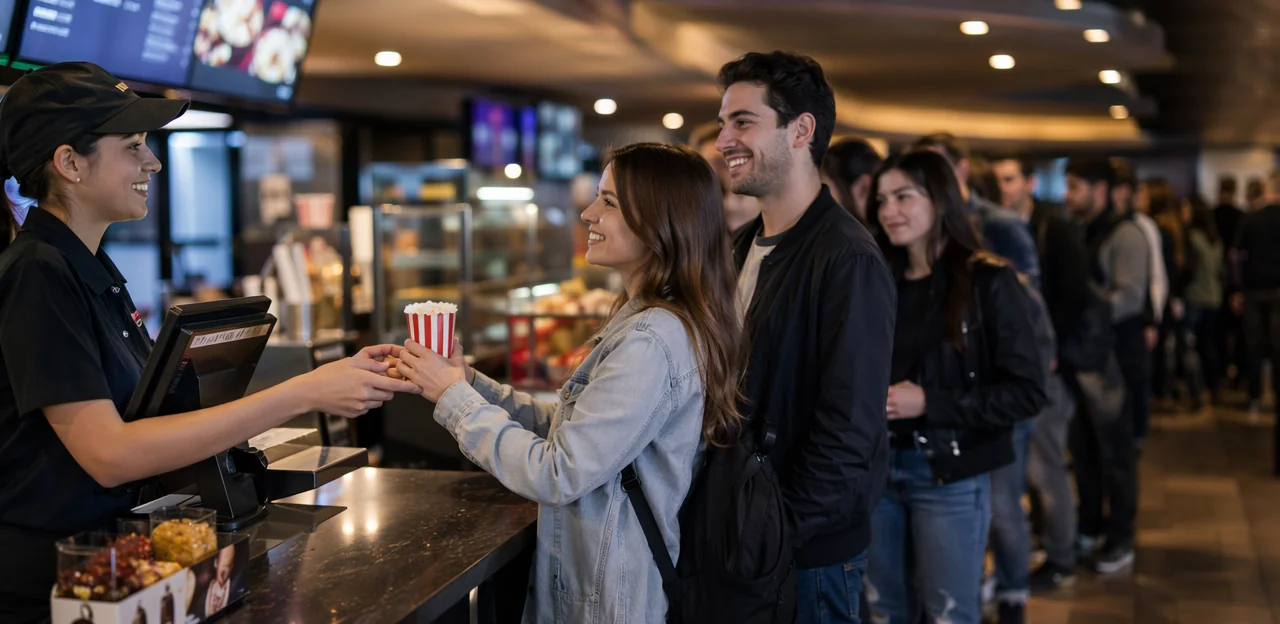
A packed lobby, a long line at the counter, and a customer deciding whether the popcorn is worth the price—these small moments can shape the entire cinema experience. For exhibitors, concessions are more than an add-on sale; they are a major driver of revenue, customer satisfaction, and repeat visits. That is why cinema concession feedback has become such an important tool for understanding what audiences really think at the point of purchase.
When cinemas measure feedback on queues, product quality, perceived value, and staff service, they gain a clearer picture of where the concession experience supports the brand—and where it creates friction. A slow-moving line can frustrate guests before the film even starts. Inconsistent food quality can damage trust. Pricing that feels out of step with expectations can reduce spend and loyalty.
This article explores how cinemas can collect and use concession feedback to improve operations, pricing decisions, and audience experience in a measurable way. We will look at the key metrics to track, why timing and touchpoint-level feedback matter, and how real-time tools such as Tapsy can help teams spot issues early and respond faster. The goal is simple: turn concession insights into better guest experiences and stronger ROI.
Why cinema concession feedback matters
How concessions shape the overall cinema experience
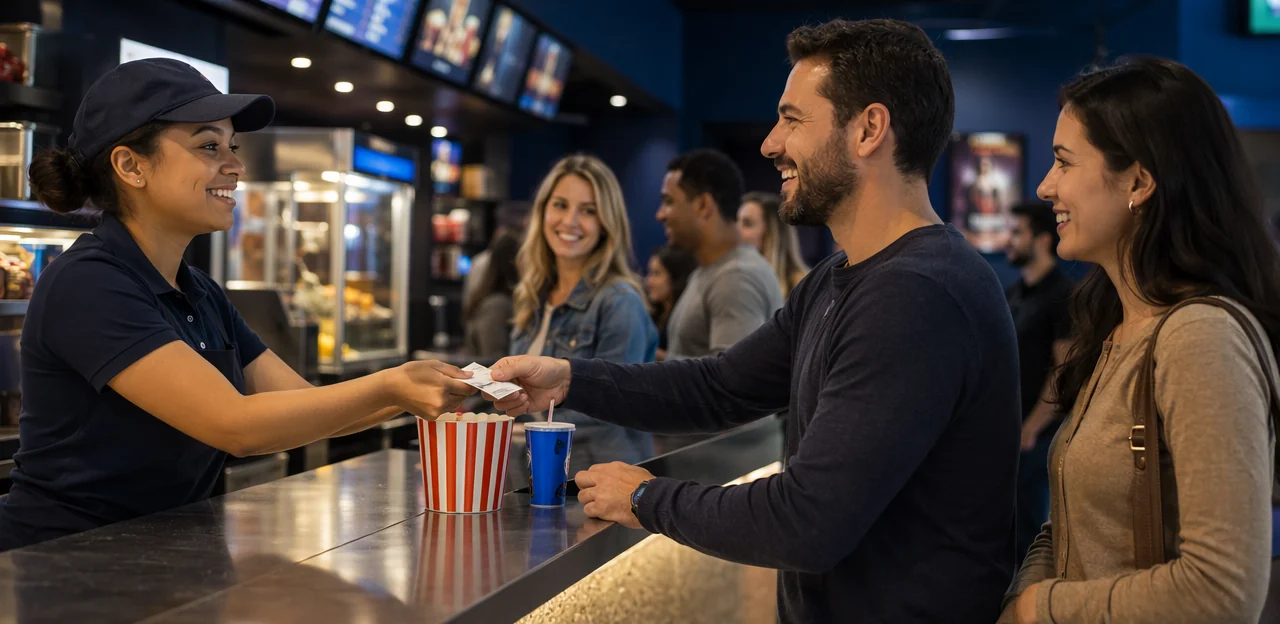
Concessions influence far more than snack sales; they shape the full audience experience before the film even starts. Strong cinema concession feedback helps operators understand how queues, product quality, pricing, and staff interactions affect comfort, convenience, and perceived visit quality.
- Shorter waits reduce pre-show stress and help guests settle in on time.
- Better cinema food and beverage quality improves enjoyment and reinforces premium expectations.
- Fair value perception makes the whole visit feel more worthwhile, not overpriced.
- Friendly, efficient service leaves a positive emotional impression beyond the screen.
When concession performance is consistent, cinemas strengthen satisfaction, repeat visits, loyalty, and spend. Real-time tools such as Tapsy can help capture these touchpoint insights while the experience is still fresh.
The link between feedback, ROI, and pricing strategy
Cinema concession feedback gives operators a practical way to refine concession pricing and improve cinema ROI. When guests consistently mention “too expensive,” “slow service,” or “poor value,” that signals where sales are being lost.
- Test price fairness: Compare feedback on value with spend per head to see which items feel overpriced versus premium-but-acceptable.
- Find margin opportunities: Identify products customers rate highly on quality and value, then promote bundles or upsells around them.
- Reduce conversion leaks: Queue complaints, stockouts, and slow service often shrink basket size and discourage repeat purchases.
- Strengthen pricing strategy: Use touchpoint-level data to align menu design, staffing, and offer structure with real demand.
Tools like Tapsy can help capture these insights in real time.
Common blind spots in concession measurement
Relying only on POS totals can hide the real drivers of guest satisfaction in cinema concessions. Strong sales do not always mean a strong experience. Common blind spots include:
- Queue frustration: long waits can reduce repeat purchases even when revenue looks healthy.
- Stock availability: sell-outs may boost urgency but disappoint guests who wanted specific items.
- Freshness and quality: stale popcorn or inconsistent temperature can hurt perception of value.
- Upsell pressure: aggressive add-on selling may increase basket size while lowering satisfaction.
- Service inconsistency: speed, friendliness, and accuracy often vary by shift or location.
This is why cinema concession feedback and broader customer feedback metrics matter: they add context to transaction data, helping teams spot service issues early and improve operations.
What cinemas should measure in concession feedback
Queue times, speed, and ease of ordering
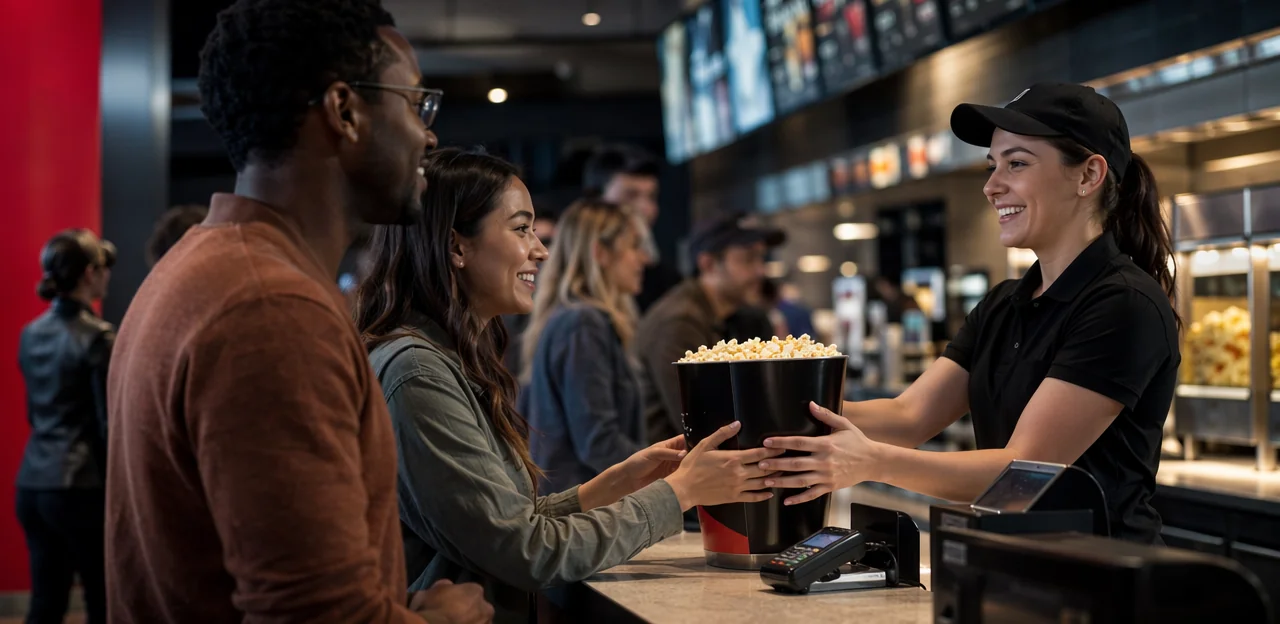
Strong cinema concession feedback should track both actual and perceived friction at the counter. Focus on:
- Measure cinema queue times: record average and peak concession wait times by daypart, screen start time, and queue length.
- Capture perceived speed: ask guests whether ordering felt fast, reasonable, or stressful, since perception often drives satisfaction more than the stopwatch alone.
- Review line management: assess whether separate pickup, payment, and collection points reduce congestion, and whether staffing matches demand before major showtimes.
- Evaluate mobile ordering convenience: measure usage, pickup delays, and whether the digital ordering experience feels simpler than joining the line.
- Identify peak-period bottlenecks: look for menu complexity, upsell delays, payment issues, or collection slowdowns.
Queue feedback matters because long waits can make guests miss trailers, feel rushed before the film, or abandon purchases entirely, directly affecting revenue and audience experience.
Product quality, freshness, and availability
For many guests, cinema concession feedback is driven as much by product quality as by speed. Audiences quickly notice whether concession quality feels consistent from one visit to the next.
- Popcorn freshness: Guests judge whether popcorn tastes freshly popped or stale, and whether it is crisp rather than chewy.
- Temperature and taste: Feedback often highlights popcorn served too cold, over-salted, under-seasoned, or lacking butter flavor.
- Portion consistency: Customers compare cup fill levels, topping amounts, and whether value matches the advertised size.
- Food availability: Reactions to sold-out popcorn sizes, drinks, nachos, or combo items reveal stock planning gaps.
Tracking this feedback helps cinemas spot operational and supply issues early, such as poor holding times, weak batch rotation, inconsistent staff preparation, or inventory forecasting problems. Real-time tools like Tapsy can help teams catch freshness and food availability issues before they affect more guests.
Value for money and service interactions
When reviewing cinema concession feedback, look beyond ticket-to-snack prices and measure how guests judge the full exchange of cost, quality, and service.
- Assess price fairness: Ask whether prices felt reasonable for the product, venue, and overall experience. Strong price perception often depends on freshness, presentation, and speed, not just the amount charged.
- Test combo appeal: Identify whether bundles feel like genuine savings or forced upsells. Good value for money comes from clear benefits and relevant pairings.
- Check portion expectations: Compare expected versus received sizes for popcorn, drinks, and add-ons. Disappointment here quickly lowers satisfaction.
- Measure service quality: Track staff friendliness, order accuracy, and how quickly mistakes are corrected. Reliable cinema concession service can offset higher prices.
- Review problem resolution: Fast replacements, refunds, or apologies often protect overall sentiment.
Real-time tools such as Tapsy can help capture these reactions at the counter, while the experience is still fresh.
How to collect better concession feedback
Best survey moments and channels
To improve cinema concession feedback, match the survey timing and channel to the guest journey so you capture honest reactions without interrupting the experience.
- Post-purchase: Best for queue speed, ordering ease, and upsell relevance. Trigger a short concession survey right after payment via kiosk receipt, app prompt, or QR code.
- Post-visit: Ideal for overall value, food quality, and service memory. Send post-visit feedback by email or SMS within 2–6 hours, while details are still fresh.
- In-app: Works well for loyalty users and mobile orders; keep it to 1–3 taps.
- Email: Good for richer cinema customer survey responses, but usually lower response rates.
- SMS: Fast, high-open channel for simple ratings.
- Kiosk/QR code: Best at concession stands and exits for instant, low-friction feedback.
Use the shortest format possible at high-traffic moments, and ask longer questions only after the visit.
Questions that reveal actionable insights
Strong cinema concession feedback starts with short, measurable feedback questions that isolate specific pain points and make trends easy to track in a customer satisfaction survey. Use a simple structure such as:
- Queue experience: “How satisfied were you with concession wait time?”
Use a 1–5 rating scale, then trigger a follow-up if the score is low: “What caused the delay—staffing, line length, or order speed?” - Quality: “How would you rate the freshness and taste of your food or drink?”
Add an open-text prompt: “What item fell below expectations?” - Value: “Did your purchase feel worth the price paid?”
Follow low ratings with: “Was the issue portion size, price, or bundle value?” - Staff service: “How friendly and helpful was the concession team?”
Include: “Tell us about a staff interaction that stood out.”
Concise cinema feedback questions improve response rates and produce clearer operational actions.
Segmenting feedback by audience, time, and location
To turn cinema concession feedback into action, break results down beyond headline scores. Strong feedback segmentation reveals whether issues are operational, audience-specific, or tied to certain screenings.
- By site: Compare venues to spot location-specific issues such as understaffed kiosks, stock gaps, or pricing complaints. This is essential for location-based feedback analysis.
- By screening time: Separate weekday evenings, weekends, school holidays, and late-night shows to identify queue pressure and service dips.
- By film type: Family titles, blockbusters, arthouse releases, and event cinema often drive different basket sizes and value expectations.
- By audience segment: Review responses from families, loyalty members, and premium format guests separately. These groups often rate speed, quality, and value differently.
- By premium formats: IMAX, 4DX, or VIP guests may expect faster service and better product quality.
This approach delivers sharper cinema audience insights and exposes patterns hidden by overall averages. Platforms like Tapsy can help capture and compare this feedback in real time.
Turning feedback into operational improvements

Reducing queues and improving throughput
Use cinema concession feedback to pinpoint where delays actually occur, then match fixes to the signals guests give you:
- Adjust staffing by peak windows: If feedback mentions long waits before trailers or during interval rushes, move more staff to tills, runners, or drink stations at those times to reduce queue times.
- Add express lanes: When guests say “I only wanted popcorn/drinks,” create a fast lane for simple orders. This is a proven throughput improvement tactic for high-volume periods.
- Enable pre-orders: If audiences complain about missing trailers or spending too long in line, mobile or QR pre-order collection can shift demand away from the main counter.
- Simplify the menu: Feedback showing confusion, slow ordering, or frequent custom requests often means the menu is too complex for efficient concession operations.
- Redesign queue flow: Comments about crowding, unclear lines, or bottlenecks justify better signage, separate pickup points, and clearer queue design. Tools like Tapsy can help capture these touchpoint-specific signals in real time.
Improving product consistency and menu performance
Cinema concession feedback is one of the fastest ways to improve product consistency and strengthen concession menu performance. When feedback is tracked by item, time of day, and location, operators can spot where quality drops and where the menu underperforms.
- Use recurring comments to tighten recipe standards for popcorn seasoning, drink ratios, nacho portions, and presentation.
- Monitor complaints about freshness to set better holding times and reduce products kept too long under heat.
- Combine sales and feedback data for smarter stock planning, so popular items stay available while waste is reduced.
- Review supplier-linked issues such as inconsistent taste, packaging faults, or ingredient quality to support supplier reviews.
- Prioritize menu optimization by removing low-value items that generate weak satisfaction, low repeat purchase, or frequent complaints relative to price.
Tools like Tapsy can help capture this feedback in real time at the concession touchpoint.
Coaching teams to deliver better service
Cinema concession feedback is one of the most practical tools for better staff training because it shows exactly where service breaks down at the counter. Use feedback trends to coach teams on the moments that most affect both satisfaction and basket size:
- Friendliness: reinforce greetings, eye contact, and positive language.
- Speed: identify peak-time bottlenecks and train staff on faster handoffs and queue management.
- Order accuracy: review common mistakes, repeat orders back, and use simple checks before serving.
- Upselling etiquette: teach staff to suggest combos or upgrades naturally, without sounding pushy.
- Issue recovery: give clear scripts for apologising, correcting errors quickly, and offering a fair make-good.
This kind of customer service improvement helps cinemas reduce complaints, increase repeat visits, and lift concession spend through smoother, more confident interactions.
Using concession feedback to guide pricing and ROI decisions

Identifying where price resistance starts
Use cinema concession feedback to pinpoint when price resistance begins by comparing what guests say with what they actually buy. Focus on three signals:
- Value scores: Track low ratings on “worth the price” by item, combo, size, and time of day. This reveals where value perception drops first.
- Complaint themes: Group comments like “too expensive,” “smaller than expected,” or “not fresh enough.” Repeated themes show whether the issue is price alone or price versus quality.
- Purchase behavior: Check conversion rates, attach rates, and basket size. If an item gets viewed but rarely purchased, cinema pricing may be too high. If premium items still lift basket size, they likely justify their price.
Tools like Tapsy can help capture this feedback at the concession touchpoint in real time.
Balancing margin, bundles, and guest satisfaction
Cinema concession feedback helps operators refine concession bundles and pricing offers without guessing what audiences will actually buy. Use feedback alongside sales data to spot where value feels strong and where pricing creates resistance.
- Improve combo design: Identify which drink, popcorn, and snack pairings feel convenient and fairly priced.
- Shape family offers: Test shared bundles, child-friendly add-ons, and clear savings for groups.
- Introduce premium add-ons carefully: Measure reactions to upgrades like gourmet snacks or larger drinks before rolling them out widely.
- Run promotional testing: Compare limited-time pricing offers by daypart, film type, or audience segment.
Tools like Tapsy can help capture fast, in-the-moment feedback that protects margin while improving guest satisfaction.
Tracking ROI from feedback-led changes
To prove feedback ROI, tie every improvement from cinema concession feedback to measurable commercial and service outcomes. Track results before and after changes, then review by site, daypart, and queue point.
- Spend per head: Measure whether faster service, better product availability, or clearer pricing increases average concession revenue per guest.
- Concession conversion rate: Track the percentage of ticket buyers who also purchase food and drink.
- Repeat purchase intent: Use post-visit surveys to see whether guests are more likely to buy concessions again.
- Satisfaction scores: Monitor gains in queue, quality, value, and staff service ratings.
- Complaint reduction: Count fewer queue, pricing, and order-accuracy complaints.
Ongoing feedback programs strengthen the business case by showing which fixes drive revenue, loyalty, and operational efficiency.
Building a long-term concession feedback framework

Creating a simple concession scorecard
Build a concession scorecard around five core measures of cinema concession feedback:
- Queue time: average wait and % served within target
- Quality: product freshness, temperature, accuracy
- Value: whether pricing feels fair for the experience
- Service: staff friendliness, speed, helpfulness
- Overall satisfaction: one simple summary score
Keep customer satisfaction metrics easy to report: use a 1–5 scale, one headline score per category, and a red/amber/green status. Add weekly trends and one comment theme per site. This makes the cinema KPI dashboard practical for site teams to act on and leadership to compare consistently.
Benchmarking across sites and over time
To turn cinema concession feedback into action, benchmark every location using the same questions, scoring scale, and sampling rules. Consistent methodology makes cinema benchmarking reliable and prevents misleading comparisons.
- Compare site performance by queue times, product quality, value perception, and service ratings.
- Identify top performers and review what they do differently in staffing, upselling, or peak-time operations.
- Run trend analysis by month, season, and campaign period to spot recurring pressure points or promotional impact.
Tools like Tapsy can help standardize collection across sites and timeframes.
Closing the loop with customers and teams
To close the feedback loop, turn cinema concession feedback into visible action:
- Use clear customer communication at counters, screens, email, or social posts: “You asked for faster service and fresher hot food—here’s what changed.”
- Share simple before-and-after results with teams, such as shorter queue times or higher value scores, to strengthen employee engagement and show staff their efforts matter.
- Invite more responses by proving feedback leads to action. Small signs, receipts, or QR prompts can say, “Your opinion helped improve tonight’s concession experience.”
Tools like Tapsy can help make updates and responses more immediate.
Conclusion
In the end, better concession performance starts with better listening. When cinemas measure the full concession experience—queue times, product quality, perceived value, and staff service—they gain a clearer view of what drives satisfaction, repeat purchases, and overall audience loyalty. Strong cinema concession feedback helps operators move beyond assumptions and identify the real friction points that affect revenue, from long waits before showtime to inconsistent food freshness or pricing that doesn’t match customer expectations.
Just as importantly, collecting cinema concession feedback in real time creates opportunities for fast operational improvements. Teams can adjust staffing during peak periods, refine menu offers, improve service training, and test pricing or bundle strategies with more confidence. Over time, this feedback becomes a practical tool for improving both ROI and the guest experience.
The next step is to build a feedback process that is simple, timely, and easy for audiences to use at the point of purchase. Start with a few core metrics, review patterns by location and time, and act quickly on recurring issues. If you want to streamline this process, solutions such as Tapsy can help cinemas capture touchpoint-level feedback in the moment. Explore your current concession journey, benchmark performance, and turn insight into action that keeps guests coming back.
Frequently Asked Questions
- Why is concession feedback important for cinemas?
Concession feedback helps cinemas understand how queues, food quality, value perception, and staff service affect the guest experience before the film starts. It also gives operators clearer signals on what may be hurting revenue, satisfaction, loyalty, and repeat visits.
- What should cinemas measure in concession feedback?
The core areas to measure are queue times, speed and ease of ordering, product quality and freshness, availability, value for money, and staff service. Many operators also track overall satisfaction so they can compare concession performance across sites and over time.
- How do long concession queues affect cinema performance?
Long waits can frustrate guests, make them feel rushed, and even cause them to miss trailers or abandon purchases. That affects both audience satisfaction and concession revenue, especially during peak periods before major showtimes.
- Why is perceived wait time as important as actual queue time?
Guests often judge the experience by how stressful or reasonable the wait feels, not only by the stopwatch. Measuring both actual timing and perceived speed gives a more complete view of friction at the counter.
- How can cinemas collect concession feedback at the right moment?
Post-purchase surveys work well for queue speed, ordering ease, and upsell relevance, while post-visit surveys are better for value, food quality, and service memory. Useful channels include app prompts, email, SMS, kiosk prompts, and QR codes at concession stands or exits.
- What are effective concession survey questions to ask guests?
Good questions are short, specific, and tied to one issue at a time, such as wait time, freshness and taste, value for the price paid, or staff friendliness. Low scores should trigger simple follow-up prompts so teams can identify whether the problem was staffing, portion size, bundle value, or another operational issue.
- What common blind spots do cinemas miss when they rely only on POS data?
Sales totals can hide queue frustration, stockouts, stale or inconsistent food quality, aggressive upselling, and service inconsistency between shifts or locations. Strong revenue does not always mean guests had a strong concession experience.
- How should cinemas segment concession feedback for better decisions?
Feedback should be broken down by site, screening time, film type, audience segment, and premium format. This helps reveal whether problems are tied to a specific location, busy daypart, customer group, or type of screening rather than being spread evenly across the business.
- What can cinemas do to reduce concession queues and improve throughput?
Useful actions include adjusting staffing during peak windows, adding express lanes for simple orders, enabling pre-orders, simplifying the menu, and redesigning queue flow. These changes should be guided by guest comments about delays, crowding, confusion, or missed trailers.
- How can feedback improve concession product quality and consistency?
Recurring comments can highlight issues with popcorn freshness, temperature, seasoning, portion consistency, and item availability. Teams can use those signals to improve holding times, batch rotation, preparation standards, stock planning, and supplier reviews.
- How does concession feedback support staff coaching?
It shows where service breaks down in practical terms, including friendliness, speed, order accuracy, upselling style, and issue recovery. Managers can then coach teams on the moments that most affect guest satisfaction and basket size.
- How can cinemas use feedback to identify price resistance?
Price resistance becomes clearer when operators compare value scores, complaint themes, and purchase behavior by item, combo, size, and time of day. Repeated comments such as 'too expensive' or 'smaller than expected' help show whether the issue is price alone or price relative to quality and portion.
- What role do bundles and offers play in concession value perception?
Bundles work best when guests see clear savings, relevant pairings, and genuine convenience rather than forced upsells. Feedback can show which combinations feel fair, which family offers are appealing, and where premium add-ons create resistance.
- How should cinemas track ROI from concession feedback improvements?
They should compare results before and after changes using measures such as spend per head, concession conversion rate, repeat purchase intent, satisfaction scores, and complaint reduction. Reviewing those outcomes by site, daypart, and queue point helps show which actions improve revenue, loyalty, and efficiency.
- How can tools like Tapsy help with cinema concession feedback?
Real-time tools like Tapsy can capture touchpoint-level feedback while the experience is still fresh. That helps teams spot queue issues, freshness problems, service gaps, and value concerns earlier so they can respond faster.