
In hospitality, memorable moments are rarely accidental. From the speed of check-in to the ease of ordering, the warmth of service, and the follow-up after a stay or visit, every interaction shapes loyalty, reviews, and revenue. That’s why a strong customer experience strategy is no longer optional for restaurants, hotels, and venues competing in an experience-driven market.
A modern approach goes beyond service standards alone. It connects customer service experience, operational consistency, staff training, personalization, and data into a unified customer experience management strategy that improves satisfaction at every touchpoint. For hospitality leaders, understanding how to create a customer experience strategy means balancing human service with technology, including AI, analytics, and customer experience software that can capture feedback and uncover trends in real time.
This article explores practical customer experience strategy best practices for accommodation and hospitality businesses, from mapping the guest journey to measuring performance and acting on insights. It will also break down how to build a customer experience strategy that aligns with your wider customer experience business strategy, helping you deliver more seamless stays, stronger guest relationships, and smarter decision-making across every location.
Why Customer Experience Strategy Matters in Hospitality
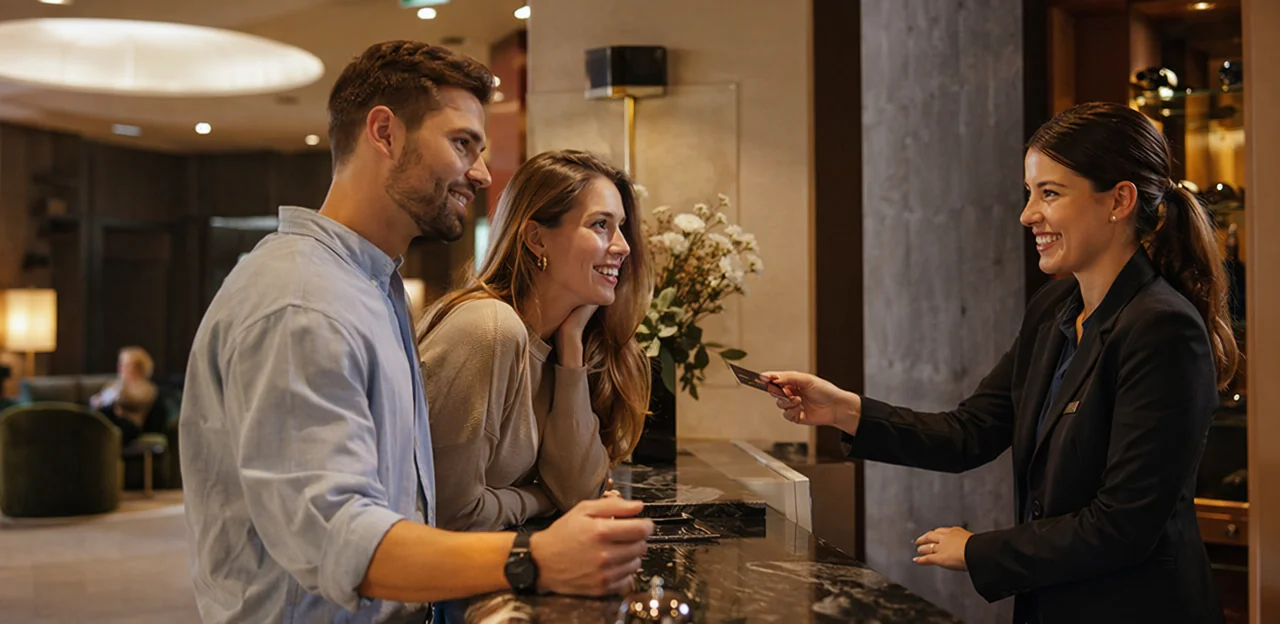
The business impact of guest experience
A strong customer experience strategy directly shapes revenue in hospitality. When guests enjoy a seamless customer service experience, hotels lift occupancy and RevPAR, restaurants improve table turns and repeat covers, and venues increase event rebookings, referrals, and upsell revenue. That is why a clear customer experience business strategy should tie service quality to measurable KPIs.
- Track satisfaction against occupancy, repeat visits, average spend, and review scores.
- Use customer experience software to capture real-time feedback and spot friction before it affects reputation.
- Apply customer experience strategy best practices by training teams, personalizing service, and acting quickly on complaints.
For brands learning how to create a customer experience strategy or how to build a customer experience strategy, the goal is simple: turn better experiences into higher lifetime value through a disciplined customer experience management strategy.
Differences between restaurants, hotels, and venues
A strong customer experience strategy should reflect how guests interact with each setting:
- Restaurants: Shorter journeys, faster decisions, and high expectations for speed, accuracy, and a smooth customer service experience.
- Hotels: Longer stays require deeper personalization, proactive communication, and consistent service across check-in, room experience, dining, and checkout.
- Venues: Event-based visits are time-sensitive and crowd-driven, so wayfinding, entry flow, staff coordination, and post-event follow-up matter most.
The core customer experience management strategy stays the same: map touchpoints, collect feedback, remove friction, and train teams. The difference is execution.
Among key customer experience strategy best practices, use customer experience software to tailor journeys by environment. If you're learning how to create a customer experience strategy or how to build a customer experience strategy, align service design with journey length, service intensity, and operational complexity.
Common pain points across the guest journey
Across restaurants, hotels, and venues, friction often appears at the same moments:
- Slow booking or check-in: clunky forms, limited availability visibility, and delayed confirmations create early frustration.
- Unclear communication: guests miss key details on timing, policies, parking, menus, or amenities.
- Long waits: queues for seating, service, support, or checkout quickly damage the customer service experience.
- Inconsistent service: quality varies by shift, team member, or location.
- Poor issue resolution: complaints are handled reactively, with no clear ownership or follow-up.
- Disconnected post-visit outreach: generic surveys and scattered data weaken retention.
These gaps show why a defined customer experience strategy matters. Following customer experience strategy best practices means mapping each touchpoint, using customer experience software, and aligning feedback, service standards, and follow-up into one customer experience management strategy rather than ad hoc fixes.
How to Create a Customer Experience Strategy Step by Step

Map the end-to-end guest journey
A strong customer experience strategy starts with a clear view of the full guest journey. If you’re asking how to create a customer experience strategy in hospitality, begin by mapping every interaction across the lifecycle, then identify where expectations are met, missed, or exceeded.
- Discovery and booking: Review website UX, OTA listings, ads, social media, and reservation flows.
- Pre-arrival: Audit confirmations, upsell emails, directions, check-in instructions, and response times.
- Arrival and on-site service: Track reception, wait times, room or table readiness, staff interactions, and overall customer service experience.
- Checkout and post-stay: Examine billing, departure ease, follow-up messages, feedback requests, and loyalty offers.
These are core customer experience strategy best practices because they show how to build a customer experience management strategy grounded in real behavior. Use guest interviews, staff input, reviews, and customer experience software to support a measurable customer experience business strategy.
Define brand promises and service standards
A strong customer experience strategy turns brand positioning into behaviors every team can deliver consistently. If your brand promises “warm, effortless hospitality,” define exactly what that means for each touchpoint. This is central to how to build a customer experience strategy that staff can follow and leaders can measure.
- Front desk: greet guests within 30 seconds, use their name, and resolve check-in issues within 10 minutes.
- Servers: acknowledge tables within 2 minutes, show menu knowledge, and personalize recommendations based on preferences.
- Concierge: respond with empathy, offer at least two tailored options, and confirm arrangements proactively.
- Event coordinators: provide milestone updates within agreed timelines and recover quickly from last-minute changes.
- Support channels: answer calls, chats, or messages within defined SLAs and close the loop on complaints.
These are customer experience strategy best practices because they make the customer service experience measurable. To support a scalable customer experience management strategy, use training, QA scorecards, and customer experience software to track speed, empathy, personalization, and problem resolution.
Set goals, metrics, and ownership
A strong customer experience strategy needs clear goals, measurable KPIs, and named owners across every department. If you’re defining how to create a customer experience strategy, start by linking metrics to business outcomes, not just guest sentiment.
- NPS and CSAT: Assign to guest experience, front desk, restaurant, or venue managers to track loyalty and satisfaction.
- Review scores: Make marketing and operations jointly responsible for improving public ratings and response quality.
- Repeat booking rate: Give revenue, reservations, and loyalty teams ownership of retention performance.
- Complaint resolution time: Set service recovery targets for operations leaders to strengthen the customer service experience.
- Staff adherence to standards: Track training completion, mystery audits, and SOP compliance by department.
These are core customer experience strategy best practices and the foundation of a scalable customer experience business strategy. To support execution, use dashboards or customer experience software so teams can monitor progress, act faster, and build a stronger customer experience management strategy.
Customer Experience Strategy Best Practices for Hospitality Brands

Personalization without losing operational efficiency
A strong customer experience strategy uses guest data to make service feel personal without slowing teams down. The key is to standardize what can be automated, then leave space for staff to add warmth.
- Use CRM, PMS, POS, and customer experience software to surface room preferences, dietary needs, past orders, and event interests in one view.
- Automate tailored recommendations: preferred room types, relevant dining offers, spa add-ons, or event reminders based on stay history and behavior.
- Create message templates with dynamic fields so communications stay fast, accurate, and on-brand.
- Train staff to act on insights consistently, turning data into better customer service experience at every touchpoint.
These are core customer experience strategy best practices and a practical answer to how to create a customer experience strategy, how to build a customer experience strategy, and align a customer experience management strategy with a wider customer experience business strategy.
Empower staff to deliver memorable service
A strong customer experience strategy starts with employees. In hospitality, standout moments happen when you hire for empathy, onboard with clear service standards, coach continuously, and give teams authority to solve guest issues on the spot. That is one of the most practical customer experience strategy best practices for improving the customer service experience and building loyalty.
- Hire for attitude and adaptability: Technical skills can be taught; warmth and judgment create memorable interactions.
- Onboard around real guest scenarios: Show staff how to create a customer experience strategy through daily service behaviors.
- Coach with data and feedback: Use guest insights and customer experience software to spot wins and service gaps.
- Empower fast decisions: Let employees offer fixes, upgrades, or small gestures without manager delays.
This approach strengthens your customer experience management strategy, supports a wider customer experience business strategy, and shows how to build a customer experience strategy that guests remember.
Design recovery moments that build trust
A strong customer experience strategy plans for service failures before they happen. In hospitality, trust is often won in recovery, not perfection. These customer experience strategy best practices help teams protect the customer service experience during complaints, delays, overbookings, order errors, or event issues:
- Acknowledge fast: Respond immediately, explain what happened, and set clear expectations.
- Lead with empathy: Train staff to apologize sincerely and personalize the response.
- Offer practical recovery: Rebook, replace, refund, comp, or upgrade based on the impact.
- Communicate proactively: Alert guests before they need to ask, especially during delays or event changes.
- Follow up: Confirm resolution after checkout, dining, or the event.
For brands learning how to create a customer experience strategy or how to build a customer experience strategy, recovery workflows should be built into the wider customer experience management strategy and supported by customer experience software.
Using AI, Analytics, and Customer Experience Software

How AI improves guest interactions
AI strengthens a customer experience strategy by making service faster, more relevant, and easier to scale without losing the human touch. As part of customer experience strategy best practices, hospitality teams can use AI to support staff, not replace genuine service.
- Chatbots for booking support: Answer common questions, confirm availability, and reduce friction across web, messaging, and social channels.
- Predictive recommendations: Use past stays, dining habits, or booking behavior to suggest upgrades, menu items, or local experiences.
- Sentiment analysis: Turn reviews, surveys, and in-stay feedback into actionable insights for a stronger customer experience management strategy.
- Staffing forecasts: Predict demand to schedule the right teams and improve the customer service experience.
- Automated follow-ups: Send timely thank-yous, recovery offers, or loyalty prompts through customer experience software.
This is central to how to create a customer experience strategy and how to build a customer experience strategy that supports long-term customer experience business strategy goals.
Choosing the right customer experience software stack
A strong customer experience strategy depends on tools that share data across the guest journey. When deciding how to create a customer experience strategy or how to build a customer experience strategy, prioritize hospitality-ready platforms that connect operations and insight.
- CRM: centralizes guest profiles, preferences, and loyalty data.
- Feedback tools: capture real-time sentiment, service issues, and post-stay insights.
- Reputation management platforms: monitor and respond to reviews across channels.
- CDPs: unify first-party data for segmentation and personalization.
- Reservation systems and PMS integrations: connect bookings, stay history, and spend data.
- Help desk tools: streamline service recovery and improve the customer service experience.
For customer experience software, evaluate:
- Integration depth with POS, PMS, CRM, and marketing tools
- Ease of use for frontline teams
- Reporting that supports a measurable customer experience management strategy
- Hospitality-specific workflows, a core part of customer experience strategy best practices and any scalable customer experience business strategy
Turn data into actionable insights
A strong customer experience strategy turns scattered feedback into clear priorities. Combine survey results, online reviews, operational KPIs, and guest behavior analytics to spot where the customer service experience breaks down—and where it can improve fastest.
- Unify data sources: Bring CSAT/NPS surveys, review sentiment, wait times, repeat visits, spend patterns, and service recovery data into one view using customer experience software.
- Find friction points: Compare locations to identify recurring issues such as slow check-in, menu confusion, housekeeping delays, or poor table turnover.
- Turn insight into action: This is central to customer experience strategy best practices and any customer experience business strategy.
Learning how to create a customer experience strategy means tracking trends, testing improvements, and scaling what works. That’s how to build a customer experience strategy and a stronger customer experience management strategy across every venue.
How to Build a Customer Experience Strategy Across Teams and Locations

Align leadership, operations, marketing, and frontline teams
A strong customer experience strategy depends on every department shaping the same guest journey, from pre-arrival messaging to post-visit follow-up. One of the most important customer experience strategy best practices is aligning teams around shared KPIs, service standards, and ownership.
- Leadership sets the vision and accountability.
- Marketing ensures promises match the on-site reality.
- Operations designs consistent delivery across locations.
- Frontline teams turn the customer service experience into memorable moments.
To understand how to create a customer experience strategy and how to build a customer experience strategy, connect feedback, training, and customer experience software in one workflow. This makes your customer experience management strategy and broader customer experience business strategy measurable, consistent, and retention-focused.
Standardize what matters and localize what delights
A strong customer experience strategy helps multi-location brands protect consistency without becoming generic. Standardize the non-negotiables—service standards, response times, brand voice, cleanliness, and feedback workflows—then localize the moments that create emotional connection.
- Boutique hotels: Keep check-in, recovery, and room-quality standards uniform, but tailor welcome amenities, neighborhood guides, and dining recommendations to local culture.
- Restaurant groups: Use shared service training and menu quality controls, while adapting specials, promotions, and ambiance to each market.
- Event venues: Standardize booking communication and wayfinding, but customize packages by audience, season, and event type.
These are core customer experience strategy best practices and a practical customer experience management strategy. To understand how to create a customer experience strategy or how to build a customer experience strategy, use guest data, frontline feedback, and customer experience software to align your customer experience business strategy with real customer service experience expectations.
Create a culture of continuous improvement
A strong customer experience strategy is never static. In hospitality, sustainable results come from consistent refinement of the customer service experience through simple, repeatable feedback loops:
- Collect regular feedback at key touchpoints to spot service gaps early.
- Use mystery shopping to evaluate real-world consistency across teams and locations.
- Hold short team huddles to review wins, complaints, and immediate fixes.
- Provide ongoing coaching so staff can turn insights into better guest interactions.
- Run quarterly CX reviews to track trends, update standards, and align your customer experience business strategy.
These are core customer experience strategy best practices and essential for brands learning how to create a customer experience strategy or how to build a customer experience strategy. Supported by customer experience software, this customer experience management strategy becomes the engine of long-term service improvement.
Measuring Success and Future-Proofing Your Strategy

Track the metrics that matter most
A strong customer experience strategy depends on KPIs that clearly link guest perception to revenue. Prioritize:
- Guest satisfaction and review sentiment to measure service quality and brand reputation
- Repeat visitation and direct bookings to track loyalty and lower acquisition costs
- Ancillary spend to show how experience drives upsells across dining, spa, or events
- Issue resolution rates to improve the customer service experience and reduce churn
As part of a customer experience management strategy and customer experience business strategy, connect each metric to ROI through retention, margin growth, and lower recovery costs—one of the most important customer experience strategy best practices.
Adapt to changing guest expectations
Guest expectations evolve quickly, so your customer experience strategy should be reviewed often and updated around emerging behaviors:
- Contactless service: Offer tap-to-order, digital feedback, and mobile payments.
- Omnichannel communication: Keep messaging consistent across web, SMS, email, and on-site touchpoints.
- Sustainability and accessibility: Prioritize inclusive design, multilingual options, and low-waste experiences.
- Hyper-personalization: Use guest data and customer experience software to tailor offers, timing, and service recovery.
These customer experience strategy best practices strengthen your customer experience management strategy, improve customer service experience, and guide how to build a customer experience strategy that stays future-ready.
Build a practical action plan for the next 90 days
To turn a customer experience strategy into action, use a simple 90-day roadmap:
- Days 1–30: Audit every guest touchpoint, from booking to post-visit follow-up, and identify gaps in customer service experience.
- Days 31–60: Choose 2–3 high-impact fixes using customer experience strategy best practices and supporting customer experience software.
- Days 61–90: Test changes, train teams, and measure CSAT, reviews, repeat visits, and complaints.
This is how to build a customer experience strategy and how to create a customer experience strategy that supports a stronger customer experience management strategy and overall customer experience business strategy.
Conclusion
A strong customer experience strategy is no longer optional for restaurants, hotels, and venues—it is a core driver of loyalty, reputation, and revenue. The most successful brands combine personalized service, consistent operations, staff empowerment, and real-time guest insight to create memorable moments at every touchpoint. By applying customer experience strategy best practices, businesses can move beyond reactive service and build a proactive, data-informed approach that strengthens every stage of the guest journey.
Whether you are exploring how to create a customer experience strategy or refining how to build a customer experience strategy across multiple locations, the key is to align your customer experience management strategy with your wider customer experience business strategy. That means setting clear goals, tracking feedback, investing in the right customer experience software, and continuously improving the customer service experience based on what guests value most.
The next step is simple: audit your current guest journey, identify friction points, and prioritize improvements that deliver measurable impact. Use feedback tools, analytics dashboards, team training, and benchmarking resources to guide your decisions. If you are ready to modernize your approach, solutions such as Tapsy can help capture real-time feedback and turn insight into action. Start building a smarter customer experience strategy today—and turn every guest interaction into an opportunity for growth.
Frequently Asked Questions
- What is a customer experience strategy in hospitality?
A customer experience strategy in hospitality is a structured approach to improving every guest interaction, from booking and arrival to service, checkout, and follow-up. It combines service standards, staff training, personalization, operational consistency, and data into one measurable plan.
- Why does customer experience matter for restaurants, hotels, and venues?
Guest experience directly affects loyalty, reviews, and revenue. Stronger experiences can support higher occupancy and RevPAR in hotels, better table turns and repeat covers in restaurants, and more rebookings, referrals, and upsell revenue for venues.
- How do customer experience needs differ between restaurants, hotels, and venues?
Restaurants usually have shorter guest journeys and higher expectations for speed, accuracy, and smooth service. Hotels require deeper personalization and consistency across longer stays, while venues depend more on entry flow, wayfinding, staff coordination, and post-event follow-up.
- What are the most common pain points in the guest journey?
Common friction points include slow booking or check-in, unclear communication, long waits, inconsistent service, poor issue resolution, and disconnected post-visit outreach. These problems often appear across all hospitality settings and can damage satisfaction and retention if they are not addressed quickly.
- How do you start building a customer experience strategy?
Start by mapping the full guest journey from discovery and booking through pre-arrival, on-site service, checkout, and follow-up. Then use guest interviews, staff input, reviews, and customer experience software to identify where expectations are being met, missed, or exceeded.
- What should service standards include for hospitality teams?
Service standards should translate brand promises into specific, measurable behaviors at each touchpoint. Examples include greeting guests within set timeframes, using guest names, responding within defined SLAs, showing empathy, and resolving issues within clear deadlines.
- Which metrics should hospitality brands track for customer experience?
Key metrics include NPS, CSAT, review scores, repeat booking rate, complaint resolution time, guest satisfaction, review sentiment, direct bookings, ancillary spend, and issue resolution rates. These should be tied to business outcomes such as retention, revenue growth, and lower recovery costs.
- How can hospitality businesses personalize service without slowing operations?
Use CRM, PMS, POS, and customer experience software to surface preferences, dietary needs, past orders, and event interests in one place. Automate tailored recommendations and message templates, then train staff to use those insights consistently while keeping interactions warm and efficient.
- How should staff be empowered to improve the guest experience?
Teams should be hired for empathy and adaptability, onboarded around real guest scenarios, and coached with feedback and performance data. They should also have authority to make quick service recovery decisions, such as offering fixes, upgrades, or small gestures without waiting for manager approval.
- What does effective service recovery look like in hospitality?
Effective recovery starts with a fast acknowledgment, a clear explanation, and sincere empathy. It should include a practical fix such as rebooking, replacing, refunding, comping, or upgrading, plus proactive communication and follow-up after the stay, meal, or event.
- How can AI improve guest interactions in restaurants, hotels, and venues?
AI can support booking through chatbots, generate predictive recommendations based on guest behavior, and analyze sentiment from reviews and surveys. It can also help forecast staffing needs and automate timely follow-up messages without replacing human service.
- What tools belong in a customer experience software stack for hospitality?
A useful stack can include CRM systems, feedback tools, reputation management platforms, CDPs, reservation systems, PMS integrations, and help desk tools. The most important selection criteria are integration depth, ease of use for frontline teams, reporting quality, and hospitality-specific workflows.
- How do you turn guest data into actionable improvements?
Bring survey results, online reviews, operational KPIs, wait times, repeat visits, spend patterns, and service recovery data into one view. Then compare locations, identify recurring friction points like slow check-in or housekeeping delays, test improvements, and scale the changes that work.
- How should multiple teams and locations align around customer experience?
Leadership, marketing, operations, and frontline teams should work from shared KPIs, service standards, and clear ownership. Multi-location brands should standardize non-negotiables such as response times, cleanliness, and feedback workflows, while localizing details like amenities, promotions, or recommendations.
- What is a practical 90-day plan to improve hospitality customer experience?
In days 1 to 30, audit every touchpoint from booking to post-visit follow-up and identify service gaps. In days 31 to 60, choose two or three high-impact fixes, and in days 61 to 90, test changes, train teams, and measure CSAT, reviews, repeat visits, and complaints.