
Physical venues are entering a new era where memorable service is no longer driven by instinct alone. From retail stores and restaurants to hotels, entertainment spaces, and healthcare facilities, brands are rethinking how they connect with visitors in real time. The biggest customer experience trends today center on a powerful combination: AI-driven insights, first-party data strategies, and loyalty programs that feel personal, seamless, and privacy-conscious.
As third-party tracking becomes less reliable and customer expectations continue to rise, physical businesses need smarter ways to understand behavior, personalize interactions, and encourage repeat visits. Technologies such as NFC and QR touchpoints are making it easier to turn everyday moments into measurable engagement opportunities, while AI helps teams act on feedback faster and uncover patterns that would otherwise go unnoticed. At the same time, data privacy is no longer a side issue—it is a core part of building trust.
This article explores the customer experience trends shaping physical venues across industries, with a close look at how AI, first-party data, and modern loyalty strategies work together. We will also examine the role of connected in-person touchpoints, the growing importance of transparent data practices, and how solutions like Tapsy reflect this shift toward smarter, more responsive customer engagement.
Why customer experience trends matter in physical venues

Physical venues are no longer just places to buy, check in, or get served—they are becoming connected, experience-led environments. One of the biggest customer experience trends is the expectation that every touchpoint feels fast, relevant, and consistent across channels.
- Convenience first: Reduce friction with mobile ordering, self-service, contactless payments, and easy wayfinding.
- Personalization in context: Use first-party data to tailor offers, recommendations, and service based on preferences and visit history.
- Speed and continuity: Let customers start digitally and continue seamlessly on-site, improving the in-person customer journey.
- Staff-enabled experiences: Equip teams with real-time insights so they can deliver better physical venue customer experience moments.
Tools like NFC or QR touchpoints, and platforms such as Tapsy, can help bridge digital and in-person interactions.
Cross-industry forces driving CX transformation
Across retail, hospitality, entertainment, restaurants, and service businesses, customer experience trends are being shaped by the same market pressures. A strong venue experience strategy now depends on doing more with fewer resources while building direct customer relationships.
- Rising acquisition costs: Paid media is more expensive, making repeat visits and owned audiences more valuable.
- Retention pressure: Stronger loyalty programs and personalized offers are central to current customer retention trends.
- Labor constraints: Lean teams need AI, automation, and self-serve touchpoints to maintain service quality.
- Insight gaps: Better first-party data helps venues understand behavior, predict churn, and improve the cross-industry customer experience.
Operators that connect real-time feedback, loyalty, and privacy-safe data collection are better positioned to adapt quickly.
What readers will learn from these trends
In this section, readers will see how today’s customer experience trends connect into one practical strategy for physical venues:
- How AI in customer experience helps teams personalize offers, predict needs, and respond faster in real time.
- Why first-party data is becoming essential for smarter segmentation, better follow-up, and stronger owned customer relationships.
- How loyalty and retention improve when rewards, feedback, and repeat visits are linked across in-person touchpoints.
- Where NFC and QR touchpoints fit into the journey to make engagement simple, measurable, and low-friction.
- Why privacy matters for building trust while collecting data responsibly.
Together, these customer engagement trends show how venues can drive stronger engagement and long-term value.
AI is reshaping customer experience trends on-site

Using AI to personalize in-venue interactions
One of the most important customer experience trends is using AI in physical venues to adapt each visit in real time. Instead of generic promotions, AI customer experience tools can turn first-party data into more relevant, timely interactions.
- Personalized recommendations: Suggest menu items, upgrades, events, or add-ons based on past purchases, loyalty status, and on-site behavior.
- Dynamic offers: Trigger time-sensitive discounts when footfall is low, a guest lingers in a certain area, or a repeat visitor arrives at their usual time.
- Smarter messaging: Send app, SMS, or QR/NFC-based prompts that match context, such as a lunch offer at noon or a spa reminder after check-in.
- Contextual experiences: Adjust content by visit frequency, dwell time, queue status, weather, or location within the venue.
For operators, the key is practical execution: connect POS, CRM, loyalty, and touchpoint data so personalized venue experiences feel helpful, not intrusive. Platforms like Tapsy can support these location-aware interactions.
Operational AI that improves speed and service
One of the most important customer experience trends in physical venues is using AI to remove friction before customers notice it. Applied well, AI analytics turns operational data into faster service, shorter waits, and more consistent experiences.
- Queue prediction: Use live footfall, transaction, and event data to anticipate peak periods and open tills, counters, or entry points earlier.
- Staffing optimization: Match labor to real demand by scheduling the right teams at the right times, improving both cost control and service speed.
- Customer service automation: Deploy chat, SMS, or QR-based support for common questions, booking changes, and issue triage so staff can focus on higher-value interactions.
- Demand forecasting: Predict inventory, menu, or capacity needs to reduce stockouts, overcrowding, and service delays.
The result is stronger operational efficiency customer experience performance: smoother visits, quicker resolution, and a brand that feels reliable, responsive, and customer-first.
Balancing automation with human hospitality
One of the most important customer experience trends is using AI to strengthen service teams, not remove the human touch. The best AI and customer service strategies apply human-centered AI to routine tasks so staff can focus on moments that truly shape loyalty.
- Use customer experience automation for low-friction tasks like check-in prompts, queue updates, FAQs, booking confirmations, and personalized offers.
- Let AI surface guest preferences, flag dissatisfaction, and recommend next-best actions to staff in real time.
- Keep humans front and center for complaints, special requests, emotional situations, and premium interactions where empathy and judgment matter most.
This balance improves speed without making service feel cold or scripted. For physical venues, trust is built when automation is invisible and helpful, while people deliver reassurance, flexibility, and genuine care. Tools like Tapsy can support this model by capturing real-time feedback and helping teams respond faster with a personal touch.
First-party data as the foundation of modern venue strategy

Why first-party data matters more than ever
As customer experience trends shift toward privacy-first engagement, first-party data has become one of the most valuable assets for physical venues. With tighter regulations, cookie deprecation, and weaker third-party tracking, businesses need a stronger customer data strategy built on data they collect directly from guests.
Owned data helps venues create a more data-driven customer experience by revealing:
- Behavior patterns: what guests engage with, when they visit, and which offers drive action
- Engagement quality: responses to QR/NFC touchpoints, loyalty participation, and repeat visits
- Marketing performance: which campaigns lead to redemptions, bookings, or higher spend
To use first-party data effectively:
- Capture data at meaningful touchpoints like check-in, Wi-Fi, loyalty sign-ups, or NFC interactions
- Connect data across systems for a clearer customer view
- Use insights to personalize offers, improve timing, and measure retention
Platforms like Tapsy can support this by turning physical touchpoints into measurable, owned engagement data.
How physical venues can collect data ethically
Ethical, consent-based data collection starts by asking only for information that improves the visit and clearly explaining why it’s needed. This is one of the most important customer experience trends for physical venues today.
- Check-ins and bookings: Collect essentials during reservations or arrivals, with clear opt-ins for marketing and loyalty.
- Guest Wi-Fi: Use simple sign-in pages that explain what data is collected and what guests get in return, such as faster access, offers, or points.
- Digital receipts: Offer emailed or SMS receipts as an optional convenience, not a hidden subscription.
- Loyalty sign-ups: Make rewards, perks, and data use easy to understand upfront.
- QR and NFC interactions: Use scans for menus, offers, or service requests, while linking to privacy notices at the point of interaction.
- Post-visit feedback: Ask for short surveys with transparent consent and clear value exchange.
Strong ethical data collection builds trust, supports customer data privacy, and improves long-term loyalty.
Turning venue data into actionable insights
To stay ahead of customer experience trends, physical venues need to turn raw interactions into clear, shared decisions. The most useful approach is to connect venue analytics across the full journey:
- Visit frequency shows who returns often and when habits change.
- Dwell time reveals which spaces, offers, or moments drive engagement.
- Purchase behavior highlights basket size, product preferences, and upsell potential.
- Campaign response shows which messages, channels, and incentives actually convert.
- Loyalty activity helps identify members with high lifetime value or churn risk.
When these signals are unified, teams can build stronger customer insights and identify high-value segments such as frequent visitors, high spenders, or guests who engage but rarely purchase. That supports smarter staffing, merchandising, offer design, and retention campaigns. With strong first-party data activation, marketing, operations, and loyalty teams can act on the same view of the customer instead of working in silos.
Loyalty and retention strategies are becoming experience-led

From points programs to relationship-building
One of the biggest customer experience trends in physical venues is the move from traditional loyalty programs toward deeper, more human relationships. Points and discounts still matter, but they are no longer enough on their own. Today’s strongest customer retention strategies focus on making guests feel known, valued, and rewarded in ways that fit the moment.
- Offer personalized rewards based on visit history, preferences, or location
- Create exclusive access to events, early bookings, or limited experiences
- Recognize loyal customers with VIP treatment, staff acknowledgment, or tailored service
- Reduce friction through convenience, such as faster check-in, mobile ordering, or tap-to-redeem perks
In physical settings, emotional connection drives repeat visits. Experience-led loyalty works because relevance, recognition, and ease turn routine transactions into memorable reasons to return.
Connecting loyalty to real-world touchpoints
To align customer experience trends with behavior on-site, venues should make loyalty part of the visit itself, not a separate signup task. The best loyalty touchpoints feel useful in the moment:
- Check-in and entry: auto-enroll guests with clear consent during booking, check-in, or ticket validation.
- Mobile engagement: surface points, perks, and personalized offers in SMS, wallet passes, or venue apps while guests are on-site.
- Receipts and kiosks: add one-tap reward claims, bounce-back offers, or profile completion prompts after purchase.
- NFC taps and QR scans: use NFC loyalty and QR codes at tables, seats, shelves, or exits to unlock instant benefits tied to location.
- Staff-assisted moments: let associates trigger rewards during service recovery or upsell conversations.
This creates a smoother in-store loyalty experience and increases participation because loyalty is embedded in natural customer actions.
Measuring retention impact across industries
To turn customer experience trends into measurable outcomes, track loyalty KPIs that reflect both behavior and business value. Focus on metrics that show whether better experiences actually drive retention and revenue:
- Repeat visit rate: Measures how often customers come back after an initial visit.
- Redemption rates: Show whether offers, rewards, or QR/NFC touchpoints motivate action.
- Visit frequency: Reveals how often loyal customers engage over time.
- Incremental spend: Tracks whether loyalty members spend more per visit than non-members.
- Customer lifetime value: Connects retention efforts to long-term profitability.
Use loyalty analytics to compare cohorts, channels, and locations, then tie each KPI to a clear goal, such as higher retention, stronger satisfaction, or increased basket size. The best programs align measurement with both operational goals and customer experience outcomes.
NFC and QR touchpoints are reducing friction and increasing engagement
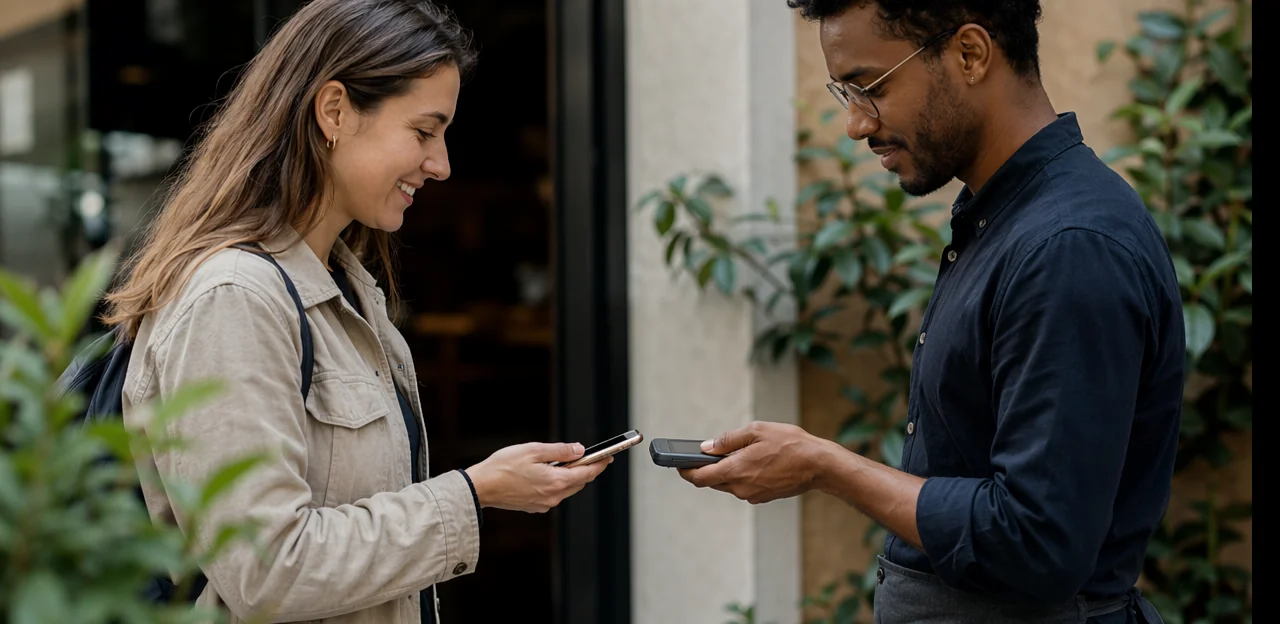
Why tap-and-scan experiences are growing
One of the biggest customer experience trends in physical venues is the rise of NFC and QR touchpoints. They give customers a fast, low-friction way to move from the physical world to digital actions without apps, queues, or staff dependency.
- Access and convenience: enable room entry, event check-in, digital menus, and self-service information.
- Better decision-making: surface product details, allergen info, availability, and how-to content instantly.
- Revenue and retention: support payments, reviews, loyalty enrollment, and personalized offers at the moment of intent.
For brands, this improves QR customer experience and scales contactless engagement while capturing first-party data that can power smarter follow-up and more relevant loyalty journeys.
Best use cases for physical venues across industries
Across today’s customer experience trends, physical venues are using contactless venue technology to reduce friction and grow first-party data:
- Retail stores: Use NFC in retail for product details, reviews, size guides, and instant loyalty sign-ups at shelves or fitting rooms.
- Hotels: Place QR codes in rooms, lobbies, and spas for check-in support, service requests, upsells, and post-stay feedback capture.
- Restaurants: Add table-side QR code use cases like menus, reorder flows, waitlist joins, and visit-triggered rewards.
- Event spaces: Use tap-to-register badges, venue maps, session check-ins, and sponsor engagement forms.
- Service locations: Clinics, salons, and banks can simplify appointment check-in, FAQs, feedback, and personalized offers.
Tools like Tapsy can help connect these touchpoints to loyalty and data capture.
Designing touchpoints that customers actually use
To align with customer experience trends, effective touchpoint design should make the next step obvious, fast, and worthwhile.
- Place touchpoints where intent is highest: entrances, tables, checkout, waiting zones, and post-service moments outperform random placements.
- Use clear messaging: tell people exactly what happens after the scan or tap, how long it takes, and what they get.
- Offer relevant incentives: discounts, loyalty points, instant perks, or service recovery options improve QR conversion optimization.
- Optimize for mobile: fast-loading pages, minimal fields, large buttons, and wallet-friendly rewards reduce drop-off in the mobile customer journey.
- Design the follow-up journey: confirm completion, deliver the reward instantly, and trigger a useful next action. Platforms like Tapsy can help connect physical touchpoints to loyalty and feedback flows.
Data privacy is now central to customer trust and CX performance

- Privacy in customer experience is now a growth driver. Among today’s customer experience trends, brands earn customer trust by asking for clear consent, explaining why data is collected, and making opt-outs simple.
- Strong data privacy practices improve participation rates because guests feel safer sharing preferences when value and safeguards are obvious.
- Secure, transparent experiences also protect brand reputation: one unclear policy or breach can reduce engagement and loyalty for years.
Use plain-language notices, collect only necessary first-party data, and regularly communicate how it improves the guest experience.
Building privacy-first experiences in physical venues
Privacy-first marketing is becoming central to customer experience trends in physical venues. To embed trust across in-person and digital touchpoints:
- Use clear disclosures: Explain what data is collected via QR codes, NFC taps, Wi-Fi, or loyalty sign-ups, and why.
- Offer consent management: Let guests easily opt in, update preferences, or withdraw consent.
- Collect only what’s needed: Minimize fields to reduce friction and risk.
- Protect secure customer data: Encrypt, limit access, and audit systems regularly.
- Train staff: Ensure teams can explain privacy practices confidently at every touchpoint.
How to future-proof CX with compliant data practices
To stay ahead of customer experience trends, venues should build systems that make data compliance easy to update as rules and expectations change.
- Choose flexible tools with clear consent management, preference controls, and easy data deletion.
- Create a proactive privacy strategy that explains what data you collect, why it matters, and how it improves service.
- Audit workflows regularly so loyalty, AI, and touchpoint data stay aligned with evolving standards.
When treated as a growth enabler, compliance helps future-proof customer experience by building trust, transparency, and stronger first-party relationships.
Conclusion
As physical venues compete on more than price or product alone, the businesses that win will be the ones that turn every in-person interaction into a smarter, more connected experience. The most important customer experience trends point in the same direction: using AI to personalize service and uncover actionable insights, building first-party data strategies that reduce reliance on third-party platforms, and creating loyalty programs that feel seamless, relevant, and rewarding across the customer journey.
At the same time, technologies like NFC and QR touchpoints are making it easier to gather feedback, trigger offers, and connect digital convenience with real-world environments—without adding friction. But success depends on trust. Strong data privacy practices, transparent consent, and clear value exchange are now essential parts of any modern customer experience strategy.
For venue operators across industries, the next step is clear: audit your current touchpoints, identify where customer data is being lost, and invest in tools that help you act on insights in real time. Solutions such as Tapsy can support this shift by combining real-time engagement, first-party data capture, and loyalty activation in physical spaces.
If you want to stay ahead of evolving customer experience trends, start by reviewing your loyalty flows, feedback systems, and privacy framework—and explore resources, platforms, and analytics tools that help turn every visit into a lasting relationship.
Frequently Asked Questions
- What are the main customer experience trends for physical venues right now?
The main trends are AI-driven personalization, first-party data strategies, experience-led loyalty, connected NFC and QR touchpoints, and stronger privacy practices. Together, these help venues make service faster, more relevant, and easier to measure across in-person interactions.
- Why are customer experience trends becoming more important for physical venues?
Physical venues are expected to deliver fast, relevant, and consistent experiences across digital and on-site touchpoints. Rising acquisition costs, retention pressure, labor constraints, and weaker third-party tracking are pushing businesses to build smarter direct relationships with visitors.
- How can AI improve the in-person customer journey?
AI can personalize recommendations, trigger dynamic offers, and send context-aware messages based on visit history, loyalty status, timing, or location in the venue. It also helps teams respond faster by turning customer and operational data into practical actions during the visit.
- What is the difference between AI for personalization and AI for operations in a venue?
Personalization AI focuses on guest-facing experiences such as relevant offers, recommendations, and messaging. Operational AI focuses on reducing friction through queue prediction, staffing optimization, service automation, and demand forecasting.
- How should venues balance automation with human hospitality?
Automation works best for routine tasks like check-in prompts, queue updates, FAQs, booking confirmations, and simple offers. Staff should stay central for complaints, special requests, emotional situations, and premium interactions where empathy and judgment matter most.
- Why is first-party data so important for physical businesses?
First-party data gives venues a direct, privacy-first way to understand behavior, engagement quality, and marketing performance. It becomes especially valuable as third-party tracking becomes less reliable and businesses need stronger owned customer relationships.
- What are the best ways to collect customer data ethically in physical venues?
Use clear, consent-based collection at touchpoints like bookings, check-ins, guest Wi-Fi, digital receipts, loyalty sign-ups, QR or NFC interactions, and post-visit surveys. Ask only for information that improves the experience, explain the value clearly, and make opt-ins transparent.
- What kinds of insights can venues get from first-party data?
Venues can track visit frequency, dwell time, purchase behavior, campaign response, and loyalty activity. When these signals are connected, teams can identify high-value segments, churn risk, and opportunities to improve staffing, merchandising, offers, and retention.
- How are loyalty programs changing in physical venues?
Loyalty is shifting from simple points and discounts toward more personalized, experience-led relationships. Stronger programs reward customers with relevant perks, exclusive access, recognition, and convenience that fits naturally into the visit.
- How can loyalty be embedded into real-world customer touchpoints?
Loyalty can be built into booking, check-in, entry, receipts, kiosks, staff interactions, and mobile messages during the visit. NFC taps and QR scans can also unlock instant benefits tied to location, making participation feel useful instead of separate from the experience.
- Which loyalty metrics matter most for measuring retention impact?
Key metrics include repeat visit rate, redemption rates, visit frequency, incremental spend, and customer lifetime value. These show whether better experiences are increasing retention, engagement, and long-term business value.
- Why are NFC and QR touchpoints growing so quickly in physical venues?
They let customers move from physical spaces to digital actions quickly without needing apps, waiting in line, or relying on staff. They also support access, information, payments, reviews, loyalty enrollment, and personalized offers at moments of high intent.
- What are some practical NFC and QR use cases across industries?
Retail can use them for product details, reviews, size guides, and loyalty sign-ups. Hotels can support service requests and upsells, restaurants can enable menus and reorder flows, event spaces can manage check-ins and maps, and service locations can simplify appointments, FAQs, and feedback.
- How can venues design QR and NFC touchpoints that customers actually use?
Place them where customer intent is highest, such as entrances, tables, checkout areas, waiting zones, and post-service moments. Use clear messaging, offer a relevant incentive, keep the mobile experience simple, and make the follow-up action immediate and useful.
- What privacy practices help build trust while improving customer experience?
Use plain-language disclosures, collect only necessary data, offer simple consent management, and make preference updates or opt-outs easy. Protect data with secure systems, limit access, audit workflows regularly, and train staff to explain privacy practices clearly.