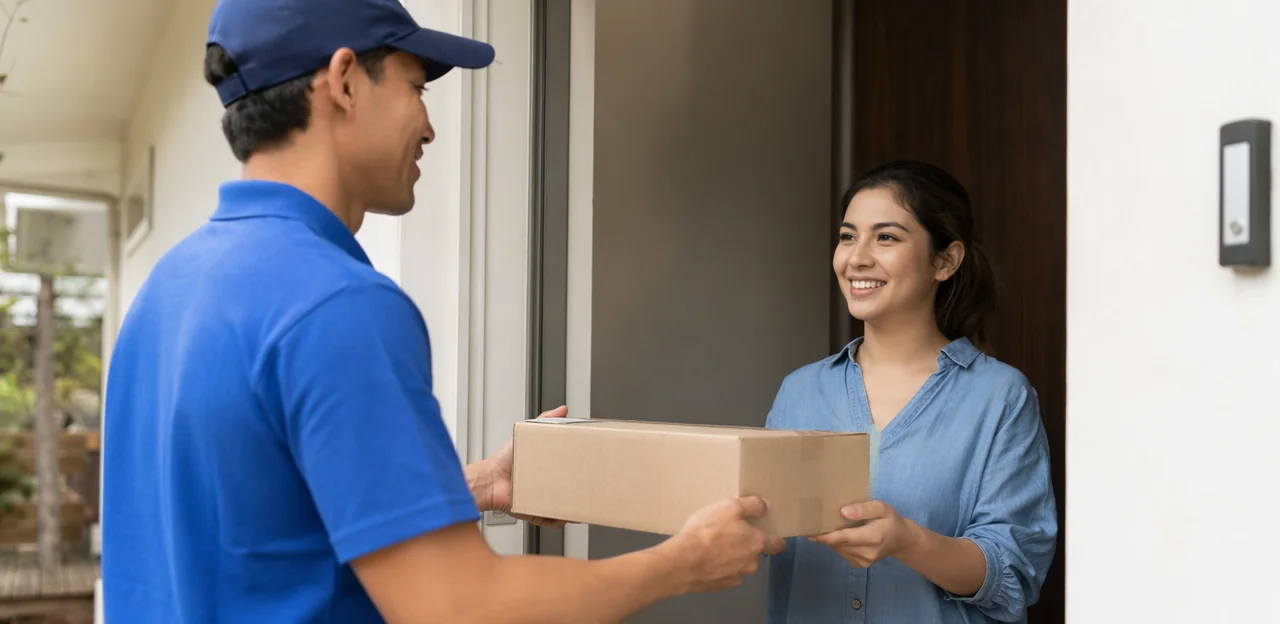
Every last-mile delivery is a make-or-break moment. Customers may forget the checkout process, but they rarely forget a late arrival, a missed handoff, or poor communication at the door. For home delivery teams, that final stretch is where brand promises are either fulfilled or broken—and where small operational issues can quickly turn into costly customer churn.
That’s why delivery experience analytics has become essential for modern delivery operations. More than tracking on-time performance alone, it helps teams understand the full customer journey: from dispatch accuracy and driver behavior to delivery windows, communication quality, failed attempts, and post-delivery satisfaction. With the right analytics in place, businesses can move beyond reactive problem-solving and start identifying patterns, predicting friction points, and improving service at scale.
In this article, we’ll explore how delivery experience analytics supports last-mile and home delivery teams in creating faster, smoother, and more reliable customer experiences. We’ll also look at the role of AI, integrations, and connected data in turning fragmented delivery touchpoints into actionable insights—helping operations leaders improve efficiency, reduce complaints, and build stronger customer trust.
What delivery experience analytics means in home delivery

Defining delivery experience analytics
Delivery experience analytics is the practice of measuring, analyzing, and improving the customer-facing side of delivery operations across the last mile. While traditional logistics metrics focus on cost and route efficiency, home delivery analytics looks at how customers actually experience the delivery.
It typically tracks:
- Communication: delivery notifications, ETA updates, and issue alerts
- Timing: on-time arrival, delivery window accuracy, and delays
- Visibility: real-time tracking, proof of delivery, and order status transparency
- Satisfaction: feedback, complaints, ratings, and successful first-attempt deliveries
For last-mile and home delivery teams, the goal is simple: connect operational data with customer sentiment to spot friction points and improve service. Actionable delivery experience analytics helps teams reduce missed deliveries, strengthen trust, and create a more consistent, customer-friendly delivery journey.
Why the last mile shapes customer perception
The last-mile delivery experience is the moment customers remember most. A smooth handoff builds confidence; a late, unclear, or missed delivery can quickly erode trust, even if everything upstream worked perfectly. That is why delivery experience analytics matters: it turns the final stop from a blind spot into a measurable customer experience moment.
- Brand trust: Accurate ETAs, proactive updates, and proof of delivery reduce anxiety and increase reliability.
- Repeat purchases: A consistent customer delivery experience makes customers more likely to buy again.
- Support volume: Tracking failed attempts, delay reasons, and communication gaps helps teams fix root causes and prevent “Where is my order?” contacts.
For home delivery teams, measuring the last-mile delivery experience is not just operational reporting—it is essential to protecting revenue and loyalty.
Core metrics teams should monitor
Strong delivery experience analytics starts with a focused set of delivery KPIs that reveal where the customer journey breaks down and where operations can improve. Prioritize these delivery performance metrics:
- On-time delivery rate: Measures how often orders arrive within the promised window.
- ETA accuracy: Compares predicted arrival times to actual delivery times to improve communication and trust.
- First-attempt success rate: Tracks completed deliveries without reattempts, reducing cost and friction.
- Delivery exception rate: Monitors failed, delayed, damaged, or incomplete deliveries.
- Customer satisfaction and NPS: Capture how customers feel about speed, communication, and professionalism.
- Proof-of-delivery completion: Ensures photos, signatures, or confirmations are consistently recorded.
Review these metrics by route, driver, region, and time slot to identify patterns and take corrective action quickly.
Key benefits of delivery experience analytics for operations and customer satisfaction
Improving visibility and proactive communication
Delivery experience analytics helps last-mile teams turn missed updates into better customer communication. By analyzing scan events, ETA accuracy, failed delivery reasons, and support contacts, teams can spot where delivery visibility breaks down and fix it fast.
- Identify communication gaps: Find routes, carriers, or time slots where customers receive late, unclear, or missing delivery notifications.
- Optimize notification timing: Test which messages work best at dispatch, en route, arrival, delay, and proof-of-delivery stages.
- Improve delivery windows: Use historical traffic, driver performance, and stop density to provide tighter, more accurate ETAs.
- Enable real-time updates: Trigger automated alerts when drivers are ahead, delayed, or unable to complete a stop.
With the right analytics, teams reduce WISMO calls, improve trust, and create a more predictable delivery experience.
Reducing failed deliveries and service exceptions
Delivery experience analytics helps teams turn recurring issues into clear operational fixes. By analyzing exception codes, driver notes, GPS timestamps, and customer communication data, teams can identify the root causes behind failed delivery reduction efforts and recurring delivery exceptions.
- Spot address quality issues: Flag incomplete, invalid, or frequently corrected addresses and trigger address verification before dispatch.
- Identify route-delay patterns: Compare delays by zone, time window, weather, carrier, or driver to refine routing and staffing.
- Track customer no-shows: Analyze missed deliveries by appointment type, reminder timing, and proof-of-attempt data to improve notifications.
- Prioritize corrective actions: Use dashboards to surface high-risk orders and automate proactive outreach for likely exceptions.
With the right analytics and integrations, teams can prevent avoidable failures, improve first-attempt success, and reduce costly re-delivery cycles.
Connecting experience metrics to business outcomes
Delivery experience analytics turns operational signals into measurable financial gains. When teams connect delivery events to customer and revenue outcomes, they can prioritize fixes that improve customer satisfaction delivery and long-term delivery ROI.
- Lower support costs: Track WISMO contacts, failed deliveries, and ETA accuracy to identify where proactive notifications or better routing reduce inbound calls and refunds.
- Increase retention: Measure repeat purchase rates after on-time, well-communicated deliveries. Customers who trust the experience are more likely to reorder.
- Improve reviews: Link NPS, CSAT, and review sentiment to delivery windows, driver professionalism, and issue resolution speed.
- Strengthen profitability: Compare experience metrics with cost per delivery, basket size, and churn to find the highest-value improvements.
Use dashboards that combine operational, CX, and financial data so teams can act on what drives profit fastest.
How AI and analytics improve last-mile delivery performance
Using predictive analytics for ETA accuracy and risk detection
Delivery experience analytics becomes far more useful when teams apply predictive delivery analytics to live operations. Instead of reacting to missed windows, predictive models estimate delay risk early and continuously improve ETA accuracy by learning from multiple variables, including:
- real-time and historical traffic patterns
- route history and stop density
- weather conditions
- driver behavior, such as speed, idle time, and dwell time
With these inputs, teams can:
- Forecast delays sooner so dispatchers can reroute or rebalance loads before service levels slip.
- Flag at-risk deliveries based on patterns linked to late arrivals, failed attempts, or customer dissatisfaction.
- Refine ETAs dynamically as conditions change throughout the day.
The result is better customer communication, fewer surprises, and more confident delivery planning.
Applying AI to customer communication and exception management
With delivery experience analytics, teams can use AI in home delivery to turn raw tracking data into faster, more relevant customer communication and stronger delivery exception management.
- Trigger smarter alerts: AI detects patterns such as traffic delays, failed delivery risk, weather disruption, or route deviation, then sends proactive alerts before customers need to ask.
- Personalize updates: Instead of generic messages, AI tailors delivery ETAs, reschedule options, and channel preferences based on customer history and order type.
- Prioritize exceptions: Machine learning can rank issues by urgency, customer value, perishability, or SLA risk so dispatch and support teams focus on the most critical deliveries first.
- Speed up support responses: AI surfaces root-cause insights, recommended actions, and next-best responses, helping agents resolve delivery issues faster and more consistently.
Turning raw delivery data into actionable insights
Delivery experience analytics helps teams convert scattered operational data into decisions that improve performance every day. Instead of reacting only when complaints rise, operations leaders can use a delivery analytics dashboard to spot patterns early and act faster.
- Dashboards centralize on-time rates, failed deliveries, ETA accuracy, proof-of-delivery issues, and customer feedback in one view.
- Trend analysis reveals recurring problems by route, driver, region, time window, or carrier, turning raw metrics into last-mile analytics insights.
- Automated reporting delivers scheduled summaries and exception alerts, so managers focus on fixing root causes rather than compiling spreadsheets.
This shift supports continuous improvement: refine routes, coach teams, adjust delivery promises, and measure whether changes actually improve the customer experience. Platforms with real-time reporting and integrations, such as Tapsy, can further accelerate insight-driven operations.
The role of integrations in a complete delivery analytics strategy

Connecting TMS, OMS, CRM, and customer communication tools
Strong delivery experience analytics starts with connected data. If your TMS, OMS, CRM, and messaging platforms operate in silos, teams cannot see the full delivery journey or diagnose failures accurately. Effective delivery integrations create a single view that links:
- OMS data: order details, promised windows, item availability, exceptions
- TMS data: route plans, driver status, ETA changes, proof of delivery
- CRM data: customer preferences, history, loyalty status, service issues
- Communication events: SMS, email, call center logs, chatbot interactions
This TMS OMS CRM integration helps teams trace why customers become dissatisfied, automate proactive updates, and improve routing, staffing, and recovery workflows. The result is faster issue resolution, better personalization, and more reliable last-mile performance.
Creating a single source of truth for delivery performance
Strong delivery experience analytics starts with unified data. When dispatch, routing, proof of delivery, surveys, and contact center platforms are connected through delivery data integration, teams can eliminate silos and see how operations affect customer outcomes in one place.
- Compare on-time rates, failed deliveries, and driver productivity with CSAT, NPS, and post-delivery survey feedback.
- Link contact center activity to delivery events to spot patterns behind “where is my order?” calls, complaints, or repeat contacts.
- Build shared dashboards for operations, support, and CX teams to improve delivery performance visibility and prioritize fixes faster.
This approach helps teams move from reactive reporting to proactive service recovery. Solutions with flexible integrations, such as Tapsy, can support faster insight-sharing across systems.
What to look for in an analytics-ready delivery platform
When evaluating a delivery analytics platform, prioritize tools that turn raw operational data into actionable delivery experience analytics for dispatch, support, and operations teams. Look for:
- Flexible APIs and webhooks to support reliable home delivery software integrations with routing, CRM, OMS, and customer communication tools.
- Real-time data syncing so order status, driver events, delays, and proof-of-delivery updates are instantly available.
- Customizable dashboards that let teams track KPIs by region, carrier, time slot, or delivery exception.
- Granular event tracking for milestones like dispatch, en route, arrival, failed attempts, and customer feedback.
- Scalability to handle higher order volumes, new markets, and more complex workflows without losing visibility.
Platforms with strong integration and reporting foundations deliver faster insights and better customer outcomes.
Best practices for implementing delivery experience analytics
Start with goals, use cases, and baseline metrics
A strong delivery experience analytics program starts with business priorities, not dashboards. First, define what success looks like in your operation, then map analytics to those outcomes.
- Set clear goals: reduce failed deliveries, improve first-attempt success, raise CSAT, lower WISMO contacts, or shorten delivery windows.
- Prioritize use cases: exception alerts, ETA accuracy, proof-of-delivery quality, customer communication, or driver performance.
- Capture delivery baseline metrics: document current failed-delivery rate, on-time percentage, average delay, CSAT/NPS, contact center volume, and redelivery costs.
This approach creates a practical delivery analytics strategy and makes it easier to prove ROI. With reliable delivery baseline metrics, teams can measure improvement, spot gaps faster, and scale analytics initiatives with confidence.
Align operations, customer service, and leadership teams
Delivery experience analytics creates value only when insights are owned across the business. High-performing cross-functional delivery teams use shared dashboards, common KPIs, and clear escalation paths so issues uncovered in the data turn into action.
- Operations should use delivery operations analytics to fix route inefficiencies, staffing gaps, and failed-attempt patterns.
- Customer service should turn recurring delivery exceptions into better messaging, proactive alerts, and faster resolution workflows.
- Leadership should review experience trends regularly, assign owners to priority issues, and hold teams accountable for improvement targets.
This cross-functional model reduces silos, improves communication, and ensures analytics drives measurable service and process changes.
Review, test, and optimize continuously
Strong delivery experience analytics programs are never static. To drive better delivery optimization and support continuous improvement delivery, build a regular testing and review cadence:
- A/B test customer notifications: Compare SMS, email, and app alerts, along with timing, tone, and ETA detail, to see what reduces missed deliveries and support calls.
- Adjust routes using real outcomes: Review delay patterns, failed attempts, and driver feedback to refine route logic and stop sequencing.
- Close the feedback loop: Combine customer surveys, driver notes, and support tickets to uncover recurring friction points quickly.
- Review KPIs consistently: Track on-time delivery, first-attempt success, CSAT, and exception rates weekly or monthly to spot trends and act fast.
Over time, small, measured changes compound into a better delivery experience.
Choosing the right metrics and next steps for home delivery teams
Metrics that matter most by delivery model
Strong delivery experience analytics starts with choosing the right home delivery metrics for your operation, not tracking every possible data point. Prioritize these last-mile delivery KPIs by model:
- Big and bulky delivery: on-time appointment adherence, first-attempt success, damage rate, install completion, and customer effort score.
- Grocery delivery: order accuracy, substitution acceptance, cold-chain compliance, delivery window performance, and refund rate.
- Parcel delivery: first-attempt delivery rate, cost per stop, route density, proof-of-delivery completion, and exception rate.
- Scheduled home services: technician punctuality, job duration variance, fix/install completion, reschedule rate, and post-visit satisfaction.
Match KPIs to service promises to improve both efficiency and customer trust.
Common mistakes to avoid
When building a delivery experience analytics program, avoid these common pitfalls:
- Tracking too many metrics: Too many dashboards create noise. Focus on a small set of high-impact customer experience metrics such as on-time delivery, ETA accuracy, first-attempt success, and CSAT.
- Ignoring customer feedback: Operational data alone misses friction points like poor communication or confusing handoff experiences.
- Relying only on lagging indicators: Metrics like monthly complaints are useful, but they won’t help teams prevent issues in real time.
- Failing to act on insights: One of the biggest delivery analytics mistakes is collecting data without linking it to dispatch, routing, staffing, or driver coaching decisions.
Building a roadmap for analytics maturity
A practical analytics maturity model helps teams evolve delivery experience analytics from hindsight reporting to real-time, AI-driven decisions:
- Start with visibility: Track core KPIs like on-time delivery, first-attempt success, ETA accuracy, and customer satisfaction.
- Integrate data sources: Connect TMS, driver apps, CRM, support tickets, telematics, and order systems to create a unified delivery view.
- Automate reporting: Replace manual spreadsheets with live dashboards, alerts, and exception workflows.
- Advance to predictive insights: Use advanced delivery analytics to forecast delays, failed deliveries, and capacity gaps.
- Optimize continuously: Apply AI to improve routing, staffing, communication timing, and proactive issue resolution.
Platforms with strong integrations and AI capabilities, such as Tapsy, can help accelerate this progression.
Conclusion
In last-mile and home delivery, every customer interaction matters. That’s why delivery experience analytics has become essential for teams looking to improve on-time performance, reduce failed deliveries, strengthen communication, and turn operational data into better customer outcomes. By connecting data across routing, driver behavior, customer notifications, proof of delivery, and support touchpoints, businesses gain a clearer view of what shapes the delivery experience from dispatch to doorstep.
The biggest advantage of delivery experience analytics is that it moves teams from reactive problem-solving to proactive optimization. Instead of guessing why customers are dissatisfied, operations leaders can identify friction points early, improve delivery windows, personalize communication, and make smarter decisions across carriers, systems, and workflows. With the right AI and integration strategy, these insights become even more actionable at scale.
Now is the time to assess how your organization captures and uses delivery data. Start by auditing your current delivery journey, identifying blind spots, and prioritizing the metrics that matter most to customers. Then explore platforms and integrations that unify data and surface real-time insights. Solutions such as Tapsy, where relevant, can also illustrate how AI-powered analytics and engagement tools help teams act faster on experience signals.
Invest in delivery experience analytics now to build a more reliable, transparent, and customer-centric delivery operation.
Frequently Asked Questions
- What is delivery experience analytics in home delivery?
Delivery experience analytics measures and improves the customer-facing side of last-mile delivery operations. It looks beyond cost and route efficiency to track communication, timing, visibility, and satisfaction across the delivery journey.
- Why does the last mile have such a strong impact on customer perception?
The final handoff is often the part customers remember most. Accurate ETAs, proactive updates, and proof of delivery build trust, while late, unclear, or missed deliveries can quickly damage loyalty and increase support contacts.
- Which delivery KPIs should last-mile teams monitor first?
Start with on-time delivery rate, ETA accuracy, first-attempt success rate, delivery exception rate, customer satisfaction or NPS, and proof-of-delivery completion. Reviewing these by route, driver, region, and time slot helps teams find patterns and act faster.
- How can delivery experience analytics reduce WISMO calls?
Teams can analyze scan events, ETA accuracy, failed delivery reasons, and support contacts to find where visibility breaks down. Better notification timing, tighter delivery windows, and real-time alerts make the experience more predictable and reduce inbound status questions.
- How do teams use analytics to reduce failed deliveries?
Teams can examine exception codes, driver notes, GPS timestamps, and customer communication data to identify root causes. That makes it easier to flag bad addresses, detect route-delay patterns, improve reminder timing, and prioritize proactive outreach for at-risk orders.
- What business outcomes can be tied to delivery experience metrics?
Delivery experience metrics can be linked to support costs, repeat purchases, reviews, and profitability. When teams connect delivery events with customer and revenue outcomes, they can focus on improvements that reduce refunds, strengthen retention, and improve delivery ROI.
- How does predictive analytics improve ETA accuracy?
Predictive models use inputs such as traffic patterns, route history, stop density, weather, and driver behavior to estimate delay risk earlier. This helps teams refine ETAs dynamically, flag at-risk deliveries, and reroute or rebalance work before service levels slip.
- How can AI improve customer communication during delivery?
AI can detect likely delays, failed delivery risk, weather disruption, or route deviation and trigger proactive alerts before customers ask for updates. It can also personalize ETAs, reschedule options, and communication channels based on customer history and order type.
- What makes a delivery analytics dashboard useful for operations teams?
A useful dashboard brings together on-time rates, failed deliveries, ETA accuracy, proof-of-delivery issues, and customer feedback in one place. It should also support trend analysis and automated reporting so managers can focus on fixing root causes instead of compiling spreadsheets.
- Why are integrations between TMS, OMS, CRM, and messaging tools important?
Connected systems create a single view of the delivery journey, linking order details, route plans, customer history, and communication events. This helps teams trace dissatisfaction more accurately, automate proactive updates, and improve routing, staffing, and recovery workflows.
- What should companies look for in an analytics-ready delivery platform?
Key capabilities include flexible APIs and webhooks, real-time data syncing, customizable dashboards, granular event tracking, and scalability. These features help teams turn raw operational data into actionable insights across dispatch, support, and operations.
- What is the best way to start implementing delivery experience analytics?
Begin with business goals and use cases rather than building dashboards first. Define targets such as reducing failed deliveries or raising CSAT, then capture baseline metrics like on-time percentage, average delay, contact volume, and redelivery costs.
- How should operations, customer service, and leadership work together on delivery analytics?
Shared dashboards, common KPIs, and clear escalation paths help teams turn insights into action. Operations can address route and staffing issues, customer service can improve messaging and resolution workflows, and leadership can assign owners and track improvement targets.
- Which metrics matter most for different home delivery models?
The right KPIs depend on the service model. Big and bulky delivery should emphasize appointment adherence and damage rate, grocery should focus on order accuracy and cold-chain compliance, parcel should prioritize first-attempt rate and proof of delivery, and scheduled services should track punctuality, job duration variance, and post-visit satisfaction.
- What common mistakes should teams avoid when building a delivery analytics program?
Common mistakes include tracking too many metrics, ignoring customer feedback, relying only on lagging indicators, and failing to act on insights. A stronger approach is to focus on a small set of high-impact metrics and connect findings to dispatch, routing, staffing, and driver coaching decisions.