
A late arrival, a damaged package, or a missing item might seem like isolated delivery problems, but customer comments often tell a bigger story. The right delivery feedback examples can reveal where the delivery experience is breaking down, how customers actually perceive your service, and which issues deserve immediate recovery before they turn into lost loyalty.
In home delivery, feedback is more than a satisfaction score. A short complaint about poor packaging, unclear communication, or an unfriendly handoff can point to deeper operational gaps across routing, driver performance, order accuracy, and customer support. When businesses know how to read these signals, they can move from reacting to complaints to building a stronger, more reliable service recovery process.
This article explores practical delivery feedback examples that highlight common service failures and the recovery opportunities hidden inside them. You’ll see how specific types of feedback can uncover trends, guide faster responses, and help teams improve the full home delivery journey. We’ll also look at how collecting feedback closer to the moment of delivery, using tools such as Tapsy, can make it easier to catch issues early, resolve them quickly, and protect the overall customer experience.
Why delivery feedback matters in home delivery service recovery

How customer feedback exposes hidden delivery experience issues
Tracking data can confirm a package was delivered on time, but it rarely explains how the delivery experience felt. That is where customer delivery feedback becomes essential. Direct comments uncover issues that dashboards often miss, including:
- confusing ETA updates or no arrival warning
- rude, rushed, or unprofessional driver behavior
- damaged packaging or mishandled items
- missed handoff instructions or unsafe drop-off locations
- frustration caused by delays, silence, or unmet expectations
These delivery feedback examples reveal root causes behind poor satisfaction scores and repeat complaints. Use open-text feedback after each order, tag comments by issue type, and trigger fast service recovery for negative responses. Tools like Tapsy can help capture fresh feedback while the delivery moment is still top of mind.
The link between feedback, customer satisfaction, and loyalty
Well-managed delivery complaints can become loyalty-building moments. When brands act quickly, take ownership, and respond with empathy, service recovery does more than fix one order—it protects future revenue and improves customer satisfaction. Strong delivery feedback examples often show that customers remember how a problem was handled more than the problem itself.
- Respond fast: A prompt refund, replacement, or status update reduces frustration before trust declines.
- Show empathy: A sincere apology and clear next step make customers feel heard.
- Close the loop: Confirm the resolution and ask for follow-up feedback to rebuild confidence.
Tools like Tapsy can help capture issues quickly and trigger faster recovery actions.
Common home delivery moments that generate actionable feedback
The best delivery feedback examples come from the moments customers notice most during home delivery. Focus on these touchpoints to uncover real delivery service issues and improve recovery speed:
- Ordering: Was checkout easy, inventory accurate, and delivery options clear?
- Dispatch updates: Did confirmation, tracking, and delay alerts arrive on time?
- Arrival windows: Was the promised time realistic, and was the driver punctual?
- Handoff: Was the delivery professional, complete, and placed correctly?
- Product condition: Did items arrive fresh, undamaged, and as ordered?
- Post-delivery follow-up: Ask for post-delivery feedback immediately to catch missing items, poor packaging, or service gaps.
Tools like Tapsy can help capture feedback quickly at these key moments.
Delivery feedback examples by issue type
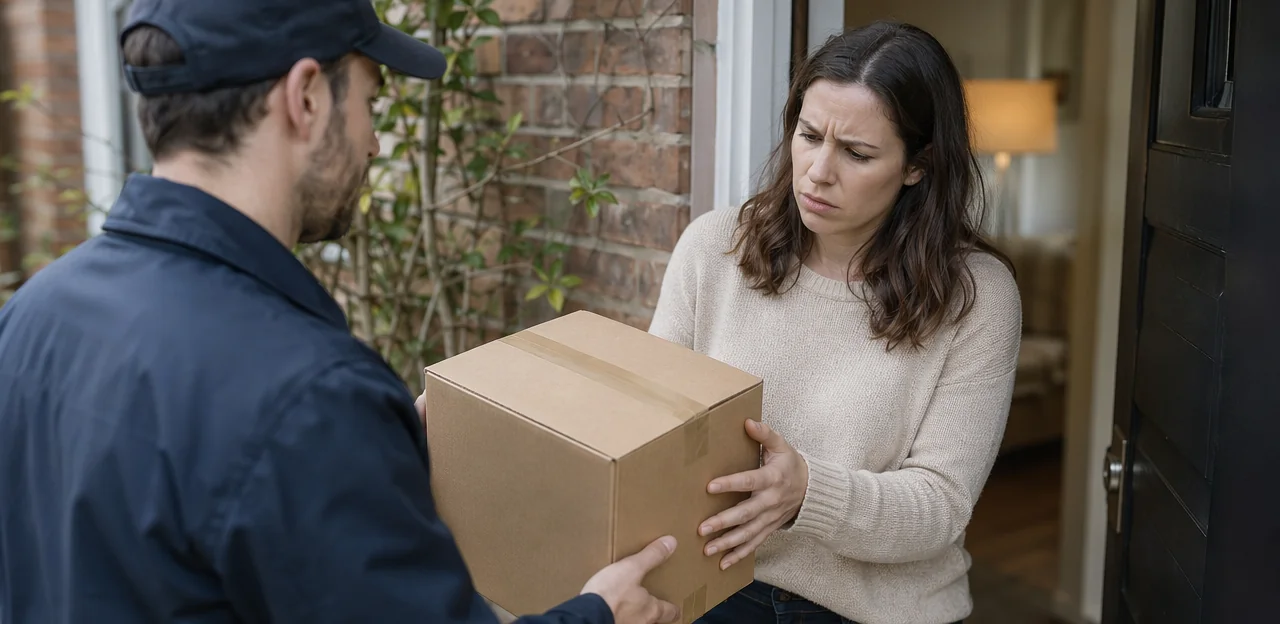
Examples of feedback about delays, missed windows, and communication gaps
These delivery feedback examples help teams spot where service recovery should start:
- “My order arrived two hours late with no explanation.”
A classic case from late delivery feedback examples. This points to route delays, weak exception handling, or no proactive outreach. Recovery should include a fast apology, status review, and compensation when appropriate. - “The driver never showed up during the promised 1–3 PM window.”
One of the most damaging delivery delay complaints, because it breaks trust and wastes the customer’s time. It suggests dispatch, driver assignment, or proof-of-attempt failures. Recovery needs immediate rebooking and clear ownership. - “The ETA kept changing, and none of the updates were accurate.”
This signals poor tracking logic or disconnected systems. Fixes should focus on more realistic ETAs and alert rules for delays. - “I had no updates after checkout and had to contact support myself.”
This highlights serious delivery communication issues. Recovery should include automated notifications, live tracking, and post-delivery feedback capture—potentially through tools like Tapsy.
Examples of feedback about damaged orders and poor handoff experiences
These delivery feedback examples often point to fixable gaps in packaging, picking accuracy, driver training, and handoff standards:
- “My order arrived with broken jars and leaking packaging.”
Common root causes include weak packing materials, poor stacking, or lack of fragile-item handling instructions. This type of damaged delivery feedback signals a packaging and carrier coordination issue. - “Two items were missing, but I was charged for everything.”
These missing order complaints usually trace back to rushed picking, no final order verification, or split shipments that were not clearly communicated. - “The driver dropped the bag at the door and left before I could check it.”
This suggests careless handling, unrealistic delivery time targets, or weak proof-of-handoff processes. - “Part of the order never arrived, and the driver seemed annoyed when I asked about it.”
Among the most useful delivery experience examples, this highlights incomplete deliveries combined with poor customer interaction training.
Capturing this feedback quickly—through receipt surveys or tools like Tapsy—helps teams identify patterns and recover issues before customers churn.
Examples of feedback about convenience, professionalism, and trust
These delivery feedback examples show how small service details shape the full home delivery experience and often reveal clear service recovery opportunities:
- Driver courtesy: “The package arrived on time, but the driver seemed rushed and dismissive when I asked a question.”
This points to a driver professionalism issue, even when operational performance looks acceptable. - Ease of scheduling: “Changing my delivery window was confusing, and I didn’t know if my request went through.”
Friction in scheduling can reduce confidence before the order even arrives. - Proof of delivery: “I got a delivery notification, but there was no clear photo showing where the package was left.”
Weak proof of delivery creates trust gaps and increases support contacts. - Special instructions: “I asked for the order to be left at the side door, but it was placed at the front entrance.”
Ignoring instructions makes customers feel unheard. - Safety concerns: “The driver parked unsafely and left the parcel in a visible area.”
Safety and judgment strongly influence trust.
Tools like Tapsy can help teams capture these soft-skill issues quickly and trigger faster recovery.
How to analyze delivery feedback for service recovery opportunities

Categorize feedback into operational, communication, and people issues
To analyze delivery feedback effectively, sort comments into clear delivery issue categories first. This helps teams spot service recovery opportunities faster and assign action to the right owner.
- Operational issues: logistics, routing, stock, packaging, damaged items, missing products, or late delivery windows
- Communication issues: unclear ETAs, no status updates, confusing instructions, policy misunderstandings, or poor issue resolution messaging
- People issues: driver behavior, handoff quality, courtesy, problem-solving, or failure to follow delivery instructions
A simple rule: ask what failed first. If the core problem was movement of goods, it is operational. If the customer felt uninformed, it is communication. If the interaction caused the complaint, it is people-related.
Using this framework with delivery feedback examples makes trends easier to track and improves escalation speed. Tools like Tapsy can also help route feedback into the right category in real time.
Identify root causes behind repeated customer complaints
Strong delivery feedback examples do more than highlight isolated issues—they support root cause analysis. The goal is to move from individual comments to patterns that explain why problems keep happening.
- Group complaints by route and delivery zone to spot location-specific delays, access issues, or driver shortages.
- Compare time slots to identify peak-hour congestion, missed ETAs, or staffing gaps.
- Segment by product type to uncover packaging failures, temperature-control issues, or handling problems.
- Review delivery partners and drivers for recurring service, accuracy, or communication issues.
- Track customer feedback trends over time to separate one-off incidents from repeat failure points.
This kind of delivery complaints analysis helps teams fix operational weaknesses instead of repeatedly treating symptoms. Tools like Tapsy can help organize feedback by route, partner, and time window for faster diagnosis.
Prioritize issues by business impact and customer effort
Not all delivery feedback examples deserve the same response. Strong feedback prioritization helps teams direct recovery time and budget to issues that create the biggest operational and customer risk.
Use a simple ranking model for each feedback theme:
- Frequency: How often does the issue appear?
- Severity: Does it involve damaged items, missed deliveries, or safety concerns?
- Refund risk: How likely is it to trigger credits, replacements, or chargebacks?
- Churn potential: Could this problem stop the customer from ordering again?
- Customer effort: How much time, inconvenience, or frustration did the customer experience?
Score each theme from 1–5, then sort by total impact. For example, a late delivery may be common, but a missing-item issue with high customer effort and refund risk may deserve faster escalation. This approach turns raw feedback into focused delivery service improvement actions.
Best practices for responding to delivery feedback

What an effective service recovery response should include
A strong service recovery response should be clear, human, and action-oriented. When responding to delivery complaints, include:
- Acknowledgment: Show you understand the specific issue raised in the delivery feedback examples.
- Apology: Use sincere, direct language. Good customer apology examples avoid excuses and focus on the customer’s experience.
- Ownership: Accept responsibility and avoid shifting blame to drivers, systems, or partners.
- Explanation: Briefly explain what happened only when it helps build trust.
- Next steps: State exactly what you will do—refund, replacement, redelivery, or investigation.
- Compensation: Offer credit or a goodwill gesture when appropriate.
- Timeline: Tell the customer when they will hear back or when the issue will be resolved.
Tools like Tapsy can help teams capture issues quickly and respond faster.
When to automate responses and when human follow-up is necessary
Use automated customer responses for simple, low-risk issues found in delivery feedback examples, such as:
- late but completed deliveries
- minor packaging concerns
- basic refund-status questions
- requests already covered by clear policy
Automation works best when the next step is predictable: confirm receipt, share tracking, issue a standard credit, or open a ticket for delivery complaint handling.
Escalate to human customer support when feedback shows:
- strong emotion or frustration
- high-value orders or VIP customers
- damaged, missing, or unsafe items
- repeat failures from the same customer, route, or driver
A good rule: automate speed, but use personal outreach where trust, empathy, and retention are at risk. Tools like Tapsy can help route urgent cases instantly.
Turning negative feedback into process improvement actions
Strong service recovery does not stop at an apology. The best delivery feedback examples show how frontline responses feed directly into process improvement and long-term fixes.
- Retrain drivers when comments mention rude handoffs, missed instructions, or unsafe drop-offs.
- Update delivery windows if customers repeatedly report late arrivals or unrealistic ETAs.
- Improve packaging when feedback highlights damaged, leaking, or poorly protected orders.
- Refine customer notifications to give clearer updates on delays, driver arrival, or failed delivery attempts.
- Tag and track patterns by route, driver, time slot, and order type to strengthen negative feedback management and support delivery operations improvement.
Tools like Tapsy can help route issues quickly to the right team.
Building a feedback-driven home delivery improvement system
Collect feedback at the right points in the delivery journey
To uncover real service recovery opportunities, time your delivery feedback collection around moments when the experience is freshest:
- Immediately after drop-off: Send a short post-delivery survey by SMS or email within 15–30 minutes to capture delivery speed, order accuracy, and package condition.
- In-app prompts: Trigger feedback after order completion in your app or tracking page while details are still top of mind.
- Support interactions: Ask for feedback after a complaint, refund, or replacement to measure recovery quality.
- Review monitoring: Track public reviews daily to catch unresolved issues and recurring delivery pain points.
A strong customer feedback system combines these channels, helping teams turn delivery feedback examples into fast, targeted service recovery actions.
Create dashboards and KPIs that connect feedback to outcomes
To turn delivery feedback examples into action, build dashboards around a small set of high-impact delivery KPIs and service recovery metrics. Track:
- Complaint rate: complaints per 100 or 1,000 deliveries to spot route, driver, or packaging issues
- First-response time: how quickly support acknowledges a problem
- Recovery resolution time: time to refund, replace, or fully resolve the issue
- Repeat issue rate: how often the same delivery problem happens again
- NPS and CSAT: core customer satisfaction metrics that show loyalty and immediate experience
- Refund and credit trends: rising compensation costs often signal deeper operational failures
Segment results by location, carrier, time window, and issue type. Tools like Tapsy can help surface these patterns faster with real-time feedback collection and alerts.
Use feedback loops across operations, support, and delivery teams
A strong cross-functional feedback loop turns isolated complaints into coordinated action. When delivery feedback examples are shared across customer support, logistics, and field teams, patterns become easier to spot and fix before they repeat.
- Centralize feedback themes: Group comments by late arrivals, damaged items, missed instructions, or driver communication.
- Assign clear owners: Support handles recovery, logistics reviews route or capacity issues, and field teams address handoff problems.
- Review trends regularly: Weekly cross-team check-ins help prioritize the biggest service gaps and track progress.
- Close the loop fast: Share what changed so every team sees how feedback drives delivery team improvement.
This approach strengthens your customer experience strategy by aligning teams around recurring issues, accountability, and continuous improvement.
Conclusion: using delivery feedback examples to improve the delivery experience

Key takeaways for identifying and acting on recovery opportunities
Delivery feedback is most useful when teams treat it as an operational signal, not just a satisfaction score. The best delivery feedback examples reveal where breakdowns happen repeatedly, how severe they are, and which recovery actions actually rebuild trust.
Key takeaways include:
- Look for patterns, not isolated complaints. Group feedback into themes such as late arrivals, damaged items, missing products, unclear delivery updates, or poor driver communication. Repeated mentions point to process-level issues that need more than a one-off fix.
- Tag feedback by route, driver, time slot, location, and order type. This makes it easier to identify whether the problem is tied to staffing, packaging, routing, or handoff quality.
- Prioritize high-impact failures first. Wrong orders, damaged goods, and missed deliveries often create the biggest risk of churn. These should trigger a fast, predefined response within your service recovery strategy.
- Respond quickly and specifically. A good recovery may include an apology, refund, replacement, delivery credit, or proactive follow-up. Speed matters, but relevance matters more.
- Close the loop internally. Share feedback trends with operations, customer support, dispatch, and fulfillment teams so each group can address root causes.
- Measure what changes after recovery. Track repeat orders, complaint volume, recovery time, and satisfaction after issue resolution to support ongoing delivery experience improvement.
Businesses that consistently review delivery feedback examples and act on them build a stronger learning cycle. Tools such as Tapsy can help capture post-delivery feedback quickly, route urgent issues, and turn customer comments into faster recovery and better long-term delivery performance.
Conclusion
Ultimately, the most valuable delivery feedback examples do more than document complaints—they spotlight exactly where service recovery can protect customer trust, reduce churn, and improve the overall delivery experience. Whether the issue is a late arrival, damaged packaging, a missing item, poor communication, or an unprofessional handoff, each piece of feedback reveals a fixable moment in the customer journey.
The key takeaway is simple: patterns matter. When businesses review delivery feedback examples consistently, they can separate one-off mistakes from recurring operational problems, identify root causes faster, and respond with the right recovery actions—refunds, replacements, credits, apologies, or process improvements. Just as importantly, timely follow-up shows customers that their experience matters.
Now is the time to turn feedback into action. Audit your current post-delivery survey process, categorize recurring complaints, and create clear service recovery workflows for frontline and support teams. If you want to streamline that process, tools like Tapsy can help collect post-delivery feedback in real time and trigger faster issue resolution.
For next steps, build a feedback library, track recovery outcomes, and review customer sentiment by route, driver, and delivery window. The more intentionally you use delivery feedback examples, the better equipped your team will be to recover service failures—and create stronger, more loyal customer relationships.
Frequently Asked Questions
- Why is delivery feedback important for service recovery in home delivery?
Delivery feedback shows how the experience felt, not just whether a package arrived on time. It helps uncover issues like poor communication, damaged packaging, missed instructions, or rude handoffs that tracking data alone may miss. Those signals help teams act before complaints turn into lost loyalty.
- What kinds of delivery problems can customer comments reveal?
Customer comments can reveal confusing ETA updates, no arrival warning, damaged items, unsafe drop-off locations, and poor driver behavior. They can also highlight frustration caused by delays, silence, or unmet expectations. These details often point to deeper operational, communication, or people-related gaps.
- How can businesses use delivery complaints to improve customer loyalty?
Fast, empathetic recovery can turn a complaint into a loyalty-building moment. A prompt refund, replacement, or status update reduces frustration, while a sincere apology and clear next step help customers feel heard. Following up after resolution helps rebuild confidence.
- Which delivery touchpoints are best for collecting actionable feedback?
Useful feedback often comes from ordering, dispatch updates, arrival windows, handoff, product condition, and post-delivery follow-up. These are the moments customers notice most during the home delivery journey. Capturing feedback at these points makes it easier to identify where the experience is breaking down.
- What does feedback about late deliveries usually indicate?
Comments about late arrivals often point to route delays, weak exception handling, unrealistic delivery windows, or poor proactive communication. If a customer says the driver missed the promised window or the ETA kept changing, dispatch and tracking processes may need attention. Recovery should focus on fast acknowledgment, status review, and clear next steps.
- What can damaged or missing order feedback tell a delivery team?
Feedback about broken items, leaking packaging, or missing products usually signals issues in packing, stacking, picking accuracy, or final order verification. It can also reveal split shipments that were not clearly communicated. These complaints help teams target packaging standards, fulfillment checks, and carrier coordination.
- How should delivery feedback be categorized for faster action?
A practical approach is to sort feedback into operational, communication, and people issues. Operational problems include routing, stock, packaging, damage, and late windows, while communication issues cover unclear ETAs or missing updates. People issues focus on driver behavior, courtesy, handoff quality, and following instructions.
- How do teams identify root causes behind repeated delivery complaints?
Teams can group complaints by route, delivery zone, time slot, product type, driver, or delivery partner. That helps separate one-off incidents from recurring patterns like peak-hour delays, packaging failures, or repeated communication issues. Tracking trends over time supports stronger root cause analysis.
- How should delivery issues be prioritized for service recovery?
A simple ranking model looks at frequency, severity, refund risk, churn potential, and customer effort. This helps teams focus first on issues that create the biggest operational and customer impact. For example, a missing-item complaint may deserve faster escalation than a routine delay because it creates higher effort and refund risk.
- What should an effective response to delivery feedback include?
A strong response should include acknowledgment, a sincere apology, ownership, and a clear explanation when it helps build trust. It should also state the next step, such as a refund, replacement, redelivery, or investigation, along with a timeline. Compensation can be added when appropriate.
- When should delivery feedback be handled automatically versus by a human?
Automation works best for simple, low-risk issues like minor packaging concerns, late but completed deliveries, or basic refund-status questions. Human follow-up is better when the feedback shows strong frustration, damaged or missing items, unsafe situations, or repeat failures. A useful rule is to automate for speed but use people when trust and retention are at risk.
- How can negative delivery feedback lead to process improvements?
Repeated complaints can guide teams to retrain drivers, improve packaging, update delivery windows, and refine customer notifications. Tagging patterns by route, driver, time slot, and order type makes those improvements more targeted. This turns frontline complaints into long-term operational fixes.
- When is the best time to ask for post-delivery feedback?
The strongest timing is immediately after drop-off, ideally within 15 to 30 minutes by SMS or email. In-app prompts after order completion are also useful while the experience is still fresh. Feedback after support interactions, refunds, or replacements can measure recovery quality as well.
- Which KPIs help connect delivery feedback to business outcomes?
Useful metrics include complaint rate, first-response time, recovery resolution time, repeat issue rate, NPS, CSAT, and refund or credit trends. These measures show both customer experience and the cost of recurring service failures. Segmenting them by location, carrier, time window, and issue type makes patterns easier to spot.
- How can Tapsy support delivery feedback and recovery workflows?
Tapsy is presented as a way to capture feedback close to the delivery moment, when details are still top of mind. It can help collect post-delivery feedback quickly, route issues by category, and support faster recovery actions. It is also mentioned as useful for real-time alerts, trend tracking, and organizing feedback by route, partner, and time window.