
A great delivery experience can turn a one-time buyer into a loyal customer, while a poor one can quickly lead to complaints, refunds, and negative reviews. Whether you manage food delivery, grocery orders, ecommerce shipments, or courier services, knowing what customers think after each drop-off is essential to improving speed, accuracy, communication, and overall satisfaction. That’s where well-designed delivery feedback templates become so valuable.
Instead of collecting vague comments or inconsistent survey responses, businesses can use structured templates to capture meaningful insights at the right moment. From late arrivals and damaged packages to driver professionalism and order accuracy, the right feedback format helps teams spot patterns, resolve issues faster, and strengthen the entire home delivery experience.
In this article, we’ll explore how delivery feedback templates can be tailored for different industries, including food, grocery, ecommerce, and courier services. We’ll also look at what makes a feedback template effective, which questions to include, and how to use customer responses to improve delivery operations and customer experience. For businesses seeking more real-time feedback collection, solutions like Tapsy can also support faster, touchpoint-based insights.
Why Delivery Feedback Templates Matter for Home Delivery Brands
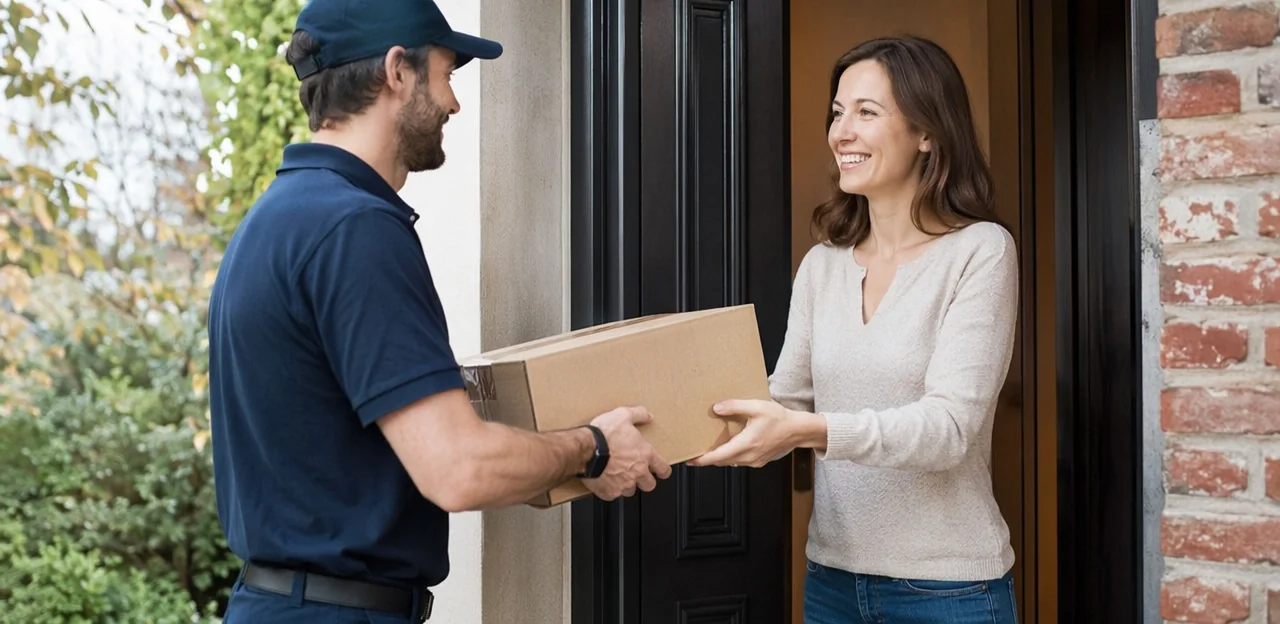
How feedback improves the delivery experience
Structured home delivery feedback helps teams spot exactly where the delivery experience breaks down and what to fix first. Using delivery feedback templates makes responses consistent, so patterns are easier to compare across drivers, routes, time slots, and service types.
- Timeliness: Identify late arrivals, missed windows, or delays during peak periods.
- Communication: Measure whether customers received clear updates, ETA changes, or driver contact when needed.
- Order accuracy: Catch missing items, damaged packaging, or wrong deliveries quickly.
- Driver professionalism: Track courtesy, appearance, and problem-solving during handoff.
- Convenience: Learn if drop-off instructions, contactless delivery, and scheduling options worked smoothly.
With standardized fields and rating scales, delivery feedback templates turn scattered comments into actionable data, helping teams prioritize training, improve operations, and resolve recurring issues faster.
Strong customer experience after delivery is one of the clearest drivers of repeat orders. When customers receive orders on time, in good condition, and with clear communication, delivery satisfaction increases—and so does loyalty.
- Higher retention: Smooth deliveries make customers more likely to reorder from food, grocery, ecommerce, and courier brands.
- Better reviews: Positive delivery moments often shape public ratings more than the product itself.
- More referrals: Customers recommend brands they trust to deliver reliably.
- Stronger brand trust: Consistent service reduces friction and builds confidence over time.
Using delivery feedback templates with a short post-delivery survey helps teams spot issues fast, recover poor experiences, and improve operations. Track sentiment by driver, route, time slot, or order type to identify what keeps customers coming back.
When to send delivery feedback requests
Use delivery feedback templates at moments when the experience is still fresh, but the customer has enough context to respond clearly. The best customer feedback timing usually includes:
- Immediately after delivery: Send a delivery feedback request within 15–60 minutes for food, grocery, and courier orders. This works best for fast checks on timeliness, packaging, and driver experience.
- After issue resolution: If there was a delay, missing item, or damaged package, request post-delivery feedback after support closes the case to measure recovery quality.
- After repeat purchases: Ask loyal customers every few orders to track trends without causing survey fatigue.
Choose channels based on urgency and behavior:
- SMS/WhatsApp: best for fast response rates
- Email: better for detailed feedback
- App push: ideal for active app users
Tools like Tapsy can help capture timely feedback with minimal friction.
What to Include in Effective Delivery Feedback Templates

Core questions every template should ask
Strong delivery feedback templates should capture the full delivery experience without making the survey feel long. Include these essential delivery survey questions in every customer feedback form:
- Delivery speed: Was the order delivered on time, early, or late?
- Package condition: Did the food, groceries, or parcel arrive in good condition?
- Order accuracy: Was every item correct, complete, and as expected?
- Communication quality: How clear and helpful were driver updates or support messages?
- Ease of tracking: Was tracking easy to access and accurate in real time?
- Overall satisfaction: How satisfied are you with the delivery service?
For best results, combine:
- Rating scales for speed, condition, and satisfaction
- Multiple-choice questions for issues like delays, missing items, or damaged packaging
- Open-text responses for specific comments and improvement ideas
This mix makes delivery service feedback easier to analyze while still uncovering actionable customer insights.
Questions that uncover operational problems
Strong delivery feedback templates should ask specific, diagnostic questions—not just “How was your delivery?” Use a short delivery problem survey to pinpoint where the process failed:
- Late arrivals: “Did your order arrive on time?” and “If late, how many minutes?”
- Missing items: “Were any items missing, substituted, or incorrect?”
- Damaged goods: “Did any products arrive damaged, leaking, crushed, or spoiled?”
- Unclear updates: “Were tracking updates accurate and easy to understand?”
- Failed handoffs: “Was the handoff completed smoothly at the door, lobby, or pickup point?”
- Contactless issues: “Was your contactless delivery left in the correct place and clearly confirmed?”
This type of delivery issues feedback turns vague complaints into usable data. Teams can separate driver delays from warehouse picking errors, packaging failures, routing problems, or communication gaps. Consistent late delivery feedback also helps spot patterns by location, shift, carrier, or order type, making service recovery and process improvement much faster.
How to keep templates short but useful
To make delivery feedback templates effective, keep them focused on the few insights that drive action. A strong short feedback template should feel quick to complete while still revealing what went well and what needs fixing.
- Prioritize essential questions: Start with 1 core rating question, such as delivery satisfaction or on-time performance. Add only 1–2 follow-ups tied to key goals like order accuracy, driver experience, or packaging.
- Use smart mobile survey design: Most customers reply on phones, so keep surveys to one screen when possible, use large tap targets, and avoid long text fields.
- Balance numbers with context: Combine a quick score with one optional open comment. This supports customer feedback best practices by giving you measurable trends and real customer language.
- Remove friction: Use clear wording, progress indicators, and skip logic to hide irrelevant questions.
Tools like Tapsy can also help capture fast, mobile-friendly feedback at the right moment.
Delivery Feedback Templates by Industry

Food and restaurant delivery feedback template
A strong food delivery feedback template should help restaurants, takeout brands, and meal delivery apps collect fast, specific insights that improve repeat orders. The best delivery feedback templates focus on the parts of the experience customers notice most:
- Meal temperature: Ask whether the food arrived hot, warm, or cold.
- Freshness and taste: Include a rating for ingredient quality, texture, and overall freshness.
- Order accuracy: Check if all items, customizations, sauces, and drinks were included correctly.
- Delivery speed: Measure whether the order arrived within the promised time window.
- Driver courtesy: Add a simple question about professionalism, friendliness, and handoff experience.
- Packaging quality: Ask if containers prevented spills, kept food secure, and preserved presentation.
For example, a restaurant delivery survey might use a 1–5 scale plus a comment box: “Was your burger still hot?” or “Did your sushi order arrive fresh and correctly packed?” This kind of meal delivery feedback makes it easier to spot issues by location, driver, or menu item. Tools like Tapsy can also help collect real-time feedback at key service touchpoints.
Grocery delivery feedback template
A strong grocery delivery feedback template should capture the details that most affect repeat orders and trust. Within broader delivery feedback templates, grocery surveys need to go beyond speed and ask about product quality, substitutions, and order accuracy.
Include questions such as:
- Were all requested items available?
- If substitutions were made, were they relevant and clearly communicated?
- How fresh were produce, dairy, meat, or bakery items?
- Were fragile goods like eggs, bread, or soft fruit handled properly?
- Did the order arrive within the expected delivery window?
- Were out-of-stock products communicated before delivery in a clear, helpful way?
This type of grocery customer survey helps brands identify whether issues come from picking, packing, inventory accuracy, or last-mile delivery. Consistent freshness feedback can reveal supplier or store-level quality problems, while substitution and stock responses highlight where fulfillment teams need better coordination. Tools like Tapsy can also help collect real-time feedback quickly, making it easier to spot recurring issues and improve delivery performance.
Ecommerce and courier delivery feedback templates
For online retailers and parcel carriers, delivery feedback templates should capture the details that most influence trust, repeat purchases, and support costs. A strong ecommerce delivery feedback template or courier feedback template should help teams evaluate both in-house fleets and third-party delivery partners.
Include questions such as:
- Package condition: Did the order arrive undamaged, sealed, and as expected?
- Shipping updates: Were tracking links accurate, timely, and easy to understand?
- Delivery window accuracy: Did the package arrive within the promised time slot or estimated date?
- Proof of delivery: Was photo confirmation, signature capture, or delivery confirmation clear and reliable?
- Ease of returns: If a return was needed, was the process simple, fast, and well communicated?
- Courier professionalism: Was the driver polite, identifiable, and careful with the parcel?
A practical shipping experience survey should also separate feedback by carrier, route, and fulfillment location. This makes it easier to spot whether issues come from warehouse packing, retailer-owned delivery operations, or external courier performance. Tools like Tapsy can help collect real-time delivery feedback at key customer touchpoints.
How to Write and Customize Delivery Feedback Templates

Choosing the right tone and format
Effective delivery feedback templates should sound like your brand while staying easy to answer. The best approach balances personality with simple, direct customer survey wording.
- Formal tone: Best for courier services, high-value ecommerce orders, or B2B deliveries. Use clear, professional phrasing such as “Please rate the timeliness of your delivery.”
- Conversational tone: Works well for food delivery, grocery apps, and consumer brands. Friendly prompts like “How did your order arrive today?” feel more natural and approachable.
- Keep language consistent: Your brand voice in surveys should match your website, app, and support messages.
- Match format to context: Use short rating questions for fast services, and add one optional comment box for detailed feedback.
Review feedback template examples by audience and service type to make every survey feel relevant, clear, and customer-friendly.
Personalizing templates by order type and customer segment
Strong delivery feedback templates perform better when questions match the customer’s context. A personalized feedback survey feels more relevant, which can lift completion rates and improve insight quality.
- First-time buyers: Ask about ordering clarity, delivery expectations, and whether the experience built trust.
- Repeat customers: Focus on consistency, speed versus past orders, and loyalty drivers.
- Subscription deliveries: Measure reliability, product freshness, preferred delivery windows, and recurring issues.
- Urgent courier shipments: Prioritize timeliness, handoff accuracy, communication, and package condition under time pressure.
- High-value ecommerce orders: Ask about packaging quality, security, proof of delivery, and confidence in the brand.
This kind of delivery survey segmentation supports smarter follow-up and stronger customer feedback personalization. Tools like Tapsy can help teams trigger tailored surveys at the right delivery moment.
Sample delivery feedback template prompts
Use these delivery feedback templates as flexible starting points for email, SMS, app notifications, and web forms. Keep prompts short, specific, and tied to the delivery stage.
- Email: “How was your delivery today?”
Follow with a simple delivery survey template:- Was your order delivered on time?
- How would you rate package or food condition?
- Was the driver professional and helpful?
- What could we improve?
- SMS: “Thanks for your order. Rate your delivery from 1–5: speed, condition, and driver experience.”
- App notification: “Your order has arrived. Share quick feedback in 10 seconds.”
- Web form: Include common home delivery survey questions like “Did you receive all items?” and “Were substitutions communicated clearly?”
For grocery, food, ecommerce, and courier workflows, trigger feedback after drop-off, photo confirmation, or issue resolution.
Turning Feedback Into Better Delivery and Customer Experience

How to analyze delivery feedback data
To analyze delivery feedback effectively, turn responses from your delivery feedback templates into simple, trackable categories:
- Track ratings by order, location, and time period to spot shifts in satisfaction.
- Categorize comments into themes such as late delivery, damaged items, missing products, driver behavior, or app issues.
- Identify recurring complaints by counting how often each issue appears and flagging repeat problems weekly.
- Compare trends by region, driver, product type, or delivery partner to find operational gaps.
Useful delivery KPIs include:
- Satisfaction score
- On-time delivery perception
- Issue frequency per 100 deliveries
Strong customer feedback analytics can also help prioritize fixes, coach teams, and improve delivery consistency.
Using insights to improve operations
Well-structured delivery feedback templates turn comments into actions that help improve delivery operations and support ongoing delivery performance improvement.
- Driver training: Use repeated feedback about lateness, professionalism, or handling issues to coach drivers on etiquette, proof-of-delivery, and care standards.
- Route planning: Track missed windows, traffic hotspots, and failed first attempts to optimize schedules, zones, and dispatch logic.
- Packaging improvements: Flag damaged, melted, crushed, or leaking orders to refine packaging materials by product type.
- Communication workflows: Identify gaps in ETA updates, delay alerts, and delivery confirmations to strengthen messaging.
- Customer support processes: Route common complaints faster and create recovery playbooks, making feedback a practical part of your customer experience strategy.
Tools like Tapsy can help capture real-time issues and close the loop quickly.
Following up with customers after negative feedback
Fast customer complaint follow-up is critical when handling negative delivery feedback. Use clear delivery feedback templates to respond consistently and recover the experience before frustration turns into churn.
- Acknowledge quickly: Send an apology message within minutes, confirm the issue, and thank the customer for reporting it.
- Offer practical service recovery: Depending on the problem, provide a refund, partial credit, replacement, or redelivery.
- Add human support: Escalate serious cases to a live agent for personal outreach.
- Share proactive updates: Explain what happened, what you are fixing, and when the customer can expect resolution.
Strong service recovery shows accountability, rebuilds trust, and increases the chance of repeat orders.
Best Practices and Common Mistakes to Avoid

Best practices for higher response rates
- Send requests fast—ideally within minutes or hours of delivery—so the experience is still fresh and your survey response rate stays higher.
- Keep delivery feedback templates short: 1–3 questions, plus an optional comment box.
- Use a mobile feedback survey with fast loading, large tap targets, and no app download.
- Explain the value clearly, such as better delivery times or service recovery.
- A/B test SMS, email, WhatsApp, send times, and subject lines.
- Always respect consent, privacy, and local data rules.
Common mistakes in delivery feedback collection
Avoid these common feedback survey mistakes when using delivery feedback templates:
- Asking too many questions: Long forms reduce response rates and lead to rushed, low-quality answers.
- Using vague wording: Unclear questions create customer survey errors and unreliable data.
- Ignoring open-ended comments: Written feedback often reveals the real cause of delivery issues.
- Collecting feedback too late: Delayed surveys weaken recall and increase delivery feedback challenges.
- Failing to act on insights: If teams don’t respond, feedback loses value and customer experience suffers.
Conclusion
In fast-moving delivery businesses, customer insight is only valuable when it is easy to collect, quick to understand, and simple to act on. That’s why well-designed delivery feedback templates matter across food delivery, grocery orders, ecommerce shipments, and courier services. The right templates help you capture timely feedback on speed, accuracy, packaging, communication, professionalism, and overall satisfaction—giving your team a clearer view of the full delivery experience.
By standardizing how you ask for feedback, you can spot recurring issues faster, improve service recovery, and make smarter operational decisions. Strong delivery feedback templates also help create a more consistent customer experience, turning everyday delivery interactions into opportunities to build trust, loyalty, and repeat business.
The next step is to review your current feedback process and tailor templates for each delivery type, touchpoint, and customer journey stage. Start with a few core questions, track response patterns, and refine your approach over time. If you want to go further, explore tools that support real-time feedback collection and action workflows, such as Tapsy, to help teams respond while the experience is still fresh.
Use these delivery feedback templates as a foundation for continuous improvement—and start transforming delivery feedback into a better delivery experience today.
Frequently Asked Questions
- What are delivery feedback templates used for?
Delivery feedback templates help businesses collect structured, consistent feedback after an order is delivered. They make it easier to identify issues with speed, communication, order accuracy, packaging, driver professionalism, and overall satisfaction. This turns scattered comments into data teams can compare and act on.
- Why do structured delivery surveys matter for home delivery brands?
Structured surveys make responses easier to compare across drivers, routes, time slots, and service types. They help teams spot recurring problems faster, improve service recovery, and strengthen retention, reviews, referrals, and brand trust. Consistency in the survey format is what makes patterns visible.
- When should a business send a delivery feedback request?
The best time is when the delivery experience is still fresh. For food, grocery, and courier orders, sending a request within 15 to 60 minutes after delivery works well for checking timeliness, packaging, and driver experience. Feedback can also be requested after issue resolution or every few orders for repeat customers.
- Which channels work best for collecting post-delivery feedback?
SMS and WhatsApp are best for fast response rates, email is better for more detailed feedback, and app push notifications work well for active app users. The right channel depends on urgency and customer behavior. Using the right format helps reduce friction and improve completion.
- What questions should every delivery feedback template include?
Core questions should cover delivery speed, package or food condition, order accuracy, communication quality, ease of tracking, and overall satisfaction. A strong template usually combines rating scales, multiple-choice questions, and an optional open-text field. This gives both measurable trends and useful context.
- How can a delivery survey uncover operational problems instead of just general opinions?
Ask diagnostic questions such as whether the order was late, how many minutes late it was, whether items were missing, whether products were damaged, and whether tracking updates were accurate. Questions about handoff quality and contactless placement also help isolate failures. This makes it easier to separate driver, warehouse, packaging, routing, and communication issues.
- How do you keep a delivery feedback template short without losing useful insight?
Start with one core rating question, such as delivery satisfaction or on-time performance, then add only one or two follow-up questions tied to your main goals. Keep the survey mobile-friendly, use clear wording, and avoid long text fields. A quick score plus one optional comment often provides enough detail for action.
- What should a food delivery feedback template ask about?
Food delivery templates should focus on meal temperature, freshness, taste, order accuracy, delivery speed, driver courtesy, and packaging quality. These are the parts of the experience customers notice most with restaurant and meal delivery orders. Questions can be simple, such as whether the food arrived hot and whether all customizations were included.
- What makes grocery delivery feedback different from food delivery feedback?
Grocery feedback needs to go beyond speed and include item availability, substitution quality, freshness, handling of fragile goods, and communication about out-of-stock products. Grocery orders often involve produce, dairy, meat, bakery items, and delicate packaging concerns. This helps identify whether problems come from picking, packing, inventory accuracy, or last-mile delivery.
- What should ecommerce and courier delivery surveys measure?
They should measure package condition, shipping update clarity, delivery window accuracy, proof of delivery, ease of returns, and courier professionalism. These factors strongly affect trust, repeat purchases, and support volume. Separating results by carrier, route, and fulfillment location also helps identify where problems originate.
- Should delivery feedback templates use a formal or conversational tone?
The tone should match the brand and delivery context. Formal wording fits courier services, high-value ecommerce orders, and B2B deliveries, while conversational wording works better for food delivery, grocery apps, and consumer brands. In both cases, the wording should stay simple, clear, and consistent with other customer communications.
- How can delivery feedback templates be personalized for different customers or order types?
Templates can be tailored by customer segment and delivery context. First-time buyers may be asked about clarity and trust, repeat customers about consistency, subscription customers about reliability and freshness, urgent courier users about timeliness and handoff accuracy, and high-value ecommerce buyers about packaging and security. Relevant questions usually improve completion rates and insight quality.
- How should teams analyze delivery feedback data?
Responses should be grouped into simple categories such as late delivery, damaged items, missing products, driver behavior, or app issues. Teams can track ratings by order, location, and time period, then compare trends by region, driver, product type, or delivery partner. Useful KPIs include satisfaction score, on-time delivery perception, and issue frequency per 100 deliveries.
- What actions can businesses take after reviewing delivery feedback?
Feedback can guide driver training, route planning, packaging improvements, communication workflows, and customer support processes. Repeated complaints about lateness, handling, or unclear updates point directly to areas that need operational changes. Acting on these insights helps improve delivery consistency and customer experience.
- What are the most common mistakes to avoid in delivery feedback collection?
Common mistakes include asking too many questions, using vague wording, ignoring open-ended comments, collecting feedback too late, and failing to act on the results. Long or unclear surveys reduce response quality and make the data less reliable. Fast, short, mobile-friendly surveys with clear follow-up are the safer approach.