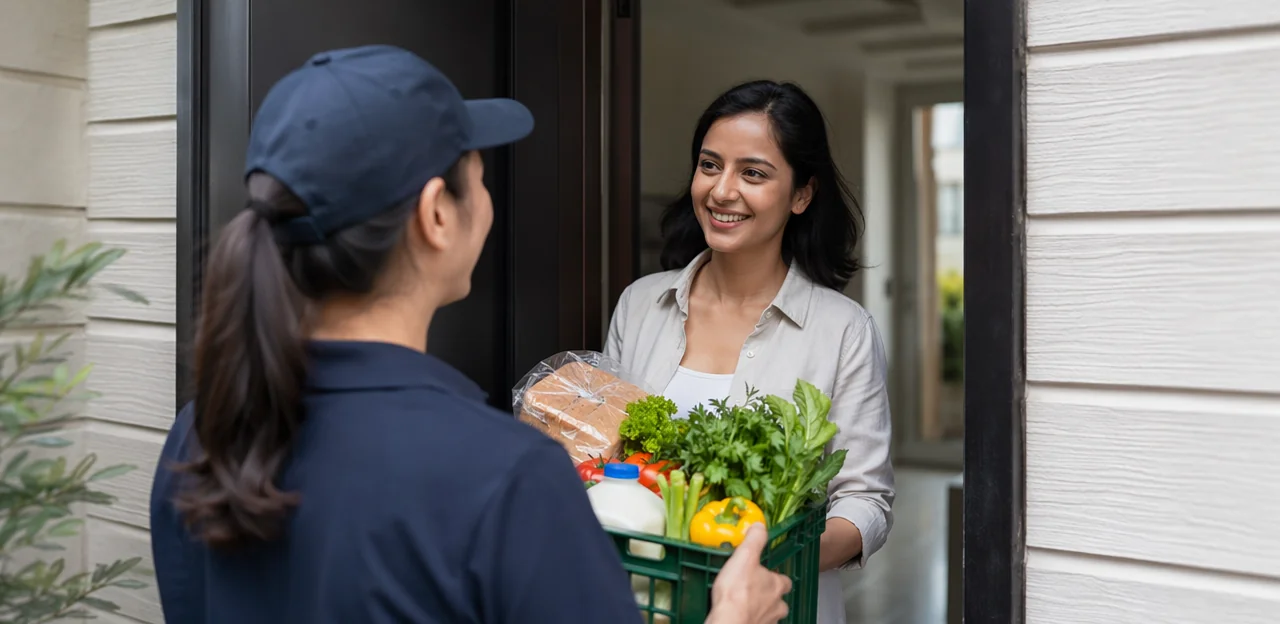
A great grocery delivery experience can win customer loyalty in seconds, but one bruised avocado, one missing item, or one late arrival can just as quickly erode trust. As more shoppers rely on home delivery for convenience, retailers and delivery providers need a better way to understand what actually happens between checkout and doorstep. That is where effective grocery delivery feedback becomes essential.
The most useful feedback does more than ask whether an order was “good” or “bad.” It uncovers the details that shape satisfaction: Were the produce and chilled items fresh? Were substitutions reasonable and clearly communicated? Did the order arrive within the expected time window? These moments define the delivery experience and directly influence repeat purchases, customer retention, and brand perception.
In this article, we will explore how to design smarter grocery delivery surveys that capture meaningful insights on freshness, substitutions, and timing without overwhelming customers. We will look at the best questions to ask, how to structure feedback flows for higher response rates, and how timely insights can help teams resolve issues before they turn into complaints or lost business. For brands looking to collect responses closer to the service moment, tools like Tapsy can also support faster, more actionable feedback collection.
Why Grocery Delivery Feedback Matters for Home Delivery Success

How feedback shapes the delivery experience
Grocery delivery feedback is essential because it turns each order into a clear signal of what customers expect from a home delivery service. Without it, teams may miss recurring issues with freshness, missing items, substitutions, or late arrivals that directly affect the overall delivery experience.
Key ways feedback improves results:
- Clarifies expectations: Learn what “fresh,” “on time,” and “acceptable substitution” mean to customers.
- Reveals service gaps: Spot patterns by store, driver, time slot, or product category.
- Improves repeat orders: Use feedback to refine picker training, substitution rules, and delivery windows.
Real-time tools such as Tapsy can help capture feedback quickly, while the order is still fresh in the customer’s mind.
Common pain points customers report
When reviewing grocery delivery feedback, a few patterns appear again and again. Tracking these issues helps teams turn recurring delivery complaints into clear survey questions and fixes:
- Bruised or spoiled produce: Ask for specific freshness feedback on fruit, vegetables, dairy, and meat quality.
- Poor substitutions: Customers dislike swaps that ignore brand, dietary needs, size, or price expectations.
- Late arrivals: Delays reduce satisfaction, especially for frozen items or time-sensitive orders.
- Missing items: Even small omissions create trust issues and refund requests.
- Communication problems: Unclear updates, missed calls, or lack of delay notifications worsen overall grocery delivery issues.
Use short post-delivery surveys to identify which pain points happen most often and where.
What makes survey feedback actionable
Actionable grocery delivery feedback comes from questions tied to specific moments, behaviors, and outcomes—not broad opinions. Strong survey design helps teams identify what to fix, who owns it, and how success will be measured.
- Ask behavior-based customer feedback questions such as:
- “Were cold items still chilled on arrival?”
- “How many requested items were substituted?”
- “Did the order arrive within the promised delivery window?”
- Use measurable response options like percentages, time ranges, or yes/no.
- Link each question to an operational team: picking, packing, substitutions, or driver timing.
- Include one optional comment field for context, not as the main data source.
This structure turns responses into actionable survey insights that support faster operational improvements.
How to Design a Grocery Delivery Feedback Survey That Gets Useful Responses
Choose the right survey goals and audience
Strong grocery delivery feedback starts with clear intent. Before writing questions, define exactly what your survey should measure:
- Order quality: freshness, item condition, packing, and substitution accuracy
- Delivery performance: on-time arrival, communication, and handoff experience
- Overall satisfaction: whether the full order met expectations and earned repeat business
This step improves grocery survey design by aligning each question with specific customer survey goals instead of mixing too many topics in one form.
Next, segment your audience:
- First-time customers: ask about ease of ordering, trust, and whether expectations were met
- Repeat customers: compare consistency, substitution quality, and changes over time
A focused delivery feedback survey gives cleaner data and more actionable improvements.
Use question types that improve response quality
Choosing the right survey question types makes grocery delivery feedback more accurate and easier to act on. Use a mix of formats to balance speed, clarity, and detail in your customer satisfaction survey:
- Rating scales: Use 1–5 or 1–10 scales to measure freshness, delivery timing, and substitution satisfaction consistently across orders.
- Multiple-choice questions: Ideal for identifying specific issues fast, such as “Which item had a freshness problem?” or “How acceptable was the substitute?”
- Yes or no questions: Best for clear service checks, like “Was your order delivered within the promised window?”
- Open-text prompts: Add these after low ratings to capture context, such as damaged packaging or missing items.
Well-structured feedback form questions help teams spot trends, compare performance, and improve delivery experiences quickly.
Keep surveys short, clear, and timely
To collect useful grocery delivery feedback, make the survey easy to answer while the experience is still fresh.
- Send the post-delivery survey quickly: Aim to send it within 30–60 minutes after drop-off. Strong customer feedback timing improves recall of freshness, substitutions, and delivery accuracy.
- Keep it short: Limit the survey to 3–5 questions. A shorter post-delivery survey reduces friction and can lift your survey response rate.
- Use simple wording: Ask direct questions like “Were your items fresh?” or “Was your delivery on time?” Avoid jargon, double-barreled questions, or long rating scales.
- Make comments optional: Use one open-text field for extra detail without slowing completion.
Tools like Tapsy can help streamline fast, touchpoint-based feedback collection.
Best Questions to Ask About Freshness in Grocery Delivery Feedback

Questions for produce, dairy, meat, and packaged goods
Use category-specific freshness survey questions to collect better grocery delivery feedback and spot recurring quality issues quickly. Focus on visible condition, safe handling, and shelf life.
- Produce: “Were fruits and vegetables firm, ripe, and free from bruising, mold, or wilting?”
This helps capture clear produce quality feedback. - Dairy: “Did milk, yogurt, and cheese arrive cold, sealed, and with acceptable expiration dates?”
This checks temperature control and short-dated items. - Meat and seafood: “Did raw items arrive properly chilled, leak-free, and within the use-by date?”
Ask specifically about odor, color, and secure wrapping. - Packaged goods: “Were boxes, cans, and bags undamaged, unopened, and not crushed, dented, or torn?”
This identifies overall grocery item condition.
For stronger insights, add a 1–5 rating plus an optional photo upload for damaged or questionable items.
How to measure perceived quality and consistency
To improve grocery delivery feedback, use simple rating questions that capture both item quality and repeat-order reliability:
- Ask for a food freshness rating on key categories such as produce, dairy, meat, and bakery using a 1–5 scale.
- Compare delivery items to in-store expectations with prompts like:
- “Did this item match the freshness you would expect if you picked it yourself?”
- “Was the product quality better, the same, or worse than in store?”
- Collect customer quality feedback with one open-text follow-up: “What felt off about the item quality?”
To track quality consistency, review scores across multiple orders by customer, category, store, and time slot. Look for recurring issues such as wilted produce on evening deliveries or lower ratings after substitutions. Tools like Tapsy can help capture and compare this feedback in real time.
Open-ended prompts that reveal root causes
To make grocery delivery feedback useful, include open-ended survey questions that go beyond “Was it fresh?” and uncover where the breakdown happened. The best prompts help teams trace freshness issues to a specific stage of delivery quality control.
- “What looked or felt less fresh, and how did you notice it?”
- “Did the item seem poorly selected, such as bruised produce or short-dated dairy?”
- “Was the packaging damaged, leaking, crushed, or warm when it arrived?”
- “Did the order appear to be stored incorrectly before delivery, for example frozen items thawing or chilled goods not cold enough?”
- “Did transport seem to affect quality, such as melted items, shifting, or delays in hot weather?”
- “What should have happened differently during picking, packing, storage, or transport?”
These prompts turn vague complaints into actionable fixes for store and delivery teams.
Best Questions to Ask About Substitutions and Item Availability

Questions that evaluate substitution accuracy
To improve grocery delivery feedback, include clear questions that measure how well replacements met shopper expectations. Strong substitution feedback should cover the most important decision points:
- Brand match: “Did the substitute item match your preferred brand or a comparable alternative?”
- Size and quantity: “Was the replacement size close enough to the original item you ordered?”
- Dietary fit: “Did the substitute meet your dietary needs, such as gluten-free, dairy-free, or low-sodium?”
- Price expectation: “Was the substitute reasonably priced compared with the original product?”
- Overall usefulness: “Was this replacement useful enough to keep, or would you have preferred no substitution?”
These prompts make an item replacement survey more actionable, helping teams refine grocery substitutions and reduce customer frustration.
How to assess customer control and communication
Strong grocery delivery feedback should measure whether shoppers felt informed and in control when items changed. Include questions such as:
- Were order update notifications sent early enough? Ask if customers received notice before delivery, not after substitutions were already made.
- Was substitution communication clear? Check whether the message explained what was unavailable, what replacement was suggested, and any price difference.
- Did the customer have real choice? Ask if they could approve, reject, or set preferences for substitutions in advance.
- Was enough information provided to decide? For example, brand, size, dietary details, and estimated arrival impact.
These answers reveal gaps in customer choice and help improve trust, transparency, and fewer delivery complaints.
Examples of strong substitution survey questions
Use a mix of rating and open-text substitution survey questions to capture clear, actionable grocery delivery feedback.
- How satisfied were you with the substitute item you received?
Use a 1–5 scale from Very dissatisfied to Very satisfied. - How well did the substitute match the original product in quality, size, or brand?
This is one of the most useful survey examples for measuring customer satisfaction with substitutions. - Was the substitute acceptable for your needs today?
Answer options: Yes completely / Mostly / Not really / No. - Did the substituted item feel equal or better in value than your original choice?
- What did you like or dislike about the substitute you received?
Open text reveals patterns behind low scores. - What substitute would you have preferred instead?
Helps improve future replacement rules.
Best Questions to Ask About Delivery Timing and Reliability
Measure on-time performance from the customer perspective
To improve grocery delivery feedback, ask timing questions that reflect the customer’s actual experience, not just your dispatch data. A strong on-time delivery survey should capture three things:
- Arrival within the promised window: “Did your order arrive within the estimated delivery window?”
- Acceptability of delays: “If your delivery was late, was the delay still acceptable?”
- Impact on satisfaction: “How did the delivery time affect your overall satisfaction with this order?”
For better delivery timing feedback, add answer options like “early,” “on time,” “slightly late,” and “very late.” Pair ratings with an optional comment field to uncover context, such as missed meals or schedule disruptions. This gives a clearer picture of delivery reliability and customer tolerance.
Questions about updates, delays, and handoff experience
Use this part of your grocery delivery feedback survey to measure whether communication and the final delivery moment met expectations. Include questions such as:
- Was the estimated arrival time accurate?
- Did you receive clear delivery updates throughout the order?
- If the order was late, were delay notifications timely and helpful?
- Was the contactless drop-off completed as requested and in the right location?
- How would you rate the driver’s professionalism and communication?
- Did the handoff or drop-off experience protect item quality and order accuracy?
Add a short comment field after low scores to uncover patterns, such as missed instructions, unclear delivery updates, or poor handoff practices.
How timing feedback connects to retention
For scheduled deliveries, timing is more than convenience—it directly shapes delivery trust. When shoppers choose a delivery window, they plan meals, work, and family routines around it. Late or missed arrivals create friction that can quickly reduce customer retention.
- Punctual delivery builds confidence: Consistently arriving on time makes customers feel your service is reliable.
- Timing feedback reveals risk early: Ask whether the order arrived within the promised window and whether updates were clear.
- Fast follow-up protects loyalty: Use negative grocery delivery feedback to trigger service recovery, credits, or proactive communication.
- Better timing drives repeat behavior: Reliable windows increase satisfaction and encourage repeat grocery orders, especially for weekly or subscription-based customers.
Turning Grocery Delivery Feedback Into Service Improvements
Analyze survey data by theme and order type
To turn grocery delivery feedback into action, group responses into three core themes:
- Freshness: produce quality, expiration dates, temperature, and damaged packaging
- Substitutions: accuracy, relevance, customer approval, and out-of-stock handling
- Timing: on-time arrival, delivery window accuracy, and delay communication
Then segment your feedback analysis by order type, store, delivery window, and product category. This makes survey reporting more useful and reveals where service breaks down.
- Compare freshness scores across stores and categories like produce, dairy, and frozen
- Review substitution satisfaction by basket type and item availability
- Track timing ratings by peak vs. off-peak windows
Use these patterns as delivery performance metrics to prioritize operational fixes and coach teams.
Prioritize fixes that improve customer satisfaction
Use grocery delivery feedback to rank issues by frequency, severity, and business impact. Focus first on patterns that repeatedly frustrate customers and are easiest to fix operationally.
- Spot recurring complaints: Track produce freshness, damaged packaging, missing items, and late arrivals by store, picker, driver, and time slot.
- Measure substitution performance: Identify low acceptance rates, then update substitution rules, brand matching, and out-of-stock communication.
- Connect feedback to action: Retrain pickers on produce selection, refine inventory visibility, and adjust delivery windows where delays are common.
- Review trends weekly: Turn survey data into operational insights that drive service quality improvement and measurable customer satisfaction improvement.
Tools like Tapsy can help surface these patterns faster.
Build a continuous feedback loop
To turn grocery delivery feedback into better operations, create a clear customer feedback loop that moves insights into action:
- Share results quickly: Send weekly summaries to store managers, pickers, drivers, and support teams. Break feedback into freshness, substitutions, and delivery timing so each team sees what it can improve.
- Test one change at a time: Try tighter produce checks, smarter substitution rules, or narrower delivery windows. Small pilots make continuous improvement easier to measure.
- Track trends over time: Monitor survey scores, complaint rates, and repeat-order behavior monthly to confirm whether changes improve the delivery experience.
This disciplined process supports smarter home delivery optimization and stronger customer loyalty.
Conclusion
In the end, strong grocery delivery feedback is what turns a convenient service into a consistently reliable one. By asking the right questions about freshness, substitutions, and timing, businesses can uncover the issues that matter most to customers at the moment they matter most. Freshness questions reveal product quality gaps, substitution questions highlight whether replacements meet expectations, and timing questions show where delivery windows, delays, or communication may be falling short.
A well-designed survey does more than collect opinions—it helps improve operations, reduce complaints, and build trust with every order. The most effective grocery delivery feedback programs keep questions short, specific, and easy to answer, while giving customers space to share details when something goes wrong. That balance leads to better response rates and more actionable insights.
If you’re refining your delivery experience, now is the time to review your current survey flow and make sure it captures the feedback that drives real improvements. Start with your highest-impact touchpoints, track trends over time, and use the results to guide fulfillment, communication, and customer service decisions. For teams looking to collect real-time feedback more efficiently, tools like Tapsy can help streamline the process. Strong grocery delivery feedback is not just a measurement tool—it’s a competitive advantage.
Frequently Asked Questions
- Why is grocery delivery feedback important for home delivery success?
It helps retailers and delivery teams understand what actually happened between checkout and doorstep. Feedback reveals recurring issues with freshness, substitutions, missing items, timing, and communication, which directly affect repeat orders, retention, and brand perception.
- What makes grocery delivery feedback more useful than a simple satisfaction score?
Useful feedback focuses on specific parts of the experience instead of asking only whether an order was good or bad. Questions about freshness, substitution quality, and delivery timing create clearer signals that teams can connect to picking, packing, substitutions, or driver performance.
- What are the most common grocery delivery problems customers report?
Common pain points include bruised or spoiled produce, poor substitutions, late arrivals, missing items, and unclear communication. Tracking these issues in short post-delivery surveys helps teams identify where complaints happen most often.
- How should a grocery delivery survey be structured to get better response rates?
Keep the survey short, clear, and timely. Sending it within 30 to 60 minutes after drop-off and limiting it to about 3 to 5 questions improves recall and reduces friction, while one optional comment field adds useful context.
- What survey question types work best for grocery delivery feedback?
A mix of rating scales, multiple-choice questions, yes-or-no checks, and optional open-text prompts works well. Rating scales help compare freshness or timing across orders, while open text is most useful after low scores to explain what went wrong.
- How can teams choose the right goals and audience for a grocery delivery survey?
Start by deciding whether the survey should measure order quality, delivery performance, or overall satisfaction. Then segment customers, such as first-time shoppers versus repeat customers, so questions stay focused and the results are easier to act on.
- What are good questions to ask about freshness in grocery delivery?
Use category-specific questions for produce, dairy, meat or seafood, and packaged goods. Strong examples check for bruising, temperature, leaks, expiration dates, and damaged packaging, often paired with a 1 to 5 rating and an optional photo upload.
- How can freshness feedback measure both quality and consistency over time?
Ask customers to rate freshness by category and compare delivered items to what they would expect in store. Reviewing those scores across multiple orders, stores, categories, and delivery windows helps uncover recurring patterns such as lower ratings in certain time slots.
- What open-ended freshness prompts help uncover root causes?
Prompts should ask what looked or felt less fresh, whether packaging was damaged or warm, and whether storage or transport seemed to affect quality. Questions about what should have happened differently during picking, packing, storage, or transport make the feedback more actionable.
- How should substitution questions evaluate whether a replacement was acceptable?
Good substitution questions check brand match, size or quantity, dietary fit, price expectation, and overall usefulness. This helps teams understand whether the replacement met the shopper's needs or whether no substitution would have been better.
- How can a survey assess customer control and communication around substitutions?
Ask whether update notifications arrived early enough, whether the substitution message was clear, and whether the customer had a real choice to approve, reject, or set preferences in advance. It also helps to ask if enough information was provided, such as brand, size, dietary details, and price differences.
- What are strong examples of substitution survey questions?
Useful examples include asking how satisfied the customer was with the substitute, how closely it matched the original in quality, size, or brand, and whether it was acceptable for their needs that day. Open-text follow-ups about what they liked, disliked, or would have preferred add practical guidance for improving replacement rules.
- How should delivery timing and reliability be measured from the customer perspective?
Ask whether the order arrived within the promised window, whether any delay was still acceptable, and how the timing affected overall satisfaction. Response options like early, on time, slightly late, and very late give more detail than a simple yes or no.
- What delivery communication and handoff questions should be included in a survey?
Good questions cover whether the estimated arrival time was accurate, whether updates were clear, and whether delay notifications were timely and helpful. It is also useful to ask if contactless drop-off was completed correctly, whether the driver communicated professionally, and whether the handoff protected item quality and order accuracy.
- How can grocery delivery feedback be turned into service improvements?
Group responses into freshness, substitutions, and timing, then analyze them by order type, store, delivery window, and product category. Prioritize fixes based on frequency and severity, share results with the relevant teams, test one change at a time, and track trends over time to confirm improvement. Tools like Tapsy can support faster, real-time feedback collection.