
The credits may be rolling, but for cinemas, one of the most valuable moments is just beginning. Right after a screening, audience opinions are fresh, emotions are high, and small details, from sound quality and seat comfort to queue times and concession service, are still top of mind. Yet many venues struggle to capture that insight before guests walk out the door. Improving your cinema feedback response rate is not just about sending more surveys. It is about asking at the right moment, through the right channel, with the right level of effort.
A stronger feedback strategy helps cinemas move beyond guesswork and understand what truly shapes the guest experience. It can reveal recurring operational issues, highlight standout staff performance, and uncover the factors that influence repeat visits and word of mouth. In a competitive entertainment market, that kind of real-time audience insight can make a measurable difference.
In this article, we will explore practical ways to increase post-screening survey participation, from simplifying survey design and choosing better touchpoints to using incentives, timing, and in-venue prompts more effectively. We will also look at how tools such as QR-based solutions like Tapsy can help cinemas collect instant feedback while the experience is still fresh.
Why cinema feedback response rates matter
The link between response rates and better decisions
A higher cinema feedback response rate gives cinemas a more accurate picture of what audiences really experienced, not just what the most vocal guests chose to report. That leads to stronger audience insights, better operational fixes, and smarter programming choices.
- Reduce bias: More responses create a broader sample across films, showtimes, and customer types.
- Spot trends faster: You can see recurring issues with sound, seating, queues, or concessions before they affect more guests.
- Improve programming decisions: Reliable feedback helps identify which genres, formats, or time slots drive the highest customer satisfaction.
- Act with confidence: When response volume is strong, decisions are based on patterns rather than isolated opinions.
Tools like Tapsy can help cinemas capture this feedback while the experience is still fresh.
What low participation can hide
A low cinema feedback response rate can make survey results look clearer than they really are. When only a small share of guests responds, cinemas often hear most from people with very positive or very negative experiences, creating feedback bias and masking what the average audience actually felt.
- Extreme views get overrepresented: a low survey response rate can distort satisfaction scores.
- Operational issues stay hidden: recurring problems with pricing, sound, seating, cleanliness, or queues may not appear often enough to trigger action.
- Decisions become riskier: weak cinema customer feedback makes it harder to spot patterns by film, screen, or showtime.
To reduce bias, collect feedback immediately after screenings and keep surveys short and easy to complete.
Key benchmarks cinemas should track
To improve cinema feedback response rate, monitor a small set of post-screening survey metrics consistently:
- Survey completion rate: Track the percentage of guests who start and finish the survey. A low survey completion rate often signals too many questions or poor mobile usability.
- Survey drop-off rate: Identify where respondents abandon the form. High survey drop-off rate at a specific question usually means it is unclear, too personal, or unnecessary.
- Device type: Compare mobile, tablet, and desktop performance to optimize layout and loading speed.
- Channel performance: Measure QR codes, SMS, email, and in-app prompts separately.
- Response timing: See how quickly guests reply after the screening; faster responses usually mean fresher, more accurate feedback.
Tools like Tapsy can help cinemas track these benchmarks in real time.
Design surveys audiences will actually complete

Keep surveys short, clear, and mobile-friendly
If you want to improve your cinema feedback response rate, make the survey effortless to finish while guests are walking out, waiting for transport, or checking their phones in the lobby. A short customer survey consistently outperforms long forms because it respects the audience’s time.
- Limit the question count: Aim for 3–5 questions max. Start with an overall rating, then ask about key factors like sound, seating, cleanliness, or concessions.
- Use simple wording: Avoid jargon, double-barrelled questions, or long answer choices. Ask one thing at a time, such as “How was the picture quality?”
- Design for phones first: A mobile-friendly survey should load fast, use large tap targets, short screens, and minimal typing.
- Make comments optional: Let guests skip open-text fields unless they want to share more.
Strong cinema survey design removes friction and increases completions. Tools like Tapsy can help cinemas collect fast, no-app feedback at exit points.
Ask better questions for better participation
Strong survey question design can lift your cinema feedback response rate by making the survey feel quick, relevant, and easy to finish. Keep post-screening surveys short and structured with a balanced mix of question types:
- Use 2–3 rating scales for core experience areas such as picture quality, sound, seat comfort, or cleanliness.
- Add 2–3 multiple-choice customer feedback questions to identify specific issues fast, such as queue times, snack satisfaction, or staff helpfulness.
- Include one optional open-text prompt like “What could we improve before your next visit?” to capture context without creating fatigue.
This format helps you collect both measurable trends and practical insights from audience survey questions. Avoid asking too many similar questions, and place the most important ones first. Tools like Tapsy can support this with simple, no-app feedback flows delivered right after the screening.
Match questions to the cinema experience
To improve cinema feedback response rate, only ask about moments guests actually noticed and can evaluate right after the screening. A focused cinema experience survey feels quicker, more relevant, and more worth completing than a generic form.
Include questions around the core parts of the visit:
- Booking and arrival: Was online booking easy? Were queues manageable?
- Concessions: Speed of service, product quality, value, and availability
- Comfort: Seat comfort, legroom, temperature, and auditorium cleanliness
- Presentation quality: Sound levels, screen brightness, picture clarity, and overall viewing quality
- Service: Helpfulness and friendliness of staff
Keep the survey tightly aligned to the full audience experience, from ticket purchase to exit. This makes movie theater feedback more actionable for operations teams and avoids wasting guest attention. Tools like Tapsy can help collect this feedback at key touchpoints while the experience is still fresh.
Choose the best timing and channels after screenings

Send feedback requests at the right moment
One of the simplest ways to improve your cinema feedback response rate is to ask while the screening is still vivid. The first few hours after a film are usually the sweet spot for post-screening survey timing because guests still remember key details: sound quality, seat comfort, cleanliness, queues, concessions, and their emotional reaction to the movie.
Survey timing best practices for cinemas include:
- Send within 1–3 hours after the screening ends for the highest recall
- Avoid waiting until the next day, when details fade and motivation drops
- Match the channel to the moment, such as SMS, email, or a QR code at the exit
- Keep the survey short, so guests can respond before they move on with their day
Good customer feedback timing captures both practical issues and emotional impressions. Tools like Tapsy can help cinemas collect instant feedback at exit points, before the audience fully disconnects from the experience.
Use QR codes, email, SMS, and apps strategically
Not every channel works equally well for every screening. To improve your cinema feedback response rate, match the survey method to the audience moment:
- Foyer QR code survey: Best immediately after the film, when reactions are fresh. Place codes at auditorium exits, concession areas, and on-screen end cards. Keep the survey very short for fast completion.
- Email feedback request: Ideal for advance bookers, families, and older audiences who are comfortable responding later. Send within 2–6 hours while the visit is still memorable, and personalise by film, location, or showtime.
- SMS survey: Strong for speed and visibility, especially after evening screenings or for mobile-first guests. Use for one-tap ratings and short follow-ups, but avoid overuse.
- Loyalty app notifications: Best for members and frequent visitors. Use push notifications to target high-value segments with tailored questions or small rewards.
Platforms like Tapsy can help cinemas combine QR and mobile touchpoints without adding friction.
Tailor outreach by audience segment
A one-size-fits-all message rarely delivers the best cinema feedback response rate. Strong audience segmentation helps you match the survey ask to what each guest values most, making participation feel more relevant.
- Families: Keep the personalized survey invitation short and mobile-friendly. Ask about seat comfort, family facilities, queue times, and snack bundles.
- Cinema loyalty members: These guests already know your brand, so reference points, perks, or status. Exclusive wording can motivate cinema loyalty members to respond more often.
- Premium-format guests: IMAX, 4DX, or recliner audiences expect more. Focus questions on picture, sound, seat quality, and whether the upgrade felt worth it.
- Event attendees: For premieres, marathons, or live broadcasts, ask about atmosphere, crowd flow, and event-specific extras.
Segmented messaging can also improve timing, incentives, and channels. Tools like Tapsy can help cinemas trigger targeted, no-app feedback requests at the right touchpoints.
Increase participation with smart incentives and messaging

Write invitations that make feedback feel worthwhile
Strong survey invitation copy should answer three questions instantly: Why should I respond? How long will it take? What will happen with my feedback? Clear answers help improve your cinema feedback response rate.
- Use specific subject lines:
“Tell us about tonight’s screening in 60 seconds” performs better than vague requests. - Add on-screen prompts before credits end:
Highlight the benefit: “Help us improve sound, seating, and snack service.” - Keep each feedback request message short:
Use direct calls to action like “Rate your visit now” or “Share feedback in under 1 minute.” - State the purpose clearly:
Explain that responses shape future screenings, comfort, and service. - Reinforce value with incentives when relevant:
Tools like Tapsy can pair quick feedback with simple rewards to increase survey participation.
Offer incentives without damaging data quality
Well-chosen survey incentives can lift your cinema feedback response rate, but the reward should encourage participation, not push guests toward overly positive answers. Keep customer survey rewards small, relevant, and easy to redeem.
- Use light-touch rewards: prize draws, loyalty points, concession discounts, or a future weekday ticket offer work well.
- Reward completion, not sentiment: make it clear every valid response qualifies, whether feedback is positive or negative.
- Avoid high-value prizes: overly aggressive response rate incentives can attract people who rush through surveys or give unreliable answers.
- Set simple rules: limit one entry per ticket or visit to reduce duplicates and abuse.
- Match the timing: offer the reward immediately after the survey for best uptake.
Tools like Tapsy can help cinemas deliver instant, low-friction rewards at exit touchpoints.
Build trust with transparency and privacy reassurance
Clear communication removes friction and can lift your cinema feedback response rate. Many guests abandon surveys when they are unsure why they are being asked, how long it will take, or what happens to their data. Build customer trust with simple, upfront messaging:
- Explain the purpose: Tell guests how feedback will improve sound, seating, cleanliness, queues, or concessions.
- Set time expectations: State the survey takes “under 60 seconds” or “3 quick questions” to reduce hesitation.
- Address survey privacy clearly: Say what personal data is collected, whether responses are anonymous, and who can access them.
- Show feedback transparency: Mention if results are reviewed daily or used to improve future screenings.
Tools like Tapsy can support short, no-app feedback flows with clear privacy messaging at the point of response.
Use staff, signage, and the cinema environment to support feedback

Train staff to promote surveys naturally
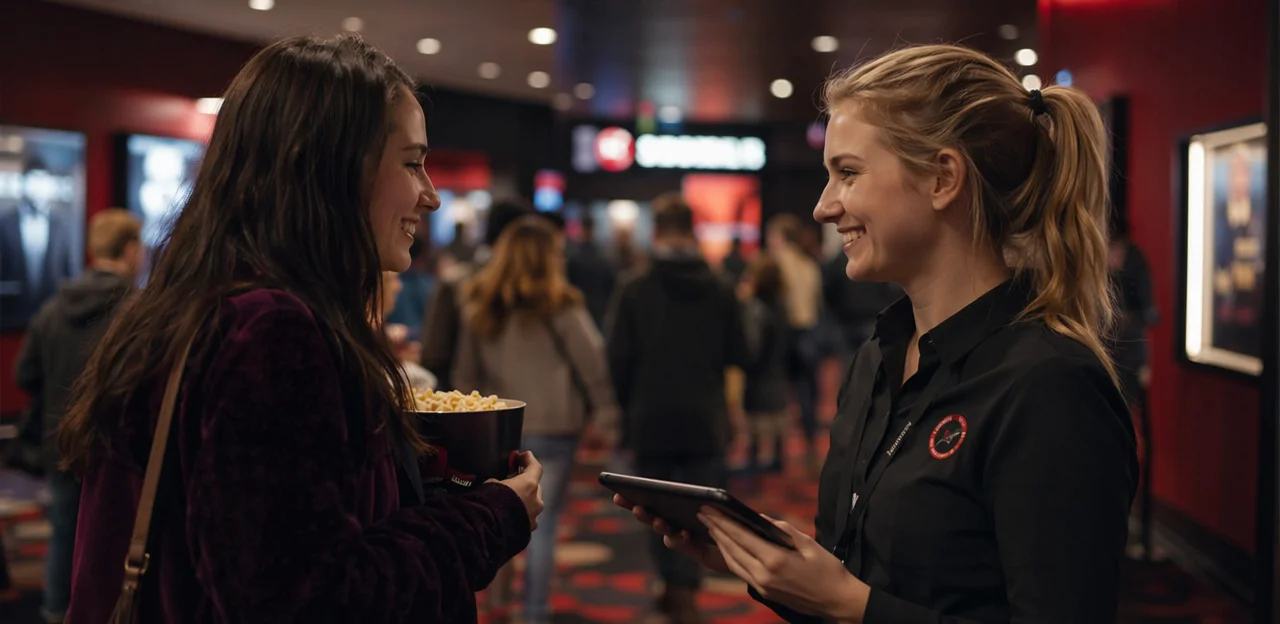
Strong staff-driven feedback collection starts with simple, well-timed prompts. During front-of-house training, teach teams to invite feedback only at natural moments, such as after resolving a seating issue, helping with accessibility needs, or delivering friendly cinema customer service at concessions.
- Ask after a positive interaction: “Glad we could help — if you have a moment, we’d love your feedback.”
- Keep it conversational, not scripted or pushy.
- Point guests to the easiest channel, such as a QR code at the exit or counter.
- Train staff to read the moment and avoid interrupting guests who are rushing out.
This approach can lift your cinema feedback response rate while keeping the experience warm and authentic.
Place prompts where attention is highest
To improve cinema feedback response rate, put survey prompts exactly where guests naturally pause or look right after the film:
- Exit doors and foyer routes: Use clear in-cinema signage with a short CTA and QR code at auditorium exits.
- Digital lobby screens: Show rotating exit survey reminders in the first few minutes after screenings end, when intent is freshest.
- Receipts and e-receipts: Add a simple “Rate your visit” line with a scannable link.
- Concession packaging: Print prompts on popcorn boxes, cups, and trays for high visibility.
- Post-film slides: Add a final on-screen survey message before house lights fully rise.
Keep messaging short, mobile-friendly, and incentive-led where appropriate.
Align feedback requests with the overall audience experience
Audiences are far more likely to respond when the customer journey ends as smoothly as the film itself. If guests face slow exits, messy restrooms, or inconsistent staff service, survey requests can feel like extra friction rather than a natural next step. To improve cinema feedback response rate, make the post-screening moment easy and positive:
- Speed up exits so guests are not stuck in queues
- Keep facilities clean, especially restrooms, aisles, and lobby areas
- Deliver consistent service from ticketing to concessions to exit staff
- Place surveys at natural touchpoints right after the screening
A strong audience experience increases trust, boosts cinema satisfaction, and makes guests more willing to share feedback while impressions are still fresh.
Optimize, test, and act on the feedback you collect

Run simple tests to improve response rates over time
Use A/B testing surveys to steadily lift your cinema feedback response rate instead of guessing what works. Test one variable at a time and track completion, drop-off, and comment quality.
- Send time: compare immediately after the screening vs. next morning
- Channel mix: test SMS, email, QR posters, or combinations
- Survey length: try 2–3 questions versus longer forms
- Incentives: compare prize draws with instant rewards
- Invitation wording: test subject lines, CTA buttons, and tone
This kind of survey optimization helps cinemas improve response rates consistently.
Close the loop with visible improvements
To improve your cinema feedback response rate, show guests that their comments lead to real change. When audiences see cleaner auditoriums, shorter concession queues, or quicker issue resolution, they are more likely to respond again.
- Share updates clearly: Use foyer signage, email, social posts, or pre-show slides to close the feedback loop.
- Be specific: Say “You asked for faster concessions — we added a second peak-time staff member.”
- Act quickly: Visible fixes strengthen audience trust and support a stronger customer feedback strategy.
Even simple updates can make participation feel worthwhile.
Turn survey data into operational and marketing wins
Use post-screening feedback to turn a stronger cinema feedback response rate into measurable results:
- Improve cinema operations: Adjust staffing by showtime, fix queue bottlenecks, and resolve cleanliness or sound issues faster.
- Refine programming: Spot which genres, formats, and time slots drive satisfaction and repeat visits.
- Grow premium revenue: Use comments to improve recliners, VIP seating, and concession bundles.
- Unlock marketing insights: Build loyalty campaigns around rewards guests actually value.
- Protect reputation: Address low scores quickly before they become public reviews.
When guests see real customer experience improvement, they’re more likely to keep responding.
Conclusion
Improving your cinema feedback response rate comes down to one simple principle: make feedback easy, immediate, and worthwhile. The most effective post-screening surveys are short, mobile-friendly, and delivered at the right moment—ideally while the experience is still fresh. Clear incentives, well-placed prompts, and questions focused on key touchpoints like sound, seating, cleanliness, concessions, and staff service can all help increase participation without overwhelming guests.
Just as importantly, audiences are more likely to respond when they believe their opinions lead to visible improvements. Reviewing data quickly, acting on recurring issues, and closing the loop with customers can turn feedback collection from a routine task into a real driver of audience loyalty and better showtime experiences. A stronger cinema feedback response rate doesn’t just give you more data—it gives you more actionable insight to improve operations, boost satisfaction, and encourage repeat visits.
Now is the time to audit your current survey process, remove friction, and test new ways to engage moviegoers. Start with shorter surveys, smarter timing, and meaningful rewards, then track what lifts your cinema feedback response rate over time. For cinemas looking to streamline this process, tools like Tapsy can help capture instant, no-app feedback directly at key touchpoints. The next step is simple: start listening closer, faster, and more consistently.
Frequently Asked Questions
- Why is a higher cinema feedback response rate important?
A higher response rate gives cinemas a broader and more accurate view of what guests experienced across films, showtimes, and customer types. It helps reduce bias, spot recurring issues faster, and support better decisions about operations and programming.
- What problems can a low survey participation rate create for cinemas?
Low participation often means feedback is dominated by guests with very positive or very negative experiences. That can hide common issues with sound, seating, cleanliness, pricing, queues, or concessions and make decisions riskier.
- What survey metrics should cinemas track after screenings?
Key metrics include survey completion rate, drop-off rate, device type, channel performance, and response timing. Tracking these consistently helps identify whether the survey is too long, unclear, poorly optimized for mobile, or weak on certain channels.
- How long should a post-screening cinema survey be?
A short survey usually performs best, with around 3 to 5 questions. Starting with an overall rating and then covering a few key touchpoints like sound, seating, cleanliness, or concessions keeps the effort low and improves completions.
- What kinds of questions work best in a cinema feedback survey?
A balanced mix works well: 2 to 3 rating-scale questions, 2 to 3 multiple-choice questions, and one optional open-text prompt. This structure captures measurable trends and useful context without creating survey fatigue.
- Which parts of the cinema visit should feedback questions focus on?
Questions should stay close to moments guests can clearly evaluate right after the visit. Useful areas include booking and arrival, concessions, seat comfort, temperature, cleanliness, presentation quality, and staff service.
- When is the best time to ask for cinema feedback after a screening?
The best time is usually within 1 to 3 hours after the screening ends, while details are still fresh. Waiting until the next day can reduce recall and lower motivation to respond.
- Should cinemas use QR codes, email, SMS, or app notifications for surveys?
Each channel fits a different moment and audience. QR codes work well immediately at exits, email suits advance bookers and older audiences, SMS is strong for speed and visibility, and app notifications are useful for loyalty members.
- How can cinemas tailor feedback requests for different audience segments?
Segmenting outreach makes the request feel more relevant. Families may respond better to questions about queues, seating, and snack bundles, while premium-format guests may care more about picture, sound, seat quality, and whether the upgrade felt worthwhile.
- What should a good cinema survey invitation say?
It should quickly explain why the guest should respond, how long it will take, and what the feedback will be used for. Clear subject lines, short calls to action, and a simple statement that responses help improve screenings, comfort, and service can increase participation.
- Do incentives help increase cinema survey responses without harming quality?
Yes, if they are small, relevant, and tied to completion rather than positive sentiment. Prize draws, loyalty points, concession discounts, or a future weekday ticket offer can work, while high-value rewards may attract rushed or unreliable responses.
- How can cinemas reassure guests about survey privacy and trust?
Clear messaging reduces hesitation. Cinemas should explain why feedback is being collected, how long the survey takes, what personal data is collected, whether responses are anonymous, and how the results are used.
- What role do staff and in-venue prompts play in boosting response rates?
Staff can encourage feedback naturally after helpful interactions, as long as the prompt feels conversational and well timed. Signage, digital lobby screens, receipts, concession packaging, and post-film slides can also capture attention at natural pause points.
- How can cinemas test and improve their survey strategy over time?
Simple A/B testing helps identify what actually lifts response rates. Testing one variable at a time, such as send time, channel mix, survey length, incentive type, or invitation wording, makes it easier to improve completion and reduce drop-off.
- How does acting on feedback help cinemas get more responses in the future?
Guests are more likely to respond again when they see visible improvements from their comments. Sharing specific updates, such as cleaner auditoriums or faster concessions, builds trust and makes feedback feel worthwhile.