Shoppers no longer respond to generic discounts alone—they expect relevant offers, seamless experiences, and rewards that feel worth earning. That shift is exactly why a well-designed in store rewards program has become a core strategy for modern retailers. Whether you run a boutique, supermarket, or national chain, the right loyalty model can turn occasional buyers into repeat customers while giving your brand richer insight into purchasing behavior.
Today’s retail landscape includes everything from traditional store rewards cards and grocery store rewards cards to digital-first options like an app to store rewards cards and a fully integrated rewards program app. At the same time, retailers are competing with increasingly sophisticated models, from department store rewards programs to the best shopping rewards program with cash back, and even hybrid offers inspired by the structure of a travel rewards program. Choosing the right approach means balancing convenience, value, data collection, and customer experience.
This guide will break down how in-store rewards programs work, what features drive engagement, and how AI and analytics can improve personalization, retention, and long-term profitability. You’ll also learn how to compare physical and digital reward systems, identify the most effective program structure for your retail space, and create a loyalty experience that keeps customers coming back.
Why an In Store Rewards Program Matters in Retail Today
How loyalty programs influence customer behavior
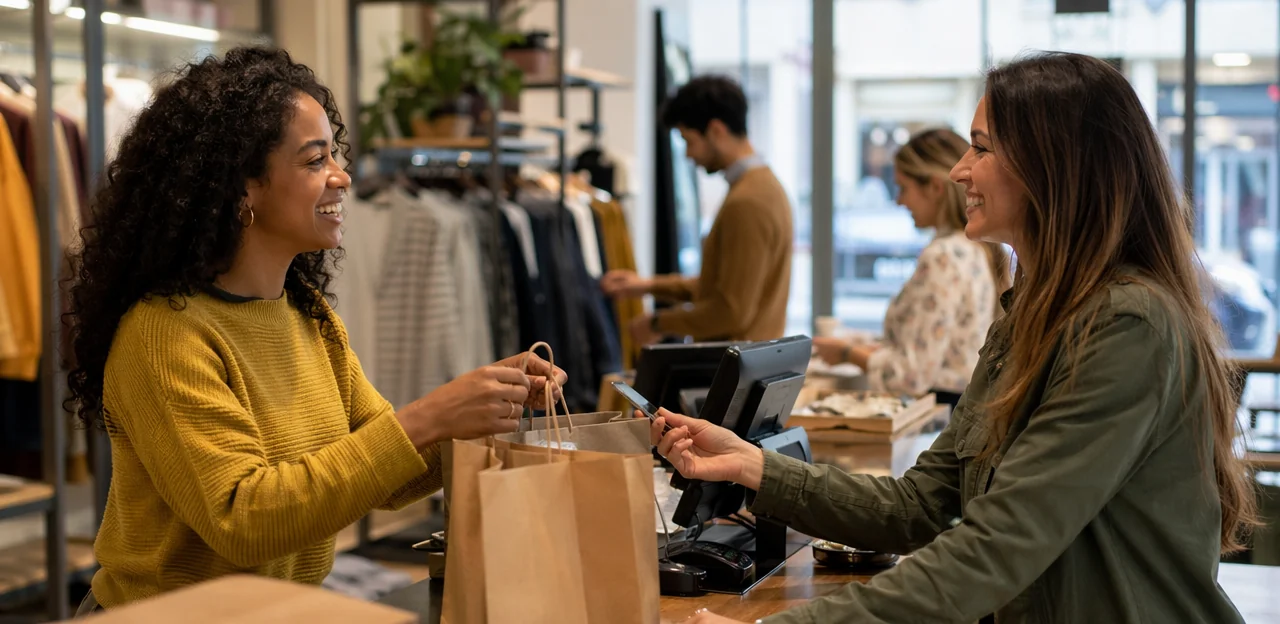
An in store rewards program shapes buying habits by making every visit feel more valuable and more personal. Shoppers are more likely to return when rewards are easy to earn, redeem, and understand at checkout.
- Repeat visits increase when points, instant discounts, or surprise perks create a clear reason to come back.
- Basket sizes grow because customers add extra items to unlock thresholds, bonus points, or cash-back offers often seen in the best shopping rewards program with cash back models.
- Emotional loyalty strengthens when store rewards cards, grocery store rewards cards, and department store rewards programs deliver visible savings and tailored offers.
Retailers improve loyalty & retention further by linking an app to store rewards cards or a rewards program app, combining convenience with personalization. Even brands inspired by a travel rewards program model can turn everyday purchases into aspirational rewards.
The role of rewards in retail experience and retention
A well-designed in store rewards program does more than hand out discounts; it strengthens the full retail experience from entry to checkout and beyond. When rewards are easy to earn and redeem, shoppers feel recognized, which reduces churn and gives them a clear reason to return instead of trying competitors.
Effective loyalty design should support both experience and retention goals:
- Use store rewards cards or a rewards program app to make earning points frictionless.
- Personalize offers by visit type, basket size, or category, whether through grocery store rewards cards or department store rewards programs.
- Blend instant perks with long-term value, such as birthday rewards, member pricing, or a best shopping rewards program with cash back.
- Connect digital and physical journeys with app to store rewards cards and even partner-style benefits inspired by a travel rewards program.
Track repeat visits, redemption rate, and customer lifetime value to measure impact.
Comparing physical, digital, and hybrid loyalty models
Choosing the right in store rewards program depends on how customers shop and how much data your team can use effectively.
- Physical programs: Traditional store rewards cards are simple, familiar, and easy to hand out at checkout. They work well for older shoppers and common use cases like grocery store rewards cards, but they offer limited personalization and weak tracking.
- Digital-first programs: A rewards program app enables instant offers, mobile wallets, and behavior-based promotions. It’s often the best shopping rewards program with cash back for brands focused on speed, data, and repeat visits, though app adoption can be a barrier.
- Hybrid programs: Combining cards, an app to store rewards cards, and CRM data creates the most flexible model. This approach suits department store rewards programs and even brands inspired by travel rewards program mechanics, because it connects in-store purchases with personalized follow-up, retention campaigns, and stronger lifetime value.
Core Elements of a High-Performing In Store Rewards Program
Choosing the right reward structure
The best in store rewards program matches how often customers buy, what they spend, and what motivates them to return.
- Points-based programs work well for frequent visits and varied basket sizes. They’re common with grocery store rewards cards and department store rewards programs because customers can earn steadily and redeem flexibly.
- Tiered rewards encourage higher annual spend by unlocking better benefits over time, such as early access, free services, or VIP support.
- Discount-led offers are simple and effective for price-sensitive shoppers, especially when linked to store rewards cards.
- Exclusive perks fit premium brands better than constant discounts. Think member-only events, faster checkout, or birthday gifts.
- Cash-back models are strongest when savings are the core value proposition. Position your offer as the best shopping rewards program with cash back if customers compare value in dollars, similar to some travel rewards program structures.
If mobile matters, connect your rewards program app or app to store rewards cards for seamless tracking and redemption.
Enrollment, redemption, and ease of use
An effective in store rewards program should feel effortless from the first interaction to the final redemption. If sign-up takes too long, customers abandon it. If points are hard to track or redeem, participation drops fast.
Key elements that improve adoption:
- Simple enrollment: Let shoppers join with a phone number, QR code, or a rewards program app instead of long forms.
- Digital card storage: An app to store rewards cards reduces lost accounts and keeps store rewards cards accessible at checkout.
- Real-time tracking: Customers should instantly see points, offers, and progress toward rewards.
- Fast redemption: One-tap coupons, barcode scans, or auto-applied discounts remove friction.
For example, a retailer can use a rewards program app to onboard shoppers in seconds, digitize grocery store rewards cards, and promote personalized offers. This also helps brands compete with department store rewards programs, a travel rewards program, or the best shopping rewards program with cash back by making everyday earning and redemption easier.
Aligning rewards with brand and customer segments
An effective in store rewards program should reflect both your brand promise and how different shoppers use your retail spaces. One-size-fits-all incentives rarely perform as well as segmented offers.
- Frequent shoppers: Use points multipliers, early access, and personalized offers through a rewards program app or app to store rewards cards connection to encourage repeat visits.
- Value-driven buyers: Focus on instant savings, coupons, and the best shopping rewards program with cash back style benefits. This works especially well for grocery store rewards cards, where shoppers expect practical, everyday value.
- Premium customers: Offer VIP services, exclusive events, premium support, or even a travel rewards program tie-in for higher spenders.
- Category-specific audiences: Tailor rewards by format—department store rewards programs may emphasize beauty, fashion, or home perks, while specialty retailers can reward category loyalty with curated bundles or member-only drops.
The best store rewards cards match shopper expectations, basket size, and store format.
Technology, AI, and Analytics Behind Smarter Loyalty Programs

Using AI to personalize offers and timing
AI & analytics make an in store rewards program smarter by turning purchase history, visit frequency, basket size, and dwell time into timely, relevant offers. Instead of pushing the same coupon to everyone, retailers can use a rewards program app to trigger promotions based on real behavior.
- Identify patterns: Spot which shoppers respond to bundles, premium upgrades, or repeat-purchase reminders across store rewards cards and digital profiles.
- Predict churn: Flag customers whose visits or spend are dropping, then send a targeted incentive before they disengage.
- Personalize by segment: Tailor offers for grocery store rewards cards, department store rewards programs, or even crossover audiences interested in a travel rewards program.
- Improve relevance: Connect an app to store rewards cards to deliver the best shopping rewards program with cash back experience, not generic discounts.
Relevant offers increase redemption, loyalty, and margin.
Connecting POS, CRM, and mobile loyalty data
A strong in store rewards program works best when POS transactions, CRM profiles, and every rewards program app interaction feed into one shared customer view. This gives retailers clearer attribution across app to store rewards cards, email, push offers, and in-person purchases.
- Connect POS data to loyalty IDs so every basket, return, and redemption updates customer history in real time.
- Unify CRM profiles with mobile behavior, including clicks, saved offers, and location-based visits.
- Use AI & analytics to identify which promotions drive repeat visits, higher basket size, and redemptions across store rewards cards.
This approach helps retailers optimize grocery store rewards cards, department store rewards programs, and even hybrid models like a travel rewards program or the best shopping rewards program with cash back, while improving visibility from app engagement to store purchase.
Key metrics to track program performance
To measure whether your in store rewards program is driving real loyalty & retention, track a focused set of KPIs:
- Enrollment rate: How many shoppers join after seeing your offer, whether through store rewards cards, a rewards program app, or an app to store rewards cards flow.
- Active member rate: The percentage of members who earn or redeem rewards regularly.
- Repeat purchase frequency: Shows whether members return more often than non-members.
- Average order value (AOV): Compare basket size across members, including users of grocery store rewards cards or department store rewards programs.
- Redemption rate: High redemption signals engagement, but should still protect margins.
- Customer lifetime value (CLV): Reveals long-term ROI versus short-term discounts.
With strong AI & analytics, retailers can identify which offers perform best, refine the best shopping rewards program with cash back, and even benchmark against models like a travel rewards program to improve profitability over time.
Examples by Retail Category: What Works Best

Grocery loyalty strategies that drive repeat visits
A strong in store rewards program keeps grocery shoppers coming back by making everyday spending feel more valuable. Unlike many department store rewards programs or a travel rewards program, grocery loyalty succeeds through convenience, weekly relevance, and visible household savings.
- Use grocery store rewards cards for frequent-trip incentives: reward weekly visits, basket size, or staple-category purchases.
- Personalize offers: connect purchase history from store rewards cards or a rewards program app to send tailored coupons on items shoppers already buy.
- Add fuel and partner discounts: fuel points remain one of the most effective grocery retention tools.
- Bridge app to store rewards cards: make it easy to clip digital deals and track savings.
For many households, the best shopping rewards program with cash back is the one that lowers routine grocery and gas costs consistently.
Department store rewards programs and premium perks
A strong in store rewards program in department retail usually goes beyond basic points. The most effective department store rewards programs use tiered status to increase spend and improve the overall retail experience.
- Tiered benefits: Offer entry, mid, and VIP levels with better earn rates, free alterations, or concierge-style service.
- Exclusive access: Reward top members with private shopping nights, beauty events, and early access to launches or seasonal sales.
- Branded credit incentives: Store rewards cards can unlock bonus points, financing offers, or “member-only” pricing.
- Cross-category value: Unlike grocery store rewards cards, department stores often bundle fashion, beauty, and home perks.
- Digital convenience: Connect an app to store rewards cards through a rewards program app for personalized offers, and consider hybrid perks inspired by a travel rewards program or the best shopping rewards program with cash back.
When travel-style rewards inspire retail loyalty
A travel rewards program succeeds because it turns everyday spending into aspirational value. Retailers can apply the same psychology to an in store rewards program by making points feel meaningful, visible, and worth saving.
- Use tiered earning across store rewards cards, grocery store rewards cards, and department store rewards programs to encourage repeat visits.
- Offer redemption options that mix instant savings with “save-for-later” perks, helping position your brand as the best shopping rewards program with cash back and premium rewards.
- Connect physical and digital journeys through an app to store rewards cards experience and a simple rewards program app.
This approach strengthens loyalty & retention by giving shoppers both practical value and a reason to come back for bigger rewards.
How to Launch and Promote an In Store Rewards Program

Planning the rollout across retail spaces
Use a simple rollout plan to launch your in store rewards program consistently across all retail spaces:
- Set the offer and enrollment path: Decide whether customers join through store rewards cards, a rewards program app, or an app to store rewards cards model. Keep signup fast at checkout and on mobile.
- Train staff first: Give associates a short script, FAQs, and incentive goals so they can explain benefits clearly, whether you run department store rewards programs, grocery store rewards cards, or a travel rewards program tie-in.
- Add visible signage: Place messaging at entrances, aisles, fitting rooms, and counters.
- Build checkout prompts: Use POS reminders for cashiers to invite every shopper.
- Coordinate omnichannel messaging: Match in-store signs with email, SMS, social, and app messaging to position your offer as the best shopping rewards program with cash back where relevant.
Driving adoption with mobile and in-store touchpoints
To grow an in store rewards program, make enrollment effortless at checkout and instantly rewarding. Shoppers are far more likely to join when the value is clear in the moment.
- QR codes at registers, shelves, and bags let customers join in seconds without staff friction.
- SMS and email capture can deliver a welcome offer immediately, turning a one-time buyer into a repeat visitor.
- Printed and digital receipts should include a join link or QR code tied to bonus points or cash-back incentives.
- A rewards program app helps customers track points, redeem offers, and manage store rewards cards in one place.
- An app to store rewards cards is especially useful for shoppers juggling grocery store rewards cards, department store rewards programs, or even a travel rewards program.
The best results come from immediate perks, simple sign-up, and a clear path to becoming the best shopping rewards program with cash back.
Common mistakes to avoid during implementation
A strong in store rewards program can fail if execution feels confusing or inconsistent. Avoid these common mistakes:
- Overcomplicated rules: If customers struggle to understand points, tiers, exclusions, or redemption windows, trust drops fast. Keep earning and redemption simple across store rewards cards, grocery store rewards cards, and department store rewards programs.
- Weak employee training: Staff should clearly explain benefits, sign-up steps, and troubleshooting for any rewards program app or app to store rewards cards experience. Poor guidance lowers participation.
- Low reward visibility: If shoppers cannot easily see progress, available offers, or cash-back value, engagement fades. Promote perks clearly, especially if positioning as the best shopping rewards program with cash back.
- Disconnected systems: When POS, CRM, and AI & analytics tools do not sync, personalization suffers and loyalty & retention weakens. Customers expect a seamless experience, whether comparing a travel rewards program or retail offer.
How to Evaluate and Improve Your In Store Rewards Program Over Time

Gathering customer feedback and behavioral insights
A strong in store rewards program improves when retailers combine direct feedback with behavior data:
- Surveys reveal which perks members actually want, from discounts to early access.
- Transaction data shows what users of store rewards cards and grocery store rewards cards redeem most often.
- Rewards program app engagement highlights which offers, reminders, and redemption paths drive action.
Using AI & analytics, retailers can compare interest across department store rewards programs, a travel rewards program, or even an app to store rewards cards model to refine messaging, benefits, and the best shopping rewards program with cash back options.
Testing offers, tiers, and cash-back incentives
Use A/B testing to improve every in store rewards program and strengthen loyalty & retention. Compare:
- Cash-back vs. points: Test whether the best shopping rewards program with cash back drives more repeat visits than points-based store rewards cards.
- Bonus events: Measure weekend multipliers, category-specific boosts, or limited-time offers for grocery store rewards cards and department store rewards programs.
- Tier structures: Compare simple entry tiers against premium models inspired by a travel rewards program.
Track redemption rate, repeat purchase frequency, and margin impact across your rewards program app or app to store rewards cards journey.
Building long-term loyalty through continuous optimization
To keep an in store rewards program effective, retailers should refine it continuously as shopper expectations shift.
- Use AI & analytics to track redemption, visit frequency, basket size, and churn signals.
- Personalize offers across store rewards cards, a rewards program app, and app to store rewards cards experiences.
- Maintain omnichannel consistency so promotions feel seamless online and in-store.
- Benchmark against department store rewards programs, grocery store rewards cards, and even a travel rewards program to stay competitive.
- Test perks like tiered benefits or the best shopping rewards program with cash back model to improve retention.
Conclusion
A well-designed in store rewards program does more than hand out discounts—it turns everyday transactions into stronger customer relationships, richer first-party data, and more repeat visits. Whether you’re evaluating store rewards cards, comparing grocery store rewards cards, or modernizing legacy department store rewards programs, the most effective strategy is one that feels simple, relevant, and rewarding at every touchpoint. Today’s retailers also need flexibility, from integrating an app to store rewards cards experience to offering a seamless rewards program app that connects in-store and digital behavior.
The strongest programs are easy to join, personalized through AI and analytics, and built around value customers actually want—whether that means points, exclusive offers, or a contender for the best shopping rewards program with cash back. For some brands, adding partnerships or perks inspired by a travel rewards program can further increase engagement and retention.
As a next step, audit your current customer journey, identify where loyalty drops off, and map out the rewards structure that best fits your audience. Then review your tech stack, in-store signage, and analytics capabilities to ensure your in store rewards program is easy to access and easy to measure. If you’re ready to elevate in-store engagement, explore platforms and tools—including contactless feedback and loyalty solutions like Tapsy—that can help you turn every visit into a reason to return.
Frequently Asked Questions
- What is an in-store rewards program?
An in-store rewards program is a loyalty system that gives shoppers points, discounts, cash-back style value, or perks for purchases made in a retail location. Its goal is to increase repeat visits, strengthen retention, and give retailers better insight into customer behavior.
- Why do retailers need an in-store rewards program today?
Shoppers expect relevant offers, smooth experiences, and rewards that feel worth earning, not just generic discounts. A strong program helps retailers increase repeat visits, grow basket size, and build stronger emotional loyalty through visible savings and personalized offers.
- How do rewards programs influence customer buying behavior?
Rewards give shoppers a clear reason to return by making each visit feel more valuable. They can also increase basket size when customers add items to reach thresholds, bonus points, or cash-back style offers.
- What is the difference between physical, digital, and hybrid loyalty programs?
Physical programs use traditional store rewards cards and are simple and familiar, but they offer weaker tracking and personalization. Digital-first programs use a rewards program app for instant offers and behavior-based promotions, while hybrid programs combine cards, app access, and CRM data for more flexibility and stronger follow-up.
- Which reward structure works best for an in-store loyalty program?
The best structure depends on how often customers shop, how much they spend, and what motivates them. Points-based programs fit frequent visits, tiered rewards encourage higher annual spend, discount-led offers appeal to price-sensitive shoppers, and exclusive perks work well for premium brands.
- How can retailers make enrollment and redemption easier?
Keep sign-up simple with options like a phone number, QR code, or app-based enrollment instead of long forms. Make rewards easy to track and redeem with digital card storage, real-time point visibility, and fast redemption methods such as barcode scans or auto-applied discounts.
- How should rewards be matched to different customer segments?
Frequent shoppers respond well to points multipliers, early access, and personalized offers. Value-driven buyers often prefer instant savings or cash-back style benefits, while premium customers may respond better to VIP services, exclusive events, or higher-end perks.
- How does AI improve an in-store rewards program?
AI helps retailers use purchase history, visit frequency, basket size, and dwell time to deliver more relevant offers. It can identify response patterns, predict churn, personalize by segment, and improve timing so promotions feel useful instead of generic.
- Why is it important to connect POS, CRM, and mobile loyalty data?
Connecting these systems creates a shared customer view across in-store purchases, app activity, and marketing touchpoints. That makes it easier to track every basket, return, redemption, and promotion response in real time and improve attribution and personalization.
- What metrics should retailers track to measure loyalty program performance?
Key metrics include enrollment rate, active member rate, repeat purchase frequency, average order value, redemption rate, and customer lifetime value. Together, these show whether the program is increasing engagement, retention, and long-term ROI.
- What loyalty tactics work especially well for grocery retailers?
Grocery programs perform best when they focus on convenience, weekly relevance, and visible household savings. Effective tactics include frequent-trip incentives, personalized coupons based on purchase history, fuel or partner discounts, and easy digital deal clipping through app-linked rewards cards.
- How are department store rewards programs different from grocery rewards programs?
Department store programs often go beyond basic points by using tiered status, premium perks, and exclusive access to events or launches. Grocery programs usually focus more on practical value, repeat trips, and everyday savings rather than aspirational or service-based benefits.
- How can travel-style rewards ideas be used in retail?
Retailers can borrow the idea of turning everyday spending into more meaningful, aspirational rewards. A mix of tiered earning, save-for-later perks, and instant savings can make points feel more valuable and encourage shoppers to keep coming back.
- What are the most important steps when launching an in-store rewards program?
Start by defining the offer and the enrollment path, whether through cards, an app, or both. Then train staff, add visible signage, build checkout prompts, and coordinate messaging across in-store and digital channels so the experience feels consistent.
- What common mistakes should retailers avoid when implementing a rewards program?
Avoid overcomplicated rules, weak employee training, low reward visibility, and disconnected systems. If customers do not understand how rewards work or cannot easily see progress and value, participation and trust can drop quickly.