
A packed screening in a tourist hotspot can bring together dozens of nationalities in a single auditorium, but that diversity also creates a challenge: how do cinemas truly understand every guest’s experience when language becomes a barrier? In high-traffic destinations, collecting clear, timely, and inclusive audience insight is no longer a nice-to-have. It is essential for improving accessibility, visitor satisfaction, and overall venue performance.
That is where cinema feedback multilingual strategies become especially valuable. When guests can share their thoughts in their preferred language, cinemas gain more accurate feedback on everything from ticketing and wayfinding to seat comfort, audio quality, staff support, and accessibility needs. More importantly, multilingual feedback helps venues respond faster to issues, reduce frustration, and create a more welcoming experience for international visitors.
This article explores why multilingual feedback matters so much for tourist-heavy cinemas, how it supports accessibility and inclusion goals, and what practical systems venues can use to gather and act on audience responses in real time. It will also look at how simple tools, including solutions such as Tapsy, can help cinemas capture in-the-moment insights without adding friction to the guest journey.
Why multilingual feedback matters in tourist-focused cinemas

In tourist hubs, cinemas rarely serve a single-language audience. Visitors include international travelers, short-stay guests, expats, and multilingual families, so cinema feedback multilingual systems are essential to understand the full tourist cinema experience.
- Clearer communication: If feedback forms, signage, and support options appear in multiple languages, guests can report issues with subtitles, audio clarity, seating, or wayfinding more accurately.
- Higher satisfaction: Language-accessible feedback reduces confusion and helps staff resolve problems quickly, improving comfort and inclusion.
- More repeat visits: Tourists who feel understood are more likely to return during their stay, recommend the venue, or leave positive reviews.
Collecting multilingual audience feedback at key touchpoints, such as entrances or exits, helps venues spot recurring barriers fast. Tools like Tapsy can support simple, no-app feedback collection across diverse visitor groups.
How language barriers reduce feedback quality
Language barriers in cinemas often distort what venues learn from international visitors. When surveys are only available in one or two languages, guests may skip questions, choose random answers, or leave overly brief comments that hide the real issue. That weakens cinema survey participation and makes trend analysis less reliable.
- Incomplete responses: Guests may understand rating scales but struggle to explain queue times, sound issues, or staff interactions.
- Lower participation: If the form feels difficult, tourists are less likely to finish it.
- Missed operational insights: Cinemas lose valuable detail about signage, concessions, accessibility, and wayfinding.
To improve cinema feedback multilingual collection, offer short surveys in key visitor languages, use simple wording, and place QR feedback points at high-traffic touchpoints. Tools like Tapsy can help streamline this process.
Accessibility and inclusion as business advantages
Multilingual feedback is more than a convenience in tourist-heavy venues; it is a practical way to improve cinema accessibility and deliver an inclusive visitor experience. When guests can share issues in their preferred language, cinemas reduce friction, uncover service gaps faster, and make more visitors feel welcome.
- Improve inclusive service: Use cinema feedback multilingual tools at key touchpoints such as ticketing, concessions, and exits so international guests can easily report problems.
- Strengthen brand reputation: Visitors who feel understood are more likely to leave positive reviews, recommend the venue, and return on future trips.
- Support accessibility goals: Multilingual feedback helps identify barriers around signage, staff communication, seating support, and wayfinding.
No-app tools such as Tapsy can help cinemas collect real-time insights and act before a poor experience becomes a public complaint.
Core elements of an effective cinema feedback multilingual system
Choosing the right languages for your venue
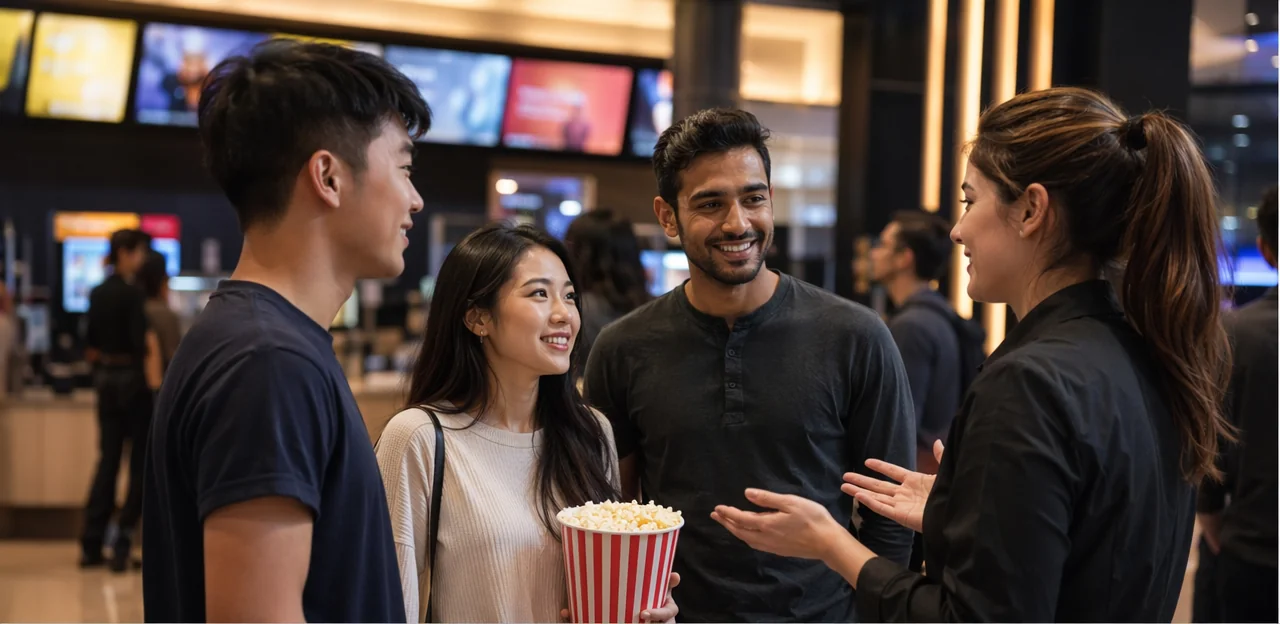
A strong cinema feedback multilingual approach starts with data, not guesswork. To build an effective multilingual feedback strategy, prioritize languages that reflect who actually visits your venue.
- Review cinema visitor demographics: Use postcode data, booking profiles, and audience surveys to identify your most common non-native language groups.
- Study tourism data: Check local tourism board reports, airport arrivals, hotel occupancy patterns, and seasonal visitor trends to spot high-volume international audiences.
- Analyze ticketing trends: Look at peak periods, film types, and screenings that attract tourists, such as blockbuster releases, festival programming, or city-center locations.
- Work with local partners: Hotels, tour operators, universities, and visitor centers can share insights into the languages their guests speak most often.
- Start with the top 3–5 languages: Focus on coverage and clarity before expanding further.
If you use a tool like Tapsy, test response rates by language and refine your rollout based on real participation data.
Selecting feedback channels tourists will actually use
For tourist-heavy venues, the best cinema feedback channels are the ones that feel instant, familiar, and easy to complete between activities. Reduce friction by offering multiple low-effort options:
- QR codes: Place a QR code cinema survey on seat backs, tickets, concession counters, and exit signage so visitors can respond in seconds without downloading anything.
- Mobile surveys: Keep forms short, mobile-first, and available in key visitor languages to support effective cinema feedback multilingual collection.
- Kiosk forms: Add touchscreen kiosks near exits for guests with low battery, limited data, or no local SIM.
- Email follow-ups: Send a short post-visit survey only when you have consent and timing data, ideally within 24 hours while the experience is still fresh.
- App-based feedback: If your cinema already has an app, enable one-tap ratings and language selection inside the booking journey.
Tools like Tapsy can help cinemas deploy no-app QR feedback at key touchpoints.
Writing simple, culturally clear survey questions
For cinema feedback multilingual programs, clarity matters more than clever wording. Simple questions are easier to translate, faster for visitors to answer, and more likely to produce consistent insights across languages and cultures.
- Use plain language: Prefer everyday words such as “clean,” “easy,” or “comfortable” over idioms, slang, or marketing terms.
- Ask one thing at a time: Avoid double-barrelled questions like “Was the screen and sound quality good?”
- Be specific: “How clean was your seat area?” works better than “How was the environment?”
- Keep response scales consistent: Use the same rating structure throughout to strengthen multilingual survey design.
- Avoid culture-dependent references: Humor, local expressions, and vague time phrases can weaken translated feedback questions.
- Test translations with native speakers: Check whether wording feels natural, neutral, and unambiguous.
If you use a tool like Tapsy, keep forms short so tourists can respond quickly before leaving the venue.
Best practices for accessibility, inclusion, and audience trust

Making feedback tools accessible to all visitors
To collect better accessible cinema feedback, venues should make every survey easy to read, hear, and complete across languages and devices. Strong inclusive survey design helps more guests participate, including tourists, older visitors, and people with visual, motor, or cognitive impairments.
- Use clean, readable layouts with plenty of spacing, clear headings, and one question per screen.
- Ensure screen-reader compatibility with proper labels, logical form order, and descriptive button text.
- Offer adjustable font sizing or default to larger text for easier reading in low-light cinema settings.
- Maintain high colour contrast so text, icons, and buttons remain visible.
- Keep navigation simple with large tap targets, back/next buttons, and minimal steps.
For cinema feedback multilingual systems, short translated prompts and no-app tools such as Tapsy can reduce barriers and improve response rates.
Respecting cultural differences in feedback behavior
Cinemas serving tourists should remember that cross-cultural feedback is rarely expressed the same way. In some cultures, guests avoid direct criticism and give mid-range scores even when unhappy; in others, visitors are more comfortable leaving blunt complaints or detailed open-text comments. To interpret cinema feedback multilingual data accurately, teams should look beyond the raw rating.
- Benchmark by language or visitor origin to spot cultural scoring patterns.
- Compare ratings with comment sentiment; a “4/5” may still contain a serious service issue.
- Use locally adapted wording so questions feel natural, not overly harsh or vague.
- Train staff to read indirect feedback, such as polite phrasing that signals dissatisfaction.
These practices improve international visitor insights and help cinemas respond fairly, rather than misreading silence, politeness, or brevity as satisfaction.
Building trust with privacy and transparency
For cinema feedback multilingual programs, trust starts before a visitor submits a single response. International guests are more likely to participate when privacy expectations are simple, visible, and easy to understand.
- Ask for clear consent: State what data is collected, why it is needed, and whether responses are anonymous or linked to contact details.
- Make your feedback privacy policy easy to find: Use short summaries in multiple languages, with a link to the full policy for those who want more detail.
- Explain data handling plainly: Clarify who can access responses, how long data is stored, and whether third parties are involved.
- Keep privacy messaging concise: Avoid legal jargon. Short, translated notices improve comprehension and strengthen visitor trust in surveys.
Tools like Tapsy can support simple, no-app feedback flows with clearer consent touchpoints.
Using multilingual feedback to improve cinema operations
Identifying service issues across the full visitor journey
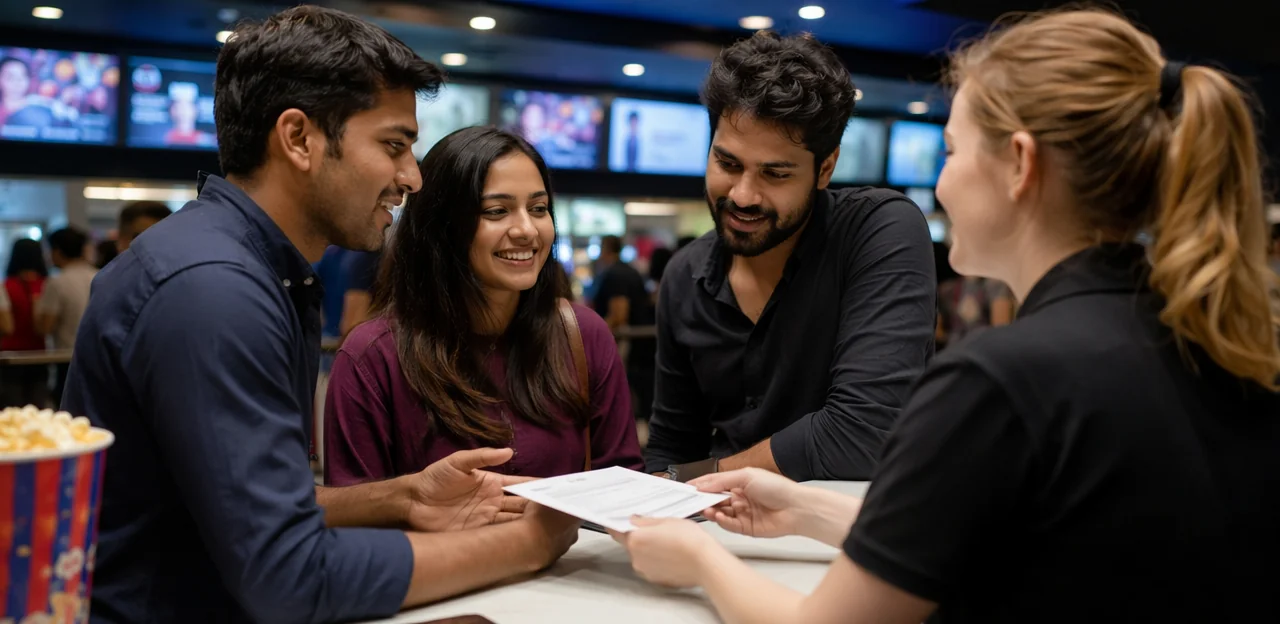
To improve the cinema customer journey, venues need feedback at every touchpoint, not just after the film ends. cinema feedback multilingual helps tourist-heavy cinemas uncover issues that local-only surveys often miss, giving clearer data for visitor experience improvement.
- Booking: detect confusion around language options, payment steps, ticket types, or confirmation emails.
- Wayfinding: identify unclear signage for entrances, screens, toilets, or collection points.
- Concessions: reveal queue frustrations, menu translation gaps, and allergy-information problems.
- Seating and subtitles: spot recurring complaints about seat location, comfort, accessibility, audio, or subtitle availability.
- Staff interactions: understand whether visitors feel welcomed, understood, and supported.
Using QR-based tools such as Tapsy at key moments can help cinemas capture and act on issues before they become negative reviews.
Recurring cinema feedback multilingual patterns should feed directly into practical team coaching and on-site updates. Managers can turn comments into measurable action by grouping issues by language, location, and touchpoint.
- Use repeated complaints to shape cinema staff training on simple multilingual greetings, ticketing explanations, seat-finding help, and accessibility support.
- Update signage where guests report confusion most often, such as self-service kiosks, screens, toilets, exits, and concession queues.
- Build quick-reference scripts for frontline teams so staff can respond clearly to common tourist questions.
- Turn service improvement feedback into support upgrades, such as translated FAQs, subtitle guidance, and better wayfinding.
Tools like Tapsy can help capture recurring themes in real time, making service fixes faster and more targeted.
Measuring ROI from better feedback collection
To prove the value of cinema feedback multilingual programs, track a small set of clear performance indicators tied to revenue and experience outcomes. The most useful cinema feedback metrics include:
- Response rate: Measure how many guests complete feedback when surveys are offered in their preferred language. Higher participation usually means more reliable insight.
- Satisfaction scores: Track CSAT or NPS by language group, showtime, and touchpoint to identify where improvements lift visitor satisfaction ROI.
- Repeat attendance: Compare return visits, loyalty sign-ups, or voucher redemptions after service improvements.
- Online reviews: Monitor review volume, star ratings, and sentiment across Google and travel platforms.
- Operational efficiency gains: Measure faster issue resolution, fewer complaints at the counter, and reduced staff time spent handling preventable problems.
Tools like Tapsy can help capture and act on this feedback in real time.
Tools and implementation tips for cinema teams
Translation tools, human review, and localization workflows
For cinema feedback multilingual programs, the best approach balances speed, accuracy, and cultural fit:
- Automated translation: Fast and cost-effective for high-volume surveys, signage, and comment tagging. Modern survey translation tools help cinemas launch quickly, but machine output can miss tone, idioms, or local expectations.
- Professional localization: Best for core questions, brand language, consent text, and service-recovery messages. Human linguists adapt wording to culture, not just language, protecting clarity and brand consistency.
- Hybrid workflow: Use automation for first-pass translation, then apply human review to guest-facing essentials. A strong cinema localization workflow should include glossary rules, approved terminology, and periodic QA checks.
Tools like Tapsy can support multilingual feedback collection across visitor touchpoints.
Integrating feedback with CRM and reporting systems
To turn cinema feedback multilingual into action, connect responses directly to your CRM, helpdesk, and analytics tools. This helps tourist-heavy venues spot issues faster, personalise follow-up, and improve service across languages.
- Sync feedback to guest profiles: Use cinema CRM integration to attach language, visit time, screen, booking channel, and sentiment to each customer record.
- Build a live feedback reporting system: Create dashboards that group comments by language, location, issue type, and urgency.
- Automate service recovery: Route low ratings or complaint keywords to customer service teams instantly for fast follow-up.
- Track trends over time: Compare recurring issues among international visitors to improve signage, concessions, accessibility, and staff support.
Tools such as Tapsy can help capture and route real-time venue feedback efficiently.
Launching a pilot program and refining over time
Start small to make cinema feedback multilingual practical, measurable, and easy to improve before a wider cinema survey rollout.
- Choose one test venue or audience group
Pick a cinema with high tourist traffic or one priority language, such as Spanish or German. - Limit the survey scope
Ask 3–5 questions on key touchpoints: ticketing, concessions, wayfinding, and seat comfort. - Use simple delivery methods
Launch QR-based surveys on posters, tickets, or lobby screens. A tool like Tapsy can help collect no-app responses quickly. - Track results weekly
Measure response rate, completion rate, language usage, and repeated complaints. - Refine before scaling
Fix unclear translations, shorten questions, and adjust placement. Once the multilingual feedback pilot performs well, expand to more languages and locations.
Conclusion: creating a better visitor experience through multilingual feedback

Key takeaways for cinema operators
For tourist-heavy venues, better feedback systems are not just a nice extra—they are essential to delivering a smoother, more inclusive guest experience. A strong cinema feedback multilingual strategy helps operators understand international visitors, resolve issues faster, and build a more welcoming reputation.
Key actions to prioritize include:
- Offer feedback in multiple languages
Make surveys, QR feedback forms, kiosks, and post-visit messages available in the main languages spoken by your visitors. Focus first on your top tourist demographics rather than trying to translate everything at once. - Keep the process simple and mobile-friendly
Tourists are often on the move, short on time, and less likely to complete long surveys. Use short forms, clear icons, and easy rating scales that work well on smartphones. - Collect feedback at the right touchpoints
Ask for input where the experience happens: ticketing, concessions, seat comfort, cleanliness, accessibility, and wayfinding. This gives more specific, actionable insight than a generic end-of-visit survey. - Respond quickly to issues
If international guests report confusion, poor signage, language barriers, or service problems, route that feedback to staff immediately. Fast service recovery can prevent negative public reviews. - Train teams for inclusive follow-up
Staff should know how to interpret feedback from visitors with different language and cultural expectations. Even basic multilingual response templates can improve consistency. - Use data to improve the tourist journey
Track recurring pain points by language, screening time, and location. This helps shape a more tourist-friendly cinema experience, from better signage to clearer food options and accessibility support.
Tools such as Tapsy can support this approach by enabling quick, no-app feedback collection at key cinema touchpoints.
Conclusion
In tourist-heavy venues, great audience experience depends on more than the film itself. When cinemas make it easy for international guests to share their thoughts in their preferred language, they remove friction, improve accessibility, and uncover issues that might otherwise go unreported. From clearer wayfinding and smoother concessions service to better seat comfort, subtitle availability, and staff support, cinema feedback multilingual systems help operators understand the real needs of diverse audiences in real time.
The value is clear: multilingual feedback strengthens inclusion, protects visitor satisfaction, and gives cinema teams the insight they need to act quickly before a minor issue becomes a negative review. It also helps venues build a more welcoming brand for tourists, families, and first-time visitors who expect seamless experiences regardless of language barriers.
Now is the time to review your current feedback journey and ask whether every guest can respond easily and confidently. Start by identifying high-traffic touchpoints, simplifying your survey flow, and offering key language options based on visitor demographics. If you want a practical way to capture cinema feedback multilingual at the moment of experience, tools like Tapsy can support no-app, real-time feedback collection.
Take the next step by auditing your guest journey, testing multilingual prompts, and tracking results over time. The better your cinema feedback multilingual strategy, the better your audience experience will be.
Frequently Asked Questions
- Why is multilingual feedback important for cinemas in tourist-heavy locations?
Tourist-focused cinemas often serve visitors from many language backgrounds in the same venue. Multilingual feedback helps guests explain issues more clearly, improves satisfaction, and gives teams better insight into ticketing, wayfinding, seating, audio, staff support, and accessibility.
- How do language barriers affect cinema survey results?
When surveys are only offered in one or two languages, guests may skip questions, choose random answers, or leave comments that are too brief to explain the real problem. That lowers participation and makes trend analysis less reliable.
- Which languages should a cinema include first in a multilingual feedback system?
Start with the top 3–5 languages based on real visitor data rather than assumptions. Useful sources include booking profiles, postcode data, audience surveys, tourism board reports, airport arrivals, hotel patterns, and insights from local partners such as hotels or visitor centers.
- What feedback channels work best for international cinema visitors?
Low-friction channels work best, especially QR codes, short mobile surveys, touchscreen kiosks, email follow-ups, and app-based feedback if the cinema already has an app. The goal is to let tourists respond quickly without adding extra steps or requiring a download.
- Where should cinemas place QR feedback points?
QR feedback points should be placed at high-traffic touchpoints such as seat backs, tickets, concession counters, entrances, exits, posters, and lobby screens. This helps capture feedback close to the moment when the experience happens.
- How should multilingual survey questions be written for clarity?
Use plain language, ask one thing at a time, and keep response scales consistent throughout the survey. Questions should be specific, avoid slang or humor, and be tested with native speakers to make sure translations feel natural and unambiguous.
- How can cinemas make feedback tools more accessible for all visitors?
Feedback forms should use clean layouts, clear headings, one question per screen, and simple navigation with large tap targets. They should also support screen readers, high colour contrast, and readable text sizing so more guests can participate comfortably.
- How do cultural differences change the way tourists leave feedback?
Some visitors may avoid direct criticism and leave mid-range scores even when unhappy, while others may be more direct in ratings and comments. Teams should compare ratings with comment sentiment, benchmark by language or origin, and train staff to recognize indirect signs of dissatisfaction.
- What privacy information should be shown in a multilingual cinema survey?
Visitors should be told clearly what data is collected, why it is needed, whether responses are anonymous, who can access the data, how long it is stored, and whether third parties are involved. Privacy notices should be short, easy to find, and available in multiple languages.
- What parts of the cinema journey should be measured with multilingual feedback?
Useful touchpoints include booking, wayfinding, concessions, seating, subtitles, audio, accessibility, cleanliness, and staff interactions. Collecting feedback across the full journey helps cinemas find problems that a single end-of-visit survey might miss.
- How can multilingual feedback improve staff training and on-site operations?
Recurring complaints can be grouped by language, location, and touchpoint to identify where staff need more support. Cinemas can use that insight to improve multilingual greetings, ticketing explanations, seat-finding help, accessibility support, signage, and quick-reference scripts.
- Which metrics show whether a multilingual feedback program is working?
Key measures include response rate, satisfaction scores such as CSAT or NPS by language group, repeat attendance, online review trends, and operational efficiency gains. These indicators show whether better feedback collection is improving both guest experience and service performance.
- Should cinemas rely on machine translation or human localization?
A hybrid approach is recommended. Automated translation is useful for speed and scale, while human review is better for core questions, consent text, brand language, and service-recovery messages where tone and cultural fit matter more.
- How can feedback data be connected to CRM and reporting systems?
Responses can be linked to guest profiles with details such as language, visit time, screen, booking channel, and sentiment. Dashboards can then group issues by language, location, urgency, and topic, while low ratings or complaint keywords can be routed quickly to service teams.
- What is a practical way to launch a multilingual feedback pilot in a cinema?
Begin with one venue or one priority language and limit the survey to 3–5 questions focused on key touchpoints like ticketing, concessions, wayfinding, and seat comfort. Track response rate, completion rate, language usage, and repeated complaints weekly, then refine translations, question length, and placement before expanding.