
What if your members could report a slippery locker room floor, a broken shower, or long waits at the front desk in seconds, right when the issue happens? For sports clubs and associations, collecting feedback has often meant relying on annual surveys, scattered emails, or complaints raised too late to fix the experience. A more practical approach is to place feedback opportunities directly where members interact with your facilities every day.
That is where a club feedback QR code can make a real difference. By adding simple QR touchpoints around gyms, changing rooms, reception desks, courts, pools, or café areas, clubs can gather fast, relevant feedback while it is still fresh. This helps teams spot operational issues earlier, improve member satisfaction, and create a smoother customer experience across the entire venue.
In this article, we will explore simple, effective use cases for QR code feedback in sports clubs, from facility cleanliness and equipment maintenance to staff service and queue management. We will also look at how QR and NFC touchpoints can support a more responsive member experience, and how solutions such as Tapsy can help clubs capture real-time insights without adding friction for members.
Why sports clubs should use QR feedback touchpoints

The value of instant facility feedback
Collecting feedback at the moment members use a space gives sports clubs clearer, more useful insights. A club feedback QR code placed at the gym entrance, changing rooms, courts, or clubhouse removes extra steps and makes it easy to respond in seconds.
- Higher response rates: members are more likely to scan a code on-site than open a later email survey.
- More accurate feedback: instant member feedback captures real impressions before details are forgotten.
- Faster issue resolution: clubs can spot recurring problems like cleanliness, equipment faults, or overcrowding quickly.
- Better sports club customer experience: low-friction feedback helps staff act faster and improve facilities continuously.
Tools like Tapsy can support this no-app approach.
How QR and NFC fit modern club operations
NFC and QR touchpoints make sports club digital transformation practical because they work with devices members already use every day: smartphones. A club feedback QR code can be placed at courts, locker rooms, reception, gyms, or cafés, while NFC tags allow a simple tap for instant access.
- Easy to deploy: add stickers or signs without changing existing systems
- Low cost: no expensive hardware or app development required
- Contactless feedback: members and guests can report cleanliness, equipment issues, or service quality in seconds
- Actionable operations: track feedback by location to spot recurring problems faster
Solutions like Tapsy can help clubs launch no-app feedback flows quickly.
The main goals of a club feedback QR code system are practical and measurable:
- Speed up issue detection: Collect facility maintenance feedback at the exact touchpoint—locker rooms, courts, showers, gyms, or entrances—so broken equipment, cleanliness problems, or safety concerns are reported faster.
- Improve service quality: Use real-time feedback to spot recurring pain points in staffing, scheduling, reception, or coaching support, then assign fixes quickly.
- Increase member satisfaction: Fast responses show members their input matters, which strengthens trust and improves the overall club experience.
- Support sports club retention: When clubs resolve small issues before they become frustrations, they reduce churn and build stronger long-term loyalty.
Tools like Tapsy can help clubs capture and route this feedback without adding friction.
Simple club feedback QR code use cases around facilities
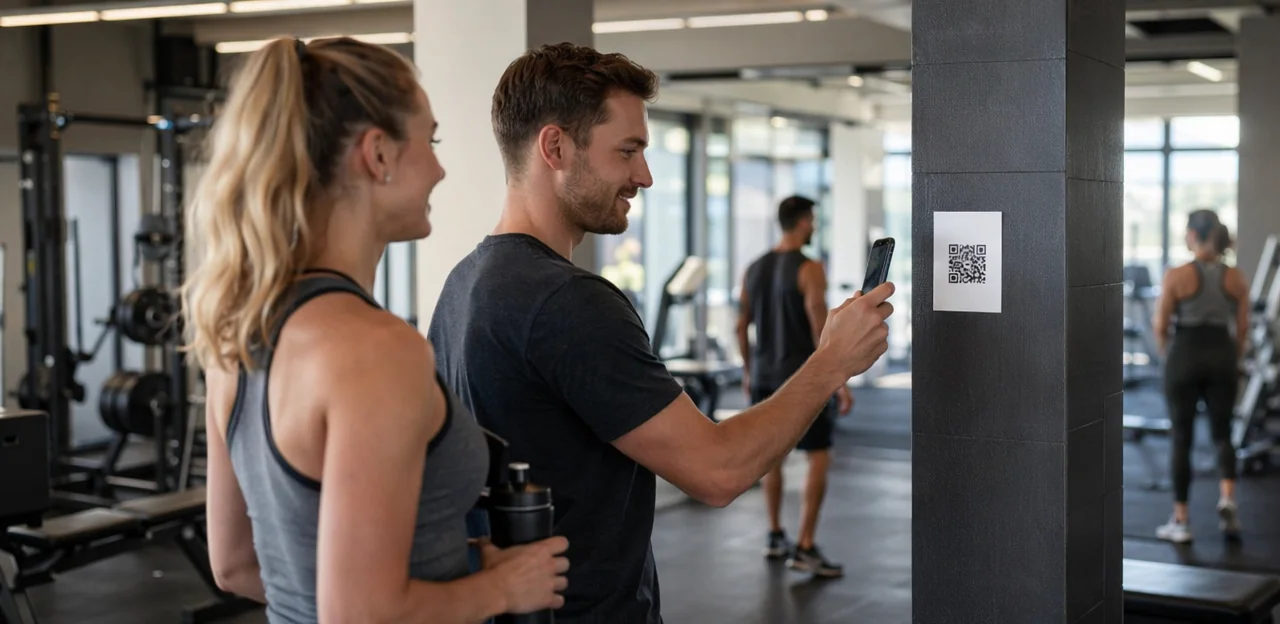
Gym, fitness, and training areas
A club feedback QR code placed at the entrance, on equipment stations, and near studio exits helps clubs collect fast, location-specific insights from members while the experience is still fresh. This makes it easier to spot recurring issues and improve training spaces continuously.
- Equipment condition reports: Use a gym feedback QR code on machines, racks, and cardio zones so members can flag loose parts, screen errors, missing attachments, or safety concerns. Effective equipment issue reporting speeds up maintenance and reduces downtime.
- Cleanliness ratings: Add quick scans in free-weight areas, stretching zones, locker-adjacent spaces, and studios to measure hygiene standards and trigger cleaning when needed.
- Crowding feedback: Let members report peak-time congestion, waiting times, or limited access to popular machines, helping staff adjust floor supervision or booking rules.
- Layout and scheduling suggestions: Collect fitness area feedback on equipment placement, traffic flow, ventilation, and class times to better match member routines.
Solutions like Tapsy can support no-app QR/NFC feedback at these touchpoints.
Locker rooms, showers, and restrooms
Locker rooms, showers, and restrooms are ideal places for a club feedback QR code because issues are time-sensitive and easy for members to notice in the moment. A small sign near exits, mirrors, or lockers lets members share locker room feedback in seconds without visiting reception or filling out long surveys.
Use a simple cleanliness QR code flow with 3–4 taps, focused on:
- Cleanliness of floors, benches, showers, and toilets
- Soap, paper towels, toilet paper, and sanitizer availability
- Water temperature, ventilation, and room comfort
- Broken lockers, drains, lights, or plumbing issues
To increase responses, keep the form frictionless: no app download, optional comments, and clear categories for urgent maintenance. This makes facility hygiene feedback fast and practical for both members and staff.
For best results, route low ratings or hygiene complaints directly to cleaning or operations teams. Tools like Tapsy can help clubs collect touchpoint-level feedback and react before small issues become member complaints.
Reception, café, courts, and spectator zones
A club feedback QR code works best when placed exactly where members and visitors experience the service. This makes sports facility feedback more specific, timely, and easier to act on.
- Reception / front desk: Ask for front desk service feedback on wait times, friendliness, check-in speed, and clarity of information about bookings, classes, or events.
- Café or bar: Prompt visitors to rate food quality, drink options, queue length, cleanliness, and value for money after they order or finish eating.
- Courts and playing areas: Collect court condition feedback on surface quality, lighting, temperature, net setup, cleanliness, and equipment availability.
- Spectator seating: Let guests report seating comfort, visibility, noise levels, shelter, and accessibility.
- Event-day touchpoints: Use short forms near entrances and exits to capture parking, signage, crowd flow, and overall match-day experience.
Keep each QR survey to 2–3 quick questions, with an optional comment box. Tools like Tapsy can help route urgent issues to the right team fast.
How to design feedback flows that members actually use

Keep forms short and mobile-friendly
To get fast, useful responses, every club feedback QR code should open a mobile feedback form that feels effortless on a phone. The goal is simple: let members respond in under a minute, right after using the gym, pitch, changing room, or clubhouse.
- Start with a one-tap rating: Use emoji, stars, or a 1–5 scale as the first action.
- Ask only 1–3 questions: A short QR survey performs better than a long form and helps improve member response rate.
- Make comments optional: Add a single open text box for extra detail, but never require it.
- Use mobile-first design: Large buttons, clear contrast, minimal typing, and fast loading are essential.
- Avoid friction: No login, no app download, and no unnecessary fields.
Tools like Tapsy can support this kind of quick, no-app feedback flow at club touchpoints.
Ask the right questions for each touchpoint
A club feedback QR code works best when each scan leads to a short, relevant survey for that exact location. Good touchpoint survey design makes responses specific, faster to answer, and easier for staff to act on.
- Changing rooms: Ask about cleanliness, temperature, showers, and locker condition.
- Reception desk: Focus on wait times, check-in speed, and staff helpfulness.
- Gym or training area: Use facility feedback questions about equipment availability, maintenance, and overcrowding.
- Pitch, court, or poolside: Ask about surface quality, lighting, and safety concerns.
- Café or social area: Check queue length, seating, and service experience.
Keep each sports club survey to 2–4 questions, with one optional comment box. If useful, tools like Tapsy can help route low scores or safety issues to the right team quickly.
Use clear calls to action and signage
Strong QR code signage can significantly increase QR scan rate in busy club environments. Members are more likely to scan when the message is specific, fast, and relevant to the space they are standing in.
- Use direct wording: A clear call to action for QR code works better than generic text like “Scan here.” Try:
- Rate this locker room
- Report an equipment issue in 30 seconds
- Tell us how clean this shower area is
- Match placement to the moment: Put the club feedback QR code exactly where the experience happens—on locker room exits, near broken-prone equipment, or by court entrances.
- Make it visually obvious: Use bold headings, high-contrast colors, short copy, and a visible QR frame so people notice it quickly.
If you use a tool like Tapsy, keep the feedback flow just as simple as the sign itself.
Turning feedback into better customer experience

Create response workflows for staff
A club feedback QR code only creates value when every report reaches the right person fast. Build a simple feedback workflow that assigns each issue by category, urgency, and location to support smoother sports club operations.
- Reception: handle booking confusion, access problems, lost property, and member complaints.
- Maintenance: receive equipment faults, lighting issues, leaks, heating, or locker repairs through a clear maintenance response process.
- Cleaning teams: act on changing room hygiene, showers, bins, and toilet cleanliness.
- Managers: review repeated complaints, safety concerns, or unresolved issues.
Set automatic alerts for low ratings and urgent comments, define response times, and track issue status until closed. Tools like Tapsy can help automate routing and notifications.
Track trends by facility and time
A club feedback QR code system becomes far more useful when you review responses by location and time, not just overall score. Use facility feedback analytics to spot patterns such as repeated locker room cleanliness complaints, evening court congestion, or recurring equipment issues in one zone.
- Group feedback by facility: gym floor, changing rooms, reception, café, pitches
- Compare time slots: identify peak-time pressure, staffing gaps, and maintenance bottlenecks
- Tag recurring issues: cleanliness, waiting times, lighting, temperature, safety
- Prioritize action: fix high-frequency, high-impact problems first
These member experience insights make sports club reporting more practical, helping managers allocate staff, schedule cleaning, and plan upgrades where they matter most.
Close the loop with members
Collecting input is only half the job. To close the feedback loop, clubs should clearly show members what changed after a scan of a club feedback QR code. This strengthens trust, improves participation, and supports long-term customer experience improvement.
Use simple member communication channels such as:
- Facility signage: “You asked, we fixed it” updates near courts, changing rooms, or reception
- Email summaries: share monthly improvements, like cleaner showers or better lighting
- App notifications: highlight quick wins and ongoing maintenance actions
Keep updates short, specific, and visible. For example: “Based on member feedback, we added more locker hooks and adjusted class times.” When members see action, they are far more likely to give feedback again.
Implementation tips for sports associations and clubs

Choosing QR, NFC, or both
The right setup depends on cost, member habits, and where feedback is collected. For many clubs, a club feedback QR code is the easiest starting point, while NFC adds speed in high-traffic spaces.
- Use printed QR codes when budget is tight, signage is visible, and members are already used to scanning posters or notices.
- Use NFC touchpoints for clubs in entrances, locker rooms, cafés, or reception desks where a quick tap feels more natural than opening a camera.
- Use both for the best QR vs NFC feedback coverage: QR supports all smartphones, while NFC improves convenience and response rates.
In wet, busy, or fast-moving facility environments, combined contactless club technology is often the most practical choice. Tools like Tapsy can support both touchpoints in one flow.
Privacy, moderation, and data quality
A club feedback QR code should make it easy to speak up without making members feel exposed. To balance trust, compliance, and useful insights:
- Offer anonymous member feedback by default, with an optional contact field only when follow-up is needed.
- Keep GDPR feedback collection simple: explain what data is collected, why, how long it is stored, and who can access it.
- Reduce spam with rate limits, basic bot protection, moderation rules, and location-specific QR codes for real touchpoints.
- Improve survey data quality by using 1–3 clear questions, one optional comment box, and predefined issue categories.
- Avoid barriers: no app download, no forced login, and mobile-friendly forms. Tools like Tapsy can support this lightweight approach.
Starting with a pilot program
A smart facility feedback strategy starts small. Instead of placing a club feedback QR code across every venue at once, launch a sports club pilot program in 2–3 high-traffic areas, such as:
- the main entrance
- changing rooms
- the gym or clubhouse café
This focused QR feedback rollout makes it easier to test engagement and operational response before scaling.
Track a few core metrics from day one:
- scan rate per location
- number of feedback submissions
- common issue types
- average issue resolution time
Use the results to identify which touchpoints deliver the most value, then expand to courts, stands, toilets, and training spaces. Tools like Tapsy can help simplify rollout and measurement.
Measuring success and long-term ROI

Key metrics to monitor
Track the right QR feedback metrics to turn every club feedback QR code into operational insight:
- Scan rate: how many members notice and open the QR prompt at courts, gyms, or changing rooms.
- Completion rate: the share of scans that become submitted feedback; this shows form clarity and ease of use.
- Satisfaction score: your core member satisfaction KPI for facilities, cleanliness, staff, and equipment.
- Issue resolution time: how quickly reported problems are fixed after submission.
- Repeat complaints: recurring issues signal deeper maintenance or staffing gaps.
- Member retention indicators: renewal rates, visit frequency, and drop-off after negative feedback.
Business benefits beyond feedback collection
A club feedback QR code system does more than gather opinions; it creates measurable business value across daily operations.
- Faster issue resolution: Route reports on cleanliness, lighting, lockers, or equipment directly to the right team for clear club operations improvement.
- Better facility standards: Spot recurring problems by location and fix them before they affect more members.
- Stronger brand perception: Showing that the club listens and acts quickly improves trust and supports stronger customer experience ROI.
- Higher member loyalty: Quick service recovery and visible improvements encourage renewals, referrals, and stronger sports club ROI.
Tools like Tapsy can help enable this in real time.
Building a continuous improvement culture
Regular, touchpoint-level feedback helps clubs spot patterns early and improve before small issues become bigger complaints. A club feedback QR code placed at entrances, changing rooms, cafés, courts, and reception supports continuous improvement in clubs by turning member comments into daily operational insight.
- Review feedback weekly by location and issue type
- Fix recurring friction points before they affect retention
- Share trends with staff and volunteers to align action
- Track improvements over time to strengthen your member experience strategy
This proactive loop raises sports club service quality across every member interaction, not just when problems escalate.
Conclusion
In short, QR-based feedback gives sports clubs a practical way to listen where the member experience actually happens: at the entrance, in changing rooms, by the pitch, in the gym, at the café, or near shared facilities. Instead of relying on long surveys sent days later, a club feedback QR code makes it easy for members, parents, and visitors to report cleanliness issues, maintenance problems, crowding, staff experience, or overall satisfaction in the moment. That means faster fixes, better facilities, and a stronger sense that the club values every voice.
The real advantage is simplicity. A well-placed club feedback QR code can increase response rates, surface recurring operational issues, and help clubs improve the day-to-day experience without adding friction. Combined with clear internal follow-up, these touchpoints can turn small comments into meaningful service improvements.
The next step is to start small: choose 2–3 high-traffic areas, create a short feedback flow, and assign alerts or reviews to the right staff members. Then track trends over time and expand to more touchpoints as needed. If you want a no-app example of how this can work in practice, tools like Tapsy show how QR and NFC touchpoints can support real-time feedback collection. Now is the time to turn every facility visit into an opportunity to learn, improve, and strengthen club loyalty.
Frequently Asked Questions
- What is a club feedback QR code for sports facilities?
It is a QR touchpoint placed where members use club spaces such as gyms, locker rooms, courts, pools, reception desks, or café areas. It lets people share feedback immediately, while the experience is still fresh. This helps clubs capture more relevant, location-specific input.
- Why should sports clubs collect feedback on-site instead of relying only on email surveys?
On-site feedback is easier to give in the moment, so members are more likely to respond. It also produces more accurate feedback because details have not been forgotten. Clubs can then detect issues like cleanliness problems, equipment faults, or overcrowding faster.
- Where should a sports club place QR feedback touchpoints?
Useful locations include gym entrances, equipment stations, studio exits, locker rooms, showers, restrooms, reception desks, courts, pools, cafés, spectator seating, and event entrances or exits. Placement works best when it matches the exact moment of the experience. Signs near exits, mirrors, lockers, or court entrances can make scanning more natural.
- What kinds of issues can members report with QR feedback in gym and training areas?
Members can report equipment problems such as loose parts, screen errors, missing attachments, or safety concerns. They can also rate cleanliness, flag crowding and waiting times, and suggest improvements to layout, ventilation, or class scheduling. This makes maintenance and space planning more responsive.
- How can QR feedback improve locker rooms, showers, and restrooms?
A simple flow can ask about floor, bench, shower, and toilet cleanliness, as well as soap, paper towels, sanitizer, and toilet paper availability. Members can also report water temperature, ventilation, comfort, and broken lockers, drains, lights, or plumbing. Routing low ratings directly to cleaning or operations teams helps clubs act before small issues become bigger complaints.
- Can QR feedback also be used at reception, cafés, and courts?
Yes, these are strong use cases because service quality and facility conditions are easy to judge on the spot. Reception feedback can cover wait times, check-in speed, and staff helpfulness, while café feedback can focus on food quality, queue length, cleanliness, and value. Courts and playing areas can be rated for surface quality, lighting, temperature, net setup, cleanliness, and equipment availability.
- How short should a sports club QR feedback form be?
The form should feel effortless on a phone and ideally take under a minute. A one-tap rating followed by only 1 to 3 questions works better than a long survey. Comments should be optional, and the flow should avoid login requirements, app downloads, and unnecessary fields.
- What questions should clubs ask at different facility touchpoints?
Questions should match the location so feedback is specific and actionable. Changing rooms can focus on cleanliness, temperature, showers, and locker condition, while reception can ask about wait times and staff helpfulness. Gyms can ask about equipment availability and overcrowding, and courts or poolside areas can ask about surface quality, lighting, and safety.
- How can signage increase QR scan rates in a busy club?
Clear, direct wording performs better than generic prompts. Messages like "Rate this locker room" or "Report an equipment issue in 30 seconds" make the purpose obvious and relevant. High-contrast design, bold headings, and placement exactly where the experience happens also help more people notice and scan.
- What should happen after a member submits feedback?
Each report should be routed to the right team based on category, urgency, and location. Reception can handle booking or access issues, maintenance can take equipment faults and repairs, cleaning teams can address hygiene problems, and managers can review repeated complaints or safety concerns. Automatic alerts, response times, and issue tracking help ensure reports are not ignored.
- How can clubs use feedback trends to improve operations?
Responses should be reviewed by facility and time, not only as an overall score. This makes it easier to spot patterns such as repeated locker room complaints, evening court congestion, or recurring equipment issues in one zone. Clubs can then prioritize high-frequency, high-impact problems and allocate staff or cleaning more effectively.
- Should a sports club choose QR, NFC, or both for feedback collection?
QR codes are usually the easiest place to start because they are low cost and simple to print and place. NFC can be more convenient in high-traffic areas like entrances, locker rooms, cafés, or reception desks where a quick tap feels natural. Using both can provide broader coverage because QR supports all smartphones while NFC can improve convenience.
- How should clubs handle privacy and data quality in QR feedback?
Anonymous feedback should be the default, with an optional contact field only when follow-up is needed. Clubs should clearly explain what data is collected, why it is collected, how long it is stored, and who can access it. Short forms, predefined issue categories, rate limits, and basic bot protection can also improve data quality and reduce spam.
- What is the best way to start a QR feedback rollout at a sports club?
A small pilot in 2 to 3 high-traffic areas is the recommended approach. Good starting points include the main entrance, changing rooms, and the gym or clubhouse café. Clubs should track scan rate, number of submissions, common issue types, and average resolution time before expanding to more touchpoints.
- Which metrics show whether a club feedback QR system is working?
Useful metrics include scan rate, completion rate, satisfaction score, issue resolution time, and repeat complaints. Clubs can also watch member retention indicators such as renewal rates, visit frequency, and drop-off after negative feedback. These measures show whether feedback collection is leading to better operations and stronger member loyalty.