
In retail, complaints are never just complaints—they are signals. A frustrated shopper who points out a long checkout line, an out-of-stock item, unfriendly service, or a confusing return policy is revealing exactly where the customer experience is breaking down. For retailers, the real risk is not hearing these issues, but ignoring them until they turn into lost sales, poor reviews, and declining loyalty.
Understanding retail customer complaints is essential for any store that wants to improve service, protect its reputation, and create better in-store experiences. While some complaints may seem minor in the moment, patterns often point to deeper operational problems across staffing, store layout, product availability, pricing, cleanliness, or communication.
This article explores the most common categories of retail customer complaints and explains how to respond to them in a way that strengthens trust rather than damages it. We’ll look at what different complaint types can reveal about your retail environment, how to prioritize issues that need immediate attention, and how service recovery can turn negative moments into positive outcomes. We’ll also touch on practical ways retailers can capture feedback closer to the point of experience, including tools like Tapsy, which help teams identify and act on problems in real time.
Why retail customer complaints matter

The link between complaints, loyalty, and revenue
Retail customer complaints have a direct impact on revenue because they shape whether shoppers return, recommend your brand, or leave for a competitor. Handled well, a complaint can actually strengthen customer loyalty in retail by showing customers that their time and trust matter.
- Repeat purchases: Fast, fair resolution increases the chance of a second visit.
- Brand trust: Clear communication and accountability rebuild confidence after a poor experience.
- Word of mouth: Effective retail service recovery can turn frustrated customers into advocates.
- Customer lifetime value: Fixing recurring issues protects long-term revenue, not just one sale.
Treat complaints as operational signals: track patterns, respond quickly, and use insights to improve staff training, stock, checkout, and store experience.
Modern retail spaces are judged against the best experiences customers have anywhere, not just in-store. That means customer expectations in retail now center on fewer friction points and faster resolution when issues arise.
- Speed and convenience: Short queues, easy navigation, fast checkout, and simple returns.
- Helpful staff: Shoppers expect visible, informed employees who can solve problems quickly.
- Cleanliness and comfort: Tidy aisles, clean fitting rooms, and well-maintained facilities directly shape the retail experience.
- Product availability: Accurate stock levels and fewer out-of-stock disappointments reduce retail customer complaints.
- Omnichannel consistency: Pricing, promotions, pickup, and returns should feel seamless across online and in-store touchpoints.
How to recognize complaint trends early
To catch customer complaint trends before they grow, retailers need a simple, repeatable retail feedback analysis process across every channel. Look for patterns in:
- Frontline staff feedback: Ask store teams to log repeated questions, delays, or product complaints they hear daily.
- Online reviews and surveys: Track recurring words, low-rated topics, and sudden shifts in sentiment by location or department.
- Returns and exchange data: High return rates often reveal hidden product quality or fit-related store operations issues.
- Customer service logs: Tag calls, chats, and emails by issue type to spot rising categories early.
Review this data weekly to identify the root causes behind retail customer complaints and act before they escalate.
Common categories of retail customer complaints
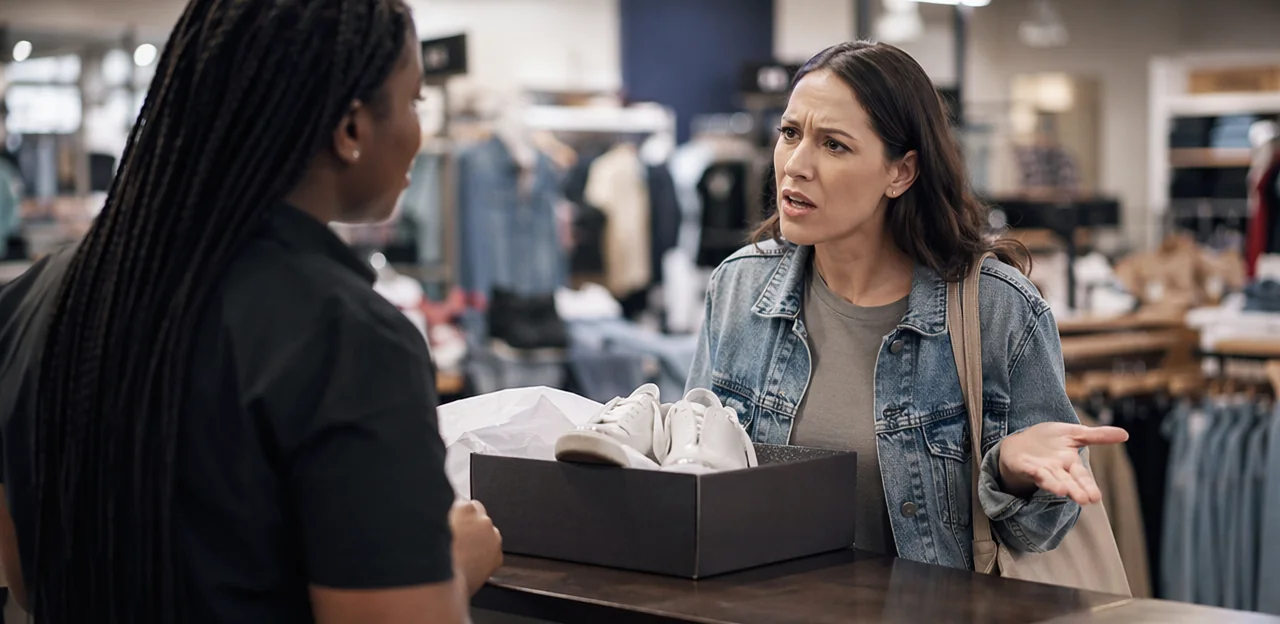
Product, pricing, and inventory complaints
Among the most common retail customer complaints are issues tied directly to what shoppers came to buy: the product, its price, and whether it is available at all. These problems create immediate frustration because they affect trust at the point of purchase.
- Out-of-stock items: Frequent inventory issues retail teams face include empty shelves, inaccurate online stock levels, and delayed replenishment.
- Misleading promotions: Customers often complain when discounts are unclear, excluded items are not obvious, or advertised offers are unavailable in-store.
- Pricing discrepancies: Common pricing complaints happen when shelf labels, online listings, and checkout prices do not match.
- Damaged goods: Broken packaging, defective items, or products damaged in transit quickly lead to returns and negative reviews.
- Product quality issues: Poor durability, misleading descriptions, or items that do not perform as expected are major product complaints in retail.
To reduce these complaints, retailers should audit pricing regularly, improve stock visibility across channels, train staff on promotions, and capture real-time feedback at store level. Tools like Tapsy can help teams spot recurring issues early and act before complaints escalate.
Staff service and communication complaints
Many retail customer complaints stem from how shoppers are treated on the floor. Common issues include rude behavior, unclear answers, slow assistance, and inconsistent experiences between branches. These customer service complaints often signal process gaps, not just individual performance problems.
To reduce poor service in stores, retailers should focus on a few practical fixes:
- Standardize service expectations: Create clear greeting, response-time, and escalation standards for every location.
- Invest in retail staff training: Train teams on product knowledge, active listening, empathy, and conflict handling so they can answer questions confidently and de-escalate tension.
- Audit staffing levels: Slow assistance is often caused by undercoverage during peak hours, not unwilling employees.
- Use mystery shopping and feedback data: Track recurring complaints by store, shift, or team member to spot patterns early.
- Improve internal communication: Staff need up-to-date information on promotions, returns, stock, and policies to avoid giving mixed messages.
Tools like Tapsy can help capture in-store feedback in real time, allowing managers to address service issues before they turn into negative reviews.
Store environment and checkout complaints
Many retail customer complaints are tied to the physical shopping journey, not just the product itself. Common retail experience issues include long lines, confusing layouts, dirty aisles, limited parking, poor signage, and accessibility barriers that make shopping stressful instead of convenient. Checkout complaints are especially damaging because they happen at the final touchpoint and can overshadow an otherwise positive visit.
Retailers should track these issues closely and respond with practical fixes such as:
- Reduce checkout delays: open more registers during peak hours, add mobile POS options, and monitor queue times in real time.
- Improve store layout: make aisles easier to navigate, group related products logically, and use clear directional signage.
- Address store cleanliness complaints: set visible cleaning schedules for entrances, fitting rooms, restrooms, and checkout areas.
- Fix access and parking pain points: review disabled access, cart availability, lighting, and traffic flow.
Tools like Tapsy can help capture in-the-moment feedback at entrances, aisles, or checkout so teams can resolve problems before they turn into negative reviews.
How to respond to complaints in the moment
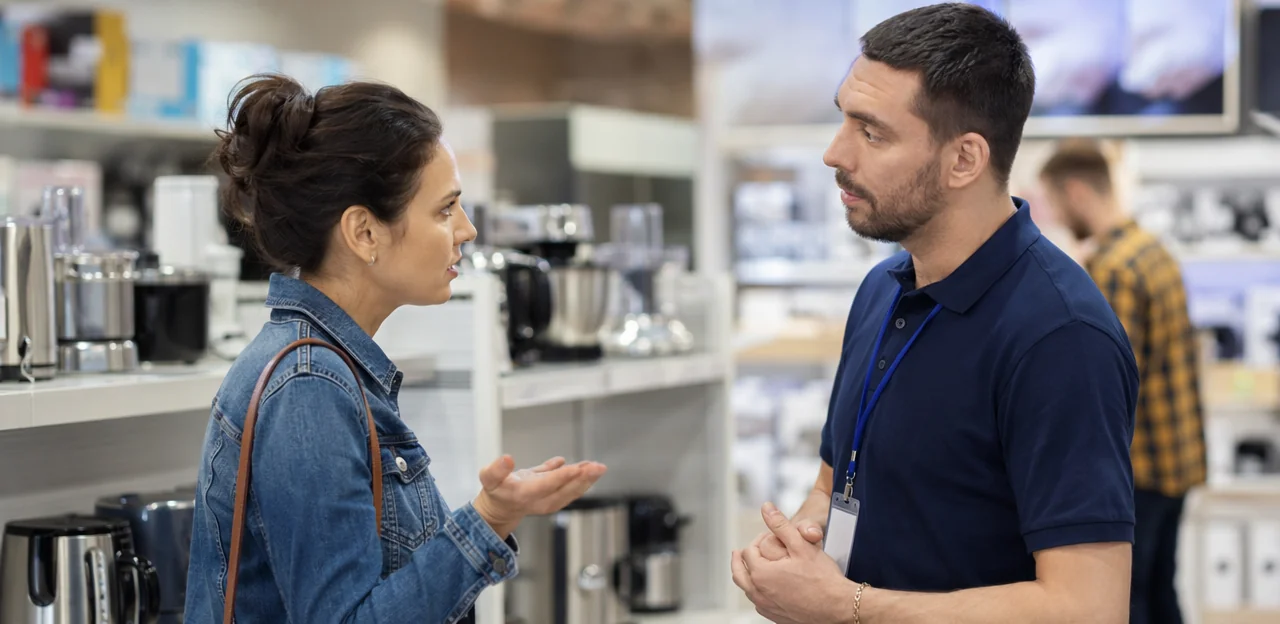
A simple service recovery framework for store teams
A clear service recovery framework helps teams respond consistently and calmly to retail customer complaints. A practical model for handling customer complaints on the floor is:
- Listen – Stop, give full attention, and let the customer explain without interruption.
- Acknowledge – Repeat the issue back in simple terms to show understanding.
- Apologize – Offer a sincere apology, even if the full cause is not yet clear.
- Solve – Act quickly: replace the item, correct the charge, involve a manager, or set a clear next step.
- Follow up – Confirm the customer is satisfied before they leave and log the issue for team review.
For managers, the key is training staff on what they can resolve immediately versus when to escalate. For frontline employees, speed, empathy, and ownership matter most. A strong retail complaint response can turn frustration into trust and protect long-term loyalty.
When to offer refunds, replacements, or alternatives
The best customer complaint resolution matches the problem, the customer, and the cost of fixing it. With retail customer complaints, retailers should act quickly but stay consistent with the refund policy retail teams follow.
- Offer a refund when the product is faulty, the service failure is serious, or the customer received something materially different from what was promised.
- Use a replacement process when the item can be swapped fast and the customer still wants the product.
- Provide alternatives such as store credit, repair, expedited shipping, or a comparable item when a full refund is unnecessary but recovery is still needed.
To choose fairly, consider:
- Issue severity and whether the retailer is clearly at fault
- Customer history, including loyalty and past claims
- Policy rules and legal obligations
- Cost of recovery versus losing future business
Clear guidelines, empowered staff, and fast issue routing help retailers resolve complaints fairly without creating delays or inconsistency.
What to say and what to avoid
When handling retail customer complaints, the goal is to lower emotion first, then solve the issue. Strong retail communication skills help preserve trust even when the customer is upset.
- Say this:
- “I can see why that’s frustrating.”
- “Thank you for telling us. Let’s fix this together.”
- “Here’s what I can do right now.”
- “Let me confirm I understood the problem correctly.”
These phrases support de-escalation in retail because they acknowledge feelings, show ownership, and move toward action.
- Avoid this:
- “That’s our policy.”
- “You need to calm down.”
- “There’s nothing I can do.”
- “That’s not my department.”
These responses can sound dismissive and often intensify conflict.
Use simple customer complaint scripts: listen without interrupting, restate the issue, apologize when appropriate, and offer one clear next step. Calm tone, open body language, and specific solutions matter more than scripted perfection.
How to act on complaints to improve retail operations

Turn complaint data into operational fixes
Treat retail customer complaints as a live source of operational intelligence, not just service issues to close. Consistent complaint data analysis helps stores spot patterns, prioritize fixes, and prevent repeat problems.
- Staffing: Repeated complaints about long waits, poor assistance, or checkout delays often point to scheduling gaps, training needs, or unclear floor coverage.
- Merchandising: Comments about hard-to-find products or confusing displays can reveal layout and signage problems.
- Pricing accuracy: Frequent price disputes signal shelf-label errors, promotion mismatches, or POS update failures.
- Inventory planning: Complaints about out-of-stocks highlight forecasting, replenishment, or assortment issues.
- Store maintenance: Cleanliness, lighting, and fitting-room concerns often expose recurring upkeep gaps.
Use root cause analysis retail teams can act on, then track outcomes to drive ongoing retail operations improvement.
Improve training, policies, and accountability
Recurring retail customer complaints should trigger operational changes, not one-off fixes. Use complaint data to strengthen retail staff training, clarify escalation, and tighten standards across stores.
- Update training by complaint theme: If shoppers repeatedly mention rude service, long waits, or poor product knowledge, refresh coaching with scenario-based practice and clear response scripts.
- Define escalation paths: Staff should know exactly when to involve a supervisor, refund specialist, or store manager, especially for damaged goods, pricing disputes, or safety concerns.
- Review return and refund policies: Simplify confusing rules, make exceptions clearer, and ensure teams apply them consistently.
- Set measurable service standards retail-wide: Track response times, resolution quality, and policy compliance to improve complaint prevention.
Tools like Tapsy can help capture recurring issues in real time and route them faster.
Close the loop with customers and teams
Resolving retail customer complaints should not end when the issue is fixed. A fast customer follow-up shows the customer they were heard, confirms the solution worked, and can turn a poor experience into renewed trust. It also gives you a final chance to recover loyalty before frustration becomes churn or a negative review.
To make closed-loop feedback effective:
- Follow up within 24–72 hours with a short email, text, or call
- Confirm the outcome and ask whether anything is still unresolved
- Log patterns by location, product, shift, or complaint type
- Share insights regularly through strong retail team communication with store managers, regional leaders, and executives
- Assign owners and timelines so recurring issues are visibly addressed
Tools like Tapsy can help route feedback quickly and support accountability across teams.
Building a proactive complaint management strategy

Create easy complaint channels across touchpoints
To handle retail customer complaints effectively, make reporting simple wherever the customer interacts with your brand. Strong omnichannel customer support means every channel connects to the same case history, response standards, and resolution process.
- In-store: Use staff prompts, receipts, kiosks, or QR codes so shoppers can share issues immediately.
- Online: Add clear complaint forms, chat, and order-help options on product, checkout, and account pages.
- Phone and email: Route requests quickly with shared templates and CRM visibility.
- Social media: Monitor mentions and move sensitive issues into private support fast.
This joined-up approach improves retail complaint channels, strengthens customer feedback retail processes, and reduces repeat frustration.
Track the right metrics for service recovery
To improve outcomes from retail customer complaints, measure the indicators that show both speed and quality of recovery:
- Complaint volume: Track total complaints by store, channel, product, or issue type to spot recurring problems.
- Complaint resolution time: Monitor average and median time to close cases, especially for urgent issues.
- First-contact resolution: Measure how often teams solve problems in the first interaction without escalation.
- Repeat complaint rate: Identify whether the same customer or issue returns after “resolution.”
- Customer satisfaction retail scores: Use post-recovery CSAT or NPS to confirm the fix restored trust.
- Retention after recovery: Compare repeat purchase rates of recovered customers versus unresolved cases.
Using clear service recovery metrics helps retailers prioritize fixes, coach teams, and reduce future complaints.
Use complaints to strengthen the retail experience
Treat retail customer complaints as a source of operational insight, not just a service issue. When patterns are tracked consistently, they can sharpen your retail experience strategy and support long-term customer experience improvement.
- Improve store design: Repeated complaints about queues, confusing layouts, or poor signage highlight friction points that need redesign.
- Adjust staffing: Feedback about slow help or unavailable associates can guide smarter scheduling and training.
- Build trust: Fast, visible action shows customers their voice matters, strengthening confidence in your brand and overall retail service quality.
Tools like Tapsy can help capture in-store feedback in real time, making it easier to act before frustration turns into lost loyalty.
Conclusion
Ultimately, retail customer complaints are not just problems to solve—they are signals that show where the customer experience is breaking down. Whether the issue is product quality, staff behavior, long wait times, pricing confusion, delivery delays, or returns and refunds, each complaint category points to an opportunity to improve operations, strengthen service recovery, and build trust.
The most effective retailers treat retail customer complaints as actionable data. That means identifying recurring themes, responding quickly, empowering frontline teams to resolve issues, and closing the loop with customers in a way that feels personal and fair. When complaints are tracked consistently and addressed at the source, businesses can reduce churn, protect brand reputation, and turn negative moments into loyalty-building ones.
The next step is to move from reactive problem-solving to proactive listening. Review your complaint categories, audit your response processes, and set up clear escalation paths for high-impact issues. You can also explore real-time feedback tools and service recovery platforms, such as Tapsy, to capture concerns earlier and act before frustration turns into a lost customer or public review.
If you want to improve retail experience at scale, start by making retail customer complaints a core part of your operational strategy—not an afterthought.
Frequently Asked Questions
- Why do retail customer complaints matter for loyalty and revenue?
Complaints influence whether shoppers return, recommend the brand, or switch to a competitor. Fast, fair resolution can rebuild trust, protect repeat purchases, and improve long-term customer value.
- What are the most common categories of retail customer complaints?
Common categories include product, pricing, and inventory issues; staff service and communication problems; and store environment and checkout frustrations. These often show up as out-of-stocks, pricing mismatches, rude or slow service, long lines, confusing layouts, and cleanliness concerns.
- How can retailers spot complaint trends before they become bigger problems?
Use a repeatable feedback review process across frontline staff input, online reviews, surveys, returns data, and customer service logs. Reviewing patterns weekly helps identify root causes early and prevents issues from escalating.
- What do repeated out-of-stock complaints usually indicate?
They often point to forecasting, replenishment, assortment, or stock visibility problems across channels. Empty shelves and inaccurate online stock levels are operational signals that inventory planning needs attention.
- How should store teams respond to a complaint in the moment?
A simple service recovery approach is to listen, acknowledge, apologize, solve, and follow up. Teams should give full attention, restate the issue clearly, offer a sincere apology, take action quickly, and confirm the customer is satisfied before closing the interaction.
- When should a retailer offer a refund instead of a replacement or alternative?
A refund fits situations where the product is faulty, the service failure is serious, or the customer received something materially different from what was promised. Replacements work when the item can be swapped quickly, while alternatives like store credit, repair, expedited shipping, or a comparable item can be used when a full refund is unnecessary.
- What should employees say when handling an upset retail customer?
Helpful phrases include: “I can see why that’s frustrating,” “Thank you for telling us. Let’s fix this together,” and “Here’s what I can do right now.” These responses acknowledge the problem, show ownership, and move the conversation toward a solution.
- What responses should staff avoid during a retail complaint?
Avoid phrases like “That’s our policy,” “You need to calm down,” “There’s nothing I can do,” and “That’s not my department.” These can sound dismissive and often make the situation more tense instead of resolving it.
- How can complaint data improve retail operations?
Complaint patterns can reveal problems in staffing, merchandising, pricing accuracy, inventory planning, and store maintenance. Using root cause analysis helps teams move from one-off fixes to operational improvements that reduce repeat issues.
- What operational issues are often behind service and communication complaints?
Many service complaints come from unclear standards, weak product knowledge, inconsistent communication, and undercoverage during busy periods. They are often process and training problems rather than isolated employee behavior.
- How can retailers reduce checkout and store environment complaints?
Open more registers during peak times, add mobile POS options, and monitor queue times to reduce delays. Clear signage, easier navigation, visible cleaning schedules, and attention to parking and accessibility also improve the in-store experience.
- Why is closing the loop after a complaint important?
Following up shows the customer they were heard and confirms whether the solution actually worked. It also helps the business log patterns, assign ownership, and prevent unresolved frustration from turning into churn or negative reviews.
- What complaint channels should a retailer make available?
Customers should be able to report issues in-store, online, by phone, by email, and through social media. Connecting these channels to the same case history and resolution standards reduces repeat frustration and supports consistent service.
- Which metrics are most useful for measuring service recovery?
Key metrics include complaint volume, resolution time, first-contact resolution, repeat complaint rate, post-recovery satisfaction scores, and retention after recovery. Together, these show both how quickly issues are handled and whether the fix restored trust.
- How can tools like Tapsy support complaint management in retail?
Tools like Tapsy can help capture feedback closer to the point of experience and surface recurring issues in real time. That makes it easier for teams to act quickly, route problems to the right owners, and address patterns before they grow.