
In retail, timing is everything—and that includes feedback. A customer’s impression of a store can shift in seconds based on checkout speed, staff helpfulness, product availability, or even how clean the fitting rooms feel. Yet many retailers struggle with one critical challenge: getting shoppers to actually respond. If your retail survey response rate is low, valuable customer insight slips away, making it harder to spot service issues, improve store operations, and create better in-store experiences.
Improving participation in stores is not just about asking more questions. It’s about asking at the right moment, in the right format, and with as little friction as possible. From short post-purchase prompts to QR-based in-store feedback points and carefully designed incentives, small changes can make a major difference in how many customers choose to engage. Solutions like Tapsy, for example, reflect how retailers can collect instant, no-app feedback directly at physical touchpoints.
This article explores the key factors that influence retail survey response rate and outlines practical ways to increase participation without overwhelming shoppers. We’ll look at survey design best practices, in-store placement strategies, timing, incentives, and customer experience considerations that help turn more visits into meaningful feedback.
Why Retail Survey Response Rate Matters for Store Performance

How response rate affects feedback quality
The retail survey response rate is the percentage of shoppers who complete a survey out of everyone invited. It directly shapes customer feedback quality.
- Low participation creates bias: if only highly satisfied or frustrated customers respond, results can overstate problems or hide everyday issues.
- Poor representativeness: a weak survey response rate may miss key shopper groups, such as weekend visitors, loyalty members, or specific store locations.
- Less reliable store decisions: staffing, merchandising, and service changes based on too few responses can lead to costly mistakes.
To improve insight quality, keep surveys short, ask at the point of experience, and use simple QR-based prompts or tools like Tapsy to capture more balanced, timely feedback.
The link between participation and retail experience insights
A higher retail survey response rate gives stores a clearer, more reliable view of what shoppers actually experience. When more customers share retail customer feedback, patterns become easier to spot and prioritize.
- Customer satisfaction: Measure how shoppers feel about staff helpfulness, product availability, and store cleanliness.
- Service gaps: Identify weak points by shift, department, or location before they affect loyalty.
- Merchandising issues: Uncover problems with pricing clarity, shelf organization, stockouts, or product placement.
- Checkout friction: Detect long lines, payment delays, or confusing self-checkout flows.
To improve in-store survey insights, collect feedback at key touchpoints and keep surveys short, timely, and easy to answer.
Benchmarks retailers should watch
To improve retail survey response rate, track a wider set of KPIs than participation alone:
- Survey completion rate: Measures how many shoppers finish once they start. A low survey completion rate often signals too many questions, unclear wording, or poor mobile usability.
- Survey abandonment rate: Shows where respondents drop off. Review exit points to shorten or reorder questions and reduce friction.
- Channel performance: Compare in-store QR codes, SMS, email, receipts, and kiosk prompts to see which channels drive the strongest engagement and best-quality feedback.
- Location-level participation trends: Benchmark stores by foot traffic, staff prompts, time of day, and region to spot operational gaps.
These retail survey benchmarks help retailers diagnose issues faster and optimize survey design with precision.
What Lowers In-Store Survey Participation

Poor timing and survey fatigue
Even a well-written survey will struggle if the in-store survey timing is wrong. Poor timing lowers customer participation and can hurt your retail survey response rate, especially when shoppers feel interrupted or repeatedly asked for feedback.
- Avoid rushed moments: Don’t ask customers to respond while they are juggling bags, waiting in line, or leaving after a stressful visit.
- Limit repeat asks: Over-surveying loyal or frequent shoppers quickly creates survey fatigue, making them more likely to ignore future requests.
- Match the moment: Ask right after a meaningful interaction, such as checkout, product assistance, or pickup, when the experience is still fresh.
- Keep it light: Use short, low-friction prompts. Tools like Tapsy can help capture quick in-store feedback without adding effort.
Long, confusing, or irrelevant survey design
Poor survey design is one of the fastest ways to hurt your retail survey response rate. When shoppers see a long form, vague questions, or prompts that do not match their visit, they often quit before finishing.
- Too many questions: Keep it to a short customer survey with only the most useful questions.
- Unclear wording: Use simple, specific language so customers can answer quickly without second-guessing.
- Weak mobile usability: A mobile-friendly survey should load fast, display cleanly on small screens, and require minimal typing.
- Irrelevant prompts: Ask about the exact store experience, purchase, or service interaction the customer just had.
Tools like Tapsy can help retailers capture quick, in-the-moment feedback with fewer barriers to completion.
Weak promotion inside the store
Even a well-designed survey will underperform if the in-store survey promotion is easy to miss. Weak execution often lowers the retail survey response rate before shoppers even consider participating.
Common issues include:
- Hidden or poorly placed retail signage near exits, checkouts, or fitting rooms
- Vague calls to action like “Scan here” without saying what customers get or how long it takes
- No staff survey invitation, so shoppers never receive a personal prompt
- No explanation of value, leaving customers unsure why their feedback matters
To improve results, use visible retail signage at key touchpoints, keep the message short, and train staff to give a simple staff survey invitation such as: “It takes 30 seconds and helps us improve your next visit.”
Proven Ways to Improve Retail Survey Response Rate

Make the survey faster and easier to complete
If you want to improve retail survey response rate, speed matters. Shoppers are far more likely to respond when a survey feels effortless and takes less than a minute.
- Limit the question count: Keep surveys to 3–5 questions whenever possible. Focus on the most useful metrics, such as satisfaction, staff helpfulness, checkout speed, or store cleanliness.
- Use simple answer formats: Prefer tap-friendly options like multiple choice, star ratings, yes/no, or emoji scales. Avoid long open-text fields unless they are optional.
- Prioritize mobile survey optimization: Most customers will answer on their phones, so use large buttons, short screens, fast load times, and minimal typing. A clunky mobile experience will hurt your retail survey response rate.
- Reduce friction at the point of experience: Make access instant with a QR code survey at checkout, on shelf signage, or near exits. You can also add SMS links or receipt prompts so customers can respond in seconds.
Tools like Tapsy can help retailers deploy no-app QR feedback flows directly in-store.
Ask at the right moment in the customer journey
One of the biggest drivers of retail survey response rate is timing. If you ask too late, customers forget details. If you ask too early, they may not have completed enough of the experience to give useful feedback. Strong survey timing best practices focus on capturing reactions while the experience is still fresh.
Use the request at the moment that matches the interaction:
- Immediately after checkout: Ideal for quick in-store questions about wait times, staff helpfulness, and ease of purchase.
- Post-purchase by SMS or email: Send a short post-purchase survey within a few hours for product satisfaction, delivery expectations, or overall impressions.
- After service interactions: Ask right after returns, fitting-room help, click-and-collect pickup, or customer support conversations.
- After key journey milestones: A customer journey survey works well after onboarding, first purchase, or loyalty program use.
Keep each survey tied to one touchpoint. Retailers using QR or NFC tools such as Tapsy can make feedback requests immediate and effortless at the exact point of experience.
Use incentives without biasing results
Well-chosen survey incentives can lift your retail survey response rate, but the reward should encourage action without shaping who responds or what they say. The best approach is to keep incentives small, relevant, and easy to redeem.
- Use low-bias rewards: Offer a sweepstakes entry, modest loyalty points, or a small future-visit discount. These customer survey rewards feel valuable without being so generous that they attract only bargain hunters.
- Reward participation, not positive feedback: Make it clear every completed survey qualifies, regardless of rating. This protects response quality and trust.
- Match the incentive to your audience: Loyalty members may prefer points, while casual shoppers may respond better to a simple prize draw.
- Avoid overly large discounts: High-value offers can skew your sample toward deal-seeking respondents rather than typical customers.
- Keep redemption friction low: Instant digital coupons or automatic points credits help increase survey participation more effectively than complex claim processes.
Tools like Tapsy can support in-store QR feedback with simple reward delivery at the moment of experience.
How Store Teams Can Increase Participation Ethically
Train associates to invite feedback naturally
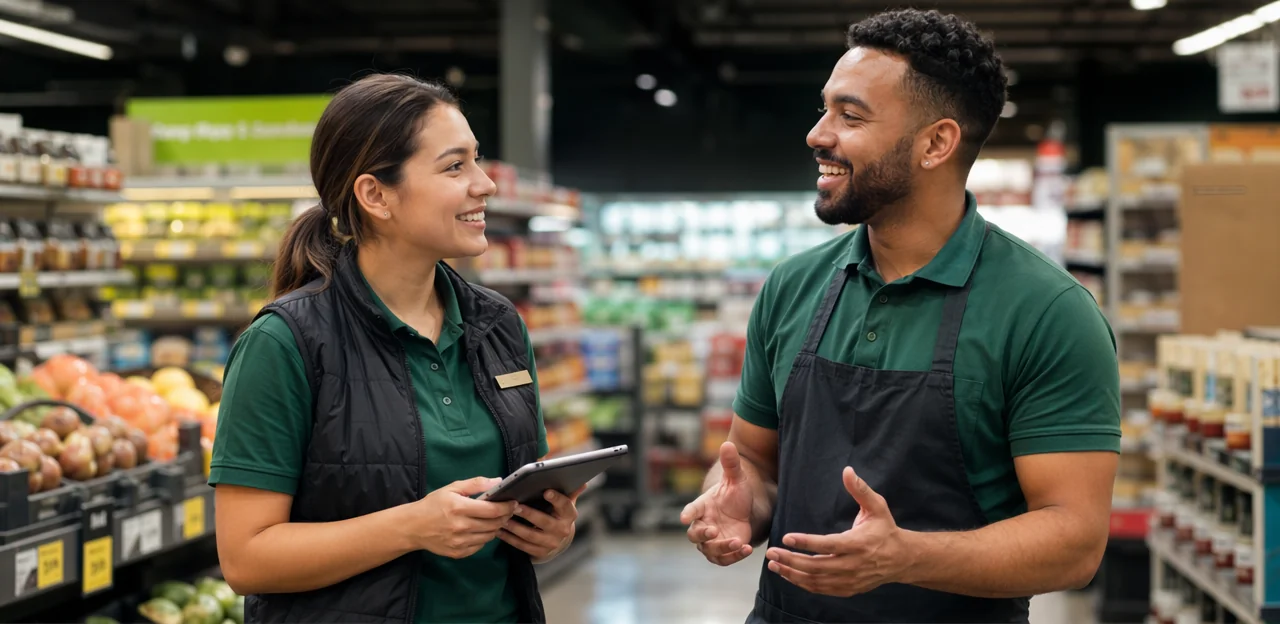
Strong staff training can lift your retail survey response rate without making checkout feel scripted or salesy. Teach associates to keep the customer feedback invitation short, relevant, and helpful:
- Lead with purpose: “We use quick feedback to improve service and fix issues faster.”
- Keep it conversational: A simple retail associate survey script works best: “If you have 30 seconds, you can scan this code and tell us how we did today.”
- Point to the easiest channel: Direct customers to the fastest option, such as a QR code on the receipt, checkout display, or SMS link.
- Avoid pressure: Invite once, smile, and move on.
Role-play these moments so associates sound natural, confident, and customer-focused.
Use signage and placement strategically
Smart placement can lift your retail survey response rate without making shoppers feel cornered. Keep your in-store customer survey visible at natural pause points:
- Entrance and browsing zones: Use clear QR code signage near store maps, promo displays, or product education areas so customers notice it early without interruption.
- Point of sale: Add a small countertop display beside the card terminal for a low-friction point of sale survey after checkout.
- Fitting rooms: Place subtle prompts on mirrors or doors where shoppers have a quiet moment to respond.
- Exits: Use concise exit signage with one clear benefit, such as “Share feedback in 30 seconds.”
Keep messaging short, friendly, and optional.
Protect privacy and build trust
Customers are more likely to respond when they know exactly what will happen to their answers. Clear, visible messaging can lift retail survey response rate by reducing hesitation and building customer trust.
- State how data will be used: explain whether feedback improves staffing, store layout, or service quality.
- Emphasize survey privacy: note if responses are confidential and never sold or shared externally.
- Offer anonymous customer feedback when possible, especially for sensitive service issues.
- Be upfront about time: say “takes 30 seconds” or “3 quick questions” to set expectations.
- Place privacy notes near QR codes, tablets, or checkout prompts so customers see them before starting.
Simple, honest wording makes participation feel safe, fast, and worthwhile.
Measuring and Optimizing Survey Performance Over Time

Track the right metrics by store and channel
To improve retail survey response rate, measure performance at the most useful breakdowns: by store, campaign, and survey trigger. Strong survey analytics help you see where participation drops and why.
- Response rate: Compare invitations vs. responses by location and channel.
- Completion rate: Identify stores or triggers where shoppers start but do not finish.
- Device type: Track mobile vs. tablet vs. kiosk usage to spot friction by format.
- Traffic volume: Review footfall alongside survey starts to understand true participation potential.
- Conversion: Measure whether specific campaigns or touchpoints drive more completed surveys.
Use store-level reporting to benchmark locations and refine timing, placement, and messaging. These retail survey metrics turn raw feedback into clear action.
Run tests to improve participation
Improving retail survey response rate should be a continuous process, not a one-time setup. Use A/B testing surveys to find what actually drives more completions in your stores.
- Test invitation wording: Compare direct prompts like “Rate your visit” against benefit-led messages such as “Share feedback for 10% off.”
- Try different incentives: Small instant rewards, loyalty points, or prize draws can each affect motivation differently.
- Adjust survey length: Test 1–3 questions versus slightly longer formats to see where drop-off starts.
- Move QR codes: Place them on receipts, checkout counters, exits, fitting rooms, or packaging.
- Experiment with timing: For SMS or email follow-ups, test send times right after purchase versus later the same day.
This kind of survey optimization helps increase completion rate with real evidence, not guesswork.
Turn feedback into visible action
To improve retail survey response rate, customers need proof that their input leads to change. When shoppers can clearly see you close the feedback loop, participation feels worthwhile rather than performative.
- Share “You said, we did” updates in-store, on receipts, or by email.
- Prioritize quick wins, such as cleaner fitting rooms, shorter checkout lines, or clearer signage.
- Train staff to mention recent changes driven by customer comments.
- Follow up on common issues and explain what was fixed, what is in progress, and why.
This approach strengthens trust, supports ongoing customer experience improvement, and makes your retail feedback strategy more credible. Tools like Tapsy can help retailers collect feedback at touchpoints and respond faster.
Common Mistakes Retailers Should Avoid

Overcomplicating the survey experience
One of the biggest survey mistakes is asking too much, too soon. If the process feels slow or frustrating, your retail survey response rate will drop fast.
- Keep surveys short: aim for 1–3 key questions.
- Make open-text fields optional, not required.
- Avoid account creation, logins, or extra verification steps.
- Prioritize strong customer survey UX with fast-loading, mobile-friendly layouts and large tap targets.
To reduce survey abandonment, remove every unnecessary step. Simple, no-app formats such as QR-based feedback tools like Tapsy can help capture responses in-store while the experience is still fresh.
Chasing volume instead of useful responses
A higher retail survey response rate is not always better if the feedback is rushed, irrelevant, or impossible to act on. Retailers should prioritize survey response quality by targeting the right shoppers, asking timely questions, and keeping surveys focused on real store experiences.
- Aim for feedback from relevant customer segments, not just the largest audience
- Design questions that produce actionable customer feedback
- Track patterns that reveal meaningful retail insights, such as service gaps, queue issues, or merchandising problems
A smaller, well-targeted sample often delivers better decisions than high-volume noise.
Ignoring store context and customer segments
A generic survey often hurts retail survey response rate because shoppers behave differently by location and mission. Strong retail survey targeting starts with customer segmentation and a clear store format strategy:
- Store format: Convenience stores need ultra-short, mobile-first surveys; big-box stores can support richer post-visit feedback.
- Shopper demographics: Adjust tone, language, and channel for age, tech comfort, and local preferences.
- Visit purpose: Browsers, urgent buyers, and repeat customers need different timing and question framing.
- Purchase type: High-ticket purchases may justify stronger incentives; routine buys respond better to instant, simple rewards.
Conclusion
Improving your retail survey response rate comes down to one core principle: make feedback easy, timely, and worth giving. The most effective in-store surveys are short, mobile-friendly, and placed at the right moments in the customer journey—whether at checkout, fitting rooms, exits, or service desks. When retailers combine clear questions, visible invitations, well-trained staff, and small but meaningful incentives, participation rises naturally. Just as importantly, customers are more likely to respond when they believe their opinions will lead to real improvements.
A stronger retail survey response rate does more than fill dashboards. It helps retailers uncover friction points, improve store operations, strengthen customer experience, and make faster, more confident decisions at location level. The key is to continuously test survey length, timing, channels, and messaging so you can learn what drives the highest engagement in your specific store environment.
If you’re ready to increase participation, start by auditing your current survey flow and removing every unnecessary step. Then explore tools that support instant, in-the-moment feedback at physical touchpoints, such as QR- or NFC-based solutions like Tapsy. For next steps, review your survey design, benchmark response rates by store, and build a follow-up process that turns customer insights into visible action. That’s how you improve your retail survey response rate—and the retail experience behind it.
Frequently Asked Questions
- What is a retail survey response rate?
A retail survey response rate is the percentage of shoppers who complete a survey out of everyone invited. It helps show how much usable customer feedback a store is actually collecting.
- Why does a low survey response rate create problems for retailers?
Low participation can skew results because only very happy or very unhappy shoppers may respond. That makes feedback less representative and can lead to poor decisions about staffing, merchandising, or service improvements.
- When is the best time to ask shoppers for in-store feedback?
The best time is right after a meaningful interaction, while the experience is still fresh. Good moments include immediately after checkout, after product assistance, after returns, or after click-and-collect pickup.
- How long should a retail survey be to improve participation?
Short surveys perform best in stores. Keeping the survey to about 3–5 questions, or even 1–3 key questions in some cases, reduces friction and makes completion more likely.
- What survey design choices help increase completion rates?
Use simple wording, fast-loading mobile pages, and tap-friendly answer formats such as multiple choice, star ratings, yes/no, or emoji scales. Open-text fields should be limited or optional so shoppers can respond quickly.
- Which in-store channels should retailers compare for survey performance?
Retailers should compare QR codes, SMS, email, receipts, and kiosk prompts. Looking at channel performance helps identify which option drives stronger engagement and better-quality feedback.
- Where should survey prompts be placed inside a store?
Strong placement points include checkout counters, exits, fitting rooms, entrances, browsing zones, and service areas. These locations create natural pause points where customers can respond without feeling interrupted.
- How can store staff ask for feedback without sounding pushy?
Associates should keep the invitation short, natural, and optional. A simple line such as inviting customers to scan a code in 30 seconds works well when paired with a clear purpose and no pressure.
- Do incentives help improve retail survey response rates?
Yes, small and relevant incentives can encourage participation. Modest rewards such as sweepstakes entries, loyalty points, or a small future-visit discount work best when every completed survey qualifies regardless of rating.
- How can retailers use incentives without biasing survey results?
The reward should be tied to participation, not positive feedback. Retailers should also avoid overly large discounts, because high-value offers can attract deal-seeking respondents rather than a more typical sample.
- What metrics should retailers track besides response rate?
Useful metrics include completion rate, abandonment rate, channel performance, device type, traffic volume, and conversion by trigger or campaign. Store-level reporting also helps compare locations and spot operational gaps.
- How can A/B testing improve in-store survey participation?
Retailers can test invitation wording, incentive types, survey length, QR code placement, and follow-up timing for SMS or email. This makes it easier to find which combinations produce more completed surveys in each store environment.
- What are common mistakes that reduce in-store survey participation?
Common mistakes include surveys that are too long, unclear questions, weak mobile usability, hidden signage, and repeated requests that create survey fatigue. Extra steps like account creation or logins also increase abandonment.
- Why should retailers adapt surveys by store format and customer segment?
Different shoppers and store types respond differently to timing, tone, channel, and incentives. Convenience stores may need ultra-short mobile-first surveys, while larger formats can support richer post-visit feedback.
- How does showing visible action from feedback help future response rates?
Customers are more likely to respond when they see their input leads to real changes. Sharing updates such as cleaner fitting rooms, shorter checkout lines, or clearer signage helps build trust and makes participation feel worthwhile.