
A great film can still be overshadowed by poor sound, uncomfortable seating, long concession lines, or a theater that feels less than spotless. For cinemas, those small moments shape the audience’s overall impression just as much as what happens on screen. That is why showtime feedback has become such an important part of delivering a better moviegoing experience.
Collected immediately after each screening, showtime feedback gives cinema operators a clearer view of what guests actually experienced while it is still fresh in their minds. Instead of relying only on delayed reviews or occasional complaints, cinemas can uncover real-time insights into picture quality, auditorium comfort, cleanliness, staff service, and concession performance. These insights do more than measure satisfaction — they help teams respond faster, fix recurring issues, and improve future screenings.
In this article, we will explore why post-screening feedback matters, what cinemas should measure, and how timely audience input can support stronger customer experience strategies across locations and showtimes. We will also look at practical ways cinemas can collect feedback efficiently, including simple in-venue tools such as QR-based systems like Tapsy, which help capture audience sentiment at the moment it matters most.
Why showtime feedback matters in modern cinemas

Defining showtime feedback in the cinema context
Showtime feedback is the immediate input collected from guests right after a specific screening, while details are still fresh. Unlike broad quarterly or occasional surveys, it ties responses to one exact showtime, auditorium, film, and service moment.
- More actionable: cinemas can pinpoint issues such as sound quality, screen brightness, seat comfort, cleanliness, queue times, or concession speed from that screening alone.
- More relevant: post-screening cinema audience feedback reflects real emotions and recent interactions, not vague memories from weeks later.
- More aligned with CX goals: it helps teams improve audience experience in real time, recover service issues faster, and strengthen overall customer experience across every visit.
Tools like Tapsy can help capture this feedback instantly at exit points.
How audience expectations have changed
Today’s cinema customer expectations go far beyond simply watching a film. Guests judge the full audience experience, from booking to exit, and small failures can quickly damage satisfaction.
- Seamless booking: Fast, mobile-friendly ticketing and easy seat selection are now basic expectations.
- Reliable presentation quality: Audiences expect sharp picture, strong sound, and comfortable seating every time.
- Clean, well-managed spaces: Auditoriums, restrooms, and concession areas must feel consistently clean.
- Minimal friction: Long queues, slow service, and unresolved issues reduce enjoyment.
That is why showtime feedback matters after every screening: it helps cinemas spot recurring problems quickly, respond faster, and adapt operations to meet rising guest standards.
Business benefits of measuring every screening
Measuring showtime feedback after every screening turns audience reactions into practical improvements that strengthen both revenue and reputation. Regular tracking of customer experience and cinema satisfaction metrics helps cinemas:
- Increase satisfaction: Spot recurring issues with sound, seating, temperature, or cleanliness before they damage more visits.
- Drive repeat attendance: Act quickly on complaints and reward feedback to give guests a reason to return.
- Improve reviews: Better in-the-moment experiences lead to stronger public ratings and more positive word of mouth.
- Boost staff accountability: Shift-level feedback shows which teams consistently deliver great service.
- Make smarter decisions: Compare performance by auditorium, film, or time slot to prioritize operational fixes.
Tools like Tapsy can help capture this feedback instantly.
What cinemas should measure after each screening

Core experience metrics to track
To make showtime feedback useful, focus on a small set of consistent, high-impact measures after every screening. These cinema feedback metrics help teams spot patterns quickly and improve movie theater customer satisfaction.
- Seat comfort: legroom, recliner function, cleanliness, and temperature comfort.
- Screen quality: brightness, sharpness, aspect ratio, and any visual issues.
- Sound quality: volume balance, dialogue clarity, bass, and audio sync.
- Cleanliness: auditorium floors, seats, cup holders, restrooms, and lobby condition.
- Staff helpfulness: friendliness, speed, problem resolution, and ticketing support.
- Concessions: queue time, product availability, freshness, and value for money.
- Overall satisfaction: a simple rating or NPS-style question to summarize the visit.
For best results, collect ratings immediately at exit points and review results by auditorium, film, and showtime. Tools like Tapsy can help capture this feedback in real time.
Operational signals behind the scores
To make showtime feedback useful, cinemas should log operational context alongside every survey response. This turns opinions into actionable screening performance metrics and helps teams spot repeatable issues in cinema operations.
- Timing: Record the exact showtime, day, and whether the screening started late. Delays often lower satisfaction before the film even begins.
- Queue length: Track wait times at ticketing and concessions. Long queues can affect mood, late seating, and snack sales.
- Technical issues: Note sound drops, dim projection, subtitle errors, or seat malfunctions to connect low scores with specific faults.
- Auditorium temperature: Too hot or too cold can strongly influence comfort ratings, even when the film itself performs well.
- Occupancy levels: A packed auditorium may affect noise, cleanliness, and queue pressure, while low occupancy can change atmosphere.
Tools like Tapsy can help capture this data in real time at key touchpoints.
Balancing quantitative and qualitative feedback
Effective showtime feedback combines fast metrics with rich context, giving cinemas both a performance snapshot and clear next steps. Relying on scores alone shows what changed, but not why.
- Rating scales track key touchpoints like sound, picture, seating, cleanliness, and queue times.
- NPS for cinemas measures loyalty and likelihood to recommend, helping benchmark overall audience sentiment across locations or screenings.
- CSAT captures immediate satisfaction after a specific visit, making it ideal for post-screening checks.
- Open-text comments reveal the details behind low or high scores, such as muffled audio, cold auditoriums, or excellent staff service.
For stronger customer feedback analysis, review score trends weekly and tag comments by theme. This helps cinema teams spot recurring issues, prioritize fixes, and identify quick wins. Tools like Tapsy can make this process faster by collecting instant, on-site responses.
How to collect showtime feedback effectively
Best channels for post-screening surveys
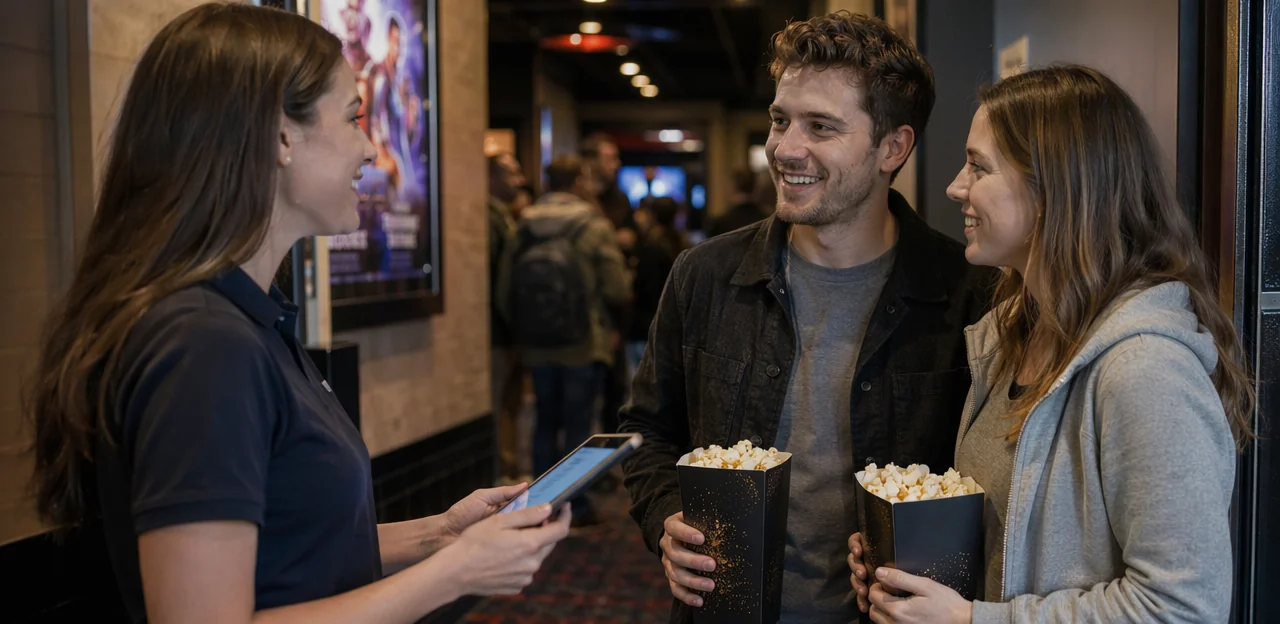
Choosing the right post-screening survey channel depends on speed, convenience, and how likely guests are to respond while the experience is still fresh. The best cinema survey methods often combine in-venue and follow-up touchpoints:
- SMS: High open rates and fast responses, ideal when tickets are tied to phone numbers. Best for short surveys sent within minutes of the credits ending.
- Email: Useful for longer feedback, but response rates are usually lower than SMS.
- App notifications: Effective for loyalty members, though limited to guests who already use the cinema app.
- QR codes at exits: Frictionless and timely for immediate showtime feedback, especially with a 1–2 question format.
- Kiosk prompts: Good for capturing reactions before guests leave, but can create queue friction.
- Digital receipts: A smart low-pressure option that reaches guests after purchase or visit confirmation.
For many cinemas, QR plus SMS delivers the strongest balance of convenience and response rate.
Timing, survey length, and question design
To get useful showtime feedback, ask for it while the experience is still fresh. Strong survey timing means sending the request immediately after the screening ends or placing it at the auditorium exit, when guests still remember sound quality, seat comfort, cleanliness, and staff interactions.
Keep the survey short to increase completion:
- Limit it to 2–5 questions
- Use one optional comment box
- Make completion possible in under a minute
Well-written customer feedback questions also matter. Focus on clarity and neutrality:
- Ask one thing at a time
- Avoid leading language like “How great was the picture quality?”
- Use simple rating scales and plain wording
- Include questions tied to action, such as sound, temperature, queues, or concessions
Tools like Tapsy can help cinemas capture fast, no-app responses at the right moment.
Increasing response rates without annoying guests
To improve survey response rate without creating friction, keep showtime feedback short, timely, and easy to complete on a phone. The goal is better insights and stronger cinema guest engagement, not more inbox clutter.
- Use mobile-first design: Send a one-minute survey with large tap targets, simple rating scales, and minimal typing.
- Ask at the right moment: Trigger feedback right after the screening, while details about sound, seating, and cleanliness are still fresh.
- Offer optional incentives: Small rewards like popcorn discounts or loyalty points can lift participation without making feedback feel forced.
- Personalize the message: Reference the film, location, or showtime so the request feels relevant rather than generic.
- Set frequency controls: Avoid sending every guest every survey. Cap requests by visit frequency to reduce survey fatigue.
Tools like Tapsy can support no-app, in-venue feedback collection at the exit moment.
Turning feedback into actionable cinema improvements

Finding patterns across screenings and locations
To turn showtime feedback into operational improvements, segment responses instead of reviewing all scores together. Strong feedback segmentation helps cinemas spot repeat problems and repeat wins faster.
- By film: Compare titles to see whether certain genres drive complaints about sound levels, audience behavior, or concession demand.
- By time slot: Track matinees, peak evening shows, and late screenings separately to identify queue pressure, staffing gaps, or cleanliness dips.
- By auditorium: Isolate issues tied to one screen, such as temperature, seat comfort, or picture quality.
- By staff shift: Match feedback to team schedules to uncover coaching needs or high-performing service habits.
- By location: Use multi-location cinema insights to benchmark branches and share best practices across the circuit.
A simple dashboard—or a tool like Tapsy—can help managers filter trends quickly, prioritize fixes, and replicate what top-performing screenings do well.
Prioritizing fixes by impact and urgency
To turn showtime feedback into action, cinemas need a simple framework for cinema issue prioritization. Rank every issue using four factors:
- Frequency: How often does the problem appear across screenings, auditoriums, or locations?
- Severity: Does it disrupt the film experience, safety, or comfort, such as poor sound, broken seats, or cleanliness issues?
- Revenue impact: Could it reduce concession sales, repeat bookings, or premium ticket upgrades?
- Customer loyalty impact: Is it likely to damage trust and stop guests from returning?
A practical customer experience improvement process is to score each issue from 1–5 in these areas, then fix the highest combined scores first. Assign a clear owner, such as operations, maintenance, or front-of-house, and set deadlines based on urgency: same day, 48 hours, or planned maintenance. Tools like Tapsy can help route urgent alerts quickly.
Closing the loop with teams and guests
To close the feedback loop, cinemas need a clear process for turning showtime feedback into visible action. Share insights quickly so managers can spot patterns, and frontline teams can fix issues before the next screening.
- Give managers a simple daily summary: highlight trends by auditorium, showtime, and issue type such as sound, cleanliness, queues, or seat comfort.
- Brief frontline staff before peak periods: translate feedback into practical actions, like faster concession prep, restroom checks, or temperature adjustments.
- Assign owners for recurring issues: this strengthens accountability and improves cinema service recovery.
- Acknowledge guests when appropriate: respond to complaints, thank them for flagging issues, and explain what was done to resolve the problem.
- Share wins with teams: when scores improve, recognize staff so feedback feels useful, not punitive.
Tools like Tapsy can help route urgent feedback to the right team in real time.
Tools, dashboards, and KPIs for showtime feedback

Choosing the right feedback technology stack
To make showtime feedback useful, cinemas need a connected stack rather than isolated tools. Prioritize:
- Survey platforms: Choose mobile-first, QR-friendly tools that capture fast post-screening responses with minimal friction.
- CRM integrations: Connect feedback to loyalty profiles so teams can segment by visit frequency, genre preference, or spend.
- POS links: Tie comments to concession purchases to spot issues with speed, pricing, or product quality.
- Ticketing data: Combine ratings with film, screen, seat class, time, and occupancy data for deeper audience insight.
- Dashboard tools: Use real-time reporting to track trends, alerts, and location benchmarks.
The best cinema feedback software works alongside broader customer experience tools to centralize data and speed up action.
KPIs that matter most to cinema operators
To turn showtime feedback into action, cinemas should track a focused set of cinema KPIs that connect guest sentiment with operations and revenue:
- Response rate: Measures how many guests complete feedback after each screening.
- CSAT: A core customer satisfaction KPI for rating overall experience, from picture quality to comfort.
- NPS: Shows how likely guests are to recommend your cinema.
- Complaint rate: Tracks how often issues like sound, cleanliness, or queues are reported.
- Issue resolution time: Measures how quickly staff fix problems after feedback.
- Repeat attendance: Indicates whether satisfied guests come back.
- Concession satisfaction: Reveals how snacks, speed, and value affect the overall visit.
Tools like Tapsy can help capture these metrics in real time.
Building dashboards for managers and executives
A strong feedback dashboard turns raw showtime feedback into clear action. Keep the layout simple so managers and executives can spot issues in seconds and use cinema reporting to prioritize fixes.
- Show trends by location and screening: compare branches, auditoriums, film titles, and time slots to identify recurring problems.
- Highlight alerts automatically: flag low scores, repeated complaints, or urgent categories like sound, cleanliness, or temperature.
- Use clear visual summaries: combine score trends, heatmaps, and top issue lists in one view.
- Support fast decisions: add filters for date, site, and screening, plus drill-down access to comments for quick root-cause analysis.
Tools like Tapsy can help centralize this reporting in real time.
Common mistakes and best practices for long-term success

Mistakes that weaken feedback quality
Common feedback mistakes can make showtime feedback less useful than it should be. Follow these survey best practices to avoid weak insights:
- Asking too many questions: Long surveys reduce completion rates and lead to rushed, low-quality answers. Keep it short and focused.
- Collecting feedback without action: If teams never respond, recurring issues keep hurting the cinema experience.
- Ignoring text comments: Open-ended responses often reveal the “why” behind low ratings.
- Failing to compare results over time: Track trends by screen, showtime, and location to spot improvements or decline.
Tools like Tapsy can help cinemas capture and review feedback quickly.
Best practices for sustainable audience experience programs
To keep showtime feedback useful over time, build the program around clear operating standards:
- Set governance: assign owners for collection, review, escalation, and reporting so issues are acted on quickly.
- Train staff consistently: teach teams how to request feedback, respond to low scores, and close the loop professionally.
- Benchmark performance: compare results by screen, showtime, film type, and location to refine your audience experience strategy.
- Protect privacy: collect only necessary data, explain consent clearly, and follow applicable privacy rules.
- Test continuously: review question design, response rates, and channels regularly using customer experience best practices. Tools like Tapsy can support fast testing.
Creating a culture of continuous improvement
To make showtime feedback part of daily cinema operations, teams need a simple, repeatable process after every screening, not just after negative reviews. This supports continuous improvement in cinemas by turning audience reactions into routine action.
- Collect feedback at the exit while the experience is fresh.
- Review results by screen, showtime, and shift.
- Assign clear owners for issues like sound, cleanliness, or queues.
- Discuss patterns in daily briefings and track fixes over time.
A strong showtime feedback strategy helps managers improve each screening consistently. Tools like Tapsy can streamline fast, in-the-moment collection and response.
Conclusion
In today’s cinema landscape, great programming alone is not enough. The real differentiator is how audiences feel from the moment they arrive to the moment they leave. That’s why showtime feedback matters so much: it gives cinemas a direct, timely view into what guests actually experienced, from sound and picture quality to seating comfort, cleanliness, queues, concessions, and staff service. When feedback is collected immediately after each screening, teams can spot recurring issues faster, respond before they damage loyalty, and make smarter operational decisions across locations, auditoriums, and showtimes.
More importantly, showtime feedback turns audience experience into measurable action. Instead of relying on delayed reviews or guesswork, cinemas can improve each screening with real insights while the experience is still fresh. This helps create better visits, stronger word of mouth, and more repeat attendance over time.
The next step is simple: build a post-screening feedback process that is fast, visible, and easy for guests to use. Start with short surveys, QR-based touchpoints, clear issue routing, and regular reporting on trends. If you want a practical example, tools like Tapsy can help cinemas capture instant feedback at key touchpoints and act on it in real time. Start using showtime feedback consistently, and every screening becomes an opportunity to improve.
Frequently Asked Questions
- What is showtime feedback in a cinema setting?
Showtime feedback is input collected from guests immediately after a specific screening. It is tied to one exact showtime, auditorium, film, and service moment, which makes it more actionable than broad or delayed surveys.
- Why should cinemas collect feedback right after each screening?
Immediate collection captures details while the experience is still fresh in guests’ minds. That helps cinemas identify issues faster, respond before they affect more visits, and improve future screenings with real-time insight.
- What parts of the moviegoing experience should cinemas measure after a show?
Cinemas should track seat comfort, screen quality, sound quality, cleanliness, staff helpfulness, concessions, and overall satisfaction. These measures cover the main touchpoints that shape how guests judge the full visit.
- How is showtime feedback different from occasional reviews or quarterly surveys?
Showtime feedback is linked to a single screening, so teams can pinpoint exactly where and when a problem happened. Delayed reviews and broad surveys are less precise because they rely on older memories and do not always connect feedback to a specific operational moment.
- Which operational details should be logged alongside guest feedback?
Useful context includes the exact showtime, day, whether the screening started late, queue length, technical issues, auditorium temperature, and occupancy levels. These details help connect low scores to specific causes such as delays, packed auditoriums, or equipment problems.
- Should cinemas use ratings only, or include written comments too?
A strong approach combines rating scales with open-text comments. Scores show what changed, while comments explain why, such as muffled audio, cold auditoriums, or especially helpful staff.
- What are the best channels for post-screening surveys?
Common options include SMS, email, app notifications, QR codes at exits, kiosk prompts, and digital receipts. QR codes and SMS are highlighted as a strong combination because they balance convenience, speed, and response rate.
- How long should a post-screening survey be?
It should usually be limited to 2 to 5 questions with one optional comment box. The goal is to let guests finish in under a minute so the process feels quick and low-friction.
- How can cinemas design better feedback questions?
Questions should be clear, neutral, and focused on one topic at a time. Simple rating scales and plain wording work best, especially for topics like sound, temperature, queues, seating, and concessions.
- How can cinemas increase response rates without annoying guests?
Use a mobile-first survey, ask at the right moment, and keep the request short and easy to complete. Optional incentives, personalized messages, and frequency controls can also help reduce survey fatigue while improving participation.
- How should cinema teams turn feedback into action across multiple screenings or locations?
Responses should be segmented by film, time slot, auditorium, staff shift, and location. That makes it easier to spot recurring problems, compare performance, and replicate what top-performing screenings do well.
- What is a practical way to prioritize cinema issues found in feedback?
A simple framework is to rank issues by frequency, severity, revenue impact, and customer loyalty impact. Teams can score each issue, assign a clear owner, and set deadlines such as same day, within 48 hours, or planned maintenance.
- How do cinemas close the feedback loop with staff and guests?
Managers should receive daily summaries, frontline teams should get practical briefings, and recurring issues should have named owners. When appropriate, guests should be thanked, informed that their concern was addressed, and shown that feedback leads to visible action.
- Which KPIs matter most when tracking showtime feedback?
Key metrics include response rate, CSAT, NPS, complaint rate, issue resolution time, repeat attendance, and concession satisfaction. Together, these connect guest sentiment with operational performance and revenue-related outcomes.
- What common mistakes make cinema feedback programs less effective?
Frequent problems include asking too many questions, collecting feedback without acting on it, ignoring text comments, and failing to compare results over time. A stronger program uses clear ownership, regular review, staff training, benchmarking, privacy protection, and continuous testing.