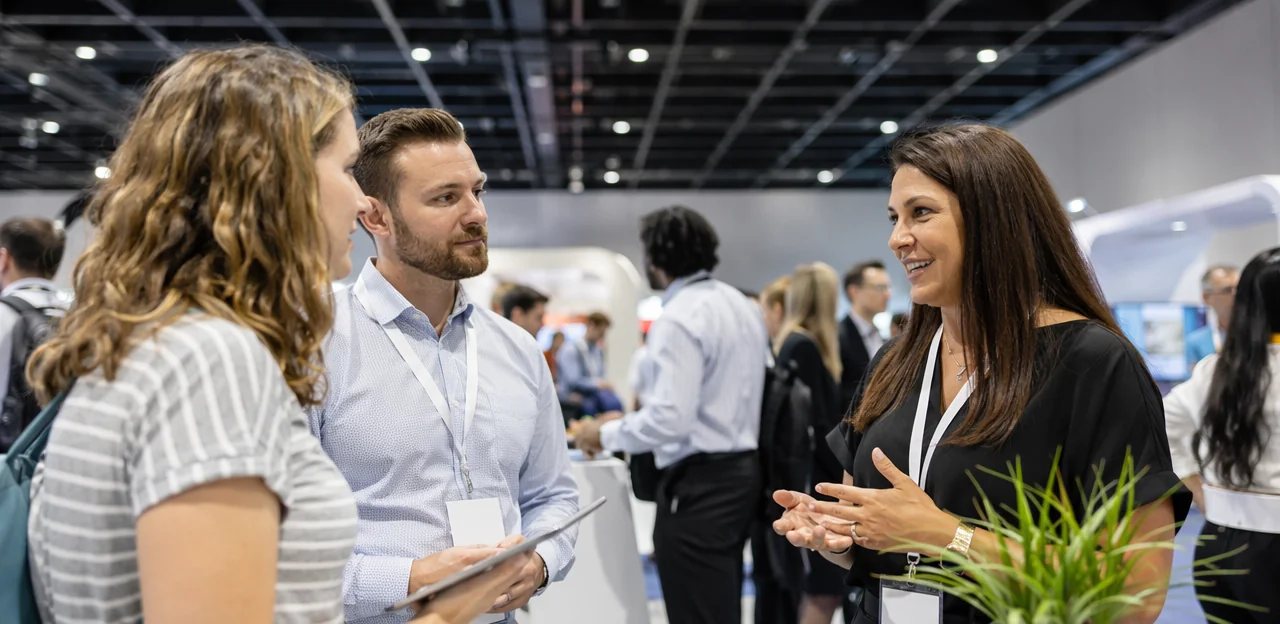
In a crowded expo hall or busy conference floor, sponsors have only a few moments to capture attention, spark meaningful conversations, and turn foot traffic into real opportunities. That is why sponsor booth feedback has become such a valuable part of modern event strategy. It is no longer enough to simply attract visitors with giveaways or polished displays. Brands need smarter ways to understand attendee interests, improve engagement in real time, and collect insights that support stronger lead qualification.
When done well, event feedback can reveal what drew people to a booth, which experiences resonated, and where the attendee journey fell short. From choosing the right event feedback questions to designing a simple event feedback form, every detail can influence response rates and the quality of insights collected. This is especially important for conference feedback, where sponsors want both immediate reactions and measurable outcomes.
In this article, we will explore practical ideas for gathering survey event feedback at sponsor booths, improving conversations with prospects, and using event feedback examples to shape better experiences. We will also look at how to collect useful post event feedback, apply AI and analytics more effectively, and create feedback-driven engagement strategies that help sponsors stand out long after the event ends.
Why Sponsor Booth Feedback Matters at Events and Conferences

How sponsor booth feedback shapes attendee experience
Sponsor booth feedback does far more than measure whether visitors “liked” a booth. It helps event teams and sponsors understand real attendee intent, what content sparked interest, and where friction reduced engagement.
- Reveals buying signals: Strong event feedback shows which visitors want demos, pricing, or follow-up.
- Measures booth performance: Use targeted event feedback questions in an event feedback form to compare traffic quality, staff interactions, and content relevance.
- Identifies friction points: Conference feedback can uncover long waits, unclear messaging, poor layout, or weak lead capture.
- Improves future strategy: Reviewing survey event feedback, event feedback examples, and post event feedback helps refine booth design, messaging, and the overall audience experience.
The connection between feedback and lead engagement
Sponsor booth feedback does more than measure interest—it helps teams spot high-intent prospects while the conversation is still fresh. A simple event feedback form with smart event feedback questions can reveal buying stage, pain points, and product fit, turning basic conference feedback into sales-ready insight.
- Use short survey event feedback prompts to score interest and urgency.
- Tag responses by role, industry, or challenge to personalize follow-up.
- Train booth staff to use live event feedback signals to adjust demos and messaging.
- Review strong event feedback examples to identify warmer leads for immediate outreach.
This improves customer experience on-site and makes post event feedback more actionable, increasing conversion opportunities during and after the event.
Common feedback gaps sponsors should fix
Many sponsor booth feedback programs underperform because the process is too broad or too disconnected from follow-up systems. Fix these common gaps:
- Asking vague event feedback questions: Replace generic prompts like “What did you think?” with specific questions about booth experience, product interest, and buying timeline.
- Collecting too much data: A long event feedback form reduces completion rates. Ask only what sales and marketing truly need.
- Ignoring open-text insights: Qualitative conference feedback often reveals objections, intent, and messaging gaps that scores alone miss.
- Failing to connect survey event feedback with CRM and AI & Analytics tools: Without integration, event feedback examples stay isolated instead of improving segmentation and post event feedback follow-up.
Strong sponsor booth feedback turns responses into actionable lead intelligence.
How to Collect Better Sponsor Booth Feedback in Real Time
Best channels for gathering event feedback on-site
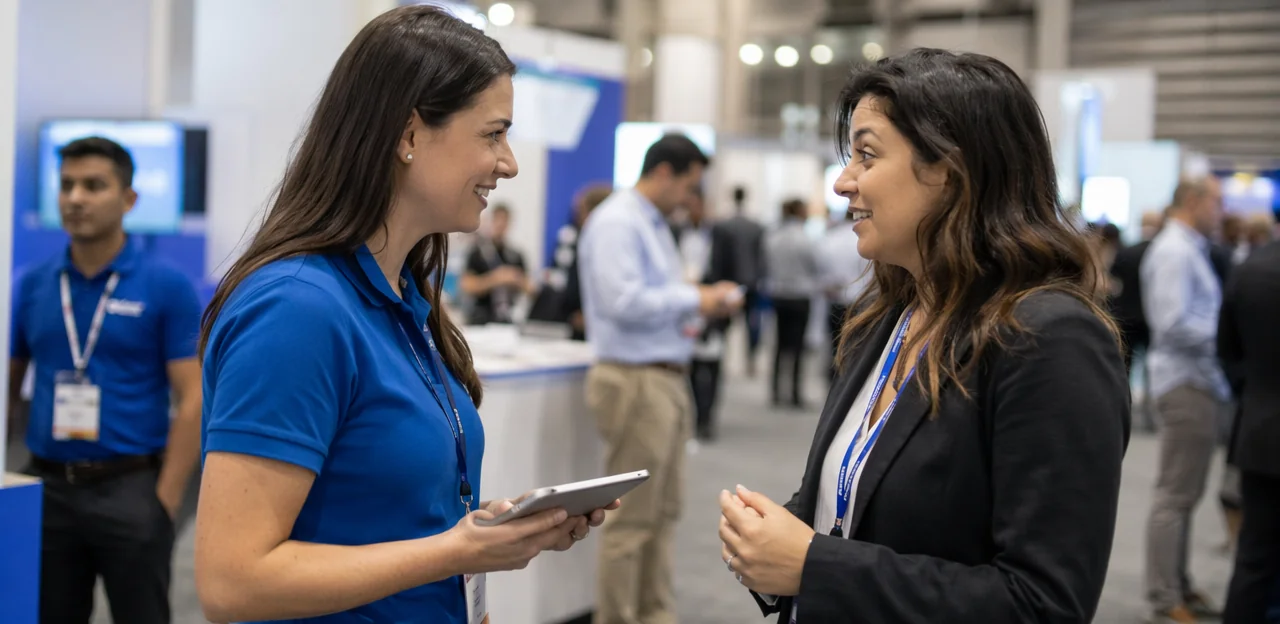
Choosing the right channel makes sponsor booth feedback easier to capture while interest is still high. The best options depend on traffic, dwell time, and how detailed your event feedback questions need to be.
- QR codes: Ideal for fast, low-friction event feedback at booths, exits, and demo stations. Link to a short event feedback form with 2–4 questions.
- Tablets or kiosks: Best for guided conference feedback when staff want attendees to complete a richer survey event feedback flow on the spot.
- Badge scans: Great for pairing lead capture with event feedback examples like product interest, session preference, or follow-up intent.
- SMS surveys: Useful when lines are busy and attendees prefer to respond moments later.
- Mobile apps: Best for larger conferences already using an event app.
- Conversational staff prompts: Perfect for warm interactions; staff can ask quick questions, then direct visitors to a digital form.
Use on-site channels for immediate insights, then follow up with post event feedback for deeper analysis.
Designing an event feedback form attendees will complete
To increase sponsor booth feedback, keep the experience fast, obvious, and mobile-first. Attendees will complete an event feedback form when it feels useful and takes less than a minute.
- Start with a clear CTA: Use action-led prompts like “Share feedback, get a giveaway entry” or “Rate your booth experience.”
- Keep it short: Ask 3–5 event feedback questions max. Good flow:
- Overall booth experience
- Product or demo interest
- Lead qualifier
- Optional open comment
- Time it well: Capture event feedback immediately after a demo, conversation, or giveaway interaction while interest is high.
- Reduce friction: Use tap-to-open QR/NFC, large buttons, one-screen progress, and no forced login.
- Offer incentives: Instant perks, prize draws, downloadable resources, or exclusive follow-up content improve survey event feedback completion.
- Design for phones: Single-column layout, thumb-friendly fields, and fast loading are essential for conference feedback and post event feedback collection.
Review event feedback examples regularly to refine question order and improve response rates.
Using AI and analytics to capture richer insights
AI & Analytics can turn sponsor booth feedback into clear, usable insight instead of a pile of disconnected comments. By analyzing both ratings and open text, teams can improve follow-up and identify higher-value leads faster.
- Score sentiment automatically: AI reviews conference feedback and event feedback comments to detect positive, neutral, or negative sentiment at scale.
- Spot patterns quickly: Analytics highlights recurring themes from event feedback questions, such as booth staff quality, demo interest, wait times, or product confusion.
- Summarize open-text responses: AI can condense long answers from an event feedback form or survey event feedback into short takeaways and actionable next steps.
- Connect feedback to lead quality: Match booth visits, scans, dwell time, and response data to see which interactions drive stronger pipeline outcomes and better post event feedback trends.
Use these insights to refine outreach, improve booth design, and build smarter event feedback examples for future shows.
Event Feedback Questions That Improve Booth Performance

Core event feedback questions every sponsor should ask
Strong sponsor booth feedback starts with concise questions that reveal both experience quality and sales intent. Include these in your event feedback form:
- How appealing was our booth?
Measures first impressions, design, signage, and whether the stand attracted attention. - How helpful was our booth staff?
This is core conference feedback for judging approachability, product knowledge, and conversation quality. - Which product or service interested you most?
A key event feedback question for lead qualification, segmentation, and follow-up relevance. - How useful was the demo or live presentation?
Helps assess clarity, engagement, and whether the demo moved attendees closer to purchase. - What would you like to do next?
Offer choices such as book a call, request pricing, get a trial, or receive updates. This turns event feedback into actionable pipeline data.
These event feedback questions also work well for survey event feedback, post event feedback, and practical event feedback examples that connect attendee sentiment to lead priority.
Event feedback examples for different booth goals
Strong sponsor booth feedback starts with matching each interaction to a clear objective. Use these event feedback examples to improve audience experience and collect more useful conference feedback:
- Product launches: Ask, “How clearly did the booth explain the new product?” and “What feature interests you most?” This type of event feedback helps refine messaging.
- Live demos: Include event feedback questions like, “Was the demo easy to follow?” and “What would you like to see demonstrated next?”
- Networking lounges: In your event feedback form, ask, “Did this space help you make valuable connections?” and “What would improve the atmosphere?”
- Thought leadership booths: Use survey event feedback such as, “Was the content insightful?” and “Which topic should we cover next?”
- Experiential activations: Capture emotional response with, “How memorable was this experience?” and “Would you share it with a colleague?”
Use quick in-booth prompts, then follow with post event feedback for deeper insights.
How to balance quantitative and qualitative feedback
To make sponsor booth feedback useful, combine fast scoring with a small number of thoughtful follow-ups. A strong event feedback form should reveal both patterns and context without overwhelming attendees.
- Start with rating scales: Ask 2–3 quick questions on booth experience, product relevance, and staff helpfulness. This makes survey event feedback easy to compare across booths and events.
- Add one or two multiple-choice questions: Use focused event feedback questions like “What brought you to the booth?” or “Which solution interested you most?” to spot trends in conference feedback.
- Finish with one open-ended prompt: Ask, “What could have improved your experience?” or “What stood out most?” This adds depth to event feedback and uncovers customer experience insights numbers miss.
Keep it to 4–6 total questions. Reviewing both scores and comments also creates stronger event feedback examples for future post event feedback analysis.
Turning Conference Feedback Into Stronger Lead Engagement

Segmenting leads based on booth feedback signals
Sponsor booth feedback becomes far more valuable when sponsors use it to segment leads for tailored follow-up instead of sending the same message to everyone. A well-designed event feedback form or quick survey event feedback flow can reveal:
- Interest level: Track booth dwell time, demo requests, and positive conference feedback to identify hot leads.
- Buying stage: Use smart event feedback questions like “Are you researching, comparing vendors, or ready to buy?”
- Topic preference: Tag responses by product feature, pricing, integration, or use case using clear event feedback examples.
- Urgency: Ask when they plan to make a decision to prioritize outreach.
This approach turns raw event feedback and post event feedback into actionable segments, helping sales teams send more relevant content, faster follow-ups, and higher-converting outreach.
Personalizing follow-up after the event
Sponsor booth feedback should shape what happens next, not sit in a spreadsheet. When you review post event feedback, segment attendees by interests, objections, product fit, and buying stage so every follow-up feels relevant and improves the overall customer experience.
- Use your event feedback form and event feedback questions to identify what each visitor cared about most.
- Build email sequences around those signals: send product details to high-intent leads, educational content to early-stage prospects, and case studies tied to topics mentioned in conference feedback.
- Guide sales outreach with notes from survey event feedback, including pain points, timelines, and requested features.
- Recommend webinars, demos, or resources based on strong event feedback examples and invite qualified leads to meetings that match their stated goals.
This turns event feedback into timely, personalized engagement.
Measuring engagement outcomes from feedback data
To prove the ROI of sponsor booth feedback, track metrics that connect conversations to revenue, not just volume. A simple event feedback form or live survey event feedback flow should measure:
- Response rate: booth visitors who complete your event feedback survey
- Qualified leads: respondents matching your ICP or buying criteria
- Meeting bookings: on-site or follow-up appointments generated
- Demo requests: clear buying-intent actions from conference feedback
- Sentiment trends: recurring positive or negative themes surfaced through AI & Analytics
- Pipeline influence: opportunities, deal value, or revenue tied to feedback-driven leads
Use focused event feedback questions to capture intent, urgency, and product interest. Reviewing event feedback examples helps refine future outreach, while comparing live responses with post event feedback reveals which booth experiences actually moved prospects toward conversion.
Best Practices for Event Experience, Customer Experience, and Audience Experience

Creating a booth experience people want to respond to
Strong sponsor booth feedback starts with a booth that feels easy, useful, and worth stopping for. To improve event feedback, conference feedback, and the overall audience experience, focus on:
- Design: Use clear signage, open layouts, and visible calls to action so attendees instantly know what you offer.
- Staffing: Train booth teams to start conversations, not sales pitches. Friendly, informed staff improve the event experience and raise response rates.
- Messaging: Ask concise event feedback questions tied to demos, pain points, or attendee goals.
- Interaction: Use live demos, touch-and-try stations, or a quick digital event feedback form to capture real-time insights.
- Follow-up: Review survey event feedback, share strong event feedback examples, and use post event feedback to refine future booth strategy.
Respecting privacy while collecting useful data
Strong sponsor booth feedback starts with trust. Whether you use an event feedback form on a tablet, QR code, or contactless tool like Tapsy, keep data collection clear and limited.
- Ask for consent upfront: Explain what the form collects, why, and whether attendees will receive follow-up messages.
- Be transparent: Add a short privacy notice to all event feedback and conference feedback surveys.
- Practice data minimization: Only ask event feedback questions that improve customer experience; avoid unnecessary personal details.
- Support compliance: Align survey event feedback and post event feedback processes with GDPR, CCPA, and event sponsor policies.
- Use smart fields: Review event feedback examples to capture actionable insights without over-collecting data.
Aligning sponsor, sales, and event teams around insights
To get more value from sponsor booth feedback, sponsors, sales, and event teams should review conference feedback together, not in silos. Shared insight helps teams respond faster to attendee needs and improve the full booth-to-follow-up journey.
- Use one dashboard for event feedback, lead quality, and booth performance.
- Standardize event feedback questions in every event feedback form so teams can compare results across sponsors and shows.
- Apply AI & Analytics to spot patterns in survey event feedback, top objections, and high-intent leads.
- Review event feedback examples and post event feedback weekly to refine messaging, staffing, demos, and next-event booth layouts.
This creates a more consistent attendee experience and smarter future strategy.
Building a Repeatable Sponsor Booth Feedback Strategy

Pre-event planning for better feedback collection
Strong sponsor booth feedback starts before the show floor opens. Build a simple plan so every interaction supports measurable outcomes:
- Define goals first: Decide whether you want lead qualification, product insight, brand recall, or conference feedback on the booth experience.
- Choose the right tools: Use a fast digital event feedback form on tablet, QR, or NFC so visitors can respond in seconds.
- Map questions to KPIs: Align event feedback questions with targets like scan-to-lead rate, demo interest, satisfaction, and follow-up intent. Review event feedback examples to keep questions short and useful.
- Train booth staff: Teach teams when to ask for event feedback, how to introduce survey event feedback, and how to log responses consistently.
- Prepare workflows: Set routing rules for hot leads, issue escalation, and post event feedback follow-up.
During-event optimization and testing
While the event is live, treat sponsor booth feedback as a real-time performance tool, not just a reporting exercise.
- Monitor response quality: Check completion rates, drop-off points, and whether attendees leave useful comments or rushed answers. If your event feedback form feels too long, shorten it immediately.
- Adjust prompts fast: Swap weak event feedback questions for clearer ones, such as rating booth demos, staff helpfulness, or interest level.
- Test event feedback examples: Run two versions of survey event feedback prompts to see which drives better conference feedback.
- Refine on-site tactics: If scans are low, reposition signage, change incentives, or simplify the ask. Better live event feedback collection also improves later post event feedback analysis.
Post-event review and continuous improvement
After the event, turn sponsor booth feedback into clear next steps. Review your post event feedback alongside lead volume, scan-to-conversation rates, demo requests, and conversions to see what actually drove engagement.
- Analyze event feedback by theme: booth design, staff performance, messaging, giveaways, and follow-up quality.
- Use consistent event feedback questions in every event feedback form so results can be compared across shows.
- Benchmark conference feedback by event type, audience, location, and booth layout.
- Save strong and weak event feedback examples to identify repeat patterns.
- Document lessons learned in a shared recap, then update your survey event feedback process, booth scripts, and CTAs for the next event.
Conclusion
In today’s competitive event landscape, the brands that win attention—and keep it—are the ones that treat sponsor booth feedback as a real growth tool, not just a box to check. By combining meaningful conversations, smart event feedback questions, and a simple event feedback form, sponsors can better understand attendee needs, improve booth experiences in real time, and turn casual visitors into qualified leads. Strong conference feedback strategies also help teams measure what resonated, what created friction, and which interactions are most likely to drive follow-up meetings or sales.
The most effective approach is to make survey event feedback fast, relevant, and easy to complete, whether through QR codes, touchpoints at the booth, or short mobile-friendly forms. Reviewing event feedback examples can help teams design better prompts, while collecting post event feedback ensures insights continue long after the conference floor closes. When sponsor booth feedback is captured consistently, it becomes a powerful source of data for improving messaging, staffing, demos, and future sponsorship ROI.
As a next step, audit your current feedback process, refine your event feedback questions, and build a repeatable system for both live and post-event collection. If you want to streamline on-site engagement and real-time insights, tools like Tapsy can support a more seamless feedback experience. Start optimizing your sponsor booth feedback strategy now to create stronger engagement at every event.
Frequently Asked Questions
- What is sponsor booth feedback and why does it matter at events?
Sponsor booth feedback is the information collected from attendees about their booth experience, interests, and next-step intent. It matters because it helps sponsors understand what attracted visitors, what created friction, and which conversations indicate stronger lead potential.
- How does booth feedback help with lead engagement?
Booth feedback helps identify buying stage, urgency, pain points, and product fit while the interaction is still fresh. That makes it easier to prioritize warmer leads, personalize follow-up, and turn basic booth visits into more actionable sales opportunities.
- What are the most common mistakes sponsors make when collecting booth feedback?
Common mistakes include asking vague questions, making the form too long, ignoring open-text responses, and failing to connect feedback with CRM or analytics tools. These gaps reduce completion rates and make it harder to use feedback for segmentation and follow-up.
- Which on-site channels work best for collecting event feedback at a sponsor booth?
Useful channels include QR codes, tablets or kiosks, badge scans, SMS surveys, mobile apps, and conversational staff prompts. The best choice depends on booth traffic, dwell time, and whether you need quick responses or more detailed answers.
- How long should an event feedback form be for better completion rates?
A strong event feedback form should usually take less than a minute to complete. Keeping it to about 3 to 5 questions reduces friction and improves the chance that attendees will finish it on-site.
- What questions should every sponsor include in a booth feedback form?
Core questions should cover overall booth appeal, staff helpfulness, product or service interest, demo usefulness, and what the attendee wants to do next. Together, these questions measure experience quality and reveal sales intent.
- How can sponsors balance rating questions with open-ended feedback?
A practical approach is to start with 2 to 3 rating-scale questions, add 1 or 2 multiple-choice questions, and finish with a single open-ended prompt. This gives you comparable data across events while still capturing useful context and objections.
- When is the best time to ask attendees for booth feedback?
The best time is immediately after a demo, conversation, or giveaway interaction, when the experience is still fresh. Sponsors can then use post-event feedback later for deeper analysis and follow-up insights.
- How can AI and analytics improve sponsor booth feedback?
AI and analytics can score sentiment, detect recurring themes, summarize open-text comments, and connect booth behavior with lead quality. This helps teams spot stronger opportunities faster and refine messaging, booth design, and outreach.
- How should sponsors segment leads using booth feedback signals?
Sponsors can segment leads by interest level, buying stage, topic preference, and urgency. Signals such as dwell time, demo requests, product interest, and decision timelines make follow-up more relevant and more efficient.
- What does effective post-event follow-up look like after collecting feedback?
Effective follow-up uses attendee responses to send content that matches their interests, objections, and stage in the buying journey. High-intent leads can receive product details or meeting invites, while earlier-stage prospects can get educational content or case studies.
- Which metrics should sponsors track to measure feedback-driven engagement?
Useful metrics include response rate, qualified leads, meeting bookings, demo requests, sentiment trends, and pipeline influence. These measures connect booth conversations and feedback activity to actual business outcomes instead of just traffic volume.
- How can sponsors improve the booth experience so more attendees respond?
Sponsors should focus on clear signage, open layouts, visible calls to action, friendly staff, and useful interactions such as demos or touch-and-try stations. A booth that feels easy and relevant makes attendees more willing to share feedback.
- How can sponsors collect useful feedback while respecting attendee privacy?
Sponsors should ask for consent, explain what data is being collected, include a short privacy notice, and only request information that supports customer experience and follow-up. Feedback processes should also align with GDPR, CCPA, and sponsor event policies.
- What should a repeatable sponsor booth feedback strategy include before, during, and after an event?
Before the event, define goals, choose tools, map questions to KPIs, train staff, and prepare lead-routing workflows. During the event, monitor response quality, test prompts, and adjust tactics quickly. After the event, review themes, compare results across shows, document lessons learned, and update scripts, CTAs, and forms for the next event.