
A spotless store does more than make a good first impression—it shapes how customers judge product quality, staff professionalism, and the overall retail experience. From entrance mats and shopping baskets to fitting rooms, checkout counters, and restrooms, cleanliness influences trust at every step of the journey. Yet many retailers still rely on broad post-visit surveys that miss the exact moment and location where problems happen.
That is why store cleanliness feedback has become such a valuable operational tool. When retailers collect input at specific touchpoints, they can move beyond vague satisfaction scores and identify the areas that most affect customer perception, repeat visits, and brand reputation. A poorly maintained fitting room or untidy self-checkout zone may seem minor internally, but to shoppers, these are high-impact moments that can define the entire visit.
In this article, we’ll explore how to measure cleanliness across the retail environment, which touchpoints deserve the most attention, and how NFC and QR-based feedback can help teams capture timely, location-specific insights. We’ll also look at how retailers can turn that feedback into faster issue resolution, stronger store standards, and a more consistent customer experience across locations—with tools such as Tapsy offering one practical example of how to collect and act on in-store feedback in real time.
Why Store Cleanliness Feedback Matters in Retail

How cleanliness shapes customer perception and loyalty
Visible cleanliness sets the tone for the entire retail customer experience within seconds. Shiny floors, tidy shelves, clean fitting rooms, and sanitized checkout areas signal care, professionalism, and safety. In contrast, poor store hygiene perception can quickly reduce trust and shorten visits.
- First impressions: Clean spaces make stores feel organized, welcoming, and higher quality.
- Brand trust: Customers often link hygiene standards with product quality and operational reliability.
- Dwell time: Shoppers stay longer when spaces feel comfortable and well maintained.
- Repeat visits: Consistent standards encourage loyalty and positive word of mouth.
Use store cleanliness feedback at key touchpoints to spot issues early and protect the in-store experience.
The business risks of poor cleanliness standards
Weak retail cleanliness standards create both immediate operational problems and long-term brand damage. When spills, dirty fitting rooms, or unclean restrooms go unresolved, the impact often shows up fast:
- More customer complaints retail teams must handle, increasing staff time and service recovery costs
- Higher risk of negative store reviews that influence future shoppers before they visit
- Reduced conversions, as customers are less likely to browse longer, try products, or complete purchases in an unpleasant environment
- Lower customer satisfaction scores, which can hurt loyalty and repeat visits
Collecting store cleanliness feedback at key touchpoints helps teams spot issues early, prioritize cleaning response times, and protect both reputation and revenue.
Periodic inspections offer a snapshot. Store cleanliness feedback shows what is happening between inspections, when spills, overflowing bins, or untidy fitting rooms can affect shoppers within minutes. In fast-moving stores, real-time cleanliness feedback helps teams spot issues early, respond faster, and protect the customer experience.
- Shoppers see problems first: Instant input captures issues managers may miss during scheduled checks.
- Staff add operational context: Teams can flag recurring trouble spots, peak-time pressure, or supply gaps.
- Retail feedback systems reveal patterns by zone, shift, or time of day.
- Customer feedback retail store data supports faster service recovery and smarter cleaning schedules.
Tools like Tapsy can help collect this feedback directly at key touchpoints.
Identify High-Impact Retail Touchpoints to Measure
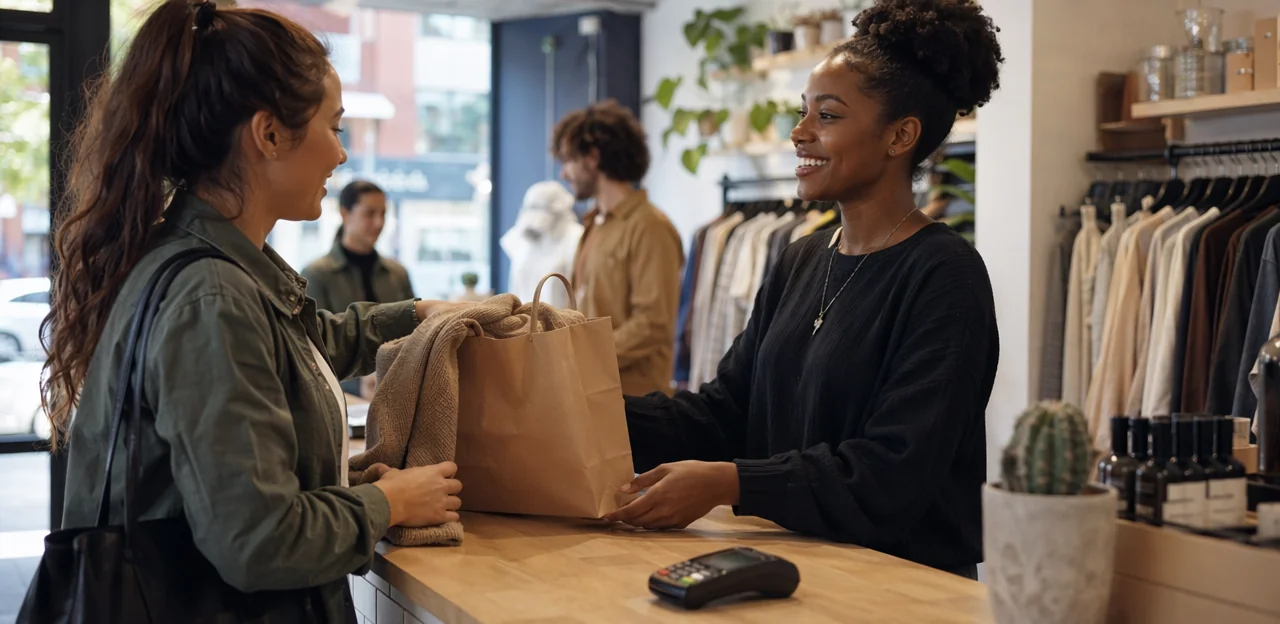
Entrance, carts, baskets, and service counters
Front-of-store retail touchpoints shape customer trust within seconds, so they should be top priorities in any store cleanliness feedback program. If shoppers see dirty doors, sticky cart handles, or cluttered service desks, they may assume the rest of the store is poorly maintained.
Prioritize measurement at these high-visibility points:
- Store entrance cleanliness: Check glass doors, mats, handles, signage, and entry floors frequently, especially during wet weather or peak traffic.
- Cart and basket areas: Monitor shopping basket hygiene, cart grips, wheel debris, and storage organization.
- Service counters: Review counter surfaces, payment terminals, queue rails, and shared pens or devices.
For faster response, place quick QR or NFC feedback prompts near these zones and trigger alerts for low cleanliness scores. Tools like Tapsy can help capture immediate, location-specific feedback and route issues to staff before impressions worsen.
Restrooms, fitting rooms, and checkout areas
Restrooms, fitting rooms, and checkout zones shape how shoppers judge the entire store. Because customers use them at high-stakes moments—personal comfort, trying products, and completing payment—even small hygiene issues can damage satisfaction and trust. This is why store cleanliness feedback from these areas is often the most specific and actionable.
- Restrooms: restroom cleanliness feedback often highlights odors, empty supplies, wet floors, or missed cleaning checks.
- Fitting rooms: fitting room cleanliness affects comfort, confidence, and willingness to try on more items.
- Checkout: checkout area hygiene influences final impressions, especially when counters, card terminals, baskets, or queue rails look neglected.
To improve results, collect feedback directly at each touchpoint, categorize issues by location, and trigger fast staff alerts. Tools like Tapsy can help retailers capture in-the-moment feedback where problems actually happen.
Product interaction zones and self-service stations
Shelves, demo tables, kiosks, and self-checkout areas are some of the most scrutinized high-touch retail surfaces in any store. Smudges, dust, sticky screens, or overflowing bins can quickly reduce trust and comfort, especially in zones where shoppers handle products directly. Strong store cleanliness feedback programs should track these areas separately because they influence both browsing confidence and purchase completion.
- Shelves and demo tables: Check for dust, spills, fingerprints, and damaged testers throughout the day.
- Kiosks and touchscreens: Prioritize retail kiosk hygiene with frequent screen wipes and visible sanitation routines.
- Self-checkout stations: Improve self-service cleanliness by cleaning scanners, card terminals, bagging areas, and hand baskets on a set schedule.
Use QR or NFC prompts at these touchpoints to capture immediate feedback and trigger faster cleaning responses.
How to Collect Store Cleanliness Feedback with NFC and QR Touchpoints
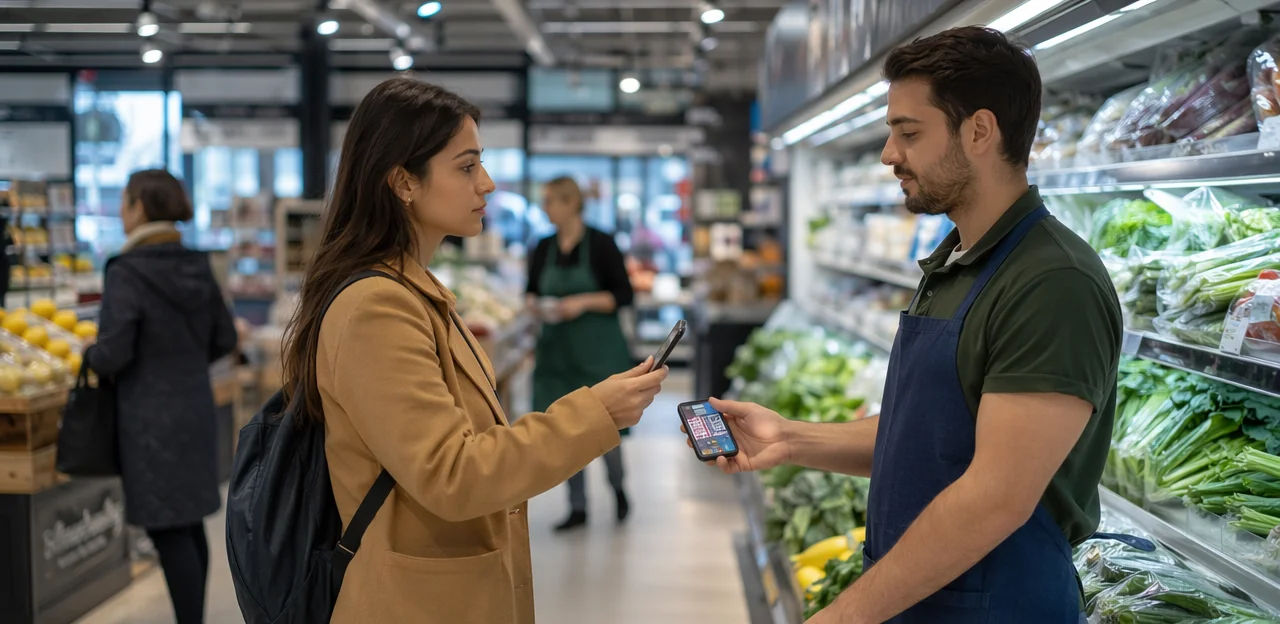
Where to place QR codes and NFC tags for maximum response
To improve store cleanliness feedback, place prompts where shoppers can respond in seconds, right after the experience. The best in-store feedback touchpoints are visible, convenient, and never block traffic.
- Restrooms: Position QR feedback retail signs near the exit or mirror area so customers can rate cleanliness immediately after use.
- Fitting rooms: Add discreet NFC feedback tags near fitting room doors or waiting benches to capture comments on tidiness, odors, and upkeep.
- Service desks: Place tags at returns, click-and-collect, or help counters where customers notice hygiene standards during close-contact service.
- Store exits: Use exit signage for a quick overall cleanliness check while the visit is still fresh.
Keep messaging short, such as “How clean was this area today?” Tools like Tapsy can help retailers collect fast, no-app feedback at these key moments.
Design short, high-conversion feedback flows
To improve store cleanliness feedback, keep every survey fast, clear, and mobile-first. A strong customer feedback form retail setup should take under 30 seconds and feel effortless at the point of experience.
- Use mobile-friendly forms: Large tap targets, one-question screens, fast loading, and no login requirement are essential for a high-performing mobile feedback survey.
- Start with a simple rating scale: Use 1–5 stars, smiley faces, or a clean numeric scale to capture sentiment instantly.
- Enable one-tap responses: Ask focused questions like “How clean was this area today?” to reduce friction and boost completion.
- Make comments optional: Follow ratings with a short optional text box to capture context without lowering response rates.
- Follow QR code survey best practices: Place codes at exits, restrooms, fitting rooms, or carts, and label them with a clear action prompt.
Tools like Tapsy can support fast, no-app retail feedback flows at these touchpoints.
Encourage honest responses without adding friction
To improve store cleanliness feedback, make the survey feel fast, safe, and easy to answer in the moment. Small wording choices can lift your retail survey response rate and improve data quality.
- Use clear prompts: Ask specific questions like “How clean was this fitting room?” instead of vague satisfaction prompts. Keep it to 1–3 taps.
- Offer anonymity: Let shoppers leave anonymous store feedback without sharing personal details unless they choose to. This often increases honesty on sensitive issues.
- Support multiple languages: A multilingual customer experience survey retail flow helps more customers respond accurately, especially in diverse locations.
- Keep wording staff-neutral: Focus on the area or touchpoint, not individuals. For example, say “Was the checkout area clean?” rather than “Did our staff clean properly?”
Tools like Tapsy can help deliver quick QR or NFC surveys at the exact touchpoint.
Metrics That Turn Cleanliness Feedback Into Action
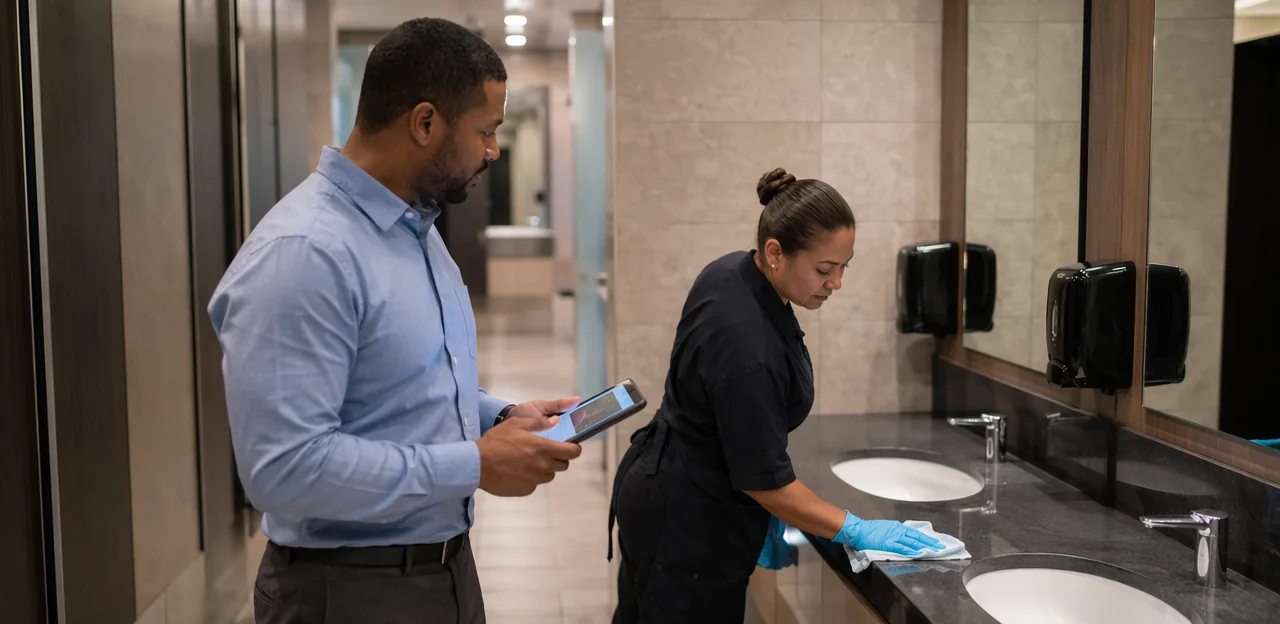
Core KPIs for cleanliness performance
To make store cleanliness feedback actionable, track a focused set of metrics tied to specific retail touchpoints such as entrances, fitting rooms, restrooms, and checkout areas. Useful store feedback metrics include:
- Cleanliness score: Average rating by touchpoint, shift, or store; this is a core cleanliness KPI retail teams can benchmark over time.
- Issue frequency: Number of cleanliness complaints per day or per 1,000 visits, showing where problems repeat.
- Response time: How quickly staff acknowledge a reported issue.
- Resolution time: Time taken to fully clean, restock, or fix the problem.
- Location-level trends: Compare stores, zones, and time periods to spot recurring weak points.
- Customer satisfaction cleanliness: Measure post-resolution ratings to confirm whether action improved the experience.
Tools like Tapsy can help capture this feedback directly at each touchpoint.
How to segment feedback by store zone and time
To turn store cleanliness feedback into action, segment responses across the moments and places that shape shopper perception. This makes retail analytics feedback more useful and helps teams focus where impact is highest.
- By department: Compare grocery, apparel, beauty, restrooms, fitting rooms, and checkout to spot recurring cleanliness issues.
- By touchpoint: Track entrances, baskets, self-checkout screens, service desks, and shared facilities to measure touchpoint performance retail teams often miss.
- By daypart: Review opening, lunch rush, afternoon, and closing periods to find when standards slip.
- By traffic level: Layer feedback against footfall to see whether peaks drive lower scores.
- By store format: Compare flagship, convenience, mall, and big-box locations for stronger store zone analysis and resource planning.
Tools like Tapsy can help capture this feedback directly at each zone.
Combine customer feedback with audits and operations data
To make store cleanliness feedback truly useful, combine shopper sentiment with internal evidence. A single low rating may signal a one-off issue, but patterns across data sources show where action is needed.
- Match feedback to staff inspections: Compare comments with each cleaning audit retail checklist to confirm whether issues were missed or standards slipped between checks.
- Review cleaning logs by time and zone: Link complaints to restroom, fitting room, entrance, or checkout cleaning schedules.
- Add footfall data: High-traffic periods often explain faster deterioration and help teams adjust cleaning frequency.
- Track incident reports: Spills, leaks, or waste overflows add context to negative scores and support faster root-cause analysis.
This layered approach improves store cleanliness reporting and turns retail operations data into practical staffing and scheduling decisions.
Acting on Feedback: Improve Retail Experience and Store Standards

Build fast escalation and response workflows
To turn store cleanliness feedback into action, retailers need a clear cleaning response workflow that removes delays and confusion. Fast, structured handling supports better retail issue escalation and measurable store operations improvement.
- Trigger instant alerts: Send notifications when customers report spills, dirty fitting rooms, full bins, or restroom issues.
- Route tasks by zone: Direct each issue to the right cleaner, supervisor, or shift lead based on store area and urgency.
- Assign ownership rules: Make one person accountable for accepting, resolving, and closing each task.
- Set response timers: Use SLAs to flag overdue issues before they affect more shoppers.
- Track resolution trends: Review repeat hotspots to improve staffing, schedules, and cleaning checks.
Tools like Tapsy can help capture and route issues in real time.
Train teams around recurring cleanliness pain points
Use store cleanliness feedback to spot repeat issues by zone, shift, or store, then turn those patterns into focused coaching and operational fixes. This makes retail staff training cleanliness more practical and measurable.
- Coach by trend: If fitting rooms, entrances, or restrooms draw repeated complaints, train teams on those exact tasks and inspection standards.
- Improve timing: Use feedback peaks to support cleaning schedule optimization, especially during rush hours, weather events, or delivery windows.
- Assign ownership: Give each area a clear owner per shift to strengthen accountability and speed up response times.
- Standardize recovery: Train staff to acknowledge issues, resolve them fast, and thank customers for reporting them.
Across locations, this supports consistent store standards improvement and easier manager follow-through.
Close the loop and show customers their feedback matters
To close the feedback loop, retailers should make improvements visible, timely, and easy to notice. When shoppers see action after sharing store cleanliness feedback, participation rises and customer trust retail strengthens.
- Use in-store signage: Post simple updates such as “You asked for cleaner fitting rooms — now checked every hour.”
- Share digital updates: Add app, email, SMS, or QR landing page messages highlighting recent fixes and cleaning improvements.
- Show visible corrective actions: Increase cleaning rounds, restock hygiene stations, or assign staff to high-traffic zones where issues were reported.
- Acknowledge feedback quickly: Thank customers and explain what changed.
This transparency drives retail experience improvement and encourages future feedback.
Best Practices for Scaling a Store Cleanliness Feedback Program

Standardize questions across locations while allowing local flexibility
Build a core store cleanliness feedback template that every branch uses, then add a small set of location-specific questions. This approach improves multi-location retail feedback quality and supports reliable store benchmarking cleanliness.
- Use 3–5 fixed questions in every standardized survey retail flow, such as restroom cleanliness, floor condition, checkout area tidiness, and overall satisfaction.
- Add 1–2 optional questions by store type, size, or zone, like fitting rooms, entrances, or food counters.
- Keep rating scales and timing identical across stores for cleaner comparisons.
- Tag responses by location, zone, and time to spot patterns without losing local context.
Protect privacy and maintain data quality
To keep store cleanliness feedback trustworthy, build privacy and quality controls into every touchpoint:
- Get clear consent: Explain why feedback is collected, how it will be used, and link to your privacy notice to support customer feedback compliance.
- Collect only what you need: Use short forms, optional comments, and avoid unnecessary personal data to strengthen retail data privacy feedback practices.
- Prevent spam: Add rate limits, one-response rules per session, bot checks, and duplicate detection to protect survey data quality.
- Set governance rules: Define retention periods, access controls, audit logs, and review workflows. Tools like Tapsy can help standardize compliant in-store feedback capture.
Create a continuous improvement cycle
To make store cleanliness feedback useful long term, build a simple review-and-action rhythm into daily operations and retail experience management:
- Review trends weekly and monthly: Track scores, comments, repeat issues, and problem zones across entrances, fitting rooms, checkouts, and restrooms.
- Test one change at a time: Adjust cleaning schedules, signage, staff ownership, or supply placement, then measure whether feedback improves.
- Compare by touchpoint and time: Identify which moments create the biggest impact on your store cleanliness strategy.
- Refine and repeat: Use insights to strengthen a continuous improvement retail process that keeps stores cleaner and customer experiences consistently better.
Conclusion
In retail, cleanliness is never just a background detail—it shapes first impressions, customer trust, dwell time, and whether shoppers choose to return. That’s why store cleanliness feedback should be measured at the moments and places where it matters most: entrances, fitting rooms, restrooms, checkout areas, and other high-traffic zones. By focusing on these high-impact touchpoints, retailers can move beyond generic surveys and uncover the specific operational issues that affect the in-store experience every day.
The most effective approach is simple: collect feedback in real time, make it easy to give, and route issues quickly to the right team. QR and NFC touchpoints can help stores capture fast, location-specific insights while the experience is still fresh. Over time, this creates a clearer picture of recurring problems, store-level trends, and the actions that improve both satisfaction and efficiency.
If your goal is to strengthen retail experience and protect brand standards, now is the time to build a smarter store cleanliness feedback strategy. Start by identifying your key touchpoints, setting response thresholds, and reviewing feedback data regularly. For teams looking to streamline this process, tools like Tapsy can support real-time feedback collection and faster issue resolution. The cleaner the experience, the stronger the customer loyalty.
Frequently Asked Questions
- Why is store cleanliness feedback important in retail?
Cleanliness shapes first impressions, trust, dwell time, and repeat visits. Feedback collected at specific touchpoints helps retailers catch issues early and protect both customer experience and brand reputation.
- What are the risks of relying only on broad post-visit surveys for cleanliness?
Broad surveys often miss the exact moment and location where a problem happened. That makes it harder to identify issues like dirty fitting rooms, restroom problems, or untidy checkout zones before they affect more shoppers.
- Which retail touchpoints should be prioritized for cleanliness measurement?
High-impact areas include entrances, carts, baskets, service counters, restrooms, fitting rooms, checkout areas, shelves, kiosks, and self-checkout stations. These are visible or high-touch zones that strongly influence customer perception.
- How does real-time cleanliness feedback differ from periodic inspections?
Periodic inspections provide only a snapshot of conditions at a given time. Real-time feedback shows what happens between checks, when spills, full bins, or supply shortages can affect shoppers within minutes.
- Where should QR codes and NFC tags be placed for the best response rates?
They should be placed where customers can respond immediately after the experience, such as restroom exits, fitting room doors, service desks, and store exits. Prompts should be visible, convenient, and positioned without blocking traffic.
- What makes a store cleanliness feedback form effective?
An effective form is short, mobile-friendly, and takes under 30 seconds to complete. It should start with a simple rating scale, allow one-tap responses, and keep comments optional to reduce friction.
- How can retailers encourage honest cleanliness feedback without lowering response rates?
Use clear, specific questions and keep the flow to just a few taps. Anonymous responses, multilingual support, and staff-neutral wording can make customers more comfortable sharing accurate feedback.
- What KPIs should retailers track for cleanliness performance?
Useful metrics include cleanliness score, issue frequency, response time, resolution time, location-level trends, and post-resolution satisfaction. These KPIs help teams compare performance across touchpoints, shifts, and stores.
- How should cleanliness feedback be segmented for better analysis?
Segment it by department, touchpoint, daypart, traffic level, and store format. This helps reveal where standards slip most often and supports better staffing and cleaning decisions.
- Why should customer cleanliness feedback be combined with audits and operations data?
Combining feedback with inspections, cleaning logs, footfall data, and incident reports gives better context for recurring issues. It helps confirm whether problems were missed during checks or caused by peak traffic and operational pressure.
- What should a fast response workflow for cleanliness issues include?
A strong workflow should trigger instant alerts, route tasks by zone, assign clear ownership, and set response timers. Tracking repeat hotspots also helps improve staffing, schedules, and cleaning routines over time.
- How can teams use recurring complaints to improve store standards?
Patterns in feedback can guide targeted coaching for problem areas like fitting rooms, entrances, or restrooms. Teams can also adjust cleaning schedules, assign area ownership by shift, and standardize how issues are acknowledged and resolved.
- How can retailers show customers that their cleanliness feedback matters?
They can make improvements visible through in-store signage, digital updates, and noticeable corrective actions such as more frequent cleaning rounds or better restocking. Quick acknowledgment and clear communication help build trust and encourage future feedback.
- How can a multi-location retailer standardize cleanliness feedback without losing local relevance?
Use a core set of fixed questions across every store, then add a small number of location-specific questions based on store type or zone. Keeping rating scales and timing consistent makes benchmarking easier while still allowing local flexibility.
- What role can tools like Tapsy play in a store cleanliness feedback program?
Tools like Tapsy can support real-time feedback collection through QR and NFC touchpoints at key in-store locations. They can also help route issues quickly to staff and organize location-specific feedback for faster action.