
A guest’s final impression often determines whether they return, recommend your property, or leave a glowing review. That is why check out survey questions matter so much in modern hospitality. When designed well, they do more than collect opinions—they reveal what shaped the guest experience, where service fell short, and what your hotel can improve right away.
In hotels and accommodation businesses, the right survey questions can uncover valuable insight across every touchpoint, from booking and check-in to room comfort, dining, and departure. Strong hotel survey questions help teams measure satisfaction, identify service gaps, and turn feedback into smarter operational decisions. This is especially important as AI and analytics make it easier to spot trends, personalize service, and act on guest sentiment at scale.
This article explores practical survey questions examples, including good survey questions for guest satisfaction, loyalty, service quality, and post-stay follow-up. It will also look at different types of survey questions, how to structure them for better response rates, and when employee survey questions or staff survey questions can complement guest feedback to give a fuller picture of performance. By the end, you will have a clearer framework for creating effective hotel check-out surveys that support better customer experience and stronger long-term retention.
Why Check-Out Survey Questions Matter in Hotels
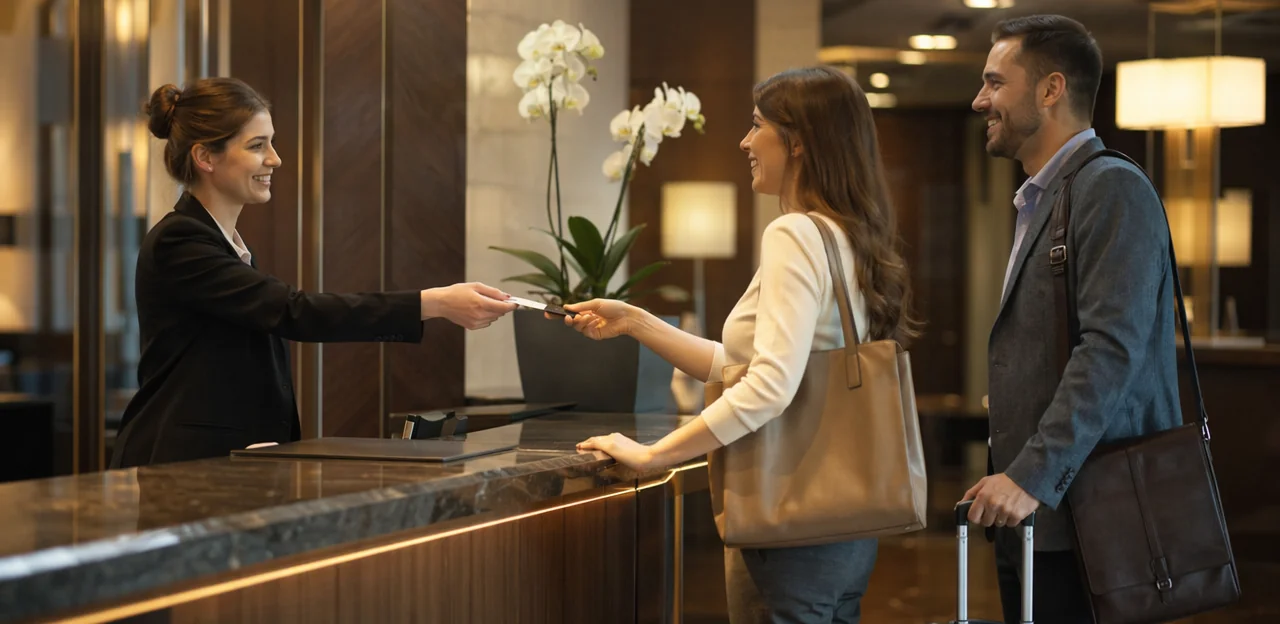
The role of post-stay feedback in guest experience
Check out survey questions are a vital final touchpoint in the guest experience because they capture impressions while the stay is still fresh. Well-designed hotel survey questions help hotels identify what delighted guests, where friction occurred, and which moments influenced loyalty, reviews, and repeat bookings.
- Use good survey questions to uncover satisfaction with check-in, room quality, cleanliness, amenities, and staff service.
- Mix different types of survey questions, including rating scales, multiple choice, and open text, to gather both measurable data and context.
- Review survey questions examples alongside employee survey questions and staff survey questions to connect guest feedback with operational improvements.
How surveys support customer experience and revenue
Well-crafted check out survey questions help hotels uncover the moments that shape customer experience and profitability. The right survey questions can spotlight issues before they turn into poor reviews, lost repeat stays, or missed upsell opportunities.
- Use hotel survey questions to measure room comfort, cleanliness, check-in speed, breakfast quality, and staff helpfulness.
- Include good survey questions that reveal why guests would or would not return.
- Review survey questions examples across departments to identify patterns affecting reputation and revenue.
- Mix different types of survey questions such as ratings, multiple choice, and open text for clearer insight.
- Pair guest feedback with employee survey questions and staff survey questions to uncover service gaps from both sides.
Where check-out surveys fit in the hospitality feedback loop
Check out survey questions work best as the final link in a continuous feedback system for hotels & hospitality teams. They validate what happened during the stay, capture fresh impressions, and connect directly to improvement actions.
- In-stay feedback: Use short hotel survey questions during the visit to fix issues in real time.
- Check-out stage: Ask good survey questions that measure satisfaction, service recovery, and intent to return.
- Online reviews: Compare responses with public review trends to spot gaps between private and public sentiment.
- Operational reporting: Turn survey questions examples, types of survey questions, employee survey questions, and staff survey questions into dashboards that guide training, staffing, and service design.
How to Design Effective Hotel Check-Out Surveys

Principles of strong survey design for hotels
Effective survey design starts with clarity and purpose. To get useful answers from check out survey questions, keep every question easy to understand and directly tied to a decision your hotel can make.
- Keep it short: Limit the survey to the most important survey questions to reduce drop-off and improve completion rates.
- Ask one idea at a time: Avoid double-barreled wording like “Was your room clean and comfortable?” Split it into two good survey questions.
- Use clear, simple language: Strong hotel survey questions avoid jargon, ambiguity, and leading phrasing.
- Match each question to a goal: Whether measuring service, cleanliness, loyalty, or operations, each item should support a business objective.
- Choose the right format: Mix types of survey questions such as rating scales, multiple choice, and open text only when needed.
Review survey questions examples, including employee survey questions and staff survey questions, for inspiration, but tailor them to the guest journey.
Choosing the right types of survey questions
The best check out survey questions mix several types of survey questions so hotels collect both measurable scores and useful detail. Choose formats based on what you want to learn:
- Rating scales: Ideal for satisfaction, cleanliness, staff friendliness, and value. These are common in hotel survey questions because they’re fast to answer and easy to benchmark.
- Multiple choice: Best when you want clear categories, such as reason for travel or preferred amenities. These survey questions examples simplify analysis.
- Yes or no: Useful for quick checks, like whether check-in was smooth, but avoid overusing them because they lack depth.
- Ranking: Helps prioritize what guests value most, such as breakfast, Wi-Fi, or room comfort.
- Open-ended: Great for uncovering issues, praise, and ideas that structured survey questions miss.
Use similar logic for employee survey questions and staff survey questions to improve service quality.
Timing, channels, and response rate optimization
To get better results from check out survey questions, timing matters as much as wording. Send surveys at check-out or within 2–24 hours after departure while the stay is still fresh. This improves recall and gives hotels more accurate customer experience insights.
- Front-desk or QR code at check-out: Best for quick ratings and short hotel survey questions. Completion rates are often higher because the guest is still engaged on-site.
- SMS within a few hours: Works well for mobile-first travelers and concise good survey questions.
- Email after departure: Better for longer-form feedback and detailed survey questions examples, but usually gets lower response rates.
- In-app prompts: Ideal when guests already use a hotel app; friction stays low.
Use a mix of types of survey questions and keep guest-focused surveys separate from employee survey questions or staff survey questions.
Best Check-Out Survey Questions for Hotels
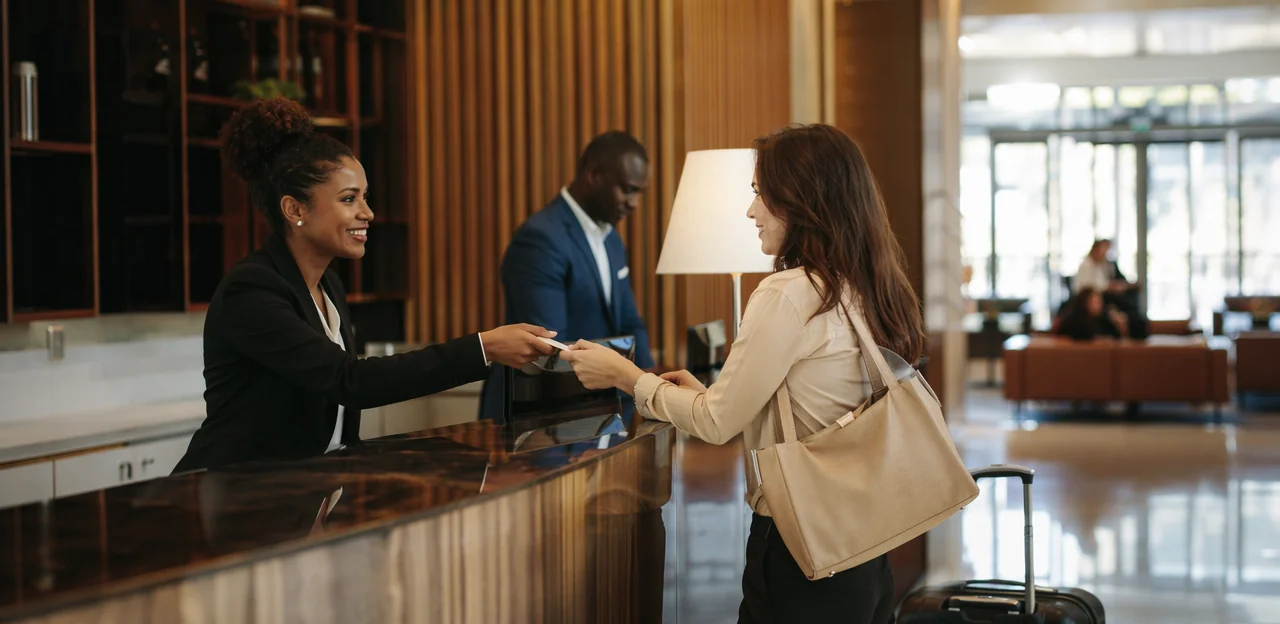
Core guest satisfaction questions to include
The best check out survey questions are short, specific, and tied to actions your hotel can improve quickly. Use a mix of rating-scale and open-ended survey questions to capture both trends and detail.
- How would you rate the cleanliness of your room and public areas?
Cleanliness is one of the most important hotel survey questions because it directly affects trust, reviews, and repeat bookings. - How comfortable was your room, including the bed, temperature, and noise level?
This helps uncover sleep and comfort issues that strongly influence guest satisfaction. - How would you rate the friendliness and helpfulness of our staff?
Among the most good survey questions, this reveals service quality and can guide training. It also connects with internal staff survey questions or even employee survey questions. - Were the amenities you used satisfactory, such as Wi-Fi, breakfast, gym, or parking?
These survey questions examples help identify which features guests value most. - Did you feel your stay offered good value for the price paid?
Value perception often shapes loyalty more than price alone. - Overall, how satisfied were you with your stay, and would you recommend us?
This is one of the most useful types of survey questions for tracking CSAT and referral intent.
Open-ended survey questions examples for deeper insights
While rating scales are useful, check out survey questions should also include open text fields that let guests explain the why behind their scores. These survey questions examples uncover details about the guest experience that fixed-choice answers often miss, from memorable service moments to unmet expectations.
Use prompts like:
- What was the highlight of your stay, and why?
- Was there anything that did not meet your expectations? Please describe.
- What could we have done to make your stay better?
- Did you experience any issues with your room, amenities, or service?
- Is there anything our team did especially well that you would like to recognize?
- What is one change you would most like to see on your next visit?
These are good survey questions because they encourage specific, honest feedback instead of one-word replies. In practice, the best hotel survey questions combine open-ended prompts with other types of survey questions, such as CSAT or NPS, to balance measurable data with context.
You can also adapt ideas from employee survey questions or staff survey questions to identify service gaps internally and compare them with guest feedback for clearer improvement priorities.
Questions by hotel department and stay type
The most effective check out survey questions are tailored to the guest’s journey, department touchpoints, and property style. In accommodation & hospitality, using the right types of survey questions helps hotels collect more relevant insights and improve service faster.
- Front desk: Ask about check-in speed, staff friendliness, and billing accuracy. Example: “How satisfied were you with the efficiency of check-in and check-out?”
- Housekeeping: Focus on room cleanliness, restocking, and response times. These are core hotel survey questions for operational quality.
- Food and beverage: Use survey questions examples such as “How would you rate breakfast variety, food quality, and service?”
- Spa and wellness: Include comfort, therapist professionalism, and ease of booking.
- Business travelers: Ask about Wi-Fi reliability, workspace comfort, and invoice accuracy.
- Families: Use good survey questions around child-friendly amenities, room space, and convenience.
- Luxury properties: Measure personalization, attention to detail, and premium service delivery.
- Budget properties: Prioritize value, cleanliness, and essential service consistency.
Combine guest-facing survey questions with employee survey questions and staff survey questions to compare internal performance with guest expectations and uncover improvement opportunities.
Using AI and Analytics to Turn Survey Data Into Action

How AI helps analyze guest feedback at scale
AI & Analytics turns large volumes of responses to check out survey questions into clear action points. Instead of manually reading every comment, hotels can use AI to:
- Categorize feedback automatically by topic, such as cleanliness, check-in, dining, or service quality.
- Detect sentiment to spot positive, neutral, and negative patterns affecting customer experience.
- Identify recurring themes across hotel survey questions, open-text comments, and common survey questions examples.
- Prioritize operational issues by flagging urgent trends, like repeated complaints about wait times or room maintenance.
This helps teams refine good survey questions, compare types of survey questions, and even connect guest insights with employee survey questions or staff survey questions to uncover root causes faster.
Building dashboards and KPIs from survey responses
Turn check out survey questions into dashboards that reveal trends, not just one-off comments. Track KPIs such as:
- Satisfaction scores: Monitor CSAT, NPS, and ratings tied to key hotel survey questions about cleanliness, check-in, amenities, and overall guest experience.
- Response rates: Measure completion by channel, room type, stay length, or guest segment to see which types of survey questions drive engagement.
- Service recovery triggers: Flag low scores, negative sentiment, or urgent comments for immediate follow-up.
- Department-level trends: Break results down by housekeeping, front desk, food and beverage, and maintenance.
Use survey questions examples, good survey questions, employee survey questions, and staff survey questions together to compare guest feedback with internal performance over time.
Closing the loop with service recovery and personalization
Well-crafted check out survey questions only create value when hotels act on the answers. To strengthen customer experience, use smart survey design to flag unhappy guests quickly and turn feedback into follow-up action.
- Route low scores from hotel survey questions to managers for same-day recovery, such as an apology, refund review, or direct call.
- Use feedback patterns from survey questions and survey questions examples to personalize future stays with room preferences, dining offers, or late checkout.
- Combine guest insights with employee survey questions and staff survey questions to uncover service gaps.
- Mix different types of survey questions to identify trends and build more relevant, good survey questions over time.
Including Staff Feedback to Improve the Guest Experience

While check out survey questions reveal what guests experienced, employee survey questions and staff survey questions explain why it happened. Staff often see the root causes behind poor guest experience, from understaffed shifts to unclear SOPs and training gaps. Use internal survey questions to uncover:
- staffing shortages during peak times
- repeated service bottlenecks
- tools or systems slowing response times
- skills areas needing refresher training
Combining guest-facing hotel survey questions with internal feedback creates more actionable survey questions examples, better types of survey questions, and more consistently good survey questions for service improvement.
Examples of staff survey questions for hotel teams
Use staff survey questions alongside check out survey questions to uncover operational issues affecting guest satisfaction. Helpful employee survey questions include:
- Front desk: What delays most often slow check-in or check-out?
- Housekeeping: Which room issues are most frequently reported after cleaning?
- Maintenance: What recurring repairs impact guest comfort the most?
- Food service: What service bottlenecks affect order speed or accuracy?
These survey questions examples help teams spot patterns, prioritize fixes, and improve service delivery. Mix open-ended and rating-scale types of survey questions for more actionable hotel survey questions.
Combining guest and staff insights for better decisions
To improve customer experience, hotels should compare themes from check out survey questions with answers from employee survey questions and staff survey questions. This helps validate whether issues, such as slow check-in, housekeeping delays, or breakfast quality, are isolated complaints or operational patterns.
- Match guest comments with internal feedback trends.
- Use hotel survey questions to rank pain points by frequency and impact.
- Review types of survey questions for both teams, including rating scales and open text.
- Turn survey questions examples and good survey questions into clear action plans, training priorities, and smarter investment decisions.
Common Mistakes to Avoid With Check-Out Surveys

Questions that are too long, vague, or biased
Poorly written check out survey questions can damage response quality and frustrate guests. In effective survey design, keep wording short, neutral, and easy to answer.
- Avoid leading language like “How amazing was your stay?” which pushes positive answers.
- Remove double-barreled survey questions such as “Was your room clean and comfortable?” Guests may feel differently about each.
- Keep questions concise; long, multi-part prompts reduce completion rates, especially on mobile.
- Use clear answer scales. If guests cannot tell the difference between “good,” “very good,” and “excellent,” your data becomes unreliable.
Among all types of survey questions, the best hotel survey questions are simple, specific, and unbiased. Reviewing survey questions examples from guest, employee survey questions, and staff survey questions can also help teams write good survey questions consistently.
Ignoring feedback or failing to act on results
Collecting check out survey questions without visible follow-up can damage customer experience more than not asking at all. When guests answer survey questions and see no improvement, trust declines and future response rates drop.
- Lower trust: Guests may feel their opinions are only collected for appearance, not action.
- Weaker participation: Poor follow-through reduces engagement with future hotel survey questions, even if they include good survey questions or strong survey questions examples.
- Missed service recovery: Unresolved complaints can turn into negative reviews instead of quick fixes.
To act effectively, review feedback weekly, flag urgent issues immediately, and connect guest insights with employee survey questions, staff survey questions, and other types of survey questions to spot root causes faster.
Overlooking segmentation and context
Hotels get far more value from check out survey questions when results are segmented instead of averaged together. A family booking through an OTA may rate the stay differently than a business traveler who booked direct, and a suite guest may expect something very different from a standard-room guest.
- Segment hotel survey questions by traveler type, booking channel, room category, and property type.
- Compare answers to identify which survey questions examples reveal issues tied to specific guest groups.
- Use AI & Analytics to spot patterns hidden in broad averages.
This helps teams choose good survey questions, refine different types of survey questions, and even align employee survey questions or staff survey questions with guest feedback to fix the right operational gaps.
Conclusion
Well-crafted check out survey questions do far more than close the guest journey—they reveal what shaped the stay, what influenced satisfaction, and what will drive return bookings and stronger reviews. By combining concise, well-timed survey questions with the right mix of rating scales, open text, and other types of survey questions, hotels can gather clear, actionable insight without overwhelming guests. The best hotel survey questions focus on the moments that matter most: check-in, room quality, cleanliness, amenities, service, dining, and check-out itself.
As you refine your approach, use proven survey questions examples to identify what works, test different formats, and prioritize good survey questions that are easy to answer and directly tied to operational improvements. Just as guest feedback matters, internal insight is equally valuable—employee survey questions and staff survey questions can uncover service gaps, training needs, and process issues that affect the guest experience behind the scenes.
The next step is simple: review your current survey, remove friction, and build a smarter check-out feedback flow that turns responses into action. If you want to go further, explore multilingual, mobile-first feedback tools, analytics dashboards, and AI-powered platforms such as Tapsy to increase response rates and capture more meaningful insights. Stronger check out survey questions lead to better decisions, better stays, and better business outcomes.
Frequently Asked Questions
- Why are check-out survey questions important for hotels?
They capture guest impressions while the stay is still fresh, making feedback more accurate and actionable. They also help hotels understand what influenced satisfaction, loyalty, reviews, and repeat bookings.
- What should a hotel check-out survey measure?
It should focus on key touchpoints such as check-in, room comfort, cleanliness, amenities, dining, staff helpfulness, and check-out. It should also measure overall satisfaction, value for money, and whether the guest would return or recommend the property.
- Which question types work best in a hotel check-out survey?
A strong survey usually combines rating scales, multiple choice, yes-or-no items, ranking questions, and open-ended prompts. Rating scales are useful for benchmarking, while open text adds context that structured answers may miss.
- How long should a hotel check-out survey be?
It should stay short and include only the most important questions tied to decisions the hotel can make. Keeping it concise helps reduce drop-off and improves completion rates, especially on mobile devices.
- When is the best time to send a post-stay hotel survey?
The best timing is at check-out or within 2 to 24 hours after departure. That timing improves recall because the experience is still recent and gives hotels clearer customer experience insights.
- Which survey channels are most effective for hotel guests?
Front-desk surveys or QR codes work well for quick feedback while the guest is still on-site. SMS is effective for short mobile-first surveys, email suits longer feedback forms, and in-app prompts work well when guests already use a hotel app.
- What are good examples of core hotel check-out survey questions?
Useful questions ask guests to rate cleanliness, room comfort, staff friendliness, amenities, and value for the price paid. A strong survey also includes an overall satisfaction question and asks whether the guest would recommend the hotel.
- Why should hotels include open-ended questions in check-out surveys?
Open-ended questions reveal the reasons behind ratings and often uncover issues or praise that fixed-choice formats miss. They are especially useful for identifying highlights, unmet expectations, service problems, and improvement ideas.
- Should survey questions be tailored by department or guest type?
Yes, tailoring makes feedback more relevant and easier to act on. Hotels can ask different questions for front desk, housekeeping, food and beverage, spa, business travelers, families, luxury stays, or budget stays.
- How can AI help hotels analyze survey responses?
AI can automatically categorize feedback by topics like cleanliness, check-in, dining, or service quality. It can also detect sentiment, identify recurring themes, and flag urgent operational issues that need attention.
- What KPIs can hotels build from check-out survey data?
Hotels can track satisfaction scores such as CSAT, NPS, and ratings for cleanliness, amenities, check-in, and overall experience. They can also monitor response rates, service recovery triggers, and department-level trends across teams like housekeeping and front desk.
- How should hotels act on negative survey feedback?
Low scores and urgent comments should be routed quickly to managers for same-day follow-up when possible. Appropriate actions can include an apology, refund review, direct contact, or using the feedback to improve future stays and service design.
- Why should guest surveys be combined with staff or employee surveys?
Guest feedback shows what happened, while staff feedback helps explain why it happened. Combining both can reveal root causes such as staffing shortages, service bottlenecks, unclear processes, or training gaps.
- What common mistakes should hotels avoid in check-out surveys?
Hotels should avoid long, vague, biased, or double-barreled questions because they reduce response quality. They should also avoid unclear answer scales and collecting feedback without acting on the results.
- Why is segmentation important when reviewing hotel survey results?
Segmentation helps hotels see differences between traveler types, booking channels, room categories, and property styles instead of relying on broad averages. That makes it easier to identify which guest groups are experiencing specific issues and where improvements matter most.