
A packed screening doesn’t always mean a loyal audience. For cinemas, the real challenge isn’t just getting people through the doors once, but understanding what brings them back again and again. From queue times and seat comfort to food quality, staff interactions, and overall atmosphere, every part of the visit shapes whether a guest becomes a regular or simply chooses another entertainment option next time.
That’s where cinema experience analytics becomes essential. By connecting customer feedback with attendance patterns, loyalty data, and repeat booking behavior, cinemas can move beyond guesswork and start making smarter, evidence-based decisions. Instead of treating feedback as a collection of isolated comments, operators can use analytics to identify the factors that most influence retention, satisfaction, and long-term revenue.
In this article, we’ll explore how cinemas can link audience sentiment to repeat visits, which metrics matter most, and how AI-powered tools can reveal patterns that traditional reporting often misses. We’ll also look at how real-time feedback and proactive service recovery can strengthen loyalty, improve the audience experience, and help cinema brands compete in an increasingly experience-driven market.
Why cinema experience analytics matters for retention

Defining cinema experience analytics in a modern exhibition context
Cinema experience analytics is the practice of connecting multiple data sources to explain what drives satisfaction, loyalty, and repeat attendance in today’s exhibition environment. Rather than relying on box office figures alone, modern cinema analytics combines:
- customer feedback from surveys, reviews, and in-the-moment comments
- transaction data such as ticket sales, concessions, and upsells
- loyalty activity, including visit frequency, rewards use, and member churn
- operational metrics like queue times, seat issues, staffing, and showtime performance
This broader view of the audience experience helps cinemas identify friction points, personalize offers, and prioritize improvements that increase return visits. Platforms such as Tapsy can support real-time feedback capture as part of this analytics approach.
How feedback connects to repeat visits and lifetime value
Cinema experience analytics becomes valuable when feedback is linked to real behavior, not just survey scores. Post-visit sentiment and satisfaction scores often predict return intent, but the strongest insight comes from matching them to actual repeat visits.
- Positive sentiment after a visit usually signals stronger cinema loyalty, especially when guests praise comfort, service, and booking ease.
- Low satisfaction scores can reveal friction points that reduce return intent and shorten customer lifetime value.
- Tracking feedback alongside loyalty, ticketing, and concession data shows which issues truly affect revisit rates.
Actionably, cinemas should segment guests by sentiment and monitor whether promoters return faster, spend more, and visit more often than detractors.
The business case for exhibitors, circuits, and independent cinemas
Cinema experience analytics turns audience feedback into measurable commercial gains across every cinema model. With the right exhibitor analytics, operators can:
- Increase occupancy: Identify which screens, showtimes, formats, and service issues reduce return visits, then adjust scheduling, staffing, and programming to improve cinema retention.
- Grow concession revenue: Link satisfaction scores to basket size to see how queue times, product availability, and upsell offers affect spend per guest.
- Strengthen loyalty performance: Track which experience factors drive memberships, repeat bookings, and churn, enabling more targeted rewards and win-back campaigns.
- Make smarter investments: Use location-level insight to prioritize seating upgrades, premium formats, mobile ordering, or staffing changes that deliver the strongest cinema revenue growth.
For circuits, this supports benchmarking; for independents, it sharpens limited-budget decisions.
What data cinemas should collect across the audience journey
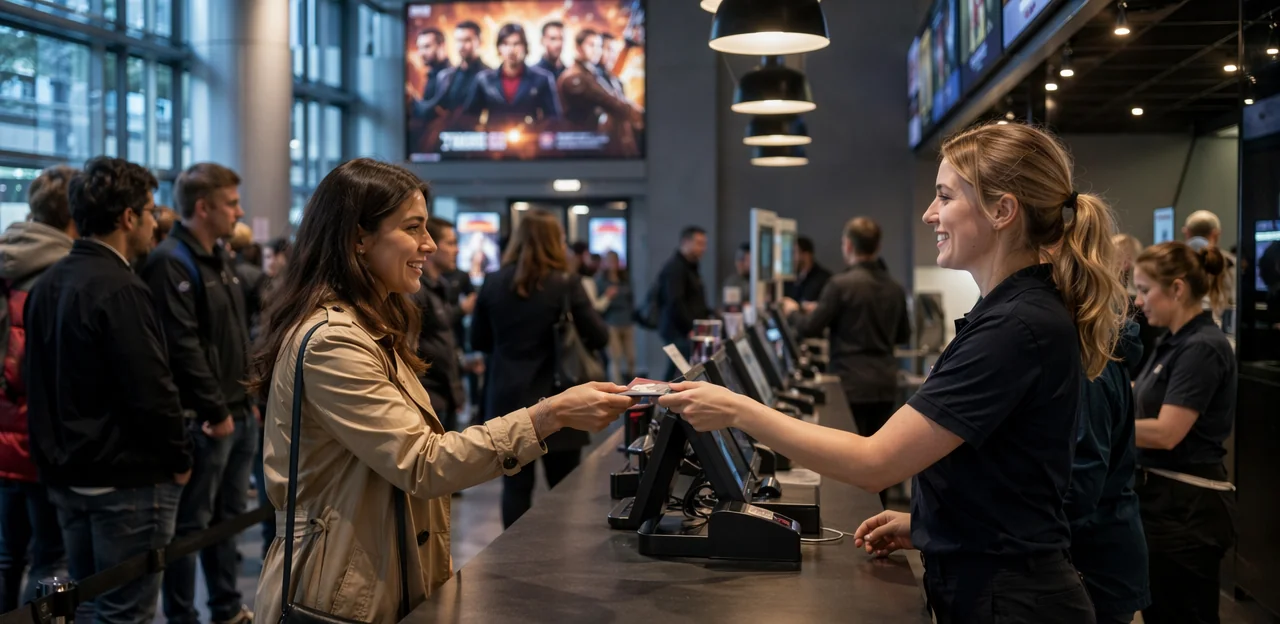
Capturing feedback at every touchpoint
Effective cinema experience analytics depends on collecting customer feedback continuously, not just after the credits roll. To improve guest satisfaction and increase repeat visits, cinemas should capture sentiment before, during, and after each visit:
- Before the visit: use booking-flow questions, app ratings, and pre-show cinema surveys to understand expectations.
- During the visit: trigger kiosk prompts, QR codes, or seat-side mobile check-ins to capture in-the-moment sentiment on queues, cleanliness, sound, and comfort.
- After the visit: send short post-visit surveys, monitor social reviews, and analyze customer service interactions for recurring issues or praise.
Bringing these sources into one dashboard helps operators spot friction fast, recover poor experiences early, and identify what drives loyalty. Tools like Tapsy can support real-time, location-aware feedback collection across multiple cinema touchpoints.
Combining behavioral, transactional, and loyalty data
Feedback tells you why guests felt a certain way, but cinema experience analytics becomes far more useful when paired with real behavior. Combining transactional data, loyalty data, and broader cinema customer data helps cinemas see what audiences actually do before and after they share an opinion.
- Ticketing data shows film choice, showtime preferences, and spend patterns
- Concessions data reveals basket size, upsell success, and premium purchase habits
- Seat selection highlights comfort preferences, group behavior, and willingness to pay more
- Booking channels show whether guests convert via app, website, kiosk, or third parties
- Membership activity tracks rewards use, points redemption, and campaign response
- Visit frequency identifies loyal regulars, lapsing guests, and churn risk
Together, these signals help teams personalize offers, fix friction points, and connect feedback directly to repeat visits.
Operational signals that influence the cinema experience
Strong cinema experience analytics should connect guest sentiment with the operational signals that shape each visit. In practice, the biggest drivers of satisfaction and repeat likelihood often include:
- Queue times: Long waits at ticketing, concessions, or entry create friction before the film even starts.
- Staffing levels: Understaffed teams can slow service, reduce upselling, and weaken issue resolution.
- Auditorium quality: Seat comfort, temperature, sound, and screen quality directly define the auditorium experience.
- Cleanliness: Lobbies, restrooms, and screens that feel neglected can quickly damage trust.
- Showtime punctuality: Late starts or disorganized seating undermine convenience and perceived value.
- Technical issues: Projection, audio, subtitles, or app/check-in failures are high-impact problems.
Using operational analytics in cinema operations helps teams spot recurring pain points, prioritize fixes, and link improvements to higher return rates.
How to link feedback to repeat visits with AI and analytics

Building a unified view of the cinema guest
Effective cinema experience analytics starts with a reliable single customer view. Without it, survey scores, ticket purchases, and loyalty behavior sit in separate systems, making retention analysis incomplete or misleading.
To build that unified profile, cinemas should connect:
- Survey responses to a persistent identifier such as email, phone number, booking reference, or loyalty ID
- Cinema CRM records to demographic data, consent status, campaign history, and visit frequency
- Loyalty IDs to member activity, rewards redemption, and repeat attendance patterns
- Point-of-sale data to transactions like tickets, concessions, upgrades, and visit timing
Best practice is to use customer data integration rules that match records across channels and remove duplicates. This lets teams see whether low feedback scores predict churn, or whether high-spend guests return despite service issues. Platforms with API-based integrations, including tools like Tapsy, can help centralize feedback and transactional data for more accurate retention modeling.
Using AI to detect sentiment, themes, and churn risk
AI turns unstructured comments into clear, usable signals for cinema experience analytics. Instead of manually reading every review, operators can use feedback analytics to spot what drives satisfaction, complaints, and repeat visits at scale.
- Apply AI sentiment analysis to open-text feedback from surveys, apps, kiosks, and social channels. This helps classify comments as positive, neutral, or negative and track sentiment by location, film format, or time of day.
- Identify recurring themes such as long concession queues, poor sound quality, uncomfortable seating, or unclear loyalty rewards. Theme clustering shows which pain points appear most often and where action is needed first.
- Segment audiences by sentiment to separate loyal promoters, passive visitors, and frustrated guests. This makes follow-up campaigns and service recovery more targeted.
- Use churn prediction models to flag guests most likely not to return, based on negative feedback, falling visit frequency, or low redemption activity.
Platforms such as Tapsy can support real-time sentiment tracking and faster intervention before dissatisfaction becomes lost revenue.
Measuring which experience factors actually drive revisits
Strong cinema experience analytics should go beyond average satisfaction scores and identify what truly changes guest behavior. The goal is to connect feedback themes to repeat visit analysis and real booking outcomes.
- Use correlation carefully: Compare ratings for seat comfort, screen quality, queue times, food, cleanliness, and staff helpfulness against revisit rates. This helps reveal which factors move with higher attendance.
- Run cohort analysis: Group guests by visit type, membership status, film genre, time of day, or first-time vs. returning status. Cohorts often show that the same issue affects segments differently.
- Apply predictive analytics: Build models that estimate the likelihood of a return visit based on experience signals, transaction history, and loyalty activity. This highlights the strongest drivers and early churn risks.
- Track actionable retention metrics: Measure 30-, 60-, and 90-day return rates, frequency uplift after service improvements, and retention by feedback category.
Platforms such as Tapsy can help capture real-time signals that improve model accuracy and intervention timing.
Metrics and KPIs that matter for cinema loyalty and audience experience

Core satisfaction and feedback metrics to track
To make cinema experience analytics actionable, track a balanced set of audience metrics:
- CSAT: Measures immediate satisfaction after booking, concessions, seating, or the screening itself. It helps pinpoint friction in specific touchpoints.
- NPS for cinemas: Shows how likely guests are to recommend your cinema, making it a strong indicator of loyalty and repeat-visit potential.
- Review scores: Monitor Google, TripAdvisor, and app ratings to benchmark public perception and spot recurring themes.
- Review analytics: Go beyond star ratings by analyzing sentiment and keywords around cleanliness, sound, staff, and queues.
- Complaint rates: High complaint volume often signals operational issues hurting retention.
- Response rates: Low survey participation can reveal weak engagement or poor timing in feedback collection.
Retention and loyalty KPIs for repeat attendance
To prove the value of cinema experience analytics, track the loyalty KPIs that tie guest sentiment to revenue and repeat behavior:
- Revisit rate: Measure the percentage of guests who return within 30, 60, or 90 days after a visit or feedback submission.
- Visit frequency: Track how often members and non-members attend per month or quarter to spot experience-driven uplift.
- Loyalty enrollment: Monitor how many satisfied guests join your program after positive in-cinema interactions.
- Redemption behavior: Analyze reward usage, offer uptake, and time-to-redeem to understand what motivates another trip.
- Customer lifetime value: Combine spend, concessions, and repeat attendance to quantify long-term impact.
Review these KPIs by segment, screening type, and location for clearer action.
Segmenting metrics by audience type, location, and format
Strong cinema experience analytics depends on comparing results across meaningful groups, not just chain-wide averages. Smart audience segmentation helps cinemas spot where satisfaction, spend, and repeat intent differ most.
- Members vs non-members: Members may rate speed, rewards, and recognition differently, revealing loyalty drivers and retention risks.
- Premium formats: Use premium format analytics to compare IMAX, 4DX, recliner, or VIP screenings against standard screens for perceived value and repeat likelihood.
- Family segments: Track families separately to uncover issues around queues, concessions, seating, and child-friendly service.
- Individual sites: Site-level cinema benchmarking highlights operational gaps, local strengths, and best practices worth scaling.
Platforms like Tapsy can help centralize and compare these insights in real time.
Turning insight into action: strategies that increase repeat visits

Fixing the biggest friction points in the cinema journey
Cinema experience analytics helps operators spot where small frustrations turn into lost repeat visits. By mapping feedback to each touchpoint, teams can prioritize customer journey optimization and target the cinema friction points that matter most:
- Slow concessions: Queue-time data and post-visit feedback can show which locations, showtimes, or menu items create bottlenecks. Adding mobile pre-ordering or adjusting staffing can reduce abandonment.
- Poor seat comfort: Seat-specific complaints often reveal aging rows or layout issues. Replacing problem seats can drive measurable experience improvement.
- Confusing booking flows: Analytics can uncover drop-off points in online checkout, such as unclear seat selection or hidden fees. Simplifying these steps improves conversion and trust.
- Inconsistent cleanliness: Feedback by auditorium and time slot helps identify cleaning gaps between screenings, supporting faster corrective action.
When cinemas fix these recurring issues quickly, satisfaction rises and repeat visits become more likely.
Personalizing offers, messaging, and loyalty engagement
With cinema experience analytics, exhibitors can turn feedback and visit history into smarter, more relevant outreach that increases repeat attendance. Instead of sending the same promotion to everyone, use audience insights to tailor personalized marketing by segment:
- Frequent visitors: reward them with early access, bonus points, or VIP seat upgrades through cinema loyalty programs.
- Lapsed guests: trigger win-back campaigns with limited-time discounts, reminders tied to favorite genres, or offers for the day and time they usually attend.
- Preference-based audiences: recommend films, events, and concessions based on genre choices, booking patterns, and satisfaction scores.
- High-value members: personalize membership benefits around premium formats, family bundles, or exclusive screenings.
Platforms such as Tapsy can help capture real-time feedback and connect it to more targeted retention campaigns.
Closing the feedback loop to build trust and advocacy
A strong feedback loop turns comments into visible action. With cinema experience analytics, operators can spot recurring issues, prioritize fixes, and show guests that their opinions matter. That transparency strengthens trust, repeat visits, and customer advocacy.
- Respond quickly: Acknowledge feedback through email, app notifications, or loyalty messages so guests know they’ve been heard.
- Communicate improvements: Use clear guest communication such as “You asked, we changed” updates about cleaner auditoriums, faster concessions, or better seating.
- Show proof of action: Share specific changes based on guest input across social media, booking confirmations, and in-venue signage.
- Close the loop personally: When possible, thank guests directly and invite them back to experience the improvement.
When cinemas consistently act on feedback, they create stronger emotional loyalty and encourage positive word-of-mouth that brings new visitors in.
Implementation roadmap for cinemas starting with analytics

To launch cinema experience analytics effectively, build the foundation first:
- Choose fast analytics tools for post-visit surveys, in-app feedback, and sentiment tagging.
- Connect feedback with ticketing, loyalty, and CRM records so repeat-visit patterns are visible in cinema BI dashboards.
- Define strong data governance: consent capture, retention rules, access controls, and GDPR/CCPA compliance.
- Assign cross-functional ownership across operations, marketing, IT, and guest experience to turn insights into action, not just reporting.
A phased plan from pilot project to full rollout
- Start with a pilot program at one cinema or for one segment, such as loyalty members or weekend families.
- Use cinema experience analytics to track feedback themes, concession spend, and 30/60-day repeat visits.
- Define success metrics early to guide analytics implementation and prove ROI.
- Once impact is clear, standardize dashboards, staff workflows, and automated outreach, then expand across locations, app, email, and in-venue touchpoints to support wider cinema transformation.
Common mistakes to avoid when measuring audience experience
Avoid these analytics mistakes when using cinema experience analytics to improve customer experience measurement and your retention strategy:
- Collecting too much disconnected data without linking it to booking, concession, and revisit behavior.
- Relying only on survey scores instead of combining sentiment, operational data, and repeat-visit patterns.
- Ignoring non-loyalty guests, who often reveal friction points before they churn.
- Failing to act quickly on insights, which turns feedback into missed recovery opportunities.
Conclusion
In a competitive exhibition market, understanding what truly brings moviegoers back is no longer optional. The most effective operators use cinema experience analytics to connect audience feedback with measurable behavior, from concession spend and seat preferences to loyalty activity and repeat visits. When cinemas capture feedback in real time, analyze sentiment at scale, and act on recurring friction points, they can improve everything from queue times and comfort to programming and personalized offers.
The key takeaway is simple: feedback only becomes valuable when it leads to action. By linking comments, ratings, and operational data, cinema teams can identify what drives satisfaction, spot churn risks early, and create experiences that strengthen loyalty over time. That is where cinema experience analytics delivers real business value—not just better reporting, but better retention.
Now is the time to turn audience insights into a repeat-visit strategy. Start by auditing your current feedback channels, integrating them with loyalty and ticketing data, and building dashboards around the metrics that matter most. If you are exploring tools to support real-time engagement and AI-driven insight, solutions like Tapsy can help illustrate what a more proactive approach looks like.
For next steps, review your retention KPIs, map the full guest journey, and invest in analytics that help every screening lead to the next visit.
Frequently Asked Questions
- What is cinema experience analytics?
Cinema experience analytics connects feedback, transaction data, loyalty activity, and operational metrics to explain what drives satisfaction and repeat attendance. It gives cinemas a broader view than box office figures alone, helping them identify friction points and prioritize improvements that support loyalty and revenue.
- How does customer feedback relate to repeat cinema visits?
Feedback becomes most useful when it is matched to actual booking and loyalty behavior. Positive sentiment often aligns with stronger loyalty, while low satisfaction scores can reveal problems that reduce return intent and shorten customer lifetime value.
- Which data sources should cinemas combine to understand retention?
Cinemas should combine surveys, reviews, in-the-moment comments, ticket sales, concessions, upsells, loyalty activity, and operational signals such as queue times and seat issues. Bringing these sources together helps teams connect what guests say with what they actually do.
- When should cinemas collect feedback during the guest journey?
Feedback should be collected before, during, and after the visit. Booking-flow questions and app ratings can capture expectations, in-venue prompts can capture live sentiment, and post-visit surveys or review monitoring can reveal recurring praise or issues.
- Why is a single customer view important for cinema analytics?
A single customer view links survey responses, CRM records, loyalty IDs, and point-of-sale transactions to one profile. This makes it possible to see whether poor feedback predicts churn, whether high-spend guests still return, and which experiences influence retention most.
- How can AI help cinemas analyze audience sentiment?
AI can classify open-text feedback as positive, neutral, or negative and detect recurring themes such as long queues, poor sound, uncomfortable seating, or unclear loyalty rewards. It also supports audience segmentation and churn prediction so teams can intervene faster.
- What operational issues most often affect the cinema experience?
Common drivers include queue times, staffing levels, auditorium quality, cleanliness, showtime punctuality, and technical issues. These factors shape convenience and perceived value, so linking them to guest sentiment helps cinemas prioritize the fixes that matter most.
- Which KPIs are most useful for measuring cinema loyalty?
Useful loyalty KPIs include revisit rate, visit frequency, loyalty enrollment, redemption behavior, and customer lifetime value. Reviewing them by segment, screening type, and location makes it easier to see where experience improvements are affecting repeat attendance.
- How should cinemas measure whether experience improvements actually increase revisits?
They should compare feedback themes such as seat comfort, cleanliness, food quality, and queue times against real return behavior. Cohort analysis, predictive models, and 30-, 60-, and 90-day return rates help show which changes are linked to stronger retention.
- What is the difference between feedback metrics and retention metrics in cinemas?
Feedback metrics focus on how guests describe their experience, using measures such as CSAT, NPS, review scores, complaint rates, and response rates. Retention metrics focus on what guests do next, such as returning within a set period, visiting more often, redeeming rewards, or generating more lifetime value.
- How can cinemas use analytics to improve concession revenue?
By linking satisfaction scores to basket size, cinemas can see how queue times, product availability, and upsell offers affect spend per guest. This helps teams adjust staffing, menu flow, or service design in ways that support both guest satisfaction and revenue.
- What are practical ways to turn cinema insights into repeat-visit actions?
Teams can target slow concessions, poor seat comfort, confusing booking flows, and inconsistent cleanliness because these are common friction points. They can also personalize offers for frequent visitors, lapsed guests, preference-based audiences, and high-value members to encourage another visit.
- Why does closing the feedback loop matter for cinema loyalty?
Responding quickly and showing visible improvements builds trust and strengthens emotional loyalty. Clear communication such as direct replies, app notifications, or 'You asked, we changed' updates can encourage guests to return and share positive word-of-mouth.
- How should a cinema start implementing experience analytics?
A practical starting point is to choose tools for post-visit surveys, in-app feedback, and sentiment tagging, then connect feedback with ticketing, loyalty, and CRM records. From there, cinemas should define governance rules, assign cross-functional ownership, and begin with a pilot before scaling dashboards and workflows.
- What mistakes should cinemas avoid when tracking audience experience?
They should avoid collecting disconnected data that is not linked to booking, concession, and revisit behavior. It is also important not to rely only on survey scores, ignore non-loyalty guests, or delay action on insights that could support service recovery.