
A great member experience can be undone in seconds by a flickering floodlight, a dirty changing room, or broken gym equipment that no one seems to own. In sports associations and clubs, small facility problems quickly become bigger service issues when reports are missed, delayed, or sent to the wrong people. That is why club facility issue reporting matters so much: it is not just about logging complaints, but about making sure every issue reaches the right team fast enough to protect safety, satisfaction, and trust.
For clubs managing multiple spaces, staff roles, and service touchpoints, routing problems effectively is often the real challenge. A maintenance concern may need facilities staff, a cleanliness issue may belong with operations, and a safeguarding or safety risk may require immediate escalation. Without a clear process, members can feel ignored and teams can struggle to respond consistently.
This article explores how better club facility issue reporting helps sports clubs improve service recovery, streamline internal workflows, and create a stronger member experience overall. It will cover common routing problems, why speed and clarity matter, and how clubs can build smarter reporting systems that turn everyday issues into opportunities to show responsiveness. Where relevant, tools like Tapsy can also support faster, location-based reporting and issue escalation.
Why club facility issue reporting matters for sports clubs
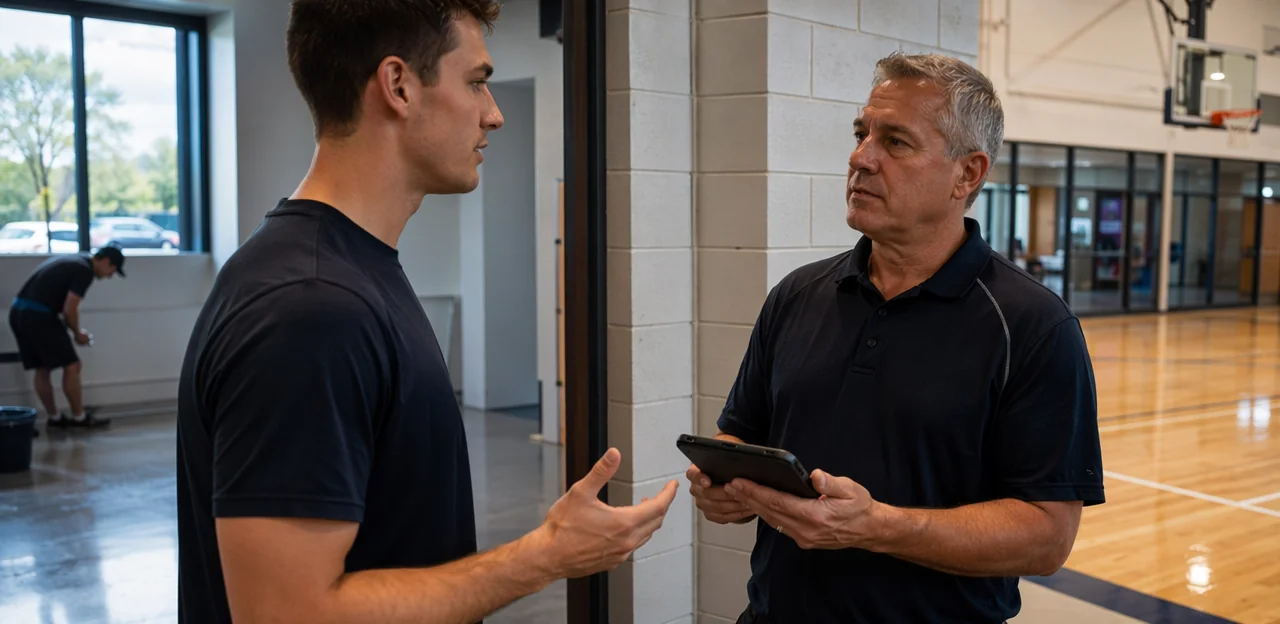
Poor club facility issue reporting quickly damages the member experience. When facility complaints are delayed, lost, or sent to the wrong team, members see inconvenience turn into neglect.
- Satisfaction drops: Broken showers, unsafe flooring, or poor lighting disrupt routines and reduce sports club member satisfaction.
- Trust weakens: If members report a problem and hear nothing back, they assume the club is disorganized or uninterested.
- Retention suffers: Repeated unresolved issues can push members to reduce visits, complain publicly, or cancel memberships.
- Operations slow down: Staff waste time forwarding reports, duplicating work, and reacting late to preventable problems.
Members expect fast acknowledgment, clear ownership, and visible action. Simple routing tools, status updates, and real-time alerts help clubs resolve issues before frustration grows.
Common facility issues clubs need to manage
Effective club facility issue reporting starts with knowing which problems appear most often and who should handle them first. Common sports club maintenance issues include:
- Locker room cleanliness: wet floors, overflowing bins, poor hygiene, and missing supplies
- Equipment faults: damaged machines, loose nets, broken benches, or unsafe weights
- Lighting failures: dark car parks, flickering indoor lights, or unlit courts and pitches
- Court and surface damage: cracked flooring, worn turf, slippery areas, or poor line markings
- HVAC problems: overheating, poor ventilation, or inconsistent temperatures
- Club safety issues: exposed wiring, blocked exits, leaks, trip hazards, and faulty doors
Use clear categories, urgency levels, and location-based reporting to route facility problems quickly to cleaning, maintenance, or management teams.
Why routing to the right team improves service recovery
Effective club facility issue reporting depends on accurate issue triage from the start. When reports are routed to the right team—maintenance, cleaning, grounds, or front-of-house—clubs can speed up their maintenance response process and improve service recovery.
- Faster resolution: Clear categorization sends urgent issues, such as lighting failures or safety hazards, directly to the people who can act.
- Less duplicate work: Staff avoid forwarding the same report between teams or logging it multiple times.
- Stronger accountability: Each issue has an owner, making follow-up easier and reducing missed tasks.
- Better member experience: Members see quicker action, which builds trust after a problem is reported.
Tools like Tapsy can help clubs capture location-based reports and route them automatically.
Designing a reporting workflow that reaches the right team

Map issue categories to responsible teams
For effective club facility issue reporting, define a simple taxonomy and assign clear ownership so every submission enters the right issue routing workflow immediately.
- Maintenance: broken equipment, lighting, plumbing, HVAC, pitch or court damage
- Cleaning: changing rooms, toilets, litter, spills, odor, hygiene supplies
- Front desk: access problems, bookings, lost property, member service issues
- Coaching staff: training-area setup, session disruptions, unsafe sports equipment
- Security: suspicious activity, lock failures, injuries requiring escalation, after-hours access
- External vendors: vending machines, specialist repairs, waste collection, internet outages
Build ownership rules into your club operations process:
- Assign one primary owner and one backup team for each category.
- Add priority levels for safety-critical or member-facing issues.
- Set response-time targets by team, including the facility management team.
- Use forms or tools like Tapsy to make category selection fast and consistent.
Set priority levels and escalation rules
A clear priority framework makes club facility issue reporting faster, more consistent, and easier to action across sports club operations. Define severity by risk, member impact, and service disruption:
- Urgent: Immediate safety or safeguarding risks, major accessibility failures, gas/water leaks, electrical hazards, or blocked emergency exits.
- Escalate instantly to the duty manager, facilities lead, and emergency services if needed.
- High: Issues disrupting core services, such as floodlit pitch failure, unusable changing rooms, broken entry systems, or inaccessible toilets/lifts.
- Route to maintenance and operations leads with same-day response targets.
- Medium: Problems affecting comfort or experience, like poor cleanliness, minor equipment faults, or signage issues.
- Assign to the relevant team within 24 hours.
- Low: Cosmetic or non-urgent repairs, including paint damage or minor wear.
- Add to planned maintenance.
Use clear issue escalation rules, ownership, and SLAs so every facility issue priority triggers the right response. Tools like Tapsy can help automate routing and alerts.
Build simple intake forms for members and staff
An effective issue reporting form should collect enough detail to speed up club facility issue reporting without making the member reporting process feel slow or complicated. Keep the form mobile-friendly and limit required fields to the essentials:
- Location: building, room, court, pitch, or equipment ID
- Issue type: cleanliness, maintenance, safety, lighting, plumbing, access, or equipment
- Urgency: low, medium, high, or safety-critical
- Photo upload: optional but strongly encouraged for faster diagnosis
- Short description: one clear sentence about what happened
- Contact details: name, email, or phone for follow-up if needed
For smoother facility issue intake, use dropdowns, checkboxes, and pre-filled locations where possible. Make photos optional, not mandatory, to reduce friction. Tools like Tapsy can help clubs capture reports quickly at the point of issue through simple QR-based flows.
Best channels for club facility issue reporting

Comparing apps, email, front desk, and QR codes
For effective club facility issue reporting, clubs should compare channels by speed, accuracy, and ease of use, then connect them through one workflow in their facility reporting software.
- Apps: Good for repeat users and rich detail, but downloads and logins reduce reporting rates.
- Email: Familiar and flexible, but reports often arrive incomplete, delayed, or in the wrong inbox.
- Front desk: Personal and helpful for urgent issues, yet staff may forget details or log reports inconsistently.
- QR code issue reporting: Fast, location-specific, and no-app, making it ideal for gyms, changing rooms, and pitches.
The best approach is multi-channel intake with one shared dashboard, clear categories, and automatic routing. Tools like Tapsy can help unify these sports club communication tools.
Centralize reports to avoid missed requests
A strong club facility issue reporting process depends on one shared place for every request. When reports arrive through email, WhatsApp, paper notes, or verbal handoffs, important issues can easily be delayed or forgotten. A centralized reporting system solves this by feeding every submission into one maintenance dashboard for clear visibility and faster action.
- Capture issues from all channels in one place
- Assign each report to the right team automatically
- Track status, priority, location, and response time
- Create accountability with timestamps and ownership
This improves club issue tracking, reduces duplicate work, and helps managers spot recurring problems. Tools like Tapsy can also help clubs collect and route reports in real time.
Make reporting easy for members, staff, and guests
To improve club facility issue reporting, remove friction at every step. The easier it is to report a problem, the faster your club can spot patterns, fix issues, and protect the member experience.
- Use mobile issue reporting: Offer QR codes or short links in changing rooms, courts, gyms, and reception so people can report issues on the spot from any phone.
- Design for accessible reporting: Use large buttons, simple forms, clear labels, and minimal required fields so all users can respond quickly.
- Create a clear guest feedback process: Let non-members report cleanliness, safety, or equipment concerns without needing a login.
- Add clear instructions: Tell people what to report, who sees it, and what happens next.
Tools like Tapsy can support fast, no-app reporting flows.
Roles, accountability, and internal communication

Define ownership from submission to resolution
For effective club facility issue reporting, every ticket should have a clear path and a named owner at each stage. This prevents stalled requests, duplicate work, and unclear accountability.
- Assign issue ownership immediately: route each report to a specific person or role, not just a department inbox.
- Set response time standards: define first-response targets by priority, such as 15 minutes for safety risks, 4 hours for operational issues, and 24 hours for minor repairs.
- Create handoff rules: when an issue moves between reception, maintenance, vendors, or management, document who accepts it next and by when.
- Track the facility resolution workflow: require status updates, escalation triggers, and closure confirmation so members know progress is being made.
Tools like Tapsy can help automate routing and alerts.
Train staff to triage and route issues correctly
Effective club facility issue reporting depends on consistent staff training and a clear issue triage process. Train front-line teams to log every report using standard categories such as cleanliness, maintenance, safety, equipment, or access, then assess urgency based on member impact and risk.
- Categorize accurately: Use simple tags and examples so staff know where each issue belongs.
- Assess urgency: Separate routine fixes from hazards, outages, or safeguarding concerns.
- Improve club staff communication: Give staff response scripts so members know their issue was heard, logged, and escalated.
- Escalate correctly: Involve managers for repeated complaints, high-risk issues, or service failures; call external contractors for specialist repairs.
Tools like Tapsy can support faster routing and alerts.
Use status updates to keep teams aligned
Clear issue status updates make club facility issue reporting far more effective by showing exactly where each problem sits in the workflow. A simple, shared status system improves internal visibility, strengthens accountability, and supports faster team coordination.
- Received: confirms the report is logged and visible
- Assigned: shows who owns the issue
- In progress: signals that action has started
- Awaiting vendor: clarifies delays outside the club’s direct control
- Resolved: confirms completion and closes the loop
To strengthen your maintenance tracking process, define who can change statuses, require notes at each stage, and review open items regularly. Tools like Tapsy can help route reports and keep updates visible across teams.
Service recovery and member communication after a report

In club facility issue reporting, speed matters almost as much as the fix itself. When a member submits a problem, send an immediate issue acknowledgment that confirms the report was received, explains what happens next, and names the responsible team if possible. This strengthens member communication and reduces uncertainty.
- Send an instant confirmation by email, SMS, or app notification
- Include a reference number and expected response window
- Set realistic service expectations based on issue type and urgency
- Clarify whether the issue is under review, assigned, or scheduled for repair
- Follow up if timelines change
Tools like Tapsy can help automate confirmations and route issues quickly.
Turn complaints into trust-building moments
Effective club facility issue reporting should not end when a problem is logged. Strong service recovery in sports clubs turns disruption into proof that the club listens and acts.
- Respond with empathy: Acknowledge the inconvenience clearly and thank members for reporting it.
- Share transparent updates: Explain what happened, who is handling it, and when members can expect a fix.
- Close the loop: After repairs or action, follow up to confirm the issue was resolved satisfactorily.
This approach improves complaint handling by making members feel heard rather than ignored. Clubs that communicate openly during service failures often protect satisfaction and support member retention. Tools like Tapsy can help route issues quickly and trigger timely updates.
Close the loop and collect feedback
Strong club facility issue reporting does not end when a task is marked complete. Clubs should use a simple closed-loop feedback process to confirm the fix, reassure members, and learn what to improve next.
- Send a quick resolution confirmation by SMS or email, explaining what was fixed and when.
- Ask the member to verify the issue is fully resolved with a one-click rating or short comment.
- Track recurring complaints to refine reporting categories, escalation rules, and response ownership.
- Review feedback trends weekly to spot gaps in cleaning, maintenance, or front-desk coverage.
- Use these insights for continuous improvement, including smarter staffing decisions during peak usage times.
Tools like Tapsy can help clubs capture and route this feedback quickly.
Measuring success and improving the reporting process

Track the right KPIs for facility issue reporting
To improve club facility issue reporting, measure performance at every step of the workflow. The most useful facility reporting KPIs show whether issues are being seen quickly, routed correctly, and resolved in a way members value.
- First response time: How fast staff acknowledge a report after submission.
- Resolution time: Track average and median resolution time by issue type, location, and urgency.
- Routing accuracy: Measure how often reports reach the correct team without reassignment.
- Repeat issues: Flag recurring problems in the same area or asset.
- Backlog volume: Monitor open cases by age to prevent unresolved build-up.
- Member satisfaction metrics: Send a short post-resolution survey to confirm the fix met expectations.
Tools like Tapsy can help clubs capture, route, and review these metrics in real time.
Identify recurring problems and root causes
Effective club facility issue reporting should do more than log one-off complaints. By reviewing reports by location, asset type, time of day, and season, clubs can uncover facility performance trends before small issues become expensive disruptions.
- Track repeated faults on the same equipment to flag recurring maintenance issues and plan preventive servicing.
- Compare incidents against staffing schedules to reveal cleaning, inspection, or supervision gaps.
- Monitor repair turnaround times to identify vendor delays or weak supplier performance.
- Review seasonal spikes, such as wet changing rooms in winter or pitch drainage problems after heavy rain.
Use root cause analysis to move beyond symptoms: ask what process, supplier, training gap, or environmental factor keeps triggering the same problem. Tools like dashboards or platforms such as Tapsy can help clubs spot patterns faster and route fixes to the right team.
Create a continuous improvement plan for clubs
A strong continuous improvement plan helps clubs turn recurring complaints into smarter processes. For effective club facility issue reporting, schedule monthly or quarterly reviews that assess response times, resolution quality, and repeat issues across locations.
- Review workflows regularly: map how reports move from submission to closure, then remove delays, handoff gaps, or unclear ownership.
- Refine categories: update issue types based on real trends, such as cleanliness, equipment, lighting, or safety, to improve routing accuracy.
- Update escalation rules: adjust urgency triggers for high-risk or high-visibility problems so the right team acts faster.
- Align with member goals: connect reporting data to satisfaction, retention, and trust metrics as part of broader club operations improvement and facility management best practices.
Tools like Tapsy can support faster feedback loops and clearer reporting insights.
Conclusion
Effective club facility issue reporting is more than a maintenance process—it’s a key part of service recovery and member experience. When clubs make it easy for members to report problems such as damaged equipment, cleanliness issues, lighting faults, or safety concerns, they can respond faster, assign responsibility clearly, and prevent small issues from becoming bigger frustrations.
The most successful approach combines simple reporting channels, clear issue categories, and smart routing so every concern reaches the right team without delay. That means facilities staff handle maintenance, front-of-house teams manage service issues, and leadership has visibility into recurring problems and response times. In turn, members feel heard, trust improves, and the overall club experience becomes more consistent.
If your club wants to strengthen operations and member satisfaction, now is the time to review your club facility issue reporting process. Map your common issue types, define ownership for each category, and create a clear follow-up workflow so members know their feedback leads to action. Tools such as QR-based feedback points or platforms like Tapsy can also help clubs capture real-time input and route it efficiently.
Take the next step by auditing your current reporting journey, training teams on escalation paths, and tracking resolution performance. Better club facility issue reporting leads to better clubs—and better member retention.
Frequently Asked Questions
- What is club facility issue reporting?
Club facility issue reporting is the process of capturing problems such as equipment faults, cleanliness concerns, lighting failures, or safety risks and sending them to the right team quickly. Its purpose is not just to log complaints, but to protect safety, member satisfaction, and trust through fast, clear action.
- Why does routing facility problems to the right team matter so much?
Correct routing speeds up resolution because maintenance, cleaning, front-of-house, security, and vendors each handle different types of issues. It also reduces duplicate work, improves accountability, and helps members see visible action sooner.
- What kinds of facility issues do sports clubs commonly need to manage?
Common issues include locker room cleanliness, broken or unsafe equipment, lighting failures, court or surface damage, HVAC problems, and safety hazards such as leaks, blocked exits, or exposed wiring. These issues should be categorized clearly so they can be sent to the right team without delay.
- How should a club assign ownership for different issue categories?
Clubs should map each category to a responsible team, such as maintenance for plumbing or lighting, cleaning for hygiene issues, front desk for access or booking problems, and security for suspicious activity or lock failures. Each category should also have one primary owner and one backup team.
- What priority levels should a club use for facility reports?
A practical framework includes urgent, high, medium, and low priority levels. Urgent issues cover immediate safety or safeguarding risks, high priority covers major service disruption, medium covers comfort or experience issues, and low covers cosmetic or non-urgent repairs.
- When should a facility issue be escalated immediately?
Immediate escalation is needed for safety or safeguarding risks, blocked emergency exits, electrical hazards, gas or water leaks, and major accessibility failures. These should go straight to the duty manager, facilities lead, and emergency services if necessary.
- What information should a club include in a facility issue reporting form?
A good form should capture location, issue type, urgency, a short description, and contact details for follow-up. Photo upload should be optional but encouraged, and the form should stay mobile-friendly with simple dropdowns and checkboxes.
- Which reporting channels work best for club facility issues?
Apps can work well for repeat users, email is familiar but often incomplete, front desk reporting is helpful for urgent issues, and QR codes are fast and location-specific without requiring an app. The strongest setup uses multiple intake channels connected to one shared workflow.
- Why should clubs centralize all facility reports in one system?
Centralization prevents issues from being lost across email, WhatsApp, paper notes, or verbal handoffs. It gives teams one place to track status, priority, location, ownership, and response times while reducing duplicate work.
- How can clubs make issue reporting easier for members, staff, and guests?
Clubs can reduce friction by offering QR codes or short links in key locations, using simple forms with minimal required fields, and avoiding mandatory logins for guests. Clear instructions about what to report and what happens next also improve participation.
- What response time standards should clubs set after a report is submitted?
Clubs should define first-response targets by priority, such as 15 minutes for safety risks, 4 hours for operational issues, and 24 hours for minor repairs. Clear response standards help teams act consistently and make expectations easier to manage.
- What status updates should teams use to track facility issues?
A simple status flow can include Received, Assigned, In progress, Awaiting vendor, and Resolved. This keeps teams aligned, shows who owns the issue, and makes delays easier to understand and manage.
- How should clubs communicate with members after they report a problem?
Clubs should send an immediate acknowledgment that confirms receipt, provides a reference number, and explains the expected response window. They should also share updates if timelines change and follow up once the issue has been resolved.
- How can clubs turn complaints into better member trust?
The best approach is to respond with empathy, explain what is happening, and close the loop after the fix. Open communication during service failures helps members feel heard rather than ignored, which supports satisfaction and retention.
- What metrics should clubs track to improve facility issue reporting?
Useful KPIs include first response time, resolution time, routing accuracy, repeat issues, backlog volume, and member satisfaction after resolution. Reviewing these measures helps clubs spot recurring problems, improve workflows, and refine escalation and ownership rules.