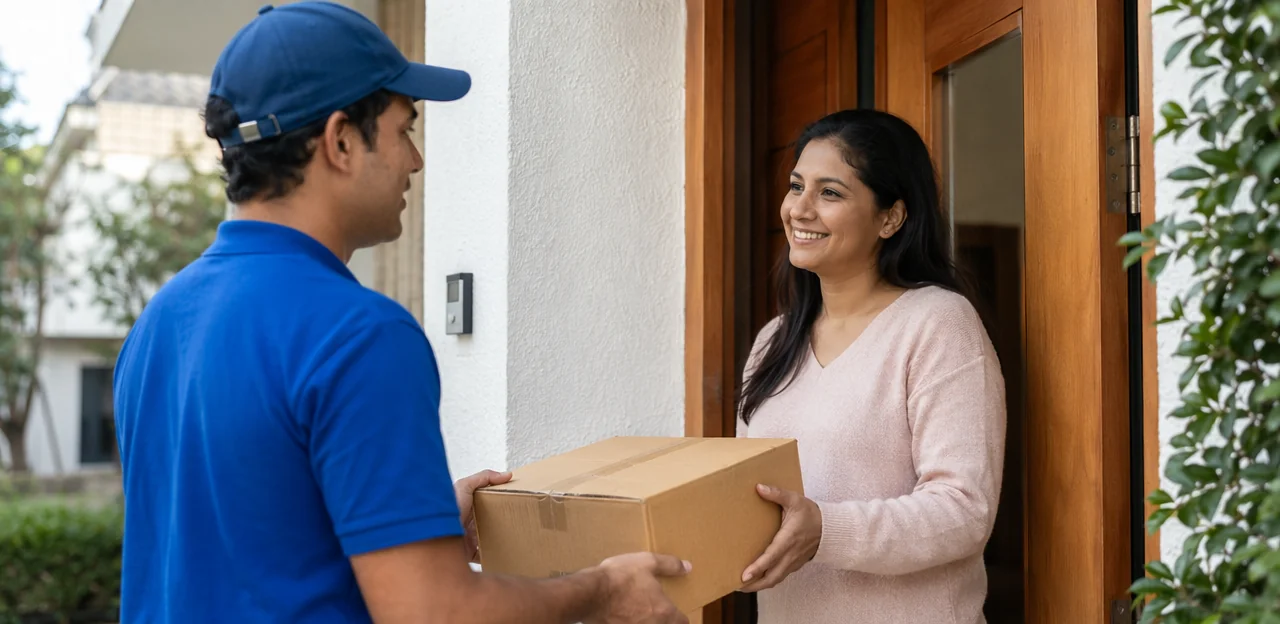
A delivery can arrive on time and still leave a customer frustrated. Maybe the driver was difficult to identify, the ETA kept changing, or there was no clear update when the order was delayed. In home delivery, those small moments shape the entire customer experience, which is why a well-designed courier feedback survey is so valuable.
Rather than relying on assumptions, delivery businesses can use customer feedback to measure what really matters: driver professionalism, delivery timing, and communication quality from dispatch to doorstep. These insights help teams spot recurring issues, improve service standards, and protect customer loyalty in an increasingly competitive market.
This article explores how courier surveys can go beyond a simple star rating to reveal the real drivers of satisfaction and dissatisfaction. We’ll look at the key questions to ask, how to measure delivery experience more accurately, and how to turn survey responses into practical operational improvements. We’ll also cover survey design best practices, including how to collect timely feedback while the experience is still fresh. For businesses looking to capture real-time insights at critical service touchpoints, tools like Tapsy can support faster, more actionable feedback collection.
Why a courier feedback survey matters in home delivery

Post-delivery feedback turns delivery data into customer insight. A courier feedback survey reveals how the experience felt to the customer, not just whether the parcel arrived on time.
- Operational metrics show what happened: on-time delivery, failed delivery rates, and first-attempt success.
- Survey feedback shows why it mattered: driver professionalism, clarity of updates, ease of handoff, and overall delivery customer satisfaction.
- Combined insights expose service gaps: for example, an “on-time” order may still create a poor home delivery experience if communication was unclear or the driver ignored instructions.
Use feedback trends to coach drivers, improve ETA messaging, and fix recurring friction points. This helps reduce complaints, strengthen trust, and improve retention by addressing issues before customers switch providers.
A strong courier feedback survey should measure three core areas that directly shape the delivery experience:
- Driver behavior: Include delivery survey questions about professionalism, friendliness, care with parcels, and respect for property. Strong driver performance feedback helps identify training needs and improves trust in your brand.
- Timing reliability: Ask whether the order arrived within the promised window and if delays were acceptable. Reliable timing increases convenience, reduces frustration, and strengthens confidence in future orders.
- Communication quality: Measure delivery communication quality across updates, ETA accuracy, and issue resolution. Clear communication reassures customers, manages expectations, and protects brand perception when delays happen.
Keep questions specific, easy to answer, and tied to actions your team can improve.
A well-designed courier feedback survey turns every delivery into a learning opportunity, helping teams make measurable operational gains.
- Fewer complaints: A fast customer feedback survey highlights recurring issues like missed ETAs, poor handoffs, or unclear updates before they become costly support cases.
- Better driver coaching: Feedback on professionalism, care, and communication gives managers specific examples to use in training and recognition.
- Improved route planning: Patterns in late deliveries reveal useful last mile delivery insights, helping optimize routes, time windows, and staffing.
- Stronger customer loyalty: Consistently acting on feedback drives delivery experience improvement, builds trust, and increases repeat orders.
Used continuously, surveys support smarter decisions, faster fixes, and a more reliable delivery experience.
Core metrics: driver, timing, and communication quality

Measuring driver professionalism and service quality
A strong courier feedback survey should measure the behaviors customers notice most during the handoff. To assess driver service quality and overall delivery professionalism, ask customers to rate specific attributes rather than giving one broad score.
- Courtesy and attitude: Was the driver polite, respectful, and professional?
- Appearance: Did the driver look tidy, identifiable, and work-ready?
- Care with parcels: Was the package handled carefully and delivered in good condition?
- Problem handling: If there was an issue, did the driver explain it clearly and resolve it calmly?
Use a simple 1–5 rating scale for each attribute, where 1 = poor and 5 = excellent. This makes courier driver feedback easy to compare across routes, teams, and time periods.
Add one or two open-ended prompts to capture context:
- “What did the driver do well?”
- “If anything could be improved, what happened?”
This combination of scores and comments helps identify coaching needs, recognize top performers, and improve service consistency.
Evaluating delivery timing and reliability
A strong courier feedback survey should measure both customer perception and operational reality. In your delivery timing survey, ask customers whether the order arrived:
- On time
- Within the promised delivery window
- Close to the ETA they were shown
- At a convenient and expected moment
To collect useful on-time delivery feedback, include simple rating and verification questions such as:
- Did your delivery arrive within the promised time window?
- How accurate was the ETA provided?
- Did the delivery feel late, early, or on time?
- How satisfied were you with the delivery reliability?
Then compare survey responses with logistics data like dispatch time, route completion, ETA updates, and proof-of-delivery timestamps. This helps you spot gaps between perceived punctuality and actual performance. For example, a delivery may be technically on time but still feel late if ETA updates were inaccurate. Tools like Tapsy can help capture fresh feedback immediately after drop-off, when timing impressions are most accurate.
Assessing communication before, during, and after delivery
A strong courier feedback survey should measure communication at every stage, because clear updates often protect customer trust even when a delivery runs late. In many cases, courier communication quality matters as much as speed.
Use questions that assess:
- Pre-delivery notifications: Was the delivery window shared early enough, and was it accurate?
- Tracking clarity: Did live tracking make sense, with useful ETAs and easy-to-understand status changes? This is where tracking updates feedback is especially valuable.
- Responsiveness: If the customer had a question, how quickly and helpfully did support or the driver respond?
- Issue updates: When delays, missed attempts, or address problems happened, was the customer informed proactively with a clear next step?
A good delivery communication survey should capture both timeliness and usefulness of messages. For example, ask customers to rate whether updates reduced uncertainty, helped them plan, and felt personalized rather than automated. This reveals how communication can improve overall delivery experience, even during disruptions.
How to design effective courier feedback survey questions

Best question types for actionable delivery feedback
Choosing the right survey question types makes a courier feedback survey faster to complete and easier to analyze. The best mix usually includes:
- Rating scales: Use 1–5 or 1–10 scales to measure driver professionalism, delivery timing, and communication quality. These work best when you want trend data, benchmarking, and quick comparisons across routes or teams.
- Multiple-choice questions: Ideal for identifying specific issues behind low scores, such as “late arrival,” “package damaged,” or “driver could not find address.” This improves reporting and keeps delivery feedback questions structured.
- Yes or no items: Best for simple confirmation points like “Did the courier arrive within the promised window?” Use them sparingly for clear operational checks in customer survey design.
- Open text responses: Add one optional comment box to capture context, examples, or service recovery details that fixed-answer formats miss.
To reduce survey fatigue, start with 2–3 closed questions, then include one optional open-text field. Tools like Tapsy can help collect this feedback quickly at the right touchpoint.
Sample questions for driver, timing, and communication
A strong courier feedback survey should use short, neutral wording so customers can respond in seconds. The best home delivery survey questions focus on the moments customers notice most: the driver, the timing, and the updates they receive.
- Driver quality
- How would you rate the driver’s courtesy?
- Did the driver handle your delivery professionally?
- Was your package delivered with care?
- Timing and reliability
- Did your order arrive within the promised delivery window?
- How satisfied were you with the delivery timing?
- If the delivery was late, how much did it affect your experience?
- Communication and updates
- How clear were the delivery notifications you received?
- Did you receive enough updates before arrival?
- Was it easy to understand when your order would arrive?
These delivery survey examples work best with simple rating scales, plus one optional comment box for extra detail.
Survey design mistakes to avoid
Even a well-timed courier feedback survey can fail if the design creates friction or bias. Follow these survey design best practices to protect response quality and completion rates:
- Leading questions: Avoid wording like “How satisfied were you with our fast delivery?” It pushes respondents toward a positive answer and distorts insights.
- Too many questions: Long surveys create survey fatigue, especially after a routine delivery. Keep it focused on driver behavior, timing, and communication.
- Vague wording: Questions such as “Was the service good?” are too broad. Ask specific questions like whether the driver arrived in the promised window or communicated delays clearly.
- Poor mobile experience: Most customers answer on their phones, so mobile survey optimization is essential. Use short questions, large tap targets, and minimal scrolling.
A simple, mobile-friendly format often performs best. Tools like Tapsy can help brands collect quick, touchpoint-based feedback without adding unnecessary friction.
When and how to send the survey for higher response rates

Choosing the right survey timing after delivery
The best post delivery survey timing is usually within minutes of a completed drop-off or, at most, within 24 hours. This keeps the experience fresh, improving recall of driver behavior, delivery timing, and communication details.
- Immediately after delivery: Best for accurate feedback on arrival time, professionalism, and handoff experience.
- Within 2–24 hours: Useful if customers need time to open the package or confirm order condition.
- Avoid long delays: After 48 hours, memory fades, lowering data quality and often hurting delivery survey response rate.
For any courier feedback survey, strong customer feedback timing balances freshness with convenience. A short, mobile-friendly survey sent promptly will usually generate better completion rates and more reliable insights.
Selecting the best channels: SMS, email, app, or web
Choosing the right channel for a courier feedback survey depends on speed, visibility, and customer habits:
- SMS delivery survey: Best for immediate post-delivery feedback. SMS has strong open rates and works well for quick ratings, but messages must stay short and can feel intrusive if overused.
- Email feedback survey: Ideal for longer responses and branded layouts. Email offers more space for context, though open rates are usually lower and replies may come later.
- Delivery app survey: Great when customers already use your app. A delivery app survey feels seamless and timely, but only reaches active app users.
- Web links: Flexible and easy to share across channels, but they rely on customers taking an extra step.
Use channel testing to match customer preferences and improve response rates.
Improving completion rates with better survey UX
A higher survey completion rate starts with reducing effort at every step of the courier feedback survey experience. Improve customer feedback UX with a few practical changes:
- Keep it short: Limit surveys to 3–5 questions and make only essential fields required.
- Use a clear CTA: Buttons like “Rate your delivery in 30 seconds” set expectations and increase clicks.
- Design for mobile: A mobile friendly survey should load fast, use large tap targets, and avoid long text entry.
- Offer small incentives: Discounts, loyalty points, or prize draws can lift participation.
- Remove friction: Pre-fill order details, use one-click ratings, and let customers submit feedback without creating an account.
Tools like Tapsy can also help simplify no-app feedback collection.
Analyzing survey results and turning feedback into action

How to interpret scores and comments
To get real value from a courier feedback survey, look beyond average ratings and focus on patterns:
- Track rating trends over time: Review weekly or monthly changes in driver courtesy, on-time delivery, and communication scores to spot recurring issues or improvements.
- Segment responses: Break results down by route, driver, delivery window, location, or order type. This makes survey data analysis more actionable and highlights where delivery performance differs.
- Categorize open-text comments: Tag comments by issue type, such as late arrival, missed instructions, damaged parcels, or poor updates, to uncover themes quickly.
For stronger customer feedback insights, combine sentiment with delivery performance metrics like route delays, failed deliveries, and contact attempts. Tools such as Tapsy can help centralize this analysis.
Using feedback to improve driver coaching and delivery operations
A well-structured courier feedback survey turns customer comments into clear actions for delivery operations improvement and last mile optimization. Focus on recurring themes, then respond systematically:
- Strengthen driver coaching: Use low-scoring feedback on professionalism, care, or handoff quality to guide targeted coaching, ride-alongs, and refresher training.
- Refine communication protocols: If customers report missed updates or unclear ETAs, standardize SMS timing, delay alerts, and proof-of-delivery messaging.
- Improve route planning: Repeated complaints about late arrivals in specific zones can reveal routing, scheduling, or capacity issues.
- Tighten exception handling: Build playbooks for failed deliveries, damaged parcels, and no-answer cases so drivers follow consistent recovery steps.
Tools like Tapsy can help capture real-time feedback and surface patterns faster.
Tracking progress with KPIs and continuous improvement loops
A courier feedback survey is most useful when results are tracked against clear delivery KPIs over time. Focus on a small set of metrics and review them consistently:
- Customer satisfaction score: track overall delivery experience and segment by driver behavior, timing, and communication.
- Response rate: measure how many customers complete the survey to judge data quality and survey reach.
- Complaint reduction: monitor whether recurring issues decline after operational changes.
- Repeat delivery success: assess whether customers continue choosing your service and receive future orders successfully.
Review these KPIs weekly or monthly, identify patterns, act on weak points, and measure the impact of each change. This creates a practical continuous improvement loop that turns feedback into better delivery performance.
Best practices for trust, privacy, and survey strategy

Keeping surveys customer-friendly and privacy-conscious
Trust is essential to every courier feedback survey. Keep questions short, explain why feedback is requested, and make survey privacy visible from the start.
- State what data you collect and how it improves delivery service.
- Practice customer data protection by asking only for necessary details.
- Request clear feedback consent, especially for follow-up contact or marketing.
- Store responses securely, limit access, and anonymize reports where possible.
A simple, transparent flow increases completion rates and customer confidence.
Segmenting feedback by order type, region, or courier team
A courier feedback survey becomes far more actionable when paired with survey segmentation. Break results down by:
- Order type: same-day, scheduled, bulky, grocery, fragile
- Delivery region analysis: postcode, urban vs. rural, high-traffic zones
- Courier team or partner: in-house drivers vs. outsourced fleets
This reveals whether low scores come from specific service levels, product categories, or partners, enabling accurate courier performance comparison and faster fixes, such as retraining teams, adjusting routes, or improving communication standards in underperforming areas.
Building a long-term courier feedback strategy
Treat each courier feedback survey as part of a continuous customer experience strategy, not a one-off project. To build a durable delivery feedback program:
- Benchmark consistently: track driver courtesy, on-time delivery, and communication by route, region, and partner.
- Iterate regularly: refine questions, triggers, and follow-up actions as delivery patterns change.
- Share ownership: align operations, support, CX, and logistics teams around one courier survey strategy with clear review cycles and accountability.
Conclusion
A well-designed courier feedback survey does more than collect opinions after a delivery—it gives you a clear view of what customers actually experience at the doorstep. By measuring driver professionalism, delivery timing, and communication quality, businesses can identify service gaps, spot recurring issues, and improve the parts of the journey that matter most. The most effective surveys stay short, ask targeted questions, and make it easy to connect feedback to specific routes, drivers, and delivery windows.
When used consistently, a courier feedback survey becomes a practical tool for improving delivery performance, strengthening customer trust, and reducing the risk of negative reviews or lost repeat business. It also helps operations teams move from guesswork to action, whether that means refining driver training, improving ETA updates, or addressing delays before they become long-term problems.
The next step is simple: review your current survey process and make sure it captures the right signals at the right moment. Focus on fast feedback collection, clear reporting, and a plan for acting on low scores. If you want to streamline real-time feedback across delivery touchpoints, solutions like Tapsy can help simplify the process. For additional progress, explore survey design best practices, benchmark delivery satisfaction over time, and build a feedback loop your team can actually use.
Frequently Asked Questions
- What is a courier feedback survey used for?
A courier feedback survey captures how a delivery felt to the customer, not just whether it was completed on time. It helps measure driver professionalism, delivery timing, and communication quality so teams can find service gaps and improve the home delivery experience.
- Why is post-delivery feedback important if operational metrics already show on-time delivery?
Operational metrics show what happened, such as on-time delivery or first-attempt success, but they do not explain how the experience was perceived. Feedback reveals issues like unclear updates, poor handoff, or a driver ignoring instructions, even when a delivery is technically on time.
- Which three areas should a courier feedback survey measure most closely?
The survey should focus on driver behavior, timing reliability, and communication quality. These areas directly shape customer satisfaction because they affect trust, convenience, and how well expectations are managed throughout the delivery.
- How should driver professionalism be measured in a delivery survey?
Use specific rating questions instead of one broad score. Customers can rate courtesy, appearance, care with parcels, and problem handling on a 1–5 scale, then add brief comments about what went well or what should improve.
- What questions help evaluate delivery timing more accurately?
Useful timing questions ask whether the order arrived within the promised window, how accurate the ETA was, whether it felt late or on time, and how satisfied the customer was with reliability. Comparing those responses with dispatch, route, and proof-of-delivery data helps identify gaps between actual and perceived punctuality.
- How can communication quality be assessed before, during, and after delivery?
Measure pre-delivery notifications, tracking clarity, responsiveness to questions, and updates during delays or missed attempts. Good questions should test whether messages were timely, useful, easy to understand, and helpful for planning.
- What survey question types work best for courier feedback?
A practical mix includes rating scales, multiple-choice questions, a few yes-or-no checks, and one optional open-text field. This structure keeps the survey quick to complete while still producing data that is easy to analyze and act on.
- How many questions should a courier feedback survey include?
Keeping the survey short usually works best, with about 3–5 questions focused on the most important delivery moments. Starting with a few closed questions and ending with one optional comment box helps reduce survey fatigue.
- What are common mistakes to avoid when writing delivery survey questions?
Avoid leading questions, vague wording, and surveys that are too long. It is also important to design for mobile use, with short questions, large tap targets, and minimal scrolling, since many customers respond on their phones.
- When is the best time to send a courier feedback survey?
The best time is usually within minutes of drop-off or at most within 24 hours. Sending it quickly improves recall of driver behavior, timing, and communication, while long delays can reduce response quality.
- Which channel is best for sending a delivery feedback survey: SMS, email, app, or web?
SMS is strong for immediate feedback and quick ratings, while email gives more space for longer responses and branded layouts. App surveys feel seamless for active app users, and web links are flexible but require an extra step, so testing channels is important.
- How can businesses improve courier survey completion rates?
Use a short survey, a clear call to action, and a mobile-friendly design that loads quickly and avoids unnecessary effort. Small incentives, pre-filled order details, one-click ratings, and no-account submission can also reduce friction.
- How should courier survey results be analyzed?
Look beyond average scores and track trends over time, then segment results by route, driver, delivery window, location, or order type. Open-text comments should be tagged by issue type so recurring problems like late arrivals, missed instructions, or poor updates become easier to spot.
- How can feedback be turned into operational improvements?
Low scores and repeated complaints can guide driver coaching, communication protocol updates, route planning changes, and better exception handling. The key is to respond to recurring themes systematically and then measure whether those changes reduce complaints and improve delivery performance.
- How does Tapsy fit into a courier feedback process?
Tapsy is presented as a tool that can support faster, touchpoint-based feedback collection and help capture responses while the delivery experience is still fresh. It can also help simplify collection and centralize analysis so teams can act on patterns more quickly.