
First impressions matter in hospitality, but the last interaction at the front desk can be just as influential. A well-designed hotel reception feedback strategy gives properties a direct way to understand what guests experienced in real time, while there is still an opportunity to resolve issues, strengthen loyalty, and improve service. Instead of relying only on post-stay customer feedback surveys that often go unopened, hotels are increasingly turning the reception area into a high-value touchpoint for collecting meaningful customer feedback.
The right guest feedback tool can do far more than gather ratings. From a simple digital feedback form to advanced guest feedback software powered by AI and analytics, reception-based systems help teams capture user feedback quickly, identify service gaps, and spot patterns that affect satisfaction. They also support faster decision-making by turning everyday comments into actionable insight.
In this guide, we will explore how hotel reception feedback points work, why they are becoming essential in modern guest experience programs, and what features to look for in effective customer feedback tools. We will also cover best practices for placement, timing, and survey design, along with how hotels can use a guest feedback tool or platforms such as Tapsy to improve engagement, streamline customer feedback collection, and deliver a more responsive guest experience.
Why Hotel Reception Feedback Matters in Modern Hospitality

The front desk as the most valuable feedback touchpoint
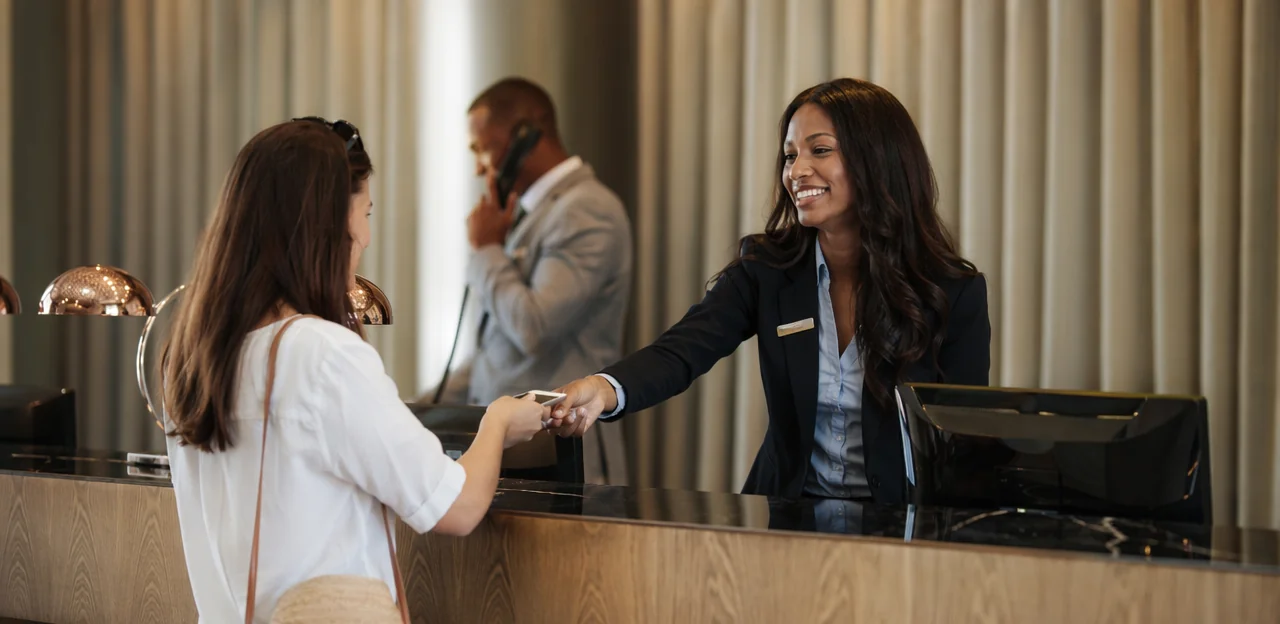
The reception desk is the most strategic place to capture hotel reception feedback because it shapes both first and last impressions of the stay. Guests interact here during key moments that strongly influence overall guest experience and willingness to return.
- At check-in: guests immediately judge speed, friendliness, and clarity. A simple feedback form or digital guest feedback tool can capture fresh reactions before details are forgotten.
- During issue resolution: the front desk often handles room changes, billing questions, and service problems. This is the ideal time to collect customer feedback and user feedback on how well staff recovered the experience.
- At check-out: guests are more likely to complete short customer feedback surveys when the stay is still top of mind.
Using guest feedback software or other customer feedback tools at reception helps hotels turn real-time insights into service improvements fast.
How feedback improves satisfaction, loyalty, and reviews
Effective hotel reception feedback gives staff a chance to act before a minor issue turns into a public complaint. When hotels collect user feedback at check-in, during the stay, or at checkout, they can spot delays, cleanliness concerns, or service gaps early and resolve them fast.
- Reduce complaints: A simple feedback form or guest feedback tool helps teams catch problems in real time.
- Improve service recovery: With guest feedback software and customer feedback tools, reception staff can respond quickly, apologize, and offer solutions while the guest is still on-site.
- Increase repeat bookings: Timely customer feedback shows guests their opinions matter, building trust and loyalty.
- Boost ratings and referrals: Well-timed customer feedback surveys often lead to better online reviews and stronger word-of-mouth because satisfied guests are more likely to share positive experiences.
Common challenges hotels face when collecting feedback
Hotels often struggle to turn hotel reception feedback into clear, actionable improvements because the collection process breaks down at several points:
- Low response rates: Traditional customer feedback surveys sent by email are easy to ignore, while long or poorly timed feedback form flows create drop-off at reception.
- Inconsistent staff follow-up: When teams are busy, asking for customer feedback becomes irregular, which skews results and leaves service issues unresolved.
- Fragmented data: Comments from paper cards, OTAs, review sites, and different customer feedback tools rarely sit in one place, making trends hard to spot.
- Poorly designed systems: If a guest feedback tool or guest feedback software asks vague questions, captures little user feedback, or lacks analytics, hotels miss useful insight.
The best guest feedback software keeps forms short, centralizes data, and helps staff act quickly.
How to Build an Effective Hotel Reception Feedback Strategy

Choosing the right moments to ask for feedback
Timing has a major impact on hotel reception feedback quality and response rates. Ask when the experience is fresh and easy to act on:
- Right after check-in: Capture first impressions of welcome, speed, and clarity. A short feedback form at reception works best here.
- After a service interaction: Request customer feedback after concierge help, housekeeping support, or a dining recommendation to measure service quality in context.
- Mid-stay: Use a guest feedback tool or guest feedback software to spot issues while there is still time to fix them.
- At check-out: Collect broader user feedback on the full stay, including room comfort, staff service, and value.
Keep customer feedback surveys short, relevant, and tied to the touchpoint. The best customer feedback tools make it easy to gather immediate, actionable insights.
Selecting the best channels and feedback formats
Choosing the right mix for hotel reception feedback depends on speed, convenience, and follow-up goals:
- In-person prompts: Best for immediate issue recovery at check-in or check-out, but results depend on staff consistency.
- QR codes: A low-friction guest feedback tool that lets guests open a quick feedback form on their phone without waiting.
- Tablets at reception: Useful for structured customer feedback surveys, though they require cleaning, charging, and supervision.
- SMS links: Strong for fast post-stay responses, especially when paired with short customer feedback questions.
- Email follow-ups: Better for detailed user feedback, but often see lower open rates.
- Digital feedback form options: Flexible and easy to connect with guest feedback software and wider customer feedback tools dashboards.
For best results, combine on-site capture with post-stay follow-up. Platforms like Tapsy can support contactless, no-app collection where relevant.
Training reception staff to collect honest, useful insights
Strong hotel reception feedback starts with staff training that feels natural, not scripted. Front desk teams should learn to invite input without pressuring guests.
- Ask neutral questions: Use phrases like “How was your check-in experience?” instead of leading prompts. This improves user feedback quality and makes customer feedback more reliable.
- Encourage quick participation: Offer a simple feedback form, QR code, or guest feedback tool at the desk so guests can respond in the moment.
- Record comments accurately: Train staff to capture exact wording in guest feedback software rather than summarizing emotionally.
- Escalate urgent issues fast: If a guest mentions cleanliness, billing, or safety concerns, route it immediately through customer feedback tools or service workflows.
- Keep it comfortable: Never ask in a way that feels intrusive; brief, respectful prompts outperform long customer feedback surveys.
Best Tools and Software for Capturing Reception Feedback

What to look for in a guest feedback platform
When choosing a platform for hotel reception feedback, focus on tools that make it easy for guests to respond and staff to act quickly. The best guest feedback software should include:
- Multilingual support so international guests can complete a feedback form comfortably.
- Mobile-friendly surveys that work smoothly on any phone, improving response rates for customer feedback surveys.
- PMS or CRM integration to connect customer feedback with guest profiles, stay history, and service recovery workflows.
- Automated alerts that notify teams instantly when negative user feedback is submitted.
- Clear dashboards that turn data into trends, sentiment, and operational insights.
- Simple reporting so managers can share results, spot recurring issues, and compare locations.
A strong guest feedback tool should help hotels collect, analyze, and act on feedback faster than traditional customer feedback tools.
Using AI and analytics to uncover patterns faster
AI & analytics turn hotel reception feedback into clear, usable insight far faster than manual review. Instead of reading every feedback form one by one, hotels can use guest feedback software to analyze large volumes of customer feedback from check-in desks, kiosks, and customer feedback surveys.
- Sentiment analysis flags positive, neutral, and negative comments instantly.
- Topic clustering groups repeated themes such as wait times, staff friendliness, cleanliness, or billing confusion.
- Trend detection shows whether issues are rising by day, shift, or season.
- Prioritization helps teams focus on high-impact problems affecting guest satisfaction and operations first.
A strong guest feedback tool or other customer feedback tools can also combine user feedback from multiple channels into one dashboard, helping reception managers act quickly, coach staff, and improve the guest experience with confidence.
Connecting feedback data with hotel operations
Effective hotel reception feedback should do more than collect ratings; it should trigger action across the property. When customer feedback tools and guest feedback software connect with daily operations, teams can resolve issues before they affect reviews or repeat bookings.
- Housekeeping: A digital feedback form can flag room cleanliness concerns instantly, creating tasks for supervisors to inspect and respond.
- Maintenance: User feedback about broken air conditioning, weak Wi-Fi, or plumbing problems can route directly to engineering for faster fixes.
- Concierge: A guest feedback tool can surface requests about transport, dining, or local recommendations in real time.
- Management: Insights from customer feedback surveys and broader customer feedback trends help leaders spot recurring service gaps, staffing issues, and training needs.
Integrated guest feedback software turns every response into operational insight, not just data.
Designing Customer Feedback Surveys That Guests Will Complete

Writing short, relevant questions for reception feedback
Keep hotel reception feedback surveys brief enough to finish in under 30 seconds. A focused feedback form improves response rates and gives clearer insight for service improvements. Use your guest feedback tool or guest feedback software to ask only high-value questions such as:
- How would you rate your check-in wait time?
- Was our reception staff friendly and welcoming?
- How efficient was the check-in process?
- If you had an issue, was it resolved quickly?
- Overall, how satisfied are you with your reception experience?
Use simple rating scales and one optional comment box for user feedback. The best customer feedback surveys avoid repetition, making customer feedback easier to analyze with customer feedback tools.
Balancing ratings, open comments, and follow-up prompts
Effective hotel reception feedback works best when a simple rating is paired with a short comment box and smart follow-up prompts. This gives teams both measurable trends and the guest stories behind them.
- Use a 1–5 or NPS-style scale in your feedback form to track patterns across check-in speed, staff friendliness, and issue resolution.
- Add one open-text field for user feedback so guests can explain low or high scores in their own words.
- Trigger follow-up prompts based on ratings, such as “What could we improve?” or “What stood out today?”
- Review results in guest feedback software or a guest feedback tool to connect customer feedback surveys with root-cause insights.
This balance helps customer feedback tools turn raw scores into actionable service improvements.
Avoiding survey fatigue and improving response rates
To make hotel reception feedback effective, keep the process fast, relevant, and effortless. Guests are far more likely to complete customer feedback surveys when the request feels timely and respectful.
- Limit questions: Ask 1–3 high-value questions in each feedback form to reduce drop-off.
- Personalize requests: Reference the stay stage, room type, or service used so customer feedback feels relevant.
- Time prompts carefully: Request user feedback at check-in, after a key interaction, or at checkout—not all at once.
- Simplify the interface: Use a mobile-friendly guest feedback tool or guest feedback software with clear buttons, fast loading, and minimal typing across devices.
- Close the loop: Show that customer feedback tools lead to action, which encourages future participation.
Turning Hotel Reception Feedback Into Actionable Improvements
Creating response workflows for urgent and routine issues
To make hotel reception feedback actionable, hotels need a clear triage process that separates urgent service failures from routine improvement requests.
- Set priority rules: Route safety concerns, billing disputes, room issues, or staff complaints from a feedback form or customer feedback surveys to reception managers immediately.
- Assign ownership: Use a guest feedback tool or guest feedback software to tag each case by department, shift, and severity so housekeeping, maintenance, or front desk teams know who acts first.
- Define response times: Urgent customer feedback should trigger instant alerts; routine user feedback can be reviewed in daily or weekly summaries.
- Track patterns: Analyze recurring themes with customer feedback tools to spot root causes, improve service standards, and strengthen long-term operations.
Using feedback to coach staff and refine service standards
Hotel reception feedback should directly shape front desk coaching and daily service standards. When managers review customer feedback, user feedback, and customer feedback surveys regularly, they can spot patterns that affect check-in quality, guest satisfaction, and revenue opportunities.
- Use a guest feedback tool or guest feedback software to track recurring comments on greeting style, wait times, clarity of communication, and professionalism.
- Turn trends from a feedback form into short training sessions on active listening, local knowledge, and confident but respectful upselling etiquette.
- Review complaint-related customer feedback tools to identify where staff need better de-escalation and faster issue resolution.
- Compare positive and negative user feedback by shift or team member to refine scripts, service tone, and recovery standards.
This makes feedback measurable, coachable, and easier to act on consistently.
Closing the loop with guests to build trust
Collecting hotel reception feedback is only valuable when guests can see it leads to action. A simple follow-up turns a basic feedback form into a trust-building part of the guest experience.
- Acknowledge every submission quickly: Thank guests for their customer feedback at reception, by email, or through your guest feedback tool.
- Share what changed: If comments highlight slow check-in, unclear signage, or room issues, explain the fix. This shows user feedback matters.
- Make improvements visible: Use lobby signage, digital messages, or staff scripts to show how customer feedback surveys led to updates.
With the right guest feedback software and customer feedback tools, hotels can track themes, respond faster, and prove that every response supports a better stay.
Measuring Success and Future-Proofing Your Feedback Program

Key metrics to track for reception feedback performance
To improve hotel reception feedback, track KPIs that show both guest sentiment and operational follow-through:
- Response rate: Measure how many guests complete your feedback form or tap a guest feedback tool after check-in, check-out, or a front-desk interaction.
- Satisfaction score: Use customer feedback surveys to monitor CSAT or NPS tied specifically to reception service.
- Issue resolution time: Track how quickly staff resolve complaints raised through guest feedback software or other customer feedback tools.
- Repeat complaint volume: Identify recurring themes in user feedback and broader customer feedback.
- Review improvement: Compare reception-related mentions in public reviews over time.
- Guest retention impact: Link feedback trends to repeat bookings, loyalty sign-ups, and return stays.
Benchmarking results across properties and guest segments
Benchmarking turns hotel reception feedback into a strategic decision tool for multi-property brands. With the right guest feedback software and customer feedback tools, groups can compare performance across:
- Property type: boutique, resort, airport, and extended-stay hotels
- Traveler profile: business, family, solo, group, and luxury guests
- Booking channel: direct, OTA, corporate, and travel agent
- Stay purpose: leisure, event, conference, or transit
This layered user feedback reveals where expectations differ and where service gaps affect revenue, loyalty, or reviews. Use a guest feedback tool to standardize each feedback form and align customer feedback surveys across locations. Then segment customer feedback by source to spot patterns, prioritize fixes, and replicate high-performing experiences across the portfolio.
Emerging trends in AI-driven hospitality feedback systems
AI is making hotel reception feedback faster, smarter, and more useful for frontline teams. Key developments include:
- Predictive service recovery: Modern guest feedback software can detect patterns in customer feedback surveys and flag likely complaints before they escalate, helping staff act in real time.
- Multilingual voice capture: Guests increasingly prefer speaking instead of filling out a feedback form, so AI-powered guest feedback tool platforms now convert voice-based user feedback into structured insights across languages.
- Automated sentiment alerts: With stronger AI & analytics, negative customer feedback can trigger instant alerts to reception managers for quick resolution.
- Smarter personalization: Advanced customer feedback tools tailor questions, rewards, and follow-ups based on guest profile, stay type, and past responses.
Conclusion
In today’s experience-driven hospitality market, a well-placed hotel reception feedback point is far more than a comment station—it’s a practical way to capture real-time insight, resolve issues faster, and strengthen guest loyalty. By making it easy for visitors to share customer feedback at the front desk, hotels can gather more meaningful responses than delayed email customer feedback surveys, while giving staff immediate visibility into service gaps and opportunities.
The most effective approach combines smart placement, simple design, and the right guest feedback tool or guest feedback software to streamline collection and analysis. Whether guests complete a quick digital feedback form, leave user feedback after check-in, or respond to instant prompts tied to service moments, the goal is the same: turn everyday interactions into measurable improvements. Modern customer feedback tools also help hotels track trends, support staff coaching, and make better operational decisions with confidence.
If you’re ready to improve guest experience, start by auditing your current reception journey, choosing a frictionless feedback method, and reviewing response data regularly. Explore best-practice templates, benchmark your survey questions, and test a solution that fits your property’s size and service style. Platforms such as Tapsy may also be worth reviewing for contactless, on-site engagement. The sooner you optimize your hotel reception feedback strategy, the sooner you can turn guest insight into lasting competitive advantage.
Frequently Asked Questions
- What is a hotel reception feedback point?
A hotel reception feedback point is a way to collect guest input at the front desk during check-in, issue resolution, or check-out. It can be a digital feedback form, QR code, tablet, or other guest feedback tool that captures real-time reactions while the stay is still fresh.
- Why is the reception desk such an important place to collect guest feedback?
The front desk shapes both first and last impressions, so it is one of the most valuable moments for understanding the guest experience. Feedback gathered there helps hotels identify problems quickly and gives staff a chance to resolve issues before guests leave or post public complaints.
- How does reception feedback improve guest satisfaction and loyalty?
Real-time feedback helps staff catch delays, cleanliness concerns, and service gaps early. When teams respond quickly and show guests their opinions matter, hotels can improve service recovery, build trust, and encourage repeat bookings and better reviews.
- Why do traditional post-stay email surveys often perform worse than reception-based feedback?
Post-stay email surveys are easy to ignore and often arrive after details have faded. Reception-based feedback works better because the experience is still top of mind and staff may still have time to fix issues on-site.
- When should hotels ask guests for feedback at reception?
The strongest moments are right after check-in, after a service interaction, mid-stay, and at check-out. These points keep the request relevant and make the feedback easier to act on quickly.
- Which feedback channels work best for hotel reception areas?
Useful options include in-person prompts, QR codes, tablets at reception, SMS links, email follow-ups, and digital feedback forms. A combined approach often works best, using on-site collection for immediate insight and post-stay follow-up for more detailed responses.
- How should reception staff ask for feedback without making guests uncomfortable?
Staff should use neutral questions, keep the request brief, and offer easy response options like a QR code or short form. They should also record comments accurately and escalate urgent concerns such as cleanliness, billing, or safety issues right away.
- What features should hotels look for in guest feedback software?
Strong platforms should offer multilingual support, mobile-friendly surveys, PMS or CRM integration, automated alerts, clear dashboards, and simple reporting. These features help hotels collect responses easily and turn them into faster operational action.
- How can AI and analytics help hotels manage reception feedback?
AI can analyze large volumes of feedback faster than manual review by using sentiment analysis, topic clustering, trend detection, and prioritization. This helps teams spot recurring issues such as wait times or billing confusion and focus on the most important problems first.
- How can reception feedback be connected to hotel operations?
Feedback can be routed directly to departments such as housekeeping, maintenance, concierge, and management. That allows room cleanliness issues, technical problems, and service requests to become tasks and follow-up actions instead of sitting as isolated comments.
- What questions should a short reception feedback survey include?
The most effective surveys focus on a few high-value questions, such as check-in wait time, staff friendliness, process efficiency, issue resolution, and overall satisfaction. A simple rating scale plus one optional comment box keeps the survey quick and useful.
- How can hotels avoid survey fatigue at the front desk?
Keep each survey to one to three relevant questions, time requests carefully, and use a simple mobile-friendly interface. Personalizing the request to the stay stage or service used also makes feedback feel more relevant and increases completion rates.
- What is the best way to handle urgent versus routine feedback?
Hotels should use a triage process that separates urgent issues like safety concerns, billing disputes, and room problems from routine suggestions. Urgent feedback should trigger immediate alerts, while lower-priority comments can be reviewed in daily or weekly summaries.
- How can managers use reception feedback to coach staff?
Managers can review recurring comments about greeting style, wait times, communication clarity, professionalism, and issue handling. Those patterns can be turned into targeted coaching, service standard updates, and training on de-escalation, active listening, and respectful upselling.
- Which metrics matter most when measuring reception feedback performance?
Key metrics include response rate, reception-specific satisfaction scores such as CSAT or NPS, issue resolution time, repeat complaint volume, review improvement, and guest retention impact. Tracking these measures shows both how guests feel and how well teams follow through operationally.