
A great salon experience is built on more than technical skill—it’s shaped by how clients feel at every touchpoint, from booking and check-in to the service itself and the follow-up afterward. That’s why salon customer feedback is one of the most valuable tools for improving service quality, strengthening client relationships, and increasing retention in a highly competitive industry.
When salons ask the right questions, they gain more than ratings—they uncover what keeps clients coming back, what creates friction, and where small changes can make a big difference. Whether the issue is wait time, staff communication, treatment results, cleanliness, or the ease of rebooking, thoughtful feedback helps salon owners and managers turn everyday interactions into long-term loyalty.
In this article, we’ll explore the most effective salon customer feedback questions to ask, how to design surveys that clients will actually complete, and how to use responses to improve the overall client experience. We’ll also look at how timely feedback collection, including real-time tools such as Tapsy, can help salons catch service issues early, respond faster, and create a stronger foundation for repeat visits and positive word of mouth.
Why salon customer feedback matters for growth
How feedback shapes client experience
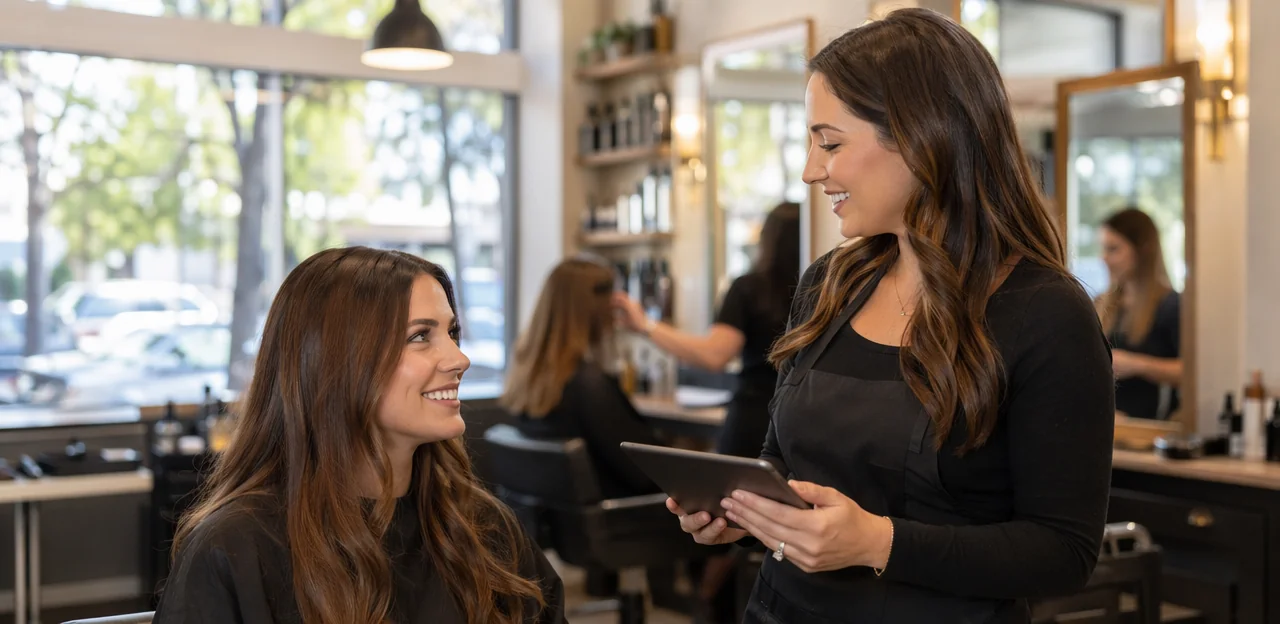
Salon customer feedback helps owners see exactly where the client experience breaks down—and where it shines. It reveals service gaps, unmet expectations, and small moments that strongly affect satisfaction, from the welcome at reception to the final styling check.
- Spot recurring issues: Look for patterns in comments about wait times, consultation clarity, pricing surprises, or inconsistent results.
- Improve consultations: Feedback shows whether clients felt heard, understood, and confident before the service began.
- Strengthen salon service quality: Use responses to standardize key steps, train staff, and reduce variation between appointments.
- Act on emotional touchpoints: Moments like friendliness, cleanliness, and aftercare advice often shape loyalty as much as technical skill.
Real-time tools such as Tapsy can help salons capture fresh insights and fix issues before they affect retention.
The link between feedback, loyalty, and retention
Regular salon customer feedback gives you a clear view of what drives client retention. Instead of guessing, salons can spot the moments that keep clients coming back—or push them away.
- Identify repeat drivers: Ask what clients value most, such as stylist consistency, wait times, service quality, or atmosphere.
- Catch churn risks early: Low ratings or recurring complaints reveal why clients stop booking before they disappear for good.
- Build trust over time: When clients see their feedback lead to visible improvements, salon loyalty grows.
Use feedback trends to refine retention strategies, from staff coaching to personalized follow-ups and rebooking offers. Tools like Tapsy can help collect real-time insights at key touchpoints, making it easier to turn feedback into repeat appointments and stronger long-term relationships.
Common mistakes salons make when collecting opinions
Many salons undermine salon customer feedback by using weak collection methods. Common survey mistakes include:
- Asking vague questions: Prompts like “How was your visit?” don’t reveal what needs improvement. Ask about wait time, stylist communication, cleanliness, and results.
- Surveying too often: Sending a survey after every visit can cause fatigue and lower response quality.
- Ignoring negative comments: Unanswered complaints make clients feel dismissed and less likely to return.
- Failing to follow up: If a guest reports a poor experience, a quick apology or recovery offer can rebuild trust.
- Using long, complicated forms: Short, focused surveys usually perform better.
A strong customer feedback strategy should be specific, timely, and actionable. Tools like Tapsy can help salons collect quick feedback at the right moment and respond before dissatisfaction turns into churn.
Best salon customer feedback questions to ask

Questions about service satisfaction
Strong salon customer feedback starts with specific, service-level questions that reveal what clients liked, what fell short, and what needs improvement. A good service satisfaction survey should cover both technical results and the overall experience.
Use clear salon survey questions such as:
- How satisfied were you with your haircut, color, styling, spa, or wellness service today?
- Did the final result match your expectations?
- How well did your stylist or therapist understand your goals before starting?
- How would you rate the quality of the result?
- How clean and comfortable was the salon, treatment room, or spa area?
- How professional, attentive, and knowledgeable was our team?
- Did you feel the service was worth the price you paid?
- Is there anything we could have done to improve your visit?
For better insights, pair rating-scale questions with one open comment box. This helps identify patterns around expectations, cleanliness, professionalism, and value. If you collect feedback in real time, tools like Tapsy can make it easier to capture honest responses before clients leave.
Questions that uncover retention drivers
To turn salon customer feedback into loyalty growth, ask retention survey questions that reveal what brings clients back—and what almost pushed them away. The most useful prompts focus on convenience, relationships, pricing, and service consistency.
- What made you decide to rebook with us?
Helps identify your strongest repeat booking insights, such as stylist trust, results, location, or easy scheduling. - Was there anything about your last visit that nearly stopped you from returning?
This surfaces hidden friction like long wait times, unclear pricing, rushed service, or booking issues. - How convenient is it to book, reschedule, and visit our salon?
Use this to spot operational barriers that affect retention. - How connected do you feel to your stylist or salon team?
Strong staff relationships are often a major reason clients stay loyal. - Do you feel our pricing matches the value and consistency of your experience?
This uncovers whether price concerns are really about cost—or inconsistent results. - What would make you more likely to return more often or recommend us?
Great for finding loyalty opportunities, from better availability to personalized follow-up.
Questions for referrals, reviews, and brand perception
Strong salon customer feedback should go beyond service quality and ask how clients talk about your business after they leave. These insights help shape a smarter online review strategy and create consistent word-of-mouth growth.
Use referral questions such as:
- How likely are you to recommend our salon to a friend or colleague?
- Would you consider leaving us an online review on Google, Yelp, or social media?
- What would most motivate you to share your experience publicly?
- In a few words, how would you describe our salon brand?
- What makes our salon different from others you’ve visited?
These questions reveal who your promoters are, which clients may need follow-up, and what brand themes show up most often, such as “welcoming,” “luxury,” or “expert color care.” Use positive language from responses in marketing, staff training, and review requests. If clients hesitate to recommend or review, that signals a reputation gap you can address quickly. Tools like Tapsy can help capture this feedback in real time and support faster service recovery.
How to design salon surveys clients will actually complete

Choosing the right survey format and timing
The best salon customer feedback strategy matches the channel to the moment. Use short, low-friction formats and smart survey timing to increase responses without overwhelming clients.
- Post-appointment survey: Send within 1–3 hours of the visit while details are fresh. Keep it to 3–5 questions about service quality, wait time, staff friendliness, and rebooking intent.
- SMS check-ins: Best for quick ratings or one-question follow-ups. Ideal after color, cut, or spa services when mobile response rates are highest.
- Email forms: Use for slightly longer feedback, especially if you want comments, before-and-after insights, or product feedback.
- In-app prompts: Ask after online booking, loyalty activity, or digital receipt viewing.
- In-salon QR codes: Place at reception or checkout for immediate feedback.
Avoid sending a survey after every visit; rotate requests and prioritize milestone appointments to prevent fatigue.
Writing clear, useful, low-friction questions
Strong salon customer feedback starts with questions clients can answer in seconds. In good survey design, keep each question short, specific, and focused on one service moment, such as booking, wait time, stylist communication, or checkout.
- Rating scales work best for speed and trend tracking:
“How satisfied were you with your haircut today?”
Use a consistent 1–5 scale to spot patterns quickly. - Multiple-choice questions make answers easy to analyze:
“What mattered most during your visit?”
Options like cleanliness, friendliness, timing, and results help identify priorities. - Open-ended prompts add context:
“What could we improve next time?”
Keep them optional to reduce friction.
The best customer feedback questions combine all three formats for fast responses and actionable insights.
Personalization and segmentation for better insights
Generic surveys often miss what matters most. To improve salon customer feedback, tailor questions to the client’s actual experience and use survey segmentation to spot patterns faster.
- By service type: Ask color clients about shade accuracy and hair health, while facial clients rate comfort, product suitability, and results.
- By client history: New clients can comment on booking ease, consultation quality, and first impressions; returning clients can evaluate consistency and relationship-building.
- By membership status: Members may value perks, scheduling priority, and package value more than one-time visitors.
- By stylist or location: Compare strengths, coaching needs, and service gaps across team members or branches.
This approach delivers more personalized feedback, making it easier to act on specific issues, improve retention, and refine the client experience.
Turning feedback into service improvements

How to analyze trends in client responses
To turn salon customer feedback into action, group responses into clear categories and review them weekly or monthly. Strong feedback analysis helps you spot small issues before they affect retention.
- Sort by format: Separate ratings, written comments, and open-text suggestions.
- Tag recurring themes: Create labels such as wait times, consultation quality, upselling pressure, staff friendliness, and service consistency.
- Track frequency: Note how often each issue appears and whether it is tied to specific days, services, or team members.
- Compare scores with comments: A low rating with repeated mentions of rushed consultations or inconsistent results reveals stronger client response trends than scores alone.
- Look for changes over time: Use a simple dashboard or tool like Tapsy to monitor patterns and respond faster.
This process makes service improvements more targeted and measurable.
Prioritizing changes that matter most to clients
Not every comment in salon customer feedback deserves the same response. A guest preferring herbal tea over coffee is useful, but inconsistent wait times or rushed consultations are higher-impact issues that directly affect retention. Build a simple service improvement plan by ranking feedback against three filters:
- Frequency — How often does the issue appear?
- Severity — Does it damage trust, comfort, or service quality?
- Business value — Will fixing it improve rebooking, referrals, or spend?
Focus first on issues that score high in all three areas. This helps separate personal preferences from true customer priorities.
- Fix immediately: hygiene, booking friction, lateness, poor communication
- Schedule next: recurring service gaps or staff inconsistency
- Monitor: one-off preferences with low retention impact
Tools like Tapsy can help surface patterns faster across touchpoints.
Closing the loop with clients and staff
Collecting salon customer feedback only creates value when clients can see that it leads to change. To close the feedback loop, acknowledge responses quickly, thank clients for their input, and share the improvements you’ve made—whether that’s shorter wait times, cleaner stations, or better consultation practices.
- Respond visibly: mention updates in follow-up texts, emails, social posts, or at reception.
- Turn feedback into staff coaching: use real comments and recurring themes in team meetings to reinforce strengths and address service gaps.
- Track action and outcomes: connect feedback trends to retention, rebooking, and review scores.
When clients notice visible action, trust grows and they’re more likely to give feedback again. Tools like Tapsy can help salons capture and act on insights faster.
Using feedback to increase salon retention and loyalty

Improving rebooking and membership strategies
Use salon customer feedback to fine-tune the offers and messages that bring clients back:
- Refine your rebooking strategy: Review feedback on timing, service results, and preferred appointment frequency to adjust front-desk scripts. For example, recommend a 4-, 6-, or 8-week return based on what clients say they want.
- Improve package offers: Identify which combinations feel valuable, then bundle services around common goals like maintenance, relaxation, or color care.
- Strengthen your salon loyalty program: Ask which rewards clients actually prefer—points, upgrades, discounts, or birthday perks—and simplify anything confusing.
- Build better memberships: Use preference data to create tiers that match visit habits, budget, and service priorities.
Tools like Tapsy can help capture this feedback quickly at key touchpoints.
Reducing churn with proactive recovery
Strong salon customer feedback systems help teams spot unhappy clients before they quietly disappear. To reduce client churn, collect feedback immediately after appointments and flag low ratings, repeat complaints, or negative comments for fast follow-up.
- Respond quickly: Contact the client within 24 hours with a sincere apology and a clear next step.
- Use targeted service recovery: Offer a complimentary correction, redo, product replacement, partial refund, or priority rebooking with a senior stylist.
- Track patterns: If multiple clients mention wait times, consultation quality, or pricing confusion, fix the root cause—not just the complaint.
Tools like Tapsy can help salons capture real-time feedback and trigger faster service recovery before relationships are lost.
Building long-term relationships through personalization
Salon customer feedback becomes far more valuable when it shapes a personalized client experience after the appointment. Instead of sending the same message to everyone, use feedback to tailor each touchpoint:
- Recommend services based on past preferences, hair goals, and satisfaction scores.
- Send appointment reminders matched to typical rebooking timing and preferred channels.
- Suggest retail products that address specific concerns, such as dryness, color care, or scalp sensitivity.
- Follow up with personalized aftercare tips and a quick check-in after major services.
This kind of thoughtful communication makes clients feel seen, not marketed to, which strengthens emotional connection, trust, and long-term customer loyalty.
Measuring success and refining your feedback strategy

Key metrics salons should track
Track salon customer feedback with a focused set of salon KPIs and customer satisfaction metrics:
- Response rate: shows how many clients complete surveys
- Satisfaction score (CSAT): measures service quality after appointments
- Net Promoter Score (NPS): gauges referral likelihood
- Repeat visit rate and retention rate: reveal loyalty trends
- Review volume: indicates brand visibility and trust
- Complaint resolution time: tracks how quickly issues are fixed
Review these monthly to spot service gaps early.
Tools and workflows for ongoing feedback collection
Use a simple, repeatable stack to capture salon customer feedback consistently:
- Connect post-visit surveys in your booking software to a salon CRM so responses attach to each client profile.
- Use lightweight feedback tools like SMS, email, or QR-code surveys for fast response rates.
- Review trends weekly in reporting dashboards by stylist, service, and location.
- Tools like Tapsy can also support real-time, touchpoint feedback collection.
How often to review and update your questions
Review salon customer feedback questions at least quarterly, and anytime you add services, hire new staff, change pricing, or notice lower response quality.
- Use survey optimization to remove vague, repetitive, or outdated questions.
- Schedule a feedback strategy review around business goals, such as retention, rebooking, retail sales, or service consistency.
- Compare answers over time to spot which questions still produce useful, actionable insights.
Conclusion
In the end, great salons do not improve by guessing—they improve by listening. Thoughtful salon customer feedback helps you understand what clients truly value, where friction appears in the appointment journey, and what keeps people coming back. By asking the right questions about booking, wait times, staff professionalism, service quality, cleanliness, pricing, and overall satisfaction, salons can uncover practical insights that directly strengthen client experience and retention.
The most effective approach is to keep surveys short, timely, and easy to complete. Focus on questions that reveal both satisfaction and opportunity: what delighted the client, what could have been better, and how likely they are to return or recommend your salon. When you consistently act on salon customer feedback, you show clients their opinions matter—and that builds trust, loyalty, and long-term growth.
Now is the time to review your current feedback process and refine the questions you ask. Start with a simple post-visit survey, track patterns over time, and share insights with your team so improvements become part of daily operations. If you want to streamline real-time feedback collection at service touchpoints, tools like Tapsy can help make the process faster and more actionable. For next steps, create a core set of feedback questions, monitor retention trends, and revisit your survey strategy regularly to keep improving service.
Frequently Asked Questions
- Why is customer feedback important for salon growth?
Customer feedback shows where the client experience works well and where it breaks down, from booking and check-in to service results and follow-up. It helps salons improve service quality, strengthen relationships, and increase retention by acting on real client concerns instead of guessing.
- What should a salon ask to measure service satisfaction?
Useful questions cover satisfaction with the haircut, color, styling, spa, or wellness service, whether the result matched expectations, and how well the stylist or therapist understood the client’s goals. It also helps to ask about cleanliness, professionalism, value for price, and what could be improved.
- How can feedback help increase client retention?
Feedback reveals what keeps clients returning, such as stylist consistency, service quality, convenience, and atmosphere. It also helps identify churn risks early when clients mention problems like long wait times, unclear pricing, rushed service, or booking issues.
- What are common mistakes salons make when collecting feedback?
Common mistakes include asking vague questions, sending surveys too often, ignoring negative comments, and failing to follow up after a poor experience. Long or complicated forms also reduce response quality, so shorter and more specific surveys usually work better.
- When is the best time to send a salon feedback survey?
A post-appointment survey works best when sent within 1 to 3 hours after the visit, while details are still fresh. Salons should avoid surveying after every visit and instead rotate requests or focus on milestone appointments to reduce fatigue.
- Which survey formats work best for salon clients?
Short post-visit surveys, SMS check-ins, email forms, in-app prompts, and in-salon QR codes are all useful depending on the moment. The best format is low-friction and matched to the touchpoint, so clients can respond quickly without feeling overwhelmed.
- How should salon survey questions be written to get more responses?
Questions should be short, specific, and focused on one part of the experience, such as booking, wait time, stylist communication, or checkout. A strong survey usually combines rating scales for speed, multiple-choice questions for easy analysis, and one optional open-ended prompt for context.
- Should salons personalize surveys for different clients or services?
Yes, personalization makes feedback more useful because different clients and services have different priorities. New clients can be asked about first impressions and consultation quality, while returning clients can rate consistency, and service-specific questions can focus on results like shade accuracy or comfort.
- What questions help uncover why clients rebook or stop returning?
Helpful questions include what made the client decide to rebook, whether anything nearly stopped them from returning, and how convenient it is to book, reschedule, and visit. Asking about connection to the stylist, pricing versus value, and what would make them return more often also reveals key retention drivers.
- How can salons use feedback to improve referrals and online reviews?
Salons can ask how likely clients are to recommend them, whether they would leave a review, and what would motivate them to share their experience publicly. These answers help identify promoters, reveal hesitation around reviews, and highlight brand themes that can be used in marketing and staff training.
- What is the best way to analyze salon feedback trends?
Responses should be grouped into categories such as ratings, written comments, and open-text suggestions, then tagged by recurring themes like wait times, consultation quality, or service consistency. Reviewing frequency, comparing scores with comments, and tracking changes over time makes improvement efforts more targeted.
- How should salons decide which feedback issues to fix first?
The best approach is to rank issues by frequency, severity, and business value. Problems like hygiene, booking friction, lateness, and poor communication should be fixed immediately, while lower-impact personal preferences can be monitored instead of prioritized.
- What does it mean to close the feedback loop in a salon?
Closing the feedback loop means acknowledging client responses, thanking them, and showing what changed because of their input. Salons can share updates through follow-up texts, emails, social posts, or reception conversations, and use recurring comments for staff coaching.
- How can feedback reduce salon churn through service recovery?
Low ratings, repeated complaints, and negative comments should trigger fast follow-up, ideally within 24 hours. A sincere apology and a clear recovery step, such as a correction, redo, product replacement, partial refund, or priority rebooking, can help rebuild trust before the client disappears.
- Which metrics should salons track to measure feedback success?
Key metrics include response rate, CSAT, NPS, repeat visit rate, retention rate, review volume, and complaint resolution time. Reviewing these regularly helps salons spot service gaps early and refine their feedback strategy as services, staff, pricing, or business goals change.