A great salon experience is about more than a perfect cut, glowing skin, or flawless nails—it’s about how clients feel from the moment they book to the moment they decide whether to come back. That’s why the right salon feedback questions can be one of the most valuable tools for improving client experience, service quality, and long-term loyalty.
When salons ask thoughtful, well-timed questions, they uncover what clients truly think about hair results, beauty treatments, staff professionalism, wait times, cleanliness, pricing, and the rebooking process. More importantly, they gain clear insights into what keeps clients returning—and what may be quietly driving them away.
This article explores how to design better salon feedback questions across the full client journey, from treatment satisfaction and customer service to checkout and rebooking intent. You’ll learn which question types work best, how to gather useful responses without overwhelming clients, and how feedback can help salons refine operations, strengthen relationships, and increase repeat visits. We’ll also look at how modern tools, such as Tapsy, can help businesses collect real-time feedback at key service touchpoints. If you want to turn client opinions into practical improvements, the right survey strategy starts here.
Why Salon Feedback Questions Matter

How feedback improves client experience
Structured salon feedback questions give salons a clear way to improve the client experience at every stage of the visit. Instead of relying on guesswork, teams can use salon customer feedback and beauty service feedback to spot patterns and fix issues quickly.
- Identify service gaps: Learn where timing, communication, or results fall short.
- Improve consultations: Understand whether clients felt heard, informed, and confident before treatment.
- Personalize appointments: Use feedback to tailor hair, skin, and beauty recommendations to client preferences.
- Build trust: Acting on feedback shows clients their opinions matter, which increases loyalty and rebooking.
Tools like Tapsy can also help capture feedback while the experience is still fresh.
The business value of better survey design
Strong survey design turns salon feedback questions into a practical growth tool, not just a data collection exercise. A short, well-timed customer satisfaction survey helps salons:
- Increase retention: spot service issues early and improve the rebooking experience before clients drift away.
- Protect online reputation: resolve concerns privately before unhappy clients leave public reviews.
- Support staff coaching: use patterns in salon survey questions to identify training needs, celebrate top performers, and improve consistency.
- Drive operational improvements: uncover friction around wait times, cleanliness, pricing clarity, or checkout.
Keep surveys brief, specific, and easy to answer so clients share honest feedback without feeling overwhelmed.
When to ask for feedback in the client journey
Timing matters as much as the salon feedback questions you ask. Request feedback at moments when the experience is fresh and the client is most likely to respond:
- Right after the appointment: Send a short post appointment survey within a few hours to capture honest reactions about hair, beauty, service, and overall satisfaction.
- After issue resolution: If a client had a complaint or service recovery, follow up once the issue is resolved to measure how well your team handled it.
- Before rebooking campaigns: Use rebooking feedback to understand why clients return, delay, or stop booking, then tailor offers and reminders across the client journey.
A simple tool like Tapsy can help collect feedback at the right touchpoints.
Core Salon Feedback Questions to Ask Every Client
Questions about hair and beauty results
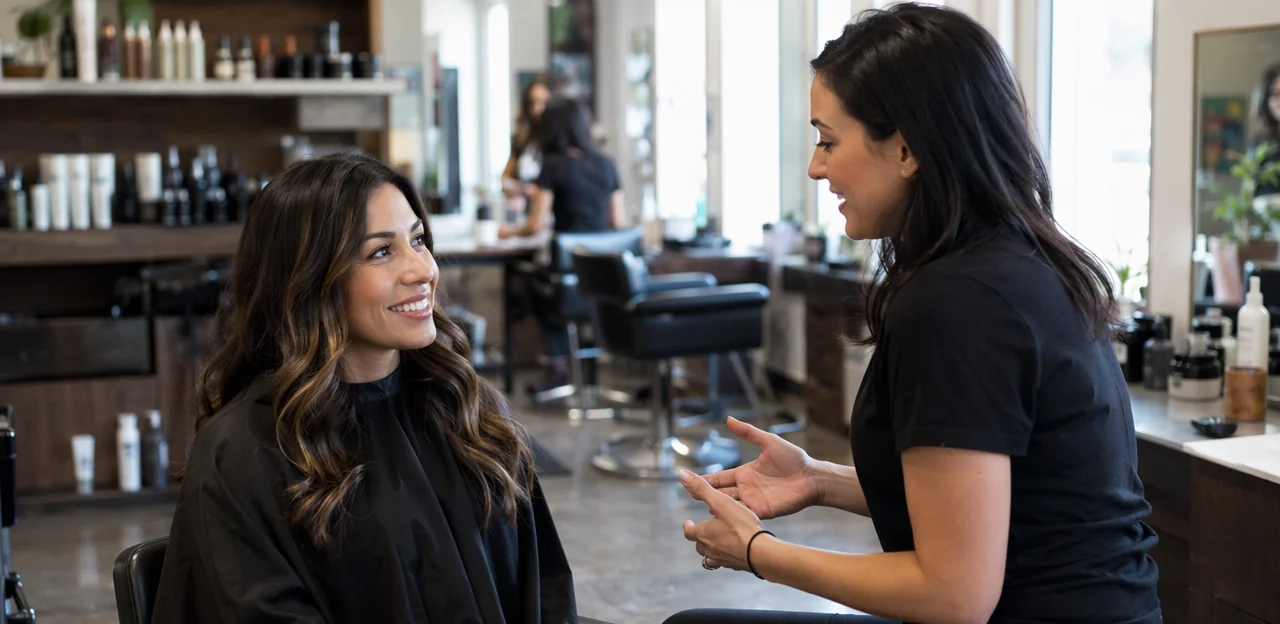
Strong salon feedback questions should focus on the outcome the client can see and feel after the appointment. This helps you measure satisfaction across both hair and beauty services while spotting where artists may need support or training.
Use clear, specific hair salon survey questions and beauty feedback questions such as:
- How satisfied are you with your haircut result?
- Did your hair color match what you discussed during the consultation?
- How well did your style hold up after leaving the salon?
- Was your blow-dry, curl, or finish completed to your expectations?
- How satisfied are you with the condition of your hair after the service?
- Did your facial or skincare treatment leave your skin feeling refreshed and cared for?
- How satisfied are you with the shape, finish, and durability of your nails?
- Did your lash or brow service look natural and meet your desired result?
Include one rating question and one open comment field, such as: “What could we improve about your result today?” Tools like Tapsy can help collect this feedback quickly at the point of service.
Questions about service quality and staff interactions
Strong salon feedback questions help you uncover what clients really think about the people, process, and atmosphere behind each appointment. To encourage honest answers in your salon experience survey, keep questions specific, neutral, and easy to rate.
Use prompts like:
- Professionalism: “How professional did our team appear throughout your visit?”
- Friendliness: “How welcomed and comfortable did you feel with our staff?”
- Consultation quality: “Did your stylist or therapist listen carefully and explain options clearly?”
- Wait times: “How satisfied were you with the time between arrival and service start?”
- Cleanliness: “How would you rate the cleanliness of the salon, tools, and treatment areas?”
- Communication: “Were pricing, timing, and aftercare explained clearly?”
For better customer service feedback, combine rating-scale questions with one open text field such as, “What could we have done better today?” Avoid leading wording like “How amazing was our service?” Neutral service quality questions produce more reliable insights and make it easier to spot training, staffing, or operational issues quickly.
Questions about pricing, value, and expectations
Including pricing-focused salon feedback questions helps you understand whether clients felt the experience justified the cost and whether your team set expectations clearly from the start. These insights can improve consultations, upselling, and retention.
Consider adding salon satisfaction questions like:
- Did the service feel worth the price you paid?
- How would you rate the overall value for money of your appointment?
- Were prices explained clearly before the service began?
- Did the final result match what you expected from the consultation?
- Were any add-ons or extra charges communicated clearly?
- What would have made this service feel like better value?
These prompts generate useful pricing feedback while revealing gaps between promised and perceived results. A strong value for money survey can show whether concerns come from pricing itself, unclear communication, service quality, appointment length, or aftercare advice.
To make responses more actionable, pair rating-scale questions with one open comment box. If you collect feedback in real time through tools like Tapsy, you can spot pricing concerns early and adjust client communication before they affect rebooking.
Rebooking and Retention Survey Questions

Questions that reveal why clients do or do not rebook
Strong salon feedback questions should go beyond satisfaction and identify what blocks the next appointment. Use targeted rebooking survey questions such as:
- What is the main reason you have not rebooked yet?
- Was appointment availability convenient for your schedule?
- Did pricing feel fair for the service you received?
- Was there anything about the service that did not meet expectations?
- Did our team clearly recommend your next visit timing or follow-up care?
- Would a reminder, package, or loyalty offer make rebooking more likely?
These questions strengthen a client retention survey by uncovering practical and emotional barriers. When you understand why clients do not return, you can adjust booking hours, improve consultation quality, refine pricing, and create better follow-up systems that encourage repeat visits.
Questions that measure loyalty and referral intent
Include salon feedback questions that reveal whether clients will return, recommend you, and stay loyal over time. Keep the format simple so responses are easy to analyze and compare.
- Repeat visit likelihood: “How likely are you to book with us again?” Use a 1–5 or 0–10 scale.
- Recommendation intent: Ask a classic NPS for salons question: “How likely are you to recommend our salon to a friend or colleague?”
- Overall loyalty: “How likely are you to choose our salon over others nearby?”
Add open-ended follow-ups to understand the “why” behind each score:
- “What influenced your rating most?”
- “What would make you more likely to return?”
- “Is there anything that would increase your confidence in recommending us?”
These client loyalty questions and a clear referral intent survey help identify retention risks and referral opportunities quickly.
Questions for follow-up and win-back campaigns
For inactive clients and one-time visitors, salon feedback questions should uncover barriers, missed expectations, and the best incentive to return. A focused win-back survey can turn silence into useful insight and improve rebooking strategy.
Ask return visit questions such as:
- What is the main reason you have not booked with us again?
- How satisfied were you with your last appointment overall?
- Was pricing, availability, location, or service quality a factor in not returning?
- What could we do differently to earn your next visit?
- Which offer would most motivate you to come back: discount, add-on service, priority booking, or stylist match?
- Would you prefer a different stylist, treatment, or appointment time?
Use this lapsed client feedback to segment outreach and send more relevant win-back offers.
How to Design a Salon Survey That Clients Actually Complete

Choosing the right question types
The best salon feedback questions mix speed with insight. In any customer feedback form or salon questionnaire, choose survey question types based on what you need to learn:
- Rating scales: Use for satisfaction, stylist performance, cleanliness, wait time, and likelihood to rebook. They are fast to answer and easy to track over time.
- Multiple choice: Best when you want clear categories, such as “Which service did you book?” or “What influenced your visit most?”
- Yes or no: Ideal for simple checks like “Was your appointment on time?” or “Did we explain aftercare clearly?”
- Open-text questions: Use sparingly for detail, such as “What could we improve?” or “What did your stylist do especially well?”
A smart survey flow starts with quick taps, then adds one optional comment for richer feedback.
Keeping surveys short, clear, and actionable
To get better responses from salon feedback questions, keep the survey quick, easy, and relevant. These short survey best practices help improve completion rates and answer quality:
- Limit length: Aim for 3–5 questions and keep completion under 2 minutes.
- Use simple wording: Ask one thing at a time, avoid jargon, and keep questions specific.
- Design for phones: Strong mobile survey design means large tap targets, short answer options, and minimal scrolling.
- Avoid bias: Don’t lead clients with phrases like “How amazing was your stylist?” Use neutral wording instead.
- Skip confusing formats: Avoid double-barreled questions such as “Was your haircut and checkout experience excellent?”
- Make it actionable: Focus on service, results, cleanliness, and rebooking intent so feedback can guide improvements.
These customer survey tips help salons collect clearer, more useful insights.
Using channels like SMS, email, and in-salon forms
Choosing the right channel for salon feedback questions directly affects completion rates and how useful the answers are.
- SMS survey: Best for speed and high response rates. Send within 1–3 hours of the appointment while the experience is fresh. Keep it short—1 to 3 questions works best on mobile.
- Email feedback request: Better for detailed responses, photos, or longer comments about hair results, service quality, and rebooking intent. Send the same day, ideally within 24 hours.
- In salon survey: Ideal at checkout or in the waiting area for immediate impressions, but responses may be shorter or more polite when staff are nearby.
For best results, match the channel to the goal: SMS for quick ratings, email for depth, and in-salon forms for instant feedback. Tools like Tapsy can also help capture fast, no-app feedback at physical touchpoints.
Turning Feedback Into Better Salon Operations

How to analyze responses for trends and priorities
To get more value from salon feedback questions, organize responses into clear segments so patterns stand out quickly. This makes it easier to analyze customer feedback, spot recurring issues, and improve the right areas first.
- Group by service type: haircuts, color, nails, brows, skincare, or retail
- Compare by staff member: identify coaching needs and top performers
- Review by location: useful for multi-site salons tracking consistency
- Tag issue categories: wait times, cleanliness, consultation, pricing, results, or rebooking
Then track salon performance metrics such as average rating, complaint volume, and rebooking intent. Prioritize fixes by combining frequency and business impact to uncover meaningful feedback trends.
Coaching staff with client feedback
Use salon feedback questions as a practical coaching tool, not just a scorecard. In strong staff coaching programs, managers review both praise and complaints to spot patterns, reinforce winning behaviors, and correct weak points before they affect retention.
- Turn positive feedback into standards: Highlight comments about friendly service, clear consultations, or great results, then use them as examples in team training.
- Use constructive feedback for targeted coaching: If clients mention rushed appointments or unclear recommendations, role-play better consultation techniques and product conversations.
- Track consistency by stylist and service type: This supports ongoing service improvement and helps managers maintain quality across the team.
These are simple but effective salon management tips for building a more consistent client experience.
Closing the loop with clients
Using salon feedback questions is only valuable if you act on the answers. To close the feedback loop, follow up quickly, thank clients for their honesty, and show what changed. This helps you respond to customer feedback in a way that builds trust and supports long-term client retention strategies.
- Acknowledge every response: Send a short thank-you message after feedback is submitted.
- Resolve complaints fast: Contact unhappy clients directly, apologize clearly, and offer a practical fix such as a redo, credit, or priority rebooking.
- Share improvements: Let clients know when their input led to better service, timing, or treatment options.
- Invite happy clients to review: After a positive recovery or great visit, ask for a public review.
Tools like Tapsy can help salons capture and act on feedback faster.
Sample Salon Feedback Question Templates by Use Case

Post-appointment survey template
Use these salon feedback questions in a short salon feedback form sent within a few hours of the visit. A simple customer satisfaction template should cover experience, results, and rebooking intent:
- How satisfied were you with your appointment today?
- How would you rate your stylist or therapist’s service quality?
- Did the final result match your expectations?
- Was the salon clean, comfortable, and welcoming?
- How likely are you to rebook or recommend us?
- What could we improve before your next visit?
These post appointment survey questions help capture fresh, actionable feedback fast.
Hair and beauty treatment-specific question examples
Use salon feedback questions that match each appointment type so responses are more specific and useful:
- Haircuts: “Did your cut match the style discussed?”
- Color: “Were you happy with the tone, coverage, and finish?”
- Facials: “Did your skin feel improved after the treatment?”
- Nails: “How would you rate shape, finish, and durability?”
- Brows/Lashes: “Did the result suit your face and expectations?”
- Massage: “Did the pressure, comfort, and atmosphere feel right?”
These hair feedback questions, beauty treatment survey prompts, and wellness service feedback examples help salons spot service gaps and improve rebooking.
Rebooking and loyalty survey template
Use these salon feedback questions to build a simple loyalty survey template that tracks return intent and repeat behavior:
- How likely are you to rebook with us today?
- Would you book the same stylist or therapist again?
- When do you expect to schedule your next appointment?
- What is the main reason you would return?
- What, if anything, might stop you from coming back?
- What offer, reminder, or service would increase rebooking?
This set of rebooking questions works well in any repeat client survey and helps identify loyalty drivers and barriers fast.
Conclusion
In the end, the best salon feedback questions do more than collect opinions—they help you understand the full client journey, from the quality of a haircut or beauty treatment to staff friendliness, wait times, overall service, and the likelihood of rebooking. When your questions are clear, timely, and focused on the moments that matter most, you gain insights you can actually use to improve client experience, strengthen loyalty, and grow repeat business.
Well-designed salon feedback questions also make it easier to spot patterns: which services delight clients, where expectations are falling short, and what encourages guests to come back. By combining rating-based questions with open-ended responses, salons can capture both measurable trends and valuable personal details that lead to better decisions.
Now is the time to review your current survey process and refine the questions you ask after every appointment. Start with a short, client-friendly feedback form, track responses consistently, and use the data to improve service standards and rebooking performance. If you want to streamline real-time feedback collection at key touchpoints, tools like Tapsy can help support a faster, more actionable process.
For next steps, create a feedback template for hair, beauty, service, and rebooking, test it with a small group of clients, and revisit results monthly. The right salon feedback questions can turn everyday client comments into long-term business growth.
Frequently Asked Questions
- Why are salon feedback questions important for client experience?
They help salons understand how clients feel at each stage of the visit, from booking to checkout and rebooking. Feedback reveals gaps in timing, communication, results, and service quality so teams can make practical improvements. Acting on it also helps build trust, loyalty, and repeat visits.
- What should salon feedback questions cover after an appointment?
They should cover treatment results, staff professionalism, consultation quality, wait times, cleanliness, pricing clarity, and rebooking intent. A balanced survey also includes at least one rating question and one open comment field. This gives both measurable trends and specific suggestions.
- When is the best time to ask clients for salon feedback?
The best time is shortly after the appointment, ideally within a few hours, while the experience is still fresh. Feedback can also be requested after resolving a complaint or before rebooking campaigns. Timing matters because clients are more likely to respond with accurate impressions.
- How many questions should a salon survey include?
A short survey of 3 to 5 questions is recommended. It should take less than 2 minutes to complete so clients do not feel overwhelmed. Keeping it brief usually improves completion rates and makes the feedback easier to act on.
- What are good examples of questions about hair and beauty results?
Useful questions ask whether the haircut matched expectations, whether hair color matched the consultation, or whether a facial left skin feeling refreshed. For nails, brows, or lashes, questions can focus on finish, durability, and whether the result looked as desired. These questions work best when they are specific to the service received.
- How should salons ask about staff interactions and service quality?
Questions should be neutral, specific, and easy to rate. Good topics include professionalism, friendliness, consultation quality, wait times, cleanliness, and whether pricing and aftercare were explained clearly. Neutral wording helps produce more reliable feedback than leading questions.
- Why should salons ask about pricing and value for money?
Pricing questions show whether clients felt the service was worth the cost and whether expectations were set clearly before the appointment began. They can also reveal whether concerns come from unclear communication, add-on charges, service quality, or appointment length. This helps salons improve consultations and reduce friction that affects retention.
- What questions help uncover why clients do not rebook?
Strong rebooking questions ask about appointment availability, pricing fairness, unmet expectations, and whether the next visit timing was clearly recommended. They can also ask whether reminders, packages, or loyalty offers would help. These responses reveal both practical and emotional barriers to returning.
- How can a salon measure loyalty and referral intent?
A salon can ask how likely a client is to book again, recommend the salon to a friend, or choose it over nearby competitors. These questions are often paired with a simple rating scale and an open follow-up asking what influenced the score. That combination helps identify both loyalty risks and referral opportunities.
- What should a win-back survey ask inactive salon clients?
It should ask why they have not booked again, how satisfied they were with their last appointment, and whether pricing, availability, location, or service quality affected their decision. It can also ask what would earn their next visit and which offer would motivate them most. This helps salons segment outreach and tailor win-back campaigns.
- Which question types work best in a salon feedback survey?
Rating scales are useful for satisfaction, cleanliness, wait time, and rebooking likelihood because they are quick to answer and easy to track. Multiple choice works well for service categories or visit reasons, while yes-or-no questions suit simple checks like punctuality or aftercare explanation. Open-text questions should be used sparingly for comments on what could improve.
- What makes a salon survey easier for clients to complete?
The survey should use simple wording, ask one thing at a time, and avoid jargon or double-barreled questions. It should also be designed for phones with short answer options, large tap targets, and minimal scrolling. Clear, neutral, actionable questions make completion easier and responses more useful.
- Should salons use SMS, email, or in-salon forms for feedback?
Each channel serves a different purpose. SMS is best for fast, high-response feedback within 1 to 3 hours of the appointment, email is better for more detailed comments, and in-salon forms work well for immediate impressions at checkout or in the waiting area. The best choice depends on whether the goal is speed, depth, or instant capture.
- How can salons turn feedback into operational improvements?
Responses can be grouped by service type, staff member, location, and issue category such as wait times, cleanliness, consultation, pricing, results, or rebooking. Salons can then track metrics like average rating, complaint volume, and rebooking intent to spot patterns. Prioritizing issues by frequency and business impact helps focus improvement efforts.
- How can Tapsy support salon feedback collection?
Tapsy is presented as a tool for collecting real-time feedback at key service touchpoints. It can help capture responses while the experience is still fresh and support fast, no-app feedback in physical settings. It is also positioned as a way to streamline feedback collection and help salons act on responses more quickly.